Insurance Versus Savings for a Standard Poodle
It’s a scenario every loving Standard Poodle owner dreads: the sudden, unexpected vet bill that lands like a gut punch. Whether it's a terrifying bloat episode or a chronic illness diagnosis, the financial strain can be as overwhelming as the emotional one. This guide will meticulously unpack the age-old dilemma of whether to invest in pet insurance or diligently build a dedicated savings fund to protect your beloved Standard Poodle from the unpredictable costs of their health journey.
Understanding the Financial Realities of Standard Poodle Ownership
Let's be frank, owning a Standard Poodle is an investment of both heart and wallet. These magnificent dogs, while generally robust, come with their own set of health considerations that can lead to significant veterinary expenses over their lifetime. It’s not just about the daily kibble and the charming bow-tie-worthy grooming; it’s about being prepared for the curveballs life, or genetics, might throw your way.
The High Cost of Unexpected Veterinary Care
When we talk about unexpected vet bills, we're often talking about emergencies or chronic conditions that can quickly escalate into four-figure sums. Standard Poodles, with their deep chests, are unfortunately predisposed to conditions like bloat, or Gastric Dilatation-Volvulus (GDV). This is a life-threatening emergency where the stomach twists, requiring immediate, often costly, surgery. Imagine rushing your beloved companion to an emergency veterinary hospital at 2 AM, knowing that the procedure to save their life could easily cost upwards of $5,000 to $10,000, especially when you factor in diagnostics, surgery, and post-operative care.
Beyond acute emergencies, Standard Poodles are also known to be susceptible to autoimmune diseases, with Addison's Disease in Standard Poodles being a prime example. A diagnosis of Addison's isn't just a one-time cost; it typically involves lifelong medication and regular monitoring, which can add up to hundreds of dollars every month. While managing this condition, you might also face diagnostic costs initially, followed by ongoing injections and blood tests. These aren't minor expenses; they're significant, continuous financial commitments that can strain even a well-managed budget. Then there are orthopedic issues like hip or elbow dysplasia, which might require extensive imaging and potentially surgical intervention, each procedure costing thousands. When your dog is in pain, you want to focus on their comfort and recovery, not the daunting numbers on an invoice.
Routine Care Isn't Cheap Either
It's easy to get caught up thinking only about emergencies, but routine care for a Standard Poodle also carries a substantial price tag. These aren't hidden costs; they're the predictable, necessary expenses that keep your poodle healthy and happy. Annual veterinary check-ups, vaccinations, parasite preventatives (flea, tick, heartworm), and routine dental cleanings are all part of responsible ownership. A yearly routine vet spend for a Poodle might include blood work, a thorough physical exam, and sometimes even a urinalysis. Dental scaling for a Standard Poodle, especially if they need extractions, can range from $500 to over $1,500, depending on your location and the complexity of the procedure.
Then there's the grooming. Standard Poodles have that magnificent, non-shedding coat that is a joy to behold but requires consistent professional attention or dedicated home care. Whether you're paying a professional groomer every 4-6 weeks or investing in high-quality clippers, blades, and shampoos to do it yourself, these are ongoing costs that you simply cannot skip if you want to prevent painful matting and skin issues. While not medical, neglecting grooming can lead to medical issues like skin infections, making it an indirect health cost. Even something as simple as stocking up on quality food and treats can add up, though shopping on platforms like Chewy can help manage those regular supply expenses with convenient delivery options.
The Case for Pet Insurance for Your Standard Poodle
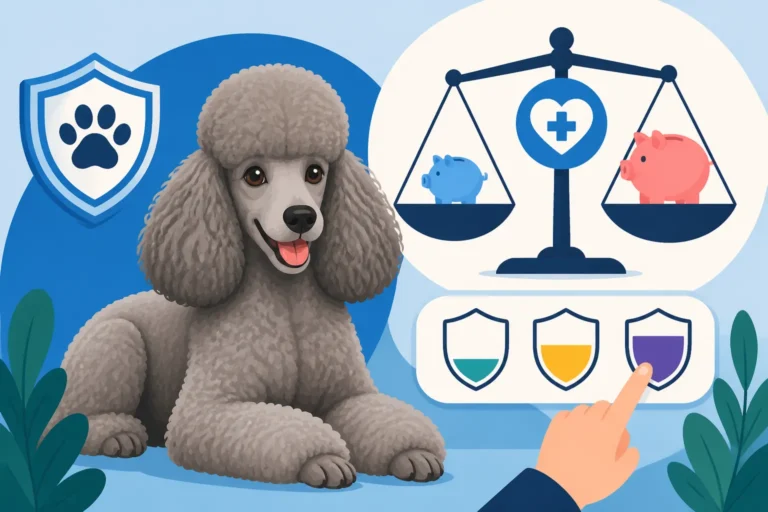
For many Standard Poodle owners, pet insurance offers a layer of financial protection and, perhaps more importantly, immense peace of mind. It’s a bit like health insurance for humans, designed to soften the blow of those hefty, unexpected veterinary bills.
How Pet Insurance Works
Pet insurance generally operates on a reimbursement model. You pay a monthly or annual premium, and in return, the insurance company agrees to cover a percentage of your vet bills once you've met your deductible. Here's a quick breakdown of the key terms:
- Premium: The recurring payment you make to keep your policy active. This varies based on your poodle's age, breed, location, and the coverage level you choose.
- Deductible: The amount you must pay out-of-pocket before your insurance company starts reimbursing you. This is usually an annual amount.
- Reimbursement Rate: The percentage of covered vet expenses that the insurance company will pay after your deductible is met (e.g., 70%, 80%, or 90%).
- Annual Limit: The maximum amount the insurance company will reimburse you in a policy year.
For example, if your Standard Poodle needs an emergency procedure costing $6,000, and you have a $500 annual deductible with a 90% reimbursement rate and a $10,000 annual limit:
- You pay the first $500 (your deductible).
- The remaining bill is $5,500.
- The insurance company reimburses you 90% of $5,500, which is $4,950.
- Your total out-of-pocket cost for that emergency would be $500 (deductible) + $550 (10% of $5,500) = $1,050.
Compare that to paying the full $6,000 yourself. Understanding your Poodle insurance premiums by size and age is crucial, as costs can vary significantly. Some providers, like Healthy Paws, offer unlimited annual payouts, which can be a huge relief for chronic conditions or multiple incidents in a year.
Peace of Mind for Catastrophic Illnesses and Accidents
The primary draw of pet insurance is the safety net it provides for unforeseen, high-cost events. Think about those terrifying scenarios: a sudden bloat emergency, a cancer diagnosis requiring chemotherapy, or a broken leg from an accidental fall. These are the situations where vet bills can quickly soar into the tens of thousands, and without insurance, you might face agonizing decisions based on financial constraints rather than what's best for your beloved Standard Poodle.
One of the biggest advantages is being able to say "yes" to necessary treatments without hesitation. When your vet recommends a specialist, advanced diagnostics, or an expensive new medication, having insurance means you can often proceed without the crushing worry of emptying your savings. It allows you to prioritize your dog's health above all else.
However, a critical factor to understand is pre-existing conditions. Most pet insurance policies will not cover conditions that were present or showed symptoms before your policy started or during a waiting period. This is why insuring a Poodle before any diagnosis is paramount. Enrolling a young, healthy puppy gives you the best chance for comprehensive coverage throughout their life. If your Standard Poodle has already been diagnosed with a condition like Addison's or has a history of luxating patellas, those specific issues will likely be excluded from coverage.
Building a Dedicated Savings Fund for Your Poodle
The alternative to pet insurance is often referred to as "self-insuring," which essentially means setting aside a dedicated amount of money specifically for your Standard Poodle's future medical needs. This approach offers a different kind of financial security and control.
The Freedom and Control of a Savings Account
With a dedicated savings fund, you are the sole decision-maker. There are no premiums to pay, no deductibles to meet, and no claims to file. Every dollar you set aside is yours, to be used exactly how and when you deem necessary for your Standard Poodle. This can feel incredibly empowering. If your dog needs a special diet, a specific supplement, or even a fancy new orthopedic bed, you have the flexibility to use those funds without worrying if an insurance company will deem it "covered."
Moreover, the money in a savings account can cover any expense, not just what a policy dictates. If you decide to pursue alternative therapies not covered by insurance, or if your poodle has a cosmetic procedure you want done (which insurance rarely covers), your savings are there. This fund isn't restricted by annual limits, specific conditions, or network providers. You can choose any vet, any specialist, anywhere, and you're not bound by waiting periods or exclusions for pre-existing conditions – because you're covering everything yourself.
The Discipline Required and Potential Risks
While attractive in its simplicity, building a dedicated savings fund requires immense discipline and a realistic understanding of potential costs. You need to consistently contribute to this fund, treating it like a non-negotiable monthly bill. It’s easy to raid a savings account for other emergencies or tempting purchases, but that money needs to be untouchable, reserved solely for your Standard Poodle.
The biggest risk, of course, is that a major health crisis could strike before you've accumulated a substantial sum. What if your young Standard Poodle unexpectedly develops an aggressive cancer requiring immediate, expensive treatment, and you've only managed to save $2,000? Many critical procedures, such as emergency bloat surgery prices for a Standard Poodle, can easily exceed $5,000 to $10,000. If you haven't saved enough, you could find yourself in a very difficult position, having to choose between taking on debt or making heartbreaking decisions.
It's one thing to budget for monthly medication costs for an Addisonian Poodle once the diagnosis is made, but it's another to come up with the initial thousands for diagnosis and stabilization. To truly be prepared, financial experts often recommend having at least $5,000 to $10,000 (or even more for a large breed with specific risks) readily available in this emergency fund. That’s a significant amount for many households to build, especially quickly. Saving ahead for a Poodle emergency takes time and consistent effort.
Making the Decision: Insurance, Savings, or a Hybrid Approach?
Deciding between pet insurance and a dedicated savings fund isn't a one-size-fits-all answer. It depends heavily on your personal financial situation, your risk tolerance, and your Standard Poodle's specific needs.
Direct Comparison: Pros and Cons
To help you weigh the options, let's look at a direct comparison:
| Feature | Pet Insurance | Dedicated Savings Fund |
|---|---|---|
| Cost | Monthly/annual premiums | Self-funded contributions, no external payments |
| Coverage | Specific conditions/accidents covered, subject to policy terms | Covers anything you choose, as long as funds allow |
| Pre-Existing Conditions | Typically excluded | Always covered (by your own funds) |
| Deductible/Reimbursement | Applies to covered conditions | Not applicable |
| Peace of Mind | High for catastrophic events, transfers risk | High if adequately funded, but risk remains with owner |
| Flexibility | Limited to policy terms, specific vets/procedures may be preferred | Complete flexibility on vet choice and treatments |
| Discipline Required | Pay premiums on time | Consistent saving habits |
| Risk of Insufficiency | Low for covered conditions once deductible is met | High if a major event occurs before sufficient savings |
| Returns on Investment | No financial return, rather a cost of risk transfer | Potential interest earned on savings |
Considerations for Your Lifestyle and Poodle's Needs
When making your decision, consider these points:
- Your Financial Comfort Zone: If the thought of a $7,000 vet bill gives you heart palpitations and would necessitate going into significant debt, pet insurance offers a crucial safety net. If you have the means and discipline to quickly build and maintain a large emergency fund, a savings account might be a better fit.
- Your Poodle's Age and Health: A young, healthy Standard Poodle is the ideal candidate for pet insurance, as you can enroll them before any pre-existing conditions develop. For an older Poodle or one with existing health issues, insurance options might be limited, more expensive, or exclude critical conditions, making a savings fund more practical. Understanding the Poodle lifespan across the three sizes can also help you predict the long-term journey.
- Breed-Specific Risks: Standard Poodles, as we've discussed, have predispositions to certain conditions. Knowing these risks can influence your decision. For breeds prone to very expensive, acute emergencies (like bloat), insurance can be invaluable.
- Your Discipline and Consistency: Be honest with yourself. Can you consistently put aside hundreds of dollars every month and not touch it for anything else? If not, the forced payment of an insurance premium might be a more reliable way to ensure funds are available.
- A Hybrid Approach: Many owners find a combination works best. You could get an accident-only policy or a high-deductible insurance plan for catastrophic events, and then maintain a robust savings fund for routine care, lower-cost issues, or items not covered by insurance. This can be a practical middle ground, leveraging the best of both worlds.
Ultimately, whether you choose pet insurance, a dedicated savings fund, or a hybrid approach, the most important thing is to have a plan in place. Your Standard Poodle relies on you to ensure they receive the best care possible, no matter what challenges arise.
Disclaimer
This article is for general informational purposes only and does not constitute professional advice. Laws, prices and regulations vary by location and change over time. Consult a qualified professional for guidance on your specific situation.