Fearful and Reactive Poodles
It can be utterly heartbreaking to watch your beloved Poodle become a trembling mess at the sight of a stranger, or explode into a barking, lunging frenzy when another dog appears across the street. This isn't the calm, elegant companion you envisioned, and it often leaves you feeling helpless, frustrated, and even embarrassed. This guide aims to shed light on why Poodles, despite their intelligence and grace, can sometimes develop fearful and reactive behaviors, and provides practical, empathetic strategies to help both you and your Poodle navigate these challenging situations with more confidence and peace.
Understanding Poodle Sensitivity and Fear
Poodles are celebrated for their sharp minds and often their gentle dispositions, but their very intelligence and sensitivity can be a double-edged sword when it comes to fear and reactivity. It's not always about aggression; often, it's a profound sense of overwhelm or a perceived threat that triggers these intense responses.
The Poodle's Innate Nature and Reactivity
Our Poodles, whether they're tiny Toys, sturdy Miniatures, or majestic Standards, are profoundly intelligent creatures. They soak up information, remember experiences vividly, and often possess an almost uncanny ability to read human emotions. This keen awareness, however, means they can also be incredibly sensitive to their environment, people, and other animals. This sensitivity, which can make them wonderful, empathetic companions, can also predispose them to fear-based behaviors. Where a less sensitive dog might shrug off a startling noise or a quick interaction, a Poodle might internalize it, building a negative association.
You see, a Poodle's alertness, which historically made them excellent watchdogs and retrievers, can sometimes morph into suspicion or anxiety when not properly channeled or socialized. They notice everything, and if what they notice is consistently perceived as threatening, even if it's just a leaf blowing across the path, their default response can shift from curiosity to caution, and then to outright fear. Many Poodle owners can attest to their dog's ability to pick up on the slightest shift in mood or environment, and this hyper-vigilance, while a testament to their smarts, can also be a burden. If you've ever felt like your Poodle is "too smart for its own good," often this underlying sensitivity is what you're noticing. We talk more about this breed's inherent traits in Poodle Temperament and Sensitivity.
Common Triggers for Fear and Reactivity
Identifying your Poodle's triggers is the first critical step in addressing fear and reactivity. These aren't always obvious; sometimes, it's not the big, scary thing, but a collection of smaller, seemingly insignificant details that push them over the edge.
- Strangers: For many Poodles, unfamiliar people can be a huge trigger. This might manifest as barking and backing away from anyone who isn't "their" person, or lunging at someone who approaches too quickly. This isn't rudeness; it's often a deeply rooted fear of the unknown or a past negative encounter.
- Other Dogs: Meeting other dogs can be another common flashpoint. Some Poodles react out of fear because they had a bad puppyhood experience, or perhaps they find boisterous, off-leash dogs overwhelming. Others might be "leash reactive," meaning they're fine off-leash but feel trapped and threatened when confined on a lead.
- Loud Noises and Sudden Movements: Think fireworks, thunder, the clang of a dropped pot, or even just a child suddenly darting past. Poodles can be quite sound-sensitive, and these sharp, unpredictable stimuli can send them into a spiral of anxiety, leading to frantic barking or a desperate attempt to flee. We sometimes see this with dogs who were not exposed to a wide range of sounds during their critical socialization window.
- New Environments or Objects: A novel place, a new piece of furniture, a bag left on the pavement – anything out of the ordinary can be perceived as a threat. Your Poodle might bark at a mailbox that wasn't there yesterday or refuse to walk past a particular bush because something about it feels "off." This hyper-awareness of change is another facet of their intelligence and sensitivity.
- Lack of Socialization or Negative Experiences: Sometimes, the root cause isn't one specific event but a general lack of positive exposure during crucial developmental periods. A Poodle puppy kept isolated might grow into an adult who finds the world a scary place. Conversely, a traumatic incident – like being attacked by another dog or experiencing harsh training methods – can permanently shape a Poodle's perception of the world, creating deep-seated fears that require immense patience and careful rehabilitation. Understanding Sound Work for a Noise-Sensitive Poodle can be crucial here.
Recognizing the Signs of Fear and Reactivity in Your Poodle
It's easy to spot a Poodle that's barking and lunging on a leash, but fear and reactivity often begin much more subtly. Learning to read your Poodle's body language is absolutely essential for intervening before they reach their "threshold" and react overtly.
Subtle Cues Versus Overt Displays
Poodles, being highly intelligent and often quite stoic, might not immediately launch into a full-blown display of fear or aggression. They often offer a series of quieter signals first, warning signs that can be easily missed if you don't know what to look for. Think of it like a dimmer switch: the light doesn't just go from off to full blast.
-
Subtle Cues (Early Warning Signs):
- Lip Licking and Yawning: These aren't always signs of hunger or tiredness; in a stressful situation, they can be "calming signals" indicating mild anxiety or an attempt to self-soothe. Your Poodle might lick its lips rapidly or offer a big, slow yawn when a stranger approaches.
- Whale Eye: This is when you can see the whites of your Poodle's eyes, usually on the edges, as they try to keep an eye on a perceived threat without fully turning their head. It's a clear sign of unease.
- Body Stiffness and Freezing: A Poodle might suddenly become rigid, halt in place, or slow their movements. Their tail, instead of its usual cheerful wag or relaxed carriage, might be held low and stiff, or tucked between their legs. This "freeze" response is often mistaken for good behavior or attention, but it's a sign they're processing a threat and preparing for flight or fight.
- Ears Back or Pinned: While Poodles have drop ears, you can still see them flatten against their head or pull back, indicating tension and fear.
- Turning Away or Avoiding Eye Contact: Your Poodle might actively try to create distance, turn their head away from the trigger, or break eye contact with you or the perceived threat. This is their way of saying, "I don't like this, please make it stop."
- Panting (without exertion) or Drooling: Excessive panting when not hot or exercising, along with drooling, can indicate stress and anxiety.
-
Overt Displays (When the Poodle is Over Threshold):
- Barking and Lunging: This is the most common and visible form of reactivity. Your Poodle might bark incessantly, lunge forward at the end of the leash, or pull intensely towards or away from the trigger. It's often a desperate attempt to create distance or make the threat go away.
- Growling and Snapping: These are more serious warnings. A growl is a Poodle's way of saying, "I'm very uncomfortable, and if you come closer, I might bite." Snapping, even without contact, is an escalation of that warning. It's crucial not to punish these signals, as they are your Poodle's communication; removing them without addressing the underlying fear can lead to bites without warning.
- Frantic Retreat or Hiding: Some fearful Poodles will try to bolt, pulling desperately on the leash to get away. If off-leash, they might run and hide. This is the "flight" response in full effect.
- Self-Mutilation: In extreme anxiety, a Poodle might excessively lick or chew their paws or flanks, sometimes to the point of causing skin irritation or wounds. This is a severe self-soothing behavior.
Understanding these cues, especially the subtle ones, allows you to intervene before your Poodle reaches a point of no return. You'll find more detailed explanations in Reading a Poodle's Body Language.
The Fight, Flight, or Freeze Response
When a dog perceives a threat, their body prepares for one of three primal responses: fight, flight, or freeze. These are involuntary, instinctual reactions designed for survival, and recognizing which one your Poodle is exhibiting can help you understand their state of mind and respond appropriately.
-
Fight: This is the reactive Poodle we most often recognize – the one who barks, lunges, growls, and might even snap or bite. It's important to remember that this "fight" response is rarely aggression for the sake of it. More often, it's a desperate attempt by a fearful dog to make the scary thing go away. They're trying to project an image of being formidable, hoping the perceived threat will retreat. It's often a "best defense is a good offense" strategy born out of deep insecurity and fear. For a sensitive Poodle, this can be incredibly draining and stressful.
-
Flight: This response is all about escape. A Poodle in flight mode will try to get away from the trigger at all costs. This might look like pulling relentlessly on the leash, trying to run away, ducking behind your legs, or hiding under furniture. If a door is open, they might bolt. This Poodle isn't trying to scare anything away; they just want to be gone. Their body language will be tucked, low, and their tail will likely be clamped tight. They may try to pull on their leash so hard that a traditional collar could cause them discomfort, making a comfortable harness a much better option.
-
Freeze: The freeze response is often misunderstood. A Poodle might suddenly stop moving, become very still, and appear to be "calm." However, this isn't calmness; it's a state of high alert, where the Poodle is assessing the threat, hoping it will pass, and preparing for the next move if it doesn't. Their muscles will be tense, their breathing might be shallow, and their eyes may be wide (whale eye). They're essentially playing dead or hoping to be unnoticed. If the threat doesn't go away, a Poodle in freeze mode can quickly switch to fight or flight, often without warning, because they've reached their breaking point after an extended period of internal stress. This is why a seemingly calm Poodle might suddenly lash out if approached – their warning signs were subtle, and their freeze state was misread.
Understanding these responses helps us move away from labeling our Poodles as "aggressive" or "stubborn" and instead see them as dogs who are genuinely frightened and trying to cope in the only ways they know how.
Strategies for Managing and Reducing Reactivity
Dealing with a fearful and reactive Poodle requires a multi-faceted approach, combining careful management with gentle, consistent training techniques. It's a journey of patience, empathy, and understanding.
Environmental Management and Avoiding Triggers
Before you even think about training, you need to manage your Poodle's environment to minimize exposure to their triggers. This isn't about ignoring the problem; it's about reducing stress for your Poodle so they can be in a mental state where they are capable of learning and feeling safe.
- Change Your Routine: If your Poodle reacts to other dogs on your usual morning walk route, change it! Explore quieter streets, parks at off-peak hours, or even different times of day. The goal is to avoid situations where your Poodle is consistently "over threshold" – that point where they can no longer cope and react. Every time they react, the behavior is reinforced, and their fear solidifies.
- Create Safe Spaces at Home: Ensure your Poodle has a quiet, comfortable retreat in your home where they can feel secure. This might be a crate covered with a blanket, a bed in a quiet room, or a specific corner they've claimed. This is their sanctuary, especially when visitors come over or there's unexpected noise.
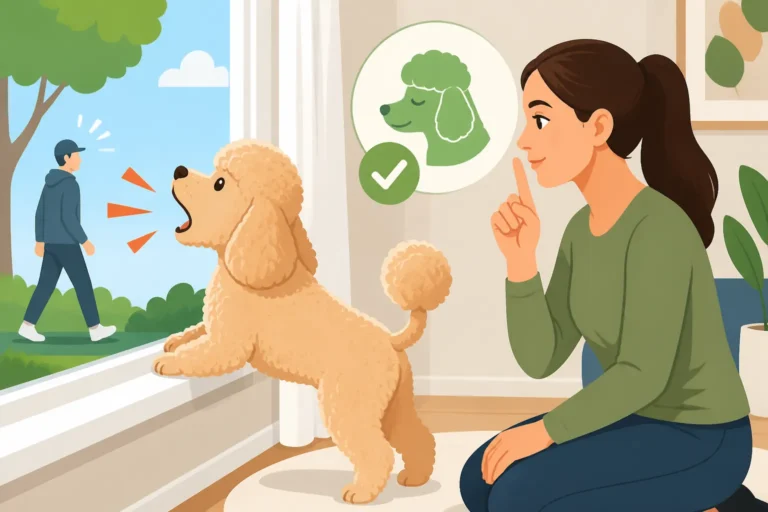
- Use Visual Barriers: If your Poodle barks at people or dogs passing by a window, simply closing the blinds or using window film can make a huge difference. In your yard, consider taller fencing or privacy screens. Out on a walk, if you see a trigger approaching, you can sometimes step behind a parked car, a large tree, or a bush to create a temporary visual block.
- Don't Force Interactions: This is crucial. Never drag your fearful Poodle towards a person or another dog, and don't allow strangers to rush up and pet them. Advocate for your Poodle, and politely inform others that your dog needs space. Forcing an interaction will only escalate their fear and potentially lead to a bite.
- Utilize Appropriate Leash and Harness: For Poodles who are reactive on leash, a comfortable, well-fitting harness (such as a front-clip harness) can provide better control than a collar, reducing pulling and preventing strain on their neck. Some Poodles do well with head halters, but others find them aversive, so observe your dog's comfort. Avoid retractable leashes, as they offer little control and can be dangerous. A longer lead (6-10 feet, not retractable) can offer a Poodle a bit more freedom and distance from you while still maintaining control, which can sometimes reduce their sense of being trapped. For more on gear, see Harness or Collar for a Toy Poodle.
By managing the environment, you're not coddling your Poodle; you're giving them the mental and emotional space they need to start healing and learning new coping mechanisms.
Desensitization and Counter-Conditioning Techniques
Once environmental management is in place, you can begin the work of desensitization and counter-conditioning (D&CC). These are gentle, positive reinforcement-based methods aimed at changing your Poodle's emotional response to their triggers. Instead of fearing something, we want them to associate it with good things.
- Understanding "Over Threshold": The most critical concept in D&CC is staying under your Poodle's threshold. This means working at a distance or intensity where your Poodle notices the trigger but doesn't react negatively (no barking, lunging, freezing, or obvious stress signals). If they react, you're too close or the stimulus is too intense, and you need to increase the distance or decrease the intensity.
- Desensitization (Gradual Exposure): This involves gradually exposing your Poodle to their trigger at such a low level that it doesn't cause a fear response. For example, if your Poodle barks at other dogs:
- Start at a distance where your Poodle can see another dog but remains calm – perhaps across a football field or even through a window at home.
- As your Poodle observes the distant dog calmly, immediately give them a high-value treat (something they absolutely adore, like cooked chicken or cheese).
- The moment the other dog disappears from view, stop the treats.
- Repeat this over and over, slowly decreasing the distance over many sessions, days, or even weeks. The key is gradual progression.
- Counter-Conditioning (Changing the Emotion): This pairs the trigger with something wonderful. The goal is to change the Poodle's feeling about the trigger from negative to positive.
- Every time your Poodle sees their trigger (at a sub-threshold distance), immediately give them a stream of high-value treats.
- The trigger predicts the treats. Over time, the Poodle learns: "Oh, there's that scary thing! But wait, that means delicious treats are coming! Maybe that scary thing isn't so bad after all."
- This isn't about bribing them; it's about creating a new, positive emotional association.
- The "Look At That" Game: This is a fantastic D&CC exercise.
- When your Poodle spots a trigger (at a safe distance), say "Look!" (or a similar cue).
- The moment they look at the trigger, mark the behavior (with a clicker or "yes!").
- Immediately give them a high-value treat.
- Repeat. Eventually, your Poodle learns to look at the trigger and then look back at you expectantly for a treat, rather than reacting to the trigger. This teaches them to check in with you, building a stronger bond and reliance on your guidance.
Remember, consistency is key, and progress can be slow. Celebrate every small win, and never punish your Poodle for reacting. Punishment only adds to their fear and can damage your bond. If you find your Poodle shutting down, as discussed in Why a Poodle Shuts Down When Scolded, you've pushed too hard.
Structured Training and Building Confidence
Beyond managing triggers, structured positive reinforcement training plays a huge role in building your Poodle's confidence and providing them with alternative behaviors when faced with a trigger. Training the Second Smartest Dog Breed highlights just how capable Poodles are of learning new things, and this intelligence can be harnessed for good.
- Foundation Obedience: Basic cues like "sit," "stay," "come," and "watch me" are invaluable.
- "Watch Me" / Eye Contact: This is particularly powerful for reactive dogs. Teach your Poodle to make eye contact with you on cue. When they see a trigger, instead of reacting, you can ask for a "watch me," diverting their attention and creating a moment to reward their focus on you.
- Reliable Recall: Having a solid "come" command means you can call your Poodle away from a potential trigger before they escalate, or safely get them back if they slip their leash. Long line work in a safe, open area can be fantastic for building this without pressure.
- "Go To Mat" / Place Command: Teaching your Poodle to go to a designated mat or bed and stay there calmly can be incredibly useful when visitors arrive or during other stressful household situations.
- Engage-Disengage Game: This builds on the "Look At That" game.
- Poodle sees trigger (at a safe distance), you mark and treat. (Engage)
- Poodle looks at trigger, then disengages (looks away, looks at you), you mark and treat again. (Disengage)
- The goal is for your Poodle to choose to disengage from the trigger, learning that looking at it isn't rewarding, but disengaging is.
- Scent Work and Puzzle Toys: These activities are fantastic for mental enrichment and confidence building.
- Scent Games: Hide treats around the house or yard and encourage your Poodle to sniff them out. This engages their natural instincts, builds focus, and can be incredibly calming and tiring.
- Puzzle Toys: Feeding meals from puzzle toys or snuffle mats makes your Poodle use their brain to "hunt" for their food. This builds problem-solving skills and independent confidence.
- Finding the Right Trainer: It is absolutely paramount to work with a trainer who understands fear and reactivity and uses only positive reinforcement and force-free methods. Poodles are sensitive, and harsh corrections or punishment will only worsen their fear and damage your trust. Look for certified professional dog trainers (CPDT-KA) or veterinary behaviorists. They can provide tailored guidance and help you implement these strategies effectively. A good trainer, as discussed in Finding a Trainer a Poodle Will Not Shut Down For, will help you understand your Poodle's unique needs without resorting to methods that cause distress.
Tools and Resources for Supportive Care
Supporting a fearful or reactive Poodle isn't just about training; it's also about providing them with the right tools and knowing when to seek expert help. These resources can significantly enhance your Poodle's comfort and your ability to manage their challenges.
Essential Gear and Aids
The market is full of products claiming to calm anxious dogs, and while no single item is a magic bullet, some can certainly be part of a comprehensive support plan.
- Harnesses: As mentioned before, a front-clip harness is often recommended for reactive dogs. It redirects the dog's forward momentum when they pull, making it harder for them to lunge and giving you more control without putting pressure on their delicate throat. Harnesses like those from reputable brands can be found easily on Amazon and come in various sizes to fit Poodles of all types. Ensure it fits snugly but comfortably, without rubbing or restricting movement.
- Long Lines: A lightweight, non-retractable long line (15-30 feet) can be invaluable for practicing recall and allowing your Poodle to explore safely in a large, secure area, building confidence without the pressure of being off-leash in an uncontrolled environment. This can be great for practicing engage-disengage games at a distance.
- Calming Aids:
- Pheromone Diffusers and Sprays: Products that release synthetic canine appeasing pheromones (similar to those a mother dog produces to calm her puppies) can help create a more serene atmosphere at home.
- Anxiety Wraps/Vests: These snug-fitting vests apply gentle, constant pressure, much like swaddling a baby. For some Poodles, this can have a calming effect during stressful events like thunderstorms or car rides. Not every Poodle benefits, but they are worth trying if your Poodle is amenable to wearing clothing.
- Supplements: Some natural supplements contain ingredients like L-theanine or tryptophan, which may help promote calmness. Always consult your veterinarian before starting any supplement regime, as they can interact with other medications or be inappropriate for certain health conditions.
- High-Value Treats: For counter-conditioning, you need treats that your Poodle would never turn down. Think small pieces of cooked chicken, hot dogs, cheese, or specialized training treats. These are not everyday kibble rewards; they are special currency for overcoming big fears. You can find a wide variety of high-value training treats on Amazon.
Remember, these tools are aids, not solutions. They work best when combined with consistent training and a deep understanding of your Poodle's needs.
Professional Guidance and Support
While you can do a lot on your own, dealing with a fearful or reactive Poodle is often complex and overwhelming. Professional help can make all the difference, providing expertise, customized plans, and much-needed support.
- Certified Professional Dog Trainers (CPDT-KA): These trainers have demonstrated knowledge in dog training techniques and ethical practices. They specialize in behavior modification using positive reinforcement and force-free methods. A good CPDT-KA can help you implement desensitization and counter-conditioning protocols, teach you effective management strategies, and build your Poodle's confidence through structured exercises. They're excellent for general reactivity issues.
- Veterinary Behaviorists (DACVB): These are veterinarians who have gone on to complete extensive residencies in animal behavior, making them specialists in diagnosing and treating behavioral disorders, including severe fear, anxiety, and aggression. If your Poodle's reactivity is intense, persistent, or involves aggression, a veterinary behaviorist can conduct a thorough medical and behavioral assessment, prescribe medication if necessary (which can help lower anxiety enough for training to be effective), and develop a comprehensive treatment plan. This is often the best route for complex cases.
- Behavior Consultants: Similar to CPDT-KAs, behavior consultants often have extensive experience with behavioral issues and use positive reinforcement. While not necessarily certified as veterinary specialists, many hold various certifications (like KPA-CTP, CDBC) indicating their expertise in behavior modification.
- Online Training Resources and Communities: Many reputable trainers offer online courses, webinars, or virtual consultations, which can be a lifeline if in-person help is limited in your area. Brands like BAXTER & Bella offer comprehensive online puppy and dog training programs that focus on positive reinforcement, which can be excellent for building a strong foundation and addressing emerging behavioral concerns. Additionally, online support groups for owners of reactive dogs can provide a sense of community and shared experience.
- Why Positive Reinforcement is Non-Negotiable: For a fearful or reactive Poodle, using punishment-based methods (like leash jerks, shock collars, or alpha rolls) is not only ineffective but incredibly damaging. These methods suppress outward symptoms but increase the underlying fear and anxiety. They teach your Poodle to fear you and the training environment, further eroding trust and making their reactivity worse in the long run. A sensitive Poodle will absolutely shut down under harsh treatment, making it even harder to address their fear. Your Poodle needs a partner, not a punisher, to overcome their fears.
Don't hesitate to seek professional help. It's an investment in your Poodle's well-being and your relationship with them.
Living with a Fearful Poodle Long-Term
Bringing a fearful or reactive Poodle into your life means committing to a journey that might be longer and more challenging than you initially anticipated. It requires immense patience, adaptability, and a shift in perspective, but the rewards of seeing your Poodle gain confidence are truly immeasurable.
Adjusting Expectations and Celebrating Small Wins
One of the hardest parts of living with a reactive Poodle is letting go of the picture of the "perfect" dog – the one that happily greets strangers, plays freely at the dog park, or ignores every other dog on a walk. For many reactive Poodles, that ideal may never be fully realized, and that's okay.
- Realistic Goals: Instead of aiming for a Poodle who loves everyone, perhaps your goal becomes a Poodle who can calmly pass a stranger on the street at a respectful distance, or who can relax in a quiet corner of the house when guests are over. Focus on reducing their stress and increasing their comfort, rather than forcing them into situations they can't handle.
- Celebrating Micro-Successes: The progress of a fearful Poodle often comes in tiny, almost imperceptible steps. Did your Poodle glance at a distant dog and then look back at you for a treat, instead of tensing up? That's a huge win! Did they walk past a previously scary object without flinching? Celebrate it! Every calm moment, every choice to disengage, every moment they trust you over their fear, is a monumental step forward.
- Self-Compassion for Owners: Living with a reactive dog can be emotionally draining. You might feel isolated, judged, or frustrated. It's okay to feel these things. Give yourself grace, acknowledge the effort you're putting in, and don't compare your Poodle's journey to others. Connecting with other owners of reactive dogs, either online or in person, can provide invaluable support and remind you that you're not alone. Your commitment to your Poodle's well-being is what truly matters.
Maintaining a Calm and Predictable Environment
Poodles thrive on routine and predictability, especially those prone to fear and anxiety. A stable home environment acts as an anchor, helping them feel secure enough to process the world around them.
- Consistent Routines: Establish predictable schedules for feeding, walks, playtime, and quiet time. Knowing what to expect reduces uncertainty, which is a major source of stress for fearful dogs. When your Poodle knows their walk will be at the same time each day, and that it will be a calm, managed experience, their anxiety leading up to it can decrease significantly.
- Quiet Spaces and Retreats: Reinforce your Poodle's safe space at home. This might be their crate, a bed in a low-traffic area, or a dog-proofed room. Ensure this space is always available and associated with positive, calm experiences (e.g., favorite chew toys, quiet naps). Teach children and guests to respect this space, ensuring your Poodle has an undisputed refuge when feeling overwhelmed.
- Managing Visitors: If visitors are a trigger, plan ahead. Your Poodle can be safely in their crate with a chew toy, in a separate room with a puzzle feeder, or leashed with you if they can remain calm at a distance. Don't let guests rush your Poodle, and explain gently that your dog needs space. Consider using baby gates to manage interactions.
- Enrichment Over Excitement: Focus on providing mental and physical enrichment that calms rather than over-excites. Daily sniff walks in quiet areas, puzzle feeders, chew toys, and simple training games using positive reinforcement can tire a Poodle's mind and body more effectively and less stressfully than a chaotic dog park visit. Engaging their intelligent minds with tasks, as discussed in Keeping a Poodle Mind Occupied, is key.
- Monitor for Pain or Discomfort: Sometimes, a sudden increase in fear or reactivity can be a sign of underlying pain or medical discomfort. Poodles, being sensitive, can become more irritable or fearful when they don't feel well. Regular vet check-ups are important, and if you notice any changes, don't hesitate to consult your veterinarian. Learning to pick up on subtle signs of discomfort is vital for any Poodle owner; more on this can be found in Reading Pain in a Sensitive Poodle.
By creating a stable, predictable, and supportive environment, you empower your fearful Poodle to feel more secure in their world, allowing them to slowly, but surely, blossom into the confident companions they were meant to be.
Disclaimer
This article is for general informational purposes only and does not constitute professional advice. Laws, prices and regulations vary by location and change over time. Consult a qualified professional for guidance on your specific situation.