Reading a Poodle’s Body Language
It’s easy to look at our Poodles, with their elegant coats and often serious expressions, and wonder what in the world is going on inside their clever heads. Sometimes, it feels like they’re masters of subtle communication, or worse, that they’re completely unreadable, leaving us baffled when they suddenly “sulk” or react unexpectedly. This guide is here to unravel the mystery, helping you truly understand the rich, nuanced language your Poodle uses every single day, building a deeper, more empathetic bond.
The Expressive Poodle: More Than Just a Pretty Face
Poodles are renowned for their intelligence and often their somewhat aristocratic demeanor. But beneath that beautiful coat and poised exterior lies a highly sensitive and expressive creature. Learning to read their body language isn't just a fun exercise; it's fundamental to understanding their needs, fears, joys, and even their frustrations. When you start to truly "speak Poodle," you'll find a world of subtle messages opening up, transforming your relationship with your beloved companion.
Why Poodle Body Language Can Be Misleading
Let's be honest, sometimes it feels like Poodles have a knack for being misunderstood. Their unique physical characteristics can certainly play a role in this. Those glorious drop ears, for example, while undeniably charming, don't have the same range of motion as the prick ears of a German Shepherd or a Border Collie, making it harder to discern subtle ear signals. Similarly, their dense, curly coats can sometimes obscure muscle tension or the nuanced movement of hackles raising along their spine.
Then there's the famous Poodle intelligence. They're quick learners, sometimes almost too quick, which means they can adapt their communication in ways that might throw us off. They might learn that a quiet, intense stare gets your attention faster than a bark, or they might seem to "sulk" when they're actually feeling overwhelmed or confused. It's easy to project human emotions onto them, seeing them as "dramatic" or "stubborn" when they're simply trying to communicate in a way we haven't quite learned to interpret yet. This can lead to moments where we feel our Poodle is actively trying to outthink us, or worse, that they're deliberately ignoring commands. Remember, a Poodle's cleverness means they might even Why a Poodle Invents Its Own Shortcuts to get their point across, which can look like defiance if we're not paying close attention to all their signals. Sometimes, what we perceive as a Poodle sulking is actually a sign of stress or discomfort. Whether Poodles Sulk dives deeper into this common misconception.
The Importance of Context in Reading Signals
One of the biggest mistakes we can make when trying to understand our dogs is to isolate a single body language signal and assign it a universal meaning. A wagging tail, for instance, isn't always a sign of happiness. A low, slow wag can indicate unease, while a high, stiff, rapidly vibrating tail might signal high arousal or even a pre-cursor to aggression. The context – everything else happening around your Poodle, and every other part of their body – is absolutely crucial.
Think about it: a Poodle panting after a vigorous run is totally normal. A Poodle panting heavily while standing still in a cool room, with wide eyes and a tucked tail, is likely experiencing significant stress or discomfort. The situation, their environment, who they're interacting with, and what other signals their body is sending all combine to paint a complete picture. It's like trying to understand a sentence by only reading one word; you need the full grammatical structure and the surrounding paragraphs to truly grasp the meaning. Ignoring context can lead to serious misunderstandings, especially in situations where your Poodle might be trying to tell you they're uncomfortable or afraid.
Head and Facial Cues: The Subtle Story
Our Poodles’ faces are remarkably expressive, even with their long muzzles and often masked ears. Paying close attention to the subtle shifts in their eyes, ears, and mouth can tell you volumes about their emotional state long before a bark or a growl might alert you. It's often where the earliest, most nuanced messages originate.
Eyes, Ears, and Muzzle: Windows to Their Soul
The eyes, in particular, are incredibly communicative. A Poodle with soft, almond-shaped eyes that are blinking gently is likely relaxed and comfortable. Direct, hard eye contact, on the other hand, can be a sign of challenge or intense focus, often bordering on arousal or even aggression, especially if paired with a tense body. Conversely, an averted gaze, where your Poodle deliberately looks away, is often an appeasement signal, indicating they want to de-escalate a situation or are feeling submissive. Squinting can sometimes signal pain or discomfort, but it can also be a sign of extreme contentment, like a cat purring. You'll learn to differentiate by observing the rest of their posture and the context.
While Poodles have those characteristic drop ears, they're far from immobile. A Poodle's ears can still be pinned back tightly against their head, signaling fear, anxiety, or submission. When slightly pulled back but still somewhat relaxed, it often means they are attentive and engaged in a friendly way. Ears perked forward, perhaps with a slight furrow in their brow, indicate alertness and interest – they're listening intently and processing information. It takes a bit more observation with drop-eared breeds, but the movement, tension, and positioning are still valuable indicators.
The muzzle, too, holds clues. A relaxed Poodle will often have a soft muzzle, perhaps slightly open if panting comfortably. Rapid lip licks, especially when no food is present, are a classic stress or appeasement signal. A tense, tightly closed muzzle, often accompanied by a furrowed brow, can indicate anxiety, discomfort, or even a precursor to aggression. An open-mouthed, "play" face, where the mouth is relaxed and sometimes slightly drooling in excitement, is a clear invitation for interaction.
The Poodle Smile and Other Mouth Signals
Yes, Poodles can definitely "smile!" This isn't usually a full baring of teeth like a human smile, but more of a "submissive grin" – where the lips are pulled back to show the front teeth, often accompanied by a lowered head and wiggly body. It’s an appeasement signal, a way for your Poodle to say, "I'm friendly, please don't hurt me." It's very different from an aggressive snarl, where the lips are pulled back in a tense, upward fashion, exposing canines and incisors, often accompanied by a stiff body and growl. Distinguishing between these two can be critical in understanding your Poodle's intentions.
Panting is another significant mouth signal. While often a normal response to heat or exercise, heavy, rapid panting in a cool environment, especially when combined with a tense body or wide eyes, is a clear indicator of stress, fear, or pain. Occasional yawns can also be stress-related, a way for your Poodle to self-soothe or to signal to you that they're feeling a bit overwhelmed. A big, relaxed yawn, on the other hand, is just your Poodle being sleepy and comfortable. Chewing or mouthing can also be stress relievers, or simply signs of playfulness, depending on the context. If your Poodle is frantically chewing a toy, it might be relieving anxiety, but if they're gently mouthing your hand during play, it's a different story. Drooling beyond what's typical for your Poodle can be a sign of extreme excitement, nausea, or significant stress.
Torso and Tail Talk: The Bigger Picture
Beyond the head, your Poodle's entire body posture tells a profound story. The way they carry themselves, the position of their weight, and especially the movement of their tail, are all critical pieces of the puzzle when you're trying to understand their inner world. These larger movements often convey more overt messages about their confidence, fear, or excitement.
Posture: Low, Neutral, or Tall?
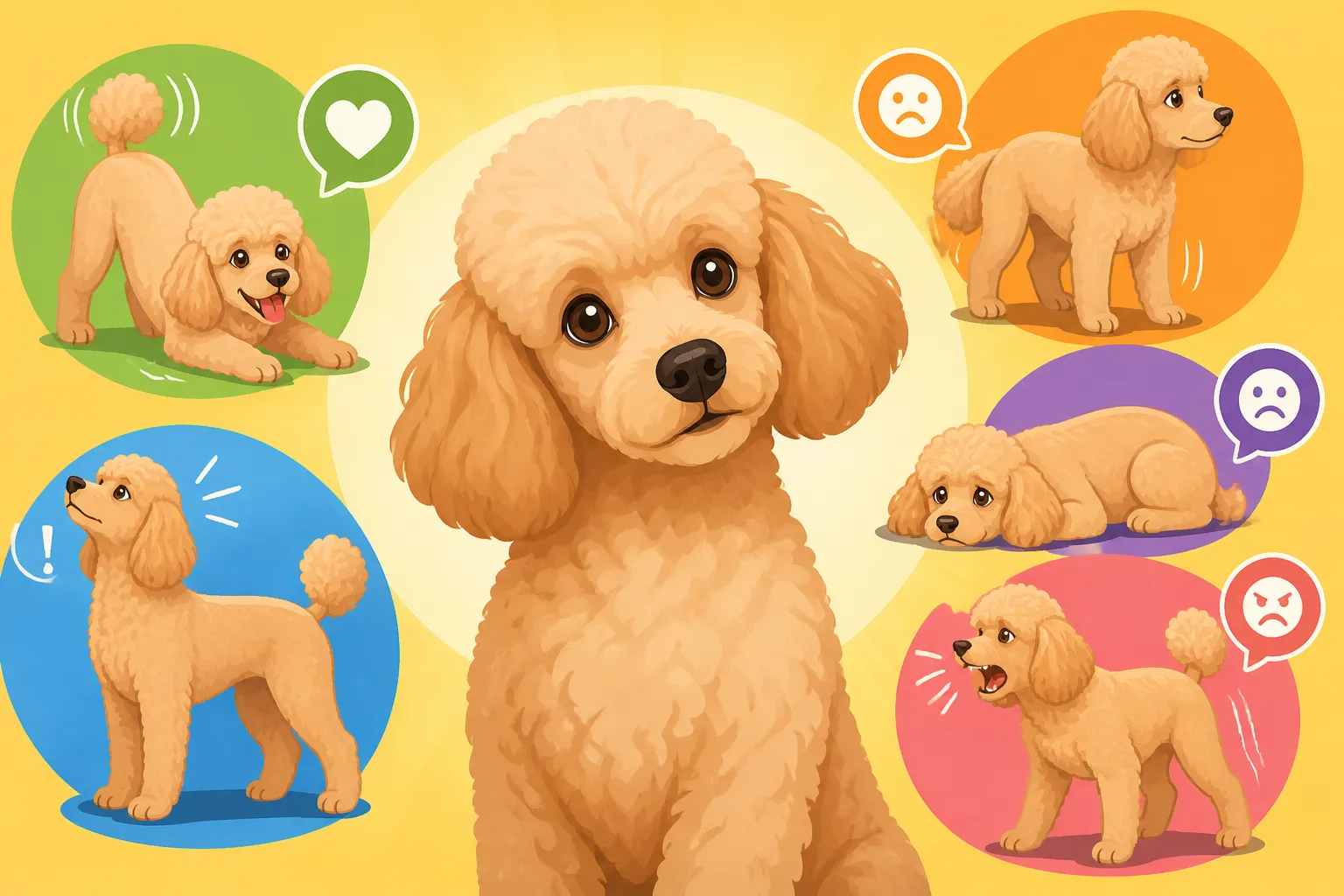
A Poodle's overall body posture can quickly signal their general emotional state. A low posture, where their body is crouched close to the ground, can indicate fear, submission, or a desire to appear smaller and non-threatening. They might be trying to tell you, or another dog, that they're not a threat and want to avoid conflict. A classic play bow – front end down, rear end up, tail wagging – is an unmistakable invitation to play, signaling that any subsequent roughhousing is just fun.
A neutral posture means your Poodle is relaxed and comfortable. Their weight will be evenly distributed, their muscles relaxed, and they'll likely move fluidly. This is the posture of a confident, content Poodle who feels secure in their environment.
Conversely, a tall posture often signals arousal, alertness, or even a challenge. If your Poodle stiffens, raises their head and tail, and perhaps even leans forward, they might be asserting dominance or preparing to react to something they perceive as a threat or a high-value stimulus. Raised hackles (piloerection) along their spine or at the base of their tail are a clear sign of arousal. This doesn't always mean aggression; it can be excitement, fear, or a combination. It simply means their "fight or flight" system has been activated, and they are on high alert. Observing the context and other body signals is key to interpreting why their hackles are up. A Poodle standing over another dog, even a smaller one, can also be a display of dominance or resource guarding, especially if the other dog is showing appeasement signals.
The Wiggle and the Wag: Deciphering the Tail
The tail, often considered the most obvious indicator of a dog's mood, is actually one of the most complex. It's not just about whether it's wagging, but how it's wagging, and at what height.
A high tail set, held above the Poodle's back, often indicates high arousal, confidence, or alertness. If it's stiff and vibrating rapidly, it usually points to tension or potential aggression. A neutral tail position, carried naturally for the breed (often curved up and over the back in many Poodles), suggests a relaxed and attentive state. A low or tucked tail, tucked tightly between the legs, is a clear sign of fear, submission, insecurity, or pain. It's an effort to appear smaller and more vulnerable.
Now for the wag itself:
- Loose, wide wag: This is the classic "happy" wag, often involving the entire rear end. It indicates friendliness, excitement, and a desire to interact positively.
- Stiff, rapid, short wag: This is a very different wag. The tail might be held high, and the wagging is quick and constrained. This indicates high arousal, tension, and often means your Poodle is on alert and could react to a perceived threat. This is not a friendly wag.
- Slow, hesitant wag: This can be seen in a low-held tail and suggests caution, uncertainty, or mild submission.
- "Helicopter" wag: A very loose, circular wag that involves the whole body, often seen when a Poodle is greeting a favorite person. It's pure joy and enthusiasm.
Understanding these nuances in tail movement is crucial. What looks like a "happy" wag can sometimes be a warning sign. For more detailed insights into this, check out Reading a Poodle's Ears and Tail.
Leg and Paw Signals: Grounding the Message
While perhaps less dramatic than a full body wag or an intense stare, your Poodle's legs and paws offer a wealth of information about their current state. These are often the first parts of the body to show subtle signs of discomfort, anxiety, or even pain. Learning to notice these finer details can give you an early warning system.
Paws and Legs: Stability and Stress
Observe how your Poodle distributes their weight on their paws. Are they standing evenly, or is their weight shifted slightly back, indicating hesitation or a readiness to retreat? A forward lean might mean they're preparing to engage or move towards something. These subtle shifts can tell you if your Poodle is feeling confident, cautious, or even defensive.
A Poodle lifting one paw slightly off the ground can mean several things. It might be a mild sign of anxiety or uncertainty in a new situation, a common appeasement signal. It can also be an attention-seeking behavior, especially if they do it towards you. In some cases, it can even indicate a subtle pain or discomfort in that leg or paw, so it's worth observing for other signs if this behavior seems unusual or persistent.
Paw licking or even nail biting can be significant indicators. While a quick lick after a walk might just be cleaning, persistent, compulsive licking of paws, especially if the skin appears irritated or red, is a strong sign of anxiety, boredom, or allergies. Poodles are prone to skin issues, and consistent paw licking warrants attention. If you notice this, it might be time to investigate potential causes, including environmental factors or diet. For related issues, see Poodle Allergies and Skin Reactions. Sometimes, this is a form of self-soothing, but it can also escalate into a serious skin infection if not addressed.
Trembling, Freezing, and Self-Soothing
Trembling or shivering is another clear signal, though its meaning depends entirely on context. Is your Poodle cold? Are they experiencing intense excitement, perhaps when you grab the leash for a walk? Or are they genuinely afraid or in pain? Distinguishing between these requires observing the full picture. A Poodle trembling out of fear will likely also have a tucked tail, wide eyes, and a crouched posture. A Poodle trembling from excitement might be doing so with a loose, wagging tail and a happy, panting mouth.
Freezing is a critical signal to recognize. This is when your Poodle suddenly becomes still, rigid, and unresponsive. It's a "stop" signal, often preceding a "flight" (running away) or "fight" (biting) response. A frozen Poodle is a Poodle who is deeply uncomfortable, potentially overwhelmed, and may be signaling that they are about to snap if the perceived threat doesn't back off. This is not a time to push them or force interaction. It’s a moment to give them space and assess the situation to remove the source of their distress. Sometimes, our Poodles are masters of subtle communication, and they might go completely quiet before they show overt signs of distress or pain. Why a Poodle Goes Quiet Before It Limps explores how they can mask discomfort, which is directly relevant to recognizing these nuanced signals.
Beyond paw licking, other self-soothing behaviors include yawning (when not tired), sniffing the ground intently (when nothing interesting is there), or turning their head away. These are often subtle ways your Poodle tries to cope with stress or signal appeasement. Recognizing these minor cues can help you intervene before your Poodle feels the need to escalate to more overt or distressed behaviors.
Vocalizations: When Body Language Isn't Enough
While this guide focuses heavily on the visual cues of body language, it's impossible to fully understand your Poodle's communication without considering their vocalizations. Sometimes, they need to add sound to their gestures to make their message undeniably clear. From the familiar bark to the subtler sigh, each sound carries meaning, complementing or amplifying what their body is already saying.
Barks, Growls, and Whines
Barks are perhaps the most common vocalization, and they come in a surprising variety. A sharp, repetitive bark might be an alarm bark, alerting you to something outside the window or a stranger approaching. Poodle Alarm Barking delves into this common behavior. A playful bark is often higher-pitched, less insistent, and accompanied by a bouncy body and play bows. A Poodle might also use a demanding bark to solicit attention, food, or play, often escalating in intensity until their need is met. Learning your individual Poodle's "bark vocabulary" takes time, but it's incredibly rewarding.
Growls are serious signals and should always be respected. They are a warning, a way for your Poodle to say, "Stop, I'm uncomfortable, and if you don't listen, I might escalate." Growls can be playful, especially during a game of tug or wrestling, but these are typically loose, low, and accompanied by a relaxed body. A true warning growl, however, will be deep, tense, and coupled with a stiff body, possibly raised hackles, and a hard stare. Never punish a growl; it's your Poodle's way of communicating their boundaries. Punishing it teaches them not to warn you, making a sudden bite more likely.
Whines are often expressions of need, frustration, or excitement. A high-pitched, insistent whine usually means "I want something!" – be it food, a walk, or your attention. A softer, more prolonged whine can be a sign of discomfort, pain, or anxiety. A Poodle might also whine with excitement when they see a loved one after an absence, often accompanied by a full-body wiggle.
Sighs, Yawns, and Other Sounds
Beyond the more obvious barks and growls, Poodles make an array of more subtle sounds that offer insights into their emotional state.
Sighs are a wonderfully expressive sound. A long, relaxed sigh often indicates contentment, especially after settling down for a nap or receiving a good scratch. It's their version of saying, "Ah, this is the life." However, a sigh can also signal resignation or mild frustration, particularly if they've given up on trying to get your attention or if a desired activity isn't happening. Again, context is key.
As mentioned earlier, yawns can be more than just a sign of sleepiness. A "stress yawn" is typically a wider, more exaggerated yawn that happens when your Poodle is feeling anxious, uncomfortable, or trying to de-escalate a tense situation. You'll often see these when they're in a new environment, meeting a stranger, or being asked to do something they're hesitant about. A sleepy yawn, on the other hand, will generally be shorter and more relaxed, usually occurring when they're winding down for rest.
Poodles can also make other small sounds like snorts, which can be a sign of irritation or disdain (yes, Poodles can be dramatic!), or a way to clear their nose. Grunts can signify effort, contentment during a good scratch, or even mild annoyance. Huffs can be a sign of mild exasperation or a sigh of relief. These small, idiosyncratic noises are often unique to individual Poodles and become part of your personal lexicon with them. Paying attention to them helps you tune into their unique personality.
Putting It All Together: A Holistic Approach
Understanding your Poodle's body language isn't about memorizing a list of individual signals; it's about seeing the whole picture. It's a continuous, dynamic conversation where every part of their body contributes to the message. Developing this skill will not only prevent misunderstandings but also deepen the incredible bond you share with your intelligent and sensitive companion.
Recognizing Stress Signals Early
One of the most valuable aspects of learning body language is being able to recognize stress signals early, before they escalate. Dogs, Poodles included, rarely go from calm to aggression without sending a series of escalating signals. These often start subtle: a lip lick, a head turn, a yawn, a shift in weight, a slight tightening of the muzzle. If these early signals are ignored, your Poodle might feel the need to escalate to more obvious warnings like freezing, growling, or even snapping.
This accumulation of stress is sometimes called "trigger stacking." Imagine your Poodle is mildly annoyed by a sound outside, then a child rushes past, then a stranger approaches too quickly. Each event adds to their stress bucket, and even if individually minor, the cumulative effect can push them over their threshold. By recognizing the very first subtle signs of discomfort, you can often intervene, remove your Poodle from the situation, or create space, preventing a full-blown meltdown. This proactive approach not only keeps everyone safe but also builds immense trust, as your Poodle learns that you understand and will act on their behalf. Poodles are incredibly sensitive, and Why Harsh Handling Breaks a Poodle is a stark reminder of how quickly they can shut down if they feel misunderstood or threatened. When a Poodle is feeling overwhelmed or frightened, they might completely withdraw and become unresponsive. Why a Poodle Shuts Down When Scolded is an excellent resource for understanding how their emotional state impacts their behavior.
Building a Better Bond Through Understanding
When you actively try to understand your Poodle's body language, you're doing more than just observing; you're engaging in a profound act of empathy. You're acknowledging their perspective, validating their feelings, and responding to their needs in a way that words alone cannot achieve. This kind of understanding forms the bedrock of a strong, trusting relationship. Your Poodle, in turn, will feel heard and understood, leading to a more confident, secure, and happier companion. They are truly masters at reading us, so when we reciprocate, it’s a powerful connection. For more on this, consider Why a Poodle Reads People So Well.
To continue your learning journey, there are many fantastic resources available. Books and online courses specifically focused on canine body language can be incredibly insightful. You might find valuable training programs, such as those offered by BAXTER & Bella, which often incorporate modules on understanding your dog's communication cues. Exploring different training methods can help you find what truly resonates with your Poodle's sensitive nature. Additionally, resources on platforms like Amazon offer a wealth of books by renowned canine behaviorists that delve deeply into the subject, providing visual guides and real-life examples to help you hone your observation skills. The more you observe, the more intuitive it becomes, turning those "unreadable" moments into clear, actionable insights that strengthen your partnership with your Poodle every single day.
| Body Part | Signal | Common Interpretation (Context Matters!) | What It Might Look Like |
|---|---|---|---|
| Eyes | Soft, blinking | Relaxed, content, trusting | Almond shape, slow blinks, perhaps squinting if very happy. |
| Hard stare, wide | Alert, aroused, potential threat | Pupils may be dilated, eyebrows furrowed, intense focus. | |
| Averted gaze | Appeasement, discomfort, shy | Head turned away, may be accompanied by lip lick. | |
| Ears | Pinned back | Fear, submission, anxious | Ears flattened against the head, often with a low posture. |
| Forward/perked | Alert, interested, engaged | Ears held high, often with head tilted, listening intently. | |
| Slightly back/relaxed | Happy, comfortable, listening | Ears relaxed, may occasionally flick back and forth. | |
| Mouth | Loose, slightly open | Relaxed, comfortable panting | Jaw relaxed, tongue may be slightly out, no tension. |
| Lip lick | Stress, appeasement, anticipating treat | Quick flick of tongue, often seen in tense situations or before food. | |
| Tense, closed, snarling | Threat, discomfort, aggression | Lips pulled back to show teeth, muscles around mouth tight. | |
| Tail | High, stiff wag | Arousal, tension, potential threat | Tail held above spine, short, fast, stiff movements. |
| Low, tucked | Fear, submission, insecurity | Tail pulled tightly between legs, body often crouched. | |
| Loose, wide wag | Happy, friendly, excited | Tail held at or below back level, wide, relaxed swings. | |
| Posture | Relaxed, balanced | Calm, confident | Weight evenly distributed, muscles soft, fluid movement. |
| Crouching low | Fear, submission, cautious | Body lowered towards ground, head may be down, trying to appear small. | |
| Stiff, forward lean | Arousal, dominance, threat | Body rigid, weight shifted forward, head often held high. | |
| Paws | Licking/chewing | Anxiety, self-soothing, irritation | Repetitive licking or nibbling of paws, may involve redness. |
| Lifting one paw | Mild anxiety, attention-seeking | One front paw slightly raised, often pausing mid-step. | |
| Frozen in place | Fear, processing, preparing action | Suddenly still, rigid body, often with wide eyes. |
Disclaimer
This article is for general informational purposes only and does not constitute professional advice. Laws, prices and regulations vary by location and change over time. Consult a qualified professional for guidance on your specific situation.