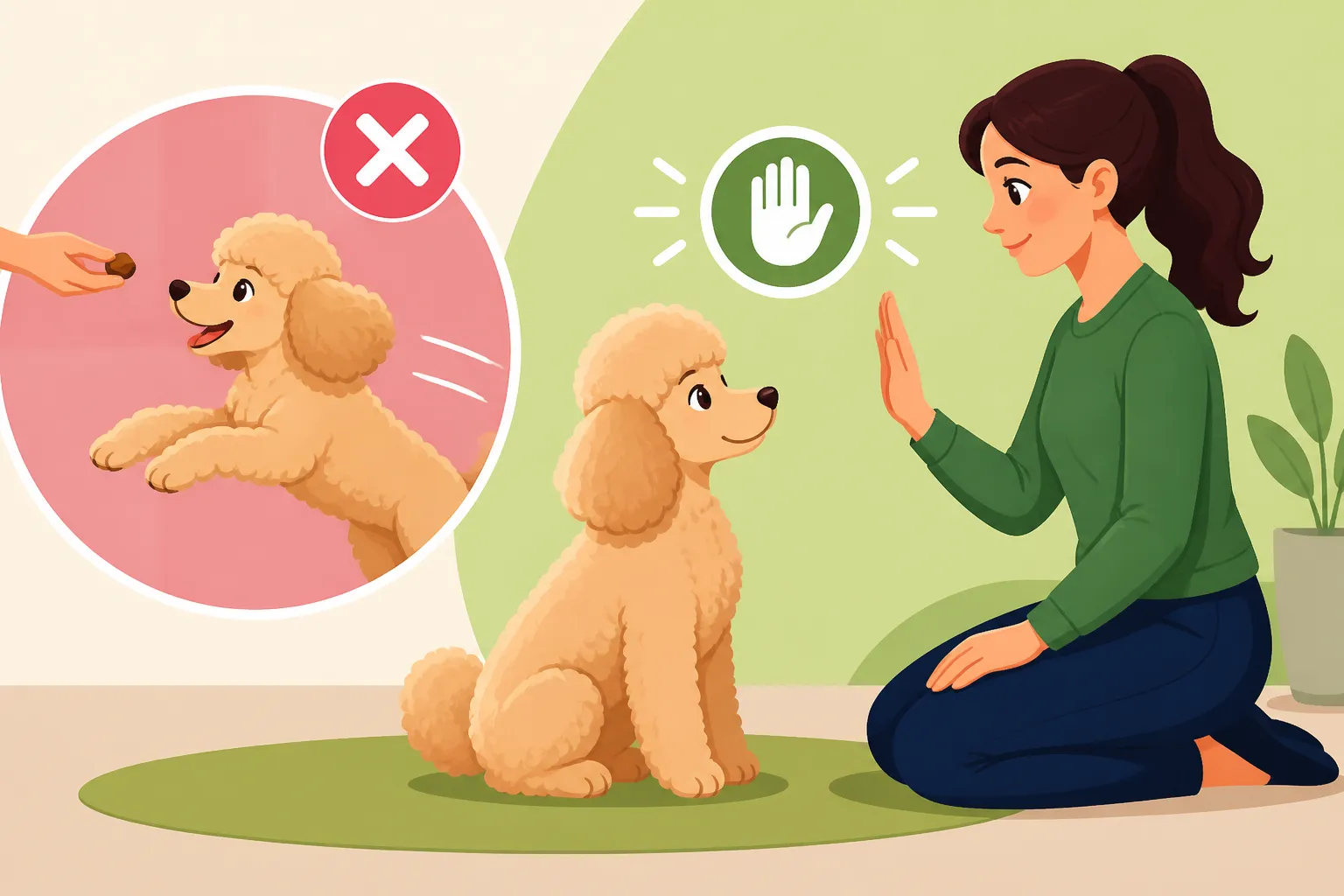
Teaching a Poodle to Wait Rather Than Guess
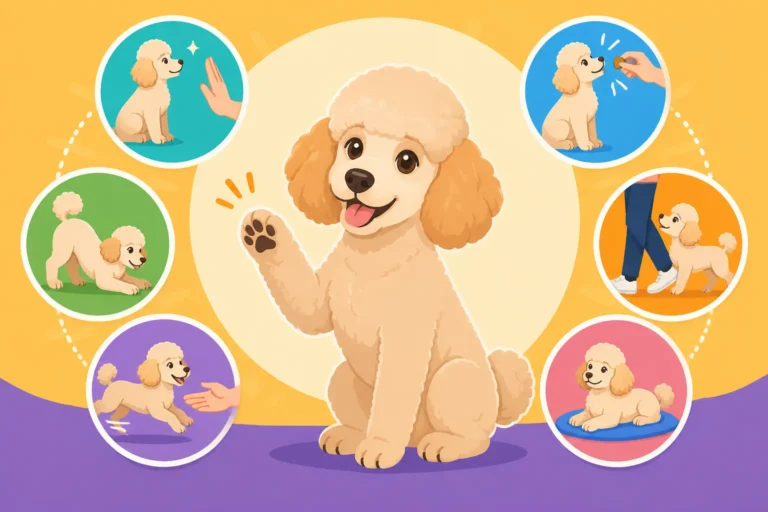
It's incredibly frustrating when you're trying to communicate with your brilliant Poodle, and instead of waiting for your clear instruction, they just… guess. One moment you're asking for a "sit," and the next they're offering a "down," a "paw," or even dashing for the door. This guide will walk you through clear, consistent strategies to teach your clever Poodle the invaluable skill of waiting for your cue, rather than rushing to a premature (and often incorrect) conclusion.
Understanding Why Poodles Guess and Rush
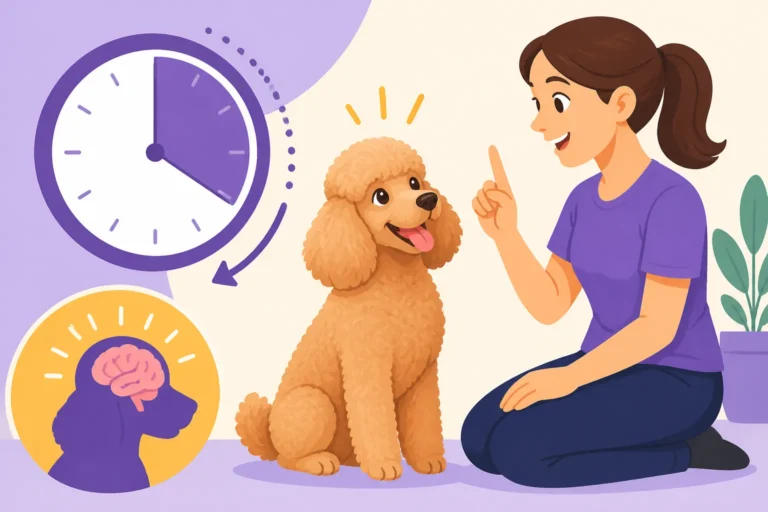
Poodles are renowned for their intelligence, often ranking high on lists of smart dog breeds. But sometimes, that sharp mind can be a double-edged sword. Their eagerness to please, combined with their quick learning abilities, can lead them to anticipate and guess what you want before you've even finished asking.
The Poodle's High Intelligence and Drive
Poodles are problem-solvers. They observe, they deduce, and they are incredibly driven by reinforcement, whether that's a treat, a toy, or your enthusiastic praise. When you ask them to "sit," their brain immediately starts cycling through all the behaviors that have earned them a reward in the past. If "sit" has often been followed by "down," or if they've gotten a treat for offering a rapid sequence of commands, they might start to combine or rush through these actions, hoping to hit the jackpot. This isn't naughtiness; it's often an overzealous attempt to get it right and earn that reward as quickly as possible. The frustration for us humans comes when their "right" is not our right at that precise moment. They truly want to cooperate, but their enthusiasm can get the better of them.
Lack of Impulse Control Training
Many Poodles excel at learning basic commands like "sit," "stay," and "come." They can pick up cues with remarkable speed. As we discussed in Why Poodles Learn a Cue in Five Repetitions, their capacity for learning is vast. However, knowing a cue is one thing; performing it with patience, holding still, and waiting for a release cue is another entirely. This is where impulse control comes into play, and it’s a skill that needs to be explicitly taught, just like "sit" or "down." Without it, your Poodle might jump on guests, bolt out the door the moment it opens, or snatch a treat before you've given the "take it" command. They understand the action but lack the restraint to perform it only when given the all-clear. This isn't about obedience, it's about self-regulation, a vital life skill that makes living with a Poodle much more harmonious.
How Our Own Habits Reinforce Guessing
Let's be honest, sometimes we inadvertently train our Poodles to guess. Imagine this scenario: you say "sit," your Poodle offers a quick "sit" then immediately a "down." You wanted the sit, but you're so delighted they did something right that you treat the "down" or the rapid sequence. Or perhaps you're inconsistent: sometimes you reward the immediate "sit," other times you wait for perfect stillness. Poodles thrive on predictability. If the rules are fuzzy, they'll create their own, which often involves guessing to increase their chances of reward. Furthermore, if we're constantly repeating commands ("Sit? Sit! SIT!") before they've even had a chance to process or commit to the action, we teach them that the first cue is just a suggestion, and they don't need to respond until the third or fourth. Our own impatience can breed theirs.
Laying the Foundation for Patience and Waiting
Building patience in a Poodle requires clear communication, consistency, and a structured approach. It's about teaching them that good things come to those who wait, not to those who guess.
Starting with Basic "Wait" and "Stay" Cues
The "wait" and "stay" cues are fundamental for building impulse control. Think of "wait" as a temporary pause, often used for short durations or before an activity (like waiting for dinner, or at a door). "Stay" is for longer, more formal durations and positions.
- Teaching "Wait" at Meal Times: This is often the easiest place to start because the motivation (food!) is so high. Hold your Poodle's food bowl, or place it on the floor. As you lower it, if your Poodle tries to dive in, immediately lift the bowl back up. Don't say anything, just calmly remove the opportunity. Wait for them to offer any pause – a brief glance away, a half-second of stillness. The instant they offer that stillness, even if it’s just for a blink, say "Yes!" or "Okay!" (your chosen release word) and lower the bowl for them to eat. Repeat this. Over time, increase the duration of the "wait" before you give the release word. They quickly learn that stillness and patience lead to the reward.
- Progressing "Stay": Once they understand "wait" at the bowl, you can introduce a formal "stay." Ask your Poodle to "sit," then say "Stay." Take one tiny step back. If they move, calmly put them back in the "sit" position without scolding, and try again. If they hold the "stay" for even a second, step back to them, reward, and give your release word. Gradually increase distance and duration. The key is to reward before they break the stay, always returning to them to reward, not calling them to you. This reinforces the idea that "stay" means "stay in this exact spot." For a quick-witted Poodle, this clear structure is vital.
The Importance of a Release Word
A release word is your Poodle's green light. It tells them, "Okay, you can move now; the exercise is over, or the reward is available." Without a clear release word, Poodles are left to guess when they can break position or take the treat. This is a huge source of guessing behavior! If you're constantly fading rewards, as discussed in Fading Rewards With a Quick-Learning Poodle, you also need to make sure the release is clear.
Choose a simple, distinct word like "Okay," "Free," or "Break." Use it consistently every single time you want your Poodle to know the "wait" or "stay" is over. For instance, after holding a "stay" for a few seconds, walk back to your Poodle, give them the reward, then say "Okay!" as they get up. This creates a clear boundary: the behavior is active until the release word. They learn that holding the position (or resisting the urge to guess) until that word is spoken is what truly earns the reward.
Using Lure-and-Reward for Early Success
Lure-and-reward training is an excellent way to guide your Poodle into the correct position without forcing them. It's especially useful when starting new behaviors or refining existing ones to include a "wait."
- Describing Luring: To teach a "sit" with a "wait," for example, hold a high-value treat (you can find a great variety of training treats on Amazon) near your Poodle's nose. Move the treat slowly in an arc over their head, towards their tail. As their nose follows the treat, their rear end will naturally lower into a sit. The instant their rear touches the ground, you can mark the behavior with a "Yes!" and give the treat.
- Transitioning from Lure to Hand Signal/Verbal Cue: Once your Poodle is consistently following the lure into a sit, start to perform the same hand motion without the treat in your hand. Give the verbal cue "Sit" simultaneously. When they sit, reward immediately from your other hand. Gradually, you can reduce the size of your hand motion until it's just a subtle signal, and eventually rely on the verbal cue alone. The "wait" part comes in before the reward. After they sit, pause for a second, then reward after the pause. This teaches them to hold the position briefly before the treat arrives, naturally building in a small "wait."
Practical Exercises to Build Reliable Waiting
Consistency and practice in various situations are essential for making "waiting" a natural part of your Poodle's repertoire. These exercises integrate impulse control into daily life.
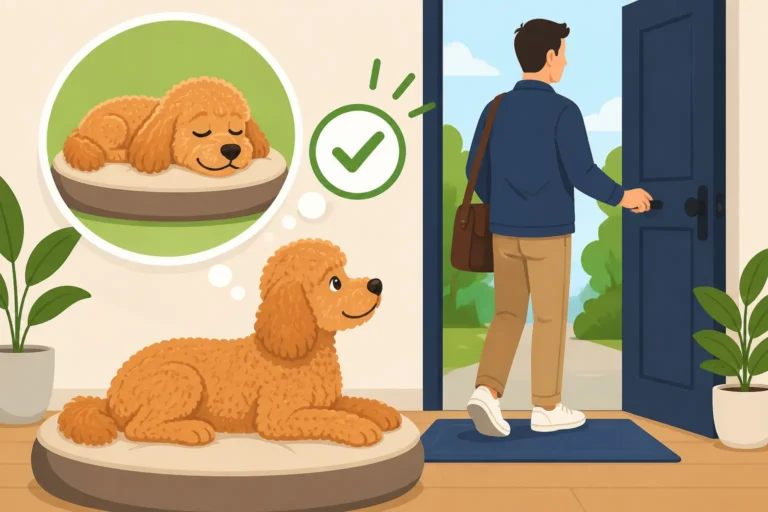
Door Manners: No More Bolting!
A Poodle darting out the door is not only annoying but potentially dangerous. Teaching polite door manners is a crucial impulse control exercise. This process often starts similar to building Leash Manners for a Standard Poodle – it’s all about polite movement.
- Step-by-Step for Waiting at the Door:
- Approach the door with your Poodle on a leash. Ask them to "sit" a few feet away from the door. If they pop up, calmly put them back. Reward for holding the sit.
- Reach for the doorknob. If your Poodle gets up, pull your hand back from the knob. Only when they are sitting calmly again do you reach for the knob.
- Slowly open the door a crack. If your Poodle tries to push through, immediately close the door. Repeat this until they remain sitting patiently with the door slightly ajar.
- Gradually increase how wide you open the door, always closing it if they attempt to dart.
- Once they can sit calmly with the door fully open, give your release word ("Okay!") and allow them to walk through politely after you.
- Dealing with Visitors: This process also works wonders for visitors. Have your Poodle on a leash when the doorbell rings. Ask for a "sit" a few feet from the door. Follow the same steps, only opening the door when they are calm. The visitor should wait outside until your Poodle is settled. This teaches your Poodle that exciting things (like walks or guests) only happen when they are calm and patient.
Mealtime Patience: The Underrated Skill
We touched on this briefly, but mealtime is a golden opportunity to reinforce patience daily. Poodles love their food, which makes it a high-value training session. Using slow feeders, as explored in Slow Feeders for a Gulping Standard Poodle, can also extend the eating process and encourage calmer behavior around food.
- Using the Food Bowl as a Training Tool: Instead of just putting the bowl down, make it a mini-training session.
- Ask your Poodle to "sit" and "wait" while you prepare their food.
- Place the bowl on the floor. If they rush, immediately pick it up. No yelling, no frustration, just remove the access.
- Wait for them to sit or stand calmly, then place the bowl down again.
- Repeat until they remain calm while the bowl is on the floor. Then, and only then, give your release word.
- Gradually Increasing Wait Time: Start with just a second or two of "wait." As they succeed, slowly extend the duration. Can they wait 5 seconds? 10 seconds? Can they wait while you walk a circle around the bowl? By practicing this daily, you're building a strong foundation of impulse control that transfers to other areas of their life.
Leash and Walk Etiquette
Walks are full of potential "guessing" situations: darting out the door, pulling on the leash, rushing to greet other dogs. Good Leash Manners for a Standard Poodle involves a lot of waiting.
- Waiting to Go Out: Just like door manners, waiting to be leashed up and waiting to step outside are crucial. Don't leash your Poodle if they're jumping and wriggling. Wait for a calm sit. Don't open the door until they are sitting patiently. Make the start of the walk a calm, controlled event.
- Waiting at Curbs: Before crossing any street, ask your Poodle to "sit" and "wait" at the curb. This is a critical safety command. Only when you give the release word do you proceed. This teaches them to check in with you and wait for your lead, rather than rushing headlong into traffic or an exciting smell.
- Teaching Polite Greetings: When you encounter another dog or person on a walk, your Poodle might want to rush over. Teach them to "wait" by your side, maintaining a loose leash. If they pull, stop walking. Only continue when the leash is loose again. This teaches them that pulling gets them nowhere, while calm waiting gets them closer to what they want. You can even use a special cue like "say hello" as their release word for greetings, but only after they've demonstrated calm waiting.
"It's Yer Choice" Game (Impulse Control)
This is a fantastic game for teaching self-control, particularly around temptations. It teaches your Poodle that they choose to be patient, and that patience is rewarded. BAXTER & Bella, an online puppy school, often incorporates similar games into their curriculum to build foundational impulse control.
- How to Play:
- Hold a high-value treat in your closed fist. Present your fist to your Poodle.
- They will likely sniff, lick, paw, and nudge your hand. Keep your fist closed.
- The instant they pull their nose away from your hand, or look up at you, open your hand slightly. If they immediately try to grab the treat, close your hand again.
- The goal is for them to learn that when your hand is open, if they don't try to take the treat, they will get it.
- When they look at the open treat but then look at you (making eye contact) or offer any moment of stillness, say "Yes!" and then let them take the treat.
- Progressing the Game: You can advance this by placing the treat on the floor, covering it with your hand, then gradually removing your hand. If they lunge, cover it again. They learn that the treat becomes available only when they exercise self-control and wait for your signal. This game reinforces that their choice to wait is what unlocks the reward, not their choice to grab.
Advanced Strategies and Troubleshooting
Even with a solid foundation, Poodles can sometimes revert to guessing, especially when faced with new challenges or high-distraction environments. Knowing how to adapt your training and when to seek help is key.
Increasing Distractions and Duration
Once your Poodle is a master of waiting in a quiet living room, it’s time to up the ante. The real world is full of distractions, and your Poodle needs to learn to apply their patience in those situations too.
- Gradually Adding Noise, Movement, People: Start small. Can your Poodle "stay" while you shuffle your feet? While a family member walks past? While the TV is on low? Slowly introduce more challenging distractions. Practice outside in your yard, then on a quiet street, then a busier park. Each new environment and distraction level is a new learning experience for your Poodle. Remember to set them up for success by starting with very short durations in new environments and building up. Don't go from a quiet home to a bustling dog park and expect perfection right away.
- Working in Different Environments: Changing locations is crucial. A "stay" in your kitchen might be solid, but a "stay" at the local pet store with all those exciting smells and sights is a whole new ballgame. Practice short, successful sessions in many different places. This generalizes the behavior, helping your Poodle understand that "wait" means "wait," no matter where they are or what's going on around them. Just like people need to focus in a noisy office, your Poodle needs to learn to focus on your cues amidst chaos. This also helps occupy their incredibly active Poodle mind, as discussed in Why a Bright Poodle Gets Bored, giving them a constructive task to focus on.
When Your Poodle Still Guesses: Backtracking
It happens to the best of us! You think you've got it, and then your Poodle suddenly starts guessing again. Don't get discouraged. This isn't a failure, it's information.
- Identifying Why the Poodle is Guessing:
- Too Hard, Too Fast: Are you progressing too quickly? Have you increased the duration, distance, and distraction all at once? Go back to basics. If they're struggling at the park, go back to practicing in your quiet backyard.
- Inconsistent Cues: Are you accidentally giving them mixed signals? Are all family members using the same commands and release words? Are you sometimes letting them get away with guessing? Everyone in the household needs to be on the same page.
- Lack of Motivation: Is the reward high enough value for the task you're asking? In a high-distraction environment, a boring piece of kibble might not cut it. Use a really tasty treat or their favorite toy.
- Environmental Overwhelm: Sometimes the environment is just too stimulating. A sensitive Poodle, as we discussed in Rebuilding Trust With a Frightened Poodle, can easily become overwhelmed, making it hard for them to focus and leading to frantic guessing. Reduce the environmental pressure.
- Going Back to Basics: If guessing becomes a consistent problem, take a step back. Revisit the "It's Yer Choice" game, practice mealtime patience, and work on basic "wait" and "stay" in a low-distraction environment. Build up their confidence and understanding again, and then slowly reintroduce challenges. Think of it as reviewing a lesson; sometimes we all need a refresher!
Seeking Professional Guidance
There's absolutely no shame in needing extra help. Sometimes a fresh pair of eyes can spot something you've missed, or an experienced trainer can offer tailored strategies for your specific Poodle's personality and challenges.
- When to Call in a Certified Professional: If you're feeling stuck, frustrated, or if your Poodle's guessing is escalating into more serious behavioral issues (like resource guarding because they snatch things, or jumping on people because they can't wait), it's time to call a certified professional dog trainer or a veterinary behaviorist. They have the expertise to assess your Poodle's specific needs, identify underlying causes for the behavior, and develop a customized training plan.
- The Benefits of a Fresh Perspective: A good trainer, especially one who understands the unique intelligence and sensitivity of Poodles (like those mentioned in Finding a Trainer a Poodle Will Not Shut Down For), can provide invaluable insights. They can help refine your timing, suggest new games, and teach you how to read your Poodle's body language more effectively. Remember, training is a partnership between you and your Poodle, and sometimes a skilled third party can strengthen that bond and communication.
Comparing Guessing vs. Waiting Behaviors
To truly understand the impact of teaching your Poodle to wait, let's look at the contrast between a guessing Poodle and a patient one.
| Aspect of Behavior | Poodle That Guesses & Rushes | Poodle That Waits & Is Patient |
|---|---|---|
| Response to Cues | Offers multiple actions, anticipatory, frantic | Offers requested action, holds position, calm, attentive |
| Door Manners | Darts, pushes, jumps at door, tries to escape | Sits calmly at door, waits for release word, walks politely |
| Mealtime | Lunges for bowl, barks, whines | Sits/waits for bowl, waits for release, eats calmly |
| Leash Walking | Pulls, lunges at distractions, inconsistent heeling | Walks on loose leash, checks in, waits at curbs, polite |
| Greetings | Jumps on people/dogs, over-excited, rough play | Approaches calmly, waits for "say hello" cue, gentle interaction |
| Owner Frustration | High, feeling unheard, chaotic interactions | Low, feeling understood, harmonious interactions |
| Poodle State | Anxious, overstimulated, misses context | Calm, focused, confident in understanding expectations |
Teaching your Poodle to wait rather than guess is one of the most rewarding investments you can make in your relationship. It transforms chaotic moments into calm ones, fosters better communication, and builds a deep trust between you and your intelligent companion. It's a journey of patience, consistency, and understanding, but one that yields a Poodle who is not just smart, but also a joy to live with.
Disclaimer
This article is for general informational purposes only and does not constitute professional advice. Laws, prices and regulations vary by location and change over time. Consult a qualified professional for guidance on your specific situation.