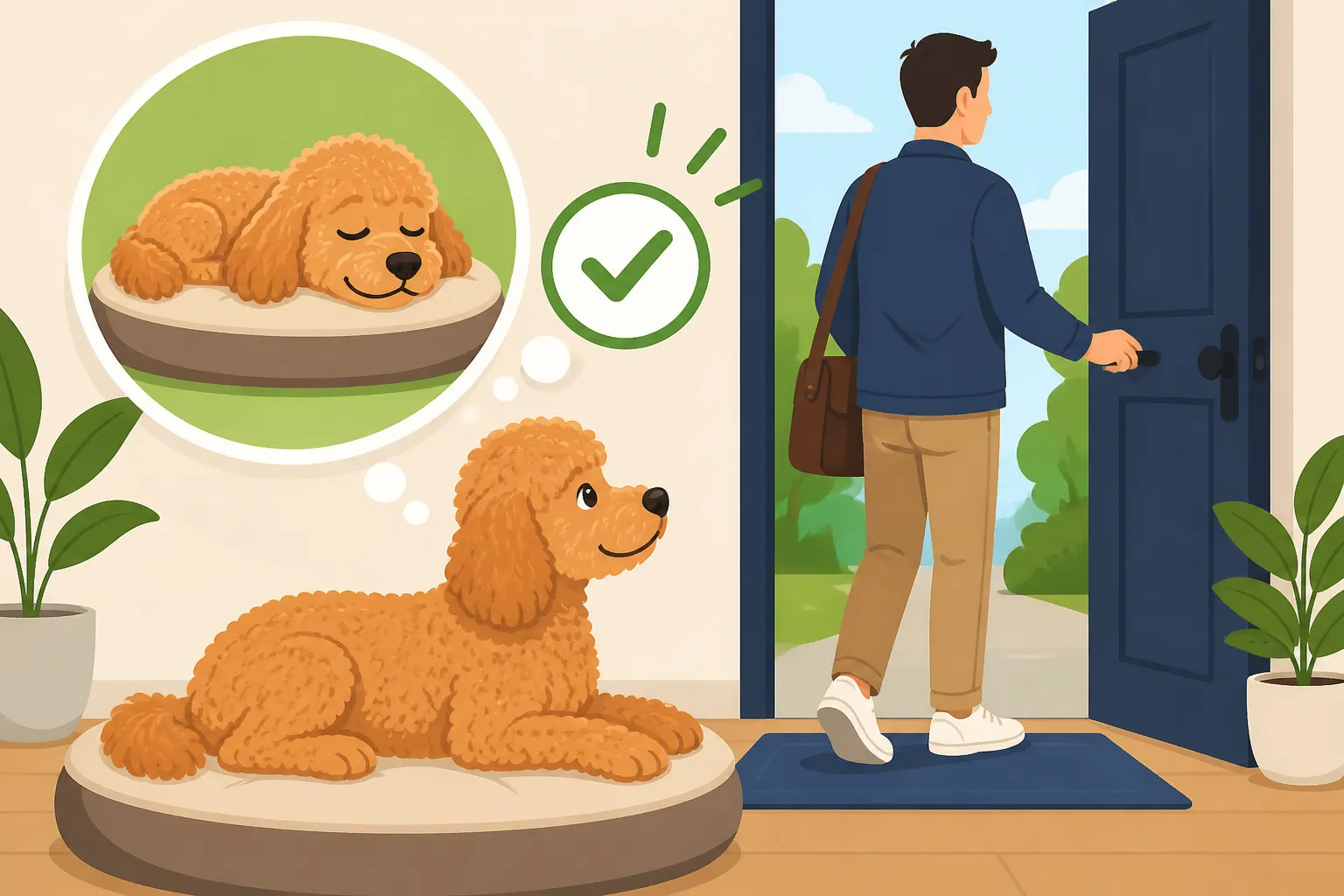
Teaching a Poodle That Leaving Is Ordinary
One of the most heart-wrenching struggles Poodle owners face is the distress their beloved companions exhibit when left alone. You might find yourself caught in a cycle of guilt, hearing the cries and knowing your Poodle is panicking the moment you step out the door. This guide aims to gently walk you through strategies to help your Poodle understand that your departures are not a permanent abandonment, but a normal, predictable part of life, making 'leaving' a truly ordinary event.
Understanding Why Poodles Struggle with Alone Time
Poodles are incredibly intelligent, sensitive, and deeply bonded dogs. They thrive on companionship and mental engagement, which are wonderful traits until they manifest as profound anxiety when their favorite humans disappear. It’s not just about them missing you; for many Poodles, it can be a genuine existential crisis.
Why Poodles Are Prone to Separation Issues
Our Poodles were originally bred as water retrievers, working closely with their human partners. This history ingrained a strong desire for interaction and purpose. Over centuries, as they transitioned into companion animals, their intelligence and sensitive nature amplified their need for connection. They are literally bred to be "with people." When you leave, it's not just a momentary inconvenience for them; it can be perceived as the loss of their pack, their purpose, and their security. This inherent sensitivity is often why Poodles, especially Standards and Miniatures, form such intense bonds, making alone time particularly challenging. The Poodle That Follows You Everywhere touches on this strong attachment.
Consider also their acute awareness. Poodles are astute observers, picking up on the slightest shift in your routine or mood. They learn quickly, but sometimes what they learn isn't what we intend. If your Poodle associates your car keys or coat with your departure, they start to anticipate the distressing event long before you even reach the door. This anticipatory anxiety can be as powerful, if not more so, than the actual loneliness they experience once you're gone.
Recognizing the Signs Beyond Just Crying
Many owners immediately think of howling or incessant barking when they picture separation anxiety, and while those are certainly common, Poodles can display a much wider range of distress signals. Sometimes the signs are subtle, like pacing, restlessness, or repetitive licking. Other times, they can be destructive, such as chewing on furniture, scratching at doors, or having "accidents" even if they are perfectly house-trained. These aren't acts of spite; they are desperate attempts to cope with overwhelming panic.
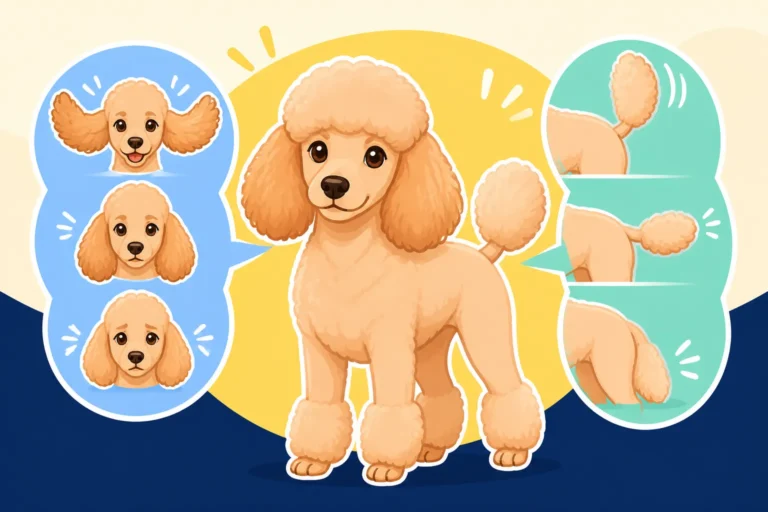
A Poodle suffering from separation distress might also exhibit obsessive behaviors, like trying to escape their crate or finding ways to reach items that smell like you. You might come home to a dog panting heavily, even if the house is cool, or find drool stains on the floor. Pay close attention to these cues, as they are your Poodle's way of telling you they're struggling. Reading Pain in a Sensitive Poodle can offer more insights into interpreting your Poodle's body language when they're in distress.
The Difference Between Boredom and True Anxiety
It's crucial to differentiate between a Poodle who is simply bored and one experiencing genuine separation anxiety. A bored Poodle might chew on a shoe because it's interesting, or bark a few times at a squirrel outside the window. They might be a bit mischievous, but their overall demeanor isn't one of panic. They settle down eventually, perhaps taking a nap until you return.
True separation anxiety, however, involves a deep-seated panic response. The destructive chewing is frantic, not exploratory. The barking or howling is relentless and often accompanied by other signs like panting, drooling, house-soiling, or attempts to escape. The dog typically doesn't settle down at all until the owner's return. They often won't eat special treats or engage with puzzle toys when truly distressed. Understanding this distinction is vital, as the training approaches for boredom versus anxiety are quite different.
Setting Up for Success in Your Poodle's Alone Time
Before you even start practicing departures, it's incredibly important to create an environment and routine that helps your Poodle feel safe and secure. This isn't just about managing symptoms; it's about building a foundation of confidence.
Creating a Safe and Comforting Den
Every Poodle needs a personal sanctuary, a place where they feel safe and can retreat when you're away. For many, this is a crate, but it could also be a dog bed in a quiet corner or a small room baby-gated off. The key is that this space should be positive and inviting, not associated with punishment. Introduce it gradually with treats and toys, making it a happy place. The goal is for your Poodle to willingly choose to go there.
Consider making this den extra comfortable with soft bedding, a blanket that smells like you (worn clothing works wonders), and perhaps a durable chew toy or a puzzle feeder filled with something delicious. Some Poodles benefit from having a covered crate, as it creates a cave-like, secure feeling. It's about minimizing sensory overload and maximizing comfort. Think of it as their "safe room" where they can truly relax, even when you're not physically present. Crate Size for Each Poodle Variety provides guidance on choosing the right dimensions for your Poodle's comfortable retreat.
Establishing a Predictable Departure Routine
Poodles thrive on routine, and a predictable departure routine can actually reduce anxiety because it signals what's coming next. The trick is to make this routine utterly boring and consistent. Don't make a big fuss when you leave. Avoid dramatic goodbyes and lingering farewells, as these only heighten your Poodle's emotional state. Instead, keep your actions calm and matter-of-fact.
Before you leave, ensure your Poodle has had ample exercise and a potty break. Then, about 10-15 minutes before you head out, engage them with a long-lasting puzzle toy or a chew. The idea is to associate your departure with a positive, engaging activity. Your Poodle should be engrossed in their treat as you quietly gather your things and slip out the door. The less attention you draw to your exit, the more 'ordinary' it becomes for them.
Managing Your Own Emotions During Departures
This is often the hardest part for us, the Poodle parents! Our Poodles are incredibly attuned to our emotions. If you feel guilty, stressed, or anxious about leaving them, your Poodle will pick up on that energy and reflect it. They'll internalize your anxiety, confirming their own fears that your departure is indeed something to be worried about. It's a tough cycle to break.
Before you leave, take a few deep breaths. Remind yourself that you're doing what's best for your Poodle by teaching them independence. Project a calm, confident, and even slightly aloof demeanor. When you return, again, keep it low-key initially. Wait a few minutes for them to calm down before offering a calm greeting. This teaches them that your departures and arrivals are not high-stakes emotional events, but rather ordinary transitions.
Gradual Departure Training: Making 'Leaving' Boring
The core of helping your Poodle cope with alone time lies in gradual, systematic desensitization. This means starting with tiny steps, making your absence incredibly short and uneventful, and slowly building up duration. It's often called "micro departures" for a reason.
The Art of Micro Departures
Start by practicing departures that are so brief, your Poodle barely registers you're gone. This might mean simply standing up and sitting back down, or walking to the door, opening it, and immediately closing it. Gradually, you'll work up to stepping outside the door for just a second or two, then coming back in. The key is to return before your Poodle starts to show any signs of anxiety. If they do start to whine or bark, you've gone too far, too fast, and you need to shorten the duration next time.
When you return, there's no fanfare. Just calmly re-enter, ignore your Poodle for a minute or two, and then go about your business. This reinforces that your comings and goings are not a big deal. Repeat these micro departures multiple times a day, sometimes just for a few seconds, sometimes for a slightly longer duration. The goal is to make the act of you leaving and returning a non-event. Many online training programs, like those from BAXTER & Bella, offer structured approaches to these critical early steps.
Increasing Duration and Distance Slowly
Once your Poodle is comfortable with you stepping out for a few seconds, you can slowly, incrementally increase the time you're gone. Add five seconds, then ten, then thirty. It's a painstaking process, but patience is vital. You're aiming for success every single time. If your Poodle shows signs of distress at two minutes, go back to 90 seconds until they are completely calm, then try two minutes again later.
You can also vary the distance you go. Maybe you stand right outside the door, then move to the end of the driveway, then walk around the block. The goal is to expand your Poodle's comfort zone gradually. Always ensure they have a special, high-value chew or puzzle toy when you leave – something they only get when you're gone, making your departure a trigger for something positive. For example, a KONG filled with frozen peanut butter or cream cheese can keep a Poodle happily occupied for a significant period. You can find many such enrichment items easily on Amazon.
Varying Your Departure Cues
As mentioned earlier, Poodles are brilliant at picking up on cues. They learn that the jingle of keys, the grab of your purse, or the sound of the garage door opening means you're leaving. To help them dissociate these cues from panic, start practicing them randomly without actually leaving. Pick up your keys, then put them back down. Put on your shoes, then take them off. Walk to the door, touch the doorknob, and then go sit on the couch.
The idea is to desensitize your Poodle to these "pre-departure" signals so they no longer trigger an immediate anxiety response. By making these cues meaningless in isolation, you reduce the anticipatory stress your Poodle experiences. This random practice, interspersed with actual short departures, helps to break the pattern of anxiety and rebuild a sense of calm around your movements.
Enrichment and Mental Stimulation When Alone
A tired Poodle, both physically and mentally, is a calmer Poodle. Providing engaging activities specifically for their solo time can make a world of difference in reducing anxiety and preventing boredom-related behaviors.
Puzzle Toys and Long-Lasting Chews
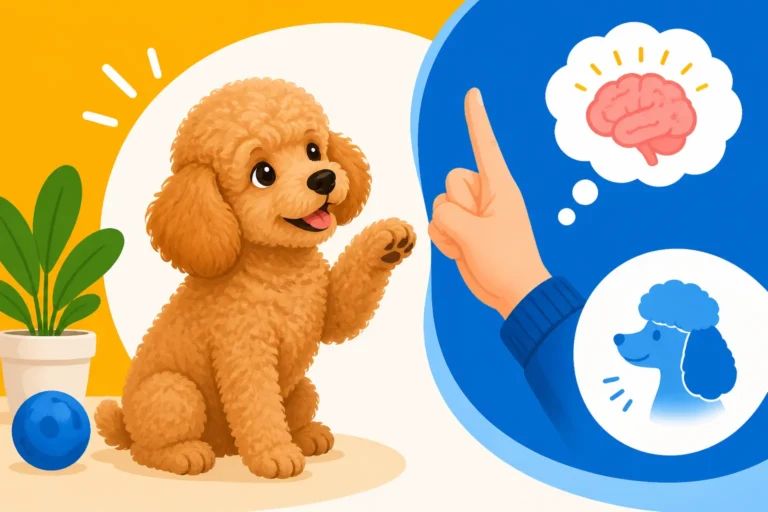
This is where your Poodle's intelligence truly works in your favor. Poodles love to problem-solve, and puzzle toys can keep their clever minds occupied for a significant duration. Look for toys that dispense treats slowly or require manipulation to get to a reward. These aren't just distractions; they provide a "job" for your Poodle while you're away, fulfilling their inherent need for mental engagement.
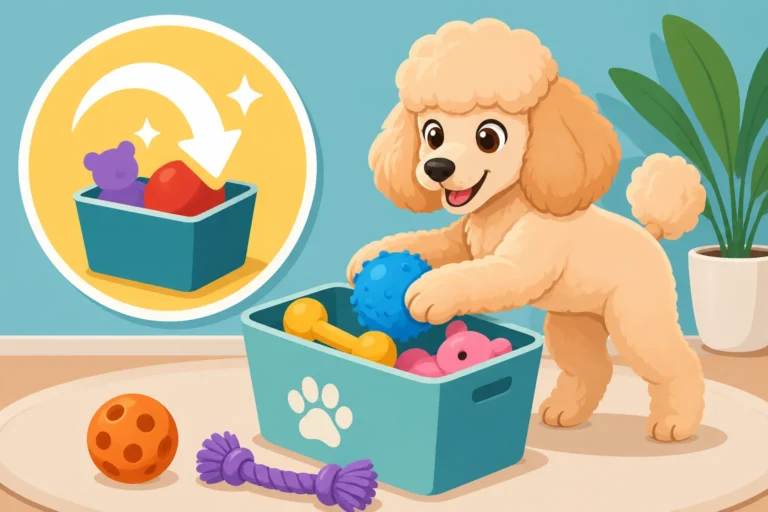
Examples include KONG toys, snuffle mats, treat-dispensing balls, or even specific long-lasting chews. Just make sure whatever you provide is safe for your Poodle to have unsupervised and is appropriate for their size and chewing style. Introducing these toys only when you leave makes them extra special and creates a positive association with your departure. Puzzle Feeders That Make a Poodle Think for Dinner offers a deeper dive into these useful tools.
| Enrichment Type | Description | Best Used For | Considerations |
|---|---|---|---|
| Food-Dispensing Puzzles | Toys that require manipulation to release kibble or treats. | Mental stimulation, slowing down eating, positive association with alone time. | Choose durable, size-appropriate toys; start easy. |
| Long-Lasting Chews | Bully sticks, dental chews, specific hard rubber chews. | Sustained occupation, stress relief, dental health. | Ensure it's safe for unsupervised chewing; monitor intake. |
| Scent Games | Hiding treats for your Poodle to sniff out. | Mental engagement, natural foraging behavior, builds confidence. | Can be done before leaving or set up for discovery. |
| Audio/Visual Stimuli | Dog-specific music, white noise, dog TV channels, webcams. | Calming, masking outdoor sounds, reducing loneliness. | Ensure comfortable volume; monitor reactions via camera. |
| Interactive Feeders | Slow feeder bowls, lick mats spread with wet food. | Prolonging mealtime, calming, reducing anxiety. | Use safe ingredients; clean thoroughly after use. |
Scent Games for Solo Play
Poodles have excellent noses, and engaging their sense of smell can be incredibly tiring and satisfying. Before you leave, you can set up a simple "treasure hunt" for your Poodle. Hide small, high-value treats around their safe space or even throughout a designated room. Your Poodle will spend their alone time sniffing out these treasures, which is mentally stimulating and can help distract them from your absence.
Another idea is to use an old t-shirt or blanket that smells strongly of you and hide it within a puzzle toy. The familiar scent combined with the mental challenge can be comforting and engaging. The beauty of scent work is that it's low impact physically but highly stimulating mentally, meaning your Poodle will likely be calmer and more tired by the time you return.
Audio and Visual Stimulation
Sometimes, silence can amplify a Poodle's anxiety. Leaving a radio on a talk station or playing classical music can provide comforting background noise, masking outside sounds that might trigger barking or alarm. There are even specific "dog calming music" playlists available on streaming services or through products found on Amazon that are designed to soothe canine ears.
Some Poodles also benefit from visual stimulation, such as leaving a TV on a channel with nature scenes or even dedicated "dog TV" programs. Using a pet camera, many of which are available through popular retailers, allows you to monitor their behavior, and some even offer two-way audio so you can speak to your Poodle briefly if needed. Cameras and Puzzle Feeders for a Lonely Poodle delves deeper into these technological aids. This isn't about replacing your presence, but about enriching their environment and reducing feelings of isolation.
Troubleshooting and Advanced Tips for Persistent Poodle Anxiety
Even with the best intentions and consistent training, some Poodles might still struggle. It's important to have additional strategies in your toolkit and know when to call in the cavalry.
Addressing Escalating Behaviors
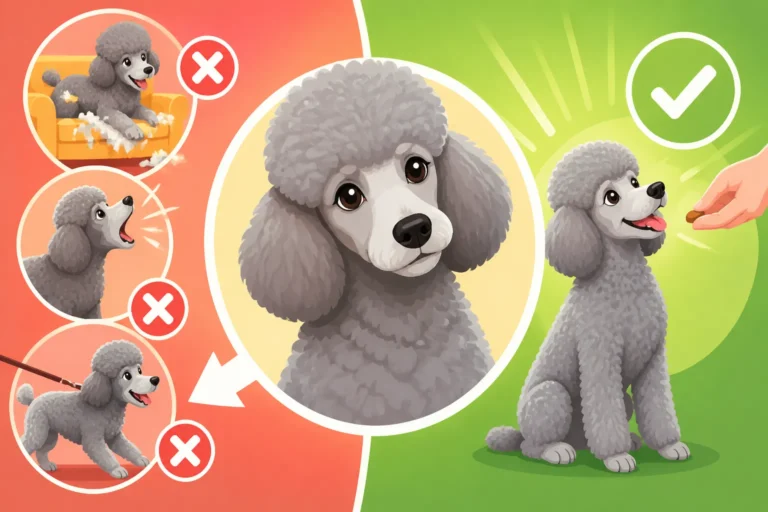
If your Poodle's anxiety escalates, leading to destructive behaviors like scratching at doors, chewing through walls, or self-harm, it's a clear sign that the current strategies aren't enough. What a Panicking Poodle Does to the Door illustrates the severity of these behaviors. This isn't naughtiness; it's panic. At this point, punishment is not only ineffective but can worsen the anxiety. Your Poodle needs help, not discipline.
Consider revisiting your micro-departure training, making your absences even shorter. If you're currently leaving for 5 minutes and they're panicking, go back to 30 seconds. You might need to step back to the very beginning, ensuring absolute success before moving forward. Also, reassess the value of the treats and toys you're leaving. Are they truly high-value enough to keep your Poodle engrossed despite their anxiety? Sometimes a switch to a novel, irresistible treat can make a difference.
Using Technology to Monitor Progress
Investing in a pet camera can be a game-changer for severe separation anxiety. These cameras, often easily purchased online, allow you to observe your Poodle's behavior in real-time when you're gone. This objective data is invaluable. You can see precisely when the anxiety starts, what triggers it, and how long it lasts. This information helps you fine-tune your training. For instance, if you see your Poodle starting to pace at the 7-minute mark, you know your next practice departure should be just under 7 minutes.
Many cameras also offer motion alerts, two-way audio, and even treat dispensers. The ability to give a calming verbal cue or dispense a treat remotely can sometimes interrupt a budding anxiety spiral, though it's important not to rely on this too heavily, as your Poodle needs to learn to cope independently. The monitoring simply gives you the data to make your training more effective. Hours a Poodle Copes With an Empty House further explains how monitoring can help assess a Poodle's coping ability.
The Role of a Second Dog (or not)
It's a common thought: "Maybe my Poodle just needs a friend!" While some Poodles might benefit from the companionship of another dog, it's rarely a magic bullet for true separation anxiety. If your Poodle's anxiety is solely triggered by the absence of their primary human, another dog won't fill that void. In fact, if the new dog isn't well-adjusted to being alone, you could end up with two anxious dogs.
However, if your Poodle primarily suffers from isolation distress (anxiety about being alone, regardless of who is gone), then a calm, confident canine companion might help. This is a subtle but important distinction. Carefully observe your Poodle's behavior when they are separated from you but with other dogs or people. If they are still distressed, another dog won't solve the core problem. Whether a Second Poodle Fixes Loneliness offers more detail on this topic. Always introduce a second dog carefully, focusing on the needs of both animals.
When to Seek Professional Help for Your Poodle
There are times when despite all your efforts, your Poodle's anxiety remains unmanageable. It's not a failure on your part; it simply means your Poodle needs more specialized support.
Recognizing the Limits of DIY Training
You've tried the gradual departures, the puzzle toys, the calming routines, and you've diligently monitored your Poodle, but the destructive behaviors persist, or the vocalizations remain constant. If you're seeing signs of self-harm, severe property destruction, or if your Poodle refuses to eat or engage with anything when you're gone, it's time to acknowledge that you've reached the limits of DIY training. These are indicators of profound distress that require a more intensive, professional approach.
Trying to push through severe anxiety without expert guidance can actually worsen the problem, making your Poodle even more sensitive to your departures. It can also be incredibly draining and frustrating for you, the owner. Knowing when to call in a professional is a sign of responsible pet ownership, not a capitulation.
Consulting a Certified Professional Dog Trainer
For many cases of moderate separation anxiety, a certified professional dog trainer (CPDT-KA or similar certification) who specializes in separation anxiety can be incredibly helpful. These trainers often use positive reinforcement techniques and structured desensitization protocols. They can observe your Poodle's behavior (often via remote video sessions, which is perfect for this issue) and tailor a plan specifically to your Poodle's individual needs.
A good trainer will work with you to implement a gradual training plan, adjust it based on your Poodle's progress, and provide the much-needed emotional support and guidance. They can also help you identify subtle triggers you might be missing and refine your techniques. Look for trainers who use force-free, fear-free methods, especially with a sensitive breed like the Poodle. Finding a Trainer a Poodle Will Not Shut Down For provides advice on how to select the right professional. Many online training platforms, such as BAXTER & Bella, also offer personalized coaching services for more complex behavioral issues.
Exploring Veterinary Behavioral Consultations
For severe cases of separation anxiety, particularly those involving panic attacks, self-harm, or intense destruction, a veterinary behaviorist (DACVB) is the best course of action. These are veterinarians who have specialized training in animal behavior and can prescribe medication to help manage your Poodle's anxiety. Just as humans with severe anxiety sometimes benefit from medication, so too can dogs.
Medication isn't a "cure-all" but a tool that can lower your Poodle's anxiety levels enough for them to be receptive to behavioral modification training. It allows them to learn and practice coping mechanisms without being overwhelmed by panic. A veterinary behaviorist can create a comprehensive plan that combines medication with a tailored training protocol, offering your Poodle the best chance at a calmer, happier life when you need to step out the door. It's about providing holistic support for your sensitive companion.
Disclaimer
This article is for general informational purposes only and does not constitute professional advice. Laws, prices and regulations vary by location and change over time. Consult a qualified professional for guidance on your specific situation.