Vegetables Safe for a Poodle
It's wonderful that you're thinking about adding more variety and nutrients to your Poodle's diet! So many of us want to treat our furry companions to fresh, healthy foods, but the sheer volume of information out there about what's safe and what isn't can feel completely overwhelming. You want to do right by your Poodle, but you're probably worried about accidentally feeding them something that could cause an upset tummy or, worse, a trip to the emergency vet. Don't worry, you're not alone in this concern. This guide is here to cut through the confusion and give you clear, actionable advice on which vegetables are safe for your Poodle, how to prepare them, and which ones to steer clear of entirely.
Why Add Vegetables to Your Poodle's Diet?
When we think about our Poodles' diets, kibble often comes to mind first. And while a high-quality commercial dog food provides a balanced meal, adding certain fresh vegetables can offer a fantastic boost, not just nutritionally, but also for their overall well-being. It's like adding vibrant, wholesome side dishes to our own meals – they complement the main course perfectly.
Nutritional Benefits Beyond Kibble
Even the best dog foods can benefit from the inclusion of fresh, whole foods. Vegetables are little powerhouses of vitamins, minerals, and antioxidants that can support everything from immune function to healthy skin and a shiny coat. Take something as simple as a carrot; it's packed with Vitamin A, which is crucial for vision and immune health. Green beans offer Vitamin C and K, and a good dose of manganese. These micronutrients work synergistically, meaning they often work better together than in isolated supplements, helping your Poodle thrive.
Beyond the vitamins and minerals, vegetables are also an excellent source of dietary fiber. Fiber is vital for maintaining a healthy digestive system, promoting regular bowel movements, and can even help to regulate blood sugar levels. A Poodle with a well-functioning gut is a happier Poodle, often exhibiting better energy levels and a more robust immune response. It’s a simple addition that can make a big difference in their daily comfort.
Another often-overlooked benefit is the high water content found in many vegetables. If your Poodle isn't the best at drinking enough water throughout the day, incorporating hydrating veggies like cucumbers or celery can contribute to their overall fluid intake. This can be especially helpful during warmer months or for Poodles who are particularly active. So, while you're focused on the crunch and the flavor, your Poodle is also getting a little extra hydration with every bite.
Managing Weight and Promoting Satiety
Let's face it, Poodles, regardless of size, can sometimes be a bit too fond of their food. And like us, if they consume too many calories, those extra pounds can creep on. Obesity in Poodles is a real concern and can lead to a host of health issues, including joint problems, heart disease, and diabetes. This is where vegetables become an invaluable tool in your arsenal. You might want to read our guide on Poodle Obesity and Its Consequences for more information.
Many safe vegetables are naturally low in calories but high in volume and fiber. This means you can offer your Poodle a satisfying treat that fills them up without adding a significant caloric load. Imagine your Standard Poodle looking longingly at you after dinner; instead of another biscuit, a handful of steamed green beans can be just as satisfying. They feel full, you feel good about giving them something healthy, and their waistline thanks you.
For Poodles who are always hungry, or for those on a weight management plan, vegetables can be a fantastic substitute for traditional, higher-calorie dog treats. Instead of reaching for processed goodies that can pack on the pounds, a crisp carrot stick or a few pieces of cooked sweet potato can be a much better option. This simple swap can help manage their hunger between meals and contribute to a healthier weight, which is essential for a long and active life. You'll find more ideas for smart snacking in our post Low Calorie Treats for a Poodle.
Dental Health and Enrichment
Poodles are notorious for their dental health challenges, especially the smaller varieties. Anything we can do to support their oral hygiene is a win. Crunchy vegetables, like raw carrots or even crisp slices of cucumber, can act as a natural toothbrush, helping to scrape away plaque and tartar buildup on their teeth. While they're no substitute for regular brushing or professional dental cleanings, they certainly contribute to better oral health with every chew.
Beyond the physical benefits, offering a variety of vegetables provides wonderful mental enrichment. Poodles are incredibly intelligent and curious dogs, and they thrive on novelty and stimulation. Different textures, tastes, and smells from various vegetables can engage their senses in a way that kibble alone often doesn't. Giving them a new vegetable to investigate, crunch, and enjoy can be a fun activity in itself, preventing boredom and promoting a more fulfilled life.
This enrichment isn't just about taste; it's also about the act of eating. Watching your Poodle happily chomp on a piece of broccoli or meticulously pick at a bit of pumpkin puree adds a layer of joy to their day. It breaks up the monotony of their usual meals and treats, making snack time an exciting, engaging experience. It’s a small way to add a lot of happiness.
Top Safe Vegetables for Poodles
When you're ready to introduce vegetables into your Poodle's diet, it's helpful to know which ones are generally considered the safest and most beneficial. We're looking for nutrient-dense options that are easy to digest and offer a good bang for your buck, nutritionally speaking.
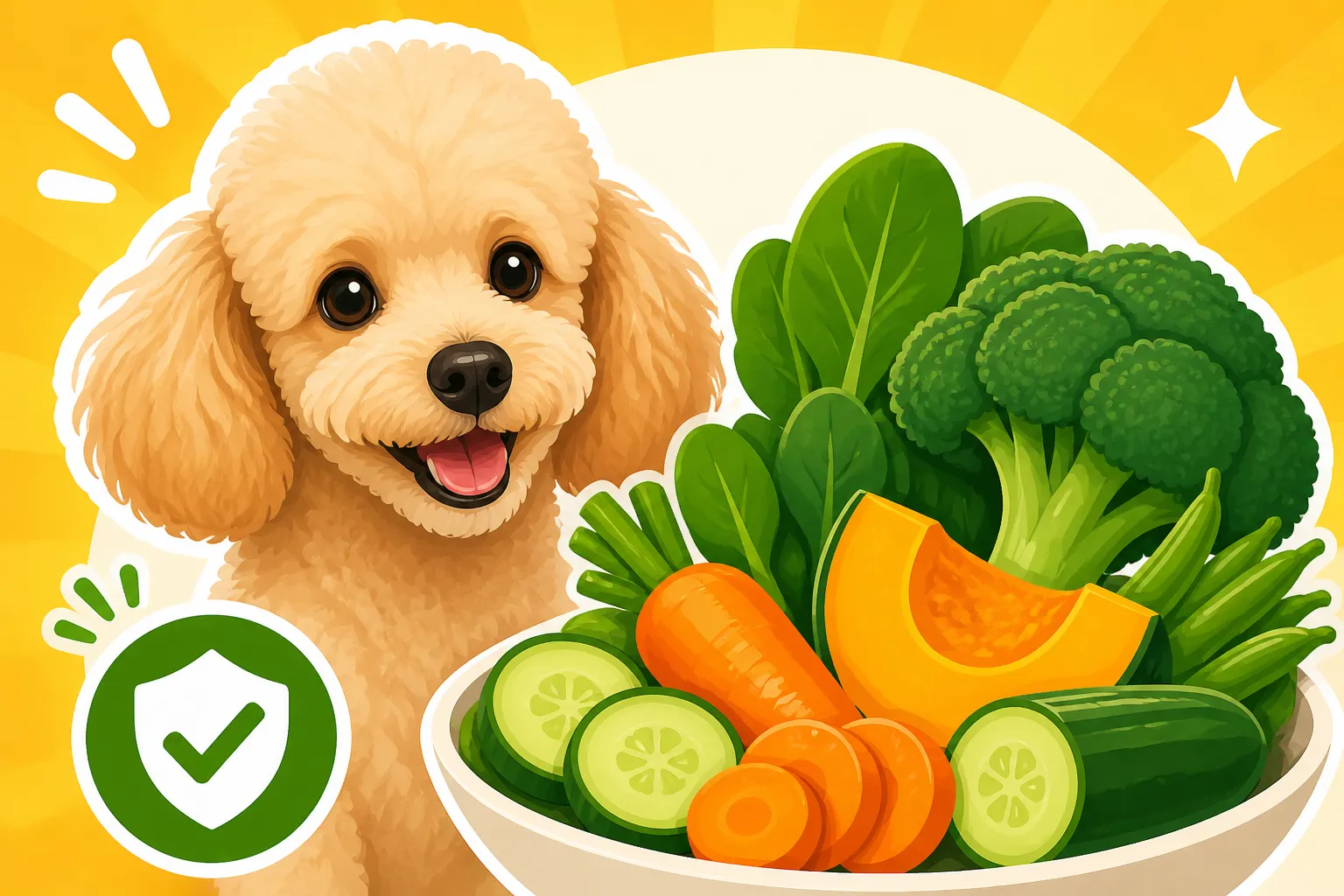
Green Veggies: Broccoli, Green Beans, Spinach
Green vegetables are often hailed as superfoods for humans, and many of them offer similar benefits for our Poodles. Just remember that moderation is key, especially when first introducing them.
Broccoli is a popular choice, packed with vitamins C and K, fiber, and antioxidants. Your Poodle can enjoy both the florets and the stalks, but they should always be cooked – steaming or boiling until tender is best. Raw broccoli can be difficult for dogs to digest and might lead to gas or an upset stomach. When serving, make sure to chop it into small, bite-sized pieces to prevent choking, especially for Toy Poodles. While beneficial, it's best to offer broccoli in small quantities, as excessive amounts can sometimes cause digestive upset in some sensitive Poodles due to its sulfur compounds.
Green beans are another excellent choice and often a Poodle favorite! They are wonderfully low in calories, high in fiber, and contain vitamins A, C, and K. You can offer them fresh, steamed, or boiled, but always make sure they are plain – no salt, butter, or seasonings. Many Poodle parents find frozen green beans to be a convenient and crunchy treat, especially in warmer weather. Just ensure they are defrosted slightly or offered directly from the freezer if your Poodle enjoys them that way, as a very hard, frozen bean could be a choking hazard for smaller mouths. They're a fantastic snack for Poodles on a diet or those who just love a good crunch.
Spinach is a nutrient-dense leafy green, rich in iron, vitamins A, C, and K, and antioxidants. It's generally safe for Poodles in moderation. However, spinach contains oxalic acid, which can interfere with calcium absorption and, in very large quantities over time, could contribute to kidney issues, especially in dogs prone to such problems. For this reason, it's best to offer spinach cooked and in smaller amounts, perhaps mixed into their regular food a couple of times a week, rather than as a daily staple or primary snack. Think of it as a nutritional garnish rather than a main event.
Root Vegetables: Carrots, Sweet Potatoes
Root vegetables are often naturally sweet and appealing to Poodles, offering different textures and a good dose of carbohydrates for energy.
Carrots are probably one of the most widely recommended vegetables for dogs, and for good reason! They are an excellent source of beta-carotene, which is converted into Vitamin A in the body, supporting healthy vision and skin. Their crunchy texture makes raw carrot sticks a fantastic dental aid, helping to clean teeth and satisfy your Poodle's urge to chew. For puppies or Poodles with dental issues, cooked carrots (steamed or boiled) are easier to manage. Always chop carrots into appropriate sizes to prevent choking, especially the smaller varieties like Toy Poodles, who might struggle with a whole, raw carrot stick.
Sweet potatoes are another incredibly popular and beneficial root vegetable. They are packed with dietary fiber, beta-carotene (Vitamin A), Vitamin C, and manganese. Sweet potatoes are excellent for digestive health and can be very soothing for an upset stomach. They must be cooked and served plain – absolutely no spices, butter, or sugar. Baking, boiling, or steaming them until soft, then mashing or dicing them, makes them easy for your Poodle to enjoy. Never offer raw sweet potato, as it can be very hard to digest. They make a fantastic, wholesome addition to a Poodle's meal or a delightful, nutritious treat.
It’s crucial to remember that while both carrots and sweet potatoes are healthy, they also contain natural sugars and carbohydrates. This means they should still be given in moderation as part of a balanced diet, particularly for Poodles who are watching their weight or have conditions like diabetes. Always introduce them slowly and in small amounts to see how your Poodle's digestive system reacts.
Other Favorites: Pumpkin, Cucumbers, Bell Peppers
Beyond the greens and root vegetables, there are several other fantastic options that many Poodles absolutely adore and that offer great health benefits.
Pumpkin is a true lifesaver for many Poodle owners, especially when digestive issues strike. Plain, cooked pumpkin puree (not pie filling, which contains spices and sugar!) is an excellent source of fiber and can help with both diarrhea and constipation. It's incredibly soothing for an upset stomach and can often firm up loose stools or provide gentle relief for a constipated Poodle. You can buy canned pumpkin puree on Chewy or Amazon, just be sure to double-check the label to ensure it's 100% plain pumpkin. A spoonful mixed into their regular food or given as a standalone treat can work wonders. Many Poodles also enjoy small pieces of cooked fresh pumpkin.
Cucumbers are a fantastic low-calorie, hydrating snack, especially for Poodles who need to watch their weight. They're over 90% water and contain vitamins K, C, and B1, as well as potassium and copper. Sliced or diced, they offer a refreshing crunch that most Poodles find irresistible. Always wash them thoroughly and remove any seeds if you prefer, although the seeds themselves aren't harmful. Cucumbers are perfect for a hot day or as a guilt-free treat that helps keep your Poodle hydrated and happy without adding extra pounds.
Bell peppers (capsicums) are another colorful and healthy addition. All colors – red, yellow, orange, and even green – are safe for Poodles. They are packed with Vitamin C, antioxidants, and a good amount of Vitamin A. Red bell peppers tend to be the sweetest and most nutrient-dense. Always remove the core and seeds, and wash the pepper thoroughly. You can offer them raw, cut into small, bite-sized pieces, or lightly steamed. Some Poodles might find raw bell peppers a bit harder to digest, so cooked might be better for sensitive stomachs. Introduce them slowly, as with any new food, to gauge your Poodle's reaction.
How to Prepare and Serve Vegetables Safely
Giving your Poodle vegetables isn't just about choosing the right ones; it's also about preparing and serving them in a way that is safe, palatable, and maximizes their nutritional benefits without causing harm.
Preparation: Washing, Chopping, and Cooking
The first and most crucial step for any fresh produce, whether for you or your Poodle, is thorough washing. Always wash vegetables under cool, running water to remove dirt, pesticides, and any potential bacteria. Even if you plan to peel them, a quick wash first is a good habit.
Next, consider how you're going to present the vegetable. Chopping is essential. Large chunks, especially of harder vegetables like raw carrots or broccoli stalks, can pose a serious choking hazard, particularly for smaller Poodles. Think about the size of your Poodle's mouth and jaw; aim for pieces that are easy for them to chew and swallow without difficulty. For a Toy Poodle, tiny dice or thin slices are best. For a Standard Poodle, slightly larger chunks are fine, but still avoid anything that could be gulped whole. Our guides on Feeding a Toy Poodle Puppy and Feeding a Standard Poodle Puppy have good general advice on portion sizing.
Most vegetables can be offered raw if they are soft enough and chopped appropriately (like cucumber or celery), but many are best cooked for easier digestion. Steaming, boiling, or baking are ideal methods. The key is to serve them plain: absolutely no added oils, butter, salt, garlic powder, onion powder, or any other seasonings. These additions, while tasty for us, can be harmful or even toxic to your Poodle. For instance, too much salt can lead to sodium ion poisoning, and many spices can cause severe gastrointestinal upset.
If your Poodle has dental issues or is a very small puppy, you might even consider pureeing cooked vegetables. A good quality food processor, easily found on Amazon, can help you create smooth purees that are easy to lap up and digest. This is also a great way to mix vegetables into their regular kibble if they are a bit picky about eating plain veggies.
Introducing New Vegetables Gradually
Just like introducing any new food to your Poodle, a slow and gradual approach is best when it comes to vegetables. Their digestive systems need time to adjust to new ingredients, especially those with different fiber content.
Start by offering a very small amount – perhaps just a teaspoon for a Toy Poodle or a tablespoon for a Standard Poodle – of a single new vegetable. Mix it into their regular food or offer it as a small treat. Then, observe your Poodle for the next 24-48 hours. Look for any signs of digestive upset, such as excessive gas, bloating, loose stools, diarrhea, vomiting, or a decrease in appetite. Some Poodles might be more sensitive than others, and what's fine for one might cause a reaction in another.
If your Poodle tolerates the new vegetable well, you can gradually increase the amount over several days or weeks. However, don't rush into introducing multiple new vegetables at once. If your Poodle has a reaction, you won't know which new food was the culprit. Patience is key here. By introducing one new item at a time, you can confidently identify what works well for your individual Poodle and what doesn't.
Portion Control and Moderation
Even the healthiest vegetables should be given in moderation. They are meant to be a supplemental treat or a healthy addition to a balanced diet, not the main component of a meal. A good rule of thumb is that treats, including vegetables, should make up no more than 10% of your Poodle's daily caloric intake. This ensures they are still getting the majority of their nutrition from their complete and balanced dog food. For more about this, check out Weighing a Poodle's Meals.
The appropriate portion size will depend on your Poodle's size, age, activity level, and overall caloric needs. A tiny Toy Poodle will need significantly less than a large Standard Poodle. For instance, a few small pieces of carrot might be perfect for a Toy Poodle, while a Standard Poodle could enjoy a larger handful. Our articles Feeding a Poodle by Size and Calorie Needs of a Senior Poodle can offer guidance on general feeding requirements.
Remember, even healthy foods can cause problems if given in excess. Too much fiber can lead to digestive upset, and even too many good vitamins can sometimes throw off their nutritional balance. Think of vegetables as a healthy bonus, a way to add variety and a nutritional boost, but always within reason. If you're ever unsure about specific portion sizes for your Poodle, a quick chat with your veterinarian can provide tailored advice.
Vegetables to Avoid and Why
While many vegetables are fantastic additions to your Poodle's diet, there are some that are outright dangerous and others that require extreme caution. Knowing the difference is paramount for your Poodle's safety.
The Absolute No-Gos: Onions, Garlic, and More
This category includes vegetables that are genuinely toxic to dogs and should never be fed to your Poodle, in any form. Even small amounts can cause serious health problems.
The most critical group to avoid are all members of the Allium family: onions, garlic, chives, and leeks. These vegetables contain compounds called thiosulphates, which can cause oxidative damage to your Poodle's red blood cells, leading to hemolytic anemia. Symptoms can range from lethargy, weakness, and vomiting to pale gums, increased heart rate, and even collapse. The toxicity is cumulative, meaning repeated small exposures can be just as dangerous as a single large dose. It's why you must be vigilant about any hidden onion or garlic powder in human foods you might be tempted to share.
Another absolute no-go is wild mushrooms. While some cultivated mushrooms sold in grocery stores (like button mushrooms) are generally considered safe, it is nearly impossible for the average person to distinguish between safe and highly toxic wild mushrooms. Many wild varieties can cause severe liver damage, neurological problems, or even death. Unless you are 100% certain it's a safe, store-bought mushroom, it's best to avoid them entirely to eliminate any risk.
Lastly, rhubarb is another vegetable to keep off your Poodle's plate. The leaves and stems of rhubarb contain oxalic acid, which can be toxic to dogs. Ingesting rhubarb can lead to kidney issues, tremors, excessive drooling, and changes in thirst or urination. It's best to ensure your Poodle doesn't have access to rhubarb plants in your garden either.
Proceed with Caution: Corn and Potatoes
Some vegetables aren't inherently toxic, but they come with caveats or offer very little nutritional benefit, making them less ideal choices for your Poodle.
Corn, while not toxic, is often a controversial ingredient in dog diets. Corn kernels themselves are generally safe for Poodles to eat, provided they are cooked and removed from the cob. The cob itself, however, is a serious choking hazard and can cause dangerous intestinal blockages. From a nutritional standpoint, corn is often used as a filler in dog foods and isn't particularly easy for many dogs to digest. It offers minimal nutritional benefits compared to other vegetables on our safe list. If you choose to offer corn, ensure it's cooked, plain kernels, and in very small amounts.
Potatoes, specifically raw potatoes, are another "proceed with caution" item. Raw potatoes, especially those with green spots or sprouts, contain solanine, a toxic compound that can cause digestive upset, neurological issues, and heart problems. However, cooked and plain potatoes (without any butter, salt, or seasonings) are generally safe for Poodles in moderation. Sweet potatoes are a much better and more nutrient-dense choice, but if you do offer regular potatoes, ensure they are thoroughly cooked, mashed, or diced, and free of any skin, eyes, or green parts.
These "caution" vegetables aren't outright poisons, but they either present a physical danger (corn cob), contain mild toxins in their raw form (potatoes), or offer such minimal nutritional value that other options are far superior. It's about making the most informed and safest choices for your Poodle.
Understanding Toxicity and Digestive Upset
It's important to understand the difference between something that is genuinely toxic to your Poodle and something that might simply cause a mild digestive upset. Toxicity means the substance contains compounds that are harmful to the body's systems, potentially leading to organ damage, illness, or even death. Digestive upset, on the other hand, usually refers to symptoms like gas, bloating, mild diarrhea, or vomiting that resolve on their own once the offending food is out of the system.
For truly toxic vegetables like onions or garlic, even a small amount warrants immediate veterinary attention. Don't wait to see if symptoms develop. Contact your veterinarian or an emergency animal hospital right away. The sooner intervention can happen, the better the outcome. Our article What a Vet Checks on a Toy Poodle Puppy outlines common vet examinations, but for suspected poisoning, it will be a specific battery of tests.
For vegetables that might cause digestive upset, if you've introduced them gradually and in small amounts, and your Poodle still reacts negatively, it's simply best to avoid that particular food in the future. Every Poodle is an individual, and what sits well with one might not with another. When in doubt, always err on the side of caution. If you're unsure about a certain vegetable, or if your Poodle seems unwell after eating something new, it's always safest to consult with your veterinarian. You can also look for pre-made, vet-approved vegetable blends or high-quality fresh dog food options from companies like Ollie that explicitly list safe, human-grade vegetables in their recipes, taking all the guesswork out of the equation.
Here’s a quick overview of common vegetables and their suitability for Poodles:
| Vegetable | Safe for Poodles? | Preparation Notes | Benefits/Cautions |
|---|---|---|---|
| Carrots | Yes | Raw (chopped), cooked | Vitamin A, good for dental health. Choke hazard if too large. |
| Green Beans | Yes | Fresh, steamed, boiled (plain) | Low calorie, fiber, vitamins. Excellent treat. |
| Broccoli | Yes (small amounts) | Steamed florets/stalks, chopped | Vitamins, fiber. Can cause gas if given in excess. |
| Sweet Potato | Yes | Cooked (baked, boiled, steamed), plain | Fiber, Vitamin A. Great for digestion. |
| Pumpkin | Yes | Cooked, plain puree (not pie filling) | High fiber, good for digestive upset. |
| Cucumber | Yes | Fresh, sliced or diced | Very hydrating, low calorie. |
| Bell Pepper | Yes (small amounts) | Fresh, remove seeds/core, all colors | Vitamin C, antioxidants. Can cause mild stomach upset. |
| Spinach | Yes (moderation) | Cooked, small amounts | Iron, vitamins. Oxalic acid (limit large quantities). |
| Peas | Yes | Cooked, fresh or frozen | Vitamins, minerals, fiber. |
| Celery | Yes | Fresh, chopped bite-sized | Hydrating, crunchy, low calorie. |
| Zucchini | Yes | Raw or cooked, sliced or diced | Low calorie, hydrating. |
| Brussels Sprouts | Yes (small amounts) | Cooked, chopped | Vitamins, fiber. Can cause gas. |
| — | — | — | — |
| Vegetables to AVOID | |||
| Onions | No | All forms (raw, cooked, powdered) | TOXIC, causes red blood cell damage. |
| Garlic | No | All forms | TOXIC, causes red blood cell damage. |
| Leeks | No | All forms | TOXIC, causes red blood cell damage. |
| Chives | No | All forms | TOXIC, causes red blood cell damage. |
| Rhubarb | No | All parts | TOXIC, causes kidney issues. |
| Wild Mushrooms | No | All forms | HIGHLY TOXIC, difficult to identify safe ones. |
| Raw Potatoes | No | (Cooked are OK, but avoid raw, green parts, sprouts) | Solanine is toxic. |
| Corn on the Cob | No | (Kernels are usually OK, but avoid cob at all costs) | Choking hazard, intestinal blockage. |
Disclaimer
This article is for general informational purposes only and does not constitute professional advice. Laws, prices and regulations vary by location and change over time. Consult a qualified professional for guidance on your specific situation.