Weighing a Poodle’s Meals
It’s a common scenario for Poodle owners: you scoop kibble into a bowl, eyeballing the measurement, perhaps relying on the lines on a measuring cup. You figure it's "close enough." But when it comes to your Poodle's health and maintaining their ideal weight, "close enough" can lead to a host of problems over their lifespan. This guide will walk you through why precise meal weighing is crucial for your Poodle, how to implement it effectively, and how to ensure your beloved companion is getting exactly what they need to thrive.
Why Weighing Your Poodle's Meals Matters More Than You Think
Many of us grew up simply pouring food into a bowl or using a standard kitchen scoop. It seemed fine, right? For a Poodle, with their unique metabolism and predisposition to certain health issues, this casual approach can unknowingly set them on a path toward unnecessary weight gain. A few extra kibbles here and there, added up over weeks and months, can really make a difference.
The Inaccuracy of Measuring Cups
First, let's talk about the measuring cup. It seems like a reliable tool – it has lines for cups, half-cups, quarter-cups. But here’s the rub: kibble isn't a liquid, and it doesn't always settle uniformly. One scoop can be packed tight, while another might be loose and airy, leading to significant variations in the actual amount of food your Poodle is getting. Think about how you scoop flour for baking; if you just dump it in, you'll have a different weight than if you spoon it in and level it. The same principle applies to kibble. These discrepancies, even if they seem minor day-to-day, accumulate. Over time, these small overages can turn into an extra pound or two, which for a Toy Poodle could be a substantial percentage of their body weight, akin to a human gaining twenty or thirty pounds. For a Standard Poodle, it might lead to a slower, more insidious creep of weight gain that you only notice when their energy levels dip or their harness starts feeling a bit snug.
Guarding Against Poodle Obesity
Poodles, like many purebred dogs, can be prone to weight gain, especially as they age or if their exercise routine isn't perfectly matched to their caloric intake. Poodle Obesity and Its Consequences are far-reaching, affecting joints, exacerbating conditions like Poodle Hip Dysplasia by Size, increasing the risk of diabetes, and generally shortening their lifespan. When you weigh your Poodle's food, you are taking a proactive step in preventing these issues. It's not about being restrictive or depriving your Poodle; it's about being accurate and responsible. Every calorie counts, and understanding the precise caloric content of their food, combined with accurate weighing, empowers you to manage their health much more effectively. This precision becomes even more critical when you consider how subtle changes in a Poodle's body condition can be hidden under their dense, curly coat, making visual assessment difficult.
The Tools and Techniques for Accurate Meal Weighing
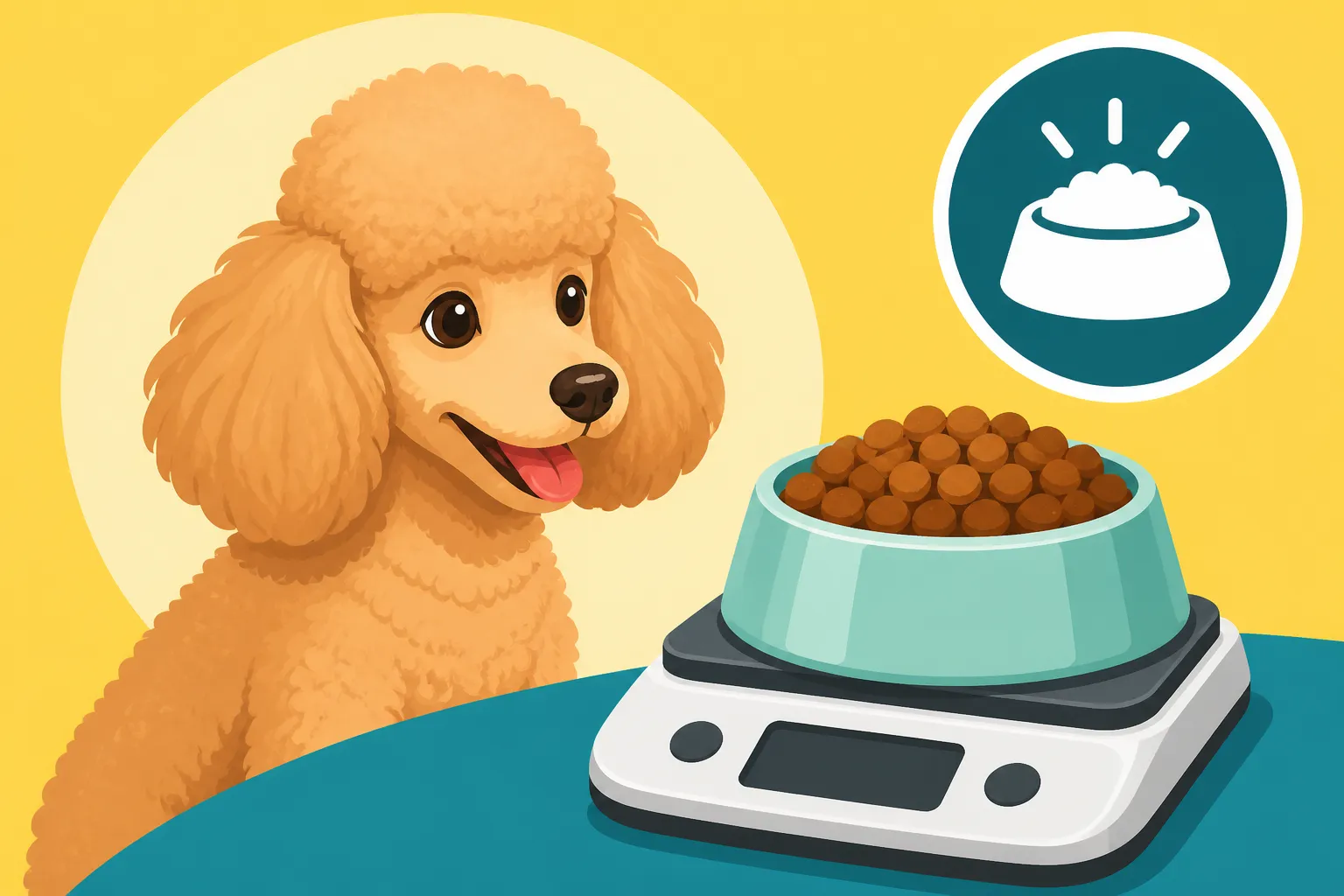
Now that we understand why it's important, let's get into the how. You don't need fancy, expensive equipment, but a reliable kitchen scale is non-negotiable for anyone serious about their Poodle's nutritional health. This small investment will pay dividends in their well-being.
Choosing the Right Kitchen Scale
For weighing kibble, a digital kitchen scale is your best friend. Look for one that measures in grams, as this provides the most precise readings for dog food. Most kibble bags provide feeding guidelines in ounces or grams, and grams offer finer increments, making it easier to hit the exact recommended portion. You can find a wide variety of suitable scales on sites like Amazon, ranging from basic models to more advanced ones with tare functions. A tare function allows you to place your Poodle's bowl on the scale, zero it out, and then add the food, making the process incredibly simple and mess-free. Ensure the scale has a decent weight capacity, especially if you have a Standard Poodle and feed larger portions, though most kitchen scales will easily handle a few cups of kibble. Durability is also a factor; you want something that will withstand daily use.
A Step-by-Step Guide to Weighing Meals
Once you have your scale, the process is straightforward:
- Read the Label: Check your Poodle's food bag for the feeding guidelines, specifically looking for the "grams per cup" or "calories per cup" information, or even better, direct gram recommendations based on weight. This is often in a table format that correlates your Poodle's weight with a suggested daily gram amount. If your bag only gives cup measurements, you'll need to do a one-time conversion (more on this below).
- Place the Bowl: Put your Poodle's empty food bowl on the digital scale.
- Tare the Scale: Press the "tare" or "zero" button. This resets the display to zero, so only the weight of the food will be measured.
- Add the Kibble: Slowly pour or scoop the kibble into the bowl until the scale displays the exact gram amount recommended for your Poodle's daily intake. If you're feeding twice a day, divide the total daily amount by two for each meal.
- Record (Optional but Recommended): Especially in the beginning, jotting down the exact amount can help you stay consistent and track any changes. This is particularly useful if your vet suggests adjusting portions.
By following these simple steps, you remove all guesswork from your Poodle's feeding routine. This isn't just about weight loss; it's about maintaining a healthy weight throughout their life, regardless of their size. Whether you're Feeding a Toy Poodle Puppy or trying to manage the weight of an older Caring for an Aging Poodle, precision is key.
Translating Kibble Labels into Precise Portions
Food labels can sometimes feel like trying to decipher an ancient code, especially when you're looking for precise feeding guidelines. They often provide ranges, or only list cup measurements, which we've already established can be wildly inaccurate. The goal here is to get past the ambiguity and pinpoint the exact gram amount your Poodle needs.
Deciphering the Feeding Chart
Most quality dog food brands, like those found on Chewy, will have a feeding chart on their packaging. This chart typically provides a range of recommended daily food amounts based on your dog's current weight. For example, it might say "For a 10-20 lb dog, feed 1 to 1.5 cups per day." The problem with this is that a 10 lb Poodle has very different caloric needs than a 20 lb Poodle, and the range of 1 to 1.5 cups is huge. This is where the conversion to grams and a more specific recommendation comes in. Look for the calorie content per cup or, ideally, per gram. If a brand offers different formulas, like a puppy formula versus an adult formula, know that the caloric density will vary significantly. The Age a Poodle Changes to Adult Food is an important transition point where these calculations will need to be re-evaluated.
Converting Cups to Grams
If your dog food only lists cup measurements without a gram equivalent, you'll need to do a one-time calibration. This is crucial because different kibble shapes, sizes, and densities mean that one "cup" of Brand A might weigh significantly more or less than one "cup" of Brand B.
Here’s how to do it:
- Get a Standard Measuring Cup: Use a dedicated, actual pet food measuring cup (often provided by the brand or available from pet stores) or a standard kitchen measuring cup.
- Scoop Accurately: Fill the measuring cup with your Poodle’s kibble, leveling it off without packing it down. Try to be as consistent as possible, as if you were following the "cup" measurement in your daily routine.
- Weigh the Scoop: Place the filled measuring cup on your digital kitchen scale (after taring it, of course). Note the weight in grams.
- Calculate: Now you know how many grams are in your "cup" of that specific kibble. For example, if your bag recommends 1 cup per day, and your measured cup weighs 110 grams, then 110 grams is your target daily amount. If it recommends 1.5 cups, you'd calculate 1.5 x 110 = 165 grams.
- Re-evaluate: If your Poodle is getting a fresh food diet like Ollie, they often provide pre-portioned meals or very clear gram recommendations, making your job much easier. Still, verifying with a scale ensures accuracy.
This one-time conversion provides you with the precise gram weight that corresponds to the manufacturer's volume-based recommendation. From then on, you can ignore the imprecise cup measurement and simply weigh out the appropriate gram amount for your Poodle. This approach is superior because it accounts for the actual density and composition of the specific food you are feeding, rather than relying on a generic volume measure. This level of Portion Control for a Poodle is fundamental to their long-term health.
| Measurement Type | Consistency | Accuracy | Ease of Use (Daily) | Best For |
|---|---|---|---|---|
| Standard Cup | Variable | Low | High | General estimation (not ideal) |
| Digital Scale (grams) | High | High | High | Precise caloric intake, weight management |
| Manual Scoop | Variable | Low | High | Quick feeding (risky for health) |
Beyond the Bowl: Balancing Treats and Training into Your Poodle's Diet
It's easy to get caught up in weighing the main meals and forget about all those little extras that find their way into your Poodle's day. Treats, dental chews, and training rewards are often significant sources of calories, and if not accounted for, can quickly derail your efforts to maintain an ideal weight.
Factoring in Treats and Chews
Those adorable puppy-dog eyes are hard to resist, aren't they? But every treat adds up. It's crucial to consider treats as part of your Poodle's overall daily caloric intake, not just an addition. Many treats have calorie information on their packaging. Look for this, and try to calculate how many calories the treats contribute. For instance, if your Poodle gets 10 small training treats throughout the day, and each is 5 calories, that's 50 extra calories. For a tiny Toy Poodle, 50 calories could be a substantial percentage of their total daily needs.
A good rule of thumb is that treats should make up no more than 10% of your Poodle’s total daily caloric intake. If you're unsure about the calorie content of a specific treat or chew, many pet supply websites, including Chewy, list nutritional information for their products. Opt for Low Calorie Treats for a Poodle when possible, such as small pieces of steamed carrot or green beans, which offer crunch and enjoyment without a huge caloric punch. Even better, consider making your Poodle "work" for their main meal by using a portion of their kibble as training rewards. This way, you're not adding extra calories, just redirecting them.
Training Rewards and Their Impact
Poodles are incredibly intelligent dogs and thrive on training and mental stimulation. Training the Second Smartest Dog Breed often involves a lot of positive reinforcement, and for many Poodles, that means food rewards. While using food in training is excellent, it's vital to integrate these calories into their daily meal plan. Training Treats and a Poodle's Daily Calories should be carefully managed. Instead of adding extra treats, consider using a portion of your Poodle’s daily kibble ration for training sessions. This means you're not overfeeding, but you're still providing that valuable motivation.
For intense training sessions, especially with a highly food-motivated Poodle, divide their weighed daily meal into smaller portions and use these throughout the day. If you absolutely need to use higher-value treats, make them tiny – pea-sized or even smaller. Think about the size of a blueberry for a Standard Poodle, or a single grain of rice for a Toy Poodle. The goal is the reward, not the volume of food. By being mindful of every morsel, whether it comes from the food bowl or your hand during a training exercise, you ensure your Poodle maintains their ideal body condition, helping them stay active, happy, and healthy for years to come. Remember to regularly assess your Poodle's body condition by feeling for their ribs; you should be able to feel them easily but not see them protruding. This will help you know if your precise weighing is hitting the mark for What a Poodle Should Weigh by Variety.
Disclaimer
This article is for general informational purposes only and does not constitute professional advice. Laws, prices and regulations vary by location and change over time. Consult a qualified professional for guidance on your specific situation.