Whether the Poodle Is German or French
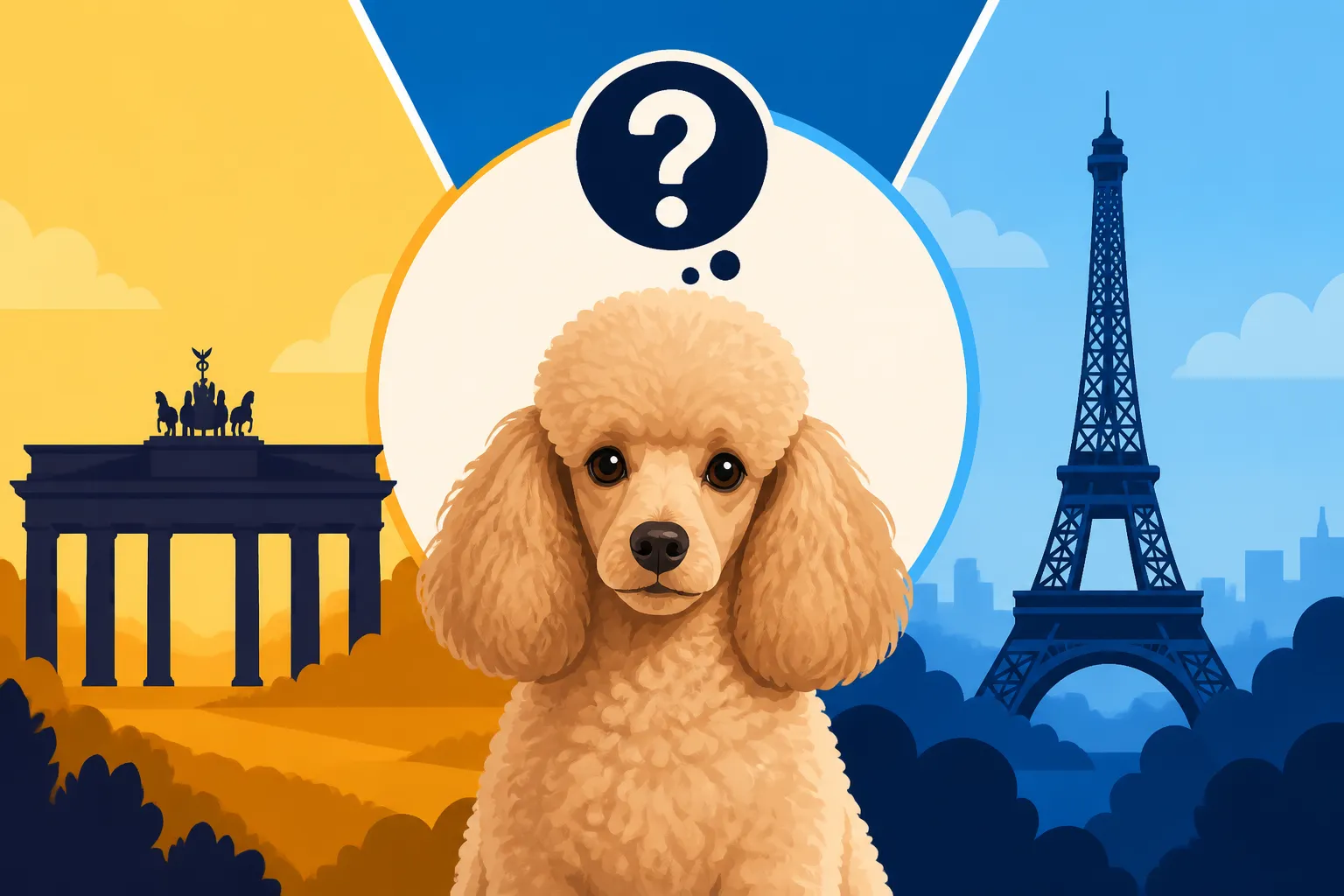
It's a common question that swirls around the Poodle, one of the most elegant and intelligent breeds: is this magnificent dog truly German or French? For many Poodle lovers, the debate can be a source of confusion and even friendly disagreement, as both nations proudly lay claim to its heritage. This guide will dive deep into the historical evidence, linguistic clues, and cultural evolution that shaped the Poodle, unraveling the fascinating truth behind its origins and explaining why both countries have a very strong case.
Tracing the Poodle's Ancient Roots: A European Puzzle
Before the Poodle became the sophisticated show dog we often picture today, it was a robust, hard-working water retriever. Its journey began in a time when specific "breeds" as we understand them now were less defined, and dogs were primarily bred for their utility. Understanding this working history is key to untangling the German and French claims.
The Water Dog Ancestors and the "Pudel" Connection
The Poodle, in its earliest form, was undeniably a water dog. Imagine a shaggy, strong swimmer, tirelessly retrieving waterfowl from cold, marshy waters. These types of dogs were common across various parts of Europe, particularly where hunting waterfowl was prevalent. The word "Pudel" in German is derived from "pudeln," which means "to splash" or "to wallow in water." This linguistic clue is incredibly strong evidence pointing to a German origin for the type of dog that would eventually evolve into the Poodle. It describes the very essence of its original function: a dog that loved the water and excelled at working within it. This tells us less about its precise geographic birthplace and more about its job description. Why the Poodle's Name Means to Splash is a fascinating dive into this etymological heritage, confirming its aquatic roots.
These ancient water dogs were valued for their dense, curly coats, which provided excellent insulation against icy waters, and their powerful swimming abilities. They weren't just pets; they were essential tools for hunters, much like a good gun or a well-made trap. The exact lineage is murky, as breed records from centuries ago are scarce, but the presence of these curly-coated water dogs is historically consistent across central and western Europe, with a strong presence in what is now Germany.
Early Depictions and the Working Poodle
Historical art and literature offer glimpses into the Poodle's past. From the 15th to the 17th centuries, dogs resembling Poodles began to appear in paintings and tapestries across Europe. These depictions often show dogs with the characteristic curly coat, sometimes in the distinctive "Continental Clip" or "Lion Clip," which was originally a practical choice for working dogs. Why the Poodle Clip Was a Working Design explains how these clipped areas, like the hindquarters, reduced drag in water, while the "pompoms" over joints provided warmth. This wasn't about fashion initially; it was about function.
These early Poodles were not the dainty creatures many associate with the breed today. They were robust, intelligent, and highly trainable dogs, perfectly suited for the demanding task of retrieving game. While it's difficult to pinpoint an exact nation from these artistic references alone, they do confirm the widespread presence of these water dogs across regions that would eventually become both Germany and France. The practicality of their design and their clear working roles suggest a utilitarian origin, which aligns well with the German emphasis on functionality.
The German Claim: From Water Retriever to Household Companion
The argument for the Poodle's German origin often centers on its historical function and the very name it carries. This isn't just a linguistic accident; it reflects centuries of working heritage.
The Etymology of "Pudel": A Clear German Link
As mentioned, the German word "Pudel" directly refers to the act of splashing in water. This isn't a vague descriptor; it's a specific, functional name that directly links the dog to its primary purpose as a water retriever. Imagine a dog breed today being named "Fishtail" because of its swimming prowess, or "Diggermutt" for its burrowing skills. The name "Pudel" carries that same weight of direct, functional identification. What Pudel Means and How Poodle Came From It offers more insight into this fascinating etymological journey.
This strong linguistic connection is often cited as the most compelling evidence for the Poodle originating in Germany. It suggests that the Poodle, or its direct ancestor, was known and named for its role within German-speaking lands long before it became a fashionable companion elsewhere. The practical application of the dog in hunting was deeply ingrained in its identity, as reflected in its very name. This foundational aspect of the breed's identity points firmly towards Germany as its functional birthplace, where it was developed and refined for its specific working abilities.
Historical Records and Early Breed Development in Germany
While official breed clubs and registries are a relatively modern invention, early records and writings from Germany provide glimpses of Poodle-like dogs being used extensively by hunters. These dogs were not merely companions; they were integral to the hunting practices of the time, demonstrating intelligence and stamina. They were valued for their dense, corded or curly coats, which were perfect for shedding water and protecting them from the elements.
It's believed that these German water dogs were bred with various other European water dogs, possibly even the Barbet from France, which also shared a curly coat and an affinity for water. This interbreeding would have gradually refined the Poodle's characteristics over centuries. These dogs, described as "Wasserhunde" (water dogs), were not just found in rural areas but also began to appear in more urban settings, eventually transitioning from purely working dogs to popular companions for noblemen and even circus performers due to their intelligence and trainability. In these early stages, the German influence focused heavily on maintaining the Poodle's robust health, working drive, and physical capabilities required for its aquatic tasks.
The French Embrace: Cultivating Elegance and Miniaturization
While Germany might lay claim to the Poodle's working origins, it was arguably in France that the breed truly blossomed into the sophisticated companion dog recognized globally today. France took the functional "Pudel" and transformed it, elevating its status and refining its appearance.
The Poodle as France's National Dog and Royal Favorite
It was in France that the Poodle found its true calling as a companion, particularly within the royal courts and aristocratic circles. The French aristocracy fell in love with the Poodle's intelligence, charm, and elegant appearance. King Louis XVI and Marie Antoinette were known to have Poodles, and their popularity surged among the elite. The Poodle became so intertwined with French culture that it was eventually recognized as France's national dog. The Poodle as France's National Dog delves into this cultural adoption, highlighting how deep the French connection runs.
This adoption by the French elite led to a significant shift in the Poodle's development. While its working heritage was still present, more emphasis was placed on its aesthetic qualities and its ability to be a charming, intelligent companion. This period saw the Poodle move from the marshes to the lavish salons, a testament to its adaptability and the French appreciation for beauty and refinement in their canine companions. The French influence helped solidify the Poodle's reputation as a dog of distinction and grace.
French Influence on Poodle Grooming and Variety Development
The French played a pivotal role in refining the Poodle's distinctive appearance. While the utilitarian clip existed prior, it was the French who transformed it into an art form, creating the elaborate show clips that are iconic today. They stylized the various "pompoms" and rosettes, turning what was once a functional haircut into a statement of fashion and elegance. This focus on grooming became synonymous with the Poodle, elevating its status and making it a beloved subject for artists and sculptors. Many of the intricate grooming styles we see today have their roots in this French aesthetic. For instance, finding the right tools for these clips, such as specialized combs and shears, is something Poodle owners often search for, and online retailers like Chewy often carry a wide range of these grooming supplies.
Beyond aesthetics, the French also largely drove the miniaturization of the Poodle. As the breed became more popular as a companion, especially for those living in city apartments or needing a lapdog, breeders in France began to selectively breed for smaller sizes. This led to the development of the Miniature and eventually the Toy Poodle varieties. Why the Poodle Was Bred Down in Size explores how this trend met the demands of urban living and changed the breed forever. These smaller versions retained the intelligence and distinctive coat of their larger ancestors but were perfectly suited for a more refined, less physically demanding lifestyle. The elegant Continental Poodle Clip and Its Upkeep also became a hallmark, showcasing the dedication to grooming.
Unraveling the Official Recognition and Modern Perspective
The debate about the Poodle's origins isn't just historical; it also plays a role in how breed standards are written and how the breed is recognized by major kennel clubs around the world.
Kennel Club Stances and International Consensus
Different kennel clubs often reflect these dual claims in their official breed standards. The Fédération Cynologique Internationale (FCI), which represents many European countries, often lists France as the country of development (patronage) but acknowledges German origins. For example, the FCI breed standard for the Poodle specifically states that France is the country of patronage, but it refers to the breed's derivation from "the old type of French barbet, but especially a German water dog," acknowledging both sides of the argument.
In contrast, the American Kennel Club (AKC) and The Kennel Club (UK) typically list Germany as the country of origin. This difference highlights the complexity of tracing a breed's exact birthplace, especially one with such a long and intertwined history across multiple nations. The consensus, if there is one, seems to be that the Poodle originated in Germany as a working water dog, but was developed and refined into its modern form, particularly the smaller varieties and elegant presentation, in France. This dual heritage means that both countries hold significant claims to the Poodle's legacy. When new Poodle owners are researching their potential puppy, understanding these nuances can provide a richer context for the breed's characteristics, whether they are looking at What a Poodle Breeder Must Test For or simply learning about The Poodle as a Breed in general.
The Shared Heritage: A Cross-Cultural Evolution
Ultimately, the Poodle's history is a testament to cross-cultural evolution. It's not a simple case of one country or the other; rather, it's a story of how a functional working dog from one region was embraced, refined, and transformed into a cultural icon in another. The strong, intelligent water dog, the "Pudel," with its German name, provided the foundation. France, with its appreciation for artistry and companionship, then sculpted this foundation into the elegant and versatile Poodle we adore today.
Think of it like a beautiful piece of classical music: the initial composition might come from one genius, but another master conductor and orchestra might interpret, refine, and bring it to its most famous performance. Both contributions are essential. This shared heritage is what makes the Poodle so unique. It embodies both rugged utility and refined elegance, a combination that has endeared it to people for centuries. It's a breed that proves how much dogs can influence and be influenced by human culture.
| Aspect of Origin | German Contribution | French Contribution |
|---|---|---|
| Etymology | "Pudel" (to splash), name for water dog | "Caniche" (duck dog), related to canard (duck) |
| Initial Function | Working water retriever, game hunter | Companion, often in noble courts |
| Breed Type | Foundation of the robust water dog type | Refinement of elegance, creation of smaller varieties |
| Grooming Style | Practical clip for function (reduced drag, warmth) | Stylization of clips for aesthetics and show |
| Earliest Records | Strong linguistic evidence, historical working dogs | Artistic depictions in court settings, miniaturization |
| Official Recognition | Often cited as country of origin (AKC, UK Kennel Club) | Often cited as country of patronage/development (FCI) |
Beyond Borders: The Poodle's Global Journey
The story of the Poodle doesn't end with Germany and France. Its intelligence, beauty, and hypoallergenic coat have made it a favorite around the world, spreading its influence far and wide.
How the Poodle Spread Across the World
From its European roots, the Poodle quickly gained popularity in other countries, captivating dog enthusiasts with its distinct qualities. The breed was introduced to England, where it was further refined and gained recognition. Later, it made its way to the United States, becoming one of the most popular breeds for decades. This global spread cemented the Poodle's status as a truly international dog, adaptable to various climates and lifestyles.
Its reputation as a "non-shedding" dog made it particularly attractive to allergy sufferers, contributing to its widespread appeal. The Poodle's versatility also played a huge part; it excelled not only as a companion but also in various dog sports, obedience trials, and even as a circus performer. Poodles in Circuses and Performance tells a fascinating story of its natural aptitude for learning tricks and engaging audiences. Today, you'll find Poodles of all three sizes—Standard, Miniature, and Toy—thriving in homes and competitive arenas across every continent, each carrying a piece of that rich German and French heritage.
What the Origin Debate Means for Today's Poodle Lover
For us Poodle lovers today, understanding this dual origin adds depth to our appreciation of the breed. It explains why Poodles are often seen as both highly intelligent and capable working dogs, yet also as elegant and sensitive companions. The German "Pudel" reminds us of their strong retrieving drive and robust nature, traits that contribute to their trainability and love for engaging activities. The French influence explains their undeniable flair, their desire for human companionship, and the meticulous grooming that has become synonymous with the breed.
This rich history means that while you might be buying a bag of high-quality Poodle food from Chewy, or a new slicker brush to tackle that magnificent coat, you're also investing in a breed that has a legacy stretching back centuries across two major European cultures. It’s a reminder that beneath the perfectly coiffed exterior lies a brainy, water-loving dog with a history as complex and fascinating as its curly coat. Whether your Poodle is a dignified Standard, a perky Miniature, or a charming Toy, it carries the best of both worlds, truly a testament to its enduring appeal and adaptability. This blend makes the Poodle not just a pet, but a living piece of European history.
Disclaimer
This article is for general informational purposes only and does not constitute professional advice. Laws, prices and regulations vary by location and change over time. Consult a qualified professional for guidance on your specific situation.