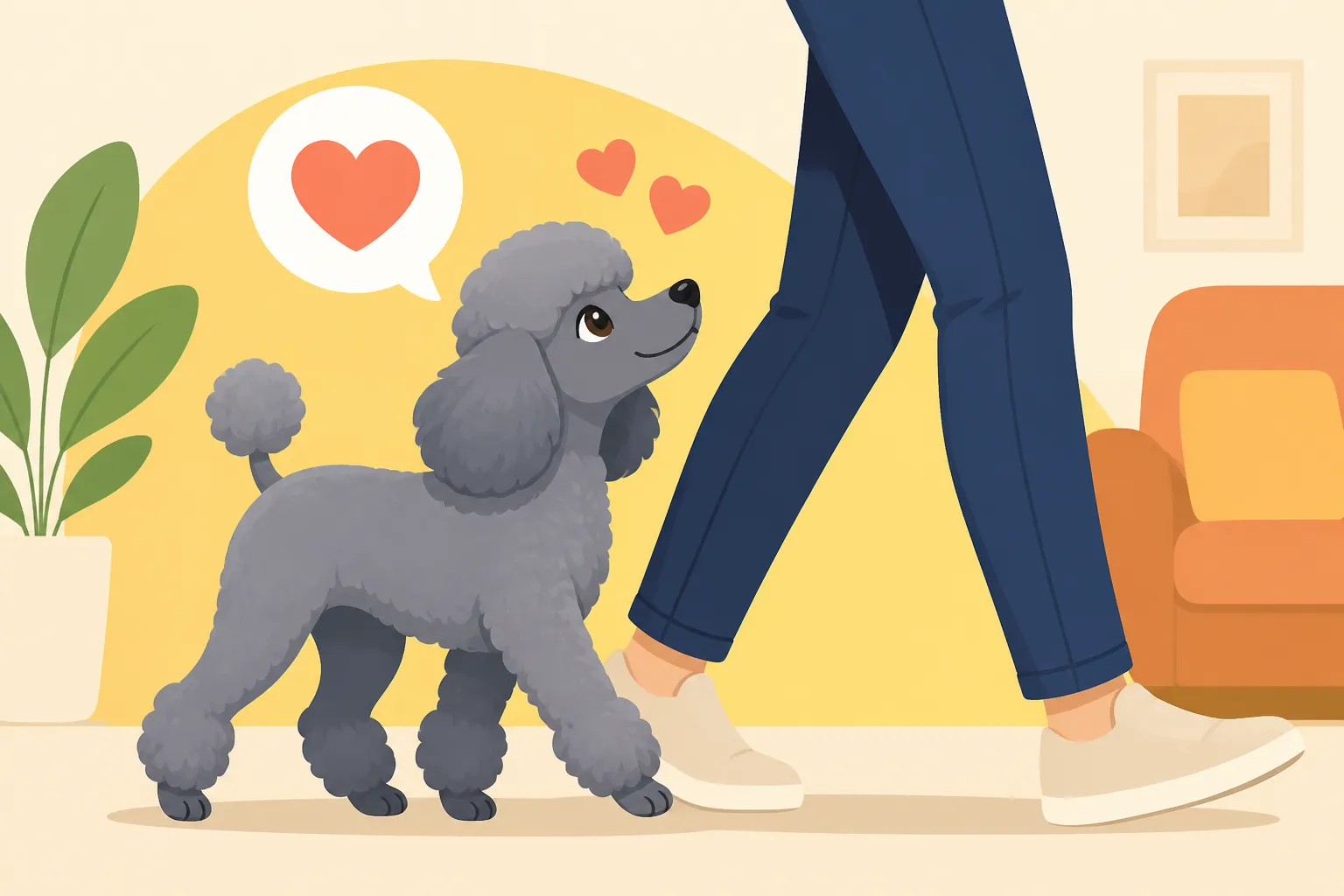
Why a Poodle Shadows Its Owner
If you're a Poodle owner, you know the feeling: you get up to grab a cup of coffee, and there they are, right on your heels. You move from the living room to the kitchen, and your Poodle is your tiny (or not-so-tiny) shadow, seemingly attached to you by an invisible thread. It can be endearing, occasionally a trip hazard, and sometimes you might wonder, "Why exactly does my Poodle follow me everywhere?" This guide is here to shed some light on this incredibly common Poodle behavior, exploring the deep-rooted reasons behind their constant companionship and offering insights into whether it's simply devotion or something more.
The Poodle's Deep Connection to Its People
It’s easy to dismiss persistent following as just "being clingy," but with a Poodle, it often stems from a much richer, more complex foundation of breed history and inherent temperament. These aren't just pretty faces; they're deeply thoughtful and dedicated companions.
A History of Partnership and Purpose
To truly understand why your Poodle shadows you, we have to rewind a bit and look at their origins. Poodles weren't always the pampered show dogs or elegant lap warmers we often picture today. They were, first and foremost, working dogs – highly intelligent, athletic retrievers tasked with bringing waterfowl back to hunters from often icy waters. Their very name, "Pudel," is German for "to splash in water." This job required an intense focus on their human handler. A duck hunter needed a dog that was constantly aware of their position, their commands, and their intentions. A Poodle that wandered off or wasn't keenly attuned to its person wouldn't be a successful retriever.
This historical role bred a profound desire to be in close proximity and communication with their human partners. They needed to anticipate, to respond, and to remain connected. Over centuries, even as Poodles transitioned from boggy marshes to royal courts and eventually into our homes, that fundamental trait of hyper-awareness and dedication to their primary person remained. It’s etched into their very DNA. So, when your Poodle follows you from room to room, they're not just being nosy; they're often operating on an ancient instinct to stay connected to their "pack leader" and be ready for whatever you might ask of them next. They want to be involved, to be useful, and to be close to the source of their world.
The "Velcro Dog" Phenomenon
The term "Velcro dog" was practically invented for many Poodles. It describes a dog that prefers to be in constant physical or near-physical contact with its owner, sticking to them like, well, Velcro. This isn't necessarily a bad thing; in fact, for many Poodle owners, it's one of the most endearing aspects of the breed. They thrive on companionship and express their affection and loyalty through proximity.
Think about it: your Poodle lives in your world. You provide food, comfort, entertainment, and safety. You are their sun, moon, and stars. It makes perfect sense that they want to be where you are, observing your every move, perhaps hoping for a stray pet, a game, or just the quiet reassurance of your presence. This phenomenon is often more pronounced in Poodles because of their intelligence and sensitivity. They pick up on subtle cues, your tone of voice, your posture, and even your mood. Being close allows them to gather this information and feel more secure in their environment. It’s their way of staying informed and integrated into the family unit. For Poodles, the world is much better when it involves you, and being right by your side is the best possible vantage point.
Reading a Poodle's Body Language
Understanding the nuances of your Poodle's "shadowing" behavior often comes down to reading their body language. Not all following is created equal, and discerning the difference can help you understand their underlying needs.
A Poodle that is simply devoted might follow you with a relaxed gait, tail held naturally, ears soft, and an expression that says, "I'm just happy to be near you." They might settle calmly at your feet when you stop, or nap peacefully while you work in the same room. This is the comfortable, affectionate Velcro behavior we cherish. You might notice them glance up at you often, but it's a calm, reassuring check-in. This kind of shadowing often comes from a place of deep trust and contentment.
However, sometimes the shadowing can be laced with a bit more anxiety. If your Poodle follows you with a slightly lowered body, a tucked tail, panting, wide eyes, or excessive whining when you move to another room, it could be a sign of mild Separation Anxiety in a Velcro Poodle. They might try to physically block your path, constantly nudge your hand for attention, or become frantic if a door closes between you. In these cases, their proximity isn't just about affection; it's about managing their fear of being left alone. Another scenario might be a Poodle who is shadowing you as a form of "resource guarding" over you, their beloved person. They might stiffen when another pet approaches you, or give a subtle growl or stare. This is less common but can happen in highly bonded Poodles and needs careful observation and potentially professional guidance.
It's crucial to differentiate these behaviors. A Poodle quietly observing you from a few feet away, occasionally nudging for a pat, is likely just expressing their bond. A Poodle that cannot settle, whines persistently, or becomes visibly distressed when you create even a small distance is communicating a deeper need for reassurance or help with anxiety. Observing the quality of their shadowing – whether it's calm and contented or tense and frantic – is your first step to understanding their emotional state.
Instinct, Intellect, and Anxieties
Beyond their historical drive for partnership, a Poodle's unique combination of high intelligence and inherent sensitivity plays a massive role in why they stick so close. Their brains are always working overtime, processing information and trying to make sense of your world.
The Poodle's Sharp Mind at Work
Poodles are consistently ranked among the most intelligent dog breeds, often second only to the Border Collie in some intelligence assessments. Why the Poodle Sits Second in Coren's List This high intelligence isn't just for learning tricks; it means they are incredibly observant and adept at understanding patterns and routines. Your Poodle knows your daily schedule better than you do sometimes! They learn that when you walk to the kitchen, it often means food preparation, or when you pick up your keys, it might mean a walk.
Their shadowing behavior can often be a proactive strategy based on their smarts. By staying close, they gather maximum information about your next move. They are constantly trying to anticipate what's coming, especially if it involves them – which, from their perspective, most things should! If you're heading to the pantry, maybe it's treat time. If you're going to the bedroom, maybe it's snuggle time. Their high intelligence means they are constantly thinking and interpreting, and proximity gives them the best chance to be "in the know" and ready to participate. It's a testament to their cleverness, not just their devotion. They're basically little furry detectives, constantly gathering clues about your intentions.
Separation Sensitivity and Comfort Seeking
Despite their confident appearance and sharp minds, Poodles can be quite sensitive creatures. This sensitivity, combined with their strong bond to their families, can make them prone to various forms of anxiety, particularly related to separation. For some Poodles, "shadowing" is less about curiosity and more about comfort-seeking. They feel most secure when they are in your immediate presence.
If your Poodle starts to follow you with a heightened sense of urgency, seems restless when you're out of sight, or even begins to exhibit destructive behaviors when left alone, it's worth considering separation sensitivity. It's not always a full-blown separation anxiety disorder, which can be quite debilitating for a dog. Sometimes, it's a milder form where they simply prefer to always be near you for reassurance. They might pace a bit if you leave the room, or sit by the door, waiting. This subtle anxiety can drive the shadowing behavior as a way to self-soothe by maintaining contact.
This is where empathy comes in. Imagine if your entire world revolved around one or two beings, and their movements dictated your comfort and safety. You'd probably want to keep them in sight too! For Poodles with this sensitivity, your presence is their anchor, and they will literally follow you to the ends of the earth (or at least, to the bathroom door) to maintain that feeling of security. Understanding this can help you approach their need for proximity with patience and compassion, while also considering gentle strategies to build their confidence in being alone.
Resource Guarding of "Their Person"
While less common than general attachment or curiosity, some Poodles might exhibit a form of shadowing that borders on resource guarding – specifically, guarding their beloved human. This isn't usually an aggressive trait in Poodles, but more of an overzealous protectiveness or possessiveness.
You might notice this if your Poodle positions themselves between you and another pet, or even between you and another person in the household. They might give a subtle growl, a hard stare, or physically lean into you when someone else approaches. This is their way of communicating, "This is my person." This behavior stems from their strong bond and desire to keep what they value most (you!) close and exclusively theirs. It’s important not to punish this behavior, as it often comes from a place of insecurity or a misunderstanding of social dynamics. Instead, gentle, positive reinforcement methods are needed to teach them that sharing you is a good thing and doesn't threaten their bond. If you notice signs of resource guarding over you, it's wise to consult with a professional dog trainer or behaviorist to ensure it doesn't escalate into a more serious issue. The goal is always to encourage a secure, confident Poodle who doesn't feel the need to "own" you.
Managing and Understanding the Shadow
Living with a Poodle shadow can be delightful, but sometimes you need to walk across a room without tripping or enjoy a moment of quiet solitude. Finding the balance between embracing their devotion and establishing healthy boundaries is key.
Establishing Healthy Boundaries
It's absolutely okay to love your Poodle's clinginess while also needing a little personal space. The trick is to teach them that your absence from their immediate vicinity isn't a catastrophe.
- Practice "Relax on a Mat": Teach your Poodle to go to a designated mat or bed and stay there calmly for increasing periods. Reward them for staying, even if you leave the room briefly. This builds their ability to settle independently.
- "Invisible" Departures: Instead of making a big fuss every time you leave a room, try to slip out quietly for a few seconds. Return before they become anxious and reward their calm. Gradually increase the time you're gone. This helps them understand that your departures are often temporary and uneventful.
- Encourage Independent Play: Offer puzzle toys or long-lasting chews (like those from Chewy) that can keep them engaged for a while in a different room. This teaches them to self-entertain.
- Create Designated "Alone Zones": This might be a comfy dog bed in a quiet corner, or a crate for specific times. Make these spaces positive, safe havens where they can relax without needing to be right on top of you. Remember, Crate Size for Each Poodle Variety will depend on your Poodle's specific size.
- Vary Your Routine: If you always get up and go to the bathroom at the same time, your Poodle learns to anticipate it. Mix it up sometimes to prevent them from becoming overly fixated on your movements.
It’s about gently shifting their mindset from "I must be with you" to "I can be perfectly happy and safe even if you're not right next to me."
When Shadowing Becomes a Concern
While a Poodle's devotion is charming, there are times when excessive shadowing can indicate a deeper issue that needs attention. Look out for these signs that the behavior might be tipping into problematic territory:
- Inability to Settle: Your Poodle cannot relax or lie down unless they are physically touching you or extremely close.
- Excessive Vocalization: Whining, barking, or crying intensifies dramatically the moment you create distance.
- Destructive Behavior: Chewing furniture, scratching doors, or having accidents when left alone, even for very short periods (e.g., you step into the shower).
- Loss of Appetite or Interest: Refusing to eat or play when you're not present.
- Hyper-Vigilance: Constantly scanning for you, even if you're just on the other side of a baby gate, looking stressed.
- Panic at Your Departure Cues: Extreme distress when you pick up keys, put on shoes, or perform any action that signals your imminent departure. This is a common indicator of significant Separation Anxiety in a Velcro Poodle.
If you observe these behaviors consistently, it’s a strong signal to seek professional help. A certified professional dog trainer or a veterinary behaviorist can help you assess the situation and develop a tailored plan to address underlying anxiety and build your Poodle's confidence and independence. Early intervention is always best.
Embracing the Bond
Ultimately, much of a Poodle's shadowing behavior is a beautiful testament to their loyalty and the profound bond they form with their humans. These are dogs who genuinely love being part of your life, deeply connected to your every move and mood.
Instead of seeing it as a nuisance, try to view it as a gift of unconditional affection. Your Poodle trusts you implicitly, finds comfort in your presence, and simply wants to share every moment. While setting boundaries for independence is important for their mental well-being, there's no need to completely extinguish their desire to be near you. Embrace the quiet companionship, the head resting on your foot, the gentle nudge for a scratch. These are the unique joys of living with a Poodle.
They are intelligent, intuitive, and remarkably loving companions. The "shadow" is often just a furry extension of their heart, always wanting to be where yours is. By understanding their history, their smarts, and their sensitive nature, you can better appreciate this charming Poodle trait and build an even stronger, more harmonious relationship.
| Shadowing Behavior Type | Common Indicators | Underlying Reason | When to Be Concerned |
|---|---|---|---|
| Normal Devotion | Calm gait, relaxed body language, settles nearby, occasionally nudges for attention, happy to nap in your room. | Strong bond, affection, desire for companionship, sense of belonging to the family unit. | Rarely, unless it prevents all independent activity. |
| Curiosity/Anticipation | Attentive gaze, follows with purpose (e.g., towards kitchen), watches your hands, predicts next actions. | High intelligence, pattern recognition, desire to be involved, hoping for treats or activities. | If they become demanding or disruptive when their anticipation isn't met. |
| Mild Anxiety/Comfort-Seeking | Slightly restless, soft whining when you leave sight, settles but remains hyper-aware, follows with urgency. | Sensitivity, slight insecurity about being alone, seeking reassurance from your presence. | If it escalates to persistent vocalization, destructive behavior, or inability to relax. |
| Resource Guarding (Person) | Stiff body, subtle growl or stare towards others approaching you, physically blocks others, possessive. | Insecurity, strong bond misinterpreted as ownership, lack of trust in sharing you. | Immediately, seek professional behavioral guidance to prevent escalation. |
Disclaimer
This article is for general informational purposes only and does not constitute professional advice. Laws, prices and regulations vary by location and change over time. Consult a qualified professional for guidance on your specific situation.