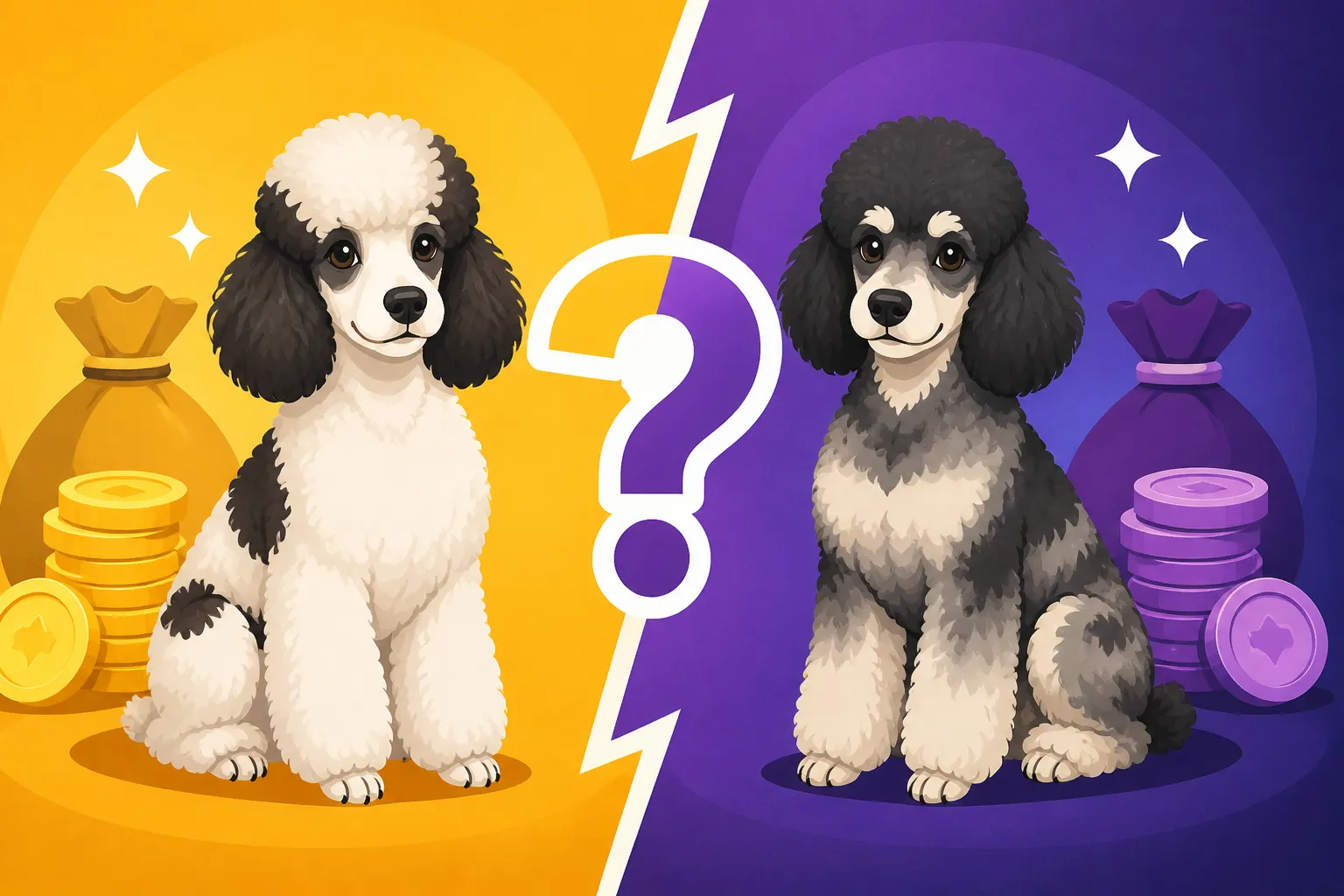
Whether Parti and Phantom Poodles Cost More
It’s a common question that pops up in online groups and around the ringside: do those stunning parti or phantom Poodles actually cost more than their solid-colored cousins? It’s a completely understandable concern when you’re looking to bring a Poodle into your home, especially since initial puppy costs can vary wildly. This guide is here to untangle the nuances of Poodle pricing, clarify what truly drives those numbers, and help you understand if a specific coat pattern really adds to the overall expense, both upfront and over a lifetime.
Unpacking Poodle Puppy Pricing Beyond Color
When you start looking for a Poodle puppy, it’s easy to get sidetracked by all the beautiful colors and patterns available. But the truth is, while a unique coat might catch your eye, it’s rarely the primary driver of a Poodle's price. What you’re really paying for is the culmination of careful breeding, health screening, and the extensive effort a reputable breeder pours into their lines.
What Truly Influences a Poodle's Price Tag
The sticker price on a Poodle puppy often reflects a complex equation involving pedigree, lineage, and the overall quality of the breeding program. A puppy from champion lines, where both parents have impressive show records and have proven their conformation and temperament, will naturally command a higher price. This isn't just about bragging rights; it's an indicator that the breeder is dedicated to upholding the breed standard and producing excellent examples of the Poodle. Think of it like buying a car: a standard model gets you from A to B, but a performance model with specialized features and engineering costs more for a reason. With Poodles, those "performance features" are often found in strong genetic health and predictable temperament.
Location also plays a significant role. Poodle puppies from breeders in areas with a higher cost of living or greater demand might be more expensive. In bustling metropolitan areas like Los Angeles or New York, you might find higher prices compared to rural communities where overhead costs for breeders are lower. This is a simple economic principle that applies to almost any market, and puppies are no exception. The convenience of finding a reputable breeder closer to home might also contribute to a slightly higher price.
The Breeder's Investment in Health and Pedigree
A cornerstone of responsible breeding, and a major factor in a puppy's cost, is the extensive health testing performed on the parent dogs. Reputable breeders invest thousands of dollars in genetic screening and orthopedic evaluations to minimize the risk of passing on hereditary conditions. They test for common Poodle ailments such as hip and elbow dysplasia, progressive retinal atrophy (PRA), Von Willebrand’s disease, and Addison’s disease. These tests aren't cheap, but they are absolutely vital for the long-term health and well-being of the puppies. Without these tests, you might pay less upfront, but you could be signing up for a lifetime of expensive vet bills down the line. It's truly a "pay now or pay much, much more later" situation. This is why understanding What a Poodle Breeder Must Test For is so important.
Furthermore, a breeder’s commitment extends beyond just health. They invest in showing their dogs to earn titles in conformation, obedience, or agility. These titles demonstrate that their dogs meet the breed standard in structure and temperament, and have proven their intelligence and trainability. This investment in titles, along with careful genetic selection, helps ensure that each litter produced contributes positively to the breed. All of these factors contribute to the pricing structure you’ll see when looking at Poodle Puppy Prices Across the Three Sizes.
Regional Markets and Demand for Poodles
The geographic location of a breeder and the local demand for Poodles can significantly influence pricing. In regions where Poodles are particularly popular, such as parts of California or the Pacific Northwest, prices may be higher due to increased competition among buyers. Conversely, in areas with lower demand or a greater supply of breeders, you might find slightly more accessible pricing. This isn't unique to Poodles; it's a dynamic seen across many popular dog breeds.
Think about it from a supply and demand perspective. If there are fewer reputable breeders in a high-demand area, their puppies will naturally cost more. Conversely, if an area has many breeders, or if local interest has waned, prices might adjust downwards. It’s also worth considering that a breeder’s reputation can extend beyond their immediate region. Highly sought-after breeders, known for exceptional health and temperament, often have waitlists that span across states, or even countries, regardless of their physical location. This widespread demand can also push prices upwards, as people are willing to travel or pay shipping costs to get a puppy from a truly outstanding line.
The Reality of Parti Poodle and Phantom Poodle Pricing
Now, let's get to the heart of the matter: do parti and phantom Poodles actually cost more? The simple answer is, not inherently because of their color, but sometimes due to other factors often associated with these patterns. The American Kennel Club (AKC) recognizes solid colors in the show ring, which means that many top breeders focused on conformation historically bred for solids. This created a perception that parti and phantom poodles were "less desirable" in some circles, or from less traditional lines. However, times are changing, and the beauty of these patterns is increasingly celebrated.
Parti Poodles and the Show Ring Standard
Parti Poodles, characterized by a white base coat with patches of another solid color, were historically excluded from the conformation ring by the AKC. This meant that breeders primarily focused on show dogs often didn't produce parti-colored Poodles. Instead, the focus on parti colors often came from breeders catering to the pet market or those who simply loved the aesthetic. As a result, until recently, parti Poodles might have been less expensive than solid-colored Poodles from show lines because they lacked the "show potential" that drives up the price of some puppies. However, the AKC now allows parti-colored Poodles to compete in performance events like agility, obedience, and rally, which has increased their desirability and value in those specific arenas.
The distinction between "show quality" and "pet quality" can significantly impact a Poodle's price. A solid-colored Poodle puppy with excellent conformation and temperament from a heavily titled lineage might be priced higher because of its potential to excel in the show ring and contribute to a future breeding program. Parti Poodles, though equally intelligent and lovable, generally haven’t had this same "show potential" in the traditional conformation sense. This has meant that the premium often placed on potential show winners hasn't applied to them in the same way. However, as demand for unique patterns has grown, and with the increased acceptance of parti Poodles in performance sports, prices have started to reflect this broader appeal. You might find that Whether a Parti Poodle Can Compete at All provides more context.
Phantom Poodles: A Distinctive Aesthetic
Phantom Poodles feature distinct markings, typically above the eyes, on the sides of the muzzle, on the chest, on the legs, and under the tail, against a solid base color. These markings often resemble the pattern of a Doberman Pinscher or a Rottweiler. Phantom Poodles, much like partis, were not historically favored in the AKC conformation ring, which traditionally emphasizes solid colors. This meant that breeders focused solely on conformation might not have had phantom Poodles in their lines, or if they did, those puppies might have been priced lower because they didn't fit the strict show standard.
However, the striking appearance of phantom Poodles has created a strong demand in the pet market. Many individuals actively seek out this unique pattern for its beauty and distinctiveness. This strong pet demand can actually lead to prices that are comparable to, or even sometimes higher than, solid-colored Poodles from similar pet-focused lines, simply because fewer breeders specialize in them or because the specific aesthetics are highly sought after. It's less about the inherent cost of the color, and more about the market's appreciation for a rarer or more visually interesting pattern. For a deeper dive, consider reading Phantom Poodle Markings.
Supply, Demand, and the "Uniqueness" Factor
Ultimately, the pricing for parti and phantom Poodles often comes down to the simple economics of supply and demand, coupled with the "uniqueness" factor. While these patterns might have once been overlooked by some show breeders, they are now highly desired by pet owners looking for something a bit different. This increased demand, especially for well-bred parti and phantom Poodles from health-tested parents, can naturally lead to higher prices. It’s not that the color itself costs more to produce, but rather that certain breeders have specialized in these patterns, and the market is willing to pay for that specialization and aesthetic appeal.
It's crucial to remember that a reputable breeder of parti or phantom Poodles will still conduct all the necessary health testing and provide the same level of care and support as a breeder of solid Poodles. If you encounter a breeder charging significantly more solely for a coat pattern without the accompanying health clearances and breeder support, that should be a red flag. The value should always be in the health, temperament, and ethical breeding practices, not just the visual appeal.
| Factor | Solid Poodle Pricing | Parti/Phantom Poodle Pricing | Key Drivers |
|---|---|---|---|
| Conformation Show Potential | High influence for top lines | Low influence historically; increasing in performance sports | AKC breed standard, desire for titles |
| Pet Market Demand | Consistent, high demand | High demand for unique aesthetics | Aesthetic preference, perceived rarity |
| Breeder Reputation/Testing | Major influence | Major influence (should be equivalent) | Health clearances, pedigree, breeder support |
| Rarity/Uniqueness | Standard colors not rare | Perceived as rarer, driving some demand | Visual appeal, less common in past |
| Overall Cost Impact | Reflects breeder investment, pedigree | Reflects breeder investment, high pet demand | Quality of breeding program first, then aesthetics |
Addressing Misconceptions About Color and Health Costs
One common misconception is that certain Poodle colors or patterns are inherently less healthy or predisposed to more issues, thus implying higher future vet costs. This is generally not true for parti or phantom Poodles. While some specific color genes can be linked to certain health conditions in other breeds (like merle in Aussies leading to eye/ear issues when bred incorrectly), Poodle patterns like parti and phantom are not inherently linked to increased health risks.
Genetic Health and Coat Color: Is There a Link?
For Poodles, genetic health issues are primarily tied to specific genes unrelated to the genes for solid, parti, or phantom patterns. Conditions like Addison's Disease, bloat (Gastric Dilatation-Volvulus), Sebaceous Adenitis, and various eye conditions affect Poodles regardless of their coat color or pattern. A solid black Poodle is just as susceptible (or resistant, if well-bred) to these conditions as a parti-colored Poodle or a phantom Poodle. The crucial factor is the health screening of the parent dogs, not their coloration.
Breeders who focus on parti or phantom patterns, if they are reputable, will perform the same comprehensive health testing as breeders of solid Poodles. They should be able to provide clear OFA (Orthopedic Foundation for Animals) certifications for hips and elbows, genetic test results for PRA, vWD, and other relevant conditions. Any breeder who suggests that their parti or phantom Poodles are exempt from these health concerns, or that testing isn't as important for their patterns, should be avoided. The health of your Poodle is paramount, and it transcends coat color. You can learn more about specific Poodle health concerns by looking into topics like Addison's Disease in Standard Poodles or Inherited Blindness in Poodles.
Routine Veterinary Care for All Poodles
The routine veterinary care for a parti or phantom Poodle is exactly the same as for any solid-colored Poodle of the same size. This includes annual check-ups, vaccinations, parasite prevention (heartworm, fleas, ticks), and regular dental cleanings. The frequency and cost of these services are determined by the dog's size, age, and overall health status, not by the color of their coat. A Toy Poodle, regardless of color, will have different vaccine dosing schedules and potentially different dental care needs than a Standard Poodle.
For instance, a Toy Poodle puppy, whether solid or parti, will need appropriate spacing for its shots and careful monitoring for conditions like hypoglycemia. Similarly, a Standard Poodle, black or phantom, will require the same preventive care against conditions like bloat, and the cost of preventative measures like a gastropexy surgery would be identical. Your vet bills for basic care won't increase just because your Poodle has unique markings.
Long-Term Health Investment and Insurance Considerations
Investing in pet insurance is a smart decision for any Poodle owner, irrespective of coat color. Conditions like Addison's disease or bloat can strike any Poodle and incur significant costs. Pet insurance providers like Healthy Paws offer coverage for unexpected illnesses and accidents, and they don't base their premiums on coat color or pattern. Instead, factors like the Poodle's age, size (Standard Poodles often have slightly higher premiums due to the risk of bloat), and your geographic location are the primary determinants of your premium.
It's essential to get insurance before any diagnosis occurs, as pre-existing conditions are typically not covered. For example, if you adopt a Poodle and it is later diagnosed with Addison's disease, any costs related to managing that condition might not be covered if the policy was purchased after the diagnosis. This is why many experienced Poodle owners consider insurance early on, knowing that Poodles, like many purebreds, can be prone to certain genetic conditions. Researching Poodle Insurance Premiums by Size and Age can help you plan your budget.
Beyond the Initial Purchase: Lifetime Costs for Any Poodle
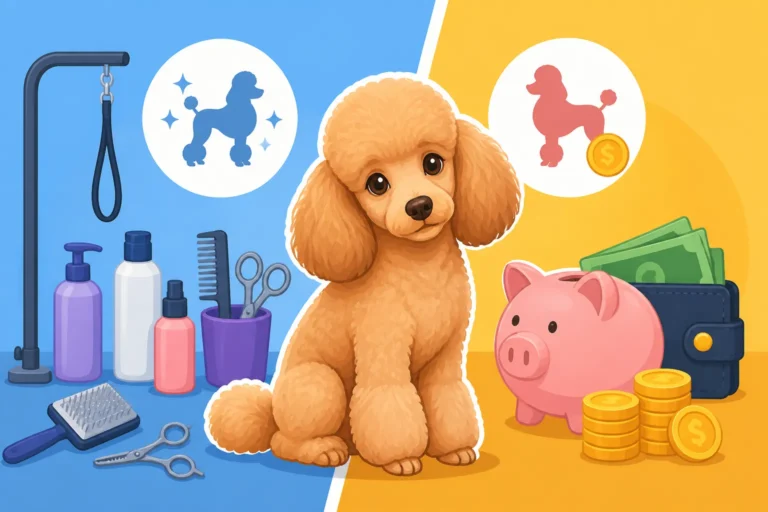
The initial puppy price is just the tip of the iceberg when it comes to Poodle ownership. The true financial commitment lies in the ongoing care, feeding, grooming, and general well-being of your dog over its lifetime. These costs are consistent across all Poodle colors and patterns; a parti Poodle will eat just as much and need grooming just as frequently as a solid white Poodle.
Grooming the Poodle Coat, Regardless of Pattern
Poodles are renowned for their non-shedding, continually growing coat, which requires significant grooming maintenance. This isn't just about aesthetics; it's vital for their health and comfort. Whether your Poodle is solid black, a striking parti, or a subtle phantom, its coat will need regular brushing, bathing, and professional clipping every 4-8 weeks. Neglecting this can lead to painful matting, skin infections, and ultimately, a costly full shave-down at the groomer.
The cost of professional grooming varies by Poodle size (Standard Poodles being the most expensive due to their sheer volume of hair) and your location. A basic "kennel clip" or "sporting clip" might be less expensive than a more elaborate "Continental clip" often seen in the show ring, but the underlying need for regular maintenance remains the same for all Poodles. Many owners choose to learn how to groom their Poodle at home to save money, but this still requires an investment in quality tools like clippers, blades, brushes, and specialized shampoos and conditioners. Learning How to Line Brush a Poodle Properly is critical for any Poodle owner. No matter the color, What Grooming Adds to a Poodle's Lifetime Cost is significant.
Feeding a Healthy Poodle for Life
Feeding a Poodle a high-quality, nutritious diet is another non-negotiable expense. The type of food (kibble, fresh, raw, or a combination) and the Poodle's size will dictate the monthly cost. Standard Poodles, with their larger appetites, will consume more food and therefore cost more to feed than Toy Poodles. A well-balanced diet is essential for maintaining their energy levels, coat health, and overall longevity. Brands like Ollie offer fresh, human-grade food options that can contribute to a Poodle's health, though at a potentially higher cost than traditional kibble. You can also find a wide range of high-quality kibble and wet food options through retailers like Chewy, which often offers bulk discounts or subscription services to help manage costs.
It's important to choose food appropriate for your Poodle's life stage and size, as nutritional needs change from puppyhood to senior years. For example, a large breed puppy formula might be recommended for a Standard Poodle to promote slow and steady growth, while a senior Poodle might benefit from a diet lower in calories and higher in joint support. Understanding Feeding a Poodle by Size is crucial for budgeting.
Enrichment, Training, and Everyday Essentials
Beyond the basics of food and grooming, all Poodles thrive on mental stimulation, physical exercise, and ongoing training. Poodles are highly intelligent and require regular engagement to prevent boredom and destructive behaviors. This means budgeting for things like puzzle toys, training classes, or even dog sports like agility or obedience. These activities are critical for their well-being, whether they're solid or parti.
Every Poodle also needs everyday essentials: a comfortable bed (or several!), a sturdy leash and collar or harness, appropriate toys, and routine dental care products like toothbrushes and dog-specific toothpaste. Chew toys can be particularly important for Poodles to satisfy their natural chewing instincts and help keep their teeth clean. These items are recurring expenses, as beds wear out, toys get destroyed, and dental products need replenishing. The cost of these items won't change based on your Poodle's color; it’s simply part of being a responsible Poodle owner.
Finding a Reputable Breeder for Any Poodle Color
When you're searching for a Poodle, the most crucial decision you'll make is choosing a reputable breeder. This holds true whether you're seeking a solid-colored Poodle, a parti, or a phantom. A good breeder prioritizes the health, temperament, and genetic soundness of their dogs above all else, and they will be transparent about their practices.
Prioritizing Health Testing Over Coat Pattern
A truly reputable breeder will put extensive effort into health testing their breeding stock. This is non-negotiable, regardless of whether they specialize in solid colors, partis, or phantoms. They will happily share the results of OFA certifications for hips and elbows, DNA tests for progressive retinal atrophy (PRA), Von Willebrand’s disease (vWD), and screening for other conditions common in Poodles, such as Sebaceous Adenitis and Addison's disease. These tests are verifiable and provide objective evidence of a breeder's commitment to producing healthy puppies.
Never compromise on health testing for the sake of a specific coat pattern. A breeder who dismisses health testing, claims it's "not necessary" for their lines, or can't provide verifiable results, is a major red flag, no matter how appealing their puppies' colors are. A healthy puppy, regardless of its markings, will always be a better investment in the long run. When evaluating a breeder, inquire about Genetic Panels for the Three Poodle Sizes to ensure they are thorough.
Reading a Poodle Breeder Contract Carefully
A comprehensive and transparent breeder contract is a hallmark of a reputable operation. This document should clearly outline the responsibilities of both the breeder and the buyer. It will typically include health guarantees, often for specific genetic conditions, a spay/neuter clause (especially important for pet-quality puppies), and terms for returning the puppy if unforeseen circumstances arise. For parti and phantom Poodles, especially those not intended for conformation showing, the contract might include clauses regarding limited registration with the AKC.
Pay close attention to the health guarantee. A good breeder stands behind the health of their puppies and will offer support or compensation if a serious genetic condition emerges within a specified timeframe. Understand what is covered and what isn't, and don't hesitate to ask questions if any part of the contract is unclear. This contract protects both you and the breeder and sets the foundation for a healthy relationship with your new Poodle. Make sure to read up on Health Clauses in a Poodle Breeder Contract before you sign.
The Ethics of Pricing and Puppy Placement
Ethical breeders price their puppies based on their significant investment in health testing, quality care, optimal nutrition for the dam and puppies, early socialization, and ongoing support for their puppy owners. They are not simply trying to profit from a "designer" color or pattern. A breeder who focuses on specific patterns like parti or phantom, but maintains ethical practices, will have prices that reflect these high standards, which may be comparable to well-bred solid Poodles.
Beware of breeders who charge exorbitant amounts solely for a "rare" color or pattern without the backing of comprehensive health testing, strong pedigrees, and a proven track record. These are often indicators of breeders prioritizing profit over the well-being and genetic health of their dogs. The best breeders are more concerned with placing their puppies in loving, appropriate homes than with extracting the highest possible price, and they will often interview prospective owners thoroughly to ensure a good match.
Disclaimer
Please note that the information provided in this article is intended for general informational purposes only and does not constitute professional veterinary advice. Always consult with a qualified veterinarian for any health concerns or before making any decisions about your Poodle's health or care. Specific costs and market conditions for Poodles can vary based on location, individual breeder practices, and current demand.