Phantom Poodle Markings
You've probably seen a Poodle with those stunning, distinctive markings that look like they've been painted on – a beautiful contrast of color on their muzzle, above their eyes, or on their legs. These aren't just random splashes; they're known as phantom markings, and they ignite a lot of questions and sometimes a little confusion among Poodle lovers. This guide will dive deep into what phantom Poodle markings are, where they come from, how they differ from other patterns, and what it means for owning and loving one of these gorgeous dogs.
What Exactly Are Phantom Poodle Markings?
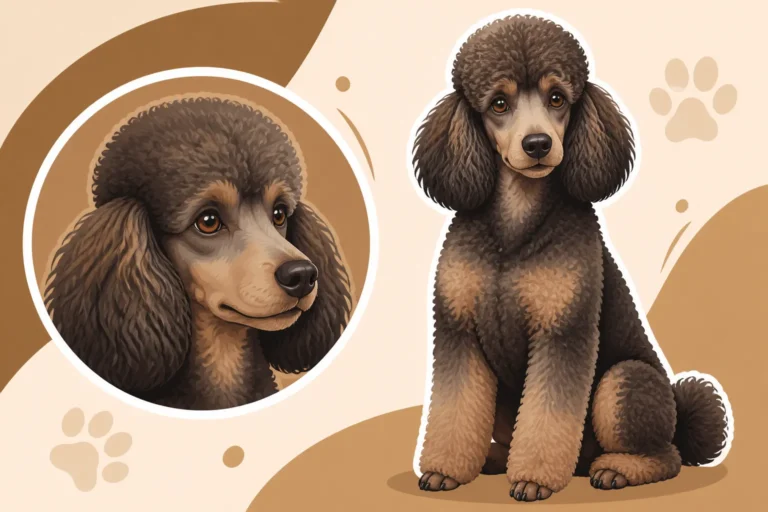
Phantom Poodle markings are truly a marvel, setting these dogs apart with an almost regal appearance. Unlike a solid-colored Poodle, which has one consistent hue throughout its coat, a phantom Poodle sports a striking bi-color pattern that follows a very specific layout on the dog's body. It's not just a random patch; it's a defined set of "points" that create an elegant, almost Doberman-like, look.
The Genetics Behind the Pattern
The existence of phantom markings in Poodles is all thanks to a particular genetic blueprint, specifically a recessive gene that dictates this unique color pattern. For a Poodle to display phantom markings, it must inherit this gene from both parents. This means that two solid-colored Poodles, or even one phantom and one solid Poodle, can produce phantom puppies, as long as the solid-colored parents carry the recessive phantom gene. It’s like a hidden trait that only reveals itself when the right combination of genes is passed down. Understanding this genetic foundation helps clarify why you don't see them as frequently as solid colors and why Genetic Panels for the Three Poodle Sizes are so important for breeders.
This specific pattern isn't about having a piebald coat, which is characteristic of parti Poodles with their large, irregular patches of white and another color. Instead, the phantom gene acts on a base color, adding distinct secondary markings. Think of it less as a canvas with multiple colors applied randomly and more as a carefully designed overlay on an already existing solid base. This genetic expression is what makes phantoms so consistently patterned, rather than having varied splotches. It's a testament to the diverse and intricate genetics that can create such beauty within a single breed.
The recessive nature of the gene also explains why, for many years, phantom Poodles were less common, as breeders often focused on solid colors for the show ring standard. However, the unique beauty of phantom markings has garnered a strong following, leading to more breeders specifically working to preserve and produce these patterns responsibly. It takes a knowledgeable breeder to understand the nuances of the "at" gene locus responsible for this pattern, ensuring that they are breeding for health first and foremost, with color as an added bonus.
Where Phantom Markings Sit on a Poodle
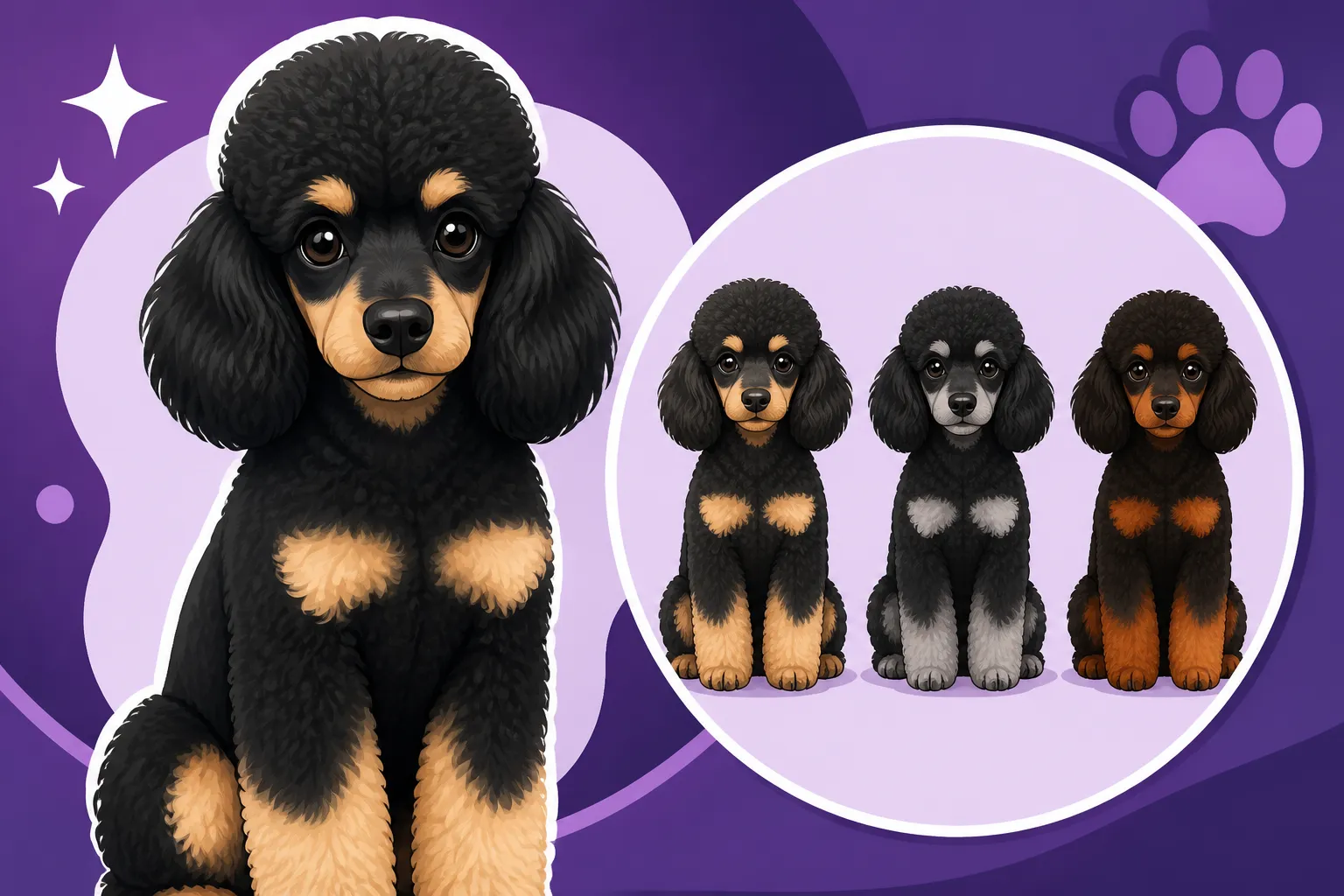
The defining characteristic of a phantom Poodle is the precise location of its secondary color points. These markings aren't haphazard; they appear in very specific areas, giving the Poodle its recognizable pattern. You'll typically find these lighter "points" above each eye, creating expressive eyebrows, on the sides of the muzzle, extending onto the cheeks and sometimes up the throat. There will also be a distinct patch on the chest, often referred to as a "bow tie" or "bib" marking.
Beyond the face and chest, the phantom markings continue down the legs, usually covering the lower part from the hocks/elbows to the paws. It's common to see a clear line where the base color transitions to the secondary color on the legs. And, for the grand finale, you'll usually find the secondary color underneath the tail, sometimes extending partially up the tail itself. These consistent placements are what differentiate a phantom from other multi-colored Poodles and give them their distinctive elegance.
The color of these points can vary in intensity and depth. For example, a black phantom might have points ranging from a pale cream to a rich, dark tan or even red. The contrast is usually quite sharp and defined, especially in a young Poodle. As the dog matures, some of these colors, particularly the lighter ones, might "clear" or fade slightly, but the pattern itself remains. This evolution of color can be fascinating to watch, adding another layer of individuality to each phantom Poodle. It's a living piece of art!
Common Phantom Poodle Color Combinations
While the pattern itself is specific, the actual colors that make up a phantom Poodle can be quite diverse and absolutely stunning. The base coat can be any solid Poodle color, and the points will typically be a lighter shade, creating that striking contrast. This variety ensures there's a phantom Poodle to capture almost any preference, from classic elegance to more unique, subtle beauty.
Classic Black and Tan/Apricot Phantoms
When most people picture a phantom Poodle, the image of a black Poodle with tan or apricot points often comes to mind. This is perhaps the most recognized and iconic phantom combination, and for good reason—it’s absolutely gorgeous. The deep, lustrous black base coat provides the perfect backdrop for rich, warm tan or apricot markings that truly pop. These markings usually appear as those expressive eyebrows, the accent on the muzzle, the "bib" on the chest, and the distinct socks on all four legs, along with the under-tail marking.
The tan or apricot shade in these phantoms isn't always uniform; it can range from a light, creamy tan to a deep, fiery reddish-apricot, even to a rich red. This variation adds to the charm, meaning no two black-and-tan phantoms look exactly alike, even with the same pattern. As these puppies grow, their point color can sometimes intensify or mellow out slightly, but the clear definition of the phantom pattern remains. It's a timeless combination that truly highlights the Poodle's sophisticated structure and intelligent expression.
This classic pairing harks back to the "black and gold" or "black and silver" point patterns seen in breeds like Dobermans or Rottweilers, which is often why phantoms are sometimes described as having a Doberman-like appearance. It demonstrates the versatility of the Poodle's genetic palette and how different genes can interact to produce such striking results. Whether you prefer a bold contrast or a more subtle blend, the black and tan/apricot phantom offers a beautiful spectrum of possibilities.
Silver and Cream, or Blue and Cream Phantoms
Beyond the classic black and tan, phantom Poodles also come in a range of other exquisite color combinations, some of which are more understated but equally captivating. Silver and cream phantoms, for example, present a softer, more ethereal look. The silver base coat, which can range from a very light platinum to a deeper charcoal silver, is beautifully accented by cream or pale apricot points. This combination tends to have a more delicate contrast than the black and tan, giving the Poodle a sophisticated and almost pearlescent glow.
Similarly, blue and cream phantoms offer another lovely, muted option. Blue in Poodles is a dilute black, meaning the base coat is a deep, smoky grey rather than a true black. When paired with cream or light apricot points, the effect is stunningly elegant. These colors often take time to fully "clear" or develop; a blue phantom puppy might be born looking black with tan points, and the blue will gradually emerge as they mature, giving their coat a unique depth and shimmer. How a Black Poodle Puppy Turns Blue explains this fascinating color transformation in more detail.
These less common phantom combinations demonstrate the incredible breadth of Poodle coat colors. The beauty often lies in their subtlety and how the light interacts with the various shades. For owners who appreciate unique aesthetics, a silver and cream or blue and cream phantom Poodle can be an absolute showstopper, standing out with their refined elegance without the bold contrast of the black and tan. Remember, regardless of the color combination, the specific placement of the phantom markings remains consistent, which is the key to identifying them.
Distinguishing Phantom from Other Poodle Patterns
With the Poodle's vast array of colors and patterns, it's easy to get confused. Phantom markings are distinct, but they are sometimes mistaken for other patterns like parti, sable, or brindle. Knowing the precise differences is key to appreciating the unique genetic artistry of each Poodle.
Phantom vs. Parti Poodles
This is perhaps the most common point of confusion, and it's essential to understand the distinction between a phantom Poodle and a parti Poodle. While both are bi-colored, their patterns are fundamentally different. A parti Poodle has a white base coat with large, irregular patches of another solid color. Think of it like a paint splatter pattern, where the white is prominent, and the colored patches are often asymmetrical and can appear anywhere on the body, including over the eyes or down the back. The term "parti" refers to being partially colored. You can learn more about Parti Poodles and the Show Ring to see how their unique patterns are judged.
In stark contrast, a phantom Poodle has a solid base color (like black, brown, silver, blue, or red) with very specific, symmetrical markings of a secondary, lighter color. These markings are restricted to the points we discussed: above the eyes, on the muzzle, chest, legs, and under the tail. The base color covers the majority of the dog's body. So, while both have two colors, the distribution and type of pattern are entirely different. A phantom doesn't have large white patches; it has designated accent areas.
This distinction is crucial, not just for identifying a Poodle's pattern correctly but also for understanding breed standards, especially if you're interested in showing. Parti Poodles have their own rich history and acceptance in various events, but phantom Poodles, with their point pattern, are viewed differently under traditional conformation rules, which historically favored solid colors. If you're looking at puppies, knowing the difference will help you identify what you're truly getting and appreciate the genetic beauty of each type.
Phantom vs. Sable, Brindle, or Abstract
Beyond parti, there are other Poodle patterns that can sometimes cause momentary confusion for the untrained eye, but they are genetically and visually quite distinct from phantom markings. Let's break down sable, brindle, and abstract patterns to clarify these differences.
Sable Poodles have a coat where each individual hair is banded with two or more colors, typically darker at the tip and lighter at the base. This gives the dog an overall "tipped" appearance, often with a darker overlay that fades to a lighter color further down the hair shaft. Imagine a gradient on each strand of hair. This is completely different from phantom markings, which are solid blocks of contrasting color in specific locations on the body, not a layering of color on individual hairs. A sable Poodle's pattern is much more diffuse and less defined than the sharp points of a phantom.
Brindle Poodles, though less common, exhibit a striking tiger-stripe pattern. This involves dark stripes over a lighter background, creating a visually dramatic effect. These stripes can vary in intensity and thickness, but they are always distinct linear patterns across the body. Again, this is a clear departure from phantom markings, which are specific "points" of color, not stripes. A brindle Poodle's pattern covers the whole body in a striped fashion, whereas a phantom's secondary color is restricted to designated areas. Whether a Brindle Poodle Is Recognized explores more about this rare and intriguing pattern.
Finally, an "abstract" or "mis-marked" Poodle typically refers to a solid-colored Poodle with small, irregular white patches, usually on the chest, toes, or chin. These patches are small and don't form a recognizable pattern. They are not the large, defined patches of a parti Poodle, nor are they the symmetrically placed points of a phantom. The white is generally considered an "imperfection" in a solid-colored Poodle, whereas phantom markings are a genetically determined, intentional pattern. Each of these patterns, while beautiful in its own right, has a unique genetic basis and visual presentation that clearly sets it apart from the phantom Poodle's characteristic points.
The AKC and Phantom Poodle Recognition
The world of dog shows and kennel club registration can be a bit of a labyrinth, especially when it comes to color and pattern variations. Phantom Poodles, despite their striking beauty and clear genetic basis, have had a somewhat complex relationship with official breed standards and show ring acceptance.
Phantom Poodles and AKC Registration
Historically, the American Kennel Club (AKC) and many other major kennel clubs worldwide placed a strong emphasis on solid colors for Poodles. For many years, any Poodle with markings or patterns other than a single, uniform color was often considered outside the ideal show standard, even if they were purebred. This historical preference meant that phantom Poodles, along with parti Poodles, were often overlooked or relegated to "limited registration," which allowed them to be registered but not participate in conformation events.
However, the AKC does register phantom Poodles. They are typically registered under their primary or base color (e.g., "Black" or "Brown") with a notation of "Tan Points" or "Apricot Points" to indicate the phantom markings. This means a phantom Poodle is recognized as a purebred Poodle and can participate in a wide array of AKC events such as obedience, agility, rally, and other performance sports. What they generally cannot do is compete in the conformation ring, where dogs are judged on how well they conform to the breed's physical standard, including color.
The distinction between full and limited registration, and the evolving understanding of coat colors, can be a point of frustration for enthusiasts of multi-colored Poodles. While the breed's standard generally calls for solid colors, the ability to register phantom Poodles underscores their status as true Poodles, even if their unique pattern steers them away from certain competitive arenas. It’s important for prospective owners to understand that registration is about lineage, while showing in conformation is about adherence to a specific aesthetic standard.
Showing a Phantom Poodle in Conformation
For those dreaming of strutting their phantom Poodle in the highly competitive conformation ring, it's important to understand the current realities. Traditional Poodle breed standards, as interpreted by the AKC and many other major kennel clubs, historically emphasized solid colors. This means that Poodles with phantom markings, much like parti-colored Poodles, are generally not eligible to compete in standard conformation events. The judges are looking for a dog that adheres as closely as possible to the established breed standard, which for Poodles, traditionally means a coat of a single, even color.
This doesn't mean a phantom Poodle can't be a successful and highly decorated dog! They excel in a multitude of other dog sports and events where intelligence, athleticism, and temperament are prioritized over coat color. Think about the thrill of agility, the precision of obedience, the intricate dance of rally, or even the intense focus of scent work. Phantom Poodles, with their sharp minds and energetic dispositions, thrive in these environments. Many phantom Poodle owners find immense joy and success earning titles in these performance events, proving that a Poodle's worth is far more than skin deep.
So, while the conformation ring might be out of reach for a phantom Poodle, the vast world of canine activities offers endless opportunities for these intelligent and capable dogs to shine. Breeders who produce phantom Poodles are often focused on health, temperament, and performance abilities, ensuring that these dogs are well-suited for active homes and diverse canine pursuits. It's a testament to the Poodle's versatility that even with a non-standard coat pattern, they remain highly prized and successful companions and competitors.
Living with a Phantom Poodle: What to Expect
Bringing any Poodle into your life is a wonderful adventure, and a phantom Poodle is no exception. Beyond their eye-catching coat, they are, at their core, Poodles, with all the intelligence, charm, and sometimes mischief that comes with the breed. Understanding their needs, just like any Poodle, is key to a happy and healthy relationship.
Temperament and Health of Phantom Poodles
One of the most important things to remember about phantom Poodles is that their unique markings have absolutely no bearing on their temperament or overall health. A phantom Poodle possesses the same intelligent, sensitive, and often playful personality as any other Poodle of its size, whether Standard, Miniature, or Toy. Their Poodle-ness shines through regardless of whether their coat is solid black, shimmering silver, or elegantly phantom-marked. They are still that sharp-witted companion, eager to please and always ready for an adventure or a cuddle. The Poodle Character perfectly describes these traits.
When it comes to health, phantom Poodles are susceptible to the same breed-specific health concerns as their solid-colored counterparts. The color of their coat does not introduce new genetic health issues. Therefore, it is paramount to seek out a reputable breeder who prioritizes health testing above all else. A good breeder will screen for conditions common to Poodles, such as hip dysplasia, eye disorders, Addison's disease, and Von Willebrand's disease, regardless of whether they are breeding for solid or phantom colors. This is where researching a breeder's practices and asking about health clearances becomes vital. What a Poodle Breeder Must Test For is an excellent resource for understanding these critical health screenings.
Ultimately, the vibrancy of your phantom Poodle’s personality and their longevity will be determined by responsible breeding practices, proper nutrition, regular exercise, and loving care – not by the presence of their beautiful phantom markings. Never fall for the trap of a breeder marketing "rare" phantom colors at exorbitant prices without verifiable health clearances. A healthy, well-socialized Poodle, regardless of its specific coat pattern, is the true treasure.
Grooming a Phantom Poodle's Unique Coat
The striking appearance of a phantom Poodle's coat, with its distinct two-tone pattern, might lead some to believe it requires specialized grooming. However, the truth is, a phantom Poodle's coat is fundamentally the same as any other Poodle's coat – curly, dense, and non-shedding, which means it grows continuously. This beautiful hair is what holds the phantom markings, so the grooming routine you'd apply to a solid-colored Poodle applies just as much, if not more, to a phantom.
Regular and thorough grooming is absolutely essential to maintain the health and appearance of your phantom Poodle's coat. This means diligent brushing, ideally daily or every other day, to prevent mats and tangles, which can quickly form due to the coat's texture. When brushing, pay special attention to areas where mats love to hide, such as behind the ears, in the armpits, and where harnesses or collars rub. Brushing a Poodle to the Skin provides detailed guidance on proper brushing techniques to ensure you're reaching all the way down to the skin, where mats often start. If you’re looking for high-quality brushes, combs, and detangling sprays to help keep those phantom markings looking sharp, places like Chewy offer a fantastic selection of grooming tools specifically designed for Poodle coats.
Beyond brushing, professional grooming every 4-8 weeks is typically required. During these appointments, your Poodle will be bathed, dried, and clipped to maintain a healthy length and shape. You can choose a clip that highlights their phantom markings, perhaps by keeping the body slightly longer to showcase the contrast, or a shorter, more practical clip that still allows the beautiful pattern to be seen. Whichever style you choose, consistency is key to keeping their coat healthy, free of mats, and those phantom markings looking as vibrant and beautiful as ever.
Finding a Reputable Breeder for Phantom Poodles
The journey to finding a phantom Poodle companion is exciting, but it's also a critical decision that impacts your future dog's health and temperament. Because of their unique coloring, phantom Poodles can sometimes attract less reputable breeders who prioritize color over everything else. It's crucial to be an educated consumer.
Prioritizing Health Over Color
When you're searching for a phantom Poodle, it's easy to get swept away by the beauty of those distinct markings. However, I cannot stress this enough: always prioritize the health and temperament of the puppy and its parents over the specific color or pattern. Unscrupulous breeders sometimes capitalize on the demand for "rare" or unique colors, charging premium prices for puppies that may come from poorly health-tested lines. These puppies can then develop serious, costly, and heartbreaking genetic health conditions down the road.
A reputable breeder of phantom Poodles will be just as dedicated to the health of their dogs as a breeder of solid colors. They will conduct comprehensive health screenings on both the sire and dam (parents) for conditions prevalent in the Poodle breed, such as hip dysplasia, eye diseases (like Progressive Retinal Atrophy), Von Willebrand's disease, and Addison's disease. They should be transparent about these results and willing to share documentation like OFA (Orthopedic Foundation for Animals) or CERF (Canine Eye Registration Foundation) clearances. A breeder focused on color alone, without these vital health checks, is a red flag. What a Poodle Breeder Must Test For is an essential read before you contact any breeder.
Remember, a beautiful coat won't make up for a lifetime of pain and medical bills for your beloved companion. Insist on health testing, ask for references, and don't be afraid to walk away if something doesn't feel right. The goal is a healthy, happy Poodle who happens to have stunning phantom markings, not a phantom Poodle at any cost.
What to Ask Your Breeder
Once you've found a potential breeder for a phantom Poodle, having a list of informed questions is paramount. This isn't just about vetting them; it's about understanding the lineage of your potential new family member and ensuring they've had the best start in life. A reputable breeder will welcome your questions and be eager to share information, seeing it as a sign of a responsible prospective owner.
Start with health. Ask specifically about the health testing performed on both the sire and dam. Inquire about their hips, eyes, thyroid, and genetic conditions like Von Willebrand's disease and Addison's disease. Ask to see the actual certificates, not just take their word for it. Follow up with questions about the parents' temperaments – are they friendly, calm, confident? You want parents with stable personalities, as these traits are often inherited. Also, ask about the puppy's early socialization: have they been exposed to various sights, sounds, people, and other animals? Early positive experiences are crucial for developing a well-adjusted Poodle. For getting all the necessary supplies for your new puppy, whether it's quality food, toys, or bedding, online retailers like Chewy make it easy to stock up before your little phantom arrives home.
A good breeder will also have questions for you to ensure their puppy is going to a suitable home. Be prepared to discuss your living situation, experience with dogs, and how you plan to care for and train your Poodle. They should be a lifelong resource, willing to offer support and advice long after the puppy goes home. Transparency, open communication, and a clear contract are hallmarks of a responsible breeder, and these are non-negotiable when searching for your phantom Poodle.
Comparison of Poodle Coat Patterns
To help clarify the differences between phantom and other Poodle coat patterns, here's a quick comparison:
| Feature | Phantom Poodle | Parti Poodle | Solid Poodle |
|---|---|---|---|
| Primary Pattern | Specific, symmetrical "points" of secondary color | Large, irregular patches of a second color over white | Single, uniform color throughout |
| Base Color | Solid (e.g., black, brown, silver, blue, red) | White | Any recognized solid Poodle color |
| Secondary Color | Lighter points (tan, apricot, cream, silver) | Any recognized solid Poodle color | None (may have minor mismarks, but not a pattern) |
| Placement | Above eyes, muzzle, chest, legs, under tail | Random, asymmetrical patches anywhere on body | None (entirely one color) |
| Genetic Basis | Recessive "at" allele | Recessive "sP" (piebald) allele | Dominant solid color alleles |
| Conformation Show Eligibility (AKC) | Generally not eligible (registered as solid with points) | Generally not eligible (registered as parti) | Eligible (most common for show) |
This table provides a quick visual reference to distinguish these beautiful, yet distinct, Poodle patterns.
Disclaimer
This article is for general informational purposes only and does not constitute professional advice. Laws, prices and regulations vary by location and change over time. Consult a qualified professional for guidance on your specific situation.