Treats Small Enough for a Toy Poodle
Finding the right treats for a Toy Poodle can feel like a surprisingly big challenge, especially when you're faced with an aisle full of options clearly designed for much larger dogs. It’s frustrating when you just want to reward your little companion, but every treat seems either too big, too hard, or just plain inappropriate for their tiny mouths and delicate digestive systems. This guide is all about navigating that treat aisle (or your own kitchen!) to ensure your Toy Poodle gets treats that are not only delicious but perfectly safe and beneficial for their unique needs.
Why Treat Size Truly Matters for Your Toy Poodle
It's easy to assume a treat is a treat, but for a Toy Poodle, size and consistency are paramount. What might be a harmless little bite for a Standard Poodle or a Golden Retriever could pose a significant risk to your miniature marvel. We're not just talking about convenience; we're talking about health and safety.
Choking Hazards and Tiny Throats
Imagine trying to swallow a golf ball whole – that’s a bit how a large treat might feel to your tiny Toy Poodle. Their esophagus is incredibly narrow, and their small teeth aren't always equipped to break down larger, harder treats effectively. A treat that’s too big can easily become lodged in their throat, turning a simple reward into a terrifying emergency. This is particularly true for hard, round, or oddly shaped treats. Even if they don't choke outright, they might struggle to chew it properly, leading to discomfort or potential dental issues if they try to swallow chunks that are too large. It’s a common worry for Toy Poodle owners, and for good reason! We want to avoid any situations that might require immediate veterinary intervention.
Calorie Control and Avoiding Obesity
Let's be honest, those big, heartfelt Poodle eyes can be hard to resist when they're begging for a treat. But with a metabolism as tiny as a Toy Poodle, every single calorie counts. A treat that seems small to us can represent a significant portion of their daily caloric intake. Think about it: a treat meant for a 50-pound dog, even if broken into quarters, might still be too much for a five-pound Poodle. This can quickly lead to unwanted weight gain, and Poodle Obesity and Its Consequences is a serious health concern for any Poodle variety. Obesity exacerbates joint issues, strains their tiny hearts, and can even shorten their lifespan. Choosing appropriately small treats, or making sure to break them down, is a simple but crucial step in managing their weight and keeping them spry.
Identifying the Perfect Treat Size and Texture
So, how do you know if a treat is "just right"? It's more than just a guess; there are some practical guidelines you can follow to ensure you're making the best choices for your Toy Poodle.
The "Pea-Sized" Rule of Thumb
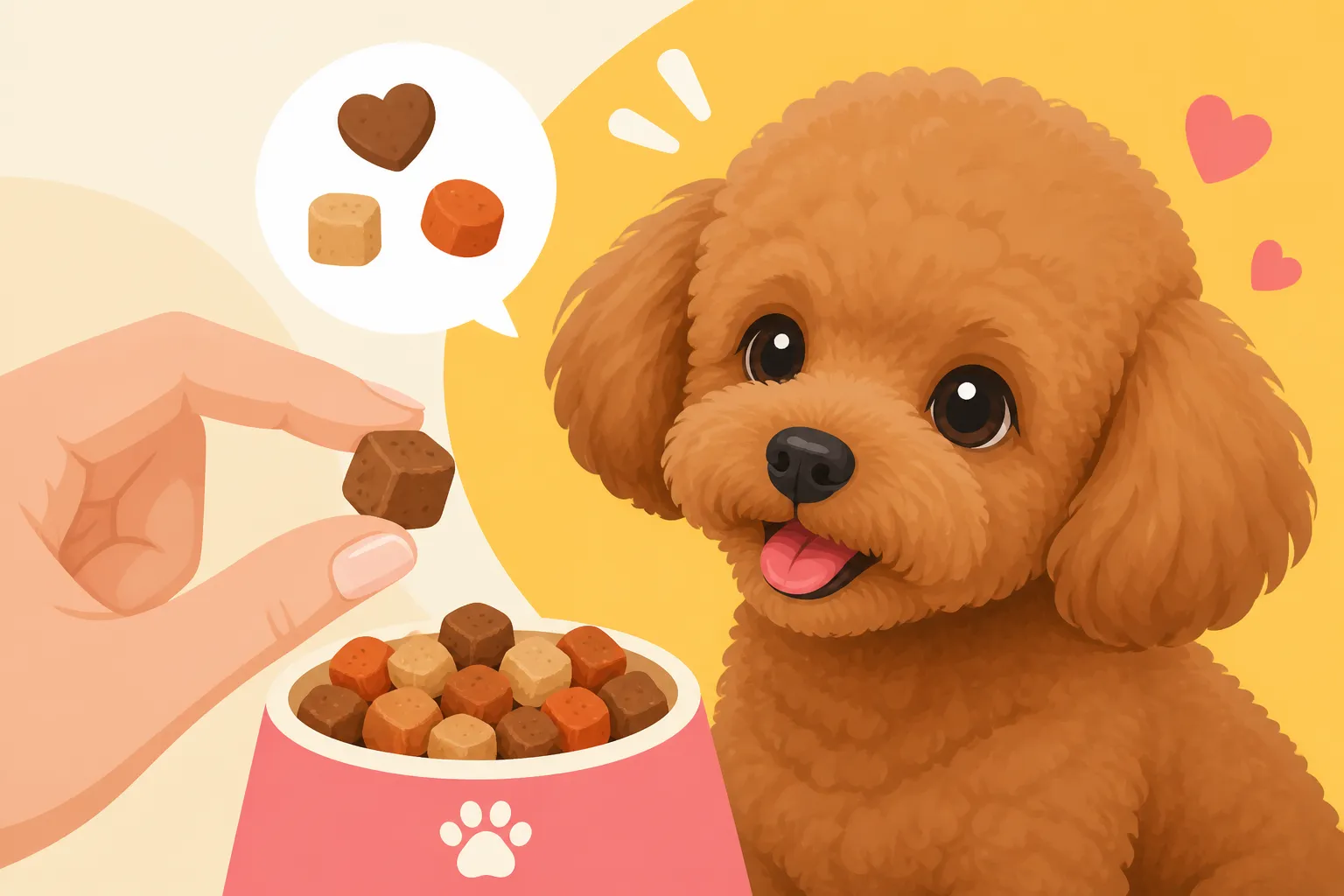
When in doubt, aim for "pea-sized." This isn't just an arbitrary measurement; it's a widely accepted guideline that ensures the treat is small enough to be swallowed easily without posing a choking risk, yet large enough for your Poodle to register it as a reward. For an average Toy Poodle, this means a treat that is roughly 1/4 to 1/2 inch in diameter. If you're looking at a product on Amazon or at your local pet store, try to find images with size comparisons or read reviews from other small dog owners. For training purposes, especially when you're giving many repetitions, Clicker Timing With a Fast-Learning Poodle works best with these tiny, quick-to-eat rewards, so your Poodle doesn't get distracted by chewing for too long. If you use treats bigger than this, your Poodle will be spending more time munching than focusing on the next cue.
Soft, Chewy, or Crunchy: What's Best?
The texture of a treat is just as important as its size.
- Soft and Chewy: These are often the safest and most popular choice for Toy Poodles. They are easy to break into smaller pieces if needed, and they dissolve quickly, reducing the choking risk. Soft treats are also much gentler on tiny teeth, which can be prone to issues like Why Small Poodles Lose Teeth Early. They are excellent for puppies learning to chew and for older Poodles who might have sensitive gums or missing teeth. Many trainers swear by soft, high-value treats for focused work.
- Crunchy: Crunchy treats can be fine, but they need to be truly small and easily crunched. Harder, biscuit-style treats that require significant chewing effort can be problematic. They might chip a tooth or, if swallowed in large, sharp pieces, cause digestive upset. If you opt for crunchy, make sure they are specifically marketed for small breeds and are bite-sized before you even consider breaking them down further.
- Dental Chews: While larger dental chews are unsuitable, there are fantastic options specifically designed for tiny mouths. Dental Chews Sized for a Toy Poodle are excellent for promoting good oral hygiene, but again, ensure they are appropriate for their size and that you supervise your Poodle while they enjoy it. Some dental chews can be quite firm, so always err on the side of caution.
Top Treat Choices for Your Pint-Sized Pal
Now that we understand why size and texture matter, let's dive into some specific types of treats that can be a hit with your Toy Poodle.
Commercial Treats Designed for Small Breeds
The pet food industry has thankfully caught on to the needs of our smaller companions. You can find a fantastic selection of small-breed treats online and in stores. When browsing on Amazon, for instance, look for keywords like "mini," "tiny," "small breed," or "training treats." Many reputable brands offer soft, chewy morsels perfectly proportioned for Toy Poodles. Always check the ingredient list for quality and avoid anything with excessive fillers, artificial colors, or questionable preservatives. High-quality protein as a first ingredient is always a good sign. Don't be afraid to try a few different brands to see what your Poodle truly enjoys. Sometimes, a Poodle can be a bit particular!
Homemade and Human Food Options
Your kitchen can be a treasure trove of healthy, tiny treat options. This gives you complete control over ingredients, which is fantastic for Poodles with sensitivities or those on specific diets.
- Cooked Lean Meats: Tiny bits of cooked chicken breast (plain, no seasoning), turkey, or even lean beef can be incredibly high-value. Cube them into pea-sized pieces. Remember to cook them thoroughly and ensure there are no bones or skin.
- Certain Vegetables: Small pieces of steamed green beans, carrots, or sweet potato are often well-received and add fiber and vitamins. Again, prepare them plain and in very small, manageable sizes. Low Calorie Treats for a Poodle can often come straight from your veggie drawer!
- Fruit: A minuscule piece of apple (no seeds!), banana, or blueberry can be a delightful, sweet reward. Just be mindful of sugar content and only offer very small amounts.
- Hard-Boiled Egg: A tiny crumb of hard-boiled egg is a protein-packed, soft, and healthy option that many Poodles adore.
Always introduce new human foods slowly and in very small quantities to monitor for any digestive upset. And, of course, absolutely avoid toxic foods like chocolate, grapes, raisins, onions, garlic, and xylitol.
Training-Specific Treats
For intense training sessions, where you'll be giving many rewards in a short amount of time, the treats need to be extra special, easily consumed, and super small. This is where the pea-sized rule truly shines. Many positive-reinforcement training programs, like those promoted by BAXTER & Bella, emphasize high-value, pea-sized treats to keep your Poodle engaged and focused during sessions without filling them up or causing distraction with prolonged chewing. You want a treat that disappears in a flash, allowing you to move quickly to the next command. Think about tiny bits of cheese, cooked liver, or high-quality, soft commercial training treats. These highly palatable rewards motivate your clever Poodle without derailing their hunger for dinner. If you're working on Teaching a Poodle to Fetch and Deliver, the quick reward helps reinforce the action without making them drop the item to chew.
Smart Treat Practices for Toy Poodle Owners
Beyond just choosing the right treats, how you give them matters. Smart treat practices ensure your Poodle stays healthy, engaged, and doesn't become a picky eater.
Portion Control and Daily Limits
Even the smallest treats add up! It’s vital to incorporate treats into your Poodle’s daily caloric intake, not just as an add-on. Work with your vet to understand your Poodle's ideal weight and daily calorie needs. Then, account for treats as part of that total. On days when you're doing a lot of training, you might need to slightly reduce their regular meal portions to compensate for the extra treat calories. Generally, treats should make up no more than 10% of their daily diet. This is especially true for Toy Poodles, where Treats and a Poodle's Waistline can become an issue very quickly. Monitoring their weight regularly is key – you should be able to gently feel their ribs without seeing them.
The Art of Breaking Treats
Sometimes, you'll find a fantastic treat that's just a hair too big. Don't toss it! Embrace the art of breaking treats. Even commercially available small-breed treats can often be broken in half or quarters, especially the softer, chewier varieties. This stretches your treat supply, further reduces caloric intake per reward, and ensures optimal safety. A good pair of kitchen shears or even your fingers can easily turn one slightly-too-big treat into two or three perfectly sized morsels. This is a brilliant way to ensure your Feeding a Toy Poodle Puppy routine includes safe, appropriate rewards.
Treating for Training vs. Just Because
It’s great to give your Poodle treats "just because" sometimes, but it’s crucial to distinguish between casual treats and training rewards. For training, consistently use those high-value, pea-sized treats. For casual rewards, you might use slightly less exciting (but still healthy) options, or simply offer verbal praise and affection. This helps your Poodle understand the value of different rewards and keeps them motivated during structured learning. If you're struggling with a Poodle who is Fading Rewards With a Quick-Learning Poodle, varying your treat types and values can keep them guessing and engaged.
Comparing Treat Options for Toy Poodles
Here's a quick comparison of common treat types and their suitability for your pint-sized pal:
| Treat Type | Size Suitability (Initial) | Texture | Key Considerations | Best Use |
|---|---|---|---|---|
| Small Commercial Soft Chews | Excellent (often pea-sized) | Soft/Chewy | Easy to break, high palatability, good for sensitive teeth. Check ingredients for quality. | Training, quick rewards |
| Small Commercial Crunchy Bits | Good (must be very small) | Crunchy | Can chip teeth if too hard. Ensure they crumble easily. Check for small-breed specific packaging. | Casual reward, enrichment |
| Cooked Lean Meats (Chicken/Turkey) | Excellent (cut pea-sized) | Soft/Chewy | High-value, single ingredient. Must be plain, thoroughly cooked, and cut small. | High-value training |
| Steamed Veggies (Green Bean/Carrot) | Excellent (cut pea-sized) | Soft/Crunchy | Low calorie, healthy. Great for adding fiber. Ensure no seasoning. | Healthy snack, casual |
| Tiny Fruit Bits (Blueberry/Apple) | Excellent (cut pea-sized) | Soft | Sweet treat, moderation is key due to sugar. Avoid seeds/pits. | Occasional, special treat |
| Hard-Boiled Egg | Excellent (crumbed) | Soft | Protein-rich, easy to digest. Very high value for many Poodles. | High-value training |
| Large Dog Biscuits | Poor (choking risk) | Hard | Avoid entirely. Too large, too hard, choking hazard, too many calories. | N/A |
| Rawhide/Large Chews | Poor (choking risk, indigestible) | Hard | Avoid entirely. Choking risk, can cause blockages, difficult for tiny jaws. | N/A |
Remember, your Toy Poodle is a unique and cherished member of your family. Taking a little extra time to select or prepare treats that are just right for their size and health will ensure many happy, healthy years together. It truly makes a world of difference for their well-being and your peace of mind.
Disclaimer
This article is for general informational purposes only and does not constitute professional advice. Laws, prices and regulations vary by location and change over time. Consult a qualified professional for guidance on your specific situation.