Whether a Second Poodle Fixes Loneliness
Coming home to a Poodle who has torn up a cushion, soiled the rug, or greeted you with an utterly frantic energy can be heartbreaking, leaving you to wonder if your beloved companion is simply lonely. Many of us, faced with a Poodle who clearly struggles with being left alone, immediately jump to what seems like the most natural solution: getting them a friend. This guide will explore whether bringing a second Poodle into your home genuinely solves the problem of loneliness, or if it might introduce new challenges.
Understanding Poodle Loneliness and Separation Anxiety
Poodles are incredibly intelligent, sensitive, and deeply bonded dogs. This makes them wonderful companions, but it also means they can struggle immensely when left to their own devices, especially if they haven't been adequately prepared for solitude. It's not just about missing you; for some Poodles, it's a genuine panic.
The Root Causes of a Poodle's Distress
A Poodle's distress when left alone isn't always as simple as missing company. Often, it stems from a complex mix of factors. Their genetic predisposition as intelligent working dogs means they thrive on purpose and interaction. When that's absent, they can become profoundly bored, which quickly escalates to anxiety. Think about it: a Poodle's brain is constantly seeking engagement, and if you're not there to provide it, they'll find their own "job," which might involve deconstructing your sofa. This breed also tends to form incredibly strong attachments to their primary caregivers, leading to significant distress when that bond is broken, even temporarily. It’s not just a preference for company; it can be a feeling of genuine abandonment.
Moreover, inadequate socialization during their critical puppyhood can contribute. A Poodle puppy who wasn't gradually accustomed to short periods of being alone might never learn to self-soothe. They grow up believing that solitude is an abnormal and frightening state. Poor routines, inconsistent departures and arrivals, or even past negative experiences when left alone can all chip away at a Poodle's confidence, making them more prone to anxiety. It's a testament to their deep connection with us that they feel our absence so acutely. For a more in-depth look at this specific challenge, you might find Separation Anxiety in a Velcro Poodle helpful.
How Loneliness Manifests in Poodles
The signs of loneliness and separation anxiety in Poodles can be varied and, at times, quite dramatic. It's not always obvious, either. Some Poodles might become destructive, chewing on furniture, doorframes, or even personal items that carry your scent, almost as if trying to keep a piece of you with them. Others might vocalize excessively, barking, howling, or whining non-stop from the moment you leave until you return, much to the dismay of your neighbors. This isn't just a "I miss you" bark; it's often a distress call.
You might also observe house-soiling, even in a perfectly house-trained Poodle. This isn't out of spite but a symptom of extreme anxiety, where they simply lose control. Some Poodles will pace relentlessly, pant, or drool excessively, leaving puddles around the house. In severe cases, Poodles can resort to self-harm, like obsessive licking that leads to hot spots or chewing their paws raw. Their highly sensitive nature means that mental distress can quickly manifest physically. It's a clear signal that something is deeply wrong and they need more than just a quick fix. Understanding these behaviors is the first step, as they are often a plea for help.
Why a Poodle Develops Such Strong Bonds
Poodles are known for their unwavering devotion and form powerful connections with their human families. This isn't just a charming trait; it's deeply ingrained in their history and temperament. Originally bred as retrieving water dogs, they worked closely with hunters, relying on clear communication and a strong partnership. This historical role cultivated a breed that thrives on interaction and guidance from their human companions. They are keen observers of human emotion, picking up on our moods and responding empathetically. This sensitivity means they become deeply attuned to our presence and can feel our absence profoundly.
Moreover, their intelligence drives a need for constant mental engagement, and for many Poodles, their primary human becomes the source of that stimulation. They aren't content to merely exist in the same space; they want to participate, learn, and interact. This intense bond, while wonderful, can become a double-edged sword when they are left alone. Their capacity for deep attachment makes them vulnerable to feelings of isolation and anxiety, creating a dependency that can be challenging to manage. They are not merely pets; they are family members who truly invest themselves emotionally. You can see this dedication in How a Poodle Shows Affection.
The Lure of a Second Poodle: What You Hope For
The thought of two Poodles frolicking together, keeping each other company, and easing the silence of an empty house is incredibly appealing. It’s a vision many Poodle owners entertain when faced with a lonely dog.
The Idea of Constant Companionship
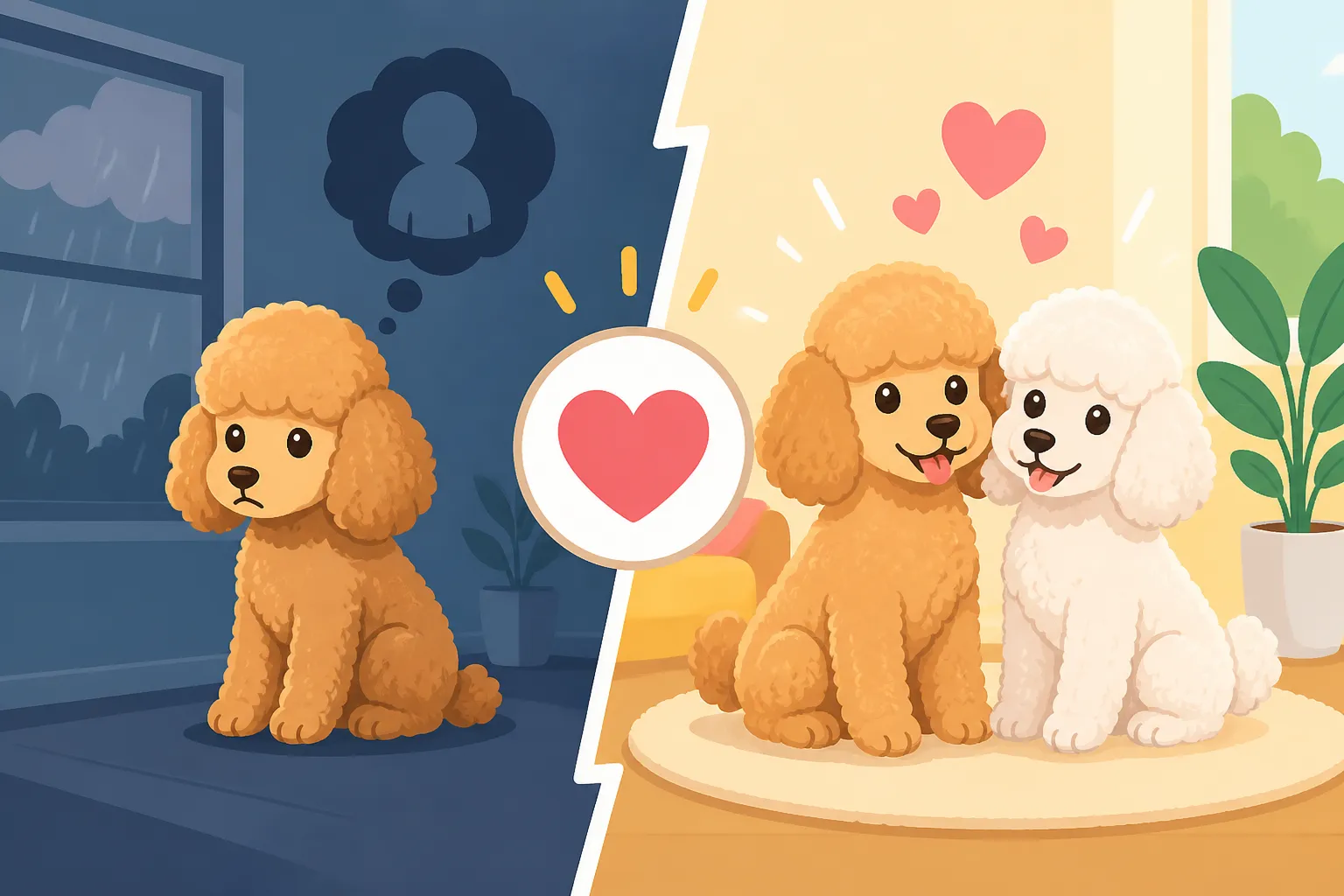
The most compelling reason people consider getting a second Poodle is the simple, hopeful idea that two are better than one. The belief is that if your Poodle has a furry friend, they won't feel so alone when you're gone. You picture them curled up together for naps, chasing toys in the yard, and generally providing each other with a comforting presence. It feels like a natural solution, filling the void that your absence creates. This isn't just wishful thinking; there's a kernel of truth to the idea that dogs are social animals and often benefit from canine companionship.
For many Poodle owners, the hope is that the presence of another dog will act as a buffer against anxiety, perhaps even teaching an anxious Poodle how to be calm. You imagine less barking, less destruction, and a happier homecoming. It’s an understandable desire to alleviate your dog’s distress and, let's be honest, your own guilt. The thought of your Poodle spending long hours staring at the door, pining for your return, is hard to bear. A new friend seems like the perfect antidote, offering constant interaction and mutual support in a way no human can replicate all day long.
Shared Play and Mental Stimulation
Another powerful draw for adding a second Poodle is the promise of shared play and increased mental stimulation. Poodles are highly active and intelligent dogs, and they need outlets for their energy and sharp minds. If you’re at work all day, your single Poodle might be lacking crucial physical and mental exercise, leading to boredom-induced behaviors like chewing, digging, or excessive barking. The idea of two Poodles engaging in games of chase, wrestling, or even just mutually sniffing around the yard sounds like a dream come true for both you and your current dog.
This kind of interaction isn't just physical; it's mentally stimulating as well. Dogs communicate in complex ways, and having another dog to "talk" to, interpret, and play with can fulfill social needs that a human simply cannot. You might imagine them solving puzzle toys together or engaging in synchronized bursts of zoomies. This natural canine interaction could potentially tire them out both physically and mentally, leading to a calmer, more content Poodle when you do arrive home. It's a way to delegate some of the "job" of keeping your Poodle occupied to another Poodle. However, it’s crucial to remember that this ideal scenario requires both Poodles to be compatible and willing playmates, which isn't always a guarantee. To learn more about stimulating your Poodle's mind, consider What a Poodle Does When Its Brain Is Idle or Training the Second Smartest Dog Breed.
Easing the Guilt of Leaving Your Poodle Alone
Let's be real: one of the biggest motivators for getting a second dog is often our own guilt. We love our Poodles fiercely, and the thought of them being sad, bored, or anxious while we're away at work or running errands can be truly upsetting. That feeling in the pit of your stomach when you close the door, knowing your furry friend is on the other side, is tough. A second Poodle offers the comforting illusion that at least they aren't alone.
You imagine your first Poodle has someone to lean on, someone to share a sunny spot with, or simply another warm body to nap next to. This eases the burden of responsibility you feel to be their sole source of companionship and entertainment. It feels like a loving gesture, a way to provide them with everything they could possibly need, even when you can't be there. This emotional relief for the owner is a significant factor, but it's important to differentiate between what makes us feel better and what truly benefits our Poodles. While admirable, this motivation needs to be balanced with the practical realities and potential pitfalls of adding another animal to the household. The honest truth is, some Poodles need human presence more than canine.
The Reality of Adding Another Poodle to the Mix
While the vision of two Poodles happily coexisting is lovely, the reality can sometimes be far more complex than we anticipate. It's not a guaranteed solution, and in some cases, it can even exacerbate existing issues or create new ones.
It's Not Always a Simple Fix
It’s tempting to think that getting a second Poodle will magically solve your first Poodle's loneliness, but it's rarely that straightforward. Dogs, like people, have individual personalities, preferences, and needs. There's no guarantee that your existing Poodle will even like the new addition, let alone bond with them in a way that alleviates loneliness. In fact, if your Poodle's distress is rooted in separation anxiety from you, another dog may not provide the specific comfort they seek. They might still panic about your absence, even with a companion nearby.
Sometimes, rather than finding comfort, the resident Poodle might feel threatened by the newcomer, leading to stress, territorial behavior, or even aggression. The dynamic can be unpredictable. You might also find that the new Poodle, instead of helping, picks up on the anxious behaviors of the first. Imagine a puppy mimicking the older Poodle's frantic barking or destructive habits – suddenly, you have two Poodles with separation issues! It's crucial to understand that a second dog is a distinct individual, and their integration into your home and into your existing Poodle's life requires careful planning, patience, and a deep understanding of canine behavior. For a closer look at multi-dog dynamics, consider A Poodle in a Multi-Dog House.
Potential Behavioral Challenges and Rivalries
Bringing a second Poodle into the home, even if both are lovely individuals, can introduce a host of behavioral challenges and potential rivalries. Dogs establish a social hierarchy, and sometimes this process isn't smooth. You might see resource guarding over toys, food bowls, or even prime napping spots on the sofa. Your first Poodle might suddenly feel their territory is invaded, leading to growling, snapping, or general unease. This can manifest as subtle tension or overt conflict, creating a stressful environment for everyone involved.
Even if they don't outright fight, there can be passive-aggressive behaviors, like one Poodle blocking the other from getting attention or constantly nudging them away. The newcomer might challenge the established routines or boundaries, leading to confusion and stress for your existing Poodle. Furthermore, if your original Poodle has specific behavioral issues, such as fearfulness or reactivity, introducing a new dog could either help by providing a calm role model or worsen things if the new dog is boisterous or if the fearful dog feels more overwhelmed. It’s a delicate balance, and sometimes the best intentions can lead to unexpected and difficult dynamics. This table illustrates some common expectations versus realities:
| Expectation | Reality |
|---|---|
| Instant best friends | May take weeks or months to tolerate each other |
| Solves separation anxiety | May create two anxious dogs, or no change |
| Shared playtime & exercise | May lead to resource guarding or one-sided play |
| Reduces destructive behavior | Can double destructive behavior if both get anxious |
| Easier to manage | Doubles feeding, grooming, and vet costs |
| Always comforting for first Poodle | Can be a source of stress or rivalry |
Doubling Down on Costs and Commitment
Before you even consider the emotional and behavioral aspects, it’s vital to be realistic about the financial and time commitment involved in owning two Poodles. Everything effectively doubles. You'll need double the food – and Poodles, especially Standards, can eat a fair bit! You’ll need double the vet bills for routine check-ups, vaccinations, parasite prevention, and unexpected emergencies. Factor in potential costs for two sets of training classes or behavior consultations if things don't go smoothly. Think about Budgeting for a Poodle Coat That Never Stops and then imagine that times two.
Then there's the grooming. Poodles require consistent, professional grooming, or dedicated home grooming time. Two Poodles mean twice the brushing, twice the bathing, and twice the clipping. This isn't just about money; it's about time. Are you prepared to spend hours each week maintaining two Poodle coats? The time commitment extends to daily exercise, training, and individual attention. Each Poodle deserves one-on-one time with you. If you were already struggling to provide enough mental and physical stimulation for one, adding a second might simply mean neither gets enough attention, leading to more stress and behavioral problems for both. It’s a significant investment that requires careful consideration. Read Fifteen Years of Poodle Grooms and Vet Care for a perspective on long-term costs for a single Poodle.
Alternatives to a Second Poodle for Alleviating Loneliness
If a second Poodle isn't the guaranteed fix you hoped for, what can you do to help your lonely or anxious Poodle? Plenty, it turns out. Focusing on individual needs and environmental enrichment is often far more effective.
Enriching Your Poodle's Environment
One of the most impactful ways to combat loneliness and boredom in a Poodle is to enrich their environment, especially during your absence. This means providing activities and items that engage their intelligent minds and keep them constructively busy. Think beyond just a chew toy. Puzzle feeders, for instance, are fantastic. Instead of simply dumping their kibble in a bowl, put it in a dispenser toy that requires them to work for their meal. Brands like Kong or other interactive feeders available on Amazon can provide 15-30 minutes of engaging work. This transforms mealtime into a mental exercise, tapping into their natural problem-solving abilities. You can also explore options like snuffle mats or treat-dispensing balls. Learn more about these tools in Cameras and Puzzle Feeders for a Lonely Poodle.
Consider rotating toys to keep things fresh. Don't leave all toys out at once; introduce a "new" toy every few days to maintain interest. Scent work games, even simple ones like hiding treats around the house, can be incredibly tiring and satisfying for a Poodle's nose and brain. Leaving on a radio tuned to a talk station or a TV channel designed for dogs can provide background noise and a sense of presence, helping to mask external sounds that might trigger barking. A secure, comfortable den or crate that feels like their safe haven can also offer immense comfort. The goal is to make their alone time less about waiting and more about engaging.
Training and Behavioral Support
Addressing loneliness and separation anxiety often requires a targeted approach through training and, if necessary, professional behavioral support. This isn't about punishment; it's about teaching your Poodle coping mechanisms and building their confidence in your absence. Start with gradual desensitization: practice leaving for very short periods (seconds, then minutes), returning before your Poodle shows signs of distress. Slowly increase the duration over days and weeks. This teaches them that your departures are always followed by your return and that being alone isn't scary.
Crate training, if introduced positively and correctly, can provide a safe and secure space where your Poodle feels protected rather than trapped. Consistency is key with any training. Establish clear routines for departures and arrivals – make them low-key. Avoid making a huge fuss when you leave or return, as this can heighten their anxiety. Investing in online courses or working with a certified professional dog trainer can be invaluable. Platforms like BAXTER & Bella offer comprehensive online training programs that can guide you through these challenging behaviors step-by-step, helping you understand the nuances of Poodle behavior and how to build independence gently. A good trainer can help you read your Poodle's body language and tailor a plan specifically for their needs. This kind of dedicated work truly builds a resilient Poodle. You might also find Finding a Trainer Who Uses No Force on a Poodle a useful resource.
External Support Systems and Daycare
Sometimes, despite your best efforts, your Poodle might need more than you can provide on your own during working hours. This is where external support systems come into play. Professional dog walkers can be a lifesaver. A mid-day walk, even for 30-45 minutes, breaks up the day, provides exercise, a potty break, and some crucial social interaction, making the second half of their alone time much more manageable. They come home tired and stimulated, ready for a nap.
Dog daycare is another excellent option for Poodles who thrive in social environments. It offers structured play, supervision, and constant canine and human interaction, ensuring they are mentally and physically exhausted by the time you pick them up. Not every Poodle enjoys daycare, especially if they are more reserved or easily overwhelmed, so a trial period is always recommended. For Toy Poodles, ensure the daycare has separate play areas for smaller breeds. Lastly, consider trusted friends, family, or professional pet sitters who can pop in for visits or even stay at your home during extended absences. The goal is to ensure your Poodle's social and mental needs are met, even when you're not physically present. Thinking about your Poodle's energy levels, you might also want to consult Daily Exercise for a Standard Poodle or Daily Exercise for a Toy Poodle. Ultimately, a well-exercised and mentally stimulated Poodle is a far less lonely Poodle.
Disclaimer
This article is for general informational purposes only and does not constitute professional advice. Laws, prices and regulations vary by location and change over time. Consult a qualified professional for guidance on your specific situation.