Why a Poodle Invents Its Own Shortcuts
There's nothing quite like the exasperation of realizing your brilliant Poodle, the one you spent hours training with meticulous care, has found a "better" way to do something—a way that completely circumvents your perfectly taught cues and routines. It feels like they're outsmarting you, doesn't it? This guide is here to shed some light on why our clever Poodles often invent their own shortcuts and how we can lovingly, yet firmly, guide their genius toward the behaviors we actually want.
The Poodle Brain: A Double-Edged Sword of Genius
Poodles are renowned for their intelligence. They consistently rank among the smartest dog breeds, a trait that makes them incredibly trainable and capable of learning complex tasks. But this sharp intellect isn't always convenient for us, their human companions. Often, that very intelligence leads them to observe, analyze, and, yes, optimize their environment and interactions in ways we never anticipated. What seems like defiance or stubbornness might simply be a Poodle applying their immense brainpower to find the path of least resistance or greatest perceived reward.
Their Natural Problem-Solving Instinct
Think about a Poodle's historical role. They weren't just pretty faces; they were working dogs, bred to retrieve waterfowl, often in challenging conditions. This required independent thought, problem-solving on the fly, and adapting to dynamic situations. That instinct didn't vanish when they moved from the duck blind to our living rooms. When faced with a task, whether it's getting a treat from a puzzle toy or getting your attention, a Poodle's brain is constantly calculating the most efficient route. If they see a faster, easier, or more rewarding way to achieve their goal, they'll take it. It's not malice; it's just pure, unadulterated Poodle efficiency. They are simply asking, "Why do it the hard way when there's this perfectly good easy way?"
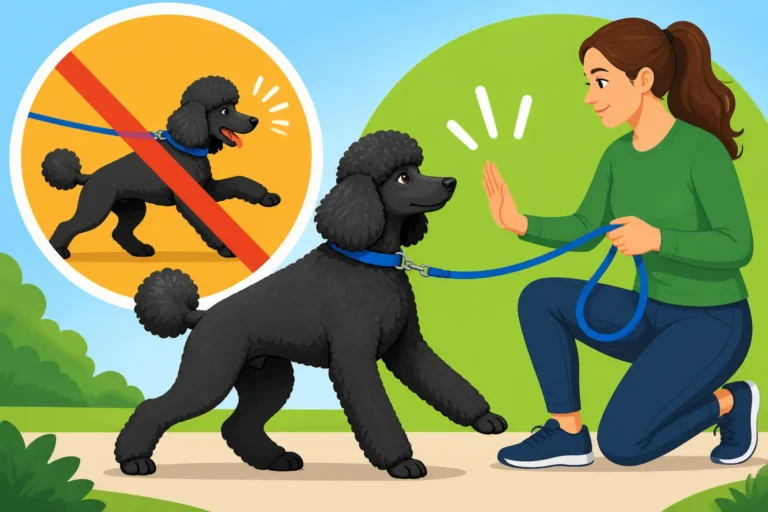
You might teach your Poodle to sit patiently by the door before going out for a walk. But if one day, in their excitement, they nudge the door open with their nose and you proceed with the walk, they've just discovered a shortcut. Their brain connected "nudge door" with "walk happens." From their perspective, they've successfully problem-solved: "How do I get out faster?" and the answer was not "sit" but "nudge." This is where our consistency becomes paramount, as a single slip can reinforce an unintended behavior.
The Drive for Efficiency and Novelty
A Poodle's intelligence also means they can get bored with repetition very quickly. Why a Bright Poodle Gets Bored is a common challenge for Poodle owners. Once they've mastered a skill, performing it the exact same way every time might feel redundant to their keen minds. They're like little canine engineers, always looking for ways to streamline processes. If they've learned a "sit-stay" and realize that wiggling forward just a tiny bit before the release cue doesn't actually stop the treat from coming, they've just invented a tiny shortcut within the stay. This micro-adjustment is a testament to their observational skills and their drive for efficiency.
This desire for novelty can also manifest as them inventing new behaviors entirely, sometimes unrelated to what you were trying to teach. Perhaps you wanted them to bring you their leash, but instead, they started bringing you a specific squeaky toy first, then the leash, because they realized the squeaky toy gets a bigger reaction from you. They're not just learning the cues we give them; they're learning the system and looking for ways to exploit it for their benefit, or simply to add a little flair to their day. It’s part of the charming, albeit sometimes frustrating, experience of Training a Poodle That Outthinks You.
Why Shortcuts Emerge
Understanding that Poodles invent shortcuts is one thing, but knowing why they do it can help us prevent and redirect these inventive behaviors. It usually boils down to a combination of their innate intelligence, our inadvertent reinforcement, and a lack of mental engagement.
Perceived Higher Reward for the Shortcut
This is arguably the biggest reason. Dogs, like all animals, operate on a reward system. If a shortcut consistently yields a higher or faster reward than the "correct" behavior, the shortcut will win. Imagine you're teaching your Poodle to retrieve a toy and bring it directly back to your hand. You reward them for this. But one day, they drop it at your feet and you, perhaps engrossed in something else, still pick it up and throw it. To your Poodle, dropping it at your feet just became a shortcut to getting the toy thrown again, requiring less effort on their part. The "reward" (the throw) was still achieved.
The key here is perceived reward. It might not be a food treat. It could be your attention, a game, access to a desired area, or simply achieving a goal faster. If your Poodle barks at the door to go out, and you eventually let them out, they've learned barking is a shortcut to outdoor access, even if you were planning to let them out anyway. They've found a way to control the outcome more directly. This is why being mindful of what we're inadvertently reinforcing is so critical, especially with a dog as smart as a Poodle.
Boredom and Lack of Mental Challenge
An under-stimulated Poodle is a Poodle looking for a job, and if you don't give them one, they'll create their own. Their natural problem-solving abilities, when not channeled into constructive activities, can lead them to "invent" ways to entertain themselves, often by bypassing established rules. A Poodle that’s bored with simple obedience drills might start to experiment with different ways to perform a command, or even ignore it, to see what happens. This isn't defiance; it's a search for mental engagement.
Think of a Poodle who knows "stay" perfectly but starts slowly creeping forward. This isn't necessarily disobedience if they're not being actively challenged in other ways. They might be testing the limits, or simply adding a layer of complexity for their own amusement. What a Poodle Does When Its Brain Is Idle can be anything from counter-surfing to excessive barking, and yes, inventing shortcuts. Providing regular mental enrichment through puzzle toys, new tricks, or scent games can help satisfy this need for cognitive work. Products found on Amazon, like snuffle mats or interactive feeders, can be excellent for this.
Inconsistent Training and Boundary Testing
Poodles are excellent at reading their humans and their environment. If the rules aren't consistently applied, they will quickly identify the loopholes. If "sit" means a treat 90% of the time, but 10% of the time they get a treat without a perfect sit because you're in a hurry, their sharp mind registers this inconsistency. They learn that sometimes a "good enough" sit is acceptable, and they'll try to push that boundary.
This testing of boundaries isn't a sign of a "bad" dog; it's a sign of a highly intelligent one exploring the parameters of their world. They're asking, "How far can I push this?" or "Does this rule always apply?" If the answer, even occasionally, is "no," then a shortcut has just been established in their mind. This highlights the importance of everyone in the household being on the same page with training and expectations.
Managing the Poodle's Ingenuity: Channeling Their Smartness
So, how do we handle these clever canine masterminds and redirect their shortcut-seeking tendencies? The good news is that their intelligence, which causes the "problem," is also the solution. We just need to be smarter and more consistent than them!
Consistency is King (and Queen, and the Entire Royal Court)
This cannot be stressed enough. If you want your Poodle to perform a specific behavior, it must always yield the desired outcome, and shortcuts must never yield it. If your Poodle nudges the door to go out, the door does not open. The moment they offer a sit, then the door opens. If they drop the toy at your feet instead of in your hand, don't throw it until they pick it up and place it in your hand. This requires patience and commitment, but it’s the most effective way to teach a Poodle that the right way is the only way to get what they want.
Every interaction is a training opportunity. Even when you're tired, try to be consistent. If you let them get away with a shortcut "just this once," they remember. Their memory for what works (and what doesn't) is phenomenal. Teaching a Poodle to Wait Rather Than Guess is a crucial skill for curbing shortcuts, and it relies heavily on consistent reinforcement of the desired waiting behavior.
Make the Right Way Easier and More Rewarding
Why did they invent the shortcut? Because it seemed easier or more rewarding. Your job is to make the correct path unequivocally the most attractive option.
- Higher Value Rewards: If they're taking a shortcut to get a toy, make the correct delivery earn a higher value treat (like a tiny piece of cheese or chicken) or an even more exciting game of fetch.
- Reduce Effort for the Correct Behavior: If your Poodle is skipping a step, perhaps the correct multi-step behavior is too complex or physically demanding. Break it down into smaller, easier-to-achieve steps and reward each small success generously.
- Proofing: Practice the "right" behavior in different environments, with varying distractions. A behavior isn't truly learned until it can be performed reliably everywhere.
Here's a quick comparison of how a Poodle's brain might assess a situation:
| Desired Behavior | Poodle Shortcut | Why the Shortcut Appeared (from Poodle's view) | Our Strategy |
|---|---|---|---|
| Sit at door to go out | Nudge door with nose, then walk | Faster access to outside; human still opens door | Ignore nudge; reward immediate sit with door opening. |
| Retrieve toy to hand | Drop toy at feet | Less effort; human still throws toy | Don't throw until toy is placed in hand. |
| Stay in place for 30 seconds | Creep forward at 15 seconds | Still gets reward; human sometimes allows it | Reset, don't reward creep; only reward full, correct stay. |
| Go around the baby gate | Jump over low baby gate | Direct route; human didn't correct jump effectively | Raise gate, block jump; reward going around only. |
| Come when called | Come slowly, sniffing | Still reaches human; human isn't always firm | High-value reward for immediate, fast recall; practice in varied environments. |
Remember that dogs repeat behaviors that are reinforced. If the shortcut works, they'll keep doing it. If it never works, and the correct behavior always works and is more rewarding, they'll choose the correct one.
Engaging Their Minds Productively
A bored Poodle is an inventive Poodle, and not always in ways we appreciate. Channel their intelligence into acceptable outlets.
- Puzzle Toys: Offer food puzzles or snuffle mats for meals, making them think for their dinner. There are many great options on Amazon that cater to various difficulty levels.
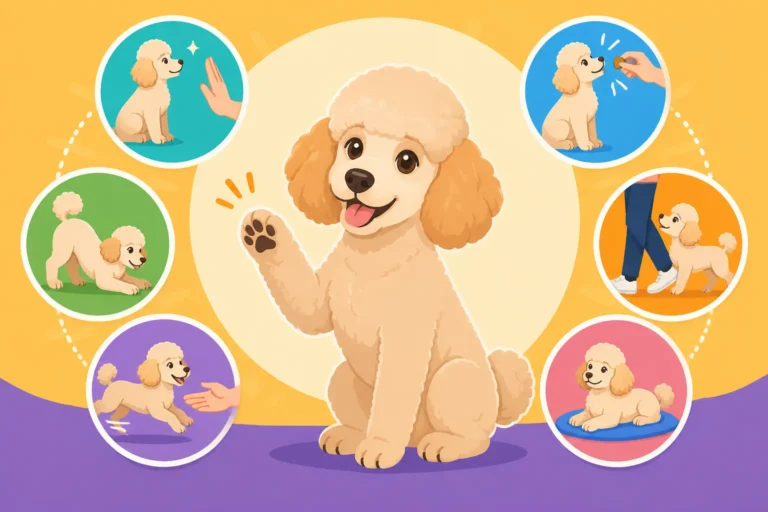
- Training New Tricks: Keep training fun and engaging by constantly teaching them new cues or tricks. This satisfies their need for mental stimulation. Consider online training programs like BAXTER & Bella, which often provide a wide array of engaging activities and positive reinforcement methods suitable for a smart Poodle.
- Dog Sports: Poodles excel in activities like agility, obedience, rally, and even scent work. Dog Sports a Poodle Excels At are fantastic ways to give them a "job" and work their brains and bodies.
- Interactive Play: Instead of just passive fetching, engage them in games that require thinking, like hide-and-seek with toys or finding hidden treats. Scent Games That Stretch a Poodle's Mind are particularly good for this.
By giving them appropriate challenges, you're less likely to find them inventing their own, less desirable, shortcuts. You're essentially saying, "Yes, you're smart, and I appreciate that! Here's a brain teaser I want you to solve."
Recognising the Early Signs of a Poodle's "Innovation"
Sometimes, a shortcut doesn't appear fully formed overnight. It can start as subtle changes in behavior that, if left unaddressed, escalate into a full-blown habit. Learning to spot these early indicators can save you a lot of headache down the line.
The "Good Enough" Performance
One of the first signs is when your Poodle starts giving you a "good enough" rather than a "perfect" performance of a cue. Maybe their "sit" isn't quite as straight or fast as it used to be. Perhaps their "down" is a little sloppy, or they break their "stay" by an inch or two. This isn't defiance, but often a test. They're probing the boundaries, trying to see how much they can get away with while still receiving the reward. If you consistently reward these "good enough" attempts, you've just reinforced a shortcut.
It's crucial at this stage to raise your standards gently. Don't punish the imperfect attempt, but simply withhold the reward and prompt them to perform the action correctly. For example, if their sit is lazy, don't reward, just softly say "sit" again and guide them into a proper sit, then reward lavishly. This teaches them that precision matters. This also applies to Fading Rewards With a Quick-Learning Poodle—you want to fade reliance on constant treats, not the precision of the behavior itself.
Testing Your Attention and Boundaries
Poodles are masters at reading their human's body language and level of focus. If you're distracted, on the phone, or just not paying close attention, they might take the opportunity to try a shortcut. They're seeing if the rules still apply when you're not fully engaged. This could be a slow creep during a stay, nudging a door, or simply ignoring a verbal cue because they've learned that you're less likely to follow through with a correction or redirection when your attention is elsewhere.
This is where being present during training and interactions is key. Even short, focused training sessions are more effective than long, distracted ones. If you find yourself consistently rewarding a "good enough" behavior out of convenience, it’s a sign that your Poodle is learning that they can get away with it when your attention wanes. By being consistent and present, you reinforce that the rules are always in effect, regardless of your immediate focus.
The Emergence of Unexpected Solutions
Sometimes, a Poodle's shortcut isn't a deviation from an existing cue, but an entirely new, unprompted behavior they've invented to achieve a goal. For example, if they want attention, instead of sitting politely, they might start pawing at your leg or even grabbing a specific item to bring to you (because that usually gets a reaction). Or if they want to go outside, they might discover that scratching at the door gets a response quicker than sitting.
These are true innovations from their intelligent minds. When you observe these unexpected "solutions," take a moment to understand the underlying motivation. What is your Poodle trying to achieve? Once you identify the goal (e.g., attention, outdoor access, food), you can then redirect them to the correct behavior that achieves that same goal. For instance, if they paw for attention, ignore the pawing, and only reward them when they offer a polite sit. This teaches them that their ingenuity is appreciated, but it needs to be channeled into approved behaviors.
Final Thoughts on Your Inventive Poodle
Living with a Poodle means living with a truly intelligent companion, and sometimes that intelligence expresses itself in ways that are both endearing and challenging. Their ability to invent shortcuts is a testament to their sharp minds and problem-solving capabilities. It's not about them trying to be "naughty" or disobedient; it's often about efficiency, boredom, or simply exploring the boundaries of their world.
By understanding why your Poodle might take shortcuts, and by committing to unwavering consistency, making the desired behaviors more rewarding, and providing ample mental stimulation, you can channel their genius in positive directions. Embrace their cleverness, but guide it with a firm, loving hand, and you'll find your Poodle to be an endlessly fascinating and well-behaved member of your family.
Disclaimer
This article is for general informational purposes only and does not constitute professional advice. Laws, prices and regulations vary by location and change over time. Consult a qualified professional for guidance on your specific situation.