Scent Games That Stretch a Poodle’s Mind
It’s a common frustration for Poodle owners: you’ve walked your smart, energetic companion, thrown the ball a dozen times, and yet, they’re still pacing, still looking for something to do. A Poodle’s brain is a finely tuned machine, wired for problem-solving and work, and without adequate mental exercise, that boundless intelligence can turn into boredom, leading to mischief like chewing the sofa or excessive barking. This guide is here to help you tap into your Poodle’s natural instincts and stretch their brilliant mind with engaging scent games, turning that restless energy into focused, satisfying work.
Why Your Poodle Needs Scent Games and Nose Work
Poodles, regardless of their size, are exceptionally intelligent dogs with a rich history as working retrievers. They weren't bred to sit idly by; their ancestors were keen water dogs, using their noses to locate fallen birds in dense cover. This innate drive to hunt, seek, and solve problems is still very much alive in the modern Poodle, and when it’s not channeled productively, it can manifest as unwanted behaviors.
Tapping into a Poodle's Natural Instincts
Imagine a Standard Poodle, sleek and powerful, plunging into icy water to retrieve a duck decades ago. Or a Miniature Poodle, small but mighty, navigating reeds to bring back a smaller bird. These images aren't just historical footnotes; they're blueprints for your Poodle's brain. Their olfactory senses are incredibly sophisticated, far surpassing our own, and using them is deeply satisfying for them. When a Poodle is allowed to engage their nose, they are literally fulfilling a part of their genetic heritage. It’s not just a game; it's a connection to their past, a way to be the dog they were always meant to be. This kind of work is intrinsically rewarding and builds confidence.
When a Poodle's day consists mostly of walks on a leash and maybe some indoor playtime, their mind can quickly become understimulated. They might learn tricks quickly, because Why Poodles Learn a Cue in Five Repetitions, but even that intellectual exercise might not fully tap into their primal drives. Scent work, however, provides a mental workout that is both challenging and instinctual, engaging their brain in a completely different, and often more profound, way.
Preventing Boredom and Destructive Behaviors
A bored Poodle is a creative Poodle, and often, their creativity isn't aligned with your home decor. That Poodle who meticulously unravels toilet paper rolls or decides your couch cushions need "rearranging" isn't being naughty; they're usually just trying to find a job to do. Their keen intelligence, which ranks them so high in studies like Coren's, means they constantly need something to process. Why a Bright Poodle Gets Bored highlights this perfectly. If you're struggling with a Poodle who seems restless even after physical exercise, a lack of mental engagement is often the culprit.
Scent games offer a fantastic solution because they require intense concentration and problem-solving, which is incredibly tiring in a good way. Ten minutes of focused nose work can be as exhausting for a Poodle as a much longer physical walk, simply because it demands so much from their brain. This mental fatigue can lead to a calmer, more contented dog who is less likely to invent their own, less desirable, forms of entertainment. Instead of coming home to a pilfered pantry or chewed shoes, you'll find a Poodle happily snoozing, dreaming of the next "hunt."
Building Confidence and Reducing Anxiety
For Poodles who might be a bit shy, or even those prone to anxiety, scent games can be a game-changer. The act of successfully finding a hidden treat or toy, purely through their own efforts, is a huge confidence booster. They learn to trust their own abilities and instincts, which can generalize to other areas of their life. For instance, a Poodle who struggles with new environments might feel more comfortable if they know they can engage in a familiar and rewarding activity like a scent game, distracting them from potential stressors and giving them a positive focus.
Furthermore, scent games are often quiet, independent activities that a Poodle can engage in at their own pace. This makes them ideal for dogs who might get overstimulated by high-energy play or those recovering from an injury where strenuous physical activity isn't possible. It gives them a productive outlet without adding to their stress levels, helping them to settle and feel secure. This kind of focused work also strengthens the bond between you and your Poodle, as you become the facilitator of their joy and success.
Getting Started with Simple Scent Games for Your Poodle
You don't need fancy equipment or a special degree to start playing scent games with your Poodle. The beauty of nose work is its accessibility. You can begin with items you already have around the house, making it an easy and low-cost way to introduce your Poodle to this wonderfully enriching activity. The key is to start simple and make it fun and rewarding.
The "Treat Under a Cup" Game
This is the ultimate beginner game and perfect for introducing your Poodle to the concept of using their nose to find a reward.
How to Play:
- Gather your supplies: You'll need a few opaque cups (plastic or paper work well) and some high-value, pea-sized treats. Think small bits of cooked chicken, cheese, or your Poodle's favorite training treats.
- Initial setup: Place one treat on the floor in front of your Poodle, then cover it with a cup. Encourage them to investigate. Most Poodles will sniff, paw, and eventually knock the cup over to get the treat. Praise them enthusiastically when they succeed!
- Increase difficulty: Once they understand the concept, place one treat under one cup, with one or two empty cups nearby. Let them watch you place it at first, then encourage them to "find it!" As they get better, you can place the treat without them watching, or increase the number of empty cups.
- Gradual progression: Spread the cups out a bit more. Add more cups. Change the type of cup. The goal is to make them rely less on sight and more on scent. Remember to always make it a positive experience. If they get frustrated, make it easier again.
This game teaches them that their nose is the tool to unlock a tasty reward, setting the foundation for more complex nose work. Just a few rounds of this can really get their brain buzzing.
Snuffle Mats and Puzzle Feeders
These are fantastic tools that transform mealtime or treat time into a scent game. They're readily available and offer varying levels of challenge. You can find a huge array of options on Amazon, from simple fabric mats with flaps to intricate plastic puzzles.
How to Use:
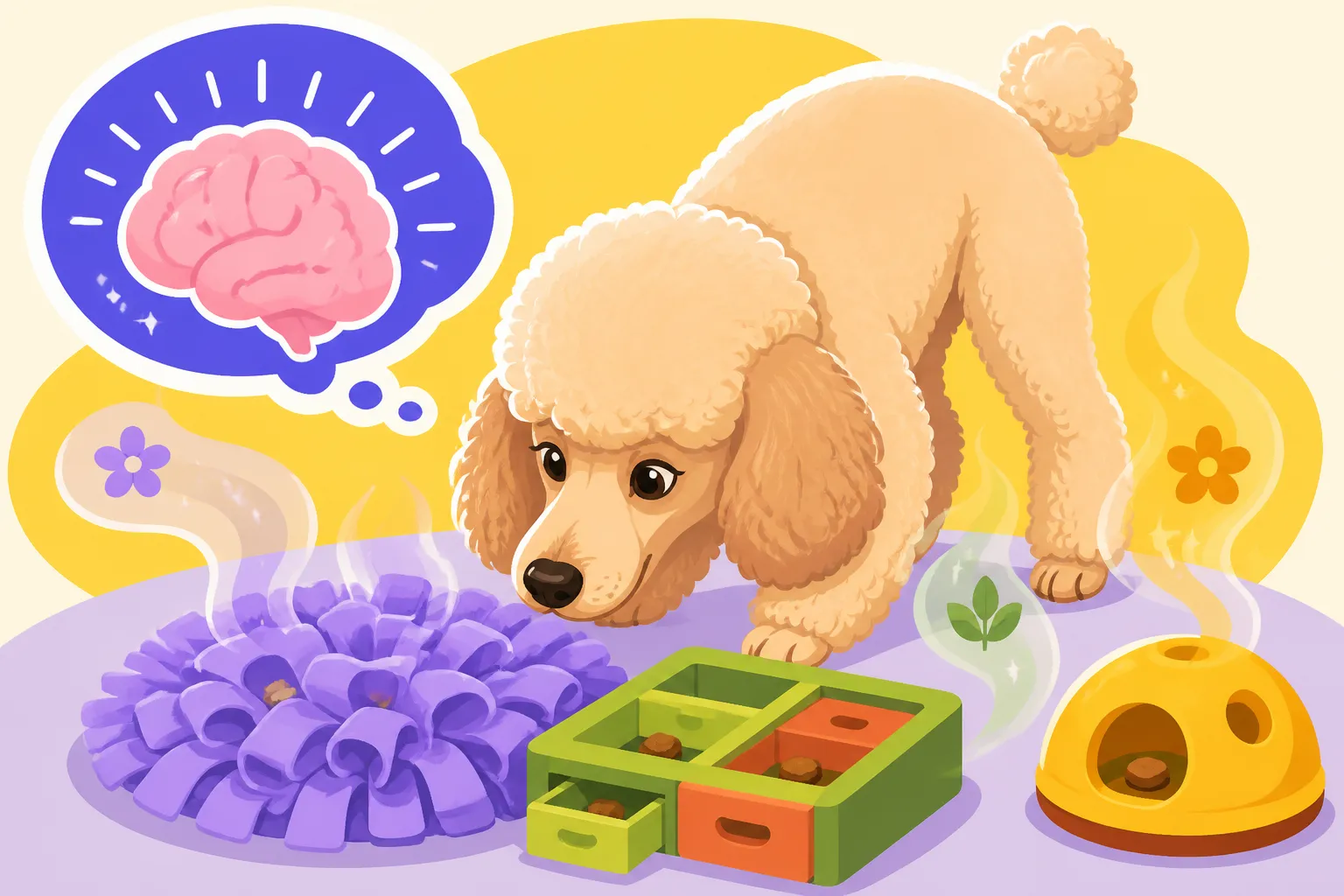
- Snuffle Mats: A snuffle mat is a piece of fabric with many nooks, crannies, and strips where you can hide kibble or treats. Simply scatter your Poodle's meal or a handful of treats deep within the fabric folds. Your Poodle then has to use their nose to root around and find each piece. It slows down eating, which is great for eager eaters, and provides a significant mental challenge. Nose Work as Exercise for a Poodle discusses how these simple tools can provide significant mental stimulation.
- Puzzle Feeders: These come in many forms – balls that dispense kibble as they're rolled, trays with sliding covers, or mazes. Again, the idea is to make your Poodle work for their food. Start with easier puzzles where the reward is easily visible or accessible, and gradually introduce more complex ones. Always supervise your Poodle with new puzzle toys to ensure they understand how to use them and don't try to chew them apart.
These tools are wonderful for when you need a few minutes of quiet time or when the weather prevents outdoor activity. They provide self-directed entertainment that relies heavily on scent and problem-solving.
Indoor Hide and Seek with Treats or Toys
This game is a step up, requiring your Poodle to search a wider area, mimicking a more natural hunting scenario.
How to Play:
- Start easy: Have your Poodle sit and stay in one room. Show them a high-value treat or their favorite toy. While they watch, place it just out of sight, maybe behind a chair or under a cushion in the same room. Release them with a "find it!" command.
- Expand the search: As they grasp the concept, gradually increase the difficulty:
- Hide the treat or toy in a different, but still obvious, spot while they watch.
- Then, have them stay in a different room while you hide it. Start with an adjacent room, then move to further rooms.
- Increase the number of hiding spots, but only put a treat in one or two. This teaches them to discriminate scents.
- Use different types of treats or toys to keep it interesting.
- Involve the whole house: Eventually, you can hide several treats throughout your home and let your Poodle go on a "scavenger hunt." This is a fantastic way to tire them out mentally and physically. Keeping a Poodle Mind Occupied with games like this is vital for their well-being.
Important Tip: Always end a scent game on a high note. If your Poodle seems to be getting frustrated, make the next hide incredibly easy so they end with a success. This keeps their enthusiasm high for the next session.
Advancing Your Poodle's Nose Work Skills
Once your Poodle has mastered the basics and shows a real enthusiasm for using their nose, you can introduce more structured and challenging scent games. These not only deepen their skills but also offer a truly engaging mental workout that goes beyond simple foraging.
Introduction to Scent Discrimination
This takes the "find it" game to the next level by asking your Poodle to distinguish between specific target scents. You're no longer just asking them to find a treat, but to find the treat that smells different or special.
How to Start:
- Choose your target scent: You'll want a distinct, non-food odor that is safe for your Poodle. Common choices for formal nose work include essential oils like birch, anise, or clove, diluted and placed on cotton swabs. For home use, you could start with a specific herb (like dried rosemary), a small piece of leather, or a specific type of fabric.
- Pairing and rewarding: Let your Poodle sniff the target scent. Immediately give them a high-value treat and praise. Repeat this several times so they associate the scent with a positive reward.
- Simple find: Place the target scent (e.g., a cotton swab with a drop of diluted birch oil, or a small baggie of rosemary) in a cup, and an empty cup next to it. Encourage them to find the "scent cup." When they nose or paw at the correct cup, lift it, let them sniff the scent again, and immediately reward them with a treat. Do not put the treat with the scent; the reward comes after they indicate the scent.
- Increasing distractions: Gradually add more empty cups, or cups with different, neutral scents (like plain cotton). The goal is for your Poodle to ignore everything else and only indicate the target scent. You can also vary the containers – small boxes, tins, etc. This requires intense focus and develops their ability to filter out irrelevant smells.
This progression requires patience and consistency, but it's incredibly rewarding to watch your Poodle hone their olfactory talents.
Advanced Hide and Seek with Multiple Layers
Moving beyond hiding treats under cups, you can create more complex search environments. This involves using different types of containers, varying heights, and introducing environmental distractions.
Container Searches:
- Multiple containers: Use a variety of boxes, laundry baskets, suitcases, or even empty coolers. Hide your Poodle's favorite toy or treats in one or more, and let them search through the array.
- Varying materials: Introduce containers made of different materials like cardboard, plastic, wood, or fabric. Each material will hold and disperse scent differently, adding to the challenge.
- "Shell game" with a twist: Place several identical boxes in a line. While your Poodle watches, place a treat in one, then subtly rearrange the boxes. Release them to find the treat. This combines visual tracking with scent, then gradually transitions to pure scent when they don't watch the hide.
Environmental Searches:
- Room searches: Hide treats in progressively more difficult spots within a room: under a rug, on a low shelf, tucked into a plant pot (ensure it's safe!). What a Poodle Does When Its Brain Is Idle often leads to them exploring every nook and cranny anyway, so why not make it productive?
- Outdoor searches: Take the game outside. Hide treats in the grass, under leaves, behind bushes, or even on low branches. The changing wind and natural scents add a layer of complexity. Always use safe, non-toxic treats and ensure the area is clear of hazards.
- Elevated hides: Once your Poodle understands searching at ground level, introduce hides at different heights. Tape a treat to the underside of a table, place it on a chair, or inside an open drawer. This encourages them to use their nose in a three-dimensional way, often standing on their hind legs to sniff.
Remember, the goal is to challenge, not frustrate. If your Poodle struggles, make the next hide easier and build up slowly.
Online Courses and Professional Guidance
For those who want to delve deeper into nose work, there are excellent resources available. Online training platforms, like those offered by BAXTER & Bella, often have modules dedicated to scent work or nose games that provide structured lessons and progression. These can be particularly helpful for Poodle owners who appreciate a step-by-step approach.
Benefits of structured learning:
- Clear progression: Guides you through exercises, preventing you from making them too hard too quickly or missing key foundational steps.
- Technique refinement: Teaches you how to properly handle scent, set up searches, and read your Poodle's signals, known as "changes in behavior" when they detect the target scent.
- Community and support: Many online courses offer forums or groups where you can share experiences and get feedback.
- Formal titles: If you get serious, you can even pursue official nose work titles through organizations that host trials, which can be an incredibly rewarding journey for both you and your Poodle.
Whether self-taught or guided by professionals, advanced nose work is a fantastic way to honor your Poodle's incredible intelligence and give them a job they truly love.
| Scent Game | Difficulty | Setup Time | Poodle Skill Focus | Tools Needed |
|---|---|---|---|---|
| Treat Under a Cup | Easy | Low | Basic Scent Discrimination | Opaque cups, small treats |
| Snuffle Mat/Puzzle Toy | Easy/Medium | Low | Foraging, Problem-Solving | Snuffle mat or puzzle toy, kibble/treats |
| Indoor Hide & Seek | Medium | Medium | Area Search, Endurance | Treats or favorite toy, various hiding spots |
| Scent Discrimination | Medium/Hard | Medium | Target Scent Identification | Specific target scent (e.g., essential oil swab), containers, treats |
| Advanced Environmental | Hard | High | Complex Area Search, Focus | Treats/toy, various indoor/outdoor locations, different heights |
Integrating Scent Games into Daily Life and Troubleshooting
Making scent games a regular part of your Poodle's routine is key to maximizing their benefits. They don't have to be hour-long affairs; even short, focused sessions can make a huge difference in your Poodle's mental well-being. However, like any training, you might encounter a few bumps along the way.
Weaving Nose Work into Your Routine
The beauty of scent games is their flexibility. You can fit them into almost any part of your day, replacing passive activities with active mental engagement.
- Breakfast or Dinner Time: Instead of just putting down a bowl, use a snuffle mat or puzzle feeder. This turns mealtime from a two-minute gulp into a fifteen-minute mental exercise. It also slows down eating, which is particularly beneficial for Standard Poodles prone to issues like bloat.
- Before You Leave: If your Poodle struggles with Separation Anxiety in a Velcro Poodle, a quick ten-minute scent game before you head out can help tire them out mentally and leave them in a calmer, more satisfied state. Hiding treats in various spots around the house can give them a positive activity to focus on as you depart.
- Rainy Days or Limited Exercise: On days when outdoor exercise isn't possible, scent games are a lifesaver. An indoor scavenger hunt or a series of container searches can provide ample mental stimulation when physical activity is restricted. Indoor Work for a Poodle on a Wet Day can be entirely centered around nose work.
- Evening Wind-Down: A gentle nose work session can be a great way to help your Poodle relax before bed. It's a calming activity that doesn't overstimulate, promoting a good night's sleep for both of you.
Consistency is more important than duration. Even five to ten minutes of focused scent work several times a week will yield noticeable benefits in your Poodle's behavior and happiness.
Common Scent Game Challenges and Solutions
Even the smartest Poodle might hit a snag or two when learning scent games. Patience and positive reinforcement are your best tools.
-
My Poodle Just Eats the Treats and Doesn't Search: This is common, especially at the beginning. It means the game is likely too easy, or the rewards are too obvious.
- Solution: Make the hides slightly more challenging, so they have to use their nose. For example, instead of just covering a treat with a cup, put the treat under a small piece of paper inside the cup. Or, put the treat deeper in the snuffle mat. Ensure the treats are small and don't leave a huge visual footprint.
- Another Solution: Guide them. Point to the area and say "find it!" with enthusiasm. If they're struggling, tap the area where the treat is hidden, then praise them when they find it. You might even have to show them finding it a few times to build the association.
-
My Poodle Gets Frustrated and Gives Up: Poodles are smart, but they can also be sensitive. If a game is too hard, they might disengage. Reading Pain in a Sensitive Poodle applies to emotional pain too; frustration can be felt keenly.
- Solution: Go back to basics. Make the game incredibly easy again, ensuring guaranteed success. End every session on a positive note, even if it means placing a treat right in front of them to "find." This rebuilds their confidence and motivation.
- Another Solution: Shorten the sessions. Maybe they can only handle five minutes of intense focus right now. That's perfectly fine. Build up their mental stamina gradually.
-
My Poodle Cheats or Ignores the Rules: You hide a treat, and they just nudge a stack of boxes over or try to chew through a container to get to the reward.
- Solution: Re-evaluate the containers. Are they sturdy enough? If they're breaking containers, you might need to use more robust options.
- Another Solution: Reinforce the desired behavior. If they chew the container, remove it for a moment, then present it again. When they do sniff or paw gently, immediately reward. The reward comes for the effort of using their nose and brains, not for brute force. If they're really struggling with impulse control, consider working on basic "leave it" commands in a separate training session.
-
My Poodle Isn't Interested in the Scent: Some Poodles aren't immediately enthusiastic, especially if they're used to more high-energy play.
- Solution: Use irresistible, high-value treats. Small bits of boiled chicken, freeze-dried liver, or strong-smelling cheese can be incredibly motivating. Gradually reduce the value of the treats as their interest grows.
- Another Solution: Make it a party! Your enthusiasm is contagious. Use an excited tone, clap your hands gently, and really celebrate when they find something. Poodles thrive on connection with their people, and making it a shared joyful activity can pique their interest. If they're still not getting it, consider professional guidance. Finding a Trainer a Poodle Will Not Shut Down For could be invaluable if you're hitting a wall, as a professional can observe and offer tailored advice.
Scent games are an invaluable tool for enriching your Poodle's life, tapping into their incredible natural abilities, and creating a deeper bond between you. By starting simple, being patient, and making it fun, you’ll unlock a whole new world of engagement for your clever companion.
Disclaimer
This article is for general informational purposes only and does not constitute professional advice. Laws, prices and regulations vary by location and change over time. Consult a qualified professional for guidance on your specific situation.