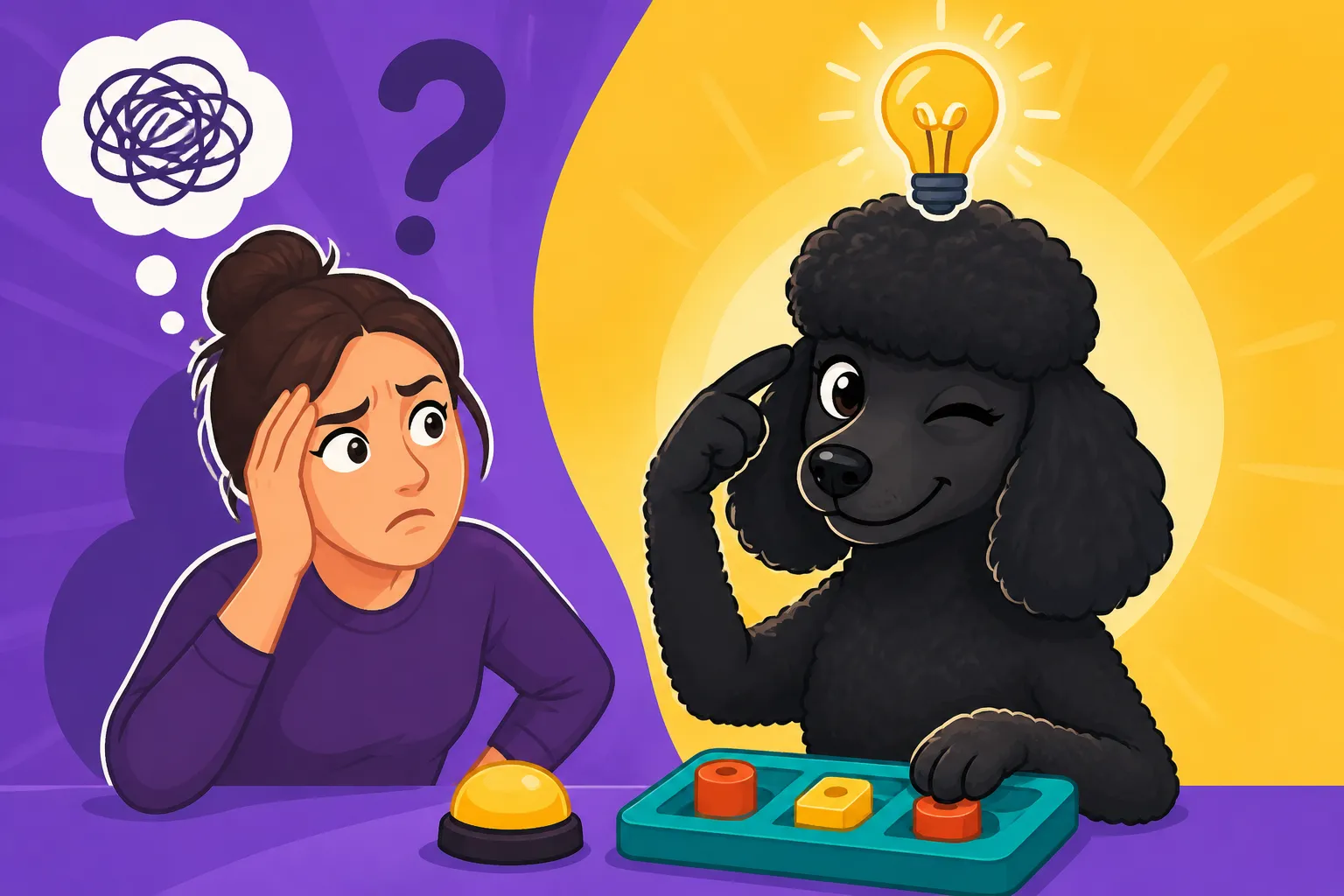
Training a Poodle That Outthinks You
Oh, the sheer delight and exasperation of owning a Poodle! You bring home this fluffy, intelligent creature, expecting a smart companion, and you get exactly that – sometimes too smart. Many of us Poodle parents have found ourselves in situations where we realize our furry genius has not just learned a command, but has figured out how to work the system, how to get what they want, or how to avoid what they don't. It's a unique challenge to train a dog that seems to anticipate your every move, but this guide is here to help you channel that incredible Poodle brainpower into positive, cooperative behaviors, rather than clever mischief.
Understanding the Poodle Brain: Why They're So Smart (and Sometimes Troublesome)
Poodles are consistently ranked among the most intelligent dog breeds, often second only to the Border Collie in terms of working intelligence and obedience. This isn't just a fun fact; it's a foundational truth that impacts every aspect of living with and training a Poodle. Their minds are constantly whirring, observing, and drawing conclusions. While this makes them incredibly trainable and capable of complex tasks, it also means they can quickly learn to manipulate situations to their advantage or become bored if not adequately challenged.
The Double-Edged Sword of Poodle Intelligence
On one paw, Poodle intelligence is a marvel. They grasp new commands with lightning speed, often needing only a handful of repetitions to understand what you're asking. If you've ever felt like your Poodle knows what you're thinking before you even say it, you're not far off. This cognitive ability allows them to excel in various dog sports, therapy work, and can make them wonderful, responsive companions. They thrive on learning and enjoy having a "job" to do, whether it's fetching the mail or mastering a new trick. You can explore just Why Poodles Learn a Cue in Five Repetitions to understand this better.
However, this sharp intellect comes with a built-in challenge. A Poodle's mind is like a supercomputer that needs constant processing and input. Without proper mental stimulation, that powerful brain can turn its focus to less desirable activities. This might manifest as chewing, excessive barking, digging, or even developing elaborate schemes to raid the kitchen counter. They don't do these things out of malice, but out of a desperate need to use their impressive cognitive abilities. It's a common lament among Poodle owners: "My Poodle is so smart, they get into everything!"
Anticipation and Pattern Recognition
One of the key ways a Poodle "outthinks" us is through their uncanny ability to recognize patterns and anticipate events. They're master observers. They'll notice the subtle cues you give before you even say a word – the jingling of keys, the way you reach for their leash, or even a change in your body language. For example, if you always get up and go to the treat cupboard after they perform a "sit," they'll quickly connect the dots and might offer a "sit" unprompted, expecting the treat. This can be great for prompting desired behaviors, but it can also lead to them "gaming the system."
Imagine this scenario: you're trying to teach your Poodle to settle quietly on their mat while you eat dinner. You consistently reward them when they're on the mat. But then you notice that as soon as you put your plate down, they immediately hop on their mat, staring intently. They haven't necessarily learned to settle for the duration of dinner; they've learned that "human sits at table + I go to mat = treat." As soon as dinner is done and the potential for a treat passes, they might be off the mat, wandering. This isn't defiance; it's sophisticated pattern recognition and optimization for reward. They've found the shortest path to the desired outcome. This ties into Why a Poodle Invents Its Own Shortcuts.
Selective Hearing: A Poodle's Strategic Choice
Ah, selective hearing. This is a classic "outsmarting" tactic, and many Poodle owners nod knowingly when it's mentioned. It's not that your Poodle can't hear you; it's that they've made a quick cost-benefit analysis and decided that obeying you in this particular instance isn't worth their while, or perhaps something else holds a higher value. This is especially true if a command has been inconsistently reinforced or if there's a more exciting distraction present.
For instance, you call your Poodle from the dog park, "Come!" They look at you, then look back at the interesting smell they were sniffing, or the other dog they were about to play with. They might even take a step or two towards you, then veer off, pretending they didn't quite hear you. This isn't a lack of understanding; it's a choice. They know what "come" means, but they've weighed the joy of that scent or play against the reward (or lack thereof) for coming to you, and the scent won. This often happens when the environment offers a richer reward than you do, or if they've learned that ignoring you has no real consequences. It's frustrating, but it's a testament to their intelligent assessment of the situation.
Common Scenarios Where Poodles "Outsmart" Us
Poodle owners often share stories of their dogs' incredibly clever antics, which, while endearing, can also be incredibly challenging. These aren't just one-off occurrences; they're often learned behaviors perfected over time as our Poodles figure out the loopholes in our human rules.
The "Oops, I Forgot!" Potty Break
You've painstakingly house-trained your Poodle, and they're generally good about going outside. Then, one day, you notice a pattern: if you're engrossed in a movie or busy with work, they might have an "accident" right in front of you, or just around the corner. You rush to clean it up, giving them attention (even negative attention is attention, right?), and a few days later, it happens again. You start to wonder if they're doing it on purpose.
Well, a Poodle often is not being malicious, but they might indeed be "using" the accident to get your attention. If they've learned that barking at the door or pawing at your leg doesn't always get an immediate response, but an accident guarantees your full, albeit frustrated, attention, they might start to associate the accident with getting you to engage with them. It's a highly intelligent, albeit inconvenient, form of communication. They figured out what gets you moving when other methods fail. For new owners, House Training a Toy Poodle can offer foundational advice to prevent these habits.
The Escape Artist and Opportunist
A Poodle's intelligence, combined with their natural curiosity and often high prey drive, can make them expert escape artists and opportunists. Whether it's figuring out how to open a gate latch, scaling a seemingly secure fence, or simply waiting for that one moment the door is left ajar, they are always observing and testing. They learn quickly which items on the counter are within reach, which cabinets have the good snacks, and how to position themselves perfectly for a dropped crumb.
I once knew a Standard Poodle who learned to open the freezer door just enough to hook out frozen chicken breasts with his paw and drag them to his bed for a slow, satisfying defrosting and snack. His humans were baffled for weeks, thinking they had a ghost in the kitchen! It wasn't until they set up a camera that they caught him in the act. This kind of problem-solving is remarkable, but also a major headache for owners. They aren't trying to be naughty; they're just incredibly efficient at finding solutions to their own desires, whether it's freedom or a tasty treat. Their ability to "work a problem" until they solve it is why Why a Bright Poodle Gets Bored is such a crucial read – boredom fuels this kind of ingenuity.
Manipulating for Attention or Treats
Poodles are social creatures and deeply attuned to their human companions. They quickly learn what gestures, sounds, or behaviors elicit a response from us. This can easily turn into manipulation if we're not careful. The "Poodle sigh" for attention, the gentle paw on your leg, the toy brought to you with wide, pleading eyes – these are all carefully honed tactics.
Consider the Poodle who "limps" only when you're looking, or only when you're about to leave the house. You might rush over, fussing and checking their paw, inadvertently rewarding the "limp" with attention. Or perhaps your Poodle has learned that if they bark relentlessly at the dinner table, a piece of food eventually "accidentally" drops. They're not just being noisy; they've figured out that consistent barking eventually pays off. These behaviors are not malicious; they are simply a Poodle's intelligent application of cause and effect to achieve a desired outcome. They've discovered that certain actions on their part lead to desirable reactions from you.
Setting the Foundation: Clear Communication and Consistency
The key to successfully training a Poodle who can seemingly read your mind and exploit every loophole is to establish a rock-solid foundation of clear communication and unwavering consistency. Your Poodle thrives on understanding expectations, and when those expectations are murky or change frequently, they will fill in the blanks themselves – usually in ways that benefit them, not you!
Establishing Leadership (Positive Reinforcement Style)
When we talk about "leadership" with a Poodle, we're not talking about dominance or harsh corrections. That's actually counterproductive and can lead to a Poodle shutting down or becoming fearful, which is truly heartbreaking given their sensitive nature. As you'll read in Why Harsh Handling Breaks a Poodle, negative methods are never the answer for this breed. Instead, positive reinforcement leadership means you are the benevolent, reliable guide who provides structure, safety, and all good things. You control the resources, the schedule, and the rules, always with kindness and clarity.
This involves:
- Being the provider of all good things: You dispense food, treats, toys, and affection. Your Poodle learns that engaging with you and following your lead is the pathway to all the things they love.
- Structuring their day: Establish clear routines for feeding, potty breaks, play, and training. This predictability reduces anxiety and provides a framework within which your Poodle can thrive.
- Setting clear boundaries: Decide what's acceptable and what's not, and stick to it. If jumping on guests is not allowed, never allow it, even if just one guest finds it cute. Every exception is a lesson to your Poodle that the rule is flexible.
- Teaching impulse control: This is huge for a Poodle that outthinks you. Commands like "wait" or "leave it" are essential not just for safety, but for teaching them that immediate gratification isn't always available, and that good things come to those who wait for your permission.
The BAXTER & Bella online puppy school program, for example, is built around this positive reinforcement philosophy, providing structured lessons that help owners build this kind of cooperative relationship from the ground up, teaching you how to be that consistent, guiding leader your smart Poodle needs.
The Power of Predictability and Routine
Poodles, despite their cleverness, are creatures of habit. They feel secure and confident when their world is predictable. When you establish a consistent routine, you remove much of the guesswork for your Poodle, making it harder for them to "outthink" you by finding loopholes. They learn when to expect walks, when to eat, and when training sessions occur.
For example, if your Poodle constantly paws at you for attention during your work calls, establish a clear routine. Perhaps every morning after their walk, you have a dedicated 15-minute play session, followed by a puzzle toy, and then you begin your work. Your Poodle will learn that after play, quiet time is expected, and they have an engaging activity to keep them occupied. If they start to demand attention, you can gently redirect them to their puzzle or mat, reinforcing the routine. This helps them understand that while they might want attention now, it's not the designated time, and their efforts to manipulate won't yield results. This routine also manages their often high mental energy, helping to avoid Telling Poodle Boredom From Real Panic.
Making the Right Choice the Easiest Choice
This is where positive reinforcement truly shines with a Poodle. Instead of trying to prevent unwanted behaviors with punishment (which a smart Poodle will just learn to do when you're not looking), focus on setting up the environment and your training so that the correct behavior is always the most rewarding and easiest path for them to take.
Let's revisit the counter-surfing Poodle. Instead of constantly scolding them (which might just teach them to counter-surf silently when you're out of the room), remove all temptations from the counter when you're not directly supervising. Make it impossible for them to "win" at counter-surfing. Simultaneously, make performing a "go to your mat" or "leave it" command highly rewarding. Practice these commands frequently, giving high-value treats when they succeed. Soon, your Poodle will learn that ignoring the counter (because there's nothing there anyway) and choosing to perform a known command yields a much better reward than trying to steal food. You've essentially changed the game, making the "right" choice a no-brainer for their intelligent, reward-driven brain.
Turning Their Brains Into a Training Advantage
Instead of seeing your Poodle's intelligence as a hurdle, reframe it as your greatest asset! Their quick minds and eagerness to learn mean you can engage them in incredibly stimulating ways that go far beyond basic obedience. When you tap into their natural problem-solving abilities and make training a fun, cooperative game, they won't feel the need to "outthink" you because they'll be happily working with you.
Engaging Their Problem-Solving Skills
Poodles thrive on mental challenges. They love to figure things out. This is where puzzle toys, scent work, and trick training become invaluable. Instead of simply handing them a bowl of kibble, make them earn it by solving a puzzle feeder. Brands like Outward Hound offer a fantastic range of difficulty levels you can find on Amazon, keeping those Poodle brains busy at meal times. This turns eating into a mental exercise, satisfying their need to work for a reward.
Scent work is another brilliant way to engage their problem-solving skills and incredible noses. Hide treats around the house and encourage them to "find it!" You can even teach them to find specific objects by name, building on their natural curiosity. This taps into their ancestry as retrieving water dogs and gives them a "job." Think about the satisfaction they get when they successfully track down a hidden toy or treat – it's far more engaging than simply sitting idly. Check out Scent Games That Stretch a Poodle's Mind for more ideas.
Making Training a Game They Want to Win
For a Poodle, training shouldn't feel like a chore; it should feel like the most exciting game in town! This means keeping sessions short, fun, and highly rewarding. If training becomes dull or repetitive, their smart brains will quickly disengage, and they'll start looking for more interesting activities (like inventing new ways to test your patience!).
- Vary your rewards: Don't just stick to the same boring kibble. Mix it up with high-value treats, favorite toys, or even enthusiastic praise and a vigorous game of tug. Keep them guessing what the "prize" will be.
- Keep sessions brief: Aim for 5-10 minute bursts of training a few times a day, rather than one long, tedious session. This keeps their attention sharp and prevents boredom.
- End on a high note: Always finish a session after a successful command, even if it's a simple "sit." This leaves your Poodle feeling accomplished and eager for the next session.
- Incorporate play: Weave training into play. Ask for a "sit" before throwing a ball, or a "down" before starting a game of chase. This teaches them that obedience leads to fun, rather than interrupting it.
- Involve the family: Make training a family affair. This ensures consistency and teaches your Poodle to respond to everyone, not just one person. BAXTER & Bella offers resources that make it easy for the whole family to participate in training.
Varying Rewards and Reinforcement Schedules
A Poodle who outthinks you has likely figured out that "sit" always gets a treat, or that "come" sometimes gets a treat. To keep them on their toes and prevent them from becoming complacent or manipulative, you need to introduce variable reinforcement schedules. This is a fancy way of saying: don't always give a treat, and don't always give the same treat.
- Intermittent Reinforcement: Once your Poodle reliably performs a command, start varying when you give the reward. Sometimes they get a treat, sometimes enthusiastic praise, sometimes a quick game of tug. This teaches them that even if a reward isn't immediate, it might be coming, which actually makes them more persistent! Think of it like a slot machine – people keep pulling the lever because they know a win could happen, even if it doesn't every time. This is key for Fading Rewards With a Quick-Learning Poodle.
- Jackpot Rewards: For an exceptionally good effort or a breakthrough in a difficult behavior, give a "jackpot" – a handful of extra special treats, a prolonged play session, or lots of excited praise. This reinforces truly outstanding performance and keeps them motivated.
- Surprise rewards: Sometimes, reward them for simply being calm and settled, without any command. This helps to reinforce desirable baseline behaviors.
- Different types of rewards: Rotate between food, toys, praise, belly rubs, or even the opportunity to go outside. This keeps things interesting for their intelligent minds and prevents them from getting bored with one type of reward.
Troubleshooting Advanced Poodle Tactics
Even with the best foundation, Poodles are masters of adaptation. They might develop new ways to "outthink" you as they mature or as circumstances change. It's crucial to understand their motivations and respond with patience, consistency, and a dash of your own Poodle-level cunning!
When Your Poodle "Tests the Boundaries"
Just like a clever child, a Poodle will occasionally "test the boundaries" you've set. This isn't defiance; it's them confirming if the rules still apply, if you still mean what you say, or if there's a new opportunity they've spotted. This might manifest as them nudging the forbidden treat off the coffee table, lingering too long at the door when called, or giving a warning bark at a new sound they know isn't a threat.
The key here is consistency, immediately and calmly. If they test a boundary:
- Re-establish the rule: Immediately and calmly, but firmly, apply the consequence you've established. If they nudged the treat, swiftly remove them from the area and the treat disappears. If they ignored a "come," gently lead them back and ask for the command again, ensuring success and a reward.
- Avoid emotional responses: Getting angry or frustrated only adds unnecessary emotional baggage to the situation, which a sensitive Poodle will pick up on. They may become fearful or learn that their boundary-testing gets a rise out of you, which can be its own form of attention.
- Go back to basics: If the testing is persistent, it might mean you need to revisit the foundational training for that specific command or behavior. For example, if your Poodle is repeatedly trying to snatch food, go back to short, highly rewarding "leave it" sessions in a controlled environment, making it abundantly clear what the expectation is. This is where Teaching a Poodle to Wait Rather Than Guess becomes a powerful tool.
Dealing with Stubbornness and Refusal
Sometimes, your Poodle isn't testing; they're simply being stubborn or outright refusing. This can be infuriating, especially when you know they know the command. This often stems from one of a few reasons:
- Lack of motivation: Is the reward valuable enough for the effort they're being asked to expend? If you're asking for a complex "stay" in a distracting environment and only offering a dry piece of kibble, your Poodle might decide it's not worth it.
- Over-correction or past negative experiences: If they've been scolded for an attempt at a command, they might be hesitant to try again. A Poodle that Why a Poodle Shuts Down When Scolded will refuse to engage.
- Boredom or fatigue: Sometimes, they're just not feeling it, especially if the training has been repetitive or too long.
- They don't understand why: Poodles are smart enough to question purpose. If a command seems arbitrary or yields no clear benefit, they might choose to opt out.
To address stubbornness:
- Re-evaluate your motivation: Are your rewards high-value enough? Increase the value of the treat or switch to a favorite toy.
- Make it easier: Break the command down into smaller, simpler steps. If they're refusing a "down," start by rewarding just a slight dip of the head, then a full "down," gradually building back up.
- Change the environment: If they're refusing in a distracting area, go back to a quiet, familiar place where they're more likely to succeed.
- Keep it positive: Use encouragement and patience. If they make even a small effort, reward it. Never try to force them; a Poodle will double down on their refusal if pressured.
- Seek professional help: If persistent refusal is hindering your relationship, consider working with a certified professional dog trainer who specializes in positive reinforcement. They can offer tailored strategies for your individual Poodle.
Enrichment Beyond Basic Commands
A Poodle's active mind needs more than just basic obedience to stay content and prevent them from inventing their own "games" (which usually involve something you'd rather they didn't do!). Think of mental enrichment as crucial as physical exercise. A tired body and a tired mind make for a happy, well-behaved Poodle.
- Puzzle Toys: As mentioned, these are fantastic. Brands like Kong or West Paw offer durable options you can stuff with wet food or treats, freeze, and provide hours of engaging chewing and problem-solving. You can find many options on Amazon that cater to different sizes and chewing styles.
- Scent Work and Nose Games: Hide and seek with treats, teaching them to find specific items, or even exploring advanced scent detection work. This builds confidence and provides immense mental satisfaction.
- Trick Training: Poodles adore learning tricks! "Shake a paw," "roll over," "play dead," or even more complex sequences. This is not only fun but strengthens your bond and provides a wonderful outlet for their intelligence. Trick Titles a Clever Poodle Can Earn shows the possibilities.
- Dog Sports: Agility, Rally Obedience, or even Dock Diving are excellent ways to channel a Poodle's energy, intelligence, and athleticism. They excel in these fields and often find immense joy in the challenge.
- Interactive Play: Don't just throw a ball; make it a game. Teach them to bring the ball back and drop it, or even to put their toys away. This makes play more engaging and interactive, satisfying their desire for mental stimulation alongside physical activity.
By consistently engaging your Poodle's intelligent mind, you'll find they are less likely to "outthink" you in mischievous ways. Instead, they'll become a truly collaborative and joyful companion, eager to learn and work with you, rather than against you.
| Poodle "Outthinking" Scenario | Why It Happens | Effective Counter-Strategy |
|---|---|---|
| "Oops, I Forgot!" Potty Breaks | Seeking attention; inconsistent response to legitimate cues. | Predictable Schedule: Establish strict potty routines. High-Value Rewards: Lavishly praise/treat outside. Ignore Indoor Accidents: Clean calmly, no drama. Attention for Good Behavior: Proactively give attention when calm. |
| The Escape Artist / Opportunist | High intelligence, curiosity, prey drive; sees loopholes. | Environmental Management: Secure gates/fences. Clear counters. Impulse Control: Train strong "leave it" and "stay." Mental Enrichment: Puzzle toys, scent work to prevent boredom. |
| Manipulating for Attention | Learns specific behaviors (whining, pawing, fake limp) get a response. | Ignore Unwanted Behaviors: No eye contact, turn away. Reward Calm/Quiet: Give attention only when Poodle is settled. "Go to Mat" Command: Teach a place where attention isn't given. |
| Selective Hearing (Recall) | Distractions are more rewarding than obeying; inconsistent recall rewards. | High-Value Rewards: Make you the most exciting thing. Practice in Low-Distraction: Build up gradually. Emergency Recall: Use a unique sound/treat for critical situations. |
| Testing Boundaries | Confirming if rules still apply; seeking new advantages. | Immediate, Calm Consistency: Re-enforce rules every time. No Emotional Response: Avoid anger/frustration. Go Back to Basics: Re-train foundational commands if needed. |
Disclaimer
This article is for general informational purposes only and does not constitute professional advice. Laws, prices and regulations vary by location and change over time. Consult a qualified professional for guidance on your specific situation.