Knee Surgery Prices for a Toy Poodle
It’s heartbreaking to see your tiny Toy Poodle limping, skipping, or holding up a little leg, and the vet has just delivered the news: luxating patella, likely requiring surgery. The immediate worry, beyond your beloved companion's comfort, is often the daunting question of cost. This guide is here to shed light on what you can realistically expect to pay for knee surgery for your Toy Poodle, breaking down the various expenses involved and offering strategies to manage them.
Understanding Luxating Patella in Toy Poodles
One of the most common orthopedic issues we see in our smaller Poodle companions, especially the Toy Poodle, is luxating patella. It sounds complicated, but essentially, it means the kneecap (patella) slips out of its normal groove. For these lively little dogs, it can be a real nuisance, causing discomfort and hindering their ability to run and play normally. It’s a condition that can range from a minor inconvenience to a severely debilitating problem.
What is Luxating Patella?
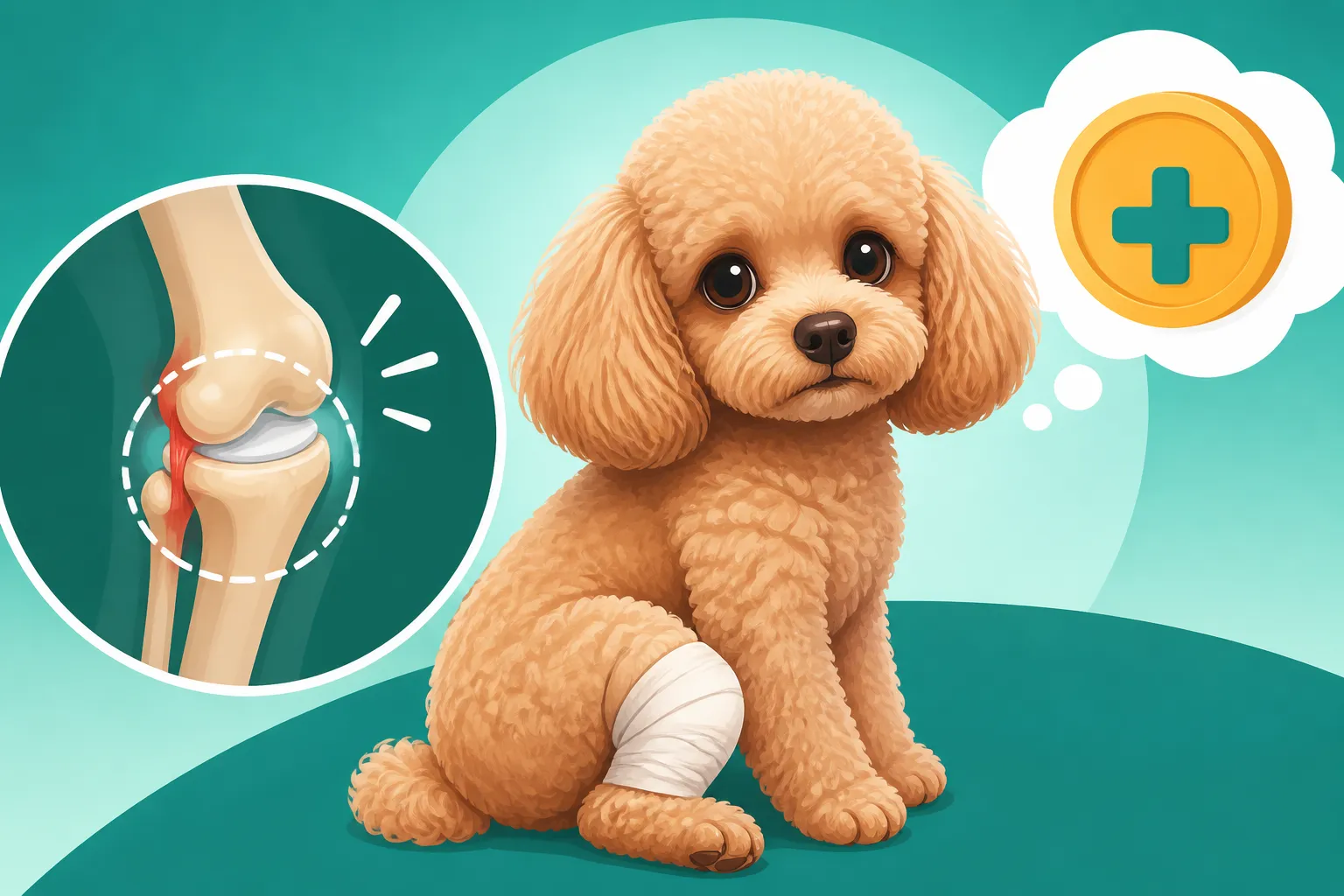
Luxating patella occurs when the patella, or kneecap, dislocates or moves out of its proper position. In Toy Poodles, it most commonly slips inward (medial luxation), though it can also slip outward (lateral luxation). This happens because the groove in the femur (thigh bone) that the patella sits in is often too shallow, or the ligaments supporting the kneecap aren't aligned correctly. It’s typically an inherited condition, meaning it’s something your Toy Poodle might be predisposed to from birth. When the kneecap pops out, your dog might hold up their leg for a few steps, give it a shake, and then continue on as if nothing happened. But over time, this repeated movement can wear away cartilage, lead to arthritis, and cause chronic pain, making early intervention important. For a deeper dive into this, you might find our article on Luxating Patella in Toy and Miniature Poodles helpful.
The impact of luxating patella isn't just about the occasional skip. When the kneecap is out of place, the quadriceps muscle, which connects to the patella, can pull the tibia (shin bone) abnormally. This chronic misalignment can lead to other structural changes in the leg over time, potentially impacting gait and overall mobility. It's not uncommon for Toy Poodles to develop bow-leggedness or knock-knees as a compensatory mechanism, further exacerbating the problem. Because of their delicate bone structure and active nature, Toy Poodles are particularly susceptible, and while it might not always require surgery, many veterinarians will recommend it to prevent long-term damage and improve quality of life.
Recognizing the Signs and Grades
The signs of a luxating patella can vary widely depending on the severity. In mild cases, you might just notice your Toy Poodle occasionally skipping a step or holding up a back leg for a moment before returning to normal. This often happens after a jump or a quick turn. As the condition progresses, the skipping might become more frequent, or your dog might yelp in pain when the kneecap pops out. In severe instances, the kneecap might be permanently dislocated, causing a persistent limp or an inability to put weight on the leg. We all know how sensitive Poodles can be, and they might try to hide their discomfort, so paying close attention to subtle changes in their movement is key. For more on how Poodles often mask discomfort, check out Why a Sensitive Poodle Hides Illness.
Veterinarians typically grade luxating patellas on a scale from I to IV:
- Grade I: The patella can be manually luxated but returns to its normal position spontaneously. Your dog might show minimal to no clinical signs.
- Grade II: The patella luxates spontaneously or can be manually luxated, but it often stays luxated for a longer period before returning to its normal position. This is where you’ll start seeing more frequent skips.
- Grade III: The patella is permanently luxated but can be manually returned to its normal position. However, it will luxate again immediately. This grade almost always requires surgical correction to improve the dog's quality of life.
- Grade IV: The patella is permanently luxated and cannot be manually returned to its normal position. This is the most severe grade, often causing significant lameness and requiring complex surgical intervention.
Your vet will perform a physical examination to assess the kneecap's movement and determine the grade. Based on this assessment, along with your dog’s age, activity level, and discomfort, they will advise whether surgery is the best course of action. Generally, Grade II cases that cause frequent lameness or pain, and all Grade III and IV cases, are strong candidates for surgical repair. Understanding when surgery becomes necessary can be found in our article on When a Toy Poodle's Kneecap Needs Surgery.
Deconstructing the Costs of Toy Poodle Knee Surgery
When facing the prospect of knee surgery for your beloved Toy Poodle, the financial implications can be overwhelming. It's not just the surgeon's fee; there are many components that contribute to the overall cost, from the initial consultations and diagnostic tests to the medications and physical therapy needed for recovery. Understanding each part of the bill can help you prepare and avoid surprises.
Pre-Surgical Diagnostics and Consultations
Before any surgery can take place, your vet needs a clear picture of your Poodle's overall health and the extent of the knee issue. This typically starts with a thorough physical examination and often involves a consultation with a veterinary orthopedic specialist, especially if your regular vet recommends it. The specialist's expertise is invaluable, but these initial consultations can range from $100 to $300, sometimes more in larger metropolitan areas like Los Angeles or New York City.
Beyond the physical exam, diagnostic tests are crucial. X-rays are almost always required to visualize the bone structure, the depth of the patellar groove, and assess for any secondary changes like arthritis or hip dysplasia, which can sometimes co-occur. A set of X-rays can cost anywhere from $200 to $500, depending on how many views are needed and the clinic's pricing. Bloodwork, including a complete blood count (CBC) and a biochemistry panel, is essential to ensure your Toy Poodle is healthy enough for anesthesia and to detect any underlying conditions that could complicate surgery. This pre-anesthetic bloodwork usually falls in the range of $150 to $350. These initial steps are fundamental to ensuring the safety and success of the surgery.
The Surgical Procedure Itself
This is typically the largest portion of the total bill. The core surgical procedure involves several techniques designed to stabilize the patella. The most common techniques include trochleoplasty (deepening the groove where the kneecap sits), tibial tuberosity transposition (realigning the attachment point of the quadriceps muscle), and lateral imbrication (tightening the joint capsule on the outside of the knee). The actual surgeon's fee, reflecting their skill and time, is a significant part of this. For a Toy Poodle, given their small size and the delicate nature of the surgery, this fee alone can range from $1,500 to $4,000.
Beyond the surgeon's hands, you're paying for a comprehensive package that includes anesthesia, monitoring during surgery, and the use of the operating room. Anesthesia for a tiny Toy Poodle requires careful titration and constant monitoring by a dedicated veterinary technician to ensure their vital signs remain stable. This portion can add $400 to $800 to the bill. Implants, if needed (such as pins or wires to hold bone in place after transposition), are also factored into the cost, though these are usually included in the overall surgical fee rather than itemized separately. Depending on the complexity and the specific techniques used, the total cost for the surgery itself often lands between $2,000 and $5,000 per knee.
Post-Operative Care and Rehabilitation
Surgery is just the beginning; the recovery period is equally critical and comes with its own set of expenses. Immediately after surgery, your Toy Poodle will need pain medication and anti-inflammatories to manage discomfort and reduce swelling. These medications can be expensive, with a month's supply potentially costing $50 to $200. You'll also need an Elizabethan collar (the "cone of shame") to prevent your Poodle from licking or chewing at the incision site, which is usually provided by the vet but sometimes costs extra, or you might prefer to purchase a softer, more comfortable one from retailers like Chewy.
Follow-up visits are essential to monitor healing, remove stitches (if applicable), and ensure your Poodle is progressing well. These visits typically occur at 2 and 4 weeks post-op and can cost $50 to $150 per visit. In some cases, additional X-rays might be recommended to confirm proper bone healing, adding another $150-$300. Physical therapy or rehabilitation is often recommended to help regain muscle strength and range of motion. This can involve hydrotherapy, therapeutic exercises, or laser therapy, with individual sessions ranging from $50 to $150, and a full course often requiring 6-12 sessions over several weeks or months. All these elements contribute significantly to the total cost of care. Our guide on Dosing Pain Relief for a Four Pound Poodle might offer some insights into medication management for tiny dogs.
Average Price Ranges and Regional Variations
The cost of Toy Poodle knee surgery isn't a fixed number; it's a spectrum influenced by several factors, including where you live and the specific circumstances of your dog's condition. While we can provide averages, it's crucial to get a detailed estimate from your local veterinary orthopedic specialist.
What to Expect in Different Regions
Veterinary costs can vary significantly depending on geographic location. In bustling urban centers like New York City, San Francisco, or London, you can expect to pay higher prices for almost everything, including specialized veterinary care. Real estate costs for clinics, higher staff wages, and increased demand all contribute to elevated fees. For Toy Poodle knee surgery, this could mean the total bill approaches the higher end of the spectrum, possibly $4,000 to $6,000 per knee or even more in highly specialized clinics.
Conversely, if you live in a more rural area or a smaller town, veterinary services might be more affordable. Clinics often have lower overheads, and the competition might lead to more competitive pricing. In these areas, you might find the cost for the same procedure to be closer to $2,500 to $4,000 per knee. However, it's worth noting that smaller towns might have fewer board-certified orthopedic specialists, potentially requiring travel to a larger city for the best care. The reputation and experience of the veterinary surgeon also play a role; highly sought-after specialists, regardless of location, may command higher fees due to their proven track record of successful outcomes. It's always a good idea to research clinics and specialists in your area and get multiple quotes if possible.
Comparing Costs: One Knee Versus Two
It's not uncommon for Toy Poodles to suffer from luxating patella in both knees. If your dog has bilateral luxating patella, meaning both kneecaps are affected, the cost considerations become more complex. While you might hope for a discount for doing both at once, it's not always straightforward. Some vets might offer a slight reduction on the second knee if done during the same surgical session, as some overhead costs like anesthesia induction are only incurred once. However, operating on both knees simultaneously can extend anesthesia time and complicate immediate post-operative mobility. Your Poodle would have both back legs restricted, making recovery more challenging.
Many veterinarians prefer to stage the surgeries, operating on one knee first, allowing for a full recovery (typically 8-12 weeks), and then addressing the second knee. This approach allows your Poodle to have at least one good leg to rely on during recovery. If you opt for staged surgeries, you'll effectively incur two separate surgical bills, meaning the total cost will be roughly double the price of a single knee surgery, spread out over several months. For example, if one knee costs $3,500, two staged surgeries could mean a total of $7,000. It's a significant financial commitment, but prioritizing your dog's comfort and successful recovery is paramount.
| Cost Component | Estimated Range (Per Knee) | Details |
|---|---|---|
| Initial Consultation | $100 – $300 | Exam by general vet or specialist |
| Pre-Surgical Diagnostics | $350 – $850 | X-rays, bloodwork, urinalysis |
| Surgical Procedure (Surgeon's Fee, Anesthesia, OR) | $2,000 – $5,000 | Deepening groove, realigning bone, joint capsule tightening, surgeon's expertise, anesthetic monitoring |
| Post-Operative Medications | $50 – $200 | Pain relief, anti-inflammatories, antibiotics |
| Follow-up Visits (2-3 visits) | $100 – $300 | Incision checks, staple removal, progress assessment |
| Rehabilitation/Physical Therapy | $300 – $1,500 (optional but recommended) | Multiple sessions of hydrotherapy, laser, exercises |
| Total Estimated Cost | $2,900 – $8,150 | Per knee; highly variable based on region and complexity |
Strategies for Managing and Mitigating Expenses
The potential cost of Toy Poodle knee surgery can be daunting, but there are several ways to manage these expenses. Being proactive and exploring your options can make a significant difference in ensuring your beloved companion receives the care they need without completely depleting your savings.
The Role of Pet Insurance
Pet insurance is, without a doubt, one of the most effective tools for managing unexpected veterinary costs, especially for something as significant as orthopedic surgery. However, timing is everything. Most pet insurance policies consider luxating patella a pre-existing condition if signs were noted or diagnosed before you enrolled or during the waiting period. This means if your Toy Poodle already has a diagnosed luxating patella, new insurance won't cover the surgery. It's why many experienced Poodle owners will tell you to insure your puppy as early as possible. For more on this, check out Insuring a Poodle Before Any Diagnosis.
If you have a policy in place, companies like Healthy Paws are known for their comprehensive coverage, often reimbursing a high percentage (e.g., 80-90%) of your vet bills after you meet your deductible. For a $3,500 surgery, with an 80% reimbursement and a $250 deductible, you could potentially save thousands. When choosing a policy, pay close attention to the reimbursement percentage, deductible, and any annual limits. Remember that monthly premiums for a Toy Poodle will be influenced by their age and where you live, and you can compare options with our guide on Poodle Insurance Premiums by Size and Age. Having pet insurance can truly be a lifesaver, transforming a potentially ruinous bill into a manageable out-of-pocket expense.
Exploring Payment Plans and Financial Aid
Even with insurance, or if you don't have it, there are still options to consider. Many veterinary clinics offer payment plans directly, allowing you to spread the cost over several months. It never hurts to ask your vet's office if they have such programs or if they work with third-party financing options like CareCredit. CareCredit is a credit card specifically designed for healthcare expenses, including veterinary care, and often offers interest-free promotional periods if the balance is paid within a certain timeframe. It's crucial to understand the terms and conditions, but it can provide much-needed breathing room.
Beyond direct payment plans, there are numerous non-profit organizations and charities that offer financial assistance for pet owners facing expensive medical treatments. Organizations such as The Pet Fund, RedRover, or your local humane society might have programs or be able to direct you to resources. Eligibility often depends on income and specific circumstances, but applying for aid can help cover a portion of the surgical costs or post-operative care. It’s worth doing some research, and your vet clinic might also have a list of local and national resources they can share.
Optimizing Post-Surgery Recovery Costs
The recovery period, as discussed, comes with its own set of costs. However, there are ways to be smart about these expenses without compromising your Toy Poodle's healing. Medications, for instance, can sometimes be filled at human pharmacies with a veterinary prescription, which might be cheaper than buying directly from the vet. Online pet supply retailers like Chewy often have competitive prices on prescription medications, supplements, and special recovery foods. Always check with your vet first to ensure the medication is exactly what's prescribed and safe for your Poodle.
For food during recovery, your vet might recommend a specific diet to aid healing or manage weight, especially if your Poodle is less active. Services like Ollie, which provide fresh, human-grade dog food, could be an option if your vet agrees, ensuring high-quality nutrition to support recovery. You can also explore joint supplements after consulting with your vet; supplements containing glucosamine and chondroitin can support joint health long-term, and buying them from reputable online stores or pet pharmacies can sometimes be more cost-effective. While professional physical therapy is ideal, your vet or rehab specialist might teach you exercises you can do at home, saving on some session costs while still providing beneficial rehabilitation for your Poodle. Our article on Joint Supplements Worth Giving a Poodle offers more details on these options.
Disclaimer
The information provided in this article is for general informational purposes only and does not constitute veterinary advice. The cost estimates are approximate and can vary significantly based on location, specific veterinary clinic, the complexity of the condition, and individual pet needs. Always consult with a qualified veterinarian for accurate diagnoses, treatment plans, and cost estimates for your specific Poodle's health concerns. Pet insurance policies and financial aid programs have specific terms and eligibility requirements; please research and understand these thoroughly.