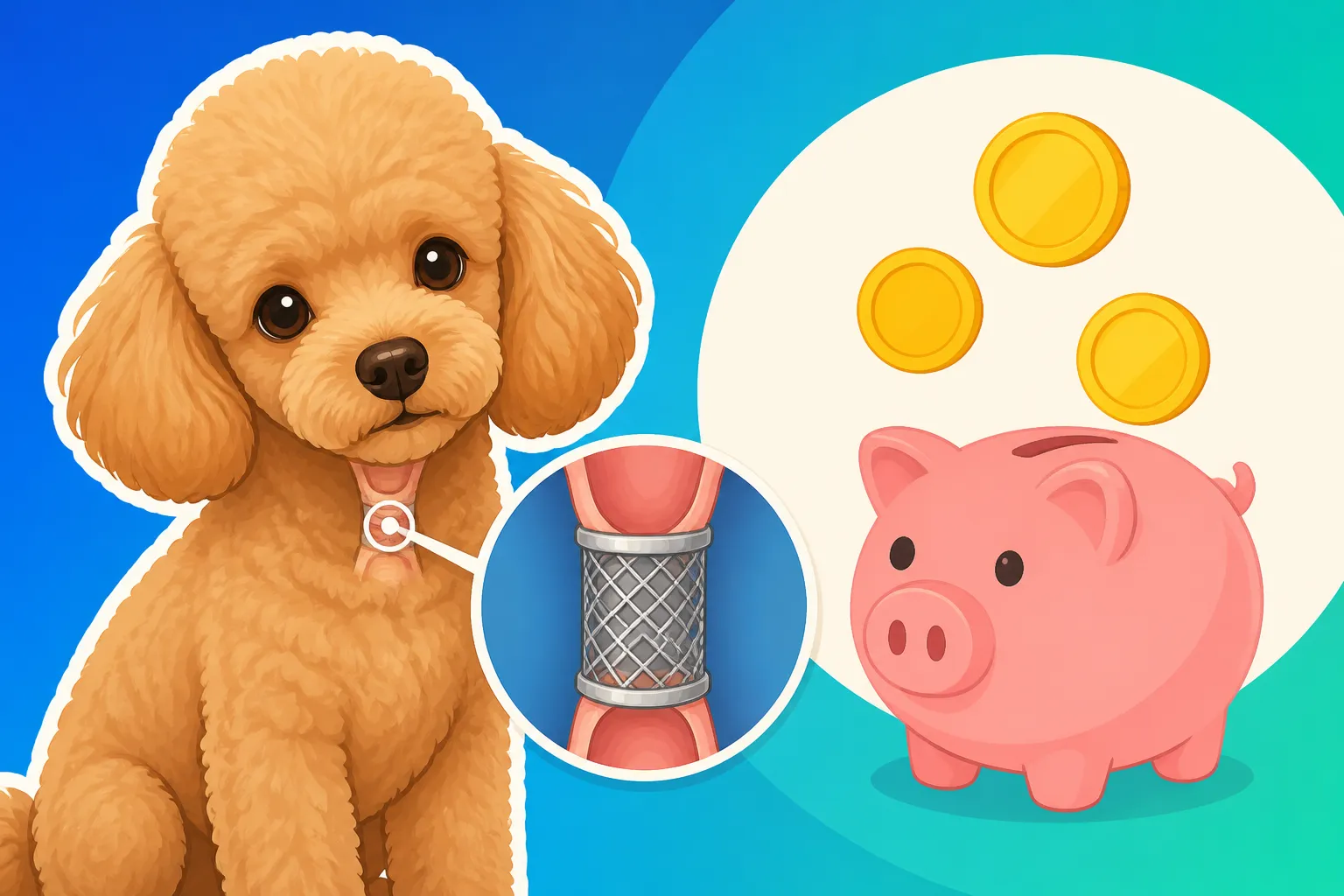
Tracheal Stent Prices for a Toy Poodle
It’s truly heart-wrenching to watch your beloved Toy Poodle struggle with a chronic cough, especially when it sounds like a goose honking, and you know they're fighting for every breath. This isn't just a nuisance; it's a terrifying reality for many small dog owners dealing with collapsing trachea. This guide aims to shed light on one of the more advanced treatment options, the tracheal stent, breaking down not just the financial implications but also what the procedure entails and what to expect in the journey to help your furry companion breathe easier.
Understanding Collapsing Trachea in Toy Poodles
When you have a little Toy Poodle, their delicate nature is part of their charm, but it also means they're prone to certain health issues that larger breeds often avoid. Collapsing trachea is one of those conditions that disproportionately affects small breeds, and it can become a significant source of distress for both dog and owner.
What is Tracheal Collapse?
Imagine the windpipe, or trachea, as a firm, flexible tube supported by C-shaped rings of cartilage. These rings keep the airway open, allowing air to flow freely to and from the lungs. In a dog with tracheal collapse, these cartilaginous rings weaken and flatten over time. Instead of maintaining a sturdy tube, the trachea essentially collapses in on itself, especially when the dog inhales forcefully, leading to a restricted airway. It’s a bit like trying to drink through a squashed straw.
While any part of the trachea can be affected, it often happens in the cervical (neck) region or the intrathoracic (chest) region. The exact cause isn't always clear-cut, but genetics certainly play a role, making breeds like Toy Poodles, Yorkshire Terriers, Pomeranians, and Chihuahuas particularly susceptible. Factors like obesity, chronic respiratory disease, and even environmental irritants can exacerbate the condition or accelerate its progression. It's a progressive disease, meaning it tends to worsen over time if not managed.
Recognizing the Signs and Diagnosis
The most tell-tale sign of a collapsing trachea is a distinctive, dry, harsh cough that often sounds like a goose honking. It’s not just a cute quirk; it’s a symptom of struggle. You might notice this cough becoming more frequent or severe during excitement, exercise, eating and drinking, or when your Poodle is exposed to allergens, smoke, or even changes in humidity. Beyond the cough, other symptoms include gagging, especially at the end of a coughing fit, difficulty breathing (dyspnea), blue-tinged gums (cyanosis in severe cases), and a noticeable decrease in exercise tolerance. Your normally energetic Toy Poodle might become hesitant to play or go for walks. It’s crucial to recognize these early signs, as they can sometimes be subtle, and a visit to the vet for early intervention can make a significant difference.
If you're noticing these kinds of symptoms, particularly that characteristic cough, it's time to talk to your vet. They'll start with a thorough physical examination, often gently pressing on your Poodle’s trachea to see if it elicits a cough. This is a classic indicator. However, to confirm the diagnosis and assess the severity, your vet will likely recommend imaging. X-rays can show the collapse, especially if taken during both inhalation and exhalation, but fluoroscopy (a moving X-ray) is often the gold standard, as it allows the vet to observe the trachea collapsing in real-time. Endoscopy, where a tiny camera is inserted into the trachea, can also provide a direct visual of the airway and its integrity. Knowing how severe the collapse is—from grade 1 (mild) to grade 4 (severe)—is vital for deciding on the best course of action. You can learn more about this specific symptom in our article on The Honking Cough of a Toy Poodle.
When is a Tracheal Stent Considered?
For many Poodles diagnosed with collapsing trachea, conservative medical management is the first line of defense. This involves medications to suppress the cough and reduce inflammation, weight management, and environmental changes. However, for some dogs, especially those with more advanced stages of collapse (typically grade 3 or 4), medical management simply isn’t enough. They continue to have severe respiratory distress, experience frequent coughing episodes that significantly impact their quality of life, or even face life-threatening breathing crises.
This is when a tracheal stent might be considered. A stent is a small, mesh-like tube that is placed inside the collapsed portion of the trachea to hold it open. It's not a decision taken lightly, as it's an invasive procedure with its own set of risks and potential complications. Typically, it’s reserved for dogs who have failed all other treatments and whose collapse is primarily within the intrathoracic trachea (the part within the chest), where external surgical rings are not a viable option. Your veterinary specialist will carefully weigh the severity of your Poodle's condition, their overall health, and the potential benefits against the risks before recommending a stent.
The Financial Reality of Tracheal Stent Surgery
Let's be blunt: a tracheal stent procedure for a Toy Poodle is not cheap. It's a specialized, delicate surgery performed by veterinary internal medicine specialists or surgeons, often requiring advanced equipment and extensive post-operative care. Many pet owners are blindsided by the costs, so understanding the breakdown is crucial for budgeting and decision-making.
Breakdown of Stent Procedure Costs
The total cost for a tracheal stent can vary significantly, but generally, you're looking at a range from $3,500 to $7,000 or even upwards of $10,000. This isn't just for the stent itself; it encompasses a whole suite of services and materials.
Here’s a typical breakdown of what those costs cover:
- Initial Consultations and Diagnostics (Pre-Op): Before a stent is even considered, there are usually several specialist consultations, extensive diagnostics, and tests to confirm suitability. This includes blood work, chest X-rays, fluoroscopy, and sometimes even a CT scan. These initial steps alone can run from $500 to $1,500.
- The Stent Device Itself: The stent is a specialized medical implant, often made of nitinol, a self-expanding alloy. The cost of the stent varies by size and manufacturer, but it’s a significant component of the overall bill, easily ranging from $1,000 to $3,000.
- Surgeon's Fees/Specialist’s Fees: This procedure is performed by highly trained veterinary internal medicine specialists or surgeons. Their expertise comes with a fee, often one of the largest components, which can be anywhere from $1,500 to $4,000 or more.
- Anesthesia and Monitoring: Anesthesia for a delicate Toy Poodle with respiratory issues requires an experienced anesthesiologist and meticulous monitoring. This includes pre-anesthetic medications, the anesthetic itself, and continuous monitoring during the procedure, adding $300 to $800.
- Procedure Room/Hospitalization Fees: The use of the specialized cath lab or operating room, along with post-operative hospitalization for observation and recovery, contributes a substantial amount. This often includes intensive care for 24-72 hours, costing $500 to $1,500 depending on the length of stay and level of care needed.
- Medications (Pre, During, and Post-Op): A range of medications will be necessary, including antibiotics, anti-inflammatories, cough suppressants, and potentially steroids. These costs can be hundreds of dollars.
- Follow-up Appointments and Imaging: Several follow-up visits and repeat imaging (X-rays) are critical to ensure the stent is in place and functioning correctly, adding another $300 to $700.
This comprehensive list illustrates why the final bill can be so daunting. It's a major undertaking, both medically and financially.
Geographical and Clinic Variations
Just like with human healthcare, veterinary costs can fluctuate dramatically based on where you live and the type of facility providing the care.
- Geographical Location: If you're in a major metropolitan area with a high cost of living, like Los Angeles, New York City, or certain parts of Florida, you can expect the prices to be on the higher end of the spectrum. Veterinary specialist practices in smaller towns or rural areas might offer slightly lower rates, though finding a specialist with the necessary expertise for stent placement outside of major vet school cities can be challenging. For instance, a stent procedure at a specialty hospital in San Diego could easily hit $8,000, while a similar procedure in a less competitive market might be closer to $5,500.
- Type of Veterinary Clinic: The vast majority of tracheal stent procedures are performed at veterinary specialty hospitals or university veterinary teaching hospitals. These facilities have the specialized equipment, board-certified internal medicine specialists or surgeons, and advanced diagnostic capabilities required for such a complex procedure. A general practice veterinarian simply won't have the resources or expertise to perform this surgery. The pricing at these specialty centers reflects their advanced capabilities and the high level of care provided. Don’t expect your neighborhood vet to offer this service, and if they do, proceed with extreme caution and ask for referral to a specialist.
The Cost of Ongoing Management Post-Stent
Getting the stent placed is often just the beginning of the financial commitment. A tracheal stent isn't a "cure" for collapsing trachea; it’s a management tool. Many Poodles will still require lifelong medical management, and there are always potential complications that can arise, adding to the long-term costs.
- Medications: Your Poodle will likely need ongoing medications to manage inflammation, prevent infection, and suppress residual coughing. This could include long-term use of cough suppressants, anti-inflammatories, or bronchodilators. These monthly medication costs can range from $50 to $200, or more if multiple drugs are prescribed. For example, a common cough suppressant like hydrocodone can add up, especially if needed daily. You might find getting these medications through online pharmacies like Chewy to be more cost-effective than your vet’s office, though always confirm with your vet.
- Repeat Imaging and Check-ups: Regular follow-up appointments and X-rays are crucial to monitor the stent’s position and ensure no further collapse or complications are occurring. These can be quarterly or semi-annually, each visit adding $150 to $400.
- Complications: Unfortunately, stents aren't without potential issues. The stent can migrate, fracture, or new areas of the trachea above or below the stent can collapse. Granulation tissue can form around the stent, narrowing the airway. These complications can necessitate additional procedures, which might include further endoscopy, laser ablation of granulation tissue, or even replacement of the stent. Each of these interventions would incur significant additional costs, potentially in the thousands of dollars.
- Quality of Life Adjustments: While not direct medical costs, you'll also be investing in things like harnesses (never collars!) to protect your Poodle's airway, special bowls, humidifiers, and high-quality diets to maintain optimal weight. These are ongoing considerations that contribute to the overall cost of living with a Poodle prone to tracheal issues.
Alternatives to Stent Surgery and Their Costs
While a tracheal stent can be a life-changing procedure for some Toy Poodles, it's essential to understand that it's often a last resort. Many Poodles can be managed successfully with less invasive and less costly alternatives, at least for a significant period. Exploring these options with your vet is crucial before committing to a stent.
Medical Management and Its Limitations
For many dogs, especially those in the earlier stages of tracheal collapse, aggressive medical management can provide substantial relief and significantly improve their quality of life. This approach focuses on reducing symptoms, inflammation, and irritants.
- Medications: The cornerstone of medical management includes:
- Cough Suppressants: Drugs like hydrocodone or butorphanol help to reduce the frequency and severity of coughing, breaking the cycle of irritation and inflammation.
- Bronchodilators: These medications help to open the airways, making breathing easier.
- Anti-inflammatories: Steroids (like prednisone) are often used to reduce inflammation in the airway, which can worsen collapse. Non-steroidal anti-inflammatory drugs (NSAIDs) may also be considered in some cases.
- Antibiotics: If a secondary bacterial infection is present, antibiotics will be prescribed.
The ongoing cost of these medications can range from $50 to $200 per month, depending on the specific drugs, dosages, and your Poodle's size.
- Weight Management: Obesity significantly exacerbates tracheal collapse by putting extra pressure on the airways and reducing lung capacity. Getting your Toy Poodle to an ideal weight is paramount. This might involve a prescription diet, controlled portions, and appropriate exercise. The cost of a specialized weight management diet can be slightly higher than standard kibble, perhaps $30-$70 per month. Brands like Ollie offer fresh, portion-controlled meals that could be beneficial, though at a higher price point.
- Environmental Modifications: Reducing airborne irritants like smoke, dust, and allergens can make a big difference. Using humidifiers, air purifiers, and avoiding smoking in the house are low-cost interventions. Switching to a harness instead of a neck collar is non-negotiable for any dog with tracheal issues, as pressure on the throat can trigger a collapse. You can read more about this in our guide on Why Harnesses Matter for a Toy Poodle's Throat.
- Limitations: While effective for many, medical management doesn't fix the collapsed trachea; it only manages the symptoms. For dogs with severe, progressive collapse, medications may eventually become insufficient, leading to the consideration of surgical options. Our article on Managing a Toy Poodle's Trachea Without Surgery provides more in-depth advice.
Surgical Rings
Before the widespread availability of tracheal stents, external surgical rings were a common surgical option, and they are still performed in certain situations. This procedure involves placing small, plastic rings around the outside of the trachea to provide external support and prevent collapse.
- Procedure: Unlike a stent, which is placed internally, surgical rings are placed externally via an incision in the neck. The surgeon carefully positions and sutures the rings to the cartilage to reinforce the weakened areas. This is a more traditional open surgery.
- Pros and Cons: Surgical rings can be very effective, especially for collapses primarily located in the cervical (neck) region of the trachea. The main advantage is that it avoids the potential for granulation tissue formation inside the airway, which can be a problem with stents. However, it's a more invasive surgery, requiring a longer recovery period. It's also not suitable for collapse in the intrathoracic (chest) trachea due to the difficulty of accessing that area surgically.
- Cost: The cost for surgical ring placement is generally comparable to, or slightly less than, a stent. You can expect to pay anywhere from $3,000 to $6,000, including diagnostics, surgeon's fees, anesthesia, and post-operative care. The cost is driven by the specialized surgical skill required and the complexity of the recovery.
Lifestyle Adjustments and Preventive Measures
Sometimes, the simplest changes can have the most profound impact, and for Toy Poodles predisposed to tracheal collapse, prevention and careful management are key. These adjustments are also crucial for dogs who have undergone stent placement or are on medical management.
- Using a Harness: This cannot be stressed enough. A collar puts direct pressure on the trachea, especially when your Poodle pulls, coughs, or gets excited. A well-fitting harness distributes pressure across the chest and shoulders, safeguarding the delicate windpipe. This is a relatively low-cost investment, typically ranging from $15 to $50, but it’s invaluable.
- Weight Management: We mentioned it under medical management, but it bears repeating. Maintaining an ideal body weight is one of the most effective preventive and management strategies. Work with your vet to determine the right caloric intake and exercise regimen for your Toy Poodle. Obesity is a common issue that contributes to many health problems, including respiratory distress. This proactive approach can also help prevent other issues like Poodle Obesity and Its Consequences.
- Controlled Excitement: High excitement, vigorous play, or even barking at the doorbell can trigger a coughing fit or a collapse episode. Teach your Poodle to manage their excitement levels, perhaps through calm greetings and redirection.
- Avoiding Irritants: Minimize exposure to cigarette smoke, harsh cleaning chemicals, strong perfumes, and dusty environments. Keep their living space clean and well-ventilated.
- Dental Health: Believe it or not, severe dental disease can contribute to inflammation in the upper respiratory tract, potentially exacerbating tracheal issues. Regular dental care is important for overall health.
- Stress Reduction: A stressed dog might pant excessively or become anxious, which can worsen breathing difficulties. Creating a calm, predictable environment for your Toy Poodle can be beneficial.
- Regular Vet Check-ups: Even if your Poodle isn't showing severe symptoms, regular veterinary visits allow for early detection of issues and proactive management. For instance, sometimes other conditions like Toy Poodle Kneecaps and Windpipes can also influence their overall health and stress on their system.
Navigating Financial Support and Insurance
Facing the potential cost of a tracheal stent for your Toy Poodle can feel overwhelming. It’s a lot to consider, but there are avenues to explore that can help ease the financial burden. Being proactive about pet health and finances is key.
Pet Insurance Coverage for Tracheal Collapse
Pet insurance can be a lifesaver for unexpected veterinary expenses, but it’s crucial to understand how it works, especially with pre-existing conditions.
- Coverage Basics: Most pet insurance policies, like those offered by Healthy Paws, cover accidents and illnesses, which would include conditions like tracheal collapse and the cost of a stent procedure, provided the condition isn't considered "pre-existing." They typically work on a reimbursement model: you pay the vet bill, submit a claim, and then get reimbursed a percentage of the covered costs after your deductible is met.
- Pre-Existing Conditions: This is the big one. If your Toy Poodle was diagnosed with tracheal collapse before you enrolled them in a pet insurance policy or during the waiting period, it will almost certainly be considered a pre-existing condition and will not be covered. This is why getting pet insurance when your Poodle is young and healthy is so important.
- Deductibles and Reimbursement Rates: Policies come with a deductible (the amount you pay out-of-pocket before insurance kicks in, often $250-$1,000) and a reimbursement rate (the percentage of covered costs the insurer pays, usually 70-90%). For a $6,000 stent procedure with a $500 deductible and 80% reimbursement, you’d pay $500 (deductible) + $1,100 (20% of the remaining $5,500), for a total out-of-pocket of $1,600. Still significant, but a huge saving compared to the full amount.
- Annual Limits: Some policies have annual limits on how much they’ll pay out. Ensure your chosen policy has a high enough annual limit to cover such a costly procedure.
- Research and Compare: Don't just pick the first policy you see. Read the fine print, compare different providers (like Embrace, Fetch, Trupanion, in addition to Healthy Paws), and ask specific questions about chronic conditions and their waiting periods. Understanding your policy thoroughly is crucial. It’s also wise to research topics like Insuring a Poodle Against Addison's and Bloat to understand common insurance limitations.
Financial Assistance Programs and Payment Plans
Even without insurance, or if your condition is pre-existing, there are still options to explore.
- Veterinary School Assistance Programs: Many university veterinary teaching hospitals have funds or programs to assist pet owners with the costs of care, particularly for specialized procedures. They might offer reduced rates or help connect you with charitable organizations.
- Non-Profit Organizations: Several national and local non-profits offer financial aid for pet medical emergencies. Organizations like The Pet Fund, RedRover, and Frankie's Friends provide grants to eligible pet owners. You'll need to apply, meet specific criteria, and often show financial need.
- Payment Plans and Credit Options: Many veterinary clinics, especially specialty hospitals, understand the financial strain and offer payment plans. They might partner with third-party financing options like CareCredit, which works like a credit card specifically for healthcare expenses, often offering interest-free periods if the balance is paid within a certain timeframe. Don't be afraid to ask your vet's office about these options.
- Fundraising: Online crowdfunding platforms like GoFundMe can be effective for rallying support from friends, family, and compassionate strangers. Sharing your Poodle's story can sometimes lead to surprising generosity.
Budgeting for a Toy Poodle's Potential Health Issues
The reality of owning a Toy Poodle, especially one prone to specific health issues, means being prepared for potential significant veterinary costs. It's not just about the upfront purchase price of a puppy; it's the lifetime commitment.
- Emergency Fund: Aim to build up an emergency fund specifically for your pet's health. Financial advisors often recommend having at least $3,000 to $5,000 saved for pet emergencies, though for specialized surgeries like a tracheal stent, even more might be needed. This fund acts as a buffer against unforeseen medical bills.
- Wellness Plans vs. Insurance: While insurance covers unexpected illnesses and accidents, some veterinary clinics offer wellness plans. These typically cover routine care like vaccinations, annual exams, and sometimes dental cleanings, but they usually don't cover major surgeries or chronic conditions. Understand the difference and consider how both might fit into your overall pet care budget.
- Proactive Care: Investing in high-quality food, regular preventive veterinary care, maintaining an ideal weight, and providing a stimulating, low-stress environment can go a long way in minimizing the likelihood of severe health issues down the road. Sometimes the little things, like understanding Caring for an Aging Poodle, can save you larger costs later.
- Long-Term View: When you bring a Toy Poodle into your life, you're signing up for potentially 12-15 years of companionship. Thinking about the long-term financial picture, including routine care, potential chronic conditions, and emergency situations, is an important part of responsible pet ownership. Many new owners overlook these factors, as detailed in our guide What a Poodle Owner Forgets to Budget.
Disclaimer
The information provided in this article is intended for general informational purposes only and does not constitute veterinary medical advice. While we strive to provide accurate and up-to-date information, individual circumstances may vary. Always consult with a qualified veterinarian or veterinary specialist for any health concerns or before making any decisions about your pet's medical care or treatment plan. Costs mentioned are estimates and can vary significantly based on location, clinic, and individual patient needs.