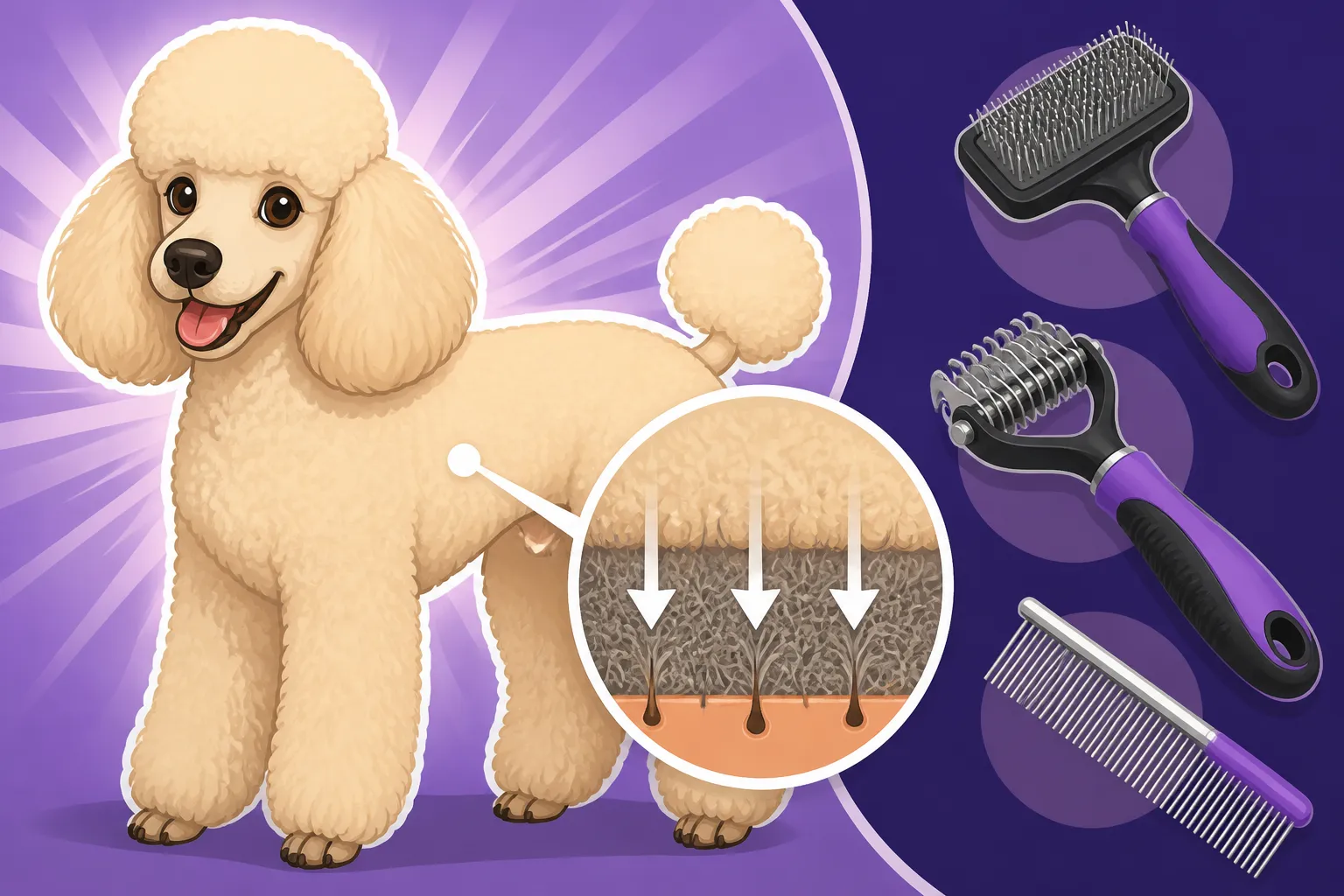
Tools That Reach a Poodle’s Undercoat
One of the biggest frustrations Poodle owners face is dealing with mats that seem to appear out of nowhere, despite diligent surface brushing. The secret to preventing those painful tangles and keeping your Poodle's iconic coat healthy and beautiful lies in understanding the unique structure of their hair and knowing exactly which tools, and techniques, are needed to reach that elusive undercoat. This comprehensive guide will walk you through the essential grooming equipment and the methods that will make a real difference in your Poodle's coat care routine.
Understanding the Poodle Coat: More Than Just "Hair"
Let's be honest, the Poodle coat is both a blessing and a bit of a mystery, especially for new owners. It's beautiful, hypoallergenic-ish, and incredibly versatile for styling, but it also demands a level of care that many other breeds simply don't. Getting to grips with its unique characteristics is the first step in tackling those sneaky mats.
The Unique Structure of a Poodle's Coat
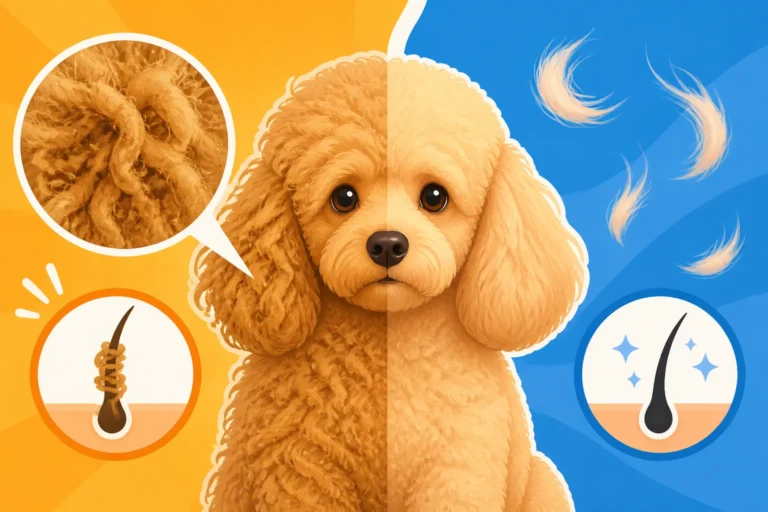
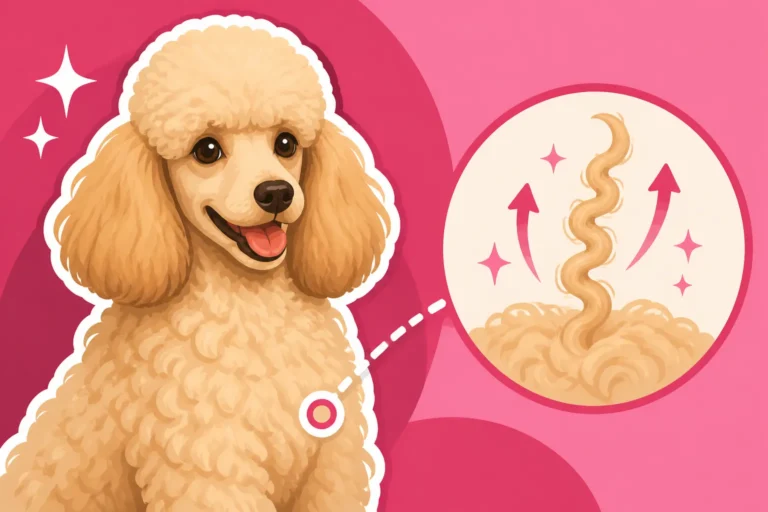
Unlike many breeds that have a double coat with a soft, dense undercoat and coarser guard hairs, Poodles have a single layer of hair that is continuously growing. It's often described as being more like human hair than animal fur, which is why it doesn't shed in the traditional sense. Instead, any loose hair gets caught within the surrounding curls. This is fantastic for allergy sufferers, but it's also the primary reason why Poodles mat. Think of it like a tangled ball of yarn – once one strand snags, it quickly pulls others into a tight, impossible knot. The "undercoat" in a Poodle isn't a separate layer, but rather the hair closest to the skin, at the very root of each curl. This is where mats begin, forming a dense, felted layer right against your dog's skin, making it incredibly uncomfortable and, if left untended, painful. For a deeper dive, check out The Poodle Coat and Why It Never Stops Growing.
Why Mats Form So Quickly
Mats are essentially felted clumps of dead hair, dirt, and skin oils that haven't been brushed out. Because the Poodle's hair is curly and holds onto shed strands, these loose hairs quickly intertwine with the healthy growing hair. Every movement, every rub against furniture, every bath where the coat isn't thoroughly brushed and dried, contributes to matting. Even a few days of skipped brushing can turn a pristine coat into a felted mess, especially in high-friction areas like behind the ears, in the armpits, and around the collar. Humidity can also exacerbate matting, making the curls tighten and clump together. Understanding Why a Poodle Coat Mats Instead of Shedding is crucial for any Poodle parent. It's not a sign of a bad owner, but rather the natural predisposition of this amazing coat type.
The Infamous "Coat Change" in Poodle Adolescence
If you've just welcomed a Poodle puppy into your home, you might be lulled into a false sense of security by their soft, easy-to-manage puppy coat. But beware, my friends! Between 8 and 18 months, most Poodles go through a "coat change" or "blowing coat" phase. During this time, their soft puppy fluff is replaced by the denser, coarser adult coat. This transition is a matting nightmare. The old puppy coat gets inextricably tangled with the new adult coat, creating a perfect storm for severe matting right down to the skin. This period requires even more diligent and thorough brushing, often daily, to prevent the coat from becoming a solid pelt. It's a challenging time, but understanding what's happening to their fur, as discussed in Coat Change in an Adolescent Poodle, can help you prepare and power through it.
The Essential Tools: Your Poodle's Best Friends
When it comes to tackling that deep Poodle undercoat and preventing mats, having the right tools isn't just helpful; it's absolutely non-negotiable. You can't effectively groom a Poodle with just any old brush from the pet store aisle. You need specialized equipment designed to penetrate those dense curls and reach right down to the skin.
The Mighty Slicker Brush: A Poodle's Daily Companion
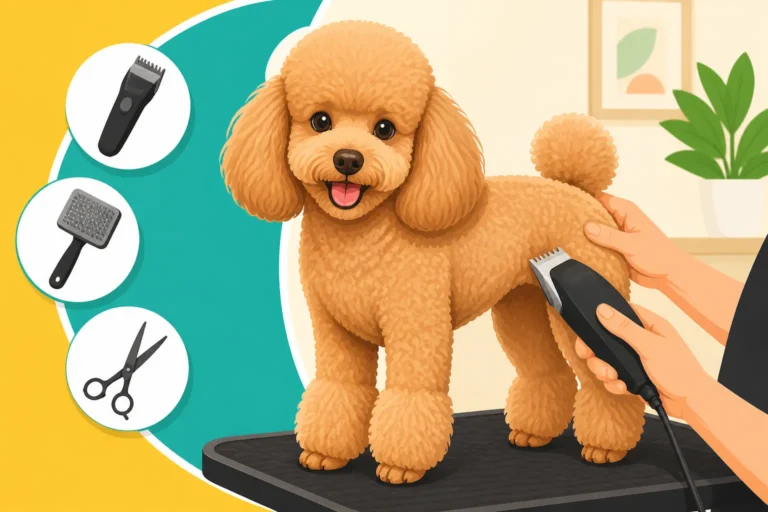
The slicker brush is the workhorse of Poodle grooming. It features a flat or slightly curved head covered in fine, tightly packed wire pins, often angled to gently detangle and separate hairs without pulling too hard. For Poodles, you want a high-quality slicker brush with firm, yet flexible pins. Avoid the super soft ones, as they won't penetrate the thick coat adequately. Brands like Chris Christensen or Activet (now Les Poochs) are often recommended by professional groomers for their effectiveness and durability. The slicker brush is primarily used for the initial detangling and brushing through sections of the coat, helping to lift and separate the curls. It's also excellent for fluff drying after a bath. You'll be using this tool every single time you brush your Poodle. When selecting one, consider the size of your Poodle – a larger slicker for a Standard Poodle, and a smaller, more delicate one for a Toy. You can find a good selection of these on platforms like Amazon or Chewy.
The Indispensable Greyhound Comb: Reaching the Roots
While the slicker brush gets a lot of the surface work done, the greyhound comb is your ultimate secret weapon for ensuring you've truly reached the undercoat. This comb is typically made of metal with both wide-set and fine-set teeth. The wide-set teeth are perfect for working through larger sections and initial detangling, while the finer teeth are essential for checking your work and confirming there are no mats hidden deep within the coat. After slicker brushing a section of hair, you must follow up with the greyhound comb. If the comb glides smoothly from the skin all the way to the tip of the hair, you've done your job. If it snags, you've found a mat that the slicker brush missed, and you need to go back and work on that area. This process is key to Brushing a Poodle to the Skin. Without a comb, you're just skimming the surface, and mats will form close to the skin.
Dematting Tools: When Things Get Tricky
Sometimes, despite our best efforts, mats happen. For minor tangles, your slicker brush and comb, used gently and patiently, might be enough. However, for more stubborn mats, a dematting tool can be a lifesaver, provided it's used correctly and sparingly.
- Dematting Rakes/Combs: These tools often have blades or teeth designed to cut through mats rather than pull them. They can be very effective but must be used with extreme caution to avoid "raking" the skin, which can cause irritation or injury. Always use them in the direction of hair growth, working slowly and using a gentle sawing motion rather than yanking.
- Mat Splitters: These have a single blade designed to split a mat into smaller, more manageable sections, making it easier to comb out. They are excellent for tight, dense mats.
- Detangling Sprays: These aren't tools in the traditional sense, but they are absolutely essential when dealing with mats. A good quality detangling spray can lubricate the hair, making it easier for your brush and comb to glide through tangles without causing pain. Look for sprays that are formulated for Poodles or curly coats. Brands like Isle of Dogs or Cowboy Magic are popular choices that can be found on Chewy. Always spray the mat thoroughly, let it sit for a minute, and then gently try to work it out from the ends, little by little.
Remember, if a mat is too large, too tight, or too close to the skin, it's always safer and kinder to your Poodle to have a professional groomer shave it out rather than trying to force it with dematting tools, which can cause significant discomfort and even skin damage.
Mastering the Technique: Line Brushing for Success
Having the right tools is only half the battle. Knowing how to use them is where the real magic happens. Poodle grooming isn't just about a quick brush-over; it's a methodical process called "line brushing" that ensures every single strand of hair, from root to tip, is free of tangles. This technique is critical for reaching the undercoat and preventing those painful hidden mats.
Breaking Down the Line Brushing Method
Line brushing means you work on your Poodle's coat in small, horizontal sections, ensuring you brush all the way down to the skin before moving to the next section. Imagine you're drawing invisible lines across your Poodle's body.
- Start at the bottom: Begin at the bottom of your Poodle's leg or flank. Part the hair horizontally with your hand or a comb.
- Hold the hair up: Hold the hair above this part upwards, out of the way, so you have a clear, thin line of hair exposed.
- Brush down to the skin: With your slicker brush, gently but firmly brush the exposed hair downwards, away from the part, aiming to reach the skin. Brush in small strokes, working out any tangles.
- Follow with the comb: Once you've slicker-brushed that section, take your greyhound comb and comb through the exact same section. The comb must glide effortlessly through the hair from the skin to the ends. If it snags, go back with the slicker brush.
- Move up: Once that section is tangle-free, drop a little more hair from the section you're holding up, create a new horizontal part just above the first, and repeat the process.
You gradually work your way up your Poodle's body, section by section, until the entire dog is brushed. This meticulous approach guarantees that no part of the coat is missed. This fundamental technique is thoroughly explained in Line Brushing a Poodle Explained.
The Importance of Sectioning
You simply cannot effectively line brush a Poodle without proper sectioning. Trying to brush through a large chunk of Poodle coat is like trying to untangle a giant ball of yarn all at once – it's impossible, frustrating, and painful for your dog.
- Clips and Bands: Use grooming clips or even simple hair scrunchies to hold up the unbrushed portions of hair, keeping them out of your way. This allows you to focus solely on the small section you are currently working on.
- Targeted Areas: Pay special attention to areas prone to matting: behind the ears, armpits, under the collar, tail base, and the groin. These are typically the first places mats form due to friction and moisture. Sectioning these areas meticulously will save you a lot of headache down the line. Remember, a common mistake is only brushing the outer layer of the coat, leaving a dense mat close to the skin.
Feeling for Mats You Can't See
Sometimes, mats can be tiny but incredibly tight and hidden within the dense curls, especially on darker colored Poodles. This is where your hands become just as important as your tools.
- Tactile Check: As you brush and comb each section, run your fingers through the hair, right down to the skin. Your fingertips are incredibly sensitive and can detect small knots and lumps that your eyes might miss. Feel for any resistance, any clumps, or any areas where the hair feels unusually stiff or dense.
- The "Comb Check": This ties back to the greyhound comb. If the comb doesn't glide easily, trust it. Don't pull. Instead, gently work the mat from the ends first. Hold the hair between the mat and the skin firmly to prevent pulling your Poodle's skin, and use the tips of your slicker brush pins to tease apart the mat, a few hairs at a time. A detangling spray applied directly to the mat can make a huge difference here. Regular tactile checks and diligent comb checks are your best defense against those sneaky mats, as detailed in Finding Poodle Mats Before the Groomer Does.
Specialized Considerations for Different Poodle Coats
While the basic principles of line brushing and using slicker brushes and combs apply to all Poodles, the nuances of their coats, dictated by size and age, mean you might need to adjust your approach slightly. A Toy Poodle's fine hair is different from a Standard Poodle's dense coat, and a puppy's fluff is a world away from an adult's more robust curls.
Tackling the Delicate Toy Poodle Undercoat
Toy Poodles, with their diminutive size, often have finer, silkier coats compared to their larger cousins. This doesn't mean they don't mat; in fact, their delicate hair can tangle just as easily, and sometimes even more tightly, because it's so fine.
- Gentle Touch: When grooming a Toy Poodle, you must be incredibly gentle. Their skin is delicate, and their small size means you have less "surface area" to work with. Use a smaller, softer slicker brush and a finer-toothed comb.
- Frequent Brushing: Because their hair is so fine, it can mat very quickly. Daily brushing might be necessary, especially if they have a longer coat or are going through their coat change. Focus on those high-friction areas: behind the tiny ears, under their tiny armpits, and where harnesses or collars rub. How Often a Poodle Must Be Brushed applies even more strictly to the Toys.
- Puppy Coats: Toy Poodle puppies, in particular, have incredibly soft, cottony coats that transition to adult coats. This phase can be particularly challenging, requiring even more patience and a very light touch to avoid pulling.
Navigating the Dense Standard Poodle Undercoat
Standard Poodles, with their impressive size, also boast a more voluminous and often coarser coat. While the individual hairs might be thicker, the sheer density of their coat means mats can become large and impenetrable very quickly.
- Sturdy Tools: For a Standard Poodle, you'll need larger, more robust slicker brushes and sturdy metal combs to penetrate that thick coat effectively. Don't shy away from a slicker with slightly firmer pins, as long as you're using a gentle touch.
- More Time and Effort: Brushing a Standard Poodle takes significantly more time and physical effort than a Toy. Expect to dedicate a good chunk of time – sometimes an hour or more – to a thorough line brushing session, especially if they have a longer clip. Break it down into manageable sections to avoid fatigue for both you and your dog.
- Deep Penetration: The key is ensuring your tools reach all the way to the skin. Often, owners only brush the outer few inches of a Standard Poodle's coat, leaving a dense, matted layer underneath. This is where the thorough comb check after every slicker-brushed section becomes paramount.
Managing the Poodle Coat Through Seasonal Changes
While Poodles don't "shed" seasonally like double-coated breeds, their coats can still be influenced by environmental factors, including changes in temperature and humidity.
- Humidity and Static: High humidity can cause Poodle curls to tighten and clump more, increasing matting risk. Conversely, dry winter air can lead to static electricity, which also makes hair more prone to tangling. Using a good quality leave-in conditioner or anti-static spray can help manage these issues.
- Outdoor Activities: If your Poodle spends more time outdoors in spring and summer, swimming or running through brush, their coat will inevitably pick up more debris and get tangled more easily. Always rinse thoroughly after swimming, especially in chlorine or salt water, and brush completely dry. A shorter clip might be a practical choice for very active Poodles, making it easier to manage the coat regardless of the season.
Beyond Brushing: Prevention and Professional Help
While diligent brushing is undeniably the cornerstone of Poodle coat care, it's part of a larger picture. A holistic approach that includes proper bathing, timely professional grooming, and the right supporting products will make your life, and your Poodle's, much easier and more comfortable.
The Role of Proper Bathing and Drying
Bathing a Poodle without thoroughly brushing them beforehand is like setting a trap for mats. Water causes tangles to tighten and felt together, making them nearly impossible to brush out once dry.
- Brush First: Always, always line brush your Poodle to ensure they are 100% mat-free before they get wet. If you find a mat, work it out or shave it out before the bath.
- Shampoo and Conditioner: Use a high-quality, hydrating shampoo and a good conditioner. Conditioner is vital for Poodles as it helps to moisturize the hair, making it smoother and less prone to tangling. Make sure to rinse thoroughly to avoid skin irritation. Check out Shampoo and Conditioner for a Poodle Coat for more details.
- Thorough Drying: This is perhaps the most critical step after bathing. You cannot let a Poodle air dry; it will guarantee matting. Use a high-velocity dryer to blow out the water, followed by a stand dryer or even a human hairdryer (on a cool or low-heat setting) while line brushing. You must dry the coat completely straight and fluffy, brushing as you go, until every hair is bone dry. This process prevents the curls from reforming and tangling as they dry. Learning to perform Bathing and Drying a Poodle correctly is a game-changer.
When to Call in the Professionals
Even the most dedicated home groomer can benefit from professional help. There are times when calling in a skilled Poodle groomer is not just a luxury, but a necessity.
- Severe Matting: If you find large, tight mats that you cannot safely work out on your own, a professional groomer is your best bet. They have the right tools and expertise to safely shave off matted coats without injuring your Poodle. Be prepared for a shorter haircut, as often the only humane option for severe mats is a complete shave-down. They may also charge a surcharge for dematting.
- Regular Maintenance: Even if you do a lot of home grooming, periodic professional grooms (every 6-8 weeks, depending on coat length) are invaluable. Groomers can spot issues you might miss, keep your Poodle's clip looking sharp, and ensure their nails, ears, and sanitary areas are perfectly maintained. This ensures a fresh start for your home grooming efforts.
- Difficult Areas: Some areas, like the face, feet, and tail, require precision clipping that can be challenging for beginners. Professional groomers make these areas look crisp and clean, which also helps to prevent matting in those specific spots. You might also want to explore Whether Grooming a Poodle at Home Saves Money to weigh the costs and benefits.
Products That Complement Your Brushing Routine
Beyond the brushes and combs, a few additional products can significantly enhance your grooming routine and make reaching that Poodle undercoat much easier.
- Grooming Table: A sturdy grooming table provides a comfortable, elevated surface that saves your back and keeps your Poodle still. This allows for much more effective and detailed brushing. Many come with an arm and loop to keep your Poodle safely in place.
- Detangling Spray/Leave-in Conditioner: As mentioned earlier, these are crucial for lubricating the coat and making it easier to brush through. Use them generously before brushing, especially on dry hair or when tackling a stubborn tangle. You can find excellent options on Amazon.
- Grooming Spray/Water Bottle: A light mist of water or a dedicated grooming spray can help dampen the coat just enough to make brushing more effective without making it soaking wet. This can also help reduce static.
- Paw Balm: Healthy paws contribute to overall comfort. A good paw balm can keep their pads soft and prevent cracking, especially if they are frequently walking on rough surfaces.
Ultimately, caring for a Poodle's coat is a commitment. It requires patience, consistency, and the right tools and techniques. But the reward – a beautiful, healthy, and happy Poodle – is absolutely worth every minute of effort.
| Tool Type | Primary Function | How it Reaches the Undercoat | When to Use It | Key Considerations |
|---|---|---|---|---|
| Slicker Brush | Initial detangling, separating curls, fluffing | Wire pins penetrate dense curls to separate loose hair and lift the coat from the skin. | Daily brushing, before and during drying after baths | Choose appropriate size and pin firmness for your Poodle. |
| Greyhound Comb | Checking for mats, fine detangling | Teeth glide through hair from skin to tip, confirming no tangles remain at the root. | After slicker brushing each section, mat checks | Metal is preferred; wide and fine teeth sections. |
| Dematting Rake | Cutting through dense mats | Blades/teeth gently slice through tightly matted hair without excessive pulling. | Only for stubborn mats, with extreme caution | Use sparingly; can cause skin irritation if used improperly. |
| Detangling Spray | Lubricating hair, easing mat removal | Reduces friction, allowing brushes and combs to glide through tangles more easily. | Before brushing dry coat, directly on mats | High-quality, Poodle-friendly formula; apply generously. |
| High Velocity Dryer | Rapid drying, blowing out loose hair | Forces air through the coat, separating hairs and preventing mats during drying. | After bathing, before or during line brushing | Essential for thorough drying; use caution with heat. |
Disclaimer
This article is for general informational purposes only and does not constitute professional advice. Laws, prices and regulations vary by location and change over time. Consult a qualified professional for guidance on your specific situation.