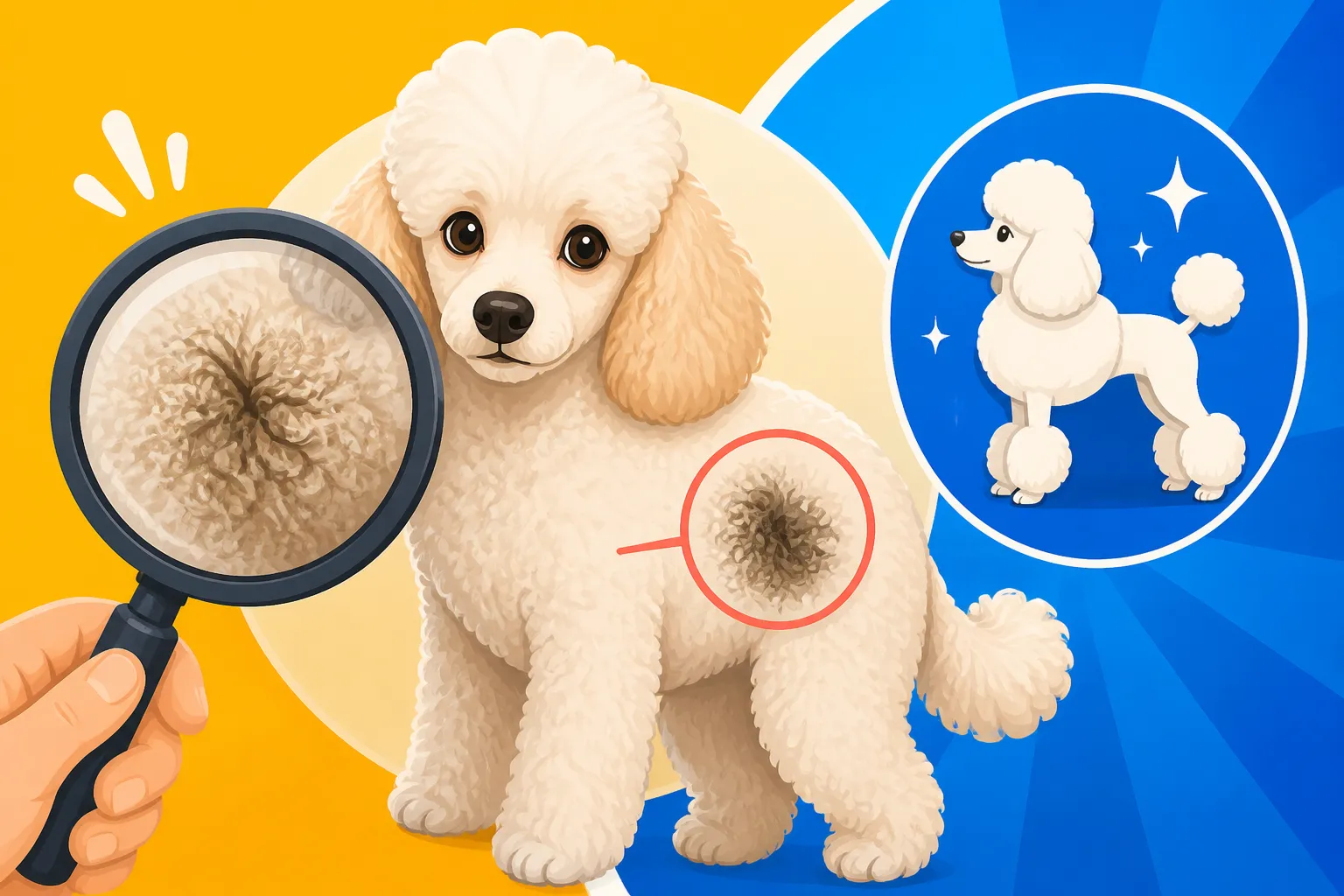
Finding Poodle Mats Before the Groomer Does
There's nothing quite like the feeling of dread when your beloved Poodle comes back from the groomer with a note about extensive matting, or worse, has to be shaved down. It's not just the added cost or the temporary loss of that beautiful floof; it's the guilt of feeling like you missed something, that your furry friend might have been uncomfortable. This guide is here to empower you, the Poodle parent, to become a mat-detecting ninja, ensuring your groomer only finds a beautiful, tangle-free coat.
Understanding the Poodle Coat and How Mats Form
The Poodle's coat is truly unique – it's often described as hair rather than fur, growing continuously without shedding in the traditional sense. This beautiful, non-shedding quality is a big part of why Poodles are so popular, especially for those with allergies. However, it's also precisely why matting is such a constant battle.
Why Poodle Hair Mats Instead of Shedding
Unlike dogs with fur, which shed dead hairs to make way for new growth, a Poodle's coat holds onto those dead hairs. If these dead hairs aren't brushed out regularly and thoroughly, they quickly intertwine with the healthy, growing hair. Think of it like a tangled ball of yarn that just keeps collecting more strands. Add moisture, friction, and dirt, and you've got a recipe for a mat. Mats aren't just cosmetic; they can pull on the skin, cause discomfort, and even lead to skin infections if moisture and debris get trapped underneath. Why a Poodle Coat Mats Instead of Shedding dives deeper into this fascinating, yet challenging, aspect of Poodle ownership.
The Role of Friction and Moisture
Mats don't just appear out of nowhere; they're often born in areas of high friction or where the coat gets wet and isn't properly dried. Imagine your Poodle wearing a collar or harness all day. The constant rubbing against the coat creates tiny tangles that, if left unchecked, quickly escalate into full-blown mats. Similarly, the hair in armpits and groin areas sees a lot of movement and rubbing, making them prime mat real estate. A rainy walk, a swim in the lake, or even just a sloppy drink of water can contribute. If that damp hair isn't thoroughly brushed and dried, it will clump together and tighten as it dries, forming mats that are much harder to remove. This is why Bathing and Drying a Poodle correctly is such a critical part of coat care.
Mastering the Art of Mat Detection: Line Brushing
You might think you're brushing your Poodle daily, but if you're not line brushing, you could be missing the mats lurking beneath the surface. Surface brushing merely smooths the top layer of hair, leaving the tangles near the skin to fester and grow.
What is Line Brushing and Why It's Crucial
Line brushing is the gold standard for Poodle grooming and the absolute best way to detect mats before they become serious problems. It involves systematically brushing small sections of hair, starting from the skin and working your way out to the tips. Imagine dividing your Poodle's body into horizontal "lines." You'll hold the top section of hair up, exposing a line of skin and the hair growing from it. Then, you brush that exposed line of hair thoroughly, from root to tip, before letting down another small section and repeating the process. This ensures every single strand of hair gets attention, preventing those sneaky mats that start close to the skin. It might sound tedious, but it's an indispensable technique for any Poodle parent, especially with breeds prone to matting. Line Brushing a Poodle Explained offers a step-by-step guide to this technique.
How to Properly Line Brush Your Poodle
To line brush effectively, you'll need a good quality slicker brush and a metal comb (often called a Greyhound comb). Start at the bottom of your Poodle – usually a leg or the belly – and work your way up and across the body.
- Sectioning: Use your non-dominant hand to part the hair, exposing a line of skin. Hold the hair above this line up and out of the way.
- Brushing: With your slicker brush, gently brush the exposed hair from the skin outwards, using short, firm strokes. Always brush in the direction the hair grows.
- Combing: Once you've brushed a section, follow immediately with your metal comb. The comb is your ultimate mat detector. If the comb glides smoothly through the hair from the skin all the way to the tip, that section is mat-free. If it snags, you've found a tangle.
- Repeat: Move up a small increment, creating a new "line" of exposed skin, and repeat the brushing and combing process. Work your way methodically over the entire body, including legs, tail, ears, and under the collar.
This systematic approach is what truly gets to the root of the problem (literally!) and ensures you catch those mats early.
Common Hiding Spots for Mats
Mats are masters of disguise, often forming in inconspicuous places where they are easily overlooked during a quick brush. Knowing these common trouble spots is half the battle in your mat detection mission.
Checking a Poodle's Armpits and Ears
These are notorious mat magnets! The armpits (or "axillae," if we're getting technical) experience constant movement and friction. Every step your Poodle takes, every stretch, every run, contributes to tangles forming here. The hair in this area is often finer and softer, making it even more prone to matting. When line brushing, remember to lift each leg and carefully brush and comb the armpit area.
Similarly, Poodle ears, with their long, often thick hair, are another hotspot. They dangle, they swing, they get wet when your Poodle drinks, and they often get rubbed when your Poodle scratches. Checking a Poodle's Armpits and Ears for Mats provides a focused approach to these areas. Always remember to check behind the ears and at the base where they attach to the head, as these are prime locations for tight, painful mats to form.
Other Tricky Areas: Tail, Legs, and Under the Collar
Beyond the armpits and ears, several other spots demand extra vigilance:
- Tail: The tail swishes constantly, creating friction. Make sure to brush and comb the entire length of the tail, especially at the base where it meets the body, and underneath.
- Legs: The insides of the legs, particularly around the "trousers" (the longer hair on the upper legs), are areas of high movement. Work through these sections carefully, segment by segment.
- Under the Collar/Harness: Any area where accessories rub against the coat will inevitably cause friction and matting. Make sure to remove collars and harnesses daily to thoroughly brush and comb these spots. Even if your Poodle wears a comfortable, wide collar, mats can still form right where it sits. Consider rotating collars or using different types to minimize pressure on one spot.
- Groin and Rear: These areas get a lot of moisture and friction, especially during potty breaks. Keep the hair here trimmed short for hygiene and ease of brushing, and always check for mats.
- Topknot/Forehead: If your Poodle has a longer topknot, the hair here can easily tangle, especially if it falls into the eyes or is constantly being played with. For show Poodles, banding is common, but for pets, daily brushing and sometimes trimming can help prevent mats. Early Sebaceous Adenitis on a Poodle's Topknot discusses coat issues in this area from a different perspective, but highlights the importance of keeping it groomed.
Remember, the goal is to find those little knots when they're still tiny tangles, not when they've become felted, impenetrable masses. The Spots Mats Form First on a Poodle offers a comprehensive rundown of all the usual suspects.
Essential Tools for Your Mat Detection Arsenal
Having the right tools is paramount. You can't fight mats with just any old brush you pick up at the grocery store. Invest in quality, and you'll save yourself (and your Poodle) a lot of grief.
The Slicker Brush and Metal Comb Duo
These two tools are the cornerstone of Poodle grooming.
- Slicker Brush: A good quality slicker brush has fine, wire pins set on a flat or curved surface. It's designed to separate individual strands of hair and remove loose undercoat (even though Poodles don't have a traditional undercoat, it still helps lift shed hairs). Choose one appropriate for your Poodle's size – a larger standard Poodle will need a bigger brush than a tiny Toy Poodle. Brands like Chris Christensen or Artero are popular with professional groomers and Poodle owners, and you can often find a good selection on platforms like Amazon or Chewy.
- Metal Comb (Greyhound Comb): This is your ultimate mat detector. A sturdy metal comb with both wide and narrow teeth is essential. The wide teeth are great for initial detangling, while the narrow teeth are crucial for ensuring the hair is completely tangle-free down to the skin. If the comb can't pass through the hair, there's a mat. Without a comb, you're essentially brushing blindly.
Regularly cleaning your brushes and combs is also important to ensure they remain effective. Hair and debris can accumulate, making them less efficient at detangling.
Detangling Sprays and Mat Splitters
Sometimes, despite your best efforts, a small mat will form. That's where detangling sprays and, as a last resort, mat splitters come in.
- Detangling Sprays: A good detangling spray can make a world of difference when working out a minor tangle. These sprays often contain conditioners that lubricate the hair, making it easier for tangles to release. Always spray the mat directly, let it sit for a minute or two, and then gently work at it with your fingers or the wide teeth of your comb. There are many excellent brands available on pet supply sites like Chewy or Amazon. Remember, saturate the mat, not the entire dog, unless you're doing a full body brush-out. Detangling Spray for a Matted Poodle provides more specific advice on choosing and using these products.
- Mat Splitters/Dematter Tools: These are sharp tools designed to cut through a mat in sections, making it easier to comb out. They are NOT for cutting out mats entirely, as this can be dangerous. Use them with extreme caution and only as a last resort for small, stubborn mats that resist combing and detangling spray. Always place your fingers between the mat and the skin to prevent cutting or irritating your Poodle's delicate skin. If a mat is tight against the skin or extensive, it’s always safer to let a professional groomer handle it. A small, tight mat can be incredibly painful to pull on, so patience is key.
What to Do When You Find a Mat
Finding a mat can be frustrating, but don't panic! Your approach determines whether it becomes a minor inconvenience or a traumatic experience for your Poodle.
Gently Working Out Small Mats
For small, loose tangles or nascent mats, follow these steps:
- Isolate the Mat: Gently separate the matted section of hair from the surrounding clear hair.
- Apply Detangling Spray: Liberally spray the mat with a good quality detangling spray. Allow it to soak in for a minute or two.
- Finger Pick: Start by gently trying to pull the mat apart with your fingers, working from the outer edges inward.
- Comb Gently: Using the wide-toothed side of your metal comb, start at the very tip of the mat and gently work tiny sections of hair free. Hold the hair at the base of the mat (closest to the skin) with your non-dominant hand. This prevents pulling on the skin, which is crucial for your Poodle's comfort. Work slowly, one strand at a time, moving closer to the skin only when the outer sections are clear.
- Patience is Key: This process takes time and patience. If your Poodle shows discomfort, take a break. You don't want to create a negative association with grooming. Offer praise and treats (maybe some goodies from Ollie!) to keep the experience positive.
Never try to yank or force a comb through a mat. This will only cause pain, damage the coat, and make your Poodle fearful of future grooming sessions.
When to Call the Professionals
There are times when a mat is simply beyond home remedy, and trying to remove it yourself could do more harm than good.
- Skin-Tight Mats: If a mat is very tight and close to the skin, it's incredibly difficult and painful to try and comb out. The skin under these mats can be very delicate or already irritated.
- Large, Felted Mats: If a mat is extensive, covering a large area, or has become a solid, felt-like mass, don't attempt to remove it yourself. These often require a complete shave-down underneath the mat.
- Poodle Shows Discomfort or Aggression: If your Poodle is consistently showing signs of pain, snapping, or trying to bite when you attempt to detangle, it's time to call a professional groomer. They have the experience, specialized tools, and often a different approach that can make the process safer and less stressful.
- You're Not Confident: If you simply don't feel confident in your ability to safely remove a mat, that's perfectly okay. A good groomer would much rather you bring in a matted dog for them to handle than for you to accidentally injure your pet.
Remember, a groomer's primary concern is the dog's well-being. If a mat is severe, they will often recommend shaving the area or even the entire dog, even if it means losing that beautiful coat temporarily. This is not a judgment, but a necessity to prevent pain and potential skin issues. Why Groomers Shave a Matted Poodle explains their reasoning and what to expect.
Preventing Mats: Daily Habits for a Healthy Coat
An ounce of prevention is worth a pound of cure, especially when it comes to Poodle mats. Establishing a consistent grooming routine is the most effective way to keep mats at bay.
The Importance of a Consistent Brushing Schedule
The frequency of brushing depends on your Poodle's coat length, texture, and lifestyle. A Poodle in a longer clip or going through "coat change" (around 8-18 months) will need more frequent brushing than one in a short sporting clip.
Brushing Frequency Guide
| Coat Length | Minimum Frequency | Ideal Frequency | Notes |
|---|---|---|---|
| Very Short (Kennel Clip) | 2-3 times/week | Every other day | Still needs brushing to remove dead hair and stimulate skin. |
| Medium (Sporting Clip) | Every other day | Daily | Most common pet clip; daily brushing prevents almost all mats. |
| Long (Puppy Clip/Show) | Daily | Daily, often twice (morning & evening) | High maintenance; critical to line brush thoroughly and frequently to prevent deep matting. |
| Adolescence (Coat Change) | Daily, sometimes twice | Daily, often twice, with extra attention | Puppy coat sheds out, adult coat comes in; a prime time for matting. Increase vigilance. Coat Change in an Adolescent Poodle is a must-read. |
It's better to brush for 10-15 minutes every day or every other day than to attempt a marathon session once a week, which often leaves mats untouched and can be exhausting for both you and your Poodle. How Often a Poodle Must Be Brushed reinforces this concept.
Professional Grooming and Home Maintenance Balance
While daily home brushing is essential, professional grooming is also a non-negotiable part of Poodle ownership. Your groomer has specialized equipment (like high-velocity dryers that help straighten the coat for easier brushing and drying, and professional clippers with various blades) and expertise in maintaining healthy coats and stylish clips.
Think of it as a team effort: you maintain the coat between visits, and the groomer provides the "deep cleaning," clipping, and styling. The frequency of professional grooms depends on your desired clip, but generally, Poodles need to see a groomer every 4-8 weeks. A Poodle in a very short kennel clip might go 8 weeks, while one in a puppy clip might need 4-6 weeks. During these visits, the groomer can also catch any emerging skin issues or health concerns you might have missed.
If you're diligent with your home grooming, your professional grooming appointments will be quicker, less stressful for your Poodle, and often less expensive, as the groomer won't have to spend extra time dematting. It's a win-win for everyone!
Disclaimer
This article is for general informational purposes only and does not constitute professional advice. Laws, prices and regulations vary by location and change over time. Consult a qualified professional for guidance on your specific situation.