When Poodle Retinal Atrophy Starts
It’s heartbreaking to imagine your beloved Poodle losing their sight, especially when you start to notice those subtle changes in how they navigate the world. The worry about what's happening and, more specifically, when something like progressive retinal atrophy might begin can be overwhelming. This guide is here to shed light on what progressive retinal atrophy (PRA) is, when its signs typically emerge in Poodles across the different varieties, and what you can do to support your furry family member through this challenging journey.
Understanding Progressive Retinal Atrophy in Poodles
The phrase "progressive retinal atrophy" sounds incredibly clinical, but at its heart, it describes a group of inherited eye diseases that slowly, relentlessly, rob a dog of its vision. For us Poodle parents, understanding what this means can feel like facing a tidal wave of uncertainty, especially because it's a condition that develops over time, often making its presence known in subtle, easy-to-miss ways at first. It’s not an acute injury or infection, but a slow, genetic march that affects the specialized cells in the back of your Poodle’s eye.
What Exactly is PRA?
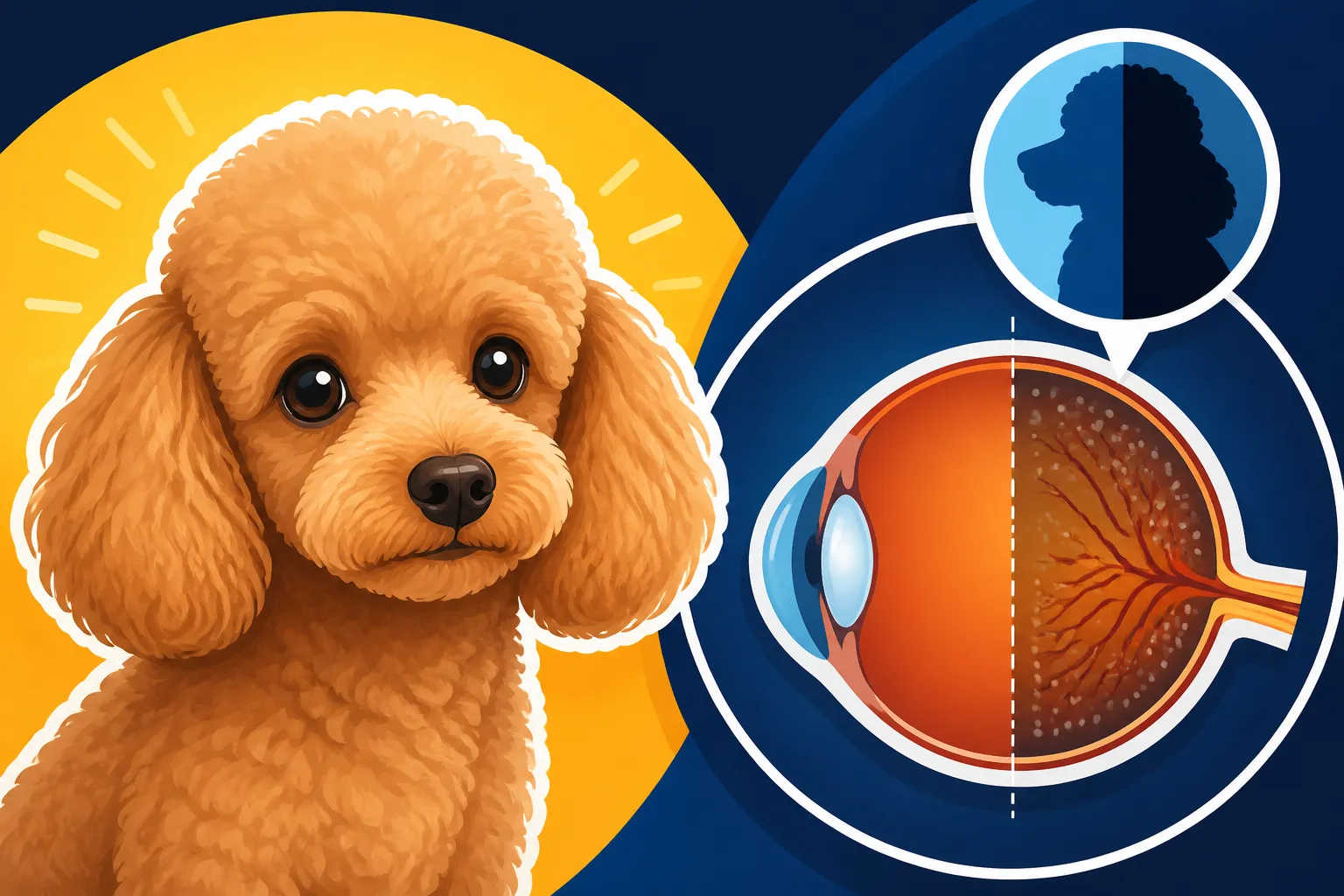
At its core, progressive retinal atrophy is the degeneration of the retina, the light-sensitive tissue at the back of the eye that's responsible for processing images. Think of the retina like the film in an old camera or the sensor in a digital one; it captures light and sends those signals to the brain to create vision. In dogs with PRA, the photoreceptor cells within the retina – the rods and cones – begin to malfunction and eventually die off. Rods are crucial for vision in low light (night vision), while cones are responsible for vision in bright light and for perceiving color and detail. Because of this cellular breakdown, the retina loses its ability to convert light into electrical signals, leading to irreversible blindness. It’s a truly devastating condition to witness.
What makes PRA so insidious is its "progressive" nature. This isn't a sudden event; it's a gradual decline. Your Poodle doesn't just wake up one day blind. Instead, the changes happen over months, or even years, which can make it incredibly hard to pinpoint the exact moment something started to go wrong. As the condition advances, these vital cells degenerate more and more, and your Poodle's world slowly darkens.
The Genetic Roots of Poodle PRA
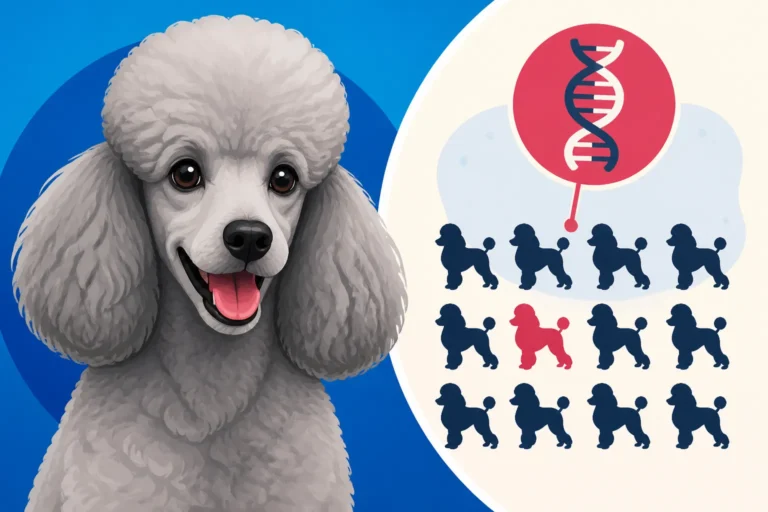
The Poodle breed, like many others, carries specific genetic predispositions, and PRA is unfortunately one of them. For Poodles, the most commonly discussed and tested form of progressive retinal atrophy is prcd-PRA, which stands for progressive rod-cone degeneration. This particular form of PRA is inherited in an autosomal recessive manner. What this means in plain language is that a Poodle needs to inherit two copies of the faulty gene (one from each parent) to actually develop the disease. If they inherit only one copy, they are a "carrier" – perfectly healthy themselves but capable of passing the gene on to their offspring.
This genetic inheritance pattern is why responsible breeders are so vital in the fight against PRA. They conduct genetic testing on their breeding stock to identify carriers and affected dogs, aiming to breed only healthy, clear dogs or healthy carriers with clear dogs to ensure that no puppies inherit two copies of the problematic gene. Ignoring these genetic realities is how these conditions sadly continue to spread through breed lines. This is a critical part of what a Poodle breeder must test for to safeguard the future health of their lines and the breed as a whole.
How PRA Steals Sight: A Gradual Process
The progression of prcd-PRA in Poodles typically follows a predictable, if heartbreaking, pattern. The rod cells, which are responsible for night vision, are usually affected first. This means that one of the earliest and most subtle signs you might notice is your Poodle struggling to see in dim light or at dusk. They might hesitate to go down stairs, bump into familiar furniture in a darkened room, or become less confident navigating the yard at night. It's often mistaken for clumsiness or just "getting old" at first, which adds to the frustration and delayed diagnosis.
As the disease progresses, the cone cells also begin to degenerate, affecting your Poodle's daytime vision. This is when the vision loss becomes more obvious. Your Poodle might start bumping into objects in broad daylight, struggle to find their food bowl, or have difficulty tracking moving objects. Eventually, without the ability of either rods or cones to function, complete blindness will occur. It's a slow, agonizing slide into darkness, making the question of "When Poodle Retinal Atrophy Starts" all the more poignant for worried owners. If you notice any of these signs, it's wise to have your vet perform regular check-ups and potentially refer you to a veterinary ophthalmologist to confirm.
When Poodle Vision Begins to Fade: Typical Onset Ages
One of the most pressing questions for any Poodle owner, or prospective owner, is exactly when progressive retinal atrophy might make its unwelcome appearance. While it’s impossible to give an exact date, we do have general timelines that are understood within the Poodle community and veterinary ophthalmology, particularly concerning the prcd-PRA form common in the breed. The onset can vary slightly by Poodle variety, adding another layer of complexity to predicting this challenging condition.
The Miniature Poodle's Vulnerability
Miniature Poodles are, unfortunately, one of the varieties most commonly associated with prcd-PRA, and thus, often the focus when discussing the disease's onset. For a Miniature Poodle carrying two copies of the affected gene, the clinical signs of vision loss typically begin to manifest in early to mid-adulthood. We're generally talking about an age range of 3 to 5 years old.
This can be particularly disheartening because it's often when your Poodle is in the prime of their life, full of energy and intelligence. The initial signs, as mentioned, are usually subtle night blindness. Owners might report their dog becoming more hesitant in poorly lit areas, or having more trouble catching toys that are thrown after sunset. Over the next few years, this will gradually progress to complete blindness. This specific form of the disease is also often highlighted in discussions about inherited blindness in Poodles due to its prevalence.
Toy Poodles and Early Adulthood Onset
Similar to their Miniature cousins, Toy Poodles are also susceptible to prcd-PRA, and the typical age of onset often mirrors that seen in Miniatures. For Toy Poodles, you might start seeing the first signs of vision deterioration, most notably night blindness, usually around 3 to 5 years of age.
It’s a cruel irony that this happens when they are still relatively young and active. A Toy Poodle's world is already visually demanding, and losing sight impacts their confidence profoundly. Owners might notice their little one becoming more cautious or sticking closer to their side, particularly in unfamiliar or dimly lit surroundings. The progression is the same gradual decline, moving from difficulty seeing at night to eventually complete blindness over several years. This emphasizes why understanding the nuances of Toy Poodle diseases Standards rarely get is so important.
Standard Poodles: A Later, Less Common Occurrence
While Standard Poodles can and do develop PRA, it is generally considered less prevalent and, in some cases, might have a slightly later onset compared to the Toy and Miniature varieties. When prcd-PRA does occur in Standard Poodles, the initial signs might not become apparent until they are closer to 5 to 8 years of age, or even later. However, it's important to remember that this is a general guideline, and individual cases can vary significantly.
It's also worth noting that Standard Poodles, being larger and often more robust, might mask their initial vision loss even more effectively than smaller Poodles, relying on their strong sense of smell and hearing to navigate. This makes observing those subtle early cues even more critical. While not as commonly impacted by prcd-PRA as the smaller varieties, the overall topic of why Poodle health splits by size highlights that different Poodle types can have varying predispositions to certain conditions. If you're considering a Standard Poodle, inquiring about the specific genetic panels for the three Poodle sizes that a breeder runs is always a good idea.
| Poodle Variety | Common PRA Form | Typical Onset Age | Initial Symptoms |
|---|---|---|---|
| Toy Poodle | prcd-PRA | 3-5 years | Night blindness, hesitation in dim light |
| Miniature Poodle | prcd-PRA | 3-5 years | Night blindness, reduced confidence, bumping into objects |
| Standard Poodle | prcd-PRA | 5-8+ years (variable) | Night blindness, changes in pupil dilation |
Catching the Cues: Spotting Early Signs of PRA in Your Poodle
As devoted Poodle parents, we want to catch any health issue as early as possible. However, progressive retinal atrophy is notoriously tricky because its initial signs are often subtle, easily missed, or even attributed to other things. Our clever Poodles are also incredibly adaptable, and their intelligence can often hide their declining vision for quite some time, making your observations even more crucial. Learning to read pain in a sensitive Poodle, or indeed any subtle changes, is a skill every owner develops.
The First Whisper: Night Blindness
Almost universally, the very first sign that a Poodle is developing prcd-PRA is a noticeable difficulty seeing in low light conditions – what we call night blindness. This isn't just them being a bit hesitant; it's a genuine struggle. You might first observe it during your evening walk when your Poodle, usually confident, starts to move more slowly, perhaps bumping into a lamppost or misjudging a curb they’ve navigated a thousand times. Inside the house, they might suddenly hesitate before going into a dimly lit room, or struggle to find a dropped toy under the sofa after dusk.
This change in confidence at night is a critical early warning. They might seem disoriented in the backyard once the sun goes down, or they might become reluctant to go outside alone after dark. Sometimes, this can lead to increased clinginess, as they feel more secure being close to you when their world is dimming. It’s not that they’re being needy; it’s that their primary sense for navigation is starting to fail them. They are starting to tell you something is wrong, even if it's not a direct vocalization.
Behavioral Shifts and Adaptation
Beyond just navigating in the dark, you might start to notice more generalized behavioral changes as your Poodle's vision continues to decline. A Poodle's keen intellect and incredible adaptability mean they will try their hardest to compensate for their failing eyesight by relying more heavily on their other senses, particularly their hearing and sense of smell. They might become hyper-aware of sounds or use their nose more to locate toys, food, or even you.
However, this adaptation also has its downsides. Your Poodle might become more hesitant in new environments, where their memorized "mental map" of familiar surroundings doesn't apply. They might startle more easily if approached unexpectedly, especially from their blind side, or if you make sudden movements or noises. You might notice they are more reluctant to play fetch in an open field, or they seem to lose track of the ball. Some Poodles become more anxious or even a bit irritable if they feel vulnerable, or why a sensitive Poodle hides illness as they attempt to cope. They might stick incredibly close to you, becoming your shadow, as you represent their safest guide in a world that's becoming increasingly blurred.
What to Look For Physically
While the behavioral signs are often the first to appear, there are also some physical changes in your Poodle's eyes that a vet or a veterinary ophthalmologist might observe. One common sign is that your Poodle's pupils may appear more dilated than usual, especially in normal or even bright light, and they might not constrict as readily when exposed to light. This is because the failing retina is trying to gather as much light as possible to compensate for its reduced function.
Another sign that a vet might notice, and you might even catch a glimpse of in certain lighting, is an increased "eye shine" or tapetal reflection. This is the reflective layer at the back of the eye (the tapetum lucidum) becoming more prominent as the retina thins. While not a diagnosis on its own, it can be an indicator. It’s also important to note that sometimes, secondary cataracts can develop in dogs with PRA, appearing as a cloudy or opaque lens. However, cataracts themselves are a different condition and don't cause the initial PRA vision loss, though they can certainly exacerbate it. A veterinary ophthalmologist can distinguish between these conditions and provide a precise diagnosis through specialized tests, reinforcing whether Poodle eyes need yearly checks, especially in susceptible breeds.
Proactive Steps and Compassionate Care for a Poodle with PRA
Receiving a diagnosis of progressive retinal atrophy for your Poodle can feel like a punch to the gut. It's natural to feel grief, fear, and a sense of helplessness. While there is currently no cure for PRA, there are incredibly important proactive steps you can take, especially regarding prevention, and compassionate strategies to ensure your Poodle lives a full, happy, and confident life even with vision loss.
The Power of Genetic Testing
The absolute best proactive measure against prcd-PRA is thorough genetic testing of breeding dogs. Reputable Poodle breeders understand the profound impact of inherited diseases and will perform DNA testing on all their breeding stock to ensure they are clear of the prcd-PRA gene. This means testing for the specific genetic mutation known to cause this form of PRA. Dogs can be classified as "Clear" (no copies of the mutation), "Carrier" (one copy, healthy but can pass it on), or "Affected" (two copies, will develop the disease).
If you are looking for a Poodle puppy, always ask for proof of genetic testing for PRA from both parents. A responsible breeder will readily provide these results. Breeding two "Clear" dogs will produce all "Clear" puppies. Breeding a "Clear" dog with a "Carrier" dog will produce approximately 50% "Clear" and 50% "Carrier" puppies, all of whom will be healthy. Breeding two "Carriers," however, has a 25% chance of producing "Affected" puppies, meaning those puppies will eventually go blind. Understanding how many Poodles carry the PRA mutation empowers breeders to make informed decisions that safeguard the health of future generations. This vital step helps prevent the heartbreak of a late-onset diagnosis.
Creating a Safe, Predictable World
Once a Poodle is diagnosed with PRA, or even if you suspect vision loss is beginning, creating a safe and predictable environment is paramount. This is where your Poodle's intelligence and adaptability shine brightest, but they need your help. The most crucial rule: do not rearrange furniture or household items unnecessarily. Your Poodle will create a detailed mental map of your home, and moving things frequently will shatter their confidence and increase the risk of bumps and injuries.
Consider using scent markers or different textures to help them navigate. For example, a specific scented mat near their water bowl or a textured rug leading to their dog bed can provide invaluable cues. Keep pathways clear of clutter. If you live in a multi-level home, consider blocking off stairs or supervising your Poodle closely. Outdoor spaces should also be kept consistent and free of new obstacles. Remember, dogs adapt incredibly well to blindness, often relying more on their phenomenal sense of smell and hearing. Programs like those that help in guiding a Poodle blinded by retinal atrophy often emphasize creating this consistent sensory landscape.
Living Fully: Beyond Vision Loss
A diagnosis of PRA is not a death sentence, nor does it mean your Poodle's quality of life will plummet. Poodles are resilient, and with your loving support, they can continue to live rich, fulfilling lives. Embrace their other senses! Engage them in scent work games, where they use their powerful noses to find hidden treats or toys. Continue with obedience training, using verbal cues and tactile signals rather than visual ones. Many blind dogs thrive on structured routines and consistent verbal praise.
Regular veterinary check-ups remain essential, not just for their eyes but for their overall health. Your vet can advise on managing any secondary issues that might arise. It’s also worth considering pet insurance, like Healthy Paws, early in your Poodle's life. While inherited conditions might be considered pre-existing if a diagnosis is made before coverage starts, having insurance can be invaluable for diagnostic tests, specialist visits, and any other health concerns that may arise over their lifespan, allowing you to focus on caring for an aging Poodle without added financial stress. Your Poodle's happiness is tied to your confidence in them and your willingness to adapt and explore new ways of interacting. They may have lost their sight, but they certainly haven't lost their heart or their zest for life.
Disclaimer
The information provided in this article is for educational purposes only and is not a substitute for professional veterinary advice. Always consult with a qualified veterinarian or veterinary ophthalmologist for any concerns regarding your Poodle's health or vision.