Which Slicker Suits a Poodle Coat
One of the biggest frustrations for Poodle owners is tackling that gorgeous, curly coat. It's beautiful, yes, but it’s also a magnet for mats, and if you don't have the right tools, brushing can feel like an impossible chore, leading to painful tangles and trips to the groomer for a full shave-down. This guide will walk you through everything you need to know about choosing the perfect slicker brush for your Poodle, ensuring their coat stays healthy, happy, and tangle-free.
The Indispensable Role of a Slicker Brush in Poodle Grooming
Let's be real: owning a Poodle means you've signed up for a lifetime of dedicated coat care. This isn't a wash-and-go kind of dog, and anyone who tells you otherwise probably hasn't owned a Poodle for long. The curly, continuously growing hair, rather than fur, is what makes them so unique and beloved by allergy sufferers, but it also demands specific grooming tools. Among them, the slicker brush stands as your absolute best friend.
The Unique Nature of the Poodle Coat
Unlike dogs with double coats that shed seasonally, Poodles have a single layer of hair that simply keeps growing. Think of it like human hair, but all over their body. This means that dead hairs don't fall out; instead, they get caught in the surrounding live hairs, forming tangles and then, if left unchecked, tight, painful mats. These mats aren't just cosmetic; they can pull on the skin, cause irritation, hide skin infections, and even restrict movement. It's a serious welfare issue if not managed. That's why consistent and correct brushing is paramount.
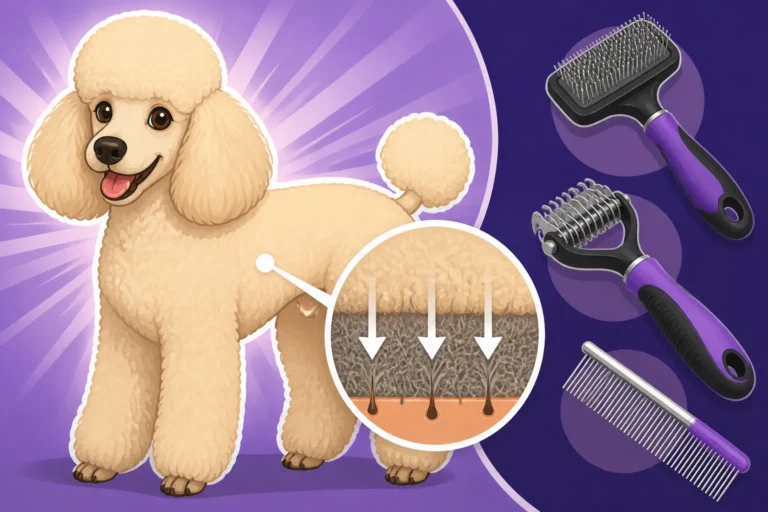
Many new Poodle owners underestimate the intensity of this coat care. They might think a quick brush-over is enough, but with a Poodle, you have to get right down to the skin. If you only brush the surface, you’re creating a smooth exterior while dense mats form closer to the body, essentially "felting" the coat. This is where the slicker brush truly shines, as it's designed to penetrate the dense curls and work through them effectively without causing undue discomfort to your sensitive Poodle. Why a Poodle Coat Mats Instead of Shedding can give you more insight into this unique challenge.
The Battle Against Matting
Matting is the archnemesis of every Poodle owner. It can happen surprisingly fast, especially in high-friction areas like behind the ears, under the armpits, around the collar, and on the legs. A day or two of missed brushing, a swim, or even just rolling around in the yard can transform a lovely coat into a knotty mess. Once mats form, they are incredibly difficult to remove without causing pain or resorting to professional intervention.
A good quality slicker brush, used correctly and regularly, is your primary weapon against these mats. It helps separate the individual hairs, removing loose undercoat and preventing the formation of those dreaded felted areas. By lifting the hair away from the skin, it also allows air to circulate, which is crucial for skin health. Without a proper slicker, you're fighting a losing battle, often leading to a distressed Poodle and a frustrated owner. Trust me, investing in the right brush now will save you countless headaches and vet bills down the line.
Understanding Different Slicker Brush Types
Walking into a pet store or browsing online retailers like Chewy or Amazon can be overwhelming when you're looking for a slicker brush. There are so many options! But not all slickers are created equal, and understanding the nuances between them is key to picking the best one for your Poodle's specific coat needs. It's not just about the brand; it's about the design and how it interacts with that distinct Poodle hair.
Firm Versus Soft Slickers
One of the first distinctions you'll notice is between firm and soft slicker brushes. This refers to the flexibility of the pins and, often, the pad they're set into.
-
Firm Slickers: These brushes typically have stiffer pins and a more rigid base. They are fantastic for tackling denser, thicker coats or for working through moderate tangles. The firm pins penetrate deeper into the coat, making them highly effective for Standards and Miniatures with a full, robust curl. However, they must be used with a gentle hand, as the stiffness can irritate sensitive skin or scratch it if you press too hard. They require a confident but delicate touch, particularly around bony areas or the belly. For adult Standard Poodles, a firm slicker is often the workhorse of their grooming routine, capable of reaching those deep-seated hairs that might otherwise mat.
-
Soft Slickers: These feature more flexible pins and often a softer, more pliable pad. They are gentler on the skin and tend to be more forgiving. Soft slickers are excellent for puppies, Poodles with fine or sparse coats, or for general maintenance brushing on an already well-maintained coat. They are also a good choice for delicate areas like the face, ears, or paws on any Poodle. While they might not penetrate the densest coats as effectively as a firm slicker, their gentleness makes them a go-to for daily quick brushes, especially for smaller Poodles like Toys and Miniatures, or if your Poodle is particularly sensitive to being brushed.
Pin Length and Density
The length and density of the pins on your slicker brush are crucial factors that directly impact its effectiveness on a Poodle coat.
-
Pin Length: Longer pins are generally better for Poodles with longer coats, as they can reach down to the skin through layers of curl. If your Poodle sports a longer clip, a slicker with longer pins will be essential for thorough line brushing. Shorter pins, conversely, are suitable for shorter clips or very fine coats, preventing the pins from bending excessively or scratching the skin. Tools That Reach a Poodle's Undercoat often highlights the importance of pin length for breeds with dense hair. You'll want to assess your Poodle's current coat length when making this decision.
-
Pin Density: This refers to how closely packed the pins are on the brush head. A higher density of pins means more pins per square inch, which can be more effective at catching loose hair and separating curls, especially in very dense or fine, easily tangled coats. However, too dense a brush can sometimes "drag" on the hair, making it harder to move through the coat, especially if there are existing tangles. A medium-density slicker is often a great all-around choice for many Poodles, offering a good balance of effectiveness and ease of use. For the thickest parts of a Standard Poodle's coat, you might find that a slightly less dense brush helps you work through section by section more easily.
Brush Head Size and Shape
The physical dimensions and design of the slicker brush head also play a significant role in its usability and effectiveness.
-
Size: Slicker brushes come in various sizes, from tiny ones designed for puppies or Toy Poodles to large ones for robust Standard Poodles. A larger brush head covers more area, which can speed up grooming for bigger dogs like Standards. However, a large brush can be cumbersome for smaller Poodles or for navigating intricate areas like legs, armpits, and faces. Conversely, a small brush might feel too tedious for a large Poodle, but it’s invaluable for precise work on a Toy Poodle or for reaching those tricky spots on any size Poodle. It's often beneficial to have a couple of sizes on hand – a larger one for the body and a smaller one for delicate areas.
-
Shape: Most slicker brushes have a rectangular or square head. Some might have slightly curved edges or an ergonomic handle. The shape of the brush head itself is less critical than its size, but a comfortable handle is absolutely paramount. You'll be spending a fair bit of time holding this tool, so make sure it fits well in your hand and doesn't cause strain. Look for handles with a good grip and weight distribution. Some brushes, particularly those found on sites like Amazon, offer different handle materials, from rubberized grips to smooth plastic. The ideal handle allows you to maintain control and apply consistent, gentle pressure without fatiguing your hand, which is vital for thorough line brushing.
Choosing the Right Slicker for Your Poodle's Size and Coat Stage
Selecting the perfect slicker isn't a one-size-fits-all affair. What works wonderfully for a Standard Poodle puppy will likely be inadequate for an adult Miniature, and certainly not for a senior Toy Poodle experiencing coat changes. Tailoring your slicker choice to your Poodle's size, age, and coat condition is crucial for effective and comfortable grooming.
Slickers for Poodle Puppies
Poodle puppies have soft, fluffy coats that are generally easier to manage than adult coats. However, they still need regular brushing to get them accustomed to the process and prevent early matting. For puppies, a soft slicker brush with short, flexible pins is usually the best choice. The gentler pins are less likely to scratch their delicate skin, and the softness helps build a positive association with grooming.
Start with very short, positive brushing sessions, using plenty of praise and treats. The goal at this stage isn't just to de-tangle, but to teach your puppy that grooming is a pleasant, calm experience. A small to medium-sized brush head is ideal for their smaller bodies. You want to ensure the pins aren't too long for their current coat length, as this can be uncomfortable. Getting them used to regular brushing now will save you immense trouble when they hit their "coat change" phase later on.
Slickers for Adult Standard Poodles
Standard Poodles boast the largest and often the densest coats, requiring a robust slicker brush. For adult Standards, a firm slicker brush with medium to long, dense pins is typically recommended. The firmer pins are necessary to penetrate the thick, curly coat and reach the skin, effectively removing dead hair and preventing mats from forming deep within the coat.
A larger brush head will make the job quicker, allowing you to cover more surface area efficiently. However, you'll still want a smaller, perhaps softer, slicker on hand for sensitive areas like the inner thighs, armpits, and around their long ears. Brushing a Standard Poodle thoroughly can take a significant amount of time – How Long Brushing a Standard Poodle Takes provides a realistic picture – so having an effective main slicker is paramount. Brands available on sites like Chewy often offer various sizes and firmness levels to cater to these needs.
Slickers for Miniature and Toy Poodles
Miniature and Toy Poodles, while smaller, still have that signature curly coat that mats easily. Their delicate frames and often finer hair require a slightly different approach than their larger cousins. For these smaller varieties, a medium-soft to firm slicker brush with medium-length, dense pins is usually ideal. The key here is balance: you need enough firmness to get through the curl, but enough flexibility to be gentle on their small bodies.
A smaller brush head is essential for these breeds. It allows for precise control, making it easier to navigate their tiny legs, underbellies, and faces without accidental scratches. Even for general body brushing, a smaller head makes the process more comfortable for them. Always remember to use a very light touch, especially on Toy Poodles, whose skin is often quite thin. What a Toy Poodle Breeder Screens For emphasizes their delicate nature, which extends to grooming.
Navigating the "Coat Change" Phase
Ah, the dreaded "coat change"! This is perhaps the most challenging grooming period for any Poodle owner, regardless of size. Between about 6 months and 18 months of age (and sometimes even up to two years), a Poodle's soft puppy coat begins to shed out and is replaced by the denser, coarser adult coat. During this transition, the puppy coat tangles and mats with the emerging adult coat like nothing else. It feels like every single strand is trying to form a knot.
During this phase, you might need to increase your brushing frequency significantly, potentially even daily. A firm slicker brush with medium to long, dense pins becomes absolutely essential for getting through the intense matting. Don't be afraid to switch between a softer slicker for general maintenance and a firmer one for tackling tougher areas. This is the time when many owners feel overwhelmed and opt for a short shave-down. While that's always an option, consistent and meticulous line brushing with the right slicker can see you through. Getting Through a Poodle's Coat Change offers even more strategies for this challenging period.
| Poodle Size/Stage | Recommended Slicker Brush Type | Pin Length & Density | Brush Head Size | Key Considerations |
|---|---|---|---|---|
| Puppy | Soft Slicker | Short, flexible | Small to Medium | Gentle introduction to grooming, positive association, delicate skin. |
| Adult Toy | Medium-Soft to Firm Slicker | Medium, dense | Small | Precision for small frame, gentle touch, fine coat. |
| Adult Miniature | Medium-Soft to Firm Slicker | Medium, dense | Small to Medium | Balance of penetration and gentleness, versatile for various clips. |
| Adult Standard | Firm Slicker | Medium to Long, dense | Medium to Large | Penetrates thickest coats, efficient for large areas, requires careful technique. |
| Coat Change | Firm Slicker (possibly two) | Medium to Long, dense | Any | Frequent, meticulous brushing is key. May need a primary larger and a secondary smaller/firmer brush. Patience is paramount! |
How to Use Your Slicker Brush Effectively
Having the right slicker brush is only half the battle; knowing how to use it properly is the other, equally important half. Many Poodle owners struggle because they're not using the correct technique, leading to frustration for both them and their dog. Effective brushing isn't just about moving the brush over the coat; it's a systematic process that ensures every inch of your Poodle's skin and coat is addressed.
The "Line Brushing" Technique
This is the golden rule of Poodle grooming. If you take one thing away from this guide, let it be line brushing. It’s the only way to ensure you’re getting down to the skin and preventing mats from forming underneath the top layer of hair. Line Brushing a Poodle Explained breaks it down in detail, but here's the gist:
- Section by Section: Start with a small section of hair, perhaps on a leg or the side of the body. Use one hand to hold the hair up and out of the way, creating a "part" or "line."
- Brush from the Skin Out: With your slicker brush in the other hand, gently brush the hair underneath that line, working in small strokes, always brushing away from the skin. You should be able to see the skin as you brush.
- Work in Layers: Once that small section is brushed and tangle-free, drop a little more hair from the held-up section and repeat the process. You are essentially working in horizontal or vertical lines across the entire body, gradually moving through the coat layer by layer.
- Check Your Work: After brushing a section, run a metal greyhound comb (often available on Chewy or at specialty pet stores) through the area. If the comb glides through easily from root to tip, you've done a good job. If it snags, go back with your slicker and brush again until it's smooth. This is crucial for truly removing tangles that the slicker might have missed or just pushed past.
Remember to be gentle! Poodles have sensitive skin, and harsh brushing can cause brush burn, irritation, or make your Poodle hate grooming. Always use short, light strokes.
Pre-Bathing Essentials
Never, ever bathe a Poodle that hasn't been thoroughly brushed and de-matted beforehand. I repeat: never. Water acts as a shrinking agent for mats, tightening them up and making them virtually impossible to remove. What might have been a minor tangle before a bath will become a concrete-like knot after.
Before bath time, dedicate ample time to a full-body line brushing session. Use your slicker brush and comb to ensure every single mat and tangle has been removed. If you encounter a particularly stubborn mat that the slicker can't handle, use a detangling spray (you can find many good options on Amazon) and work it out gently with your fingers or a mat splitter, then follow up with the slicker. This pre-bath ritual is non-negotiable for maintaining a healthy Poodle coat and preventing painful grooming experiences. Bathing and Drying a Poodle goes into more detail about the entire bathing process, emphasizing this critical first step.
Post-Bathing Drying and Brushing
The grooming doesn't stop when the bath is over. In fact, the drying process is just as important for maintaining a beautiful Poodle coat. As a Poodle's hair dries, it curls up, and if not brushed simultaneously, it can quickly form new tangles and mats.
After bathing, gently towel-dry your Poodle to remove excess water. Then, while the coat is still damp, begin line brushing again, this time using a high-velocity dryer. The dryer separates the hair, allowing your slicker brush to glide through and straighten the curls as they dry. This technique is vital for achieving that soft, fluffy, and tangle-free finish. You'll want to use your slicker brush consistently as you dry, ensuring the hair dries straight and smooth. If you let the coat air dry, or don't brush as you dry, you're practically inviting mats to form. This combination of drying and brushing simultaneously is what creates the perfect foundation for future grooming and a beautiful Poodle.
Disclaimer
This article is for general informational purposes only and does not constitute professional advice. Laws, prices and regulations vary by location and change over time. Consult a qualified professional for guidance on your specific situation.