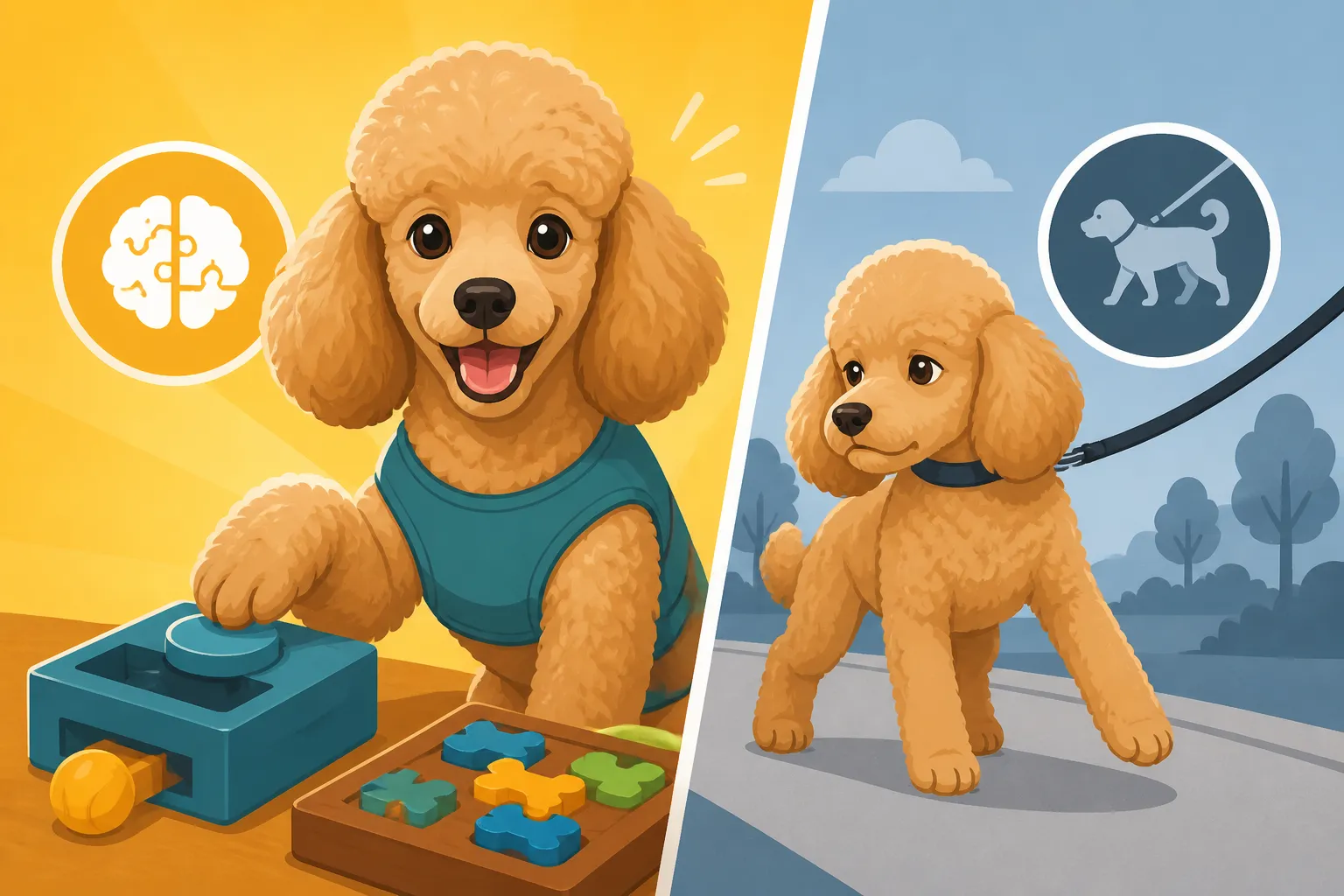
Why a Poodle Needs a Job Rather Than a Walk
It's a common misconception that a long walk is all a Poodle needs to be happy. While physical exercise is absolutely vital for their well-being, many Poodle owners quickly discover that their clever, active companions need far more than just a stroll around the block to truly thrive. This guide will delve into why Poodles require mental stimulation – a "job" for their brilliant minds – as much, if not more, than they need physical exertion, and how neglecting this can lead to frustrated, bored, and even destructive behaviors.
The Poodle's Brilliant Mind and Its Demands
Let's face it, Poodles aren't just pretty faces with fancy haircuts. They're wickedly intelligent dogs, bred for centuries to be working companions. This inherent brightness, while a joy, also comes with significant responsibilities for us, their human caregivers.
More Than Just a Pretty Face: Understanding Poodle Intelligence
Poodles consistently rank among the most intelligent dog breeds, often second only to the Border Collie in many intelligence studies. This isn't just about learning tricks quickly; it means they possess a deep capacity for problem-solving, observation, and understanding complex commands. Their brains are wired to be engaged, to figure things out, and to process information constantly. Think about it this way: a human genius wouldn't be content simply walking around aimlessly all day. They'd need intellectual challenges, projects, and puzzles to feel fulfilled. The same goes for your Poodle.
This high level of cognition can be a double-edged sword. On one hand, it makes them incredibly trainable and adaptable. On the other, it means they can easily become bored if their minds aren't adequately stimulated. A bored Poodle is often a Poodle looking for a "job," and if you don't provide a constructive one, they'll invent their own – which might not align with your idea of a well-behaved pet! You'll often find that Why Poodles Learn a Cue in Five Repetitions, and while this is wonderful for training, it also means they master things quickly and then need the next challenge.
The Hunting Dog Instinct: What Drives a Poodle
Before they became the elegant show dogs and beloved companions we know today, Poodles were primarily water retrievers, a working dog designed to plunge into icy European waters to fetch shotfowl for hunters. Their distinctive coats and clips, in fact, were originally practical adaptations to protect vital joints and organs in cold water while allowing free movement. This history means they come hardwired with a strong drive to work, retrieve, and use their senses, particularly their nose.
This retrieving instinct doesn't simply disappear because your Poodle lives in a suburban home. It manifests as a desire to carry things, to search, and to bring items to you. Ignoring these deep-seated drives leaves a significant part of their nature unfulfilled. It’s why The Poodle's Retrieving Instinct is so strong, even in Toy and Miniature Poodles. They need an outlet for this natural desire, something more satisfying than just watching the world go by from a leash.
The Consequences of an Understimulated Poodle
When a Poodle's brilliant mind isn't given appropriate outlets, problems inevitably arise. Owners often misinterpret these behaviors, thinking their Poodle is being naughty, stubborn, or disobedient, when in reality, they're simply expressing their profound boredom and frustration.
When Boredom Turns to Destructive Behavior
An under-stimulated Poodle will often find ways to entertain themselves, and these "self-appointed jobs" are rarely things you'll appreciate. Chewing furniture, tearing up pillows, counter-surfing, and digging in the yard are all classic signs of a Poodle who needs more mental engagement. They're not doing it to spite you; they're genuinely trying to occupy their busy minds and burn off pent-up mental energy.
Imagine being stuck in a room with nothing to do for hours on end. Eventually, you'd start examining the paint, fiddling with the curtains, or perhaps even trying to dismantle something. Your Poodle feels the same way. If they don't have a puzzle toy to solve, a training session to engage in, or a scent game to play, that smart brain will find something to do, and often that something is destructive. It's not uncommon for What a Poodle Does When Its Brain Is Idle to manifest as mischief.
Anxiety, Vocalization, and Emotional Well-being
Beyond destruction, mental under-stimulation can lead to a host of emotional and behavioral issues. Excessive barking, for example, is often a Poodle's way of saying, "I'm bored! Notice me! Give me something to do!" They might bark at every leaf that blows by the window, every sound from the neighbors, or simply at thin air. This isn't always alert barking; sometimes it's just sheer boredom and a plea for interaction.
Anxiety can also develop, particularly separation anxiety, even if they get plenty of physical exercise. A dog whose mind is always active but never challenged can become chronically stressed. They might pace, whine, or become clingy. This isn't just about a Poodle being sensitive; it's about their core needs not being met. Understanding Poodle Temperament and Sensitivity is key here, as their emotional well-being is deeply tied to their mental state. A truly happy Poodle is one whose brain is as tired as their body at the end of the day.
Engaging Your Poodle: Practical "Jobs" and Activities
The good news is that providing mental stimulation for your Poodle doesn't have to be complicated or require vast amounts of time. It's often about quality over quantity and making small, consistent efforts to engage their minds.
Scent Work and Nose Games: Tapping Into Instinct
Remember that hunting dog lineage? Their nose is a powerful tool, and letting them use it is incredibly enriching. Scent work, or "nose games," are perfect for Poodles. You can start simply by hiding treats around the house and encouraging your Poodle to find them. Gradually increase the difficulty by hiding them in more challenging spots or under objects.
Puzzle toys that require them to manipulate levers, open compartments, or slide panels to get a treat are also fantastic. Brands widely available on platforms like Amazon offer a huge variety of these. Start with beginner levels and move up as your Poodle masters them. Even simple snuffle mats, where treats are hidden deep within fabric strips, can provide minutes of satisfying mental work. For more structured fun, consider actual scent detection classes – Poodles absolutely excel at this! This taps directly into Scent Games That Stretch a Poodle's Mind.
Obedience and Trick Training: Building a Working Partnership
Poodles love to learn, and they love to please their people. Regular training sessions, even short ones, provide immense mental stimulation. Beyond basic obedience, teaching them tricks is a fantastic way to engage their intelligence. Think about teaching them to "put away" their toys, close doors, or retrieve specific named items. Not only does this tire their brain, but it also strengthens your bond and builds their confidence.
Consider enrolling in formal obedience classes, or even exploring online platforms like BAXTER & Bella for structured training programs you can do at home. Their intelligence means Why a Poodle Obeys Ninety Five Percent of the Time when well-trained, but that training needs to be ongoing and engaging. Don't be surprised if your Poodle starts to anticipate your cues or tries to invent their own shortcuts – that's their cleverness at play!
Dog Sports: Channeling Energy and Talent
For Poodles with a high drive, dog sports are an unparalleled way to provide both physical and mental stimulation. Agility, rally obedience, flyball, dock diving, and even advanced retrieve work are all excellent choices. Poodles excel in almost every dog sport due to their athleticism, intelligence, and eagerness to work with their handlers.
These activities provide a "job" with clear rules, goals, and constant problem-solving. Running an agility course, for instance, isn't just about speed; it's about listening to cues, anticipating turns, and navigating obstacles in sequence. It builds focus and precision, leaving your Poodle both physically and mentally drained in the best possible way. Check out Dog Sports a Poodle Excels At for more ideas.
Everyday Tasks: Making Life a Game
You don't always need specialized equipment or classes to give your Poodle a "job." Integrate mental challenges into your daily routine:
- "Help" with chores: Teach your Poodle to carry in the mail, retrieve your slippers, or pick up dropped items.
- "Find It" games: Instead of putting their food bowl down, scatter their kibble in different rooms or hide it in puzzle feeders.
- "Wait" and "Stay" challenges: Extend the duration and distance of these commands during walks or at home. Make them wait patiently while you prepare their meal or open the door.
- Name their toys: Teach your Poodle the names of their different toys and ask them to retrieve a specific one. This is excellent cognitive exercise!
These simple tasks transform routine moments into engaging mental exercises, providing a sense of purpose that a mere walk can't always offer.
Weaving Mental Enrichment into Daily Routines
Making mental stimulation a consistent part of your Poodle's day is crucial. It’s not about one huge effort, but many small, integrated ones.
Incorporating Brain Games into Meal Times
Meal times are a golden opportunity for mental work. Instead of simply placing a bowl of food down for your Poodle to gobble in seconds, make them work for it. This slows down their eating, aids digestion, and engages their brain.
- Puzzle feeders: As mentioned, these are excellent. You can find a vast selection on Amazon for every skill level.
- Kibble scatter: Sprinkle their regular kibble across a clean floor, especially in a quiet room or outside in the grass. This encourages their natural foraging behavior.
- Snuffle mats: These soft mats with fabric folds are perfect for hiding kibble or small treats, making them sniff and dig.
- Kong toys: Stuff a KONG with their meal mixed with a little wet food, peanut butter, or yogurt and freeze it. This can keep them busy for a good chunk of time.
These methods turn a typically passive activity into an active mental quest, helping to prevent Feeding Habits That Raise Poodle Bloat Risk by slowing down consumption.
Quick Training Sessions Throughout the Day
You don't need a dedicated hour-long training session every day. Poodles benefit greatly from short, frequent bursts of mental activity. Even 5-10 minute training sessions, two or three times a day, can make a huge difference.
During commercial breaks while watching TV, while waiting for water to boil, or even during a walk, practice a few known commands or teach a new trick. Keep it fun and positive, ending each session on a successful note. This consistent mental engagement keeps their brain sharp and prevents boredom from creeping in. Remember, How Long a Poodle Training Session Should Run isn't long for a Poodle, as they learn so quickly.
Rotating Toys and Puzzles for Continued Interest
Poodles are clever, and they can quickly figure out a puzzle toy or get bored with the same old squeaky ball. To keep their interest piqued, rotate their toys and puzzles. Have a selection of toys, but only offer a few at a time. After a week or two, put those away and bring out a different set.
This makes each toy feel new and exciting again. It's like unwrapping a present every few weeks! For puzzle toys, consider having 2-3 different types and cycling through them. This prevents them from memorizing the solution and keeps them challenged. If you're looking for durable toys a bored Poodle cannot destroy, look for brands known for their tougher chews or interactive food-dispensing options.
| Activity Type | Description | Benefits for Poodles | Examples / Tips |
|---|---|---|---|
| Scent Work | Using their powerful sense of smell to locate hidden items. | Taps into natural instincts, mentally exhausting, low physical impact. | "Find it" games with treats, snuffle mats, puzzle feeders, professional scent detection classes. |
| Obedience/Tricks | Learning and performing commands and complex sequences. | Builds focus, strengthens bond, boosts confidence, continuous learning. | Daily 5-10 minute sessions, teaching new tricks (spin, bow), practicing advanced obedience, online courses (e.g., BAXTER & Bella). |
| Dog Sports | Structured activities like agility, rally, or flyball. | High mental and physical challenge, builds teamwork, energy outlet. | Agility classes, rally obedience trials, dock diving, enrolling in a local club. |
| Everyday Jobs | Integrating tasks into daily routines as purposeful activities. | Sense of purpose, prevents boredom, practical assistance. | Carrying mail, retrieving specific items, helping with laundry, waiting patiently for cues. |
| Interactive Play | Games that require thinking and engagement from both dog and owner. | Mental stimulation, strengthens bond, controlled energy release. | Fetch with specific toy names, hide-and-seek, tug-of-war with rules. |
Ultimately, providing a Poodle with a "job" isn't an optional luxury; it's a fundamental necessity for their happiness and well-being. A walked Poodle might be physically tired, but a Poodle who has exercised their brilliant mind will be truly content.
Disclaimer
This article is for general informational purposes only and does not constitute professional advice. Laws, prices and regulations vary by location and change over time. Consult a qualified professional for guidance on your specific situation.