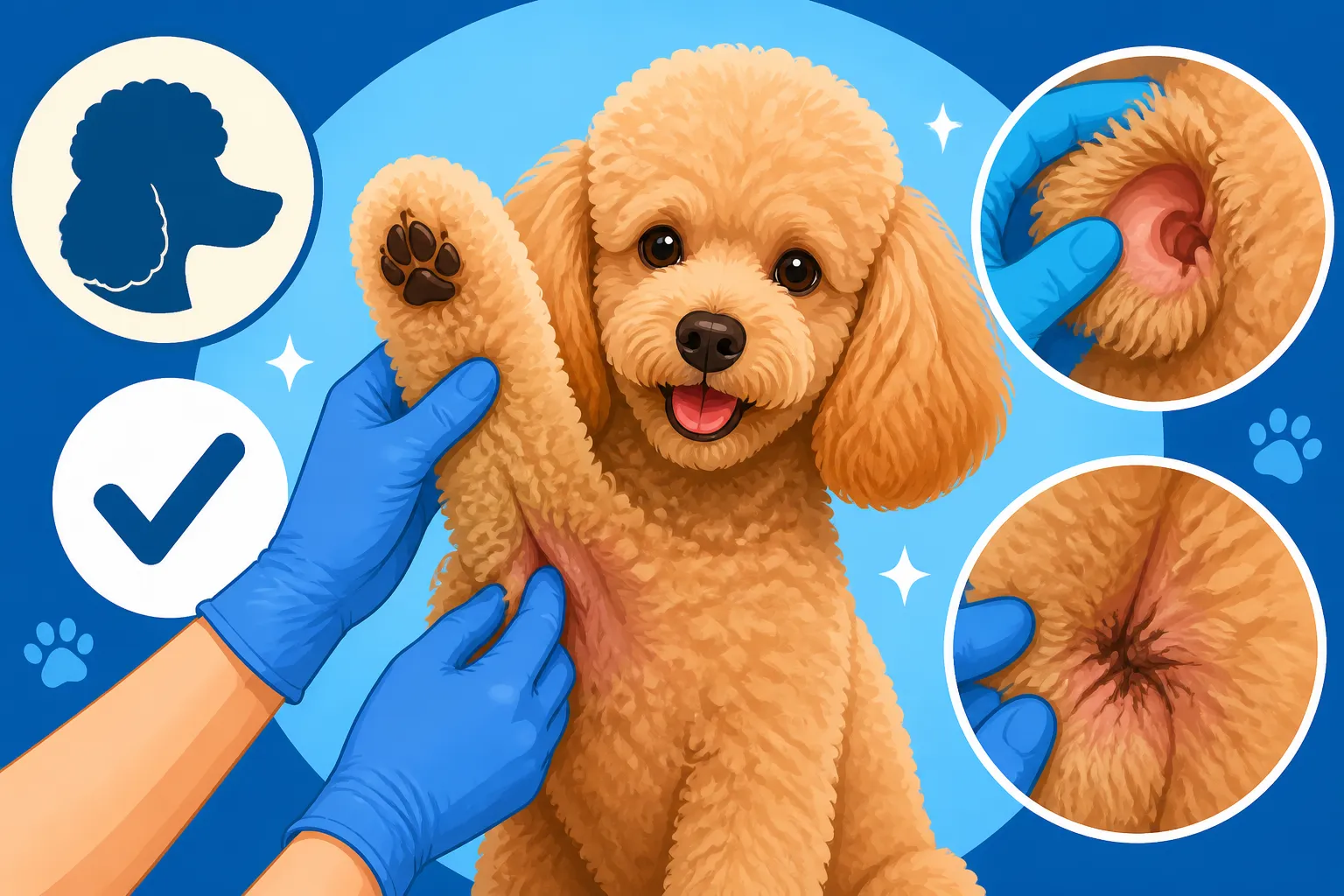
Checking a Poodle’s Armpits and Ears for Mats
It can feel incredibly frustrating to discover a stubborn mat on your beloved Poodle, especially when you’ve been diligently brushing what you thought was everywhere. The truth is, some areas on our Poodles are notorious for tangling almost invisibly, like the delicate skin behind their ears and deep within their armpits. This guide will walk you through how to pinpoint these sneaky mats, deal with them effectively, and set up a routine to keep these sensitive spots tangle-free, saving you stress and your Poodle discomfort.
The Frustration of Hidden Mats: Why Armpits and Ears Are Trouble Spots
You spend what feels like ages brushing your Poodle's beautiful coat, admiring the fluffy results, only to later feel a hard, matted clump under their leg or tucked behind an ear. It's enough to make you throw your hands up! These spots are particularly prone to matting because of a combination of the Poodle's unique hair type, constant movement, and sometimes, simple oversight. It's not a reflection of your care; it's just the nature of these tricky areas.
Understanding the Unique Poodle Coat in Sensitive Areas
Poodles don't have fur; they have hair. This distinction is crucial because Poodle hair, unlike fur, continuously grows and doesn't shed in the traditional sense. Instead, any loose hairs get caught within the surrounding curls, leading to tangles that quickly spiral into mats if not brushed out regularly. Think of it like a tightly wound spring, where loose strands get woven into the existing structure. In areas like the armpits and behind the ears, this effect is amplified. The hair here tends to be finer and softer than on the main body, making it even more susceptible to knotting. Plus, these areas are often overlooked during a quick brush, allowing small tangles to progress unnoticed.
The texture in these regions can also differ slightly. The hair behind the ears, for instance, might be almost wispy, while in the armpits, it can be quite dense, sometimes with a softer undercoat that clings tightly. Both types of hair are prime candidates for catching debris, sweat, and friction, all of which contribute to mat formation. When you consider how easily a Poodle's coat mats in general, as detailed in Why a Poodle Coat Mats Instead of Shedding, it becomes clear why these finer, more protected areas are extra vulnerable.
The Sneaky Ways Mats Develop in These Locations
Mats don't just appear overnight; they’re often a slow, insidious creep. In the armpits, every step your Poodle takes creates friction. The skin rubbing against itself, the leg moving against the body, and the hair getting compressed all combine to weave stray hairs into tight knots. If your Poodle likes to play rough, run, or even just sleep curled up, these movements are constantly at work. Furthermore, moisture from sweat, especially during warmer weather or after exercise, can exacerbate matting, making the hair stick together even more. It’s like trying to untangle wet string versus dry string – the wet is always harder.
Behind the ears, the story is similar but with a twist. The constant movement of the head, shaking, scratching, and even just the natural drop of a Poodle's ears, can cause friction. Additionally, the hair behind the ears often gets damp from water bowls, drool (especially if they have long ear leather), or even just humid air. Ear infections, which Poodles are prone to due to their drop ears, can lead to increased scratching, rapidly turning a small tangle into a painful, tight mat. Sometimes, even collar or harness straps can contribute by rubbing against the hair around the neck and ears, pushing it into a tighter clump.
Your Step-by-Step Guide to Proactive Mat Detection
The key to tackling mats in these hidden areas is early detection and a systematic approach. You can't just run a brush over the top layer and call it a day; you need to get right down to the skin. It’s a bit like detective work, but once you get into the habit, it becomes second nature. Remember, gentle handling is paramount, especially in these sensitive spots where a Poodle might already be tender if a mat is present.
Gathering Your Essential Grooming Toolkit
Before you even start, make sure you have the right tools. Trying to brush out mats with a flimsy brush or an unsuitable comb will only cause pain and frustration for both of you. You'll need:
- Slicker Brush: A good quality, firm slicker brush is essential for Poodles. Choose one with fine, bent wire bristles that can penetrate the dense coat without scratching the skin.
- Greyhound Comb (Metal Comb): This is your mat detector! A strong, metal comb with both wide and fine teeth is indispensable for finding tangles deep in the coat. A good one will glide through tangle-free hair but catch immediately on a mat. For more on this, check out Whether a Poodle Owner Needs a Greyhound Comb.
- Detangling Spray or Conditioner: A leave-in conditioner or a dedicated detangling spray can make a huge difference, especially for softening small mats and reducing static. Brands like Chris Christensen or Cowboy Magic are popular among Poodle owners, and you can often find a good selection on Chewy or Amazon.
- Scissors (Blunt-Nose): Only for emergencies and extreme caution. These are for cutting between the mat and the skin if absolutely necessary, never directly into the mat or towards the skin. Most of the time, you want to avoid cutting.
- Treats: Keep plenty of high-value treats on hand! This will make the experience positive and rewarding for your Poodle, especially if they’re not thrilled about being handled in these areas.
The Gentle Art of Systematically Checking for Mats
Now that you're armed with your tools, let’s get down to business. Find a quiet spot where your Poodle is comfortable, perhaps on a grooming table or even on your lap if they're a Toy Poodle.
-
Start with the Ears:
- Gently lift your Poodle's ear flap. The hair behind the ear leather and where the ear attaches to the head is the primary problem area.
- Using your fingers, feel along the skin from the base of the ear upwards. You're looking for any bumps, lumps, or areas where the hair feels dense and hard rather than soft and flowing.
- Once you've done a finger check, take your metal comb. Start at the very tip of the ear, gently combing through the hair. As you move closer to the head, use the "line brushing" technique, which is crucial for Poodle grooming and explained in Line Brushing a Poodle Explained. Part the hair horizontally with your fingers and comb only a small section at a time, working from the skin outwards.
- Pay close attention to the area right where the ear meets the skull. This spot is a mat magnet due to constant movement and proximity to potential moisture. If your comb snags, you've found a mat.
-
Move to the Armpits:
- For the armpits, you'll need to gently lift your Poodle's front leg. Be careful not to hyperextend their leg.
- Again, start with your fingers. Feel the hair and skin right in the "crease" of the armpit. This area is often compressed and can hide surprisingly large mats. You might find several smaller mats clustered together.
- Once you’ve felt around, take your metal comb. Just like with the ears, you need to work in small sections, always combing from the skin outwards. Use the wide-toothed side first, then switch to the finer side.
- Be extra gentle here, as the skin in the armpit is thin and delicate. Mats in this area can be particularly painful because of the continuous movement and stretching of the skin. If your Poodle flinches or pulls away, stop, reassure them, and try again more gently.
Consistency is key for both these spots. Incorporate this specific check into your regular grooming routine, which for Poodles, means quite frequently as discussed in How Often a Poodle Must Be Brushed.
| Area to Check | Common Mat Causes | Detection Strategy | Grooming Tool Focus |
|---|---|---|---|
| Behind Ears | Head movement, scratching, moisture, fine hair | Finger check, line brushing from skin out, comb at ear base | Metal Greyhound comb (fine teeth), Detangling spray |
| Armpits | Friction from movement, sweat, dense soft hair, compression | Finger check, lift leg gently, line brush small sections | Metal Greyhound comb (wide teeth), Slicker brush (gentle) |
What to Do When You Find a Mat
Finding a mat isn't the end of the world, but how you handle it makes all the difference between a quick fix and a trip to the vet for a painful shave. Never try to yank or pull a mat out; this is incredibly painful for your Poodle and can cause skin damage. Patience and gentle technique are your best friends here.
Safely Detangling Small, Fresh Mats
If the mat is small and not too tight against the skin, you have a good chance of gently working it out yourself.
- Spray generously: Liberally spray the mat with your detangling spray or a good leave-in conditioner. Let it sit for a few minutes to really soak in and soften the hair. This is crucial for making the hair more pliable and less prone to breaking or causing pain.
- Finger pick: Start by trying to gently pull apart the edges of the mat with your fingers. Work from the outside in, never trying to pull from the middle. You're trying to separate individual strands or small clumps of hair from the main knot.
- Use a mat splitter or comb: If finger picking isn't enough, take the wide-toothed side of your metal comb or a specialized mat splitter (which you can find on Amazon or Chewy) and gently tease the edges of the mat. Hold the mat close to the skin with one hand to prevent pulling on your Poodle’s skin. Work slowly, picking at small sections, never forcing the comb through. It’s a painstaking process, but rushing will hurt your Poodle.
- Slicker brush finish: Once you’ve broken the mat down into smaller, manageable sections, you can carefully use your slicker brush to comb through those smaller tangles. Always brush away from the skin, holding the base of the hair with your free hand to minimize pulling.
- Comb check: Finish by running your metal comb through the now detangled area to ensure there are no more hidden snags. The comb should glide smoothly from the skin to the ends of the hair.
Remember, even small mats can be sensitive. Offer frequent praise and treats throughout the process to keep your Poodle calm and cooperative. If you hit a point where your Poodle is showing signs of distress or the mat simply isn't budging, it's time to consider professional help.
When It's Time to Call in the Professionals
Sometimes, a mat is just too big, too tight, or too close to the skin to safely remove at home. This is especially true for mats in the armpits or behind the ears, which can be very painful and difficult to reach. Don't feel guilty about this! Professional groomers have specialized tools, techniques, and experience to deal with severe matting safely and efficiently.
- Pain and skin irritation: If the mat is pulling on your Poodle’s skin, causing redness, irritation, or even small sores, attempting to brush it out yourself will only worsen the problem. The skin underneath can be incredibly sensitive or even infected.
- Size and density: A mat that feels like a solid, hard rock is often too dense to brush out without causing immense pain. These usually require shaving.
- Your Poodle's temperament: If your Poodle becomes highly stressed, aggressive, or shuts down completely when you try to tackle a mat, it's safer for everyone to let a professional handle it. A groomer can work more quickly and often has techniques to keep anxious dogs calmer.
- Risk of injury: Using scissors on a tight mat, especially if you're not experienced, carries a significant risk of cutting your Poodle's skin. This is particularly dangerous in the delicate areas like armpits. Groomers have clippers with specific blades and techniques to safely remove mats with minimal risk of injury. For severe matting, the only humane solution is often a full shave-down, which requires professional skill. Be prepared for potential surcharges, as discussed in Surcharges Groomers Add for a Matted Poodle.
It's far better to have a groomer carefully clip out a severe mat, even if it leaves a bald patch for a while, than to put your Poodle through unnecessary pain or cause an accidental injury. Your vet can also offer advice or even mild sedation for extremely matted dogs, especially if the mats are causing significant discomfort or skin issues.
Preventing Future Mats in These Vulnerable Areas
An ounce of prevention is worth a pound of cure, especially when it comes to Poodle mats. Establishing a consistent grooming routine that specifically targets these high-risk areas will save you a lot of headache and keep your Poodle much happier and healthier in the long run.
Regular Brushing Techniques for Armpits and Ears
The most effective way to prevent mats is through daily, thorough brushing. This isn't just a quick once-over; it's a dedicated session with intention.
- Daily, focused attention: Make it a habit to check behind the ears and in the armpits every single day. Even if it's just a quick finger check followed by a comb-through with your metal comb, daily attention will catch tangles before they escalate. Think of it as part of your bonding time.
- Line brushing in detail: As mentioned before, line brushing is non-negotiable for Poodles. When you brush the armpits, lift the leg, part the hair horizontally with your non-brushing hand, and brush only that small section from the skin to the tip. Repeat, moving down the leg until the entire area is combed through. Do the same for the ears, lifting the ear and brushing the hair beneath it in layers. This ensures you're getting all the way down to the skin, where mats truly begin. You can review How to Line Brush a Poodle Properly for more detailed steps.
- The right brush and comb: Always use your slicker brush for general detangling and fluffing, but always follow up with a metal comb to confirm you haven't missed any tangles. The comb is the true test of a mat-free coat. Keep detangling spray handy and use it proactively on these areas before you even start brushing, especially if your Poodle has been playing or if it's a humid day.
- Regular professional grooming: Even with diligent home care, a professional groomer is an invaluable asset. They have the tools and expertise to keep the coat in top condition. Discuss your Poodle's matting tendencies with your groomer so they can pay extra attention to these tricky spots during their sessions. Many owners opt for shorter, more manageable clips like the Sporting or Kennel clip to reduce matting risk, especially in active dogs; you can read about options in The Sporting Poodle Clip for a Busy House.
Environmental and Lifestyle Factors to Consider
Beyond brushing, several other factors can influence mat formation in these delicate zones. Being aware of these can help you adjust your Poodle's routine and environment to minimize risks.
- Moisture management: Poodles love water, and water, unfortunately, loves to encourage mats. If your Poodle swims, plays in the rain, or even just gets wet around the face and ears from drinking, make sure these areas are thoroughly dried afterwards. A high-velocity dryer, even on a cool setting, is excellent for this. Pay special attention to drying the hair behind the ears and in the armpits.
- Harnesses and collars: A poorly fitting harness or collar can rub against your Poodle's hair, especially around the chest and behind the ears, causing friction that leads to mats. Ensure collars aren't too tight or too loose, and check harnesses for any areas that rub excessively. Consider a wider, softer collar if you notice recurring issues.
- Play and activity: Rough play with other dogs, rolling on the ground, or even just sleeping in certain positions can create tangles. While you don't want to stop your Poodle from being a dog, a quick brush-through after a particularly active play session can preempt a mat.
- Overall coat health: A healthy coat is less prone to matting. Ensure your Poodle is on a good quality diet, perhaps even one like Ollie, which is known for supporting skin and coat health with fresh, human-grade ingredients. Supplements like fish oil can also contribute to a healthy, less brittle coat that's easier to maintain.
- Ear care: Because Poodles have hair growing inside their ear canals, these areas need special attention. Regular plucking (if your vet recommends it) and cleaning can prevent debris and moisture buildup that can lead to infections and subsequent scratching, which in turn causes matting. Learn more about this in Plucking Hair From a Poodle's Ear Canal and Cleaning a Poodle's Ears After a Bath.
- Puppy coat change: Poodle puppies go through a "coat change" between 6-18 months of age, where their soft puppy fluff transitions to a denser adult coat. During this period, they are extremely prone to matting, and daily, thorough brushing of every single inch, including armpits and ears, is absolutely critical.
By combining meticulous brushing with an awareness of these environmental factors, you can effectively manage and prevent those annoying and painful mats in your Poodle's armpits and ears. Your Poodle will thank you for it!
Disclaimer
This article is for general informational purposes only and does not constitute professional advice. Laws, prices and regulations vary by location and change over time. Consult a qualified professional for guidance on your specific situation.