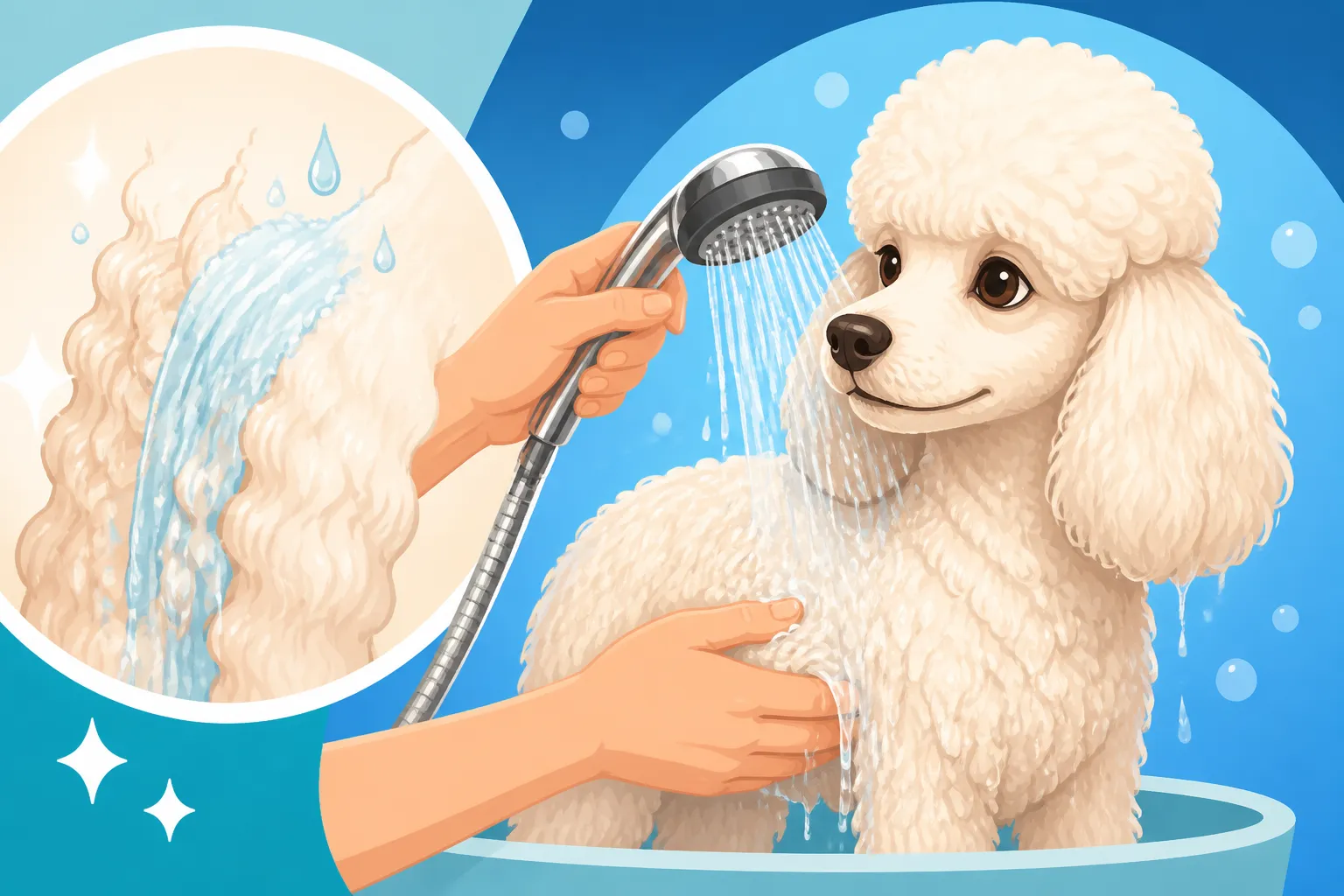
Rinsing Product Out of a Poodle Coat
Oh, the post-bath Poodle struggle! We've all been there: you think you've rinsed every last bubble, only to find a sticky, dull patch of fur the next day, or worse, your Poodle starts itching like mad. It's incredibly frustrating, and it happens to the best of us because those gorgeous, dense Poodle coats are masters at holding onto shampoo and conditioner. This guide is here to walk you through the absolute essentials of thoroughly rinsing your Poodle's coat, ensuring not just a beautiful shine, but also healthy, happy skin underneath all that glorious fluff.
The Critical Importance of a Squeaky-Clean Poodle Coat
It might seem like a small detail, but believe me, a proper rinse is just as vital as the shampoo and conditioner you choose. For Poodles, whose coats are more like hair than fur and grow continuously, any lingering product can spell trouble. We're talking about more than just a bad hair day for your pup; it can lead to serious skin and coat issues that are a pain for both of you.
Why Residue Leads to Skin Troubles
Imagine trying to keep your own hair clean if you never fully rinsed out your shampoo. It would feel greasy, heavy, and probably start to itch, right? The same goes for your Poodle, but amplified by their dense, curly coat. When shampoo or conditioner residue is left behind, it acts like a magnet for dirt, dust, and environmental allergens. This buildup doesn't just make the coat look dingy; it creates a film on the skin that can block pores, trap moisture, and disrupt the skin's natural pH balance.
Over time, this can lead to skin irritation, dryness, flakiness, or even hot spots and bacterial or fungal infections. It's a prime example of how seemingly small details in Poodle Allergies and Skin Reactions can cascade into bigger problems. I've seen Poodles come into the salon with chronic itching that cleared up dramatically once their owners committed to a more rigorous rinsing routine. It's a testament to how sensitive their skin can be, especially when constantly irritated by leftover product.
The Connection Between Poor Rinsing and Matting
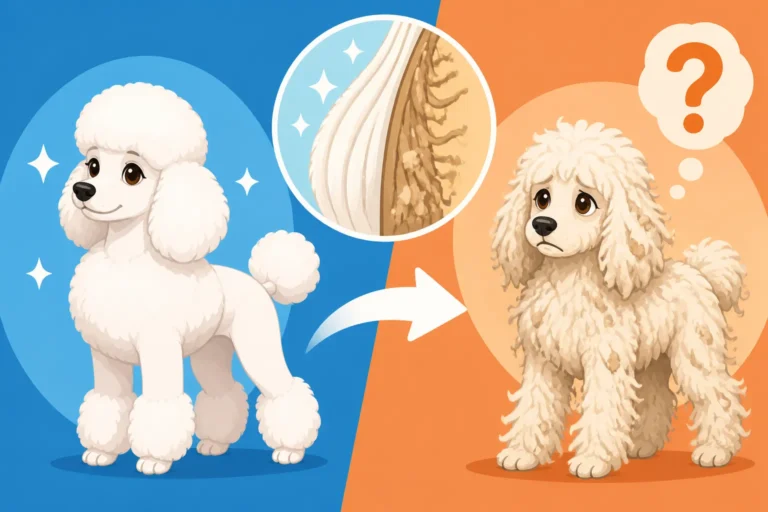
One of the biggest battles Poodle owners face is matting. You spend all that time brushing, only for mats to appear seemingly out of nowhere. While daily Brushing a Poodle to the Skin is your first line of defense, poor rinsing is a silent saboteur. Shampoo residue, in particular, can leave the individual hair strands feeling slightly tacky or rough. These sticky strands then cling to each other, especially as the coat dries, forming tangles that quickly escalate into tight, painful mats.
Conditioner residue, while seemingly beneficial, can also contribute if not fully rinsed. While it smooths the cuticle, too much left behind can make the coat feel heavy and greasy, encouraging clumping. When the coat clumps, it doesn't dry evenly, and that dampness trapped in the dense curls is a perfect environment for mats to form and tighten. Mats are not just unsightly; they can pull on the skin, causing pain and discomfort, and in severe cases, restrict movement or lead to skin infections underneath. It's a vicious cycle that starts with a simple oversight in the tub.
Keeping That Signature Poodle Luster
The Poodle coat is renowned for its elegance and beautiful texture. Whether it's a tight curl or a looser wave, a healthy Poodle coat should have a natural sheen and feel soft to the touch. When product residue is present, it dulls this natural luster, making the coat appear flat, lifeless, and even greasy, no matter how recently you've bathed them. You want your Poodle's coat to reflect light, not absorb it into a sticky film.
A thorough rinse washes away anything that could prevent the hair cuticle from lying smooth, which is what gives the coat its healthy shine. It allows the natural oils of the coat to distribute properly and keeps the hair light and airy. Achieving that soft, bouncy, and truly clean feel means every single strand is free from product. Without proper rinsing, all the effort you put into selecting high-quality Shampoo and Conditioner for a Poodle Coat goes to waste, and your Poodle won't look or feel their best.
Mastering the Art of Rinsing: A Step-by-Step Guide
Rinsing a Poodle thoroughly takes patience and a methodical approach. It's not something you can rush if you want to avoid those frustrating post-bath issues. Think of it as a crucial part of the grooming process, just as important as the wash itself. With the right technique, you'll be able to ensure every inch of that beautiful coat is truly clean.
Preparation is Key to Success
Before you even turn on the water, make sure you're set up for success. This isn't just about rinsing; it's about making the whole bathing process smoother and more effective. First, brush your Poodle thoroughly before the bath. Seriously, don't skip this. Any mats or tangles present before bathing will only tighten and worsen when wet, making it impossible to rinse effectively later. A good line brush, ensuring you get Brushing a Poodle to the Skin, is critical here.
Next, consider your tools. A detachable shower sprayer with good water pressure is an absolute game-changer. Trying to rinse a dense Poodle coat with a cup or a fixed showerhead is like trying to empty a swimming pool with a teaspoon – it's going to take forever and likely won't be as effective. You can find excellent, easy-to-install options on sites like Amazon or Chewy that allow you to direct the water exactly where you need it, which is incredibly helpful for penetrating that thick coat. Also, have a couple of large, absorbent towels ready, perhaps even a shammy-style towel, to start squeezing out excess water immediately after the final rinse.
The Sectional Rinsing Technique
This is where the magic happens for Poodles. Instead of just generally spraying water over your Poodle, you need to rinse in sections, much like how a professional groomer works. Start at the top of your Poodle's neck and work your way down their body, systematically. Use your fingers to really part the coat and allow the water to penetrate all the way to the skin.
As you rinse, run your hands through the coat, feeling for any slippery or sudsy patches. When rinsing the back, work from the spine downwards, ensuring you get the sides and belly. For the legs, hold them up and let the water flow down, working your fingers through the dense hair around the joints and under the armpits. Don't forget the tail – Poodle tails can be quite thick! Pay extra attention to areas where product tends to collect: under the ears, around the neck, the armpits, and between the toes. These are notorious spots for residue buildup and subsequent skin irritation or matting. Continue until the water running off your Poodle looks completely clear and the coat no longer feels slick or sudsy.
Visual and Tactile Checks for Perfection
How do you really know when your Poodle is fully rinsed? It comes down to a combination of sight and touch. Visually, watch the water that runs off your dog. When you first start rinsing, you’ll often see a milky, sudsy stream. You want to continue rinsing until that water is absolutely clear, with no bubbles or cloudiness whatsoever. This can take much longer than you anticipate, especially after conditioning.
Tactilely, your hands are your best tool. Run your fingers deep into the coat, all the way to the skin. The hair should feel clean and have a slight "squeaky" grip, not slippery or slimy. If you feel any slickness, particularly around the roots, you still have residue. Pay close attention to the dense areas like the mane, culottes (if your Poodle sports a The Continental Poodle Clip and Its Upkeep), and the base of the tail. Gently squeeze sections of hair; if you see any tiny suds or foam, keep rinsing. This "double-check" method might add an extra 5-10 minutes to bath time, but it saves you from days of itching, dull coat, or matting down the line. It's a small investment of time for a huge payoff in coat health and comfort for your beloved Poodle.
Common Rinsing Missteps and How to Avoid Them
Even with the best intentions, it's easy to fall into habits that prevent a truly clean rinse. Poodle coats, with their unique texture and density, present specific challenges that owners often underestimate. Understanding these common pitfalls can help you adjust your technique and achieve much better results.
The "Quick Rinse" Fallacy
Perhaps the most common mistake is assuming that a quick once-over with the sprayer is enough. We're often in a rush, or we simply don't realize just how much product those dense Poodle curls can hold onto. This "quick rinse" fallacy is the number one cause of residue buildup. You might see the suds disappear from the surface of the coat, giving the illusion of cleanliness, but deep down, at the skin level and within the dense undercoat (yes, Poodles have a very thick undercoat structure even without shedding!), shampoo and conditioner cling tenaciously.
To avoid this, you need to commit to the time. A full bath and rinse for a Standard Poodle can easily take 45 minutes to an hour, even longer if they're particularly dirty or have a long coat. For a Toy Poodle, it might be 20-30 minutes. It's not about speed; it's about thoroughness. Don't stop rinsing until you're absolutely sure, using both visual and tactile cues, that every trace of product is gone. Remember, you're rinsing for twice as long as you washed, at a minimum.
Overlooking the Hidden, Prone-to-Residue Areas
As mentioned before, certain areas of a Poodle's body are like black holes for shampoo and conditioner. These are the spots that are harder to reach, denser, or simply out of direct line of sight. Overlooking these areas leads to localized irritation, matting, and discomfort for your Poodle. Think of the armpits, groin area, under the ears, the chest, and especially the hair between the paw pads. These are often forgotten during a rush.
To combat this, develop a mental checklist. As you rinse, consciously work your way through each "trouble spot." Lift legs to get under the armpits, gently fold ears back to rinse thoroughly behind them, and carefully spread paw pads to ensure no suds are trapped. For larger Poodles, getting down on the floor or using a raised bathing tub can make these areas more accessible. It’s also crucial to remember the tail. The base of the tail and the plume itself can hold a surprising amount of product. Don't just spray; massage the water in, part the hair, and flush it out until everything feels clean.
Tools That Make or Break Your Rinsing Efforts
While a detachable sprayer is invaluable, other tools and habits can either aid or hinder your rinsing efforts. Using too much product to begin with is a common trap. While you want enough to clean, over-shampooing simply means you have more to rinse out. Always dilute your shampoo, especially for Poodles. A 10:1 or even 15:1 dilution ratio is often sufficient and makes rinsing much easier. This is especially true for concentrated professional grooming products that you might find on Chewy or Amazon.
Another often overlooked "tool" is your Poodle's tolerance level. If your Poodle hates baths and struggles constantly, it becomes incredibly difficult to perform a thorough rinse. Work on making bath time a positive experience from a young age. Introduce the water slowly, use praise and treats, and keep the temperature comfortable. A calm Poodle is much easier to rinse effectively. Finally, ensure your water pressure is adequate. If your home's water pressure is very low, it might be worth investigating ways to improve it or considering a utility sink with a stronger sprayer for bath time. Weak water pressure makes penetrating the dense Poodle coat a Herculean task.
Here’s a quick reference for common rinsing challenges and solutions:
| Challenge | Problem | Solution |
|---|---|---|
| Sticky/Dull Coat After Drying | Product residue left behind | Rinse for twice as long as you washed; use fingers to part coat to skin |
| Persistent Itching | Irritating residue on skin | Focus on thorough rinsing of skin; consider a gentle, hypoallergenic shampoo |
| Mats Forming Rapidly | Product makes hair tacky, encourages tangles | Brush thoroughly pre-bath; ensure no slickness after rinsing |
| Foul Odor Despite Bath | Trapped moisture/product leading to bacteria | Deep rinse, especially in dense areas; ensure full Drying a Poodle Straight |
| Difficult to Reach Areas | Armpits, groin, paw pads missed | Use a detachable sprayer; systematically rinse sections; lift limbs |
What Comes After: Post-Rinse Coat Care
Rinsing is just one part of the post-bath equation for a Poodle. What you do immediately after the final rinse is equally critical for preventing issues like matting, promoting skin health, and achieving that flawless, bouncy finish we all adore. Don't let all your hard rinsing work go to waste by skipping these crucial next steps.
Squeezing, Toweling, and Initial Drying
As soon as the last drop of rinse water has run clear, it’s time to start removing excess moisture. Do not rub your Poodle's coat vigorously with a towel. This is a common mistake that causes immense friction, leading to immediate tangles and mats, especially in a wet, curly coat. Instead, gently squeeze sections of the coat with your hands, working from top to bottom, to remove as much standing water as possible.
Once you’ve squeezed out the bulk, wrap your Poodle in a highly absorbent towel and gently blot and squeeze. Again, avoid rubbing! A microfiber towel or a dedicated dog drying towel works wonders here. You might need two or three towels for a Standard Poodle to get them to a damp, not dripping, state. This initial toweling drastically cuts down on overall drying time and minimizes the risk of mats forming during the drying process. For a small Toy Poodle, they might almost be dry after a good squeeze and blot.
Conditioning for Optimal Coat Health
Even if you use a "shampoo and conditioner in one" product, a separate conditioning step is vital for a Poodle's coat. A good conditioner helps to seal the hair cuticle that the shampoo opened, making the hair smoother, softer, and less prone to tangling and matting. It also restores moisture, which is especially important if you live in a dry climate or if your Poodle has sensitive skin. After towel-drying slightly, apply a high-quality, Poodle-appropriate conditioner, focusing on the mid-lengths and ends, but ensuring it penetrates to the skin.
Massage the conditioner in thoroughly, parting the coat with your fingers. Leave it on for the recommended time (usually 3-5 minutes), then rinse even more thoroughly than you did with the shampoo. Remember, conditioner residue can also cause dullness and skin issues. You want the coat to feel soft and silky, but not slick or heavy. For Poodles with particular coat challenges or How Adenitis Shows Up on a Poodle's Back, your vet or groomer might recommend specific medicated or leave-in conditioners. You can find a wide range of suitable conditioners from reputable brands on Chewy that cater to different coat types and concerns.
The Full Drying Process for a Flawless Finish
The drying process is arguably the most important step after rinsing for preventing mats and achieving that beautiful Poodle fluff. Air drying is generally not recommended for Poodles, especially those with longer coats, as it almost guarantees matting and can lead to skin problems from prolonged dampness. A high-velocity dryer is the ideal tool for blowing the water out of the coat and separating the curls, preventing them from fusing into mats.
Start by rough-drying your Poodle until they are about 50-70% dry, using the dryer to push the water off the coat. As the coat gets drier, switch to a lower setting and use a slicker brush to line brush the coat as you dry. Using a High Velocity Dryer on a Poodle in conjunction with line brushing ensures that each section of hair is dried straight and tangle-free, minimizing any chance of matting as it dries. This also helps to achieve that characteristic Poodle volume and softness. Never use heat that is too hot, as this can damage the coat and skin. A cool to warm setting is always best. Take your time, drying small sections completely before moving on. This meticulous approach is key to a truly magnificent, well-cared-for Poodle coat.
Disclaimer
This article is for general informational purposes only and does not constitute professional advice. Laws, prices and regulations vary by location and change over time. Consult a qualified professional for guidance on your specific situation.