Wet Versus Dry Food for a Toy Poodle
Choosing the right food for your beloved Toy Poodle can feel like navigating a maze of conflicting advice and endless options, especially when you're weighing up wet versus dry food. It's a common dilemma for many Poodle parents, trying to figure out what truly offers the best balance of nutrition, palatability, and practicality for such a small, delicate breed. This guide is here to cut through the confusion and help you understand the real differences between wet and dry food so you can make an informed decision that keeps your Toy Poodle healthy and happy.
Understanding the Unique Dietary Needs of Your Toy Poodle
Toy Poodles might be small, but their nutritional requirements are anything but tiny. In fact, their compact size often means they have specific vulnerabilities and energy demands that require careful consideration when selecting their diet. It's not just about tiny kibble; it's about dense nutrition, proper calorie balance, and addressing common Toy Poodle health concerns.
High Metabolism and Energy Density
One of the first things you'll notice about a healthy Toy Poodle is their boundless energy. They're little bundles of zoomies and playful antics, and this high activity level often translates to a faster metabolism compared to their larger Poodle cousins. This means they burn through calories more quickly and need food that provides a good amount of energy in a small serving. You can't just free-feed a Toy Poodle and assume they'll regulate themselves; consistent, calorie-appropriate meals are crucial. A common mistake is assuming less food is better because they're small, but inadequate calories can lead to issues, particularly in puppies. How Much a Toy Poodle Puppy Eats is a topic many new owners grapple with, and it's essential to get it right from the start.
Moreover, puppies, in particular, are susceptible to issues like Hypoglycemia in a Toy Poodle Puppy if their blood sugar drops too low due to infrequent or insufficient feeding. This isn't just a slight dip; it can be a serious medical emergency, highlighting why their diet needs to be consistent and energy-dense. Their small stomachs can only hold so much, so the quality and calorie count of that small portion are paramount.
Dental Health Considerations
Toy Poodles, like many small breeds, are notoriously prone to dental problems. Their mouths are small, and their teeth are often crowded, making them a prime breeding ground for plaque and tartar buildup. This isn't just about bad breath; severe dental disease can lead to painful infections, tooth loss, and even impact systemic health by allowing bacteria to enter the bloodstream. It's a huge frustration for many owners, seeing their little companion suffer through dental issues. This predisposition means that the texture and form of their food can play a role, albeit a supporting one, in managing their oral hygiene. While no food can replace regular brushing and professional dental cleanings, some food textures may offer slight advantages. Why Small Poodles Lose Teeth Early is a heartbreaking reality for many and underscores the importance of a comprehensive dental care strategy.
Palatability and Pickiness
Let's be real, some Toy Poodles can be incredibly picky eaters. It's not unheard of for them to turn up their noses at a perfectly good bowl of food, leaving their owners wringing their hands. Their small size means that even a day or two of not eating much can be concerning. Finding a food that they genuinely enjoy, and will consistently eat, is a huge win. This often leads owners to explore different textures and flavors, pitting wet food against dry kibble in a quest for the ultimate mealtime success. The struggle is real when your tiny companion decides they're too sophisticated for what you've offered!
The Pros and Cons of Dry Kibble for Toy Poodles
Dry kibble is often the go-to choice for dog owners, and for good reason. It's convenient, cost-effective, and generally well-understood. But for a Toy Poodle, there are specific considerations that elevate or diminish its suitability.
The Advantages of Dry Kibble
First off, let's talk convenience. Dry kibble is incredibly easy to store, measure, and serve. You can buy it in larger bags from places like Chewy, knowing it will last for a good while without spoiling, provided it's stored correctly. This makes daily feeding a breeze, especially for busy households. It's also usually more budget-friendly than wet food, which is a significant factor for many families considering the long-term costs of pet ownership.
From a dental perspective, many believe that the crunchy texture of kibble helps to scrape away plaque and tartar from a dog's teeth. While this is a minor benefit compared to brushing or professional cleaning, a well-designed kibble can offer some mechanical abrasion. For Toy Poodles, specifically, choosing a kibble with an appropriate Kibble Size for a Toy Poodle's Jaw is crucial. Too large, and they'll struggle to chew; too small, and they might gulp it down without any dental benefit. There are even dental-specific kibbles formulated to maximize this scraping action.
Finally, dry kibble is often easier to use with puzzle feeders and slow-feeder bowls, which can be great for mental stimulation and preventing gulping. For a clever Poodle that needs its mind occupied, integrating mealtime with a brain game is a fantastic approach. Mental Work That Tires a Poodle is just as important as physical exercise.
The Disadvantages of Dry Kibble
However, dry kibble isn't without its downsides, particularly for Toy Poodles. One of the biggest concerns can be palatability. Some Toy Poodles simply aren't enthusiastic about dry food, which can lead to missed meals and worries about their nutritional intake. This is especially true if they're used to more flavorful wet options or if they're generally finicky.
Another major drawback is the lower moisture content. Dogs naturally get a good portion of their hydration from their food, and dry kibble provides very little. This means Toy Poodles on an exclusively dry diet need to be diligent about drinking enough water, which isn't always a given. Adequate hydration is vital for kidney health and overall well-being.
Lastly, some dry kibbles can be very calorie-dense, which can be a double-edged sword. While it meets their high metabolism needs, it also means it's easy to overfeed if you're not meticulous with Portion Control for a Poodle. Given their small size, even a slight overestimation can lead to weight gain, which can exacerbate joint issues and other health problems down the line.
The Benefits and Drawbacks of Wet Food for Toy Poodles
Wet food often appears more appealing to both dogs and owners with its rich aromas and succulent textures. For Toy Poodles, it can be a game-changer, but it also comes with its own set of challenges.
The Advantages of Wet Food
The primary advantage of wet food is its high moisture content. Typically, wet food is around 70-80% water, which significantly contributes to your Toy Poodle's daily hydration needs. This is a huge plus, especially for dogs who aren't avid water drinkers or those prone to urinary tract issues. It ensures they're getting fluids with every meal, supporting kidney function and overall health.
Palatability is another major win for wet food. The strong aroma and softer texture are often irresistible to even the pickiest eaters. If your Toy Poodle is a fussy eater or has a reduced appetite due to age or illness, wet food can be an excellent way to ensure they're still getting the nutrients they need. Brands like Ollie offer fresh, human-grade options that are incredibly appealing and can be a great way to tempt a reluctant eater.
Wet food is also generally less calorie-dense by volume than dry kibble, which can be beneficial for Toy Poodles who need to watch their weight. While a small amount of kibble can pack a lot of calories, a larger portion of wet food might contain fewer, making the dog feel more satisfied. This can be helpful when dealing with Poodle Obesity and Its Consequences. The softer texture is also easier to chew, which is perfect for puppies with developing teeth, seniors with missing or sensitive teeth, or any Toy Poodle prone to dental pain.
The Disadvantages of Wet Food
Despite its allure, wet food has some notable drawbacks. Cost is often the first concern. It tends to be significantly more expensive per serving than dry kibble, and this can add up quickly over your Poodle's lifetime. If you're buying individual cans or pouches, you'll find your grocery bill climbing faster than if you were purchasing a large bag of kibble from Amazon.
Storage and shelf-life are also considerations. Once opened, wet food spoils much faster than dry kibble and needs to be refrigerated. This means you can't leave it out for extended periods, which might not suit every feeding schedule or lifestyle. For owners who prefer to leave food out for free-feeding, wet food isn't a practical option.
Finally, while beneficial for dogs with dental issues, wet food doesn't offer the same mechanical cleaning action as kibble. In fact, its softer texture can sometimes stick to teeth more readily, potentially contributing to plaque buildup if not followed by diligent dental hygiene. This reinforces the need for regular Dental Care for a Small Poodle no matter what food type you choose.
Making the Best Choice: A Balanced Approach for Your Toy Poodle
So, what's the verdict for your tiny companion? There's no single "best" answer that fits every Toy Poodle, as their individual needs, preferences, and health status play a significant role. Often, the sweet spot lies in a combination of both.
Mixing and Matching: The Hybrid Approach
Many Toy Poodle owners find that a combination of wet and dry food offers the best of both worlds. You could offer kibble as the main meal, providing consistent nutrition and some dental benefits, and then top it with a spoonful of wet food to boost palatability and add extra hydration. This can entice a picky eater to finish their meal without committing to an entirely wet diet. It also allows you to control costs while still offering a more appealing mealtime experience.
When mixing foods, remember to adjust portions to prevent overfeeding and ensure you're transitioning gradually. Changing a Poodle's Food Over Ten Days is always a good rule of thumb to prevent stomach upset, even when simply adding a new topping. You'll want to ensure the total calorie intake matches your Toy Poodle's Calorie Needs of a Senior Poodle or puppy if that applies.
Factors to Consider for Your Individual Poodle
- Age: Puppies often benefit from softer, more digestible foods, and wet food can be easier for them to eat as their tiny teeth come in. Senior Poodles with dental issues or reduced appetite also frequently do better with wet or softened food. For adult Poodles, either can work, but consider their activity level and dental health.
- Health Status: Poodles with kidney disease or a history of urinary tract infections may benefit greatly from the increased hydration offered by wet food. Conversely, Poodles with very sensitive stomachs might do better on a consistent dry kibble that's less rich. Always consult your vet if your Poodle has specific health concerns that might impact their diet.
- Pickiness: If your Toy Poodle consistently turns its nose up at dry kibble, incorporating wet food is a fantastic way to ensure they get the nutrients they need. A dog that won't eat is a much bigger problem than one that enjoys its meals!
- Budget and Convenience: Be realistic about what fits your lifestyle and budget. If you're on a tighter budget, you might opt for a high-quality dry kibble and use wet food sparingly as a treat or topper. If convenience is key, dry kibble is hard to beat, but make sure your Poodle is drinking enough water.
Ultimately, pay attention to your Toy Poodle. Are they eating enthusiastically? Is their coat shiny? Are their stools firm and consistent? Are they maintaining a healthy weight? These are the best indicators that you've found the right feeding strategy. Don't be afraid to experiment, gradually, to see what works best for your unique companion.
Comparative Overview: Wet vs. Dry Food for Toy Poodles
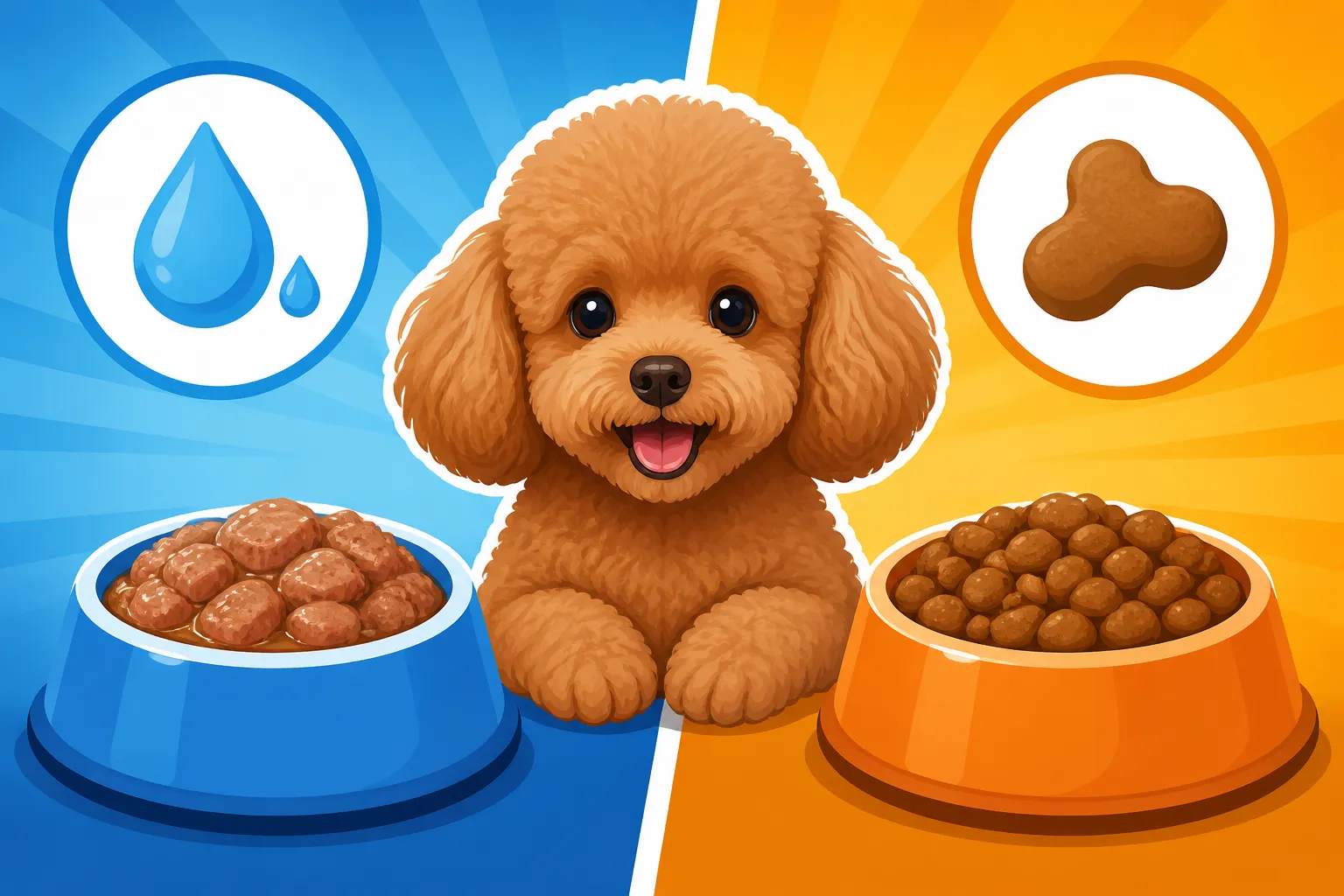
Here's a quick look at how wet and dry food stack up for your Toy Poodle:
| Feature | Dry Kibble (Typical) | Wet Food (Typical) | Best for Toy Poodle If… |
|---|---|---|---|
| Moisture Content | Low (approx. 10%) | High (approx. 70-80%) | Needs extra hydration, prone to urinary issues. |
| Palatability | Variable, can be less appealing to picky eaters | High, strong aroma, softer texture | Is a picky eater, has reduced appetite. |
| Dental Benefits | Minor mechanical scraping (if appropriate size/texture) | Minimal to none, can sometimes stick to teeth | Primary dental care is brushing, professional cleanings. |
| Cost | Generally more affordable | More expensive per serving | Budget-conscious, feeding a larger dog (though not a Toy). |
| Storage/Shelf-life | Long shelf-life, easy to store (e.g. from Chewy) | Shorter shelf-life once opened, needs refrigeration | Requires grab-and-go convenience, no fridge space. |
| Calorie Density | High by weight | Lower by weight (more volume for fewer calories) | Needs to gain weight, high energy levels. |
| Texture | Crunchy, hard | Soft, meaty | Has dental issues, very young or very old. |
Remember, the goal is always optimal health and happiness for your precious Toy Poodle. Don't hesitate to discuss your food choices with your veterinarian, as they can provide tailored advice based on your dog's specific health profile.
Disclaimer
This article is for general informational purposes only and does not constitute professional advice. Laws, prices and regulations vary by location and change over time. Consult a qualified professional for guidance on your specific situation.