How Much a Toy Poodle Puppy Eats
Bringing home a Toy Poodle puppy is an absolute joy, but it can also come with a healthy dose of worry, especially when it comes to feeding such a tiny, delicate creature. Many new owners find themselves pacing, wondering if their little floof is getting enough to eat, or perhaps too much, fearing everything from tummy upsets to serious health issues. This guide is here to melt away those anxieties, breaking down exactly how much and how often your precious Toy Poodle puppy needs to eat to thrive, keeping them happy, healthy, and full of bounce.
Why a Toy Poodle Puppy's Diet Needs Special Attention
Toy Poodle puppies are not just miniature versions of their Standard Poodle cousins; their unique physiology means their dietary needs are distinct, especially in those critical first few months. Their tiny bodies have a super-fast metabolism, burning through energy reserves much quicker than larger breeds. This makes them particularly susceptible to certain health concerns if their feeding isn't managed meticulously.
The Hypoglycemia Risk
One of the biggest worries for new Toy Poodle puppy parents is hypoglycemia, or dangerously low blood sugar. Because these puppies are so small, their liver, which stores glucose, isn't as developed or efficient as it would be in a larger breed. They don't have large reserves to tap into if they miss a meal or expend too much energy playing. A sudden drop in blood sugar can quickly lead to lethargy, disorientation, wobbliness, and even seizures if not addressed promptly. It's a scary thought, and it's why consistent, frequent feeding is absolutely paramount for their well-being. Keeping a close eye on your puppy's energy levels and demeanor between meals is crucial, as is having an emergency plan in place. You can learn more about this by reading Hypoglycemia in a Toy Poodle Puppy.
High Energy Demands for Rapid Growth
Beyond just maintaining blood sugar, Toy Poodle puppies are in a period of intense growth and development. Their little bones are growing, their brains are developing, and they are exploring the world with boundless curiosity, all of which demand a significant amount of energy and nutrients. A proper diet provides the building blocks for strong muscles, a healthy immune system, and that famously intelligent Poodle brain. Skimping on quality or quantity, even accidentally, can hinder their development and impact their long-term health. It’s a delicate balance: enough to fuel growth without overwhelming their tiny digestive systems.
Decoding Portion Sizes for Your Toy Poodle Puppy
So, how do you figure out the right amount to feed such a small dog? It's not as simple as scooping a generic amount into a bowl. Every puppy is an individual, but there are some excellent starting points and important factors to consider.
Manufacturer Guidelines: A Starting Point
The first place to look for guidance on how much to feed your Toy Poodle puppy is the feeding chart on their puppy food bag or can. These charts are usually broken down by the puppy's current weight and age. For example, a bag of high-quality small breed puppy kibble might suggest feeding a 2-pound puppy a quarter cup per day, divided into several meals. These are guidelines, however, formulated for an "average" puppy, and your specific Poodle might have different needs.
Remember that these recommendations assume a certain calorie density in the food. If you're switching brands, even if it's still a "small breed puppy food," the portion size might change significantly. Always double-check the new product's chart. Brands available on sites like Chewy often have detailed feeding instructions right on their product pages, which can be very helpful for comparing options.
Adjusting for Activity Levels and Metabolism
Your Toy Poodle puppy's individual activity level and metabolism will heavily influence their actual caloric needs. A puppy who is constantly zipping around the house, playing fetch, and exploring might need slightly more food than a more sedate, cuddle-loving puppy of the same age and weight. Weather can also play a role; puppies exercising outdoors in cooler temperatures might burn more calories.
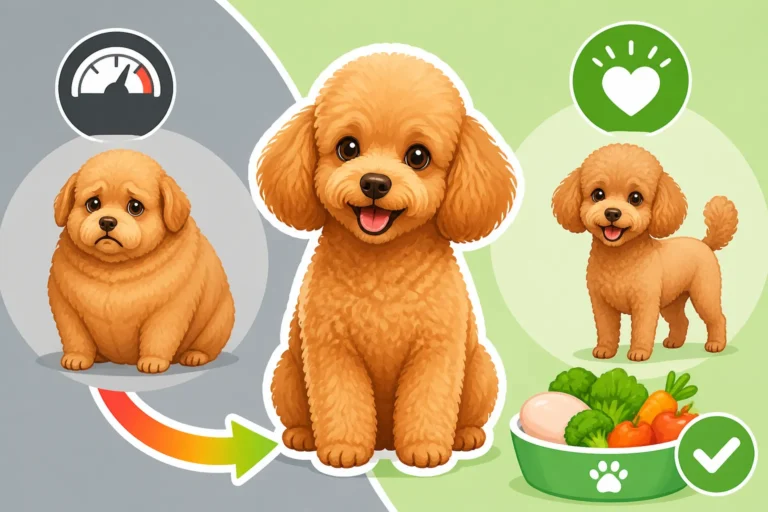
It's a dance of observation and adjustment. Are they leaving food in the bowl at every meal? Perhaps you're offering a tiny bit too much. Are they still frantically searching for crumbs after they've eaten, and seem constantly hungry despite a full stomach? They might need a smidge more. The goal is to keep them at a healthy, lean weight – you should be able to feel their ribs easily without seeing them, and they should have a visible waist when viewed from above. Learn more about their growth in When a Standard Poodle Stops Growing.
The Essential Role of Your Veterinarian
Honestly, the very best resource for pinpointing your Toy Poodle puppy's exact feeding needs is your veterinarian. During their initial check-ups and subsequent visits for vaccinations, your vet will monitor your puppy's growth curve, assess their body condition score, and discuss their energy levels and overall health. They can provide personalized recommendations based on your puppy's breed, size, age, and individual health status.
If your puppy seems underweight or overweight, or if they're experiencing any digestive issues, your vet can help adjust the feeding plan. They can also advise on the best type of food for your specific puppy, taking into account any sensitivities or allergies. Never hesitate to bring up your feeding questions during routine appointments; it's a critical part of ensuring your little Poodle starts life on the right paw.
Establishing a Consistent Feeding Schedule
Beyond how much, how often you feed your Toy Poodle puppy is equally, if not more, important, especially in their early months. Their small stomachs and rapid metabolism mean they can't go long stretches without food, making a consistent schedule a non-negotiable part of their care.
The Early Days: Frequent Small Meals (0-3 Months)
For the tiniest Toy Poodle puppies, typically from weaning up to about three months old, very frequent, small meals are essential. We're talking four to five meals spread throughout the day. This schedule helps prevent blood sugar drops, which, as we discussed, can be dangerous for tiny breeds.
Imagine dividing their total daily food allowance into these small portions. For example, if your vet recommends a total of 1/2 cup of food per day, you'd offer roughly 1/8 to 1/10 of a cup at each meal. This might mean breakfast around 7 AM, a mid-morning snack around 10 AM, lunch at 1 PM, an afternoon meal at 4 PM, and dinner around 7 PM. It sounds like a lot, but it's crucial for their tiny bodies. Consistency is key, so try to stick to these times as much as possible, even on weekends. You can often find specialty small breed puppy foods on platforms like Amazon, which might come in smaller kibble sizes ideal for frequent feeding.
The Growing Puppy: Gradually Reducing Frequency (3-6 Months)
As your Toy Poodle puppy grows a little older, typically between three and six months, their metabolism might start to stabilize just a touch, and their stomachs will be slightly larger. At this stage, you can usually reduce the feeding frequency to three to four meals per day. You're still providing the same total daily amount of food, just in slightly larger individual portions.
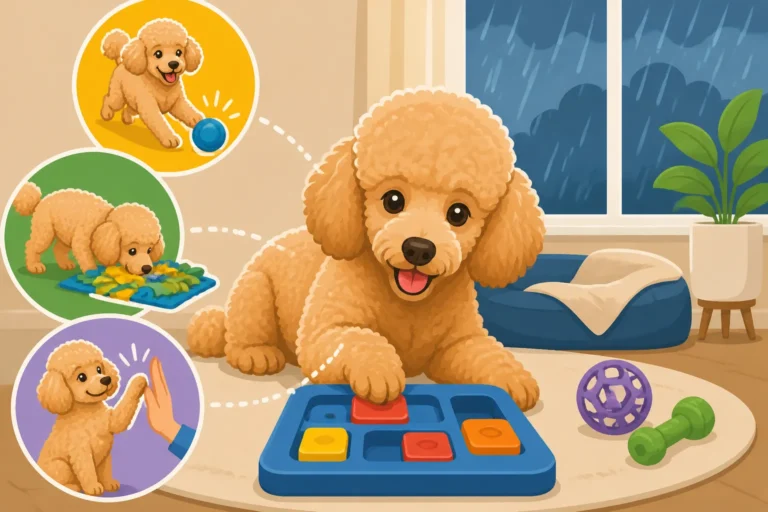
This might mean dropping the mid-morning snack, or simply consolidating two smaller meals into one larger one. For instance, breakfast, lunch, and dinner, with an optional smaller snack if they seem particularly active or hungry. Again, watch your puppy closely. Are they still energetic and playful between meals? Are they maintaining a healthy weight? These observations will guide your adjustments. This is also a good time to consider whether they are getting enough mental exercise, which can also impact their apparent hunger. Mental Work That Tires a Poodle offers great ideas.
Approaching Adulthood: Two to Three Meals a Day (6-12 Months)
By the time your Toy Poodle puppy reaches six months to a year old, they are rapidly approaching their adult size and their feeding schedule can typically transition to two or three meals per day. Most adult dogs thrive on two meals, but some smaller breeds, including Toy Poodles, might benefit from three smaller meals to further stabilize blood sugar and prevent an empty stomach for too long.
Discuss this transition with your vet. They can help you determine if your individual puppy is ready for fewer meals, based on their weight, growth, and overall health. This period is also often when you'll start thinking about transitioning them from puppy food to a high-quality small breed adult formula. This transition should always be gradual, over 7-10 days, to avoid digestive upset. Companies like Ollie, which offer fresh, pre-portioned meals, can be excellent for maintaining precise calorie control during these transitions.
Here's a quick overview of a typical feeding schedule:
| Age of Toy Poodle Puppy | Meals Per Day | Notes |
|---|---|---|
| 0-3 Months | 4-5 | Crucial for preventing hypoglycemia; consistent timing is vital. |
| 3-6 Months | 3-4 | Metabolism stabilizing, stomach growing; monitor energy levels and weight. |
| 6-12 Months | 2-3 | Approaching adulthood; consult vet for transition to adult food; can remain on 3 meals if preferred. |
Selecting the Best Food for Your Tiny Poodle
Choosing the right food for your Toy Poodle puppy isn't just about the quantity; the quality and type of food are equally vital for their unique needs. A good diet supports everything from their tiny teeth to their lustrous coat.
Prioritizing Small Breed Puppy Formulas
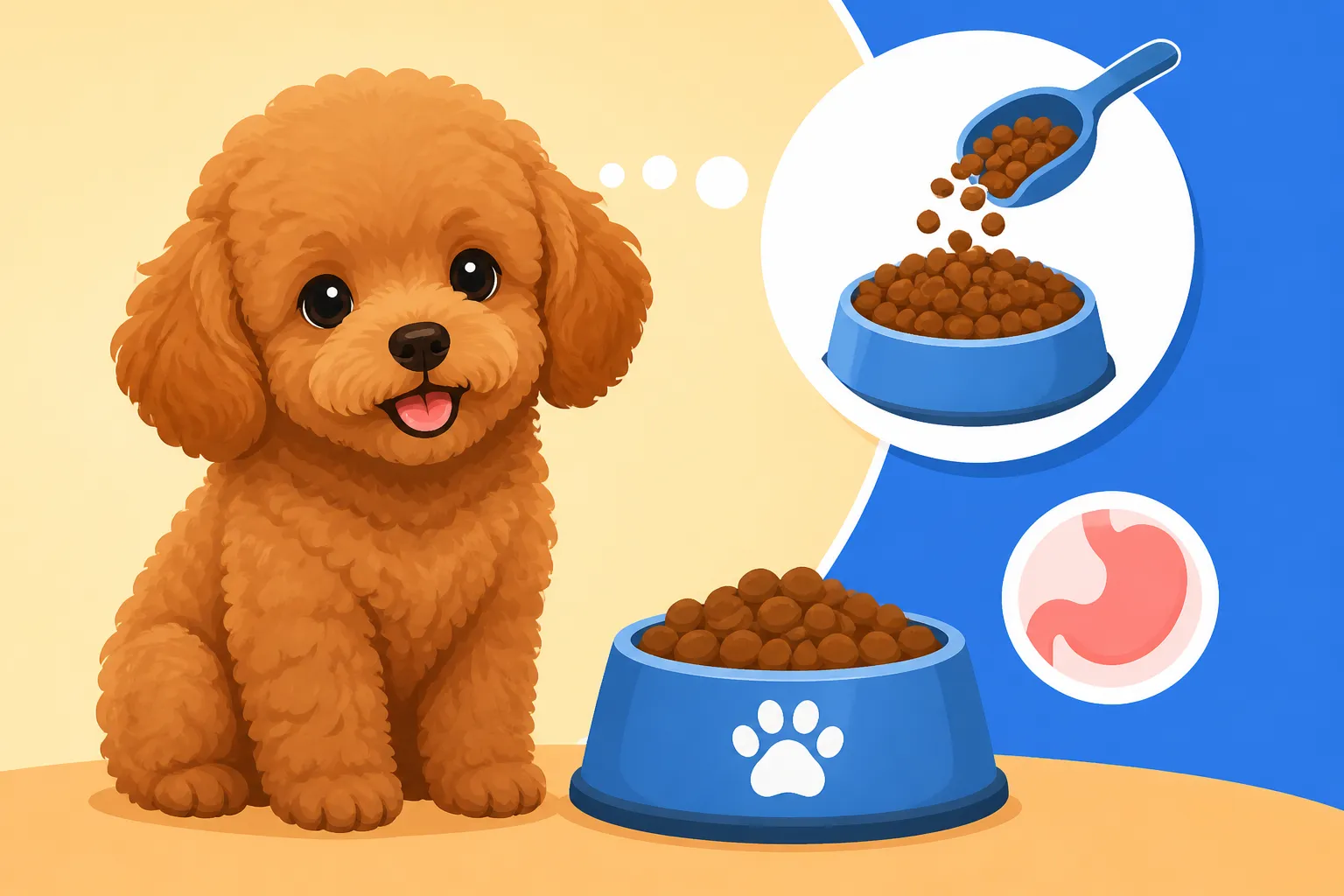
When you're walking down the pet food aisle (or browsing online, perhaps on Chewy), you'll notice a dizzying array of options. For your Toy Poodle, it's critical to select a formula specifically designed for "small breed puppies." These formulas are not just a marketing gimmick; they are scientifically formulated to meet the higher caloric and nutrient density requirements of rapidly growing small breeds. They typically contain higher levels of protein, fat, and specific vitamins and minerals crucial for their development compared to larger breed puppy foods.
Furthermore, small breed puppy formulas often come with appropriately sized kibble. This might seem like a minor detail, but for a Toy Poodle with a tiny mouth and delicate jaw, a kibble that's too large can be difficult, if not impossible, to chew and swallow safely. This can lead to frustration during mealtimes or even digestive issues if they try to gulp down pieces that are too big.
The Importance of Kibble Size
As mentioned, kibble size is a big deal for Toy Poodles. Imagine trying to eat a giant steak when you're only equipped with a tiny fork! A kibble that is too big can be a choking hazard, or it can lead to your puppy simply refusing to eat because it's too much effort. Small, digestible pieces are key. Look for bags specifically labeled "small breed" or "toy breed" as they will usually have kibble perfectly proportioned for those little mouths.
Some owners also consider options like wet food or fresh food services. Wet food can be easier for very small puppies to eat and adds moisture to their diet, which is a plus. If you're considering a fresh food option like Ollie, which delivers human-grade meals, they are usually soft and easy to consume, and often come with precise portioning, taking some of the guesswork out of feeding.
Wet Versus Dry Food Considerations
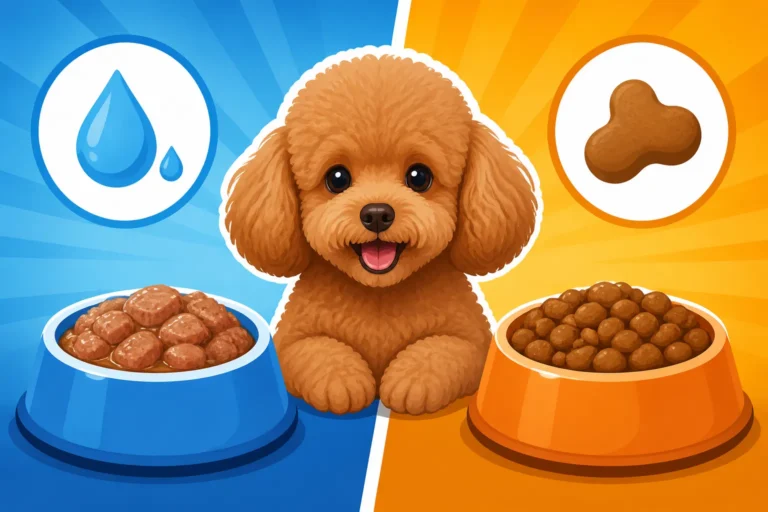
Both wet and dry food have their pros and cons for a Toy Poodle puppy. Dry kibble is excellent for dental health, as the crunching action can help scrape plaque off their tiny teeth. It's also typically more cost-effective and convenient to store. However, some puppies, especially very young or finicky ones, might find dry kibble less appealing or harder to eat.
Wet food is highly palatable and can be a good source of hydration. It's often easier for puppies with sensitive teeth or gums to consume. The downside is it can be more expensive, and if not removed promptly, can attract pests and spoil quickly. Some owners opt for a mix, using wet food as a topper or occasional treat, or rotating between wet and dry meals. Regardless of your choice, ensure the food is complete and balanced for small breed puppies, and always provide plenty of fresh, clean water alongside their meals. Hydration is vital, especially if you're feeding primarily dry kibble.
Monitoring Your Puppy's Health and Weight
Feeding a Toy Poodle puppy is an ongoing process of observation, adjustment, and collaboration with your vet. It's not a set-it-and-forget-it task, and paying close attention to your puppy's cues will help you ensure they're thriving.
Recognizing Signs of Adequate Nutrition
A well-fed Toy Poodle puppy will be a picture of health and vitality. Look for these signs:
- Consistent energy levels: They should be playful and active, not sluggish or overly tired (unless it's nap time!).
- Healthy coat: A shiny, soft coat is a great indicator of good nutrition. You can learn more about their coat care in How to Line Brush a Poodle Properly.
- Bright, clear eyes: No discharge, redness, or dullness.
- Normal stool: Firm, well-formed, and consistent bowel movements are a sign of a healthy digestive system. If you notice persistent diarrhea or constipation, it’s time to consult your vet.
- Steady growth: Your vet will track this, but you should notice them gradually getting bigger and stronger.
- Good body condition: As mentioned before, you should be able to feel their ribs without them protruding, and they should have a discernible waist.
Don't panic if your puppy occasionally leaves a few pieces of kibble; appetites can fluctuate, just like ours. However, persistent refusal of food, or a sudden change in appetite, warrants a call to your vet, especially in tiny puppies prone to blood sugar issues. Check out Signs of Low Blood Sugar in a Toy Poodle Puppy for more red flags.
Avoiding Underfeeding and Overfeeding
Both underfeeding and overfeeding can have serious consequences for a Toy Poodle puppy. Underfeeding can lead to:
- Hypoglycemia: The most immediate and dangerous risk.
- Stunted growth: Not getting enough nutrients to grow properly.
- Weakened immune system: Making them more susceptible to illness.
- Lack of energy: Affecting their play, training, and overall quality of life.
On the other hand, overfeeding, while perhaps seeming less immediately dangerous, can also lead to significant problems:
- Obesity: Puppy fat can turn into adult obesity, which puts strain on their joints (something small breeds like Toy Poodles can already be prone to, as discussed in Luxating Patella in Toy and Miniature Poodles), heart, and other organs.
- Digestive upset: Diarrhea, vomiting, or excessive gas.
- Rapid growth: While puppies should grow, too rapid growth, especially in larger breeds, can sometimes contribute to developmental orthopedic issues. For Toy Poodles, the immediate concern is more about obesity.
It's a balance, and regular weight checks at home and at the vet are your best tools. Many high-quality pet scales are available on platforms like Amazon if you want to track at home.
The Transition to Adult Food
Around 9 to 12 months of age, your Toy Poodle puppy will generally be ready to transition to an adult dog food formula. This transition should always be done gradually, over a period of 7 to 10 days, to prevent stomach upset. Start by mixing a small amount of the new adult food with their current puppy food, slowly increasing the proportion of adult food each day while decreasing the puppy food.
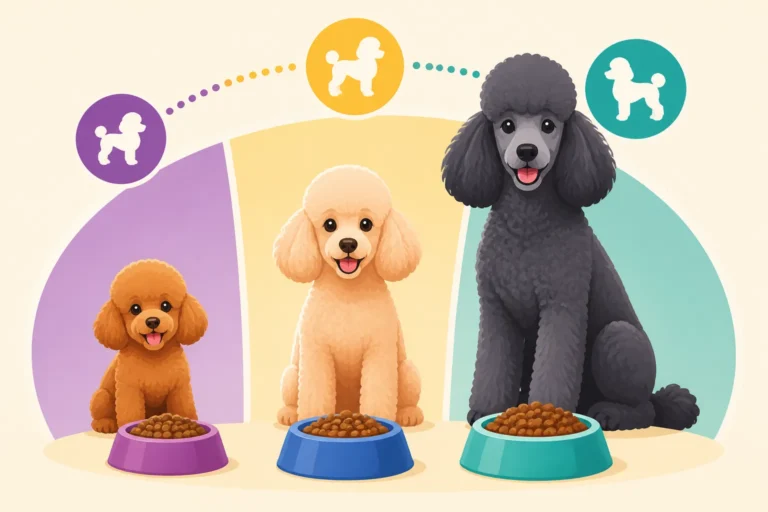
Your vet can confirm the best timing for this switch, as some smaller breeds might mature slightly faster or slower. When choosing an adult food, continue to prioritize high-quality ingredients and formulas designed for small breeds, as their metabolism and nutrient needs will remain distinct from larger dogs. Look for brands that offer balanced nutrition without excessive fillers or artificial ingredients. Making wise choices now will set your Poodle up for a long and healthy life, contributing to a good Poodle Lifespan Across the Three Sizes.
Disclaimer
This article is for general informational purposes only and does not constitute professional advice. Laws, prices and regulations vary by location and change over time. Consult a qualified professional for guidance on your specific situation.