What the Standard Says About Poodle Proportion
Navigating the nuanced world of dog breed standards can feel like deciphering an ancient text, especially when terms like "proportion" are thrown around without much practical explanation. Many of us just want a healthy, happy Poodle, and the idea of them being "correctly proportioned" might seem like something only show dog enthusiasts fret over. But understanding what the Poodle breed standard means by proportion is actually incredibly important for your dog's overall well-being, movement, and even their long-term health. This guide will walk you through the specifics of Poodle proportion, explaining why it matters for every Poodle, whether they're gracing the show ring or just your living room sofa.
Why Poodle Proportion Matters Beyond the Show Ring
When you hear "breed standard," it's easy to picture show judges scrutinizing every angle of a Poodle. But the standard isn't just about aesthetics; it's a blueprint for a functional, healthy dog. A Poodle's proportion, or how its various body parts relate to each other in size and length, directly impacts its ability to move efficiently, its stamina, and even its susceptibility to certain health issues. It’s not about vanity; it’s about vitality.
For instance, think about how you move through your day. If your legs were disproportionately short for your torso, or your neck too long, simple tasks like walking, running, or even lying down comfortably would become awkward or even painful. It’s no different for our Poodles. Their structure, dictated by these proportions, is what allows them to perform the tasks they were originally bred for – retrieving from water – and what enables them to live active, comfortable lives as our companions. Ignoring these fundamental aspects of their build can lead to a lifetime of discomfort and veterinary visits.
Movement and Joint Health
A well-proportioned Poodle moves with an effortless, springy gait. This isn't just a pretty sight; it's a sign that their joints are working in harmony. When the angles of their shoulders, hips, and stifles (knees) are correct, and their leg bones are in balance with each other, each step distributes weight and absorbs shock properly. This smooth mechanics helps prevent undue stress on ligaments, tendons, and cartilage, which can significantly reduce the risk of orthopedic problems as they age. Conditions like Poodle Hip Dysplasia by Size or luxating patellas are often exacerbated, or even caused, by incorrect bone angles and overall proportion that puts excess strain on specific joints.
Imagine a Poodle with an overly long back and short legs. This combination can put immense strain on the spinal column and associated discs, potentially leading to back pain or even disc disease over time. Conversely, a Poodle that is too tall for its length might have a less stable gait, leading to clumsiness or increased wear and tear on its front assembly. These aren't just minor flaws; they are structural weaknesses that can impact a Poodle's ability to run, jump, or even climb stairs comfortably for their entire life. We want our Poodles to romp and play well into their senior years, and good proportion is a cornerstone of that longevity.
Breeding for Function, Not Just Looks
Responsible Poodle breeders don't just aim for pretty faces; they strive to produce dogs that embody the breed standard for both health and temperament. The breed standard for proportion is a functional description, detailing the ideal build for a Poodle to be an agile, enduring retriever. When breeders prioritize these proportional aspects, they are in essence selecting for dogs that are structurally sound and less prone to conformational issues that could lead to pain or health complications. This is why it's so important to find a breeder who understands and adheres to the standard, not just one who breeds for popular colors or "cuteness."
A good breeder will carefully evaluate the parents of a litter for their conformation, looking for that ideal balance described in the standard. They understand that a dog that is too leggy or too short-bodied might not move as efficiently or may be predisposed to certain injuries. They often perform specific health tests, like those for hips and elbows, which directly relate to structural soundness. What a Poodle Breeder Must Test For often includes these orthopedic evaluations, ensuring that the Poodle's skeletal structure is as close to ideal as possible. This commitment to proper breeding practices ensures that the Poodle puppy you bring home has the best possible foundation for a long, healthy, and comfortable life, regardless of whether they ever step foot in a show ring.
Understanding the "Square" Poodle: Ideal Proportions Explained
The Poodle breed standard consistently emphasizes that a Poodle should be "square" or "approximately square" in appearance. This might sound a bit abstract, but it’s a crucial visual cue that defines the breed's elegant and athletic silhouette. It speaks to a harmonious balance between their height and length, ensuring that no single dimension appears exaggerated or underdeveloped, which would disrupt their characteristic gait and overall functionality. This squareness is a hallmark of the Poodle and is consistent across all three varieties: Standard, Miniature, and Toy.
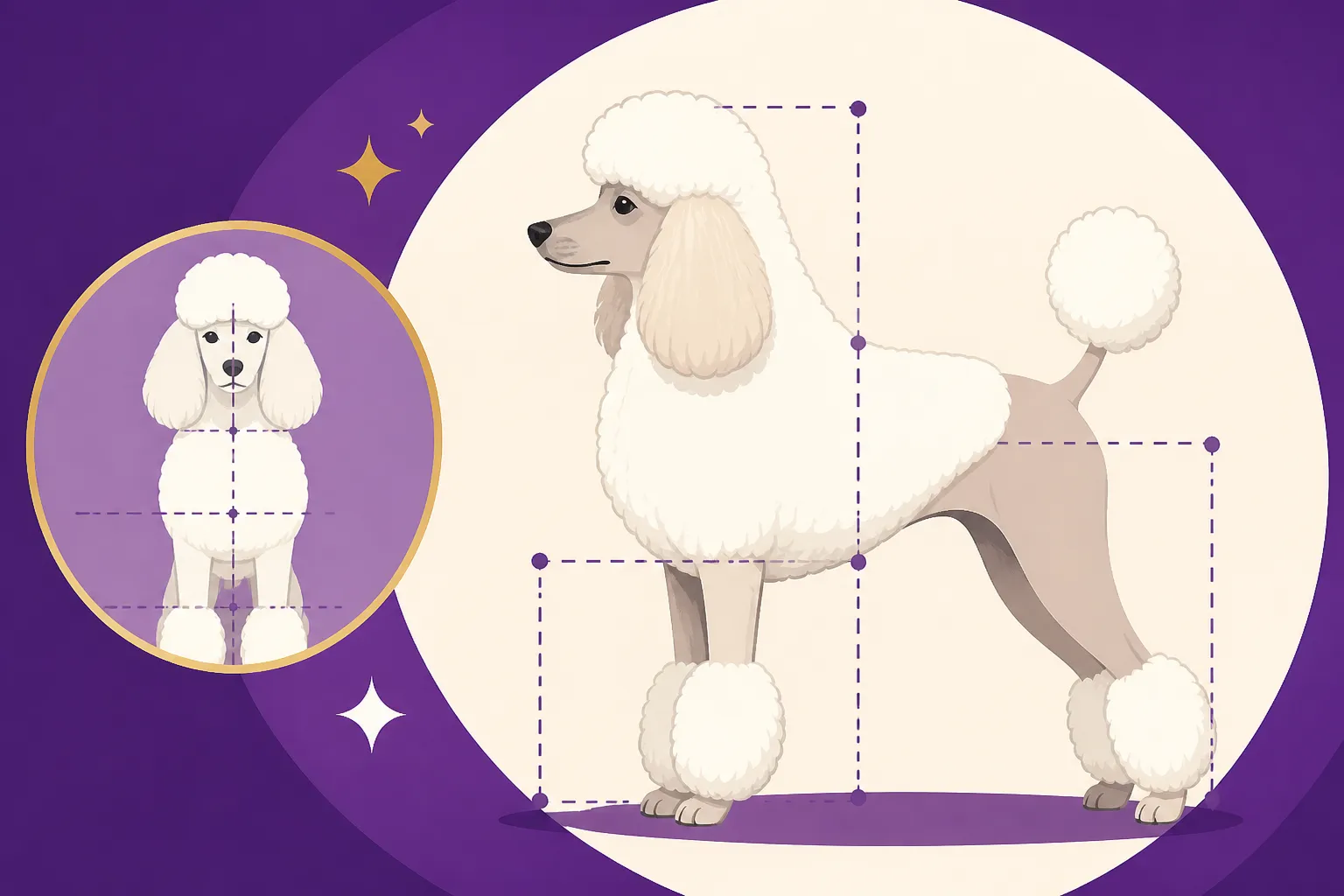
When you're observing a Poodle, imagine drawing a box around its body. The goal is for that box to be roughly equal in height and length. This specific proportion contributes to the breed's unique "springy gait" and ensures they are agile and efficient movers, capable of covering ground with ease and endurance. It’s not about being a perfect geometrical square, but rather achieving a visual balance that underscores their athletic build and inherent grace.
The Length-to-Height Ratio
The core of the "square Poodle" concept lies in its length-to-height ratio. Specifically, a Poodle's length, measured from the point of its prosternum (breastbone) to the point of its ischium (the rear of its pelvis), should be approximately equal to its height, measured from the highest point of the shoulder blades (the withers) to the ground. This isn't just about looking good; it's about optimizing their stride and balance. A Poodle that is too long will have a different center of gravity and may appear low-slung, while one that is too short can look compact or even cramped, hindering their natural range of motion.
Consider a Standard Poodle that might measure 24 inches at the shoulder. The breed standard dictates that its body length should also be around 24 inches. Deviations from this can lead to an awkward appearance and, more importantly, an inefficient gait. A Poodle with an overly long body might struggle with agility, appearing less coordinated when turning or accelerating. Conversely, a Poodle that is significantly taller than it is long can look leggy and somewhat ungainly, lacking the powerful drive from the rear that is characteristic of the breed. This balance is pivotal, and discerning breeders pay close attention to ensure their dogs adhere to this fundamental measurement. You can often see this reflected in pictures of well-bred Poodles, which exhibit a beautiful, balanced profile that is instantly recognizable. For a deeper dive into judging criteria, you might find What a Ring Judge Checks on a Poodle interesting.
Leg Length and Body Depth
Another critical aspect of the Poodle's proportion involves the relationship between its leg length and its body depth. The Poodle standard calls for the depth of the chest to be at least half of the Poodle's height at the withers. This means a good portion of their overall height should come from their legs, giving them that elegant, "upstanding" appearance. A chest that is too shallow can make a Poodle look leggy and insubstantial, while one that is too deep can give a heavy, barrel-chested appearance, shortening the visual length of their legs.
The length of the leg from the elbow to the ground should be approximately equal to the depth of the body. This creates a visually balanced picture where the Poodle's body doesn't appear too heavy or too light for its limbs. When these proportions are correct, the Poodle stands squarely on its feet, with its legs placed directly under its body, allowing for optimum balance and powerful propulsion. For instance, a Standard Poodle might stand 24 inches tall. Its chest should be at least 12 inches deep, and its legs from elbow to ground roughly 12 inches. This harmonious relationship allows for fluid movement and supports the Poodle's athletic capabilities. When you're feeding your Poodle, consider ergonomic bowls that allow them to maintain a natural posture; a well-proportioned Poodle benefits from dishes at the correct height, especially from a brand like Chewy, which offers a wide selection.
Neck and Head Set
While not strictly about body length and height, the neck and head set are integral to the Poodle's overall proportional elegance and balance. The breed standard describes a long, elegant neck, strong and well-set, flowing smoothly into a laid-back shoulder. This long neck contributes to the Poodle's aristocratic bearing and allows the head to be carried proudly and alertly. The length of the neck should be roughly the same length as the head, creating a graceful line from the shoulders to the skull.
When a Poodle has a short or thick neck, it can disrupt the overall balance of their square profile and make them appear less refined and less agile. A poorly set neck can also affect their balance and ability to carry their head with the characteristic Poodle panache. The head itself should be in proportion to the size of the Poodle's body, neither too large nor too small, with a long, fine muzzle. This complete picture, from nose to tail, is what defines the Poodle's distinctive elegance and ensures that its various parts work together as a harmonious unit. You can often notice this in how a Poodle carries itself, full of self-confidence and poise, which is a key part of The Poodle Character.
What Happens When a Poodle's Proportions Are Off
It's tempting to think that small deviations from the breed standard are just cosmetic, but when it comes to proportion, even minor imbalances can have significant consequences for a Poodle's health, comfort, and quality of life. An ill-proportioned Poodle might look a bit awkward, but more importantly, it can lead to a lifetime of strain on their body, making everyday activities difficult or painful. These issues aren't just for show dogs; they affect every Poodle, whether they're competing in obedience or just chasing squirrels in the backyard.
Understanding these potential pitfalls is crucial for prospective Poodle owners. A Poodle's skeletal structure is its foundation, and if that foundation isn't built correctly, problems are likely to arise. This often underscores the importance of choosing a reputable breeder who prioritizes sound conformation and health over trends or quick profits.
Impact on Gait and Stamina
One of the most immediate impacts of incorrect proportion is on the Poodle's gait and stamina. The characteristic "springy trot" of a Poodle is a direct result of their balanced structure, allowing them to move efficiently with minimal effort. When a Poodle is too long-backed, too short-legged, or has improper angulation, this natural gait is disrupted. Their movement might appear choppy, shuffling, or even ungainly, rather than fluid and powerful. This isn't just about looking less graceful; it means their body is working harder to perform basic movements.
Think of a Poodle with a very straight shoulder or stifle (knee) angle. These angles are crucial for absorbing shock and providing propulsion. If they're too straight, the Poodle loses its ability to "spring" and instead has to put more strain on its joints with each step. This can lead to quick fatigue, making long walks or active play sessions tiring and potentially painful. They might not have the endurance for activities like hiking How Far a Standard Poodle Should Walk or even extended games of fetch. Over time, this constant improper stress on their joints can accelerate wear and tear, leading to early onset arthritis or other degenerative joint diseases. Even a quality diet purchased from a retailer like Chewy won't fully compensate for fundamental structural issues.
Increased Risk of Certain Conditions
Incorrect proportions can predispose a Poodle to specific health problems that might otherwise be less common. As mentioned earlier, an overly long back combined with insufficient leg length can place excessive stress on the spine, making the Poodle more prone to intervertebral disc disease (IVDD) or other back ailments. Similarly, poor angulation in the rear can contribute to conditions like patellar luxation, especially in smaller Poodles like Toys and Miniatures, where the kneecap slips out of place due to shallow grooves or misaligned bones. This is why Why Size Changes Which Diseases a Poodle Gets is so important; while all Poodles should ideally be "square," the consequences of deviations can manifest differently.
Another concern for Poodles with disproportionate structures can be compromised overall skeletal health. If the Poodle is too leggy with a shallow chest, it might not have the robust skeletal support needed for its frame. Conversely, a Poodle that is too compact and heavy-boned for its length might experience different types of joint strain. These issues highlight why a focus on proportion isn't just about winning ribbons; it's about giving your Poodle the best chance at a pain-free life. A good reference for understanding these issues is The Poodle Topline and Why It Matters, which often directly reflects correct proportions.
Challenges in Grooming and Everyday Life
Beyond health implications, off-proportions can also create practical challenges in a Poodle's daily life, sometimes even affecting routine care like grooming. A Poodle with an unusually long back might struggle with certain grooming positions, making it harder for a groomer (or you, if you groom at home) to comfortably reach all areas, especially the undercarriage. Likewise, a Poodle with a very deep chest might require more specialized grooming equipment or techniques to ensure the coat around the chest and armpits is properly cared for, preventing mats in those harder-to-reach spots.
Even simple things like finding appropriately sized clothing or accessories can become a hassle. Collars and harnesses might not fit correctly, potentially causing discomfort or rubbing if the neck length or chest depth is unusual. For a Poodle whose proportions are significantly off, finding a comfortable dog bed or even a suitable dog crate can be more challenging. While these might seem minor, they contribute to the overall quality of life. For instance, if a Poodle puppy grows too fast, their proportions might not set correctly, impacting their future comfort and even their ability to carry certain types of toys from Chewy without strain.
The Nuances of Proportion Across Poodle Sizes
It's a common misconception that because Poodles come in three distinct sizes – Standard, Miniature, and Toy – their ideal proportions might differ significantly. However, one of the remarkable aspects of the Poodle breed standard is its consistency across these varieties. Whether you're looking at a majestic Standard Poodle or a dainty Toy, the underlying blueprint for proportion, particularly the "square" ideal, remains the same. This uniformity is a testament to the breed's unified heritage and purpose.
While the absolute measurements will vary dramatically – a Standard Poodle can reach How Tall a Standard Poodle Grows and weigh significantly more than a Toy – the relative proportions, such as the length-to-height ratio, chest depth, and leg length, are expected to adhere to the same principles. This means that a well-proportioned Toy Poodle should look like a scaled-down version of a well-proportioned Standard Poodle, rather than a different breed altogether.
Consistency in the Ideal Square
The concept of the "square Poodle" is universal across Standard, Miniature, and Toy varieties. This means that the length of the body (from breastbone to ischium) should be approximately equal to the height at the withers, regardless of the Poodle's size. A Standard Poodle standing 25 inches tall should be roughly 25 inches long, just as a Toy Poodle standing 9 inches tall should be around 9 inches long. This consistent ideal ensures that all Poodles possess the same elegant outline and efficient movement, optimized for agility and stamina.
This consistency is vital for maintaining the breed's integrity. It means that breeders for all three sizes are working towards the same structural ideal, promoting health and function. When you see a group of Poodles of different sizes, a well-bred individual from each variety should immediately convey that distinct Poodle look – an elegant, balanced, and athletic build. If you're trying to Predicting an Adult Poodle's Height, knowing this proportional consistency can also help you visualize their adult form.
Subtle Differences in "Feel"
While the underlying proportional rules are the same, there can be subtle differences in the feel or impression of proportion when transitioning between the sizes, largely due to scale. A Toy Poodle, being so small, often presents with a slightly more delicate bone structure and finer features than a robust Standard Poodle. While still "square," their overall presence is one of refinement and daintiness, whereas a Standard Poodle projects power and athleticism. These subtle nuances are more about bone density and overall substance rather than a fundamental change in the length-to-height ratio.
For example, a Miniature Poodle may feel more compact than a Standard, but this is often because the smaller size can give the impression of being "tighter" or more condensed, even if the actual proportions are identical to its larger cousin. These are distinctions that experienced breeders and judges pick up on, often describing it as "type." However, the core mathematical relationship of the body to its height remains steadfast. This is why a keen eye is needed to evaluate all Poodle sizes against the single, unifying breed standard for proportion.
| Proportion Aspect | Ideal Poodle Standard | Consequences of Imbalance |
|---|---|---|
| Length-to-Height Ratio | Square (Length = Height at Withers) | Overly long back: Spinal issues, reduced agility. Too short back: Cramped gait, limited movement. |
| Chest Depth | At least 50% of height at withers | Too shallow: Leggy appearance, lack of substance. Too deep: Heavy appearance, shortened leg visual. |
| Leg Length | From elbow to ground approx. equal to chest depth | Too long: Ungainly, poor balance. Too short: Low-slung, disproportionate, strain on spine. |
| Neck Length | Long, elegant, strong; approx. same length as head | Short/thick neck: Disrupts balance, less refined, affects head carriage. |
| Angulation | Well-angulated shoulders and stifles for springy gait | Too straight: Reduced shock absorption, inefficient gait, joint strain, early arthritis. |
| Overall Balance | Harmonious, athletic, graceful silhouette | Awkward movement, increased fatigue, predisposition to orthopedic problems, diminished breed type. |
Disclaimer
This article is for general informational purposes only and does not constitute professional advice. Laws, prices and regulations vary by location and change over time. Consult a qualified professional for guidance on your specific situation.