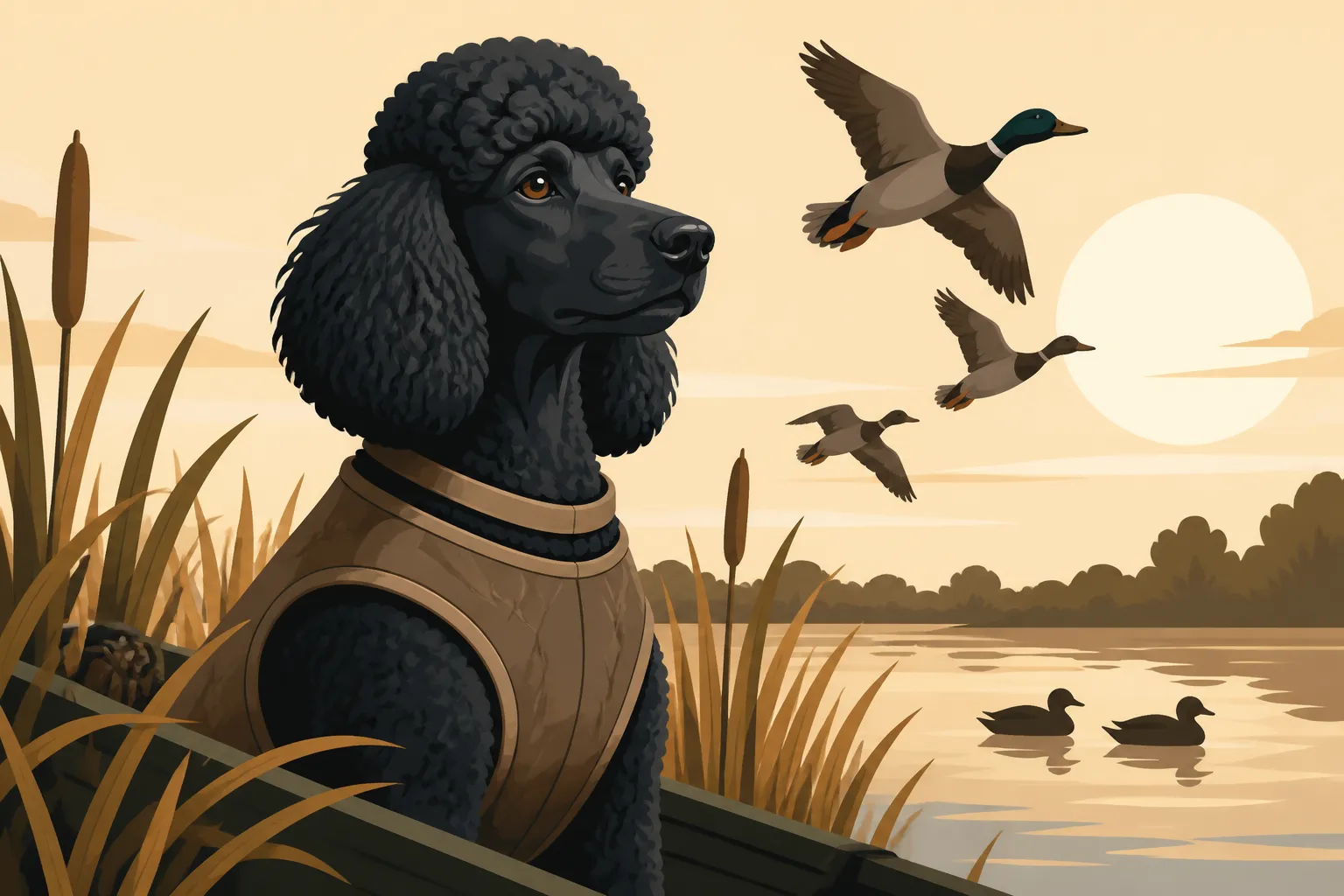
Poodles in Modern Waterfowl Hunting
Many people today view Poodles primarily through the lens of dog shows, imagining them adorned in elaborate continental clips, prancing around a ring. It’s easy to forget that beneath that famously curly coat beats the heart of a robust, intelligent, and highly capable working dog. The Poodle's original purpose, far from the glamour of the show circuit, was as a dedicated water retriever, and believe it or not, many still excel in modern waterfowl hunting, proving their enduring utility and instincts. This guide will explore the Poodle's rich history as a gun dog and delve into how these remarkable canines continue to impress in the field today.
The Poodle's Unexpected Hunting Heritage: A Water Retriever by Nature
It's a common misconception that Poodles are delicate, purely ornamental dogs. Their name itself, "Pudel" in German, literally means "to splash" in relation to water, clearly pointing to their aquatic origins. For centuries, Poodles were prized working dogs across Europe, particularly in Germany and France, where they were employed to retrieve ducks and other waterfowl for hunters. They weren't just fetching from calm ponds; these dogs were plunging into icy rivers and navigating marshy, dense terrain to bring back game.
The distinct Poodle clip, which many now consider a fashion statement, was originally designed for practical purposes in the field. Shaving certain areas of the dog's body, like the rear and flank, reduced drag in the water and prevented matting from mud and burrs, making movement easier and quicker. However, critical joints and organs were left covered with longer hair, forming "puffs" or "pom-poms" to provide insulation against the cold water. Imagine a Poodle in the biting wind and cold water of a hunt – those tufts of hair weren't for aesthetics, they were vital protection! This functional history highlights their incredible resilience and adaptability, characteristics still very much present in the breed. Over time, as hunting practices evolved and dogs were bred down in size for companionship, the Poodle's utility in the field became less common, but the instincts never truly faded. The Water Dog Behind the Poodle delves deeper into these fascinating origins.
From Marsh to Mansions: The Evolution of the Poodle's Role
The Poodle's journey from rugged waterfowl retriever to sophisticated companion is a testament to its versatility and charm. As society changed, so did the needs for canine companions. The Poodle's intelligence, eagerness to please, and low-shedding coat made them ideal pets for city dwellers and aristocracy alike. This shift in role, however, sometimes obscured their working capabilities. Many people today are genuinely surprised to learn that their elegant Poodle shares ancestral lines with robust hunting dogs.
The breed was selectively bred for different sizes—Standard, Miniature, and Toy—to suit various lifestyles, with the smaller varieties becoming particularly popular as lapdogs and entertainers. While the smaller Poodles might not be retrieving large game, even they often display strong retrieving instincts and a love for water, reminding us of their past. The Standard Poodle, however, retains much of its original size and athletic prowess, making it the natural choice for those looking to reconnect with the breed's hunting roots. It's a powerful reminder that beneath the meticulously groomed exterior, the heart of a working dog still beats strong.
Modern Poodles in the Field: Reclaiming Their Heritage
Despite their modern image, a growing number of Poodle owners and breeders are actively working to preserve and celebrate the breed's original hunting abilities. These dedicated individuals understand that a Poodle isn't just a pretty face; it possesses the intelligence, athleticism, and drive to excel in demanding field conditions. Standard Poodles, in particular, are proving to be formidable contenders in waterfowl hunting tests and real-world hunting scenarios.
Their dense, curly coats provide excellent protection against cold water and harsh weather, and their powerful swimming abilities are on par with many traditional retriever breeds. More importantly, their keen intelligence makes them highly trainable, often picking up complex commands with remarkable speed. They possess an inherent desire to work alongside their human companions, a trait that is invaluable in any hunting dog. It's truly inspiring to see a Poodle, often stereotyped as "fussy," confidently break through ice, retrieve a downed bird, and deliver it gently to hand. This resurgence in their working roles helps to educate the public and remind us all of the Poodle's incredible depth and capabilities.
The Standard Poodle's Advantage
When it comes to waterfowl hunting, the Standard Poodle truly shines. Their size—typically over 15 inches at the shoulder—gives them the strength and endurance needed to handle larger birds and navigate challenging environments. Their powerful legs are perfectly adapted for strong swimming, and their lung capacity allows for sustained effort in the water. Moreover, Standard Poodles are generally robust and healthy dogs, capable of withstanding the rigors of a day in the field, provided they are properly conditioned. What a Poodle Breeder Must Test For is a good resource for understanding health considerations when choosing a Poodle for any purpose, including demanding activities like hunting.
Their coat, while requiring regular grooming to prevent matting, offers natural waterproofing and insulation, a definite advantage in cold, wet conditions. Unlike some short-coated breeds, a Standard Poodle can stay warmer for longer periods in the water. Plus, their exceptional intelligence and biddability mean they are quick learners, responding well to training and forming a strong, cooperative bond with their handler. This makes them not just effective retrievers, but also enjoyable partners in the hunting experience. For those considering a hunting partner, a well-bred Standard Poodle often exceeds expectations.
| Trait | Poodle's Hunting Relevance | Common Misconception/Alternative Perception |
|---|---|---|
| Coat | Dense, curly, water-resistant, insulating; provides warmth & protection. | High-maintenance, purely aesthetic, prone to matting. |
| Intelligence | Highly trainable, quick to learn complex commands, problem-solver. | Aloof, too smart for its own good, easily bored. |
| Athleticism | Strong swimmer, agile, good stamina for retrieving heavy game. | Delicate, easily tired, only suited for short walks. |
| Drive | Strong retrieving instinct, eager to please, cooperative partner. | Timid, high-strung, prefers lounging to working. |
| Temperament | Focused, adaptable, resilient to varied conditions. | Fussy, sensitive, easily stressed by harsh environments. |
Training a Poodle for Waterfowl Hunting
Training a Poodle for waterfowl hunting is a rewarding experience that deepens the bond between dog and owner. While Poodles are naturally intelligent and often possess strong retrieving instincts, formal training is essential to develop them into reliable gun dogs. This isn't just about teaching commands; it's about shaping a well-mannered, confident, and effective hunting partner.
The process often begins with basic obedience, ensuring your Poodle responds reliably to commands like "sit," "stay," "here," and "heel" under various distractions. From there, specific retrieving skills are introduced, starting on land and gradually moving to water. Consistency, patience, and positive reinforcement are key, as Poodles are sensitive dogs who thrive on encouragement. Why Poodles Learn a Cue in Five Repetitions is particularly relevant here, as their sharp minds can pick up new tasks quickly, but also require engagement to prevent boredom.
Key Training Components
Successful waterfowl hunting training for a Poodle involves several crucial components:
- Obedience and Steadiness: A steady dog is paramount in the duck blind. Your Poodle must be able to remain calm and quiet amidst the excitement of decoys, calls, and gunfire, waiting for the "retrieve" command. This requires extensive practice in controlled environments, gradually introducing the sounds and sights of hunting.
- Marking and Directional Control: Poodles need to be taught to "mark" downed birds—that is, to remember where a bird falls. This skill is built through progressively challenging retrieves. Advanced training will also include "blind retrieves," where the dog is directed by hand signals and voice commands to find birds they didn't see fall, often far from the hunter.
- Force Fetch and Proper Delivery: While many Poodles naturally love to retrieve, "force fetch" training ensures a consistent, immediate retrieve to hand, even for birds they might be hesitant to pick up initially. This isn't about harshness, but rather systematic pressure and release to build reliability. The goal is a soft mouth and a clean delivery every time.
- Water Work and Conditioning: Poodles need to be comfortable and powerful in the water. This involves gradually introducing them to different types of water bodies, building their stamina, and practicing retrieves in various aquatic conditions. Ensure your Poodle has plenty of opportunities to swim and retrieve in water, becoming accustomed to cold temperatures and potentially rough surfaces. Introducing a Poodle to Water offers more insights on this.
- Gunfire Acclimation: Introducing your Poodle to the sound of gunfire must be done very carefully and positively to prevent gun-shyness. Start with very low-level sounds at a distance and gradually increase the volume and proximity, always pairing the sound with positive experiences like treats or play. Never force a dog to tolerate loud noises; it must be a gradual, positive association.
Finding a professional trainer experienced with gun dogs and, ideally, Poodles, can make a huge difference. They can provide expert guidance and ensure your Poodle develops into a confident and capable hunting companion. Remember, a well-trained Poodle is not just a better hunting partner, but a safer one too.
Equipment and Care for the Hunting Poodle
A Poodle destined for the field requires specific care and equipment to ensure their safety, comfort, and performance. This isn't just about grooming; it's about providing everything they need to thrive in a demanding environment. Just like any athlete, a hunting Poodle has particular needs.
Start by consulting with your veterinarian to ensure your Poodle is in peak physical condition. Discuss their diet, exercise regimen, and any necessary preventive care, especially for cold water exposure or tick-prone areas. For example, a quality dog food, available from retailers like Chewy, formulated for active dogs is crucial for providing the energy needed for long days in the field.
Essential Gear and Grooming Adaptations
When preparing your Poodle for hunting, certain equipment becomes indispensable:
- Protective Vests: A neoprene dog vest can provide critical insulation and buoyancy in cold water, protecting your Poodle from hypothermia. These are especially important during late-season hunts when water temperatures plummet. Ensure a proper fit that allows full range of motion. You can find a good selection of these on sites like Chewy.
- Durable Collars and Leashes: A sturdy, waterproof collar and a reliable lead are essential. Consider a long line for controlled retrieves during training sessions.
- Training Dummies and Whistles: High-quality retrieving dummies are vital for practice. Invest in different types, including floating ones for water work. A dog whistle is also an excellent tool for long-distance communication in the field. Chewy offers a wide variety of these essential training aids.
- First-Aid Kit: A comprehensive dog first-aid kit is a must-have for any hunting trip, ready for minor cuts, scrapes, or other field injuries.
- GPS Tracker: For safety and peace of mind, especially in dense cover, a GPS collar or tracker can help you locate your Poodle if they wander too far or get disoriented.
Grooming for a hunting Poodle will likely differ significantly from a show clip. A shorter, functional clip is usually preferred. This "sporting clip" or "kennel clip" keeps the coat tidy, reduces the chance of matting, and makes cleaning easier after a muddy or wet retrieve. Regular brushing, even with a shorter coat, is still important to prevent debris build-up and maintain skin health. Choosing a Clip for a Pet Poodle provides details on various practical grooming styles. After a hunt, thoroughly rinse your Poodle's coat to remove any mud, debris, or contaminants, then dry them completely to prevent skin issues and chilling. High-quality shampoo and conditioner, also easily sourced from Chewy, will help keep their coat healthy and resilient.
Health and Safety in the Field
The Poodle's health and safety should always be the top priority. Beyond physical conditioning and protective gear, consider these points:
- Temperature Extremes: Poodles, like all dogs, are susceptible to heatstroke in warm weather and hypothermia in cold. Monitor them closely, provide plenty of fresh water, and know when to call it a day if conditions are too extreme.
- Water Quality: Be mindful of the water quality where your Poodle is retrieving. Avoid stagnant water that might contain harmful bacteria or algae. Always provide clean drinking water.
- Vaccinations and Parasite Prevention: Ensure your Poodle is up-to-date on all necessary vaccinations and year-round parasite prevention, especially in areas with ticks, fleas, and heartworm. Many of these products can be found on Chewy.
- Foot Care: Rough terrain can be hard on paw pads. Check your Poodle's feet regularly for cuts, cracks, or embedded debris. Paw balms can help protect and condition their pads.
- Gun Safety: Never take a Poodle into a hunting situation without proper gunfire acclimation. A gun-shy dog can be traumatized and pose a safety risk.
By understanding their history, investing in proper training, and providing diligent care, a Poodle can indeed be an exceptional and cherished partner in modern waterfowl hunting, honoring their true heritage as intelligent, athletic, and dedicated working dogs.
Disclaimer
This article is for general informational purposes only and does not constitute professional advice. Laws, prices and regulations vary by location and change over time. Consult a qualified professional for guidance on your specific situation.