Why the Poodle Was Once a Circus Standard
When we picture a Poodle today, many of us envision a prim and proper companion, perhaps lounging on a silk pillow or strutting elegantly at a dog show. It's a perception that often leads people to wonder how such a refined breed could have ever been a staple of the boisterous, demanding world of the circus. This guide will take a deep dive into the fascinating history of the Poodle, exploring the unique combination of traits that made them not just performers, but true stars under the big top, and why their incredible versatility secured their place as a circus standard for generations.
The Innate Poodle Intellect and Trainability
The Poodle's renowned intelligence is perhaps the most significant factor in its historical success as a circus performer. These aren't just pretty faces; they possess a keen mind that is eager to learn and incredibly quick to grasp complex commands and sequences. For a circus trainer, this was pure gold.
A Mind Built for Rapid Learning
Poodles consistently rank among the most intelligent dog breeds, often placing second only to the Border Collie in studies like those conducted by Stanley Coren. This isn't just about knowing basic commands; it's about their ability to understand concepts, problem-solve, and remember intricate routines. In the fast-paced, demanding environment of a circus, where new acts might need to be developed quickly and performances repeated flawlessly night after night, a dog that could learn a cue in five repetitions, as Poodles often can, was invaluable. They didn't just perform tricks; they truly understood what was being asked of them, making the training process far more efficient and rewarding for both trainer and dog. This cognitive prowess meant they could be taught elaborate sequences, combine multiple actions, and even respond to subtle non-verbal cues from their trainers, adding layers of sophistication to their acts that other breeds simply couldn't achieve. Why Poodles Learn a Cue in Five Repetitions
Biddability and the Desire to Please
Beyond raw intelligence, Poodles possess a strong desire to please their handlers. This biddability, coupled with their intelligence, creates a potent combination for training. A Poodle isn't just smart; it wants to work with you. This eagerness makes them incredibly responsive to positive reinforcement and enthusiastic participants in training sessions. Circus trainers, who often had to manage multiple animals and demanding schedules, found Poodles to be highly cooperative and less prone to stubbornness than many other breeds.
Imagine the patience required to teach a dog to walk a tightrope, ride a scooter, or even perform complex tumbling routines. It requires not just understanding the command, but the willingness to repeat it, refine it, and perform it under pressure. Poodles thrive on this kind of engagement. They form strong bonds with their trainers and genuinely seem to enjoy the process of learning and performing, which translates into an infectious enthusiasm in their acts. This willingness to engage and cooperate was crucial in an era when training methods were not always as gentle as they are today; a Poodle's resilient spirit and desire to please helped them navigate these challenges with grace. Training the Second Smartest Dog Breed
Agility, Grace, and Physical Prowess
While their brains were a primary asset, the Poodle's physical attributes were equally important in their rise to circus stardom. They possess a unique combination of agility, balance, and a lithe, powerful build that made them ideal for a wide range of acrobatic feats.
Natural Athleticism and Coordination
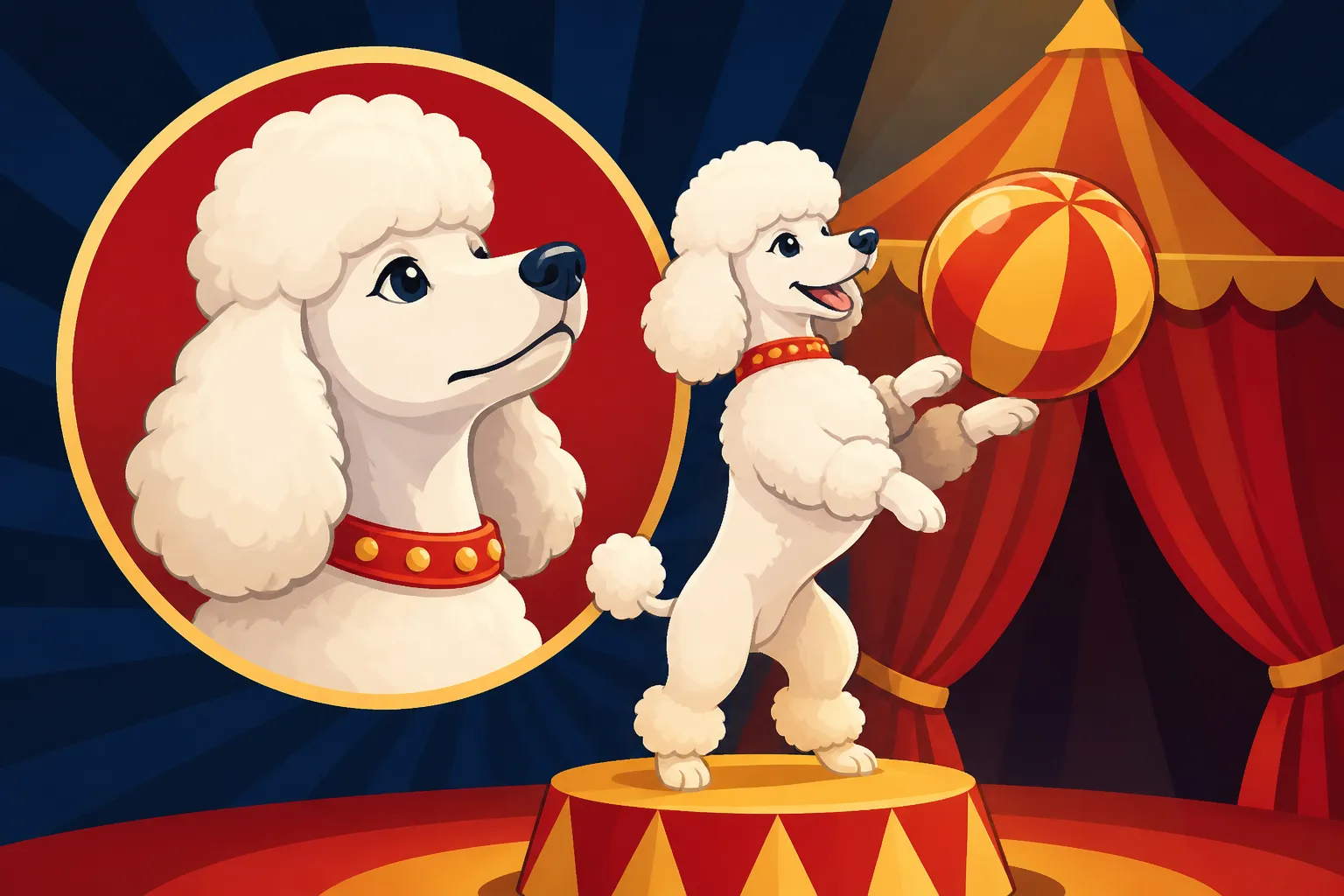
Beneath the fluffy exterior lies a surprisingly athletic dog. Poodles, especially Standard Poodles, were originally bred as water retrievers, a role that demanded strength, endurance, and excellent swimming ability. This background endowed them with a strong, well-muscled body, powerful hindquarters for jumping, and remarkable coordination. They could leap through hoops, walk on their hind legs, balance on platforms, and perform intricate choreographed movements with an almost balletic grace.
Their light bone structure relative to their muscle mass gave them an advantage in agility and jumping. They weren't bulky; they were sleek and powerful, capable of explosive movements and sustained activity. This athleticism meant they could perform demanding physical routines multiple times a day without quickly tiring, a non-negotiable trait for a touring circus performer. Even the smaller Miniature and Toy Poodles, while more delicate, retained much of this inherent athleticism, allowing them to perform their own impressive feats of agility, albeit on a smaller scale. Dog Sports a Poodle Excels At
Adaptability to Varied Stunts
The Poodle's physical versatility meant they weren't limited to one type of act. They could be taught to jump rope, ride small bicycles, climb ladders, and even participate in human-dog balancing acts. Their strong, flexible bodies and nimble paws made them adept at manipulating props and navigating complex setups.
Think about the sheer variety of physical stunts a circus dog might perform: jumping over obstacles, weaving through cones, rolling barrels, or acting out miniature dramas. Each required a specific set of physical skills, and the Poodle possessed them all. Their keen sense of balance, inherited perhaps from navigating uneven terrain or slippery riverbanks during their retrieving days, allowed them to maintain composure on narrow beams or moving platforms, adding an extra layer of difficulty and wonder to their performances. This adaptability was a huge asset, enabling trainers to create diverse and engaging acts that kept audiences captivated. The Poodle as a Breed
Temperament for the Spotlight
Beyond their intelligence and physical gifts, the Poodle's temperament played a crucial role in their ability to not just tolerate, but thrive, in the unique environment of the circus.
Confidence and Poise Under Pressure
Circus life is not for the faint of heart. It involves constant travel, exposure to loud noises, bright lights, crowds of strangers, and the expectation to perform perfectly every time. Poodles, generally, are not shy or overly anxious dogs. They possess a natural confidence and an unflappable demeanor that made them excellent candidates for the spotlight. They could handle the roar of applause, the flash of cameras, and the hustle and bustle backstage without becoming overwhelmed.
Their self-assured nature allowed them to remain focused on their trainer and their routine, even with distractions all around. This poise, combined with their intelligence, meant they could recover quickly from minor mishaps or unexpected noises during a performance, a critical trait when live audiences are watching. A Poodle rarely shuts down in the face of a challenge; instead, they often rise to the occasion, seemingly enjoying the attention and the opportunity to shine. The Poodle Character
Sociability and Performer-Audience Connection
Poodles are also inherently sociable animals, often forming deep bonds with their human companions. This sociability extended to their interactions with the public. While they might be reserved with strangers at first, their desire to engage and their expressive faces often charmed audiences. They weren't just performing tricks; they were connecting with people, their bright, intelligent eyes seeming to convey a personality that transcended the simple commands.
This ability to "perform" in a way that resonated emotionally with the audience was a huge draw. Circus acts are not just about technical skill; they are about entertainment and storytelling. A Poodle's engaging personality allowed them to become characters, adding humor, pathos, or excitement to their routines. They were more than just props; they were beloved members of the troupe, often featured prominently in promotional materials because of their captivating presence. This connection is why people remember specific Poodle acts for decades.
The Glamour and Grooming Advantage
It might seem superficial, but the Poodle's distinctive coat and appearance also contributed significantly to their status as a circus standard, allowing for artistic expression and enhancing their visual appeal.
The Iconic Poodle Clip and Its History
The elaborate Poodle clips, which many today associate with high fashion or the show ring, actually have a practical, working origin. When Poodles were retrieving ducks from icy waters, hunters would shave parts of their bodies to reduce drag and prevent matting, while leaving hair on joints and vital organs for warmth. These tufts, or "pompoms," protected them from the cold and injuries. Over time, these functional clips evolved into more artistic expressions. Why the Poodle Clip Was a Working Design
For the circus, this was a dream come true. The Poodle's non-shedding, constantly growing coat could be sculpted into an astonishing array of styles, from elaborate lion clips to intricate geometric patterns. These unique clips made Poodles instantly recognizable and added to the visual spectacle of their acts. Imagine a troupe of Poodles, each with a different, perfectly coiffed style, marching into the ring. It was a feast for the eyes, elevating the entire performance. This distinctive grooming wasn't just aesthetic; it allowed for creativity and made each Poodle act memorable.
Visual Appeal and Stage Presence
The Poodle's striking appearance, even beyond the clips, gave them an undeniable stage presence. Their elegant posture, often accentuated by careful grooming, made them look regal and important. Available in a wide variety of solid colors – white, black, apricot, silver, blue, brown, and more – allowed for stunning visual contrasts and dynamic ensemble performances. A line of perfectly groomed white Poodles, for example, performing in unison under the spotlights, created an unforgettable image.
Moreover, their expressive faces and dark, intelligent eyes could convey a range of emotions, enhancing the narrative of any act. They looked the part of a star. This combination of natural beauty, customizable coat, and inherent grace meant that Poodles didn't just perform; they truly shone in the theatrical environment of the circus. They weren't just dogs doing tricks; they were artistes, adding a touch of class and spectacle that captivated audiences young and old.
| Trait Category | Poodle Attribute | Advantage in Circus Performance |
|---|---|---|
| Intellect | High IQ, quick learner | Rapidly masters complex tricks, adapts to new routines |
| Temperament | Biddable, confident, sociable | Eager to please, performs well under pressure, connects with audience |
| Physicality | Agile, athletic, coordinated | Excels at jumping, balancing, intricate movements, good stamina |
| Appearance | Unique coat, elegant posture | Highly customizable grooming, striking visual impact, strong stage presence |
| Resilience | Adaptable, hardy (Standard Poodle history) | Handles travel, loud environments, repetitive performances |
Beyond the Big Top: The Poodle's Enduring Legacy
While the heyday of Poodles as primary circus stars may have shifted with changing entertainment landscapes, their legacy from those days continues to influence how we perceive and interact with the breed today.
The Poodle's Versatility Across Disciplines
The very traits that made Poodles circus legends – their intelligence, athleticism, and biddability – are the same traits that allow them to excel in a myriad of modern canine activities. From competitive obedience and agility trials to therapy work and even hunting (their original purpose!), Poodles continue to prove their incredible versatility. If you visit a dog park, you might see a Poodle expertly navigating an agility course, or perhaps retrieving a toy with surprising speed. This widespread success in so many different fields is a direct testament to the foundational qualities that circus trainers recognized centuries ago. Their ability to master complex tasks makes them standout competitors and beloved working partners. Dog Sports a Poodle Excels At
Whether you're looking for a dog to join you on long hikes, compete in dog sports, or simply be an intelligent and engaging family companion, the Poodle's background as a capable performer ensures they rise to the occasion. Reputable brands like Chewy offer a vast array of training tools and enrichment toys designed to keep an active Poodle mind busy, echoing the mental stimulation they thrived on in the circus.
Shaping Public Perception and Modern Ownership
The Poodle's history as a circus standard has, in some ways, contributed to their sometimes-misunderstood reputation as being "fussy" or "just for show." However, it also highlights their incredible capability and charm. Modern Poodle owners often find themselves dispelling myths about the breed, proudly showcasing their Poodles' athleticism, intelligence, and playful spirits.
This rich history also underscores the importance of mental and physical exercise for Poodles. A bored Poodle, no matter how intelligent, can become destructive or develop undesirable habits. Just as they needed "a job" in the circus, they still need engaging activities in a home environment. Providing puzzle toys, regular training sessions, and opportunities for varied exercise are key to a happy and well-adjusted Poodle. You can find everything from durable chew toys to mentally stimulating feeders at places like Chewy, ensuring your Poodle gets the engagement they need. This breed needs more than just a walk; they need a purpose, much like their ancestors who delighted audiences worldwide. What a Poodle Does When Its Brain Is Idle
The Poodle's journey from a working water dog to a circus icon and then to a beloved modern companion is a testament to their remarkable combination of brains, beauty, and brawn. Their captivating performances under the big top cemented their place in history and showcased the incredible potential of this truly extraordinary breed.
Disclaimer
This article is for general informational purposes only and does not constitute professional advice. Laws, prices and regulations vary by location and change over time. Consult a qualified professional for guidance on your specific situation.