How a Vet Confirms Poodle Addison’s
It’s truly unsettling when your beloved Poodle just isn't acting like themselves, showing a confusing mix of symptoms that come and go, making it incredibly difficult to pinpoint what's wrong. This isn't just a minor ailment; for many Poodle owners, these vague signs often hide a serious condition known as Addison's disease, a tricky illness that frequently mimics other health issues. This guide will walk you through precisely how veterinarians approach and confirm a diagnosis of Addison's in Poodles, giving you a clear understanding of the tests and processes involved.
Recognizing the Early Whispers of Addison's in Your Poodle
Addison's disease, or hypoadrenocorticism, is notoriously challenging to diagnose because its symptoms are often so non-specific and can wax and wane. It’s earned the nickname "the great pretender" for a reason, especially in breeds like our sensitive Poodles, who can be masters at hiding discomfort until things are quite severe. Many Poodle owners describe a gradual decline, or episodes of illness that resolve, only to return later, making it incredibly frustrating to get a clear picture.
Why Poodles are Particularly Susceptible
Standard Poodles, in particular, have a well-documented predisposition to Addison's disease, which makes it a condition that responsible owners and veterinarians should always consider. This isn't to say other Poodle varieties are immune, but the genetic link in Standards is stronger. The breed's sensitive nature often means they might mask early signs, or their behavioral changes could be mistaken for "sulking" or anxiety rather than a physical illness. When a Poodle just seems "off" – lethargic, eating less, perhaps even experiencing intermittent vomiting or diarrhea – and other common culprits have been ruled out, Addison's should definitely move up the list of possibilities.
Common Clinical Signs That Raise Suspicion
The symptoms of Addison's can vary widely, and they rarely all appear at once. You might notice your Poodle has less energy, seems unusually tired after walks, or isn't as enthusiastic about their food. Some Poodles experience gastrointestinal upset, like occasional vomiting, diarrhea, or a decreased appetite, which can be easily attributed to a sensitive stomach or dietary indiscretion. You might even see increased thirst and urination, though not usually to the same extreme as with diabetes. Shaking, shivering, or a general weakness can also occur. What often catches a vet’s eye is a Poodle that presents with these vague signs, sometimes improving with supportive care (like IV fluids), only to relapse when that care is withdrawn. If you've ever found yourself wondering if your Poodle's lethargy is just them being a "couch potato" or something more serious, know that this ambiguity is a classic hallmark of Addison's. It's a prime example of why understanding the First Signs of Addison's in a Poodle is so crucial.
The Initial Veterinary Assessment and Bloodwork
When you bring your Poodle to the vet with these concerning, often vague, symptoms, the diagnostic process usually begins with a thorough physical examination and routine blood tests. These initial steps are vital for ruling out more common ailments and for providing clues that point towards Addison's.
What the Physical Exam Might Reveal
During the physical examination, your veterinarian will be looking for a range of subtle indicators. They might note that your Poodle seems dehydrated, has a slow capillary refill time (meaning blood takes longer to return to the gums after pressure is applied), or has a weak pulse. They might also find that your Poodle's heart rate is slower than expected for their level of illness. Abdominal pain is sometimes present, particularly in severe cases. However, in many Poodles with early Addison's, the physical exam can be surprisingly normal, which only adds to the diagnostic challenge. This is often when a vet will start to consider that Why Poodle Addison's Is the Great Pretender.
Interpreting Routine Blood Tests
Routine blood tests, specifically a complete blood count (CBC) and a biochemistry panel, are usually the first step beyond the physical exam. While not definitive for Addison's, these tests can provide strong suggestive evidence.
- Complete Blood Count (CBC): In an Addisonian crisis, a CBC might show a lack of a "stress leukogram" – the expected increase in certain white blood cells (neutrophils and monocytes) and a decrease in lymphocytes and eosinophils that typically occurs when an animal is sick or stressed. An Addisonian Poodle often doesn't show this stress response, and instead might have an unusually high eosinophil and lymphocyte count, which is highly suggestive. However, not every Addisonian Poodle will have this, and it can be missed in milder cases.
- Biochemistry Panel: This is where things often get interesting. Addison's disease is characterized by a deficiency in mineralocorticoids, particularly aldosterone, which regulates electrolyte balance. As a result, many Addisonian Poodles will have:
- Elevated Potassium (Hyperkalemia): The most classic electrolyte imbalance.
- Decreased Sodium (Hyponatremia): Also very common.
- Low Sodium-to-Potassium Ratio: This is a key indicator. A ratio below 27:1 (and sometimes even higher thresholds depending on the lab) is highly suspicious.
- Elevated Kidney Values (BUN, Creatinine): These can be high due to dehydration and poor kidney perfusion, mimicking kidney disease.
- Low Blood Sugar (Hypoglycemia): Less common, but can occur, especially in severe cases.
- Elevated Calcium (Hypercalcemia): Also less common, but sometimes seen.
It's important to remember that while these findings are strongly suggestive, they are not exclusive to Addison's. Other conditions can cause similar electrolyte imbalances or kidney value changes. Therefore, while these tests provide crucial clues, they usually lead to the need for a more specific diagnostic test.
Here’s a simplified table comparing typical bloodwork results:
| Parameter | Typical Healthy Poodle | Poodle with Addison's (Often) | Significance |
|---|---|---|---|
| Sodium (Na) | Normal | Low (Hyponatremia) | Mineralocorticoid deficiency |
| Potassium (K) | Normal | High (Hyperkalemia) | Mineralocorticoid deficiency |
| Na:K Ratio | > 27:1 | < 27:1 | Highly suggestive, though not definitive |
| BUN/Creatinine | Normal | Elevated | Dehydration, poor kidney perfusion |
| Glucose | Normal | Low (Hypoglycemia) | Glucocorticoid deficiency (less common) |
| Eosinophils/Lymphocytes | Normal/Low stress | Normal/High (lack of stress response) | Glucocorticoid deficiency (lack of stress leukogram) |
The Definitive Test: ACTH Stimulation
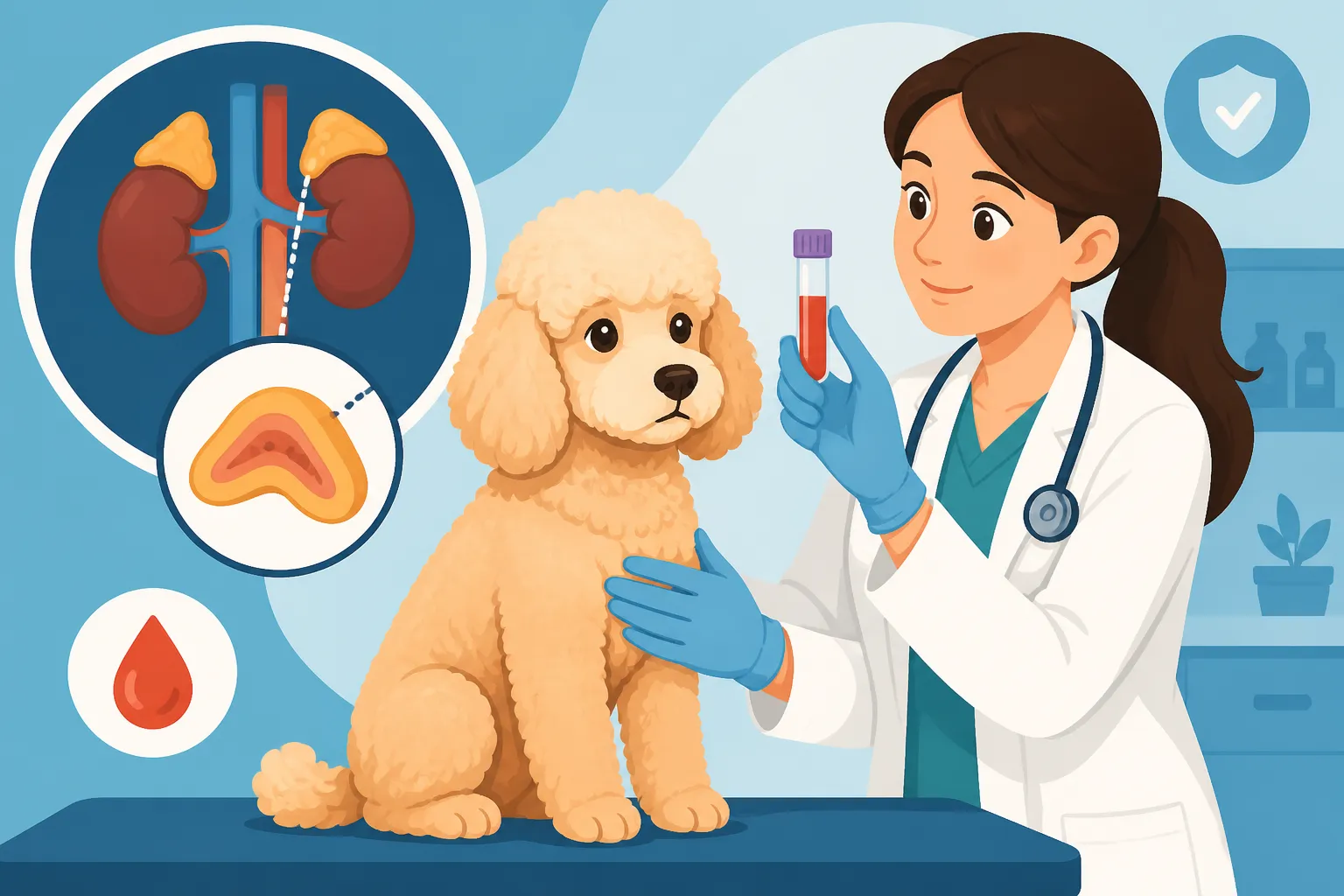
While initial bloodwork can raise a huge red flag, the ultimate way to confirm Addison's disease in your Poodle is through a specific test called the ACTH (Adrenocorticotropic Hormone) stimulation test. This test directly assesses the function of the adrenal glands, which are the organs affected by Addison's.
How the ACTH Stimulation Test Works
The ACTH stimulation test is a straightforward, yet incredibly informative, procedure. It involves measuring your Poodle's cortisol levels before and after administering synthetic ACTH, a hormone that normally stimulates the adrenal glands to produce cortisol. Here's how it generally unfolds:
- Baseline Blood Sample: First, your vet will draw a blood sample from your Poodle. This sample measures the "baseline" cortisol level circulating in their body.
- ACTH Administration: Immediately after the baseline sample, a synthetic version of ACTH is injected into your Poodle, usually intravenously or intramuscularly. This synthetic hormone acts just like the natural ACTH released by the pituitary gland, telling the adrenal glands to "wake up" and produce cortisol.
- Post-Stimulation Blood Sample: Approximately one hour after the injection (though timing can vary slightly depending on the specific protocol and synthetic ACTH product used), a second blood sample is drawn. This sample measures how much cortisol your Poodle's adrenal glands produced in response to the ACTH.
Interpreting the Results
The interpretation of the ACTH stimulation test is quite clear-cut:
- Healthy Poodle: In a healthy Poodle, the adrenal glands will respond robustly to the injected ACTH, and the post-stimulation cortisol level will be significantly higher than the baseline level. This shows that the adrenal glands are capable of producing cortisol when stimulated.
- Poodle with Addison's: In a Poodle with Addison's disease, the adrenal glands are damaged or dysfunctional, meaning they are unable to produce adequate cortisol. Therefore, both the baseline and the post-stimulation cortisol levels will remain low, and there will be little to no increase in cortisol after the ACTH injection. The failure of the adrenal glands to respond is the definitive indicator of Addison's.
It's important to note that sometimes, even if a Poodle's baseline cortisol is low, it might increase slightly post-ACTH. However, for a true Addison's diagnosis, the peak cortisol level after stimulation will still fall below a certain threshold (which varies slightly by lab but is typically very low, often under 2 µg/dL or 55 nmol/L). This lack of a significant increase confirms the adrenal insufficiency. This test is the gold standard for diagnosis and is often what owners are waiting for after a lot of back-and-forth and worry.
Beyond the ACTH Stim: Ruling Out Atypical Addison's
While the ACTH stimulation test is the definitive diagnostic tool, there's also a rarer form of the disease called "atypical Addison's." In these cases, the Poodle still has a glucocorticoid deficiency (cortisol), but their mineralocorticoid levels (aldosterone) are normal. This means their electrolytes (sodium and potassium) might appear normal on routine bloodwork, which can be misleading and make the diagnosis even harder.
If your vet suspects Addison's despite normal electrolytes, they might still perform an ACTH stim test. If the results confirm low cortisol production, they may then measure aldosterone levels alongside cortisol to differentiate between typical and atypical Addison's. This distinction matters because the treatment protocols differ slightly, though both forms require careful management. Given the costs associated with these specialized tests, many Poodle owners explore pet insurance options like Healthy Paws to help mitigate unexpected veterinary expenses, as conditions like Addison's can be costly to diagnose and manage long-term.
What Happens After a Confirmed Diagnosis
Receiving a confirmed diagnosis of Addison's disease can feel overwhelming, but it's important to remember that it's a very manageable condition with appropriate treatment. It means an end to the frustrating search for answers and a clear path forward for your Poodle.
The Role of Ongoing Monitoring and Medication
Addison's disease is typically managed with lifelong medication to replace the hormones your Poodle's adrenal glands are no longer producing. This usually involves a combination of:
- Mineralocorticoid Replacement: Most commonly deoxycorticosterone pivalate (DOCP), often brand-named Zycortal, given by injection every 25-30 days. This replaces the aldosterone and helps regulate sodium and potassium levels.
- Glucocorticoid Replacement: Prednisone or prednisolone, given daily by mouth, to replace cortisol. The dose is typically very low and adjusted based on your Poodle's needs, especially during times of stress. Understanding How Often an Addisonian Poodle Is Injected is key to successful management.
Regular follow-up appointments and blood tests are essential to monitor your Poodle's electrolyte levels and overall response to treatment. The dosages of medication will be fine-tuned to ensure they are receiving just what they need. Many Poodle owners find themselves relying on the financial safety net provided by comprehensive pet insurance plans, such as those offered by Healthy Paws, given the ongoing nature of medication and vet visits. This peace of mind is invaluable when dealing with a chronic condition like Addison's.
Living a Full Life with Addison's
With consistent and correct treatment, most Poodles with Addison's disease go on to live full, happy, and normal lives. The initial period of diagnosis and stabilization can be stressful, but once regulated, many owners report that their Poodle's energy levels return, their appetite improves, and they are back to their old selves. It’s a testament to modern veterinary medicine and dedicated Poodle parents. Don't be surprised if your vet discusses concepts like Whether an Addisonian Poodle Lives Normally or the need for Stress Dosing a Poodle With Addison's during crucial times like surgery or travel. Knowing these aspects ahead of time empowers you to give your Poodle the best possible care. For the significant lifelong costs associated with treatment, including monthly injections and daily oral medications, exploring options like Healthy Paws for assistance with medication and follow-up care can be a smart move, easing the financial burden on Poodle parents.
Disclaimer
This article is intended for informational purposes only and does not constitute veterinary advice. Always consult with a qualified veterinarian for any health concerns or before making any decisions about your Poodle's medical care.