Why a Poodle Obeys Ninety Five Percent of the Time
Ever feel like your clever Poodle is a canine prodigy 95% of the time, flawlessly executing commands with an eager wag and bright eyes, only to suddenly develop a severe case of selective hearing the moment a rogue leaf dances by or a particularly interesting scent hits their nose? It’s a common frustration for Poodle owners who know just how brilliant their dogs are. This guide dives deep into the fascinating reasons behind your Poodle's impressive baseline of obedience, explores the nuanced factors that contribute to those rare moments of "disobedience," and offers practical strategies to help you bridge that small gap, fostering an even more reliable and harmonious relationship with your intelligent companion.
The Poodle's Natural Inclination Towards Compliance
Poodles are celebrated for many qualities, but their intelligence and biddability often top the list. It's not just a lucky genetic roll; it's deeply ingrained in their history and temperament, making them inherently inclined to listen and respond. Understanding this foundation is key to appreciating why they're so often a joy to train.
A Legacy of Intelligence and Working Partnership
Before they graced the show rings and became cherished family companions, Poodles were formidable working dogs, primarily retrieving waterfowl for hunters. This demanding job required not just physical prowess but also keen intelligence, problem-solving skills, and a strong desire to work with their human partners. They needed to understand complex commands, navigate challenging environments, and bring back game reliably. This isn't a breed that was bred to independently herd sheep from a distance or protect territory alone. Their original purpose fostered a genetic predisposition for cooperation and attentive learning.
When you ask your Poodle to "sit" or "stay," you're tapping into centuries of selective breeding that prioritized a dog capable of processing information quickly and acting on it. They aren't just memorizing a trick; they're engaging their highly capable brains, which thrive on mental stimulation and purpose. This is why many Poodle owners find that their dogs pick up new cues with astonishing speed. Indeed, it's often remarked that Why Poodles Learn a Cue in Five Repetitions or fewer, thanks to their sharp minds and eagerness.
The Deep Desire to Please Their People
Beyond raw intelligence, Poodles possess a remarkable sensitivity and a profound desire to please their human companions. They are often described as "Velcro dogs" for a reason – they want to be involved, to be part of your world, and to earn your affection and approval. This isn't just about getting a treat; it's about the positive feedback loop of connection and praise. When you reward your Poodle for a correct response, you're not just giving them a piece of kibble; you're strengthening that bond and fulfilling their intrinsic need for positive interaction.
This sensitivity also means they are highly attuned to your emotional state and body language. They can often read your intentions and moods, which contributes to their responsiveness. A Poodle who feels understood and valued is generally a Poodle who is eager to engage. Their loyalty and affectionate nature drive them to be good partners, and responding to commands is a fundamental way they achieve this. When they don't respond, it often feels more jarring precisely because their usual default is to comply.
Decoding the Elusive 5%: Why Your Poodle Sometimes Goes "Deaf"
Knowing your Poodle is inherently smart and wants to please makes those moments when they seem to ignore you utterly baffling. It's rarely true disobedience in the stubborn sense; rather, it's usually a combination of factors that temporarily override their otherwise strong desire to comply. Let's delve into what's really happening in those frustrating instances.
The Allure of High-Value Distractions
Imagine you're deeply engrossed in a fantastic book, utterly lost in its world, and someone asks you a question. You might not even register it. For your Poodle, a squirrel streaking across the park, the tantalizing scent of a leftover hotdog on the pavement, or the sudden appearance of another dog can be the canine equivalent of that captivating book. Their world is rich with sensory information, and some stimuli are just so much more compelling than your familiar "come" command, especially if the reward for ignoring you feels greater (the thrill of the chase!) or the reward for coming feels insufficient in comparison.
Their retrieving instincts can kick in with a vengeance when prey is sighted, making recall a monumental challenge. Similarly, a fascinating smell offers an irresistible invitation to explore, sometimes overpowering even the most well-practiced cues. It’s not that they’ve forgotten the command, but rather that their brain has prioritized a more immediate, primal, or highly stimulating sensory input. This is particularly true for Poodles, whose historical role means they are highly alert and responsive to movement and scent.
Contextual Learning and Lack of Generalization
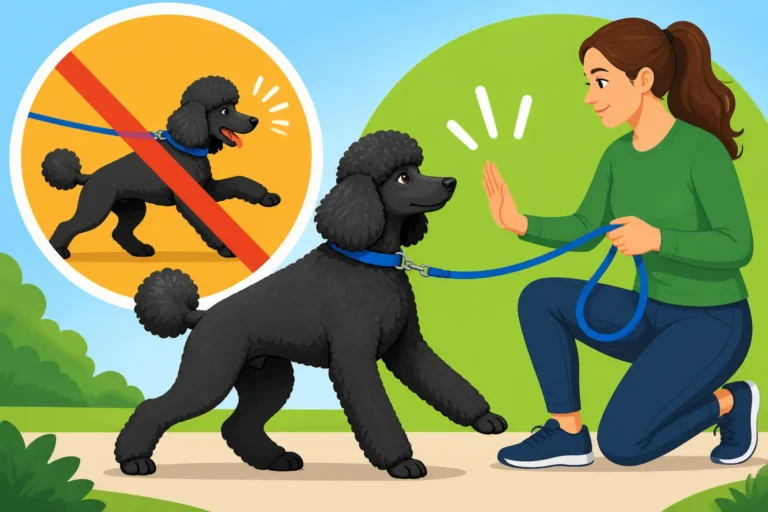
Dogs, even brilliant Poodles, are surprisingly contextual learners. They might learn a command perfectly in the quiet comfort of your living room, responding immediately every single time. However, take that same Poodle to a bustling dog park, or a new, noisy street, and suddenly, they seem to have forgotten everything you taught them. This isn't a memory lapse; it's a failure of generalization. Your Poodle has learned that "sit" means to put their bottom on the floor in the living room, with no distractions. They haven't yet connected "sit" to any environment, any distraction level.
This phenomenon explains why many owners feel their Poodle is inconsistent. The dog isn't being stubborn; they simply haven't had enough exposure and successful practice in a wide variety of settings to truly understand that a command is universal. This is where the nuance of training comes in. A Poodle might find Why a Poodle Invents Its Own Shortcuts to bypass a command if they don't fully grasp its broader application, or if they've only ever performed it in one specific way.
Unintentional Handler Errors and Inconsistent Cues
Let's be honest, sometimes the "disobedience" lies with us, the humans. We might inadvertently confuse our Poodles with inconsistent cues, unclear expectations, or even by unknowingly rewarding unwanted behaviors.
Consider these common scenarios:
- Nagging: Repeatedly saying "sit, sit, SIT!" before your Poodle finally complies teaches them that they don't have to listen until the third or fourth prompt.
- Variable Rewards: Sometimes you give a high-value treat, sometimes just a dry piece of kibble, sometimes nothing at all. This makes the reward unpredictable and less motivating.
- Accidental Reinforcement: Your Poodle barks for attention, and you respond by telling them to quiet down. Even negative attention is attention, reinforcing the barking.
- Emotional Cues: If you're stressed or frustrated, your Poodle might pick up on your tension, making them less likely to respond confidently. Reading a Poodle's Body Language is something they excel at, and your own body language or tone can inadvertently signal something different than your verbal cue.
It’s crucial to understand that Poodles thrive on clarity and consistency. If our communication isn't crystal clear, or our expectations are constantly shifting, it's unfair to expect 100% compliance. They are quick to learn patterns, both good and bad, and if the pattern is "sometimes I need to listen, sometimes not," that's what they'll learn.
Boredom, Lack of Motivation, or Stress
Poodles are intelligent dogs, and with intelligence comes the potential for boredom. If their training sessions are repetitive, unchallenging, or lack sufficient mental engagement, they might simply "check out." A Poodle's brain needs a job, and if the "job" is just endlessly repeating "sit-stay-come" without variety or a compelling reason, they can become disengaged. This is why Why a Bright Poodle Gets Bored is a real concern.
Furthermore, a Poodle might refuse a command if they are feeling stressed, anxious, or overwhelmed. Perhaps the environment is too loud, they're in pain, or they simply aren't feeling well. A sensitive Poodle, when scolded harshly or put in a situation they find frightening, might Why a Poodle Shuts Down When Scolded rather than continue to engage. It's important to differentiate between genuine refusal and a shutdown reaction due to emotional distress.
| Factor Contributing to "5% Disobedience" | Poodle's Internal Reasoning (Likely) | Solution |
|---|---|---|
| High-Value Distractions | "Squirrel! Must chase! Can't hear you!" | Gradual desensitization, higher value rewards, emergency recall training |
| Contextual Learning | "Sit means floor in kitchen, not grass in park." | Proofing commands in diverse environments |
| Inconsistent Cues/Nagging | "She'll say it again. I've got time." | One cue, one chance, immediate reward for response |
| Lack of Motivation/Boredom | "Why bother? This isn't fun or rewarding." | Vary rewards, increase challenge, incorporate games |
| Stress/Overwhelm | "Too much noise, too scary. I can't think." | Remove from situation, build confidence, lower expectations |
| Physical Discomfort | "My leg hurts when I sit like that." | Vet check, modify commands if needed |
Strategies to Bridge the Gap: Striving for Near-Perfect Reliability
While 100% obedience in every conceivable situation is an unrealistic goal for any living creature, you can certainly work towards making that 95% closer to 99%. It requires dedication, consistency, and a deep understanding of your Poodle’s unique blend of intelligence and sensitivity.
Consistent, High-Value Reinforcement
The foundation of stellar obedience lies in making compliance incredibly rewarding. For Poodles, who are highly motivated by pleasing their owners, positive reinforcement works wonders. This means consistently rewarding the behavior you want to see, especially when it’s challenging for them.
- Vary Your Rewards: Don't just stick to kibble. Sometimes it's a piece of chicken, sometimes a favorite squeaky toy, sometimes enthusiastic praise and a vigorous ear rub. High-value rewards are crucial for high-distraction environments. Consider keeping a small bag of special treats on hand for these moments; many can be found easily on Amazon.
- Timing is Everything: Deliver the reward within 1-3 seconds of the desired behavior. This instant feedback helps your Poodle clearly connect their action with the positive outcome.
- Fading, Not Eliminating, Rewards: While you might eventually Fading Rewards With a Quick-Learning Poodle as a behavior becomes second nature, never completely eliminate rewards. Poodles thrive on positive feedback, and occasional, unexpected high-value rewards keep them engaged and eager to respond. Think of it like getting a surprise bonus at work – it makes you feel valued.
Proofing and Generalization in Varied Environments
To teach your Poodle that a command means the same thing everywhere, you need to systematically proof the behavior. This involves practicing commands in increasingly distracting and varied environments.
- Start Simple: Begin in a quiet, familiar place with no distractions.
- Gradual Increase: Slowly introduce minor distractions (a toy on the floor, someone walking by in the distance).
- Change Locations: Practice in different rooms, then the backyard, then a quiet street, eventually moving to busier parks or pet-friendly stores.
- Vary the Handler: Have other family members give commands so your Poodle understands the cue, not just your specific voice or body language.
- Break It Down: If your Poodle struggles in a new environment, go back to basics. Can they perform a simpler command there? Reward heavily for any success. For a challenging command like recall in an open field, consider using a long line to Building Reliable Recall in a Standard Poodle safely.
Remember, each new context or distraction level is like a new learning opportunity for your Poodle. Be patient, keep sessions short and fun, and celebrate every little success.
Understanding Poodle Communication and Sensitivity
Poodles are sensitive dogs, and recognizing their signals is paramount to effective training. If your Poodle isn't responding, take a moment to assess the situation from their perspective.
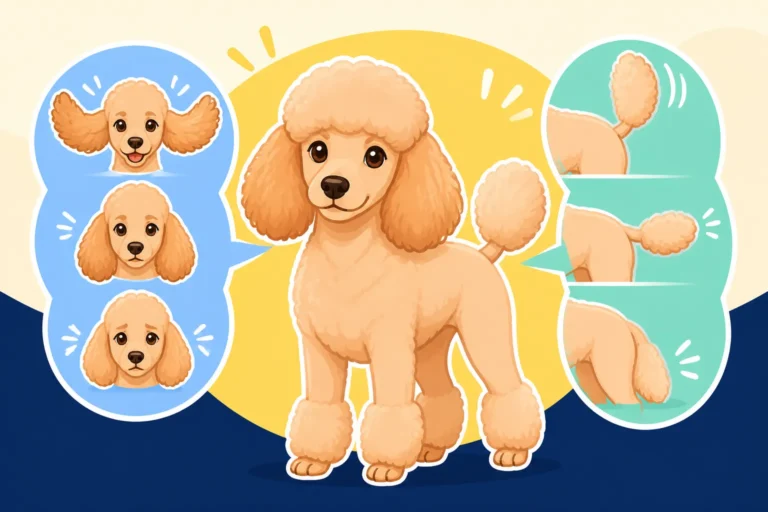
- Read Their Body Language: Are their ears flattened? Tail tucked? Are they yawning excessively, lip licking, or looking away? These can all be signs of stress or discomfort. If your Poodle is showing signs of anxiety, pushing them harder will likely be counterproductive. Take a step back, reduce the pressure, and ensure they feel safe.
- Respect Their Limits: Sometimes, a Poodle might genuinely be overstimulated or overwhelmed. Instead of demanding compliance, it's better to remove them from the stressful situation and try again later in a calmer environment. This builds trust and teaches them that you are their protector.
- Positive, Calm Demeanor: Your tone of voice and overall demeanor significantly impact your Poodle. A calm, encouraging voice is far more effective than a frustrated or angry one. Poodles are known to "sulk" or shut down if they perceive harshness, so positive reinforcement and gentle guidance are always the best approach.
Advanced Training and Mental Stimulation
For a Poodle, basic obedience is just the tip of the iceberg. To truly engage their brilliant minds and prevent boredom (which can lead to a lack of responsiveness), incorporate advanced training and mental enrichment into their daily routine.
- Dog Sports: Poodles excel in a wide variety of dog sports, from agility and obedience to rally, scent work, and even dock diving. Enrolling in classes can provide fantastic mental and physical outlets. Thinking about joining a club? Researching Agility Club Fees for a Poodle in your area can give you an idea of the commitment.
- Trick Training: Teaching your Poodle fun tricks like "roll over," "play dead," or even Trick Training a Poodle to fetch specific items is a wonderful way to keep their brains active and strengthen your bond. Many online resources, including comprehensive programs like those offered by BAXTER & Bella, can guide you through advanced trick training from the comfort of your home.
- Puzzle Toys and Games: Incorporate puzzle feeders and interactive toys that require your Poodle to think to get their treats. Nose work games, where they have to find hidden treats, are also incredibly stimulating and satisfying for them.
- "Jobs" Around the House: Give your Poodle simple "jobs" like carrying in the mail (if it's safe!), helping you retrieve items, or even "cleaning up" their toys. This fulfills their natural desire for purpose and partnership.
By providing consistent training, understanding their nuanced communication, and challenging their incredible intelligence, you can transform those occasional moments of "selective hearing" into rare occurrences. Your Poodle's 95% obedience is a testament to their brilliance and your bond; with a little extra effort, you can truly unlock their full potential and enjoy a companion who responds to your every word, almost every single time. After all, the joy of a Poodle is in the ongoing journey of learning and growing together.
Disclaimer
This article is for general informational purposes only and does not constitute professional advice. Laws, prices and regulations vary by location and change over time. Consult a qualified professional for guidance on your specific situation.