Building Reliable Recall in a Standard Poodle
One of the most heart-stopping moments for any Poodle owner is when you call your beloved Standard Poodle, expecting them to come bounding back, and instead, they simply… don't. Maybe they glance at you, maybe they pretend they didn't hear, or maybe they're off sniffing something utterly fascinating a hundred yards away. It’s frustrating, worrying, and downright dangerous in certain situations. This guide is here to help you understand why your intelligent Poodle might ignore you and provide a detailed, step-by-step approach to building a rock-solid, reliable recall that you can depend on, even when distractions abound.
Understanding the Poodle Mind and Recall Challenges
Let's be real: Poodles are ridiculously smart. This is a double-edged sword, especially when it comes to recall. Their intelligence means they learn incredibly fast, but it also means they can outthink you or decide that their agenda is more interesting than yours in the moment. It’s not spite; it's often a combination of natural instincts and a keen sense of what's rewarding.
Why a Poodle Might Choose Not to Come
It’s easy to feel personally offended when your Poodle, who otherwise adores you, acts deaf to your calls. But for a Poodle, the world is full of incredible stimuli. That rustling bush might hold a squirrel, that distant scent could be a rabbit, or that patch of grass simply smells like the most fascinating thing ever. Standard Poodles, in particular, were bred as water retrievers, meaning they have a strong innate drive to investigate, chase, and explore. This instinct can easily override your pleas if you haven't made coming back to you the absolute best decision they can make.
Think about it from their perspective. You call, and maybe they get a quick pat on the head or a boring piece of kibble. Compare that to the thrill of a chase or the discovery of a new, exciting smell. The reward has to be consistently, overwhelmingly better than whatever distraction is vying for their attention. A Poodle's intelligence means they're constantly calculating the cost-benefit analysis of their actions. If the "benefit" of ignoring you outweighs the "cost" (a mild disappointment from you), they'll make that choice every time. This is where many owners get frustrated, feeling like their Poodle is being deliberately naughty, when in reality, they're just being a Poodle. They are capable of Why a Poodle Invents Its Own Shortcuts, and recall can easily become one of those areas if we're not careful.
Setting the Foundation for Success
Before you even utter the word "come," you need to establish a strong, positive relationship with your Poodle. This means they see you as the source of all good things—food, fun, comfort, and safety. Building this bond is the bedrock of reliable recall. Start training in a quiet, distraction-free environment, like your living room or a securely fenced yard. The goal here isn't to test their recall in a challenging situation, but to make the act of coming to you a joyful, instinctual response.
Every interaction should be a positive reinforcement opportunity. When your Poodle looks at you, acknowledge it. When they come near, reward it. This constant positive feedback builds a history of good experiences associated with your presence. Remember, Poodles are eager to please when they understand what you want and find it rewarding. They can often Why Poodles Learn a Cue in Five Repetitions, but that only applies if the lesson is clear and consistently reinforced in a way that truly motivates them. Never punish your Poodle for not coming, as this will only teach them that returning to you is unpleasant, making them even less likely to respond in the future.
Step-by-Step Recall Training: From Basics to Brilliance
Building a reliable recall isn't a one-and-done process; it's a journey of consistent, positive training that slowly introduces distractions. Let's walk through it.
The "Come" Command: Making It Irresistible
Your recall cue needs to be distinct and always associated with something amazing. Don't use your Poodle's name followed by "come" unless their name itself is your cue. Choose a unique word like "here," "front," or "touch." I personally like "cookies!" (yes, literally), because it immediately signals an exciting reward is coming.
Start indoors. Get down on their level, perhaps with a high-value treat (think cooked chicken, cheese, or specialized training treats) or their absolute favorite squeaky toy. Say your recall word enthusiastically, and as soon as they take a step toward you, celebrate like they've won the lottery. Praise them effusively, give them the high-value reward, and maybe even have a quick play session. The key is to make returning to you a mini-party. Don't just give the treat and release them; hold onto them for a moment, offer more praise, or even ask for another simple command they know (like "sit") before letting them go. This prevents them from thinking "come = one treat, then I'm free."
Once they're reliably coming indoors, introduce a long line. An Amazon search for "dog long line" will give you plenty of options, usually 15 to 30 feet long. This gives you a safe way to practice with a bit more distance and control. Let your Poodle wander a short distance, then call them. If they hesitate, gently reel them in while continuing to use your enthusiastic recall word. Reward them the moment they reach you. This teaches them that resisting the recall isn't an option, but coming is always rewarded. You'll find more detailed guidance on Long Line Work With a Poodle to ensure safety and effectiveness.
Gradually Increasing Distractions
This is where many owners rush, and then get frustrated when their Poodle fails. You must increase distractions incrementally.
- Your Fenced Yard: Start in your secure yard. Let them sniff around, then call them. If they succeed, great! If not, gently use the long line. Reward heavily. Repeat this in different spots in the yard.
- Mild Outdoor Distractions: Move to a slightly more distracting environment, but still controlled. Perhaps a quiet park early in the morning, still on the long line. Have a friend walk by at a distance, or a non-reactive dog pass by far away. Call your Poodle before they become too fixated. The goal is to set them up for success, not failure. If they ignore you for a squirrel, you've moved too fast. Go back to a less distracting environment.
- Introducing New Stimuli: Once they’re solid with mild distractions, you can gradually introduce more. Maybe a ball rolling past, a child playing at a distance, or another calm dog. Again, always use the long line for safety. If your Poodle gets really excited by other dogs, consider having a trusted, calm canine friend join your training sessions at a distance, slowly closing the gap as your Poodle's recall improves. This stage is crucial to ensure they don't develop the habit of thinking Why a Poodle Ignores You in an Open Field.
Remember to keep training sessions short, fun, and frequent. A few minutes several times a day is more effective than one long, boring session. Always end on a positive note.
Proofing and Real-World Application
"Proofing" means practicing recall in every imaginable scenario, so your Poodle understands that "come" means "come," no matter what.
- Vary Locations: Practice in parks, trails, friends' yards, even busy urban areas (on-leash or long line, of course). The more places your Poodle experiences successful recalls, the more ingrained the behavior becomes.
- Vary People: Have different family members practice the recall. This teaches your Poodle that "come" isn't just a command from you, but a universal signal from anyone they trust.
- Randomness is Key: Don't always call your Poodle when they're running away. Call them when they're close, when they're sniffing, when they're looking at you, or even when they're already headed in your direction. This makes the recall less predictable and reinforces the idea that it could happen at any time, for any reason, so they should always be ready.
- The Surprise Reward: Occasionally, when your Poodle comes, give them an even better treat than usual, or a short burst of their favorite game. This keeps them guessing and highly motivated, ensuring they don't become complacent, which can happen with intelligent dogs. This ties into the concept of Fading Rewards With a Quick-Learning Poodle, but you never want to fully fade them for recall; always keep it highly valuable.
Troubleshooting Common Recall Problems
Even with the best intentions, you might hit some roadblocks. It's totally normal, especially with a clever breed like a Standard Poodle.
When Your Poodle Ignores You Entirely
If your Poodle completely blows you off, it's a clear sign that the distraction level is too high, or your reward isn't motivating enough. Don't get angry or frustrated; that will only make things worse. Why a Poodle Shuts Down When Scolded is a very real thing, and it can actively damage your training progress.
Go Back to Basics: Seriously, go back to your living room. Make recall incredibly easy and incredibly rewarding again. Build up that positive association. Re-evaluate your treats: are they truly high-value? Sometimes a Poodle can become bored with the same old treat. Try novelties like boiled chicken, bits of cheese, or even small pieces of hot dog. For some Poodles, a favorite toy is even more motivating than food.
The Long Line is Your Friend: If you're outdoors, use that long line. It's not a crutch; it's a training tool. It prevents your Poodle from practicing the bad habit of ignoring you and ensures you can always enforce the "come" in a gentle, positive way, leading to a reward. Never chase your Poodle if they don't come; that turns it into a fun game for them. Instead, use the long line to calmly bring them to you.
The "Catch Me If You Can" Game
Ah, the Poodle play-bow, a quick dash, and then they're off again. This is a classic Poodle move. They're trying to engage you in a game, but it's dangerous when you need them to come for real.
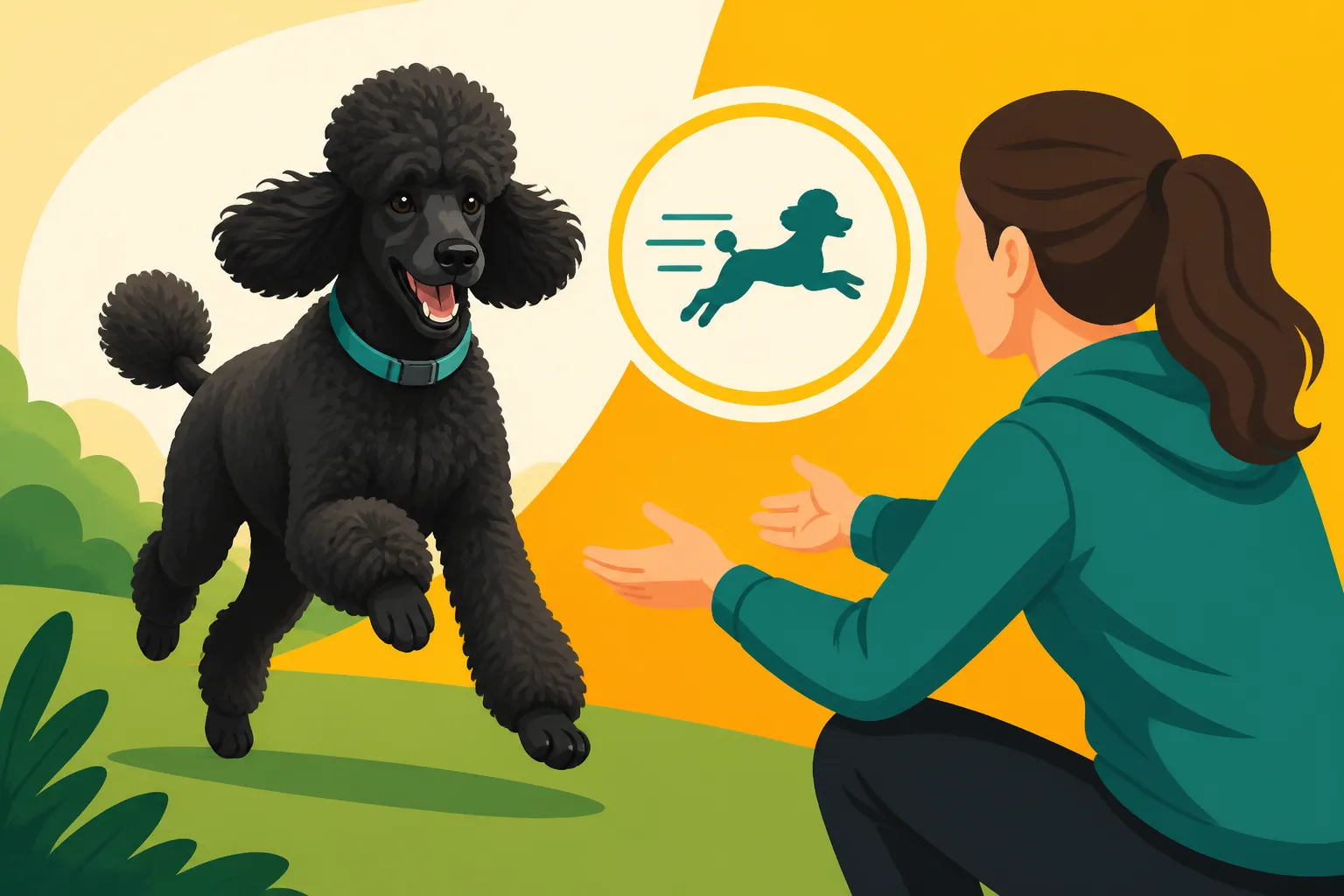
Break the Cycle: When they play "catch me," avoid chasing. Instead, try changing directions and running away from them, calling their name enthusiastically. Poodles often have a strong desire to stay with their people, and seeing you move away can pique their curiosity and herd instinct. When they catch up, reward them heavily. Another trick: drop to one knee. This makes you seem less threatening and more inviting, especially if you have a treat in hand. The goal is to make you the most interesting thing in the park, not the game of evasion.
Never Punish the Return: Even if you've had to walk over and gently grab your Poodle from a distant sniff, still reward them when they finally get to you. Don't scold them. The moment they're within reach and returning, that's when the praise and treats should flow. If you scold them, they'll associate coming back with negative feelings, making them less likely to return next time.
Integrating Recall into Daily Life
Reliable recall isn't just for emergencies; it's a command that can enrich your daily life together.
- Frequent, Mini Recalls: Throughout the day, randomly call your Poodle to you. Reward them. Then let them go back to whatever they were doing. This keeps the command fresh and positive without always leading to the end of fun. Call them for dinner, to come sit on the couch, or for a quick game.
- Recall for Fun: Link recall to highly desirable activities. Call them to come play fetch, to get their favorite toy, or to go for a car ride. This further reinforces that coming to you leads to good things.
- Online Resources: If you feel stuck, consider structured online training programs. Platforms like BAXTER & Bella offer comprehensive puppy and dog training programs that include recall, often with live support and step-by-step videos. Sometimes a fresh perspective or a structured curriculum can make all the difference. Remember, a Poodle's brain needs a challenge, and training offers a fantastic way to give them Why a Poodle Needs a Job Rather Than a Walk.
Recall Training Progress Chart
To help you visualize and track your Poodle's recall progress, here's a simple chart. Remember to be honest about your Poodle's current stage and don't rush through the steps!
| Stage | Environment & Distractions | Tools Needed | Reward Type | Goal for this Stage |
|---|---|---|---|---|
| 1. Foundation | Indoors, quiet, no distractions | None | High-value treats, favorite toy, enthusiastic praise | Poodle understands "come" = party & reward |
| 2. Short Distances | Indoors, slightly larger space (e.g., hallway), very minimal household noise | None, or short house line | High-value treats, quick play, enthusiastic praise | Poodle comes reliably from 5-10 feet away |
| 3. Controlled Outdoor | Secure fenced yard, no external distractions | Long line (15-20 ft) | High-value treats, short play, enthusiastic praise | Poodle comes reliably from full long-line distance in yard |
| 4. Mild Distractions | Quiet park/field, distant sounds, people passing far off | Long line (20-30 ft) | Very high-value treats, excited play, enthusiastic praise | Poodle chooses you over distant, mild distractions |
| 5. Moderate Distractions | Park with other dogs/people, walking paths | Long line (30+ ft) or secure long-line field | Consistently varied & very high-value treats, engaged play | Poodle prioritizes your call over visible, closer distractions |
| 6. Proofing | Varied locations, busier parks, trails, new smells | Long line (safety first!), but aim for off-leash in safe zones | Unpredictable, rotating highest-value treats/toys, "jackpot" rewards | Poodle consistently comes in diverse, real-world scenarios |
This table serves as a general guide. Your Poodle might fly through some stages and need more time on others. The key is to be patient, persistent, and always, always positive.
Building a reliable recall is one of the most important things you can do for your Standard Poodle's safety and your peace of mind. It takes time, consistency, and a deep understanding of your Poodle's clever, sometimes mischievous, nature. But with dedication, you’ll foster a bond of trust and communication that makes every outing a joy, knowing your Poodle will always choose to come home to you.
Disclaimer
This article is for general informational purposes only and does not constitute professional advice. Laws, prices and regulations vary by location and change over time. Consult a qualified professional for guidance on your specific situation.