Crate Size for Each Poodle Variety
One of the trickiest parts of bringing a new Poodle puppy or even an adult rescue into your home is figuring out the perfect crate size. It might seem like a straightforward decision – just get a box, right? But oh, it's so much more nuanced than that. Too big, and your smart Poodle might decide one end is for sleeping and the other is for "business," completely undermining your potty training efforts. Too small, and it becomes a cruel cage rather than a safe, cozy den, leaving your sensitive companion feeling anxious and trapped. Getting it just right is crucial for their comfort, safety, and your sanity during those vital early training days and beyond. This guide will walk you through everything you need to know to select the ideal crate size for every Poodle variety, ensuring a happy, well-adjusted companion.
Why Crate Size Matters Beyond Just Comfort
It's easy to think of a crate as just a box for your dog, but for Poodles, who are intelligent and inherently den-oriented, it becomes their personal sanctuary. The dimensions aren't just about whether they can fit; they're about fostering good habits, preventing accidents, and providing a genuine sense of security. Skimping on this detail can lead to more problems down the line than you'd ever anticipate.
The Potty Training Connection
This is where many new Poodle owners get tripped up. Poodles, like most dogs, have a natural instinct not to soil their sleeping area. A correctly sized crate capitalizes on this instinct by being just large enough for your Poodle to stand up, turn around, and lie down comfortably. If the crate is too big, say, a Standard Poodle puppy in an adult-sized crate without a divider, they'll often designate one corner as their bathroom and the rest as their bed. This entirely defeats the purpose of the crate as a potty training aid and can create a really tough habit to break. You’ll be scrubbing out the crate instead of celebrating successful outdoor potties. Conversely, a crate that is too small might force them to lie in their own waste, leading to immense stress and an aversion to the crate itself. It’s a delicate balance that directly impacts the ease of house training, particularly for a breed as fastidious as a Poodle.
Safety and Security
Beyond potty training, the right crate size is a matter of safety and providing a secure haven. Poodles are known for their sensitivity and intelligence, and a properly sized crate becomes their quiet retreat from the bustling household or a safe space when you can't supervise them directly. A crate that's too large could allow a small puppy to get jostled around too much during travel, or even give them enough space to get their paw stuck in a wire opening if they try to squeeze into a corner. For a Poodle, their crate should feel like a cozy cave, not a wide-open field where they might feel exposed or vulnerable. This secure feeling is especially important when Crate Training a Poodle That Wants Company or trying to settle them down for the night. It's a place where they can truly relax and feel protected, reducing anxiety and promoting a calm demeanor, which is a blessing in any Poodle household.
Sizing for Each Poodle Variety: Standards, Miniatures, and Toys
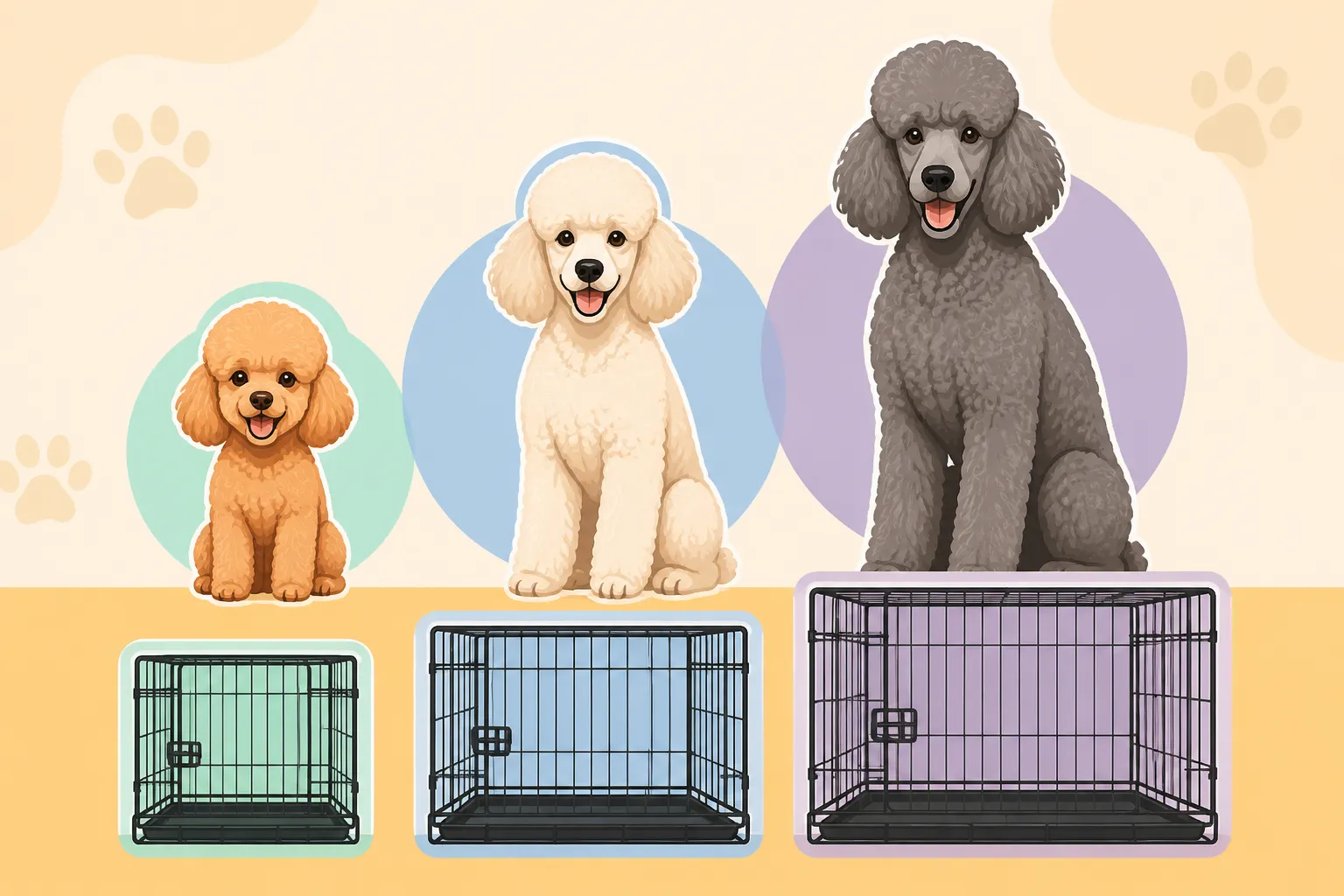
Poodles come in three distinct sizes, and naturally, their ideal crate dimensions vary significantly. What works for a tiny Toy Poodle will be utterly inadequate for a majestic Standard. It’s not just about their full-grown size; you also have to consider their puppy stage, especially with breeds that grow as rapidly as Standard Poodles.
Standard Poodle Crate Dimensions
Standard Poodles are magnificent dogs, often weighing between 40-70 pounds and standing over 15 inches tall at the shoulder. Their crates need to accommodate this impressive stature. For an adult Standard Poodle, you're typically looking at a crate that is around 42 inches long, 28 inches wide, and 30-32 inches high. This provides ample room for them to stretch out, stand up comfortably without hunching, and turn around without feeling cramped.
However, if you're bringing home a Standard Poodle puppy, this full-sized crate will be far too big initially. This is where crate dividers become your best friend. A puppy in a massive crate will almost certainly have accidents inside. You'll want to start with just enough space for them to stand, turn, and lie down. As they grow—and Why Standard Poodle Puppies Grow So Fast will quickly become apparent—you gradually move the divider to expand their living area. Investing in a good quality wire crate that comes with a divider from a reputable retailer like Amazon can save you from buying multiple crates as your Poodle grows. Remember, the goal is to make the crate feel like a secure den, not a giant playpen.
Miniature Poodle Crate Dimensions
Miniature Poodles hit that sweet spot in size, usually weighing 10-15 pounds and standing 10-15 inches tall. They're big enough to be sturdy but small enough to be portable. For an adult Miniature Poodle, a crate around 30 inches long, 19 inches wide, and 21-23 inches high is often ideal. This gives them enough space to move without feeling lost in a cavernous space.
Much like their Standard counterparts, Miniature Poodle puppies will also benefit from a divider in their adult-sized crate. While their growth isn't as dramatic, ensuring the crate is appropriately sized for their current stage helps immensely with House Training a Toy Poodle (as Miniature Poodles share some similar early bladder control considerations). You want them to feel snug and secure, encouraging them to hold their bladder until they are outside. A well-fitted crate for a Mini Poodle means they can stand up fully without their head touching the top, turn a complete circle, and lie down comfortably in various positions.
Toy Poodle Crate Dimensions
Ah, the charming Toy Poodle! These tiny bundles of joy typically weigh between 4-6 pounds and stand under 10 inches tall. Their crates need to reflect their petite stature. For an adult Toy Poodle, a crate that is approximately 18-22 inches long, 12-14 inches wide, and 14-16 inches high is generally appropriate. This might seem small, but for a Toy Poodle, it's their palace.
It's tempting to give a tiny puppy more space, but resist the urge! Even a Toy Poodle puppy needs a snug fit for effective potty training. For a small puppy, you might even start with an 18-inch crate and not need a divider. However, if you purchase a 22-inch crate to accommodate slight growth or if your puppy is particularly small, a divider could still be beneficial. Considerations like Bladder Size in a Toy Poodle Puppy mean they'll need frequent potty breaks, and a correctly sized crate helps reinforce the idea of holding it between those trips outside. When selecting a crate for a Toy Poodle, also think about portability. Many owners travel frequently with their Toy Poodles, so a lightweight option they can easily transport is a huge plus.
Here's a quick reference table for general adult Poodle crate sizes:
| Poodle Variety | Approximate Weight | Approximate Height (Shoulder) | Suggested Crate Length | Suggested Crate Width | Suggested Crate Height |
|---|---|---|---|---|---|
| Toy Poodle | 4-6 lbs | Under 10 inches | 18-22 inches | 12-14 inches | 14-16 inches |
| Miniature Poodle | 10-15 lbs | 10-15 inches | 24-30 inches | 17-19 inches | 19-21 inches |
| Standard Poodle | 40-70 lbs | Over 15 inches | 36-42 inches | 24-28 inches | 26-30 inches |
Note: These are general guidelines. Always measure your individual Poodle to confirm the best fit.
Choosing the Right Crate Features and Types
Once you have a handle on the ideal size, it's time to consider the different types of crates available and what features will make your Poodle's den truly perfect. Each type has its own pros and cons, and your Poodle's personality and your lifestyle will play a big role in the best choice.
Crate Types: Wire, Plastic, and Soft-Sided
- Wire Crates: These are perhaps the most popular choice for Poodle owners, especially for puppies. They offer excellent ventilation, which is important for Poodles with their dense coats, preventing them from getting too hot. The open design allows your Poodle to see what's happening around them, which can be comforting for a breed that often likes to be involved. Many wire crates come with adjustable dividers, making them perfect for growing puppies. They're durable and easy to clean, too. The downside for some sensitive Poodles might be feeling a bit too exposed, but a crate cover can easily fix this, transforming it into a cozy den.
- Plastic Crates (or Airline-Style): These crates offer a more den-like, enclosed feel, which some Poodles absolutely adore. They're often sturdier for travel, especially for flying, and provide a sense of security that can be very calming for anxious dogs. The solid sides block more drafts and reduce visual stimuli, which can be great for Poodles prone to Poodle Alarm Barking or those who get overstimulated easily. However, they offer less ventilation than wire crates, so ensure your Poodle doesn't overheat, especially in warmer climates. They also tend to be bulkier and don't usually come with dividers.
- Soft-Sided Crates: These are fantastic for travel, outdoor events, or as a cozy secondary den once your Poodle is fully house-trained and past the chewing stage. They're lightweight, collapsible, and often quite attractive. However, they offer no chew protection whatsoever. A Poodle puppy or an adult with separation anxiety could easily rip through one of these, rendering it useless and potentially ingesting fabric. Use these only for Poodles who are reliably crate-trained and non-destructive. They're a great choice for a quiet Toy Poodle who travels often, perhaps tucked under a table at an obedience trial.
Adjustable Dividers and Grow-With-Me Options
For Poodle puppies, adjustable dividers are non-negotiable. Instead of having to buy multiple crates as your Poodle grows from a tiny fluffball to a full-grown dog, a single crate with a divider allows you to expand their space gradually. This not only saves you money but also provides consistency for your Poodle. Brands available on platforms like Amazon often highlight this feature, making it easy to find a "grow-with-me" option. This flexibility is particularly useful for Standard Poodles, who undergo significant growth in their first year. Starting with a 42-inch crate and a divider allows you to give them just a small section, maybe 20 inches, and then gradually expand it every few weeks or months as they master their potty training and grow into their adult size.
Accessories for Comfort and Safety
Once you have the right-sized crate, accessorizing it correctly is the next step to making it a true haven.
- Crate Pads/Beds: A comfortable, washable crate pad makes the crate much more inviting. Choose one that fits snugly without leaving gaps your Poodle might try to dig into. For chewers, look for durable, chew-resistant options or start with just a few soft blankets you don't mind getting replaced.
- Water Bowls: Depending on how long your Poodle will be in the crate, a water bowl that attaches to the side is essential. This prevents spills and ensures they stay hydrated.
- Toys and Chews: Provide a safe, durable chew toy or puzzle feeder to keep your Poodle occupied and create positive associations with their crate. This is particularly helpful for smart Poodles who need their Mental Work That Tires a Poodle. Just ensure the toy is appropriate for their size and cannot be chewed into small, ingestible pieces.
- Crate Cover: As mentioned, a cover can transform a wire crate into a cozy, den-like space, reducing visual distractions and helping your Poodle feel more secure. This can be especially beneficial for Poodles who tend to be more sensitive or easily overstimulated.
Practical Tips for Crate Success
Beyond just picking the right box, how you introduce and use the crate makes all the difference in whether your Poodle sees it as a punishment or a cherished personal space. A Poodle's intelligence and sensitive nature mean they respond best to positive, consistent training methods.
Measuring Your Poodle Accurately
Don't just guess or rely solely on breed averages. Every Poodle is an individual! Here’s how to measure your Poodle for the perfect crate fit:
- Measure Length: Have your Poodle stand comfortably. Measure them from the tip of their nose to the base of their tail (not the tip, as some Poodles have docked tails that shouldn't dictate crate length). Add 2-4 inches to this measurement. This is your minimum internal crate length.
- Measure Height: Have your Poodle sit. Measure from the top of their head to the ground. Add 2-4 inches to this measurement. This is your minimum internal crate height. They should be able to stand without hunching and sit without their head touching the top.
- Turning Room: Ensure the chosen crate width allows them to turn around comfortably without hitting their nose or tail on the sides. While not a direct measurement, it's a critical visual check.
These measurements ensure your Poodle has enough space to be comfortable without having so much room that they're tempted to use a corner as a potty spot.
Making the Crate a Happy Place
For a Poodle, the crate should be a positive experience from day one. Never use it for punishment. Instead, associate it with good things:
- Treats and Toys: Toss high-value treats and favorite toys inside the crate.
- Meal Times: Feed your Poodle meals inside the crate with the door open initially, then gradually with the door closed for short periods.
- Short, Positive Stays: Start with very short periods in the crate, even just a few minutes, while you are nearby. Gradually increase the duration as your Poodle relaxes.
- Positive Reinforcement: When your Poodle is calmly resting in the crate, praise them gently or offer a quiet treat. Never force them in.
- Training Resources: Utilizing online resources or trainers that advocate positive reinforcement, such as those found through programs like BAXTER & Bella, can significantly help make the crate a positive space. Their methodologies often focus on building confidence and making training fun, which is perfect for intelligent Poodles who might otherwise invent Why a Poodle Invents Its Own Shortcuts to avoid something unpleasant. A strong training foundation built on trust will make crate training much smoother.
When to Upgrade or Adjust
Your Poodle's needs will change over time. Be vigilant for signs that the crate size needs adjusting:
- Puppy Growth: Regularly check if your puppy still has enough room to stand, turn, and lie down comfortably. If they're bumping their head or can no longer stretch out, it's time to adjust the divider or, if you didn't use one, get a larger crate. When a Standard Poodle Stops Growing can vary, but their rapid early growth means frequent checks are necessary.
- Adult Comfort: An adult Poodle who once loved their crate might suddenly seem restless or cramped. If they're struggling to find a comfortable sleeping position, or if their tail gets accidentally caught, it might be time for a slightly larger model.
- Behavioral Changes: If your previously crate-trained Poodle suddenly starts having accidents in the crate or showing reluctance to enter, it's worth assessing if the crate has become too small or if there are other underlying issues. For example, a Toy Poodle with Cognitive Decline in an Old Poodle might struggle with bladder control and require adjustments to their routine, not necessarily a larger crate.
- Life Changes: Moving to a new home or changes in routine might mean a different crate setup is needed. A Poodle's sensitivity means they thrive on predictability, so maintaining their safe den is paramount during transitions.
Choosing the right crate size for your Poodle isn't just about buying a piece of equipment; it's about providing a secure foundation for their training, safety, and emotional well-being. Take the time to measure, observe, and adjust, and you'll be giving your Poodle a gift they'll truly appreciate – their very own perfect den.
Disclaimer
This article is for general informational purposes only and does not constitute professional advice. Laws, prices and regulations vary by location and change over time. Consult a qualified professional for guidance on your specific situation.