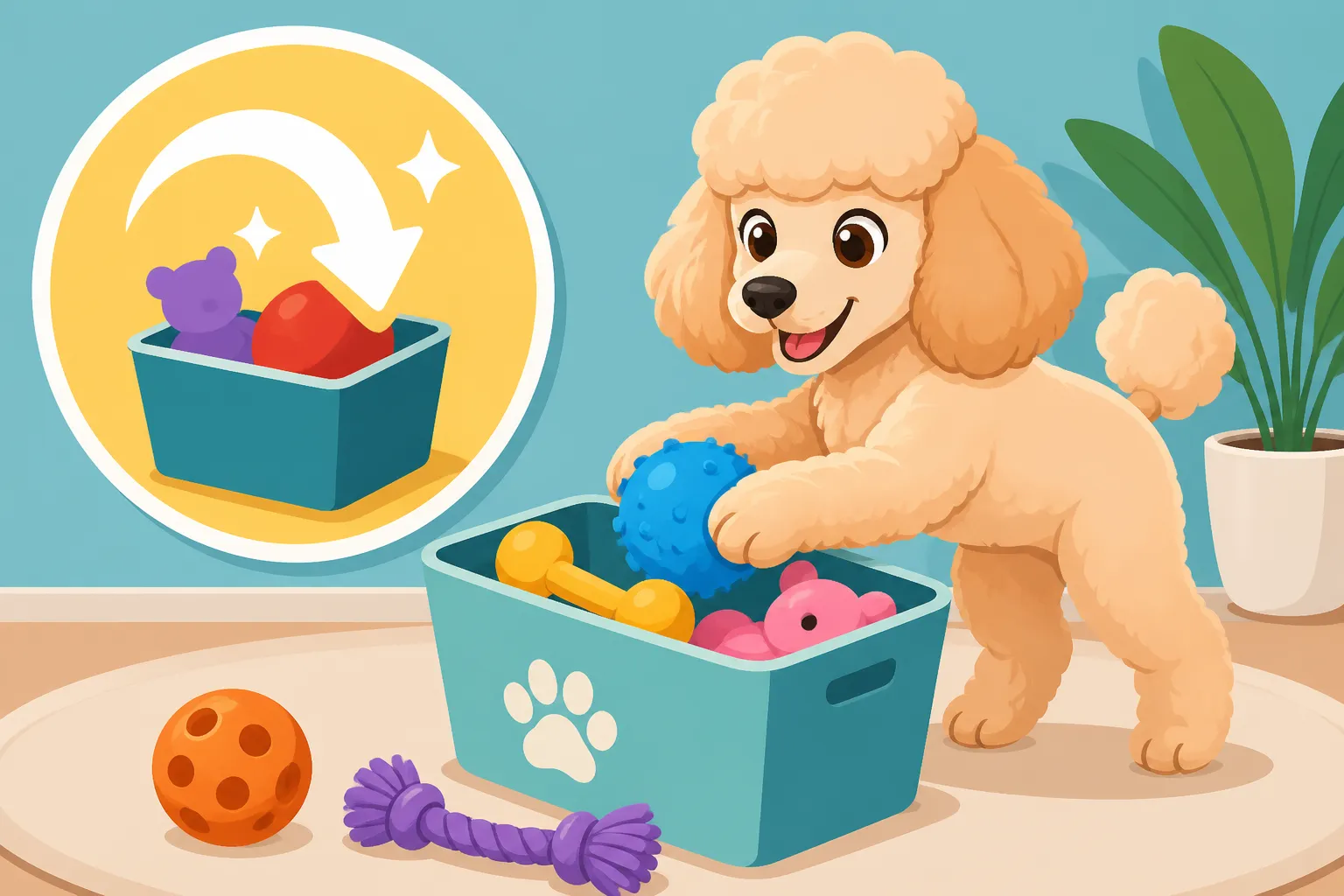
Teaching a Poodle to Put Toys Away
Few things are as endearing as a Poodle, with their brilliant minds and mischievous charm. But let's be real, that cleverness often translates into a house littered with every single toy they own, scattered from the living room to the back door. It’s a common frustration for Poodle parents – you love their playful spirit, but you also trip over a squeaky hedgehog at least three times a day. This guide isn't just about achieving a tidier home, though that's a lovely bonus; it’s about channeling your Poodle's incredible intelligence and natural retrieving instincts into a fun, rewarding, and deeply engaging "job" that will make both your lives richer.
Why Teaching Your Poodle to Tidy Up is a Game-Changer
Poodles are celebrated for their intelligence, often ranking incredibly high on lists of smart dog breeds. But with great brains come great needs! An under-stimulated Poodle can quickly become a bored Poodle, and a bored Poodle can sometimes be a destructive Poodle. Teaching them to put their toys away isn't just a cute party trick; it's a profound way to engage their minds and bodies, offering benefits far beyond a clean floor.
Tapping into Poodle Intelligence and Drive
Let's face it, Poodles were originally bred as water retrievers, which means they have an innate drive to carry objects in their mouths and bring them back. This historical purpose gives us a fantastic starting point for teaching a "put away" command. They want to work, they want to solve puzzles, and they absolutely thrive on having a designated task. Simply walking around the block isn't always enough for these brilliant dogs; their minds need to be challenged just as much as their bodies.
Think about it from their perspective: fetching a toy is fun, but what happens next? Usually, it's just left on the floor. Teaching them to put it in a specific place adds a layer of complexity and purpose. It transforms a simple retrieve into a multi-step problem-solving exercise, which is exactly the kind of mental stimulation a Poodle craves. It stops them from feeling that familiar Poodle boredom that can lead to less desirable behaviors, giving them a meaningful outlet for their boundless energy and intellect. This kind of engagement goes a long way in preventing behavioral issues that stem from a dog feeling under-utilized. It's a fantastic way to bond and build confidence, too. You might even find your Poodle picking up on the intention before you've fully given the cue, a common trait for these quick learners. Why a Bright Poodle Gets Bored
The Benefits Beyond a Tidy Home
While a cleaner living room is certainly a perk, the advantages of teaching your Poodle to tidy up stretch much further. This isn't merely about training; it's about enriching their lives and strengthening your relationship. When your Poodle learns to understand and execute a multi-step command like "put away," their confidence soars. They feel a sense of accomplishment, and that positive feeling translates into a happier, more well-adjusted dog.
This kind of complex training also reinforces your bond. You become their guide, their teammate in solving a fun puzzle. The consistent, positive interaction during training builds trust and mutual respect. Moreover, by giving your Poodle a "job," you're actively preventing potential behavioral problems. A Poodle that is mentally stimulated is less likely to engage in destructive chewing, excessive barking, or other attention-seeking behaviors that often arise from boredom. If you've ever wondered What a Poodle Does When Its Brain Is Idle, you'll quickly learn that a lack of mental exercise can lead to them inventing their own jobs, which might involve shredding your mail or reorganizing your sofa cushions! Training is an investment in their overall well-being and a calmer household.
A Step-by-Step Guide to the "Put Away" Command
Teaching your Poodle to put away their toys is a process that builds on foundational skills, much like learning to read before writing. Patience, consistency, and positive reinforcement are your best friends here. Don't rush; celebrate every tiny success.
Foundation Skills: "Take It" and "Drop It"
Before your Poodle can put a toy into a bin, they need to master picking it up and releasing it on command. These are crucial building blocks.
Teaching "Take It": Start with a toy your Poodle loves, or a treat. Hold it out and as soon as your Poodle's mouth touches or grasps the toy, say "Take It!" and immediately reward them with praise and a high-value treat. Repeat this many times. You want them to associate the verbal cue with the action of picking something up. Keep sessions short and fun, especially for a young Poodle. Remember, The Age a Poodle Puppy Starts Learning is quite young, so you can start these basics early.
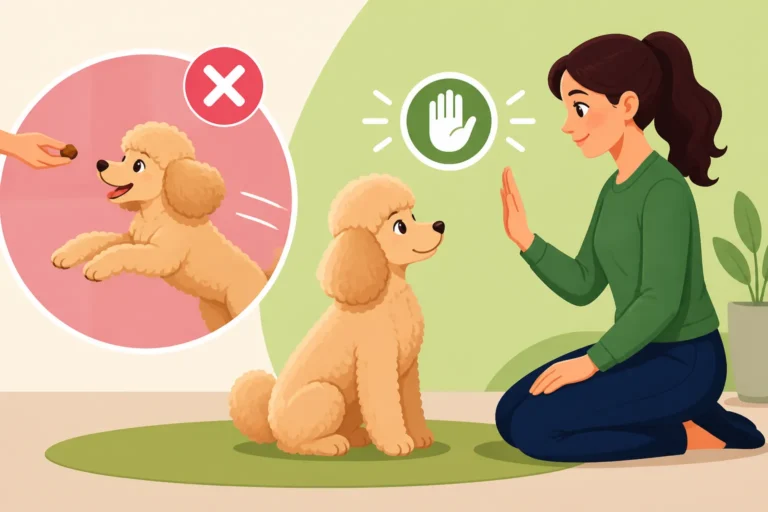
Teaching "Drop It": Once they reliably "take" the toy, you'll teach "drop it." When your Poodle has the toy in their mouth, hold a super high-value treat right near their nose. The moment they open their mouth to investigate the treat and the toy falls, say "Drop It!" and give them the treat. Immediately pick up the toy so they don't re-grab it. Practice this over and over, always making the "drop" financially beneficial for your Poodle. Eventually, they’ll understand that dropping the toy means a reward.
Introducing the "Bin" and the "Put Away" Cue
Now that your Poodle understands picking up and dropping, it’s time to introduce the concept of the "toy bin."
- Choose the Right Bin: Select a toy bin that's easy for your Poodle to access. It shouldn't be too tall, and it should have a wide opening. A low, sturdy basket or a fabric bin is often ideal. You can find many suitable options on Amazon, perhaps a collapsible fabric bin that's easy for them to reach into.
- Start Close and Simple: Place the bin directly in front of your Poodle. Hold one of their favorite toys. Give the "Take It!" command. As soon as they have the toy, hold it over the bin and give your "Drop It!" command. As the toy falls into the bin, enthusiastically say "Put Away!" and offer a jackpot of treats and praise. Repeat this several times, making it clear that dropping the toy into the bin is the magic action.
- Luring into the Bin: Once they grasp dropping into the bin, try this: Place a toy near the bin. Give "Take It!". Then, with the toy in their mouth, use a treat to lure their head over the bin. As their head (and the toy) is over the bin, give "Drop It!" or "Put Away!" and reward generously when the toy lands inside. Over time, you can fade the lure. Many online training platforms, such as BAXTER & Bella, offer video tutorials that can visually guide you through these steps, which can be incredibly helpful for visual learners (both human and canine!).
Generalizing the Behavior and Adding Distance
With the basics down, it’s time to make the "Put Away" command a true skill, not just a static trick. This means practicing in different environments, with varying distances and multiple toys.
- Increase Distance Gradually: Start by placing the toy a foot or two from the bin. Give the "Take It!" command, then encourage your Poodle to carry the toy to the bin for the "Put Away!" command. Slowly increase the distance between the toy and the bin. Remember to keep it positive and rewarding. If they struggle, go back a step.
- Add More Toys: Once they are reliably putting one toy away from a distance, introduce a second toy. Give "Take It!" and "Put Away!" for the first toy, reward, then move to the second. Gradually, you can ask them to put away several toys in a row before receiving their final jackpot reward.
- Practice in Different Rooms: Poodles are smart, but they need to learn that a command applies everywhere, not just in the living room. Practice "Put Away!" in different areas of your home. This helps them generalize the behavior. How Long a Poodle Training Session Should Run should still be kept brief – 5 to 10 minutes at a time is often plenty for these bright but easily bored dogs.
Overcoming Common Hurdles and Advancing the Skill
Even with the smartest Poodles, you might hit a snag or two. Don't get discouraged! It's all part of the learning process.
Dealing with Reluctance or Distraction
Sometimes, your Poodle might seem reluctant, or they might get easily distracted. This is where your patience and problem-solving skills come into play.
- Make it More Rewarding: If your Poodle seems uninterested, are your treats exciting enough? Try higher-value treats, or a favorite squeaky toy as a reward. Make the "Put Away" game the best thing ever! Perhaps a special treat found on Amazon could be just the ticket.
- Break it Down Further: If they're struggling, you might have asked for too much too soon. Go back to a simpler step. For example, if they won't carry the toy to the bin, practice just dropping the toy near the bin, then work on dropping into the bin again.
- Manage Distractions: Start training in a quiet room with minimal distractions. As they get better, gradually introduce more environmental stimuli. If your Poodle is prone to Why a Poodle Invents Its Own Shortcuts during training, ensure your cues are clear and your setup minimizes opportunities for them to get creative in ways that don't lead to the desired outcome. Remember to reward the correct path, not just any solution!
- Check for Understanding: Sometimes, reluctance isn't stubbornness but a lack of understanding. Observe their body language. Are they confused? Try re-teaching a specific step from scratch.
Expanding the "Put Away" Repertoire
The "Put Away" command doesn't have to be limited to just toys! Once your Poodle has truly mastered putting away their playthings, you can expand this incredible skill to other household items. Imagine your Poodle tidying up their leash, bringing in the mail, or even helping you put away clean laundry (with appropriate supervision, of course!).
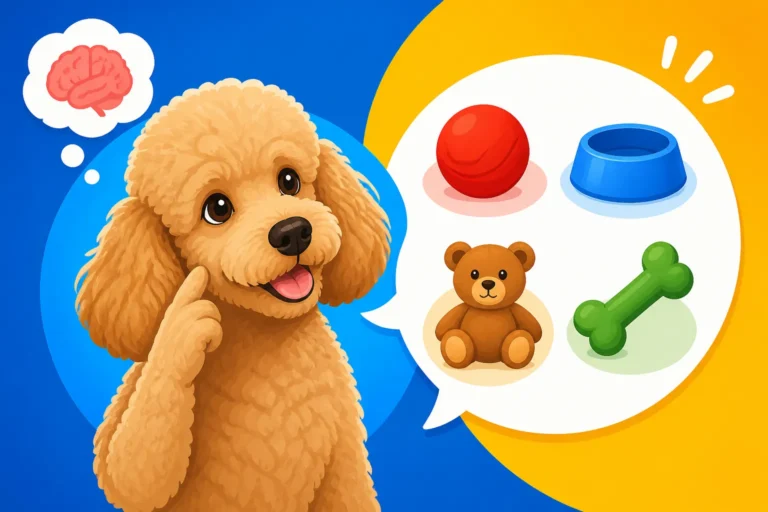
This advanced level of training requires clear communication and often involves teaching your Poodle to Whether a Poodle Can Learn Object Names. For instance, you could teach them to differentiate between "leash" and "ball." Start with an object they're highly familiar with and apply the same "Take It," "Drop It," and "Put Away!" sequence, but with the new item and its specific name. Always ensure the items are safe for them to carry and that they won't be exposed to anything hazardous. This kind of nuanced work is incredibly stimulating for a Poodle and reinforces their problem-solving abilities, keeping their intelligent minds sharp and engaged. It’s also a wonderful way to showcase their natural retrieving instincts, just like their ancestors. Teaching a Poodle to Fetch and Deliver is a natural progression of this skill.
Making Tidy Time a Regular, Rewarding Ritual
For "Put Away" to become a consistent habit, it needs to be integrated into your Poodle’s daily routine. Consistency is paramount, and continuing to make it a positive experience will ensure your Poodle remains enthusiastic.
- Routine Integration: Try to make "tidy time" a regular event. Maybe it's before dinner, or before you settle down for the evening. When they know what to expect, they're more likely to engage.
- Vary Rewards: While treats are great for initial training, gradually introduce other rewards. Verbal praise, a quick game of tug, or even access to a favorite chew toy can be powerful motivators. You want them to enjoy the process as much as the reward. Fading Rewards With a Quick-Learning Poodle means moving from constant food rewards to intermittent ones, and then to life rewards.
- Keep it Fun: Don't let it become a chore for either of you. If your Poodle seems bored, inject some enthusiasm. Make silly noises, run to the bin with them, or praise them like they've just won the lottery.
- Continue Mental Stimulation: Remember that "Put Away" is just one piece of the puzzle. Continue to challenge your Poodle with other forms of mental enrichment, whether it's Scent Games That Stretch a Poodle's Mind, puzzle toys (also widely available on Amazon), or more advanced trick training. A Poodle's mind is a terrible thing to waste! Regularly reviewing your training methods and seeking out new ideas, possibly through a reputable online resource like BAXTER & Bella, can ensure you're always providing fresh challenges.
Here’s a quick overview of the stages of training:
| Stage of Training | Key Skill Focus | What Your Poodle Learns | Common Pitfalls and Solutions |
|---|---|---|---|
| Foundation: Take It | Picking up an item | To grasp a specific object on command | Not taking: Use high-value toy/treat lure. Too soft bite: Reward firm but gentle grab. |
| Foundation: Drop It | Releasing an item | To release an object when asked | Holding on: Trade for a higher-value treat. Practice dropping near bin first. |
| Introducing the Bin | Dropping into the bin | The bin is the designated "drop" spot | Missing the bin: Start with a wide-mouthed bin. Guide the toy over the opening. |
| Adding Distance/Items | Generalization & Distance | The command applies to multiple toys, from varying distances. | Losing focus: Shorten distance. Reduce number of toys. Increase reward value. |
| Fading Lures/Treats | Self-reinforcement | The act itself is a "job" and intrinsically rewarding. | Reluctance: Reintroduce treats temporarily. Vary rewards (play, praise). |
This journey of teaching your Poodle to put away their toys will not only give you a tidier home but will also deepen your bond and provide immense mental stimulation for your clever companion. It's a testament to Why Intelligence Makes a Poodle Harder to Live With in some ways – their brains demand engagement – but also a joy to witness their understanding and eagerness to please.
Disclaimer
This article is for general informational purposes only and does not constitute professional advice. Laws, prices and regulations vary by location and change over time. Consult a qualified professional for guidance on your specific situation.