Trick Titles a Clever Poodle Can Earn
Anyone who lives with a Poodle knows they are absolutely brilliant, sometimes to a fault. Their keen intelligence means they often need more than just physical exercise; their minds crave a "job," and without it, you might find yourself with a Poodle who invents their own, often less-than-desirable, entertainment. This guide dives deep into the wonderful world of trick training, showing you how earning trick titles can be a fantastic, engaging outlet for your clever Poodle, channeling their smarts into fun and rewarding activities.
Why Trick Training Is Perfect for Poodles
Poodles aren't just pretty faces and fancy clips; they are exceptionally intelligent dogs, consistently ranking at the top of canine intelligence scales. This high intelligence means they thrive on mental stimulation, and without it, they can become bored, restless, or even destructive. Trick training offers a perfect solution, engaging their minds and bodies in a way that’s both fun and productive.
The Poodle's Innate Intelligence and Drive
Let's be real, living with a Poodle often feels like living with a furry, four-legged genius who's always five steps ahead. You might think you're teaching them a new cue, and before you've even finished the hand motion, they've already figured it out and are offering another behavior, just to see what else might get a treat. This isn't just a charming quirk; it's a testament to their incredible capacity for learning. They genuinely enjoy the process of problem-solving and figuring out what you want. Why Poodles Learn a Cue in Five Repetitions isn't just a saying; it's often a reality with these dogs, and if you're not keeping them challenged, that brilliant mind can quickly turn to mischief. They don't just want a job; they need one to truly be content and well-behaved.
Many Poodle owners can attest that a tired Poodle isn't just one who's had a long walk, but one whose brain has been thoroughly exercised. If you've ever wondered Why a Bright Poodle Gets Bored even after a good run, it's likely because their mental energy hasn't been tapped into. Trick training directly addresses this, giving them complex tasks that require focus, memory, and coordination. It transforms their boundless energy and smarts into a constructive outlet, helping to prevent boredom-induced behaviors like excessive barking or finding illicit ways to entertain themselves around the house.
Building a Stronger Bond Through Play
Beyond merely occupying their minds, trick training is a phenomenal way to deepen the connection you share with your Poodle. It's a collaborative dance, a two-way street where you learn to communicate more effectively with each other. Poodles are incredibly perceptive; they truly excel at Why Poodles Read People So Well, often anticipating your next move or even your mood. This sensitivity, when combined with positive reinforcement training, creates a powerful feedback loop.
When you're teaching your Poodle a new trick, you're not just giving commands; you're engaging in a shared activity that builds trust and mutual understanding. Every successful "spin" or "bow" is a little victory for both of you. It's an opportunity for laughter, praise, and physical affection, all of which reinforce the positive bond. This shared experience can be incredibly powerful, especially for Poodles who tend to be "Velcro dogs" and thrive on interaction with their favorite people. It validates their intelligence and makes them feel like a valued, contributing member of the family, which, let's face it, they already know they are!
Understanding Trick Dog Titles and Organizations
So, you're convinced that trick training is the way to go for your clever companion. But what exactly are "trick titles," and how do you even go about earning them? Think of trick titles as a fun, low-pressure way to formally recognize your Poodle's talents and your dedication to their training. It's less about intense competition and more about celebrating achievements and having a blast together.
The Landscape of Trick Dog Programs
Several organizations offer trick dog titles, each with slightly different rules and requirements, but all sharing the common goal of promoting positive reinforcement training and showcasing canine intelligence. The two most prominent are the American Kennel Club (AKC) and Do More With Your Dog! (DMWYD).
The AKC's Trick Dog program has gained immense popularity, offering a structured path for dogs of all breeds and mixes to earn recognition. It’s accessible and well-regarded, providing clear guidelines for each level. Do More With Your Dog!, founded by celebrity dog trainer Kyra Sundance, is another fantastic program that's been around for a long time and is known for its comprehensive curriculum and a vast library of tricks. Many trainers and owners choose to pursue titles through both organizations, as the skills are often transferable. Some online training platforms, like BAXTER & Bella, even integrate trick training into their broader curricula, helping you prepare for these titles with expert guidance.
Progression Through Levels
Most trick dog programs follow a tiered system, allowing you and your Poodle to progress from basic, beginner-friendly tricks to more complex, chained behaviors. This structured approach helps prevent overwhelm and ensures a steady build-up of skills. While specific requirements vary by organization, the general progression looks something like this:
| Title Level | General Requirements | Example Tricks |
|---|---|---|
| Novice Trick Dog | Usually requires 10-15 basic tricks from a list, performed reliably on cue. These are typically single-action behaviors that are easy for most dogs to grasp quickly. The focus is on clear communication and the dog's willingness to engage. | Touch (nose to hand), Sit Pretty (beg), Shake a Paw, Spin Left/Right, Crawl, Bow, Kiss, Paws Up (on an object). For a Poodle, these might feel almost insultingly easy, but they build the foundation for more intricate work. |
| Intermediate Trick Dog | Builds on Novice, requiring 10-15 more challenging tricks, often involving props, some distance, or combining two simple actions. At this level, dogs demonstrate more understanding and control. | Weave through legs, Play Dead, Retrieve a specific named toy (e.g., "get your squeaky duck"), Jump over an arm, Balance a treat on nose, Back up, Speak on cue. A Poodle's natural retrieving instinct can really shine here, especially if you get a few different types of toys from Amazon to teach specific names. |
| Advanced Trick Dog | Requires 10-15 advanced tricks, which might involve chaining several behaviors, performing tricks at a greater distance, or using more complex props. At this stage, your Poodle is demonstrating true understanding and responsiveness. | Turn off a light switch, Open/close a door, Put toys in a box Teaching a Poodle to Put Toys Away, Get a tissue from a box, Wipe paws on a mat, Roll out a mat, Stack rings on a post, Shell game. This is where their problem-solving really comes into play. |
| Performer Trick Dog | The highest level, often requiring 10-15 "performer" level tricks, including complex sequences, tricks with multiple props, or tricks performed in a public setting. It showcases a dog's mastery and the handler's ability to cue intricate behaviors. This is where you might see some truly show-stopping routines. | Create a multi-trick routine to music, Navigate an obstacle course, Perform advanced obedience moves with trick elements, Find a hidden object (scent work element), Retrieve specific items from another room. Whether a Poodle Can Learn Object Names becomes very relevant here, as does the ability to perform a sequence without repeated cues. |
This progression allows you to celebrate milestones along the way, keeping both you and your Poodle motivated. It’s designed to be fun and accessible, rather than intimidating.
Common Tricks for Each Title Level
Now for the exciting part: diving into the actual tricks! Your Poodle, with their intelligence and eagerness to please, will likely pick these up faster than you expect. Remember, the goal is clarity, consistency, and making it a joyful experience for your dog.
Foundation Tricks for Novice and Intermediate
For the Novice and Intermediate levels, you'll be focusing on single-action behaviors that are generally quick to teach and reinforce. These are the building blocks, and your Poodle will probably breeze through them, often anticipating what you want. Think of tricks like "Touch," where your Poodle touches their nose to your hand. This is a foundational trick that can be built upon for so many other behaviors.
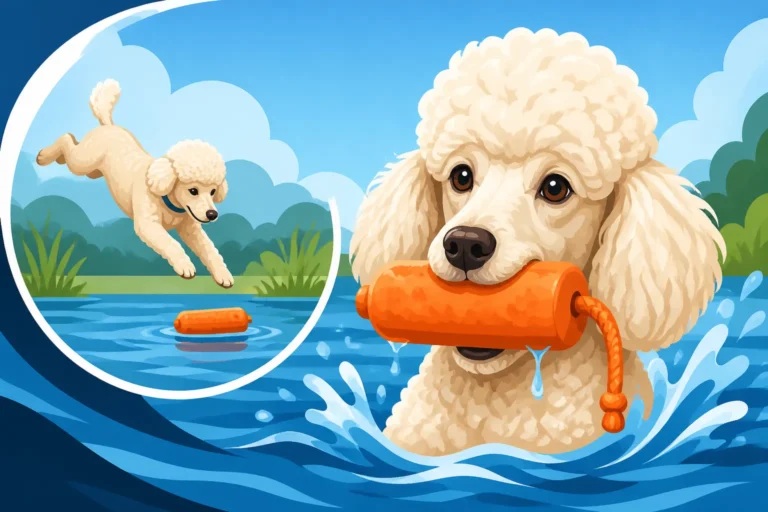
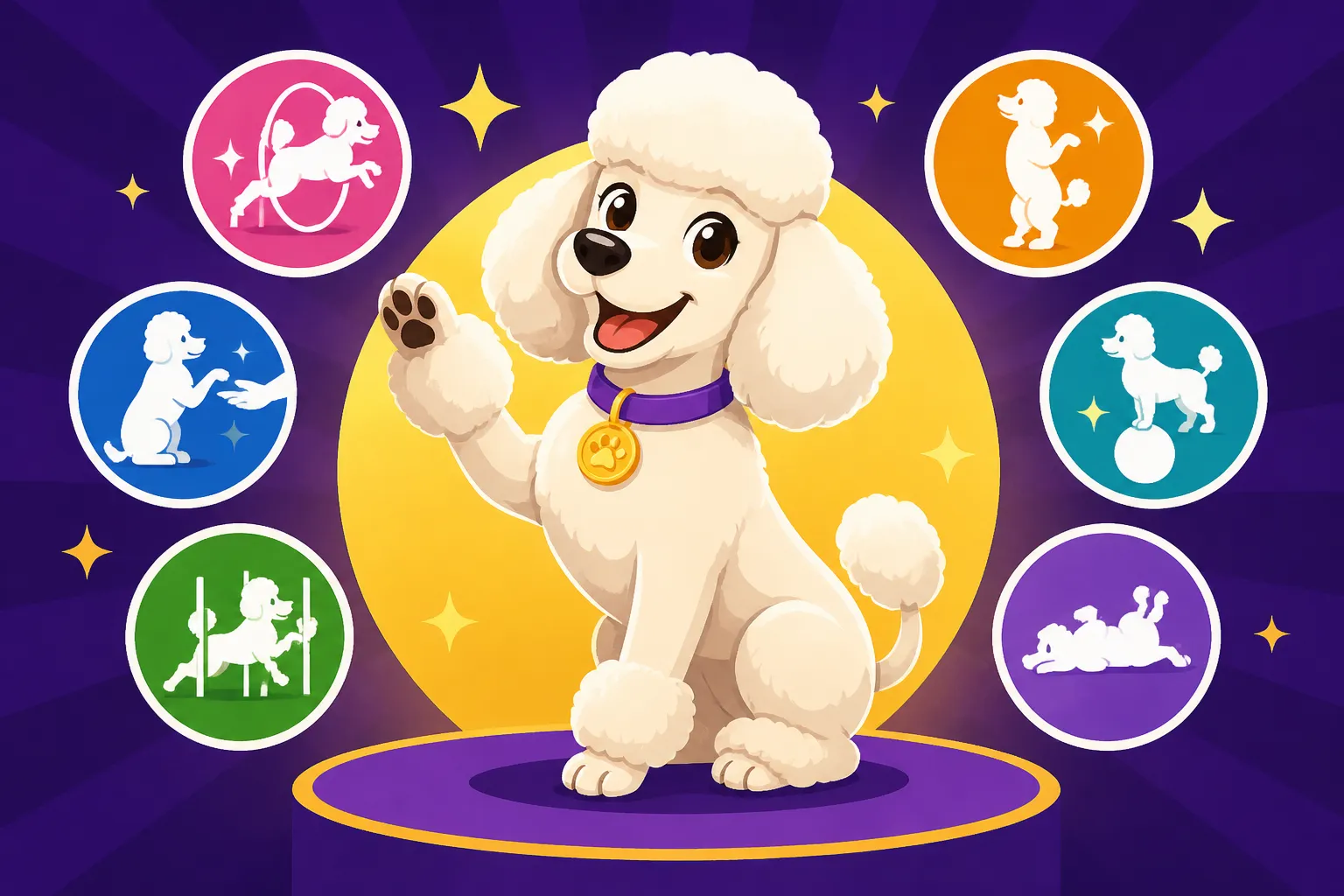
Then there's "Spin" or "Twirl," where your Poodle turns in a circle. You might find your Poodle picking up The Cues a Poodle Picks Up in a Week faster than you can say "treat!" "Shake a Paw" or "High Five" is another classic, teaching your dog to offer a paw. "Bow," where your Poodle lowers their chest while keeping their rear end up, is always a crowd-pleaser. Even "Crawl" or "Army Crawl," where they move forward while lying down, is a fun physical challenge. If you're looking to get started, you can find simple training tools like clickers and treat pouches easily on Amazon, which can make the process smoother. For dogs with a strong retrieve drive, Teaching a Poodle to Fetch and Deliver a specific toy can count as an Intermediate trick.
Advanced and Performer Level Tricks
Once your Poodle has mastered the basics, it's time to ramp up the complexity! Advanced and Performer tricks often involve chaining multiple behaviors, using props, or performing actions at a distance. These tricks truly showcase the Poodle's problem-solving abilities and focus.
Imagine teaching your Poodle to "Weave" through your legs as you walk, a fluid and engaging maneuver. Or perhaps "Play Dead," which requires them to drop and stay motionless on their side until released. These require more steps and more precision. For the Performer level, you might teach them to perform utility tasks, like bringing you a specific item from another room, which taps into Whether a Poodle Can Learn Object Names. You could even teach them to turn off a light switch, demonstrating their ability to interact with their environment in a deliberate way. Another challenging but rewarding trick is to have them "Put Away Toys" Teaching a Poodle to Put Toys Away into a designated box, which involves retrieving multiple items and depositing them. These higher-level tricks often require more patience and breaking down the behavior into smaller, achievable steps, but the payoff in seeing your Poodle's concentration and success is truly immense.
Choosing Tricks That Suit Your Poodle
While there are many lists of tricks to choose from, the best approach is to consider your individual Poodle. What do they naturally enjoy? What are their physical strengths? A Toy Poodle might excel at intricate paw manipulation or balancing acts, while a Standard Poodle might be a natural at retrieving heavier objects or performing bigger, more athletic moves.
Don't force a trick that makes your Poodle uncomfortable. If they're a bit shy, a trick requiring them to interact closely with a prop might be tougher than one that involves body awareness. Age also plays a role; a senior Poodle might not be up for complex jumps, but could still master sophisticated mental challenges. Observe your Poodle during your training sessions; their body language will tell you what they're enjoying and what they might find too difficult or stressful. The beauty of trick training is its flexibility – you can always find a trick that both you and your Poodle will love learning together.
Getting Started with Trick Training and Earning Titles
The thought of "earning a title" might sound a bit daunting, like you need to be a professional trainer or have years of experience. But that's absolutely not the case with trick dog titles! They are designed to be accessible and fun, providing a structured way to celebrate the amazing things your Poodle can learn.
Essential Tools and Resources
You don't need much to get started, which is one of the beauties of trick training. Here’s a basic toolkit that will set you up for success:
- A Clicker: This small device provides a consistent, clear marker for the exact moment your Poodle performs the desired behavior. It's incredibly effective for precise timing, especially with a fast-thinking Poodle. Getting Clicker Timing With a Fast-Learning Poodle down will make a huge difference.
- High-Value Treats: Think small, soft, and super tasty. Cut-up hot dogs, cheese, or specialized training treats work wonders. Make sure they are Treats Small Enough for a Toy Poodle if you have a smaller variety, as you'll be giving a lot of them!
- A Treat Pouch: This keeps your treats easily accessible, so you can reward quickly without fumbling.
- Online Resources/Classes: Many organizations and individual trainers offer fantastic online courses. Websites like Do More With Your Dog! have extensive video libraries demonstrating tricks. Companies like BAXTER & Bella offer comprehensive online programs that can guide you through the process step-by-step, complete with coaching. These resources can be invaluable for learning proper technique and getting inspiration for new tricks.
- Props: As you advance, simple household items often double as great props – a small stool for "paws up," a blanket for "find it" games, or a small box for "put away toys."
Start with short, fun sessions, just a few minutes a day. Poodles are smart, but like all dogs, they have a limited attention span, especially when learning something new. Keep it positive, keep it upbeat, and end on a good note!
The Submission Process
Once you and your Poodle have confidently mastered a set of tricks for a specific level, you're ready to apply for a title! The process is usually quite straightforward. For most organizations, you'll need to either:
- Submit a Video: This is the most common method. You'll record your Poodle performing the required tricks for the specific title level and upload the video according to the organization's guidelines. An evaluator will then review your video to ensure the tricks meet the criteria. This is great because you can do it from the comfort of your home, and you get to keep a wonderful video memory of your Poodle's achievements!
- In-Person Evaluation: Some organizations or clubs offer in-person evaluations by certified trick dog instructors. This can be a fun experience if you enjoy the camaraderie of a group setting and prefer direct feedback.
The fees associated with title applications are generally quite modest, covering the administrative costs and the certificate or ribbon you'll receive. It's truly a celebration of your team's hard work!
The Joy of the Journey
While earning a title is a fantastic goal, the real magic of trick training lies in the journey itself. It’s about the laughter, the shared moments of understanding, and the incredible bond that grows between you and your Poodle. It's watching their eyes light up when they figure out a new behavior, and the absolute pride you feel when they perform it flawlessly.
Poodles thrive on engagement, and trick training provides that in spades. It keeps their minds sharp, their bodies active, and their spirits high. Whether you have a tiny Toy Poodle or a magnificent Standard, trick training offers a customizable, endlessly rewarding path for mental stimulation and companionship. So go ahead, grab some treats, and start teaching your Poodle to amaze everyone – yourself included!
Disclaimer
This article is for general informational purposes only and does not constitute professional advice. Laws, prices and regulations vary by location and change over time. Consult a qualified professional for guidance on your specific situation.