Banding a Show Poodle’s Topknot
For any Poodle owner aspiring to the show ring, the magnificent topknot is both a crowning glory and a significant commitment. Yet, growing and maintaining this impressive coiffure is far from a simple task; it requires meticulous care to prevent tangles, breakage, and damage that can ruin months of growth. This guide will meticulously outline the art of banding a show Poodle's topknot, a crucial technique for preserving its health and ensuring it remains pristine and competition-ready.
Why Banding is Essential for Show Poodles
The Poodle's iconic curly coat never stops growing, and nowhere is this more evident, or more challenging, than on the head, which is carefully sculpted into a voluminous topknot for the show ring. Left to its own devices, this long, luxurious hair is incredibly prone to damage. Banding isn't just a fancy aesthetic; it's a non-negotiable part of preserving the integrity and length required for a competitive show Poodle.
Protecting Against Damage and Breakage
Imagine a long, flowing human ponytail, then picture it constantly brushing against furniture, being slept on, getting wet, or even getting caught by playful paws. That's essentially what a Poodle's topknot faces daily if it's not protected. The fine, curly hair can snag on anything and everything, leading to painful tangles and breakage. Each broken strand means lost length and density, which are critical components of a winning topknot. Banding works by gathering these delicate strands into neat, secure sections, minimizing their exposure to friction and external stressors. It's like putting your Poodle's precious locks into a protective cocoon, allowing the hair to grow unhindered and reach its full potential. Without banding, you'd constantly be battling mats and split ends, potentially requiring a significant trim that would set back your show ambitions for months.
Promoting Optimal Hair Growth
One of the primary goals for a show Poodle's topknot is length and density. The longer and fuller the topknot, the more impressive it appears in the ring, allowing for stunning sculptural styling. However, hair can only grow effectively if it's healthy. Constant breakage or matting significantly impedes growth, as the hair breaks off before it can achieve the desired length. By creating a protected environment, banding ensures that each strand has the best chance to grow long and strong. It prevents the hair from rubbing against collars, bedding, or even the dog's own ears, all common culprits of wear and tear. This consistent protection over time contributes directly to a healthier, more robust topknot, allowing your Poodle to develop that enviable, flowing mane. Think of it as investing in the long-term health of your Poodle’s most prominent feature.
Maintaining Coat Condition and Cleanliness
Beyond just length, the condition of the topknot is paramount. Healthy hair is shiny, resilient, and easy to work with. Unbanded hair is much more susceptible to drying out, especially the ends, and can easily become dirty. It absorbs moisture from food and water, picks up dust and debris from playing, and can become greasy or dull if not properly maintained. Banding helps to keep the hair cleaner by keeping it off the face and out of the way. It also makes it easier to apply conditioning treatments effectively. When the hair is neatly sectioned, you can more precisely apply leave-in conditioners or light oils, ensuring even distribution and maximum absorption without making the entire coat greasy. This targeted approach helps to retain moisture, prevent dryness, and keep the hair supple and pliable, which is essential for both grooming and presentation. It ensures that when it comes time for the show ring, your Poodle's topknot doesn't just look long, but also vibrant and impeccably clean. This meticulous care is what sets a show-ready Poodle apart, highlighting the dedication to The Poodle Coat and Why It Never Stops Growing.
Gathering Your Tools: What You'll Need for Banding
Before you even think about touching your Poodle’s topknot, it's crucial to have all your supplies ready and within easy reach. Trying to scrounge for a comb mid-process will lead to frustration for both you and your Poodle. Having the right tools isn't just about convenience; it's about making the process as comfortable and effective as possible, minimizing stress and preventing accidental damage to that precious hair.
The Right Bands and Combs
The cornerstone of successful topknot banding is undoubtedly the bands themselves. You're not looking for just any old rubber bands here. Professional groomers and show Poodle handlers swear by tiny, strong, yet gentle elastic bands. Silicone bands are often preferred because they offer excellent grip without being harsh on the hair. They come in various sizes, but for most topknots, you’ll want bands that are small enough to hold a section securely without being bulky. Latex-free options are excellent to prevent potential allergic reactions in sensitive dogs. You can find these specialized bands readily available from online retailers like Amazon, often in large packs. Avoid office-supply rubber bands at all costs; they're too tight, too prone to snapping, and will cause breakage.
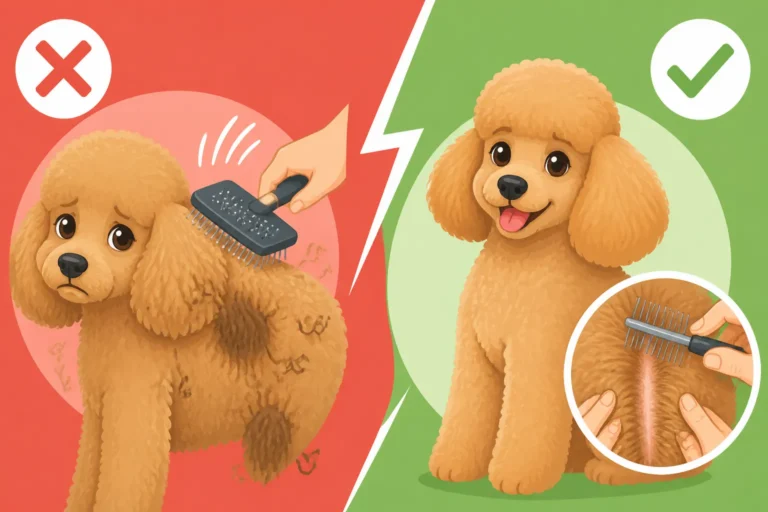
Next, a good quality comb is your best friend. A fine-toothed metal comb with both wide and narrow teeth is indispensable for precise sectioning and smoothing. Look for one that's anti-static to prevent flyaways, which can make the banding process incredibly frustrating. A sturdy pin brush is also essential for thoroughly detangling the topknot before you start. Remember, any tangles left in before banding will turn into impossible mats once banded, leading to pain and potential coat loss. Regular maintenance with a good quality brush is essential; you might want to review Brushing a Poodle to the Skin for more comprehensive tips on maintaining the overall coat.
Conditioning Sprays and Protective Wraps
Keeping the hair conditioned is paramount, both before and after banding. A good quality leave-in conditioning spray or a very light coat oil is vital. This provides slip, making it easier to comb through the hair without snagging and reducing friction when applying the bands. It also helps to prevent dryness and breakage, ensuring the hair stays supple. Look for products specifically formulated for dog coats, ideally those designed for long, curly hair. Brands available on Chewy often carry a good selection of these specialized grooming products. You might even consider a tiny dab of argan oil or a Poodle-specific topknot oil on your fingertips as you handle the hair, just to add that extra layer of protection and shine.
For an extra layer of protection, especially during playtime, sleep, or travel, topknot wraps or snoods are invaluable. These are typically made from soft, stretchy fabric like satin or silk, which reduces friction and helps to prevent bands from slipping or hair from getting pulled. A simple tube sock can even work in a pinch for very long topknots, offering a DIY solution to protect those hard-won locks. These wraps provide an excellent barrier against dirt, moisture, and roughhousing, ensuring that all your careful banding work isn't undone by an adventurous moment. This is particularly important for dogs that love to roll or rub their heads. You can find specialized wraps or snoods on platforms like Amazon, or even craft your own with a bit of sewing savvy.
| Tool Category | Specific Item | Purpose | Key Characteristics |
|---|---|---|---|
| Banding Essentials | Silicone elastic bands | Securing hair sections | Small, strong, gentle, latex-free |
| Scissors (blunt-tip) | Safely removing bands | Small, sharp, blunt tips for safety | |
| Combing & Brushing | Fine-toothed metal comb | Sectioning, smoothing, precision | Anti-static, combination teeth (wide/narrow) |
| Pin brush | Detangling prior to banding | Good quality, sturdy pins, gentle on coat | |
| Conditioning | Leave-in conditioning spray | Adds slip, prevents breakage, hydrates hair | Dog-specific, lightweight, non-greasy |
| Light coat oil (e.g., argan) | Extra protection, shine, suppleness | Pure, small amount, easily absorbed | |
| Protection | Topknot wraps/snoods | Protects banded topknot from friction, dirt, elements | Soft fabric (satin/silk), stretchy, breathable |
| Alligator clips/sectioning clips | Holding hair out of the way during banding | Non-snagging, strong grip, smooth edges |
Step-by-Step Guide to Banding a Poodle Topknot
Banding a Poodle's topknot isn't something you rush. It's a careful, almost meditative process that requires patience and a gentle touch. Getting it right ensures the hair is protected and comfortable; getting it wrong can lead to pain, breakage, and frustration. Follow these steps meticulously, and you'll be well on your way to a perfectly banded topknot.
Thorough Preparation: The Foundation of Success
Before a single band touches your Poodle’s hair, proper preparation is non-negotiable. The topknot must be impeccably clean, dry, and completely free of tangles. Ideally, you should start this process on a freshly bathed Poodle. After bathing, use a high-velocity dryer, if you have one, or a regular hairdryer on a cool setting, to thoroughly dry the coat, stretching the hair straight as you go. This process, often called "line drying," ensures that every strand is straight and separated, making it easier to comb and band. Damp hair is more fragile and prone to breakage, and banding damp hair creates a breeding ground for skin irritation and mats.
Once dry, take your pin brush and systematically brush through the entire topknot, working in small sections and going all the way down to the skin. Then, follow up with your fine-toothed comb to ensure there are absolutely no knots or tangles remaining. Any tangle left behind will become a hardened mat once banded, causing pain and making future grooming a nightmare. You might want to refer to How Long Brushing a Standard Poodle Takes for an understanding of the time commitment needed for proper coat prep. A light mist of your chosen conditioning spray can help with static and add slip, making the comb glide more easily through the hair. Ensure your Poodle is calm and comfortable, perhaps standing on a grooming table or a stable surface at your height. This isn't a battle; it's a cooperative effort.
Sectioning and Initial Banding
This is where the artistry begins. Start by sectioning off a small, square section of hair at the very front of the topknot, right between the eyes and extending back about an inch or two. Use the fine-toothed comb to create clean, straight lines for this section. The cleaner your sections, the neater and more secure your bands will be. Apply a small amount of conditioning spray or oil to this section, then comb it smooth.
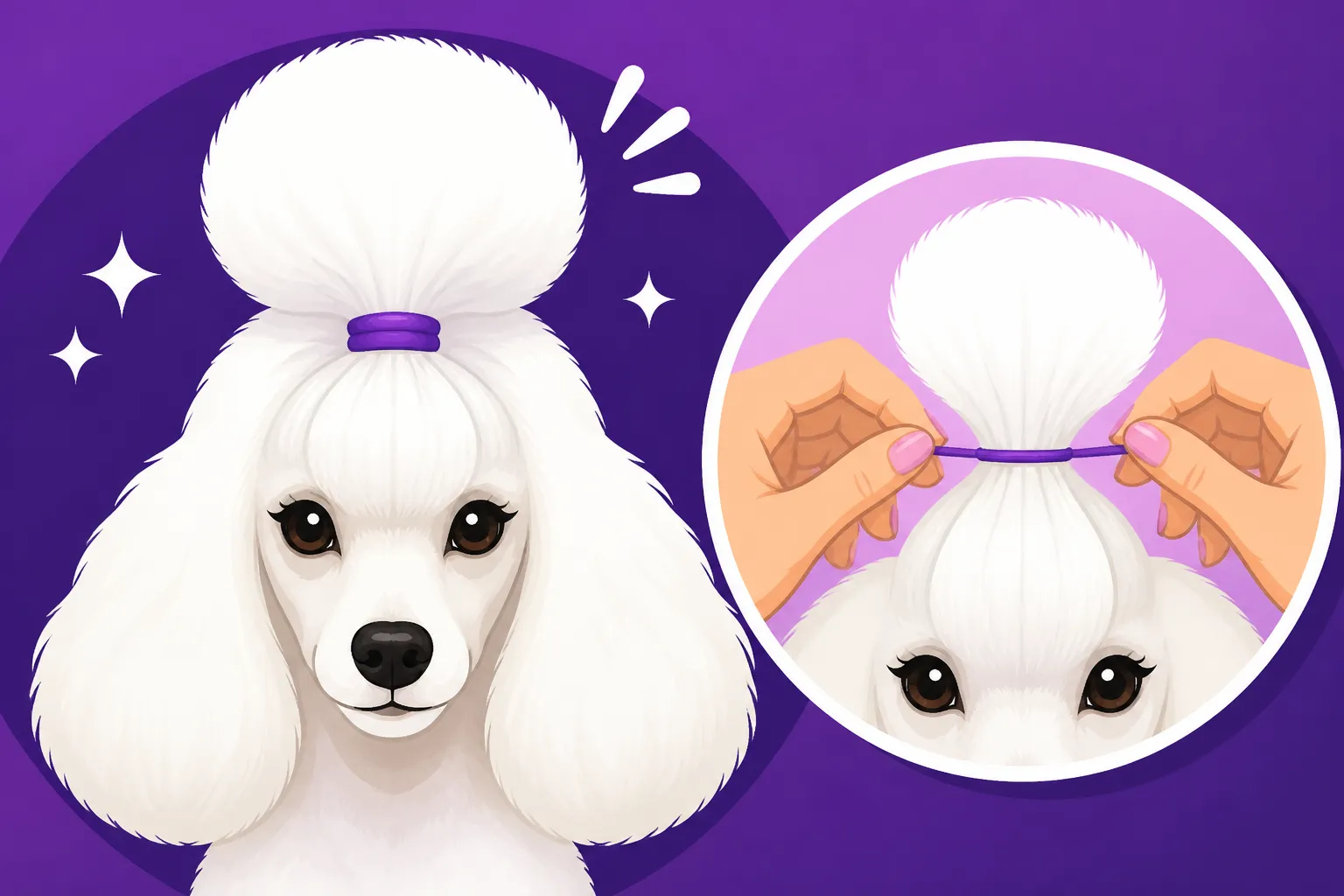
Now, take one of your small elastic bands. Hold the section of hair firmly but gently. Loop the band around the hair close to the scalp, typically two or three times, depending on the hair's thickness and the band's elasticity. The goal is to secure the hair without pulling it so tightly that it causes discomfort or stress on the hair follicles. Too tight and you risk skin irritation or even hair loss; too loose and the band will slip out. You’re aiming for snug, not strained. Once the first section is banded, you’ll repeat this process, creating additional small, square sections directly behind the first one, working your way backward over the crown of the head. Each subsequent section should be neatly aligned with the previous one, creating a series of individual, banded ponytails. These initial bands are often small and numerous, especially when the topknot is just starting to grow out.
Layering and Combining Sections
As your Poodle’s topknot grows longer, you'll reach a point where having many tiny bands becomes impractical and can even lead to more tangles between the banded sections. This is when you start layering and combining. After you've established your initial rows of individual bands, you'll begin to take two or three of these banded sections and combine them into a larger, single banded section.
For example, take the ends of the first two small banded sections. Comb them together smoothly. Then, take a fresh elastic band and secure these two sections together further down their length, creating a new, larger ponytail. This forms a "chain" effect. You continue this process, combining smaller sections into larger ones as you move down the topknot and as the hair gains length. This reduces the number of individual bands pressing on the scalp, distributes the tension more evenly, and creates a more manageable, less 'bumpy' topknot. Remember to always comb the hair smooth before each new band application, ensuring there are no hidden tangles. Be especially careful when combining sections near the ears, as this is a common area for sensitive skin and fine hair that can break easily. Regularly checking the existing bands for slippage or tightness before combining is also a good practice. This progressive combining method allows the topknot to gain significant length while remaining protected.
Maintaining the Banded Topknot and Troubleshooting
Banding isn't a set-it-and-forget-it affair. A show Poodle's topknot requires diligent daily maintenance, even when banded, to ensure maximum health and prevent disasters like painful matting or significant breakage. This ongoing care is what truly differentiates a successful show Poodle’s coat from one that struggles.
Daily Checks and Band Rotation
Every single day, you must perform a thorough check of your Poodle's banded topknot. This isn't optional. Run your fingers over each banded section, feeling for any signs of looseness, slippage, or, crucially, any small mats beginning to form within or between the banded sections. Hair grows quickly, and even with the best banding, new growth can start to tangle at the scalp or ends can fray and knot. If a band feels loose, gently remove it (by cutting, not pulling!) and re-band the section.
The frequency of changing bands depends on your Poodle's activity level and hair type, but a general rule of thumb is every 2-5 days. For a very active Poodle or one with particularly soft, fine hair, you might need to change them more often. When changing bands, always cut the elastic with blunt-tipped scissors. Never, ever try to pull them out, as this will inevitably rip and break the hair. Take your time, slide the blunt tip under the band, and snip. Once removed, gently comb through the section, apply a fresh spritz of conditioning spray, and re-band following the sectioning technique. This routine not only prevents matting but also allows you to regularly inspect your Poodle's skin for any irritation or redness that might arise from constant banding. This diligence is key to keeping your Poodle comfortable and preventing any painful surprises.
Addressing Mats and Conditioning Routines
Despite your best efforts, sometimes a small mat will sneak in. The key is to address it immediately, before it becomes a large, felted problem. If you find a mat, do not try to pull it apart. Instead, apply a generous amount of detangling spray or a rich coat oil to the mat. Brands like those found on Chewy or even pure coconut oil work wonders. Gently work the product into the mat with your fingers. Then, using the wide-toothed end of your comb, slowly and patiently pick apart the mat, starting from the very ends and working your way towards the scalp. This can take time, so be prepared for a session of patient detangling. If the mat is too tight or large, consider carefully cutting into the mat from the underside with blunt-tipped scissors, in the direction of hair growth, to break it into smaller, more manageable pieces. However, cutting should be a last resort, as it sacrifices length. The goal is always to save the hair. Prevention is truly the best cure here, as discussed in Why a Poodle Coat Mats Instead of Shedding.
A consistent conditioning routine is equally vital. The hair in the topknot, being constantly pulled and handled, can become dry and brittle. Beyond the daily conditioning spray, consider a more intensive weekly or bi-weekly deep conditioning treatment. After a bath, apply a rich conditioner specifically designed for dog coats, let it sit for the recommended time, and then rinse thoroughly. Even between baths, a light application of a Poodle-safe oil, worked gently into the banded sections, especially the ends, can keep the hair moisturized and pliable. Healthy, conditioned hair is less likely to break, less likely to mat, and will have that coveted show ring shine.
The Role of Nutrition in Coat Health
While external care is crucial, don't overlook the vital role that nutrition plays in the overall health and quality of your Poodle's coat. A healthy coat, including a magnificent topknot, starts from within. A diet rich in high-quality protein, essential fatty acids (like Omega-3 and Omega-6), and vitamins and minerals is fundamental. These nutrients contribute to strong hair follicles, healthy skin, and a shiny, resilient coat that is less prone to breakage and dryness.
Consider feeding a high-quality kibble formulated for healthy skin and coat, or exploring fresh food options. Brands like Ollie, which focus on human-grade ingredients, often provide a balanced diet designed to support overall canine health, including coat vitality. Look for foods that list meat as the primary ingredient and avoid excessive fillers. Supplements, such as fish oil, can also be beneficial, but always consult your veterinarian before adding any supplements to your Poodle's diet to ensure they are appropriate and correctly dosed. A Poodle with a deficiency in key nutrients will struggle to grow and maintain a healthy coat, no matter how meticulous your external grooming routine. Remember, a truly show-stopping topknot is a holistic endeavor, reflecting excellent care both inside and out, as elaborated in Feeding a Poodle by Size.
Disclaimer
This article is for general informational purposes only and does not constitute professional advice. Laws, prices and regulations vary by location and change over time. Consult a qualified professional for guidance on your specific situation.