Shaping a Poodle Topknot at Home
If you've ever gazed at your Poodle's fluffy head, admiring that iconic topknot, you know it's a huge part of their charm. But trying to recreate that perfectly sculpted look at home can feel like attempting brain surgery with kitchen scissors – intimidating, to say the least! The good news is, with the right tools and a little patience, you absolutely can learn to shape your Poodle's topknot between professional grooms, saving yourself some money and keeping your furry friend looking sharp.
Understanding the Poodle Topknot: More Than Just Hair
The Poodle topknot isn't just a random fluff of hair; it's a signature part of the breed's aesthetic, a crown that communicates elegance and personality. For many Poodle owners, maintaining that distinct look is a point of pride and a way to truly showcase their dog's unique features. But what exactly defines a good topknot, and what does it take to create one?
Why the Topknot Matters for Your Poodle's Look
The topknot is the defining feature of a Poodle's head. It balances their long muzzle and elegant neck, creating that distinctive, aristocratic silhouette. Without a well-maintained topknot, a Poodle can look a bit… shapeless, losing some of that undeniable Poodle pizzazz. Think of it like a perfectly styled haircut for a person – it frames the face and highlights their best features. For Poodles, the topknot helps define their overall breed standard appearance, whether you're aiming for a show ring masterpiece or a practical, stylish pet trim.
For pet Poodles, the topknot offers a chance for individual expression. You can keep it long and flowing, creating a dramatic, romantic look, or trim it shorter and rounder for a more playful, puppy-like appearance. It's often the first thing people notice, and a well-groomed topknot makes a huge difference in how polished and well-cared for your Poodle appears. Beyond aesthetics, keeping the hair around the eyes trimmed is crucial for hygiene and comfort, preventing matting and irritation.
Essential Tools for Topknot Trimming
Before you even think about picking up shears, you need the right arsenal of tools. Trying to trim a topknot with dull or incorrect equipment is a recipe for frustration, uneven cuts, and potentially even injury to your dog. Investing in quality grooming tools makes the process smoother and the results much better. You can find many of these items on platforms like Amazon or specialty pet stores online, such as Chewy.
Here's what you'll need:
- Straight Shears: These are your primary cutting tool. Look for a pair that's sharp and comfortable in your hand, typically 7-8 inches long. They'll be used for the main shaping and length adjustments.
- Thinning Shears (or Blenders): These shears have one serrated blade and one straight blade, designed to remove bulk and create a softer, more natural blend without leaving harsh lines. They are indispensable for blending the topknot into the neck and ears.
- Fine-toothed Comb: Essential for lifting the hair and checking for mats, as well as ensuring evenness before and during cutting. A good metal comb with both wide and fine teeth is ideal.
- Slicker Brush: Used for thoroughly brushing the topknot hair out, ensuring it's free of tangles and standing uniformly. This is a critical step for a clean cut. Brushing a Poodle to the Skin
- Hair Clips (or Sectioning Clips): These help you section off the topknot hair from the rest of the facial hair, allowing you to work on defined areas without accidentally cutting what you shouldn't.
- Grooming Table with Arm (Optional but Highly Recommended): While not strictly a "cutting" tool, a stable surface at a comfortable height makes a world of difference. It keeps your Poodle secure and still, improving both safety and the quality of your trim.
- Clipper (with a #10 or #15 blade, optional): While you can scissor the entire face, a small clipper with a short blade is excellent for tidying up the face, cheeks, and neck areas around the topknot, giving a clean foundation for your scissoring work.
| Tool Name | Primary Purpose | Why It's Essential |
|---|---|---|
| Straight Shears | Main shaping, cutting length | Precise cuts for overall topknot structure |
| Thinning Shears | Blending, softening lines, removing bulk | Prevents harsh lines, creates a natural transition |
| Fine-toothed Comb | Detangling, lifting hair, checking for evenness | Ensures smooth, even cuts and prevents missed spots |
| Slicker Brush | Fluffing, removing tangles, preparing coat | Essential for a mat-free, well-prepared topknot before trimming |
| Hair Clips | Sectioning off hair | Isolates the topknot area, prevents accidental cuts |
| Grooming Table/Arm | Stabilizing the dog, comfortable working height | Improves safety and precision, less strain on you and your Poodle |
| Clipper (#10/#15) | Face, throat, ear edges (optional for scissoring-only) | Creates a clean, short base around the topknot for a polished look |
Preparing Your Poodle for the Topknot Trim
Think of this as the foundation for a masterpiece. You wouldn't paint on a dirty, uneven canvas, and you shouldn't try to trim a topknot on a Poodle that isn't perfectly clean, dry, and brushed. This preparatory stage is often more important than the actual cutting itself!
The Importance of a Clean, Dry, and Brushed Coat
This cannot be stressed enough: never attempt to cut a Poodle's coat when it's dirty, greasy, or damp. Dirty hair will dull your shears almost immediately, and damp hair will shrink as it dries, leading to a much shorter cut than you intended. Worse, matted hair can be impossible to cut evenly and can cause serious discomfort to your dog.
Here's the ideal process:
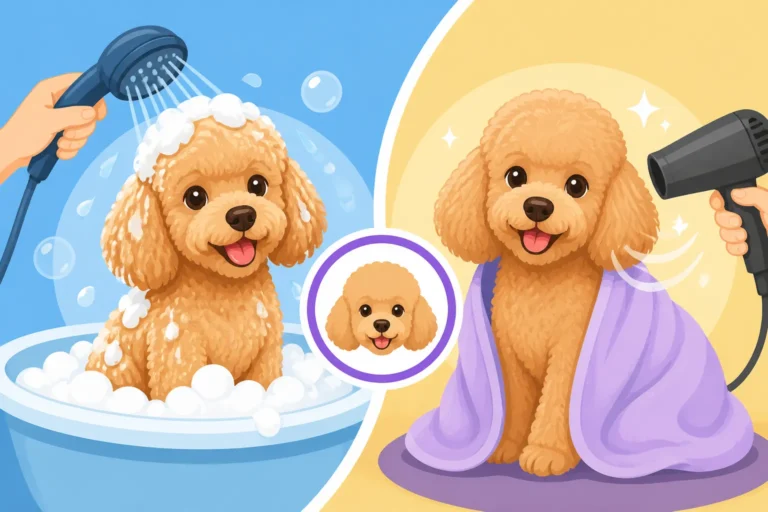
- Bathing: Start with a thorough bath using a quality dog shampoo and conditioner. Work the shampoo deep into the coat, ensuring all dirt and oils are removed, especially around the topknot where hair tends to get oily. Rinse meticulously, making sure no residue is left behind, as this can irritate the skin and weigh down the coat. Shampoo and Conditioner for a Poodle Coat
- Drying: This is the most crucial step for a great topknot. Use a high-velocity dryer (if you have one) or a strong human hairdryer (on a cool or low heat setting, never hot!) while constantly brushing the hair. The goal is to get every strand of hair completely, bone-dry and standing straight out from the skin. For the topknot, focus on drying upwards and outwards, fluffing it up to its maximum volume. If the hair is allowed to air dry or is only partially dried, it will curl and lie flat, making it impossible to get an even cut.
- Brushing: Once dry, go back over the entire coat, particularly the topknot, with your slicker brush and then your fine-toothed comb. Line brush the hair, ensuring you can comb easily from the skin all the way to the ends. Any tiny knot or mat will throw off your cut. The hair should be a fluffy, airy cloud on your Poodle's head.
Creating a Calm and Cooperative Environment
Poodles are incredibly intelligent and sensitive dogs, and they pick up on your energy. If you're stressed or impatient, they'll feel it, making the grooming process much harder. A calm, positive environment is key to a successful home grooming session. Training a Poodle to Enjoy Grooming
- Positive Reinforcement: Keep plenty of tiny, high-value treats on hand. Reward your Poodle for standing still, for allowing you to handle their head, and for tolerating the shears. Even small moments of calm deserve a reward.
- Short Sessions: Especially when starting out, don't try to do the entire topknot in one go. Break it into manageable chunks. Maybe one session for the initial outlining, another for blending. This prevents both you and your Poodle from getting overwhelmed.
- Grooming Table: As mentioned, a grooming table with an arm and noose (used safely, not tightly!) is a game-changer. It elevates your Poodle to your working height, saving your back, and prevents them from wandering off. Even a non-slip mat on a sturdy counter can work for smaller Poodles. Teaching a Poodle to Hold Still on the Table
- Patience is a Virtue: You will make mistakes. The cut won't be perfect the first, second, or even fifth time. That's okay! Hair grows back. Focus on making the experience positive for your Poodle, and the skill will come with practice. If your Poodle gets anxious around clippers or shears, take extra time to desensitize them to the tools before you even start cutting. Desensitizing a Poodle to Clippers
Step-by-Step Guide to Shaping the Topknot
Alright, Poodle parent, you've got your tools, your Poodle is bathed, dried, fluffed, and relatively calm. Now for the exciting part – the actual trimming! Remember to work slowly and deliberately.
Defining the Base and Sectioning the Hair
Before you pick up your shears to actually cut, you need to visualize the topknot shape you want to achieve. This step is about defining the boundaries of the topknot.
- Locate Key Points: Gently feel your Poodle's skull.
- Find the stop: This is the indentation between their eyes, right where the muzzle meets the forehead. This will be the front boundary of your topknot.
- Find the occiput: This is the bony bump at the very back of their skull. This marks the back boundary.
- Draw an Imaginary Box/Circle: Visualize a rectangular or slightly rounded shape that encompasses the hair you want to be part of the topknot. It should start at the stop, go back to the occiput, and extend roughly to the outside corner of each eye on the sides.
- Section the Hair: Using your comb, carefully part the hair on either side of this imaginary box, running from the outside corner of the eye back to the occiput. Use your hair clips to secure the surrounding hair (cheeks, ears, neck) out of the way. This isolates the topknot hair, preventing accidental snips of the wrong sections. This defined section is what you will be working with.
Rough Shaping and Blending with Shears
Now for the cutting! Always start with your straight shears for the main length and shape.
- Initial Length: Comb all the topknot hair straight up, perpendicular to the skull. Decide on your desired length. For a rounded pet topknot, you'll be aiming for an even length all around. If you want a more squared-off look, you'll cut accordingly. Take very small snips, literally a quarter of an inch at a time. It's much easier to take more off than to put it back on!
- Establish the Crown: Start by trimming across the top, maintaining an even height. Then, round the corners as you work your way down the sides, aiming for a nice, even curvature. Keep combing the hair up, cutting only the tips that extend beyond your desired outline.
- Blending with Thinning Shears: Once you have the basic shape with your straight shears, put them down. Pick up your thinning shears. These are your magic wand for natural-looking transitions.
- Side Blending: Use the thinning shears along the bottom edge of the topknot, where it meets the hair on the cheeks and ears. Snip in a upward motion, just along that line, to soften the transition and remove any harsh "steps" created by the straight shears.
- Back Blending: Similarly, use the thinning shears where the back of the topknot meets the neck hair. This helps create a smooth flow rather than a sudden drop-off.
- Removing Bulk: If the topknot feels too dense, you can carefully use thinning shears within the body of the topknot itself. Insert them about halfway down the hair shaft, make a single snip, then comb through. This thins the hair without shortening the outer layer. Never snip too close to the root with thinners, or you'll create bald spots.
Refinement and Finishing Touches
This is where you step back, assess, and perfect your work.
- Check for Symmetry: This is critical. Have your Poodle sit squarely in front of you. View the topknot from all angles – front, sides, and back. Does one side look higher or wider than the other? Does it look balanced with the rest of their head? Adjust as needed with tiny snips. Often, turning your Poodle's head slightly will reveal uneven spots you missed when they were facing forward.
- Scissor Fine Wisps: Use your straight shears to clean up any stray, wispy hairs that protrude from the main shape. These small details make a big difference in how polished the topknot looks.
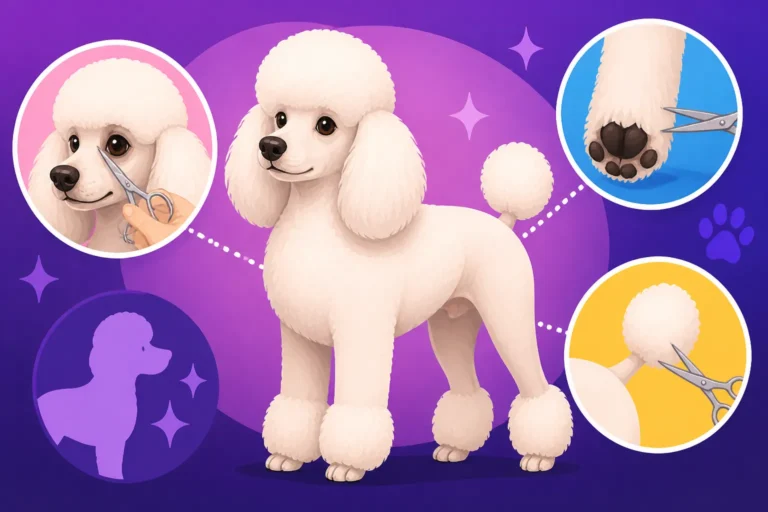
- Blending the Ear/Side Hair: Pay close attention to the hair that falls around the ears. You want a seamless blend from the topknot down into the longer ear furnishings. Use your thinning shears here to feather the edges gently. You might also want to trim the very top edge of the ear leather, where the ear meets the skull, with a #10 blade clipper for a super tidy look, if you're using clippers for the face. Trimming a Poodle's Face Clean
- Stand Back and Admire: Once you're happy, give your Poodle a good shake (if they will) or a final brush to see how the hair settles naturally. Make any final, tiny adjustments. Don't agonize over perfection; remember, it's a pet trim!
What if you make a mistake? It's going to happen. The best thing to do is take a deep breath, realize that Poodle hair grows back fairly quickly, and learn from it. Sometimes a "mistake" can lead to a new, shorter, and equally adorable style!
Maintaining the Topknot Between Full Grooms
A Poodle's coat, especially the topknot, is a high-maintenance affair. Trimming is just one part of the puzzle; daily care is absolutely essential to keep it looking good and, more importantly, to keep your Poodle comfortable and free of painful mats.
Daily Brushing and Routine Maintenance
Your Poodle's topknot is particularly prone to matting because of its length and location. The hair around the ears, eyes, and the crown of the head can easily tangle from head shakes, rubbing against furniture, or even just daily play.
- Daily Brushing: This is non-negotiable for a Poodle with any length of topknot. Every single day, take a few minutes to brush the topknot thoroughly with your slicker brush and then comb through with a fine-toothed comb. Focus on line brushing, making sure you get down to the skin to catch any tiny tangles before they become big, dense mats. How Often a Pet Poodle Needs Brushing
- Detangling Spray: Keep a good quality detangling or conditioning spray on hand. A light mist before brushing can help lubricate the hair, making it easier to comb through and reducing breakage.
- Check for Debris: Poodles love to stick their heads into things. Check the topknot daily for bits of food, burrs, leaves, or anything else that might have gotten caught and could lead to matting.
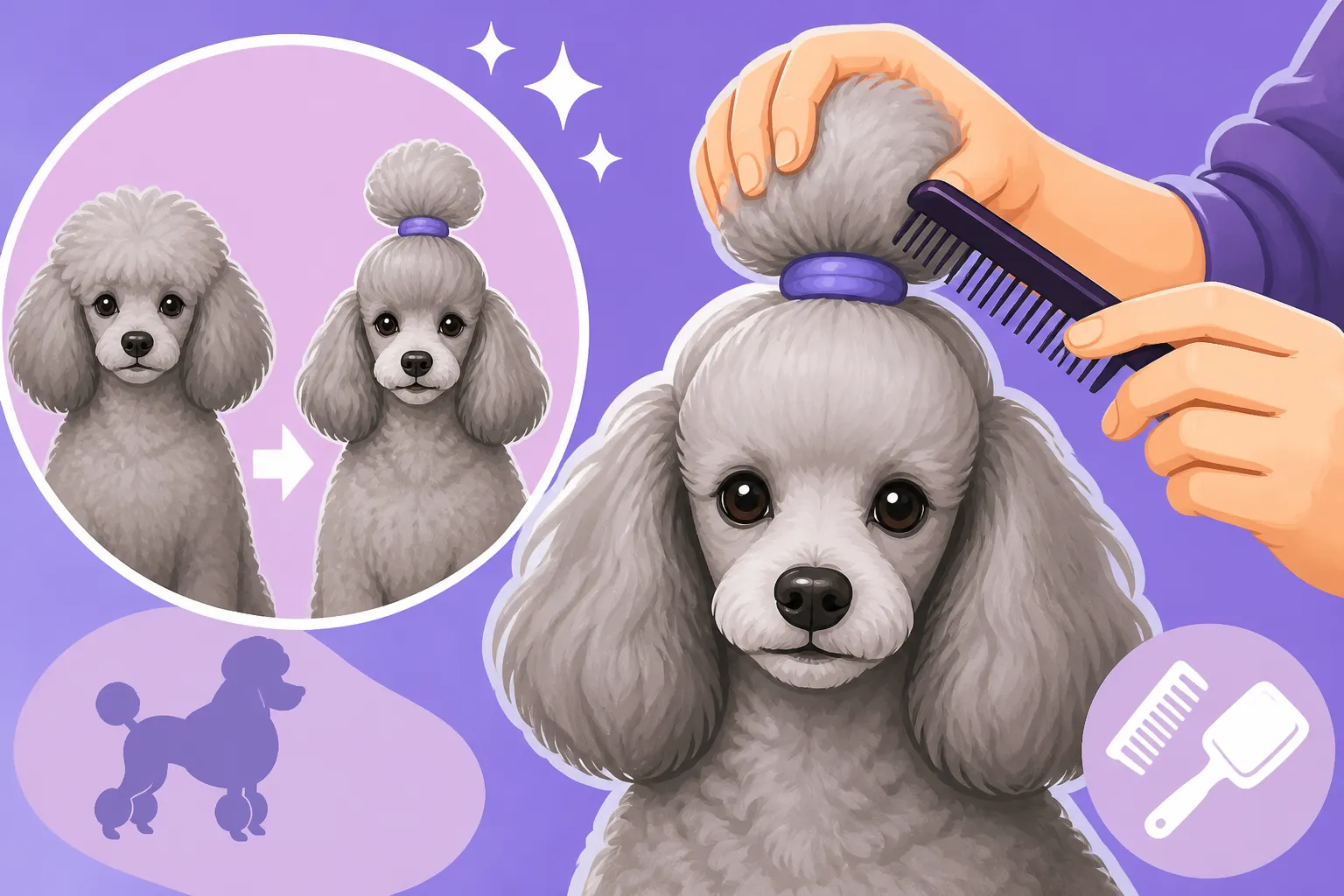
- Banding (Optional): If your Poodle has a very long topknot and you want to keep the hair out of their eyes, you can carefully band it. Use soft latex bands (not regular rubber bands!) and make sure not to pull the hair too tightly. This is more common for show Poodles or those with extreme length but can be a practical solution for preventing eye irritation.
When to Seek Professional Help or Touch-Ups
While home grooming is fantastic for maintenance and extending time between visits, there are times when a professional groomer is still your best friend.
- Major Resets: If your home trim has gone a bit… rogue, or if you're aiming for a very specific, intricate style (like a perfect Continental clip or even a very sharp lamb clip), a professional groomer can "reset" the topknot. They have the experience and advanced tools to sculpt a precise foundation that you can then maintain at home. What a Continental Poodle Clip Costs to Keep
- Show Clips: If you have a Poodle destined for the show ring, a professional groomer specializing in Poodle show clips is absolutely essential. These clips are an art form and require immense skill to get just right.
- Time Savings: Sometimes, life just gets busy. Handing your Poodle over to a professional for a full groom, including the topknot, can be a huge time-saver. Consider it an investment in your sanity and your Poodle's appearance.
- Difficult Poodles: If your Poodle is particularly anxious or uncooperative during grooming, a professional might have better luck, especially with tools like high-velocity dryers or sharp shears that require a steady subject.
Learning to shape your Poodle's topknot at home is a wonderfully rewarding skill. It deepens your bond with your dog, helps you understand their coat better The Poodle Coat and Why It Never Stops Growing, and can significantly reduce your grooming expenses over the years. With patience, practice, and the right tools, you'll soon be confidently sculpting that iconic Poodle crown!
Disclaimer
This article is for general informational purposes only and does not constitute professional advice. Laws, prices and regulations vary by location and change over time. Consult a qualified professional for guidance on your specific situation.