Why Surface Brushing Leaves Poodle Mats
It's incredibly frustrating, isn't it? You love your Poodle, you brush them regularly, sometimes even daily, and you think you're doing everything right. Then, suddenly, you discover a tight, painful mat lurking deep within their beautiful, curly coat, often behind an ear, in an armpit, or even right on their back. It feels like all your effort was for nothing, and the guilt can be immense. This guide will walk you through precisely why surface brushing often leads to these hidden tangles and how you can truly keep your Poodle's coat healthy and mat-free.
Understanding the Unique Poodle Coat: A Matting Magnet
The Poodle's coat is truly a marvel, but it's also a high-maintenance affair that often surprises new owners. Unlike many other breeds with fur, Poodles possess hair, and understanding this fundamental difference is the first step in preventing mats.
Hair, Not Fur: The Root of the Problem
When we talk about a Poodle's coat, we're talking about hair, much like human hair. This means it grows continuously and doesn't have a typical shedding cycle where fur falls out in seasonal bursts. Instead, any shed hairs get caught within the dense, curly structure of the surrounding coat. Imagine trying to brush a tangled head of long, curly human hair without getting deep into the roots – you'd just smooth the top layer, leaving knots underneath to fester. That's precisely what happens with a Poodle.
This continuous growth is why Poodles are often lauded as "non-shedding" and suitable for allergy sufferers, but it comes with a significant grooming responsibility. Their fine, dense curls are a perfect trap for loose hair, debris, and even just dust from daily life. If these trapped hairs aren't meticulously brushed out, they intertwine with healthy hairs, forming the beginnings of mats. It's a gorgeous coat, absolutely, but it demands an owner who understands its unique requirements and isn't afraid to get down to the skin. You can learn more about Why a Poodle Coat Mats Instead of Shedding in another article.
How Shed Hair Becomes a Tangle
The process of a shed hair becoming a painful mat is insidious and often happens faster than you'd expect. When those loose hairs get trapped within the Poodle's active, growing coat, they don't just stay put. As your Poodle moves, sleeps, plays, and rubs against furniture, these trapped hairs begin to twist and knot around the healthy, live hairs. It's a bit like a tiny snowball rolling down a hill, picking up more snow as it goes; a small knot can quickly grow into a dense, tight mat.
Consider the areas of your Poodle that experience the most friction: behind the ears where collars and harnesses rub, in the armpits from walking, around the groin, and even where they lie down. These are prime locations for mats to form and tighten rapidly. Each time a Poodle moves, or even just scratches an itch, those trapped hairs become more intertwined and compacted. What starts as a small tangle can, in a matter of days or even hours, become a felted mass that pulls painfully on the skin, causing discomfort and even severe irritation.
The Illusion of Brushing: Why Surface Brushing Fails
Many Poodle owners, with the best intentions, fall into the trap of surface brushing. It looks like you're grooming, and the top layer of the coat feels soft and smooth, but it's a deceptive practice that ultimately contributes to matting.
What Surface Brushing Actually Does
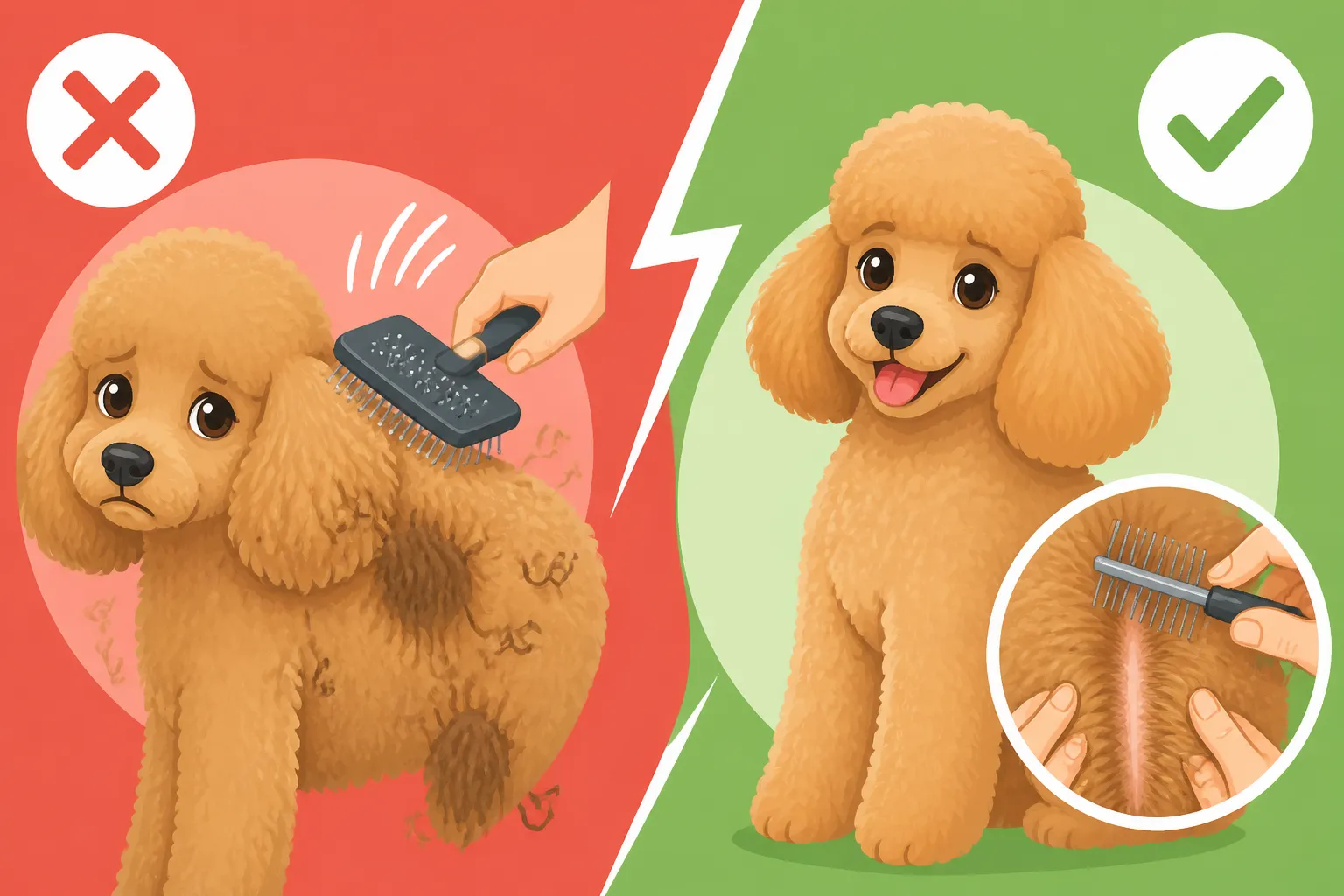
Surface brushing is exactly what it sounds like: you're brushing only the surface of the coat. You take your slicker brush or comb and glide it over the top layer of your Poodle's curls, making them look fluffy and neat. You might even pull out a few loose hairs. This creates the illusion that the coat is being thoroughly groomed and detangled. However, what's actually happening underneath is a different story entirely.
When you surface brush, your brush's bristles often aren't long enough or stiff enough to penetrate the dense, curly coat all the way down to the skin. Instead, they simply glide over the top, compacting any existing tangles and trapped shed hair closer to the skin. It's like sweeping dust under a rug – you've made the surface look clean, but you've actually made the underlying mess worse and harder to deal with later. This technique gives owners a false sense of security, leading them to believe their dog is well-groomed when, in reality, mats are quietly forming and tightening in the underlayers.
The Hidden Dangers of Neglected Underlayers
The consequences of consistent surface brushing are far more severe than just a few knots. These neglected underlayers, left to mat and tighten, pose significant health and comfort risks for your Poodle. Firstly, mats are inherently painful. They pull on the skin, much like having your hair constantly tugged. Imagine that discomfort across your entire body. This constant pulling can lead to skin irritation, redness, and even open sores as the Poodle tries to alleviate the itch or pain.
Beyond discomfort, dense mats restrict air circulation to the skin. This creates a warm, moist environment ripe for bacterial and fungal infections, commonly known as hot spots. Parasites like fleas and ticks can also hide deep within matted fur, going undetected and causing further issues. If the mats become severe enough, they can restrict movement, causing pain when walking or even making it difficult for your Poodle to lie down comfortably. At the groomer, severely matted Poodles often require a complete shave-down, which is not only stressful for the dog but also significantly more expensive due to the extra time and specialized care required. Many groomers even charge Surcharges Groomers Add for a Matted Poodle or refuse services entirely if mats are too extensive, emphasizing the gravity of the situation.
The Art of Line Brushing: Reaching Down to the Skin
The secret to a mat-free Poodle coat isn't more brushing, but better brushing. This is where the technique of line brushing comes in – a method that ensures every inch of your Poodle's skin and hair is reached and detangled.
The Technique: Breaking Down Line Brushing
Line brushing is a systematic approach that ensures you brush your Poodle's coat from the skin all the way out to the tip. It's a slower, more deliberate process than surface brushing, but it's the only way to truly prevent mats. Here's how to do it:
- Preparation is Key: Start with a calm Poodle. Having them on a grooming table or a non-slip surface at a comfortable height makes a huge difference. A quick spritz of a good quality detangling spray can help the brush glide through the coat and protect the hair from breakage. Brands found on Chewy or Amazon often carry excellent detangling options.
- Section the Coat: This is the most crucial step. Use your non-dominant hand to part the hair, creating a horizontal "line" or section of hair, perhaps an inch or two wide, starting near the bottom of your Poodle's leg or flank. Hold the rest of the coat up and out of the way with a clip or your hand.
- Brush from the Skin Out: With your dominant hand, take your slicker brush and begin brushing the small section of hair you've isolated. You must start at the very base of the hair, right where it meets the skin, and brush downwards and outwards. Make sure the bristles penetrate all the way to the skin. You'll work in small strokes, moving across that section until you've brushed it thoroughly.
- Work Your Way Up: Once that first line is completely mat-free, move up slightly, creating another small horizontal section directly above the first. Repeat the brushing process, ensuring you're overlapping slightly with the section you just finished. Continue this methodical process, line by line, until you've covered the entire body of your Poodle.
- Comb to Confirm: After you've line-brushed an area, always follow up with a metal greyhound comb. The comb should glide smoothly through the entire section from skin to tip without snagging. If it snags, you've found a tangle you missed with the slicker brush, and you need to go back and work it out gently. This combing step is non-negotiable for verifying a truly mat-free coat. For a deeper dive into this, check out our guide on How to Line Brush a Poodle Properly.
Essential Tools for Mat Prevention
Having the right tools is paramount when it comes to effectively maintaining your Poodle's coat and preventing those dreaded mats. You wouldn't try to sculpt a masterpiece with a dull chisel, and you shouldn't try to groom a Poodle with substandard tools.
First on the list is a high-quality slicker brush. These brushes have fine, wire bristles that are slightly bent. Look for one with firm but flexible pins and a comfortable handle. The size of the brush should match your Poodle; a larger standard Poodle will need a bigger brush than a tiny Toy Poodle. The slicker brush is your workhorse, designed to get deep into the coat and separate individual hairs, breaking up tangles before they become full-blown mats. Many reputable pet supply stores, including those online like Chewy or Amazon, offer a wide range of options, but investing in a good one is crucial.
Next, you need a metal greyhound comb. This isn't just any comb; it typically has teeth of varying widths, with one end wider-spaced and the other narrower. This comb is your mat-detection and confirmation tool. After you've brushed a section with the slicker, run the metal comb through it. If the comb glides effortlessly from skin to tip, that section is truly mat-free. If it snags, you know there's still a tangle hiding, and you need to go back with your slicker brush. Tools That Reach a Poodle's Undercoat are essential, and the metal comb ensures you've used them effectively.
Finally, consider a good detangling spray. This isn't just for emergencies; using it before brushing helps to lubricate the hair, making the brush glide more easily and reducing static and breakage. It can significantly cut down on brushing time and make the experience more pleasant for your Poodle. Always opt for a dog-specific spray, not a human one. Having a grooming table, even a small, portable one, can also make the entire process more comfortable for both you and your Poodle, saving your back and keeping your dog still.
Establishing a Routine for a Healthy Coat
Consistency is the absolute cornerstone of Poodle coat care. It's not about brushing for hours once a week; it's about frequent, thorough sessions that prevent problems before they escalate. For most Poodles, especially those in longer clips, daily line brushing is ideal. At a minimum, expect to brush every other day. Poodle puppies, during their "coat change" phase (typically between 6 and 18 months), will require even more frequent brushing as their softer puppy coat gives way to the denser adult coat, which is particularly prone to matting. To understand the demands, you might want to read How Often a Poodle Must Be Brushed.
Establishing this routine early in your Poodle's life is paramount. Puppyhood is the perfect time to introduce all grooming tools and make the experience positive. Short, frequent sessions with lots of praise and high-value treats (like those from Ollie) will teach your Poodle to tolerate, and even enjoy, grooming time. Start by handling their paws, ears, and tail gently, rewarding calm behavior. This early desensitization will pay dividends throughout their life, making professional grooms and at-home maintenance much easier. A good article to consult for this is Getting a Poodle Puppy Used to Being Handled. Remember, a Poodle's hair The Poodle Coat and Why It Never Stops Growing, meaning this is a lifelong commitment to their health and comfort.
| Feature | Surface Brushing | Line Brushing |
|---|---|---|
| Area Covered | Top layer of coat only | All layers, from skin to tip |
| Effectiveness | Low; creates illusion of cleanliness, compacts mats | High; prevents and removes mats, promotes skin health |
| Tools Often Used | Basic slicker, wide-tooth comb (ineffectively) | Quality slicker brush, metal Greyhound comb |
| Time Investment | Seems quick initially, but leads to longer future sessions | Requires dedicated time, but prevents major issues |
| Dog's Comfort | Initially comfortable, but leads to painful mats | May require patience, but keeps dog comfortable long-term |
| Result | Matted coat, potential skin problems, costly grooms | Healthy, tangle-free coat, reduced vet/groomer visits |
Addressing Mats and Maintaining Overall Coat Health
Even with the best intentions and a diligent brushing routine, a stubborn mat might occasionally appear, especially in hard-to-reach areas like the armpits or behind the ears. Knowing how to handle these situations, and incorporating other coat care practices, is vital for your Poodle's well-being.
Dealing with Stubborn Mats Safely
If you find a mat, resist the urge to pull at it or try to aggressively brush it out. This will only cause pain and likely make the mat worse. For small, loose tangles, you can often work them out gently using your fingers to tease the hairs apart, followed by careful brushing with a slicker brush and then a comb. Always hold the hair at the base, close to the skin, to prevent pulling. A good detangling spray can be a huge help here, making the hair more slippery and easier to separate.
For tighter mats, a specialized mat splitter or de-matting rake can sometimes be used, but extreme caution is advised. These tools are sharp and can easily cut your Poodle's skin if not used correctly. If a mat is very dense, close to the skin, or if your Poodle is showing signs of pain or discomfort, the safest course of action is often to carefully snip it out with blunt-nosed scissors (pointing away from the skin) or, even better, consult a professional groomer. They have the expertise and specialized tools to remove mats safely and with minimal stress to your Poodle. Sometimes, if mats are severe and extensive, the only humane option is a full shave-down, which is why understanding Whether a Matted Poodle Can Be Saved often comes down to the groomer's assessment.
Beyond Brushing: The Role of Bathing and Grooming
While brushing is the primary defense against mats, bathing plays a crucial supporting role. A clean coat is less likely to mat, as dirt and oils can make hair sticky and prone to tangling. However, bathing a Poodle correctly is an art in itself. You must thoroughly brush out all tangles before bathing. Water will tighten any existing mats, making them nearly impossible to remove afterward. Use a good quality shampoo and conditioner designed for dogs; many brands available on Chewy or Amazon offer excellent options for curly coats. When rinsing, ensure all product is completely removed, as residue can also contribute to matting.
After bathing, thorough drying is essential. Using a High Velocity Dryer on a Poodle is often recommended by professionals as it helps to straighten the curls, making the coat easier to brush and preventing new tangles from forming as it dries. Air drying a Poodle's coat is a recipe for matting, as the curls contract and intertwine as they dry. Regular professional grooming appointments, typically every 4-8 weeks depending on coat length, are also non-negotiable for most Poodle owners. Even if you're diligent with home brushing, a professional groomer has the tools and expertise to keep the coat in top condition, address any areas you might have missed, and ensure your Poodle stays comfortable. This investment is part of What Grooming Adds to a Poodle's Lifetime Cost.
Disclaimer
This article is for general informational purposes only and does not constitute professional advice. Laws, prices and regulations vary by location and change over time. Consult a qualified professional for guidance on your specific situation.