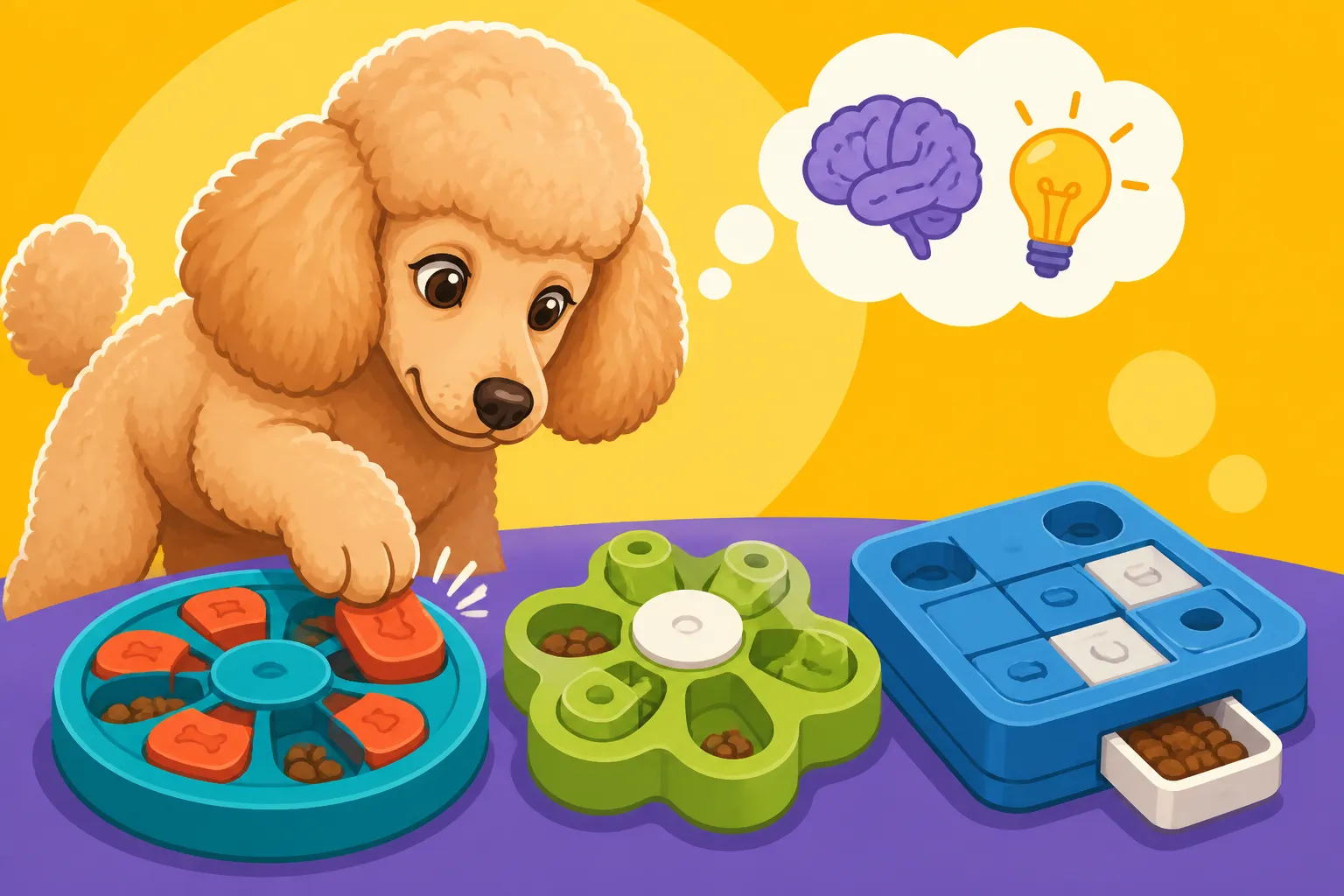
Feeders That Make a Poodle Think for Dinner
It’s a common frustration for Poodle owners: you put down a delicious meal, and within what feels like seconds, the bowl is licked clean. Or perhaps your brilliant Poodle seems utterly bored by the routine, looking for more engaging ways to use their keen mind. This comprehensive guide is dedicated to transforming your Poodle’s mealtime from a quick, unthinking gobble into a stimulating, enriching mental workout, addressing both fast eating and intellectual boredom.
Why Your Poodle Needs a Brain Workout at Mealtime
Poodles, regardless of their size, are exceptionally intelligent creatures with a natural drive to solve problems and engage their minds. When mealtime is reduced to simply inhaling food from a standard bowl, we miss a huge opportunity for enrichment and can inadvertently contribute to certain health and behavioral issues.
The Problem with Gulping Down Dinner
Many Poodles, especially those with hearty appetites, tend to eat their meals at an alarming speed. While it might seem efficient, this rapid consumption can lead to a host of problems. For larger Poodles, like Standards, gulping down food and air quickly significantly increases the risk of serious conditions such as gastric dilatation-volvulus, commonly known as bloat. Bloat is a life-threatening emergency where the stomach fills with gas and can twist, cutting off blood supply. Anything that slows down eating, reducing the amount of air ingested, is a step in the right direction to avoid Gastric Torsion Risk in a Standard Poodle. Even for Toy and Miniature Poodles, fast eating can cause indigestion, discomfort, and sometimes vomiting as their digestive system struggles to cope with the sudden influx.
Beyond the severe risks, fast eating often means your Poodle isn't truly enjoying their food. They're not engaging their senses or having the satisfying experience that comes from foraging and working for their meal, which is a natural instinct for dogs. Think about it: in the wild, no dog finds a perfectly portioned meal just sitting there. They work for it, and that engagement is part of the reward.
The Boredom Factor for a Smart Poodle
Poodles consistently rank among the most intelligent dog breeds, possessing sharp minds that thrive on mental challenges. A plain food bowl offers zero mental stimulation. It’s the equivalent of giving a child a coloring book with no crayons – the potential is there, but the tools for engagement are missing. When a Poodle's intelligence isn't adequately challenged, especially during routine activities like feeding, boredom can quickly set in.
A bored Poodle is often a mischievous Poodle. They might start inventing their own "games," which can manifest as destructive chewing, excessive barking, or constantly seeking attention in less-than-ideal ways. This isn't because they're "bad"; it's simply their clever brains trying to find something, anything, to do. Providing Mental Work That Tires a Poodle is just as important as physical exercise for their overall well-being. Using feeders that make your Poodle think turns a mundane task into an enriching activity, channeling their natural problem-solving abilities in a constructive way.
Exploring Different Types of Puzzle Feeders
The market is brimming with options designed to make your Poodle use their brain for their dinner. From simple modifications to complex contraptions, there's a puzzle feeder out there for every Poodle's skill level and your personal preference.
Slow Feeder Bowls
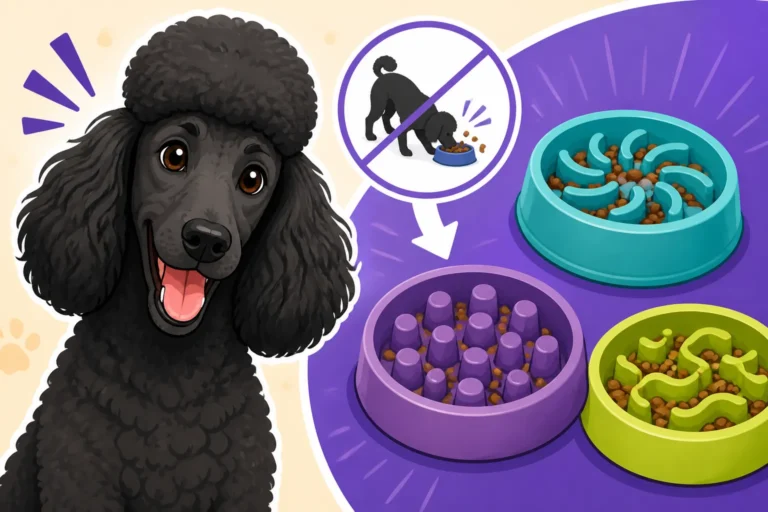
Slow feeder bowls are often the entry point into the world of mentally stimulating mealtimes. They look like regular dog bowls but feature internal ridges, labyrinths, or raised patterns that create obstacles for your Poodle’s tongue and nose. Instead of a wide-open surface, the food is dispersed into small compartments or channels, forcing your Poodle to navigate these barriers to get to each piece of kibble.
This design naturally slows down their eating pace, often by several minutes, giving their digestive system a chance to catch up and reducing the amount of air swallowed. Many Poodle owners report a noticeable decrease in post-meal burping, gassiness, and even instances of regurgitation after switching to a slow feeder. You can find a huge variety of these bowls on platforms like Amazon or Chewy, ranging from basic plastic designs to more durable ceramic or stainless steel options. While great for slowing eating, some Poodles might still finish them relatively quickly once they master the pattern, so they might be a stepping stone to more complex puzzles. Remember to choose one with sufficient depth and design complexity for your Poodle's size, particularly if you have a Slow Feeders for a Gulping Standard Poodle.
Interactive Puzzle Toys
Interactive puzzle toys take mental stimulation up a notch. These aren't just bowls; they're devices your Poodle must manipulate, push, pull, or flip to release food. They often involve multiple steps or different types of actions, making them highly engaging. Examples include toys where your Poodle has to slide panels, lift cones, or spin discs to reveal hidden compartments of kibble.
The beauty of interactive puzzle toys is their varying levels of difficulty. You can start with simpler designs that require just a nudge or a flip, and as your Poodle's problem-solving skills improve, you can introduce more complex puzzles. Some brands offer puzzles with interchangeable components, allowing you to increase the challenge over time. These toys are fantastic for Poodles who exhibit signs of boredom or need extra brain exercise to complement their physical activity. They tap into a Poodle's natural curiosity and intelligence, offering a rewarding challenge that satisfies their innate desire to work for their resources. It's a fantastic way to prevent What a Poodle Does When Its Brain Is Idle.
Snuffle Mats
Snuffle mats are fabric mats with many strips of fleece or other soft material sewn onto a base, creating a dense, shaggy texture. You sprinkle kibble or small treats deep within these fabric strips, and your Poodle uses their nose to "sniff out" and forage for their meal. It's a wonderful way to engage their olfactory senses, which are incredibly powerful, and mimic natural foraging behavior.
These mats are particularly great for Poodles of all sizes, from the tiniest Toy Poodle to the most majestic Standard. They're generally low-impact, meaning they don't require complex motor skills, making them suitable for older Poodles or those recovering from injuries. Snuffle mats offer a calm, focused activity that can be very mentally tiring without being physically strenuous. They're easy to use, easy to clean (most are machine washable), and can be a fantastic way to introduce a nervous or shy Poodle to the concept of working for their food, as it's a very natural and comforting activity.
Treat Dispensing Balls and Rollers
Treat dispensing balls and rollers are sturdy toys, usually made from rubber or hard plastic, with one or more holes. You fill them with kibble, and as your Poodle bats, rolls, or nudges the toy around, pieces of food fall out. These are excellent for Poodles who enjoy active play and need to burn off some mental and physical energy simultaneously.
Some designs have adjustable openings, allowing you to control how easily the food comes out, thus adjusting the difficulty. Poodles with their strong retrieving instinct often take naturally to these types of feeders. They learn quickly that movement equals reward, and it can be highly satisfying for them to chase and manipulate the toy. It's a dynamic way to serve a meal and can be particularly useful for Poodles who are slightly overweight, as it encourages movement during feeding time, contributing to Poodle Obesity and Its Consequences. Many can be purchased through retailers like Chewy or Amazon.
Choosing the Right Feeder for Your Poodle's Size and Temperament
Selecting the perfect puzzle feeder isn't a one-size-fits-all situation. What works wonders for a Standard Poodle might be overwhelming or too easy for a Toy, and vice-versa. Considering your Poodle's unique characteristics is key to a successful and enriching mealtime experience.
Considering Poodle Size and Jaw Strength
Poodle sizes vary dramatically, and this must be a primary consideration when selecting a feeder. A Toy Poodle, with their delicate jaw and small mouth, needs a feeder designed for tiny kibble and gentle manipulation. Large, heavy-duty puzzles meant for a Mastiff would be impossible for them to manage, potentially leading to frustration or even injury. Look for feeders with smaller openings, lighter materials, and designs that don't require excessive force. For example, a snuffle mat or a small, lightweight treat-dispensing ball might be ideal. When considering options, ensure the kibble size is appropriate for their smaller Kibble Size for a Toy Poodle's Jaw so it doesn't get stuck.
Conversely, a Standard Poodle has a powerful jaw and can be quite strong. They need feeders that are durable enough to withstand their enthusiasm and size. Flimsy plastic toys might quickly be destroyed or become a choking hazard. For Standards, look for robust puzzles, larger slow feeder bowls with deep ridges, or treat-dispensing toys made from heavy-duty rubber. The openings should be large enough to comfortably dispense standard-sized kibble without getting jammed. A feeder that's too small or too easy will offer little challenge and might be dismissed quickly by a bored Standard Poodle.
Matching the Feeder to Their Problem-Solving Skills
Every Poodle is an individual, even within the same breed. Some Poodles are natural-born puzzle solvers, while others might need a bit more guidance and encouragement. When introducing puzzle feeders, always start with an easier option. If you present a complex multi-step puzzle to a Poodle who's never worked for food before, they might get frustrated and give up, leading to a negative association with the feeder.
Begin with something straightforward, like a basic slow feeder bowl or a simple treat-dispensing ball that releases food easily with a gentle nudge. Once your Poodle masters that, you can gradually increase the difficulty. Observe their behavior: are they engaged and happily working, or are they getting visibly frustrated, pawing aggressively, or losing interest? A Poodle's incredible intelligence means they often learn quickly, and you might find yourself upgrading puzzle difficulty sooner than you think. However, be mindful that Why a Poodle Invents Its Own Shortcuts can also apply here – they might find an unintended way to "cheat" the system, which means it's time for a new challenge!
Durability and Cleaning Concerns
No one wants to invest in a feeder only for it to fall apart after a few uses, especially if your Poodle is a vigorous player. Durability is paramount, particularly for chewers or larger, more powerful Poodles. Look for feeders made from high-quality, non-toxic materials like food-grade plastic, silicone, ceramic, or sturdy rubber. Check reviews for reports of breakage or wear and tear.
Equally important is ease of cleaning. Food, especially wet food or if mixed with saliva, can quickly become a breeding ground for bacteria in the nooks and crannies of a puzzle feeder. Opt for designs that can be easily disassembled, are dishwasher safe, or have wide openings for thorough handwashing. Regular cleaning is crucial for your Poodle's health and to prevent unpleasant odors. Imagine the buildup in a complex puzzle that can’t be properly cleaned – it’s not just unhygienic, it could make your Poodle sick.
Integrating Puzzle Feeders into Your Poodle's Routine
Bringing puzzle feeders into your Poodle's daily life isn't just about picking one out; it's about thoughtful introduction and consistent use to maximize the benefits. It should be a positive and rewarding experience, not a source of stress.
Starting with Success: Tips for Introduction
Introducing a new puzzle feeder should always be a positive experience. Don't just dump their regular kibble into a complex puzzle and walk away. Start by making it easy and appealing. For the first few times, use high-value treats or a mix of kibble and extra-tasty morsels to entice your Poodle. Leave the puzzle partially filled or with some food visible and easily accessible so they get the immediate reward and understand the concept.
Always supervise your Poodle during their first few interactions with a new feeder. This allows you to observe their level of engagement and intervene if they become frustrated or attempt to chew on parts of the feeder rather than solve the puzzle. Offer gentle encouragement, praise, and maybe a little help if they’re really stuck. The goal is to build confidence and a positive association, teaching them that working for their food is fun and rewarding. Over time, as they grow more proficient, you can gradually reduce the "help" and transition to using only their regular mealtime kibble.
Rotating Feeders for Ongoing Engagement
Even the most brilliant Poodle can become bored with the same puzzle every single day. Once they’ve mastered a particular feeder, the mental challenge diminishes, and it becomes another routine. To keep things fresh and engaging, consider building a small "library" of 2-3 different types of puzzle feeders and rotating them throughout the week.
This variety keeps your Poodle’s brain guessing and ensures they’re always encountering a new challenge. One day it might be a slow feeder bowl, the next a snuffle mat, and perhaps an interactive toy the day after. This rotation not only prevents boredom but also works different cognitive skills. For example, a snuffle mat emphasizes nose work, while an interactive toy might require more paw and mouth dexterity. Keeping their brains active with varied challenges is excellent for Training the Second Smartest Dog Breed and reinforces their natural problem-solving abilities, ensuring that mealtime remains a highlight of their day.
Beyond Dinner: Other Opportunities for Mental Stimulation
Puzzle feeders don't have to be exclusively for dinner. They can be incredibly versatile tools for mental enrichment throughout the day. Consider using them for breakfast, snacks, or even to occupy your Poodle when you need them to settle quietly, such as during virtual meetings or when guests are over.
They are also invaluable for managing periods of alone time. If your Poodle tends to get a little anxious or destructive when you leave, a pre-filled puzzle feeder can provide a positive distraction and mental outlet, helping to alleviate some of that separation stress. Just ensure it's a feeder they can safely use unsupervised. You can even use portioned amounts of a fresh food service like Ollie to stuff into certain types of feeders for a special treat. By incorporating puzzle feeders into various aspects of their day, you’re providing consistent mental exercise, contributing to a well-rounded and contented Poodle.
Here’s a quick overview of some popular puzzle feeder types:
| Feeder Type | Description | Benefits | Poodle Suitability | Ease of Cleaning |
|---|---|---|---|---|
| Slow Feeder Bowl | Bowl with ridges, mazes, or obstacles. | Slows eating, reduces bloat risk. | All sizes; good starting point | Easy |
| Interactive Toy | Requires manipulation (sliding, lifting) to get food. | High mental stimulation, variable difficulty. | All sizes; choose based on complexity & durability | Moderate to Difficult |
| Snuffle Mat | Fabric mat with strips to hide kibble. | Engages sense of smell, mimics foraging. | All sizes; low physical demand | Easy (machine washable) |
| Treat Dispensing Ball | Ball/roller with holes, releases food when moved. | Encourages active play, mental & physical exercise. | All sizes; durable options for Standards | Moderate |
Disclaimer
This article is for general informational purposes only and does not constitute professional advice. Laws, prices and regulations vary by location and change over time. Consult a qualified professional for guidance on your specific situation.