Grades of Patellar Luxation in a Toy Poodle
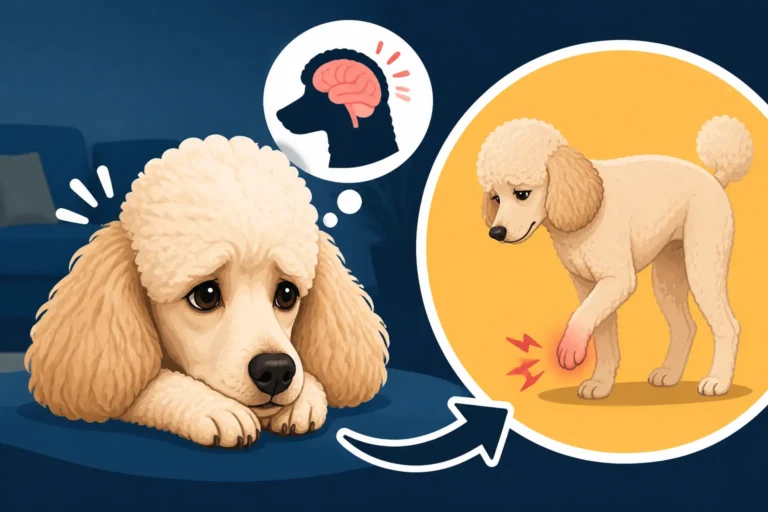
It’s a heart-wrenching moment for any Toy Poodle parent: seeing your tiny companion suddenly lift a back leg, skip a few steps, or even cry out in pain after what seems like a harmless jump. This isn't just a quirky gait; it often points to a common orthopedic issue in our smaller Poodles: patellar luxation. This guide will walk you through understanding the different grades of this condition, what each means for your beloved Toy Poodle, and the best ways to manage it, ensuring you’re equipped with the knowledge to give them the happiest, most comfortable life possible.
Understanding Patellar Luxation in Toy Poodles
Patellar luxation, often simply called "slipped kneecap," is an incredibly common condition in Toy Poodles and other small breeds. It occurs when the patella, or kneecap, dislocates from its normal position in the trochlear groove, a shallow indentation at the end of the femur (thigh bone). Instead of gliding smoothly up and down this groove as the knee bends and straightens, the kneecap pops out to either the inside (medial luxation, which is more common in Toy Poodles) or the outside (lateral luxation) of the leg. It’s alarming to witness your spirited little dog suddenly hobble or refuse to put weight on a leg, and it’s natural to feel worried and frustrated, wondering if something you did caused it.
The Anatomy of a Healthy Poodle Knee
To truly grasp patellar luxation, it helps to visualize the knee's intricate design. The knee joint, or stifle, in your Toy Poodle is a marvel of engineering, allowing for smooth, fluid motion that enables their signature bouncy gait. It’s comprised of three bones: the femur (thigh bone), the tibia (shin bone), and the patella (kneecap). The patella is a small, triangular bone embedded within the patellar ligament, which connects the quadriceps muscle to the tibia. This entire apparatus acts like a pulley system.
As your Poodle moves, the patella should glide effortlessly within the trochlear groove, a perfectly formed, V-shaped channel on the front surface of the femur. This groove, along with surrounding ligaments and muscles, keeps the kneecap aligned. When everything is working correctly, the forces are distributed evenly across the joint, allowing for efficient extension and flexion of the leg. However, in Toy Poodles, sometimes this delicate balance is disrupted, leading to the kneecap not staying where it should.
Why Toy Poodles are Predisposed to This Condition
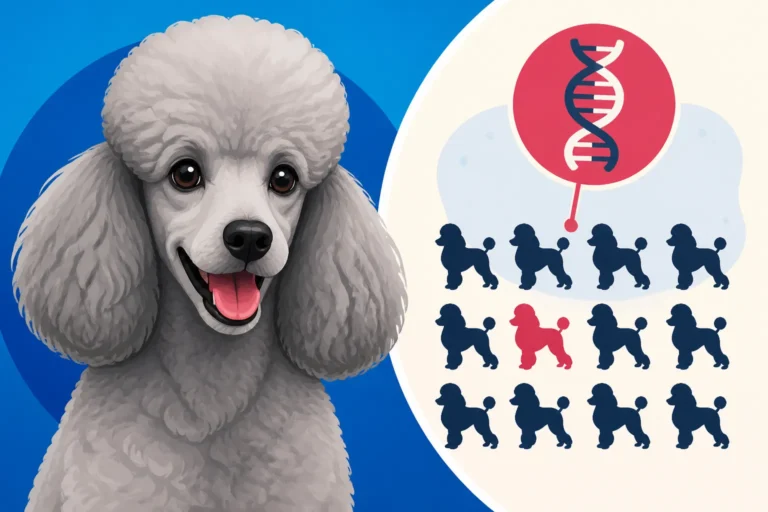
It’s easy to blame yourself when your dog develops a health issue, but patellar luxation in Toy Poodles is overwhelmingly genetic. They are simply predisposed due to their unique conformation, which has been selectively bred over generations. The condition is considered polygenic, meaning multiple genes are involved, making it tricky to eradicate entirely, even with careful breeding practices.
Specifically, the trochlear groove in many Toy Poodles can be too shallow or even flattened, providing an inadequate "track" for the kneecap. Additionally, the alignment of the bones in their hind leg, from the hip to the ankle, might be slightly off. For instance, the attachment point of the patellar ligament on the tibia might be too far to the inside or outside, pulling the kneecap out of alignment. Over time, or even with a single awkward movement, this inherent anatomical flaw allows the patella to pop out. This isn't usually due to an injury in the same way a human might sprain an ankle; rather, it’s a structural vulnerability that reveals itself. This is why when you're considering What a Toy Poodle Breeder Screens For, patellar health should be high on your list.
Deciphering the Four Grades of Patellar Luxation
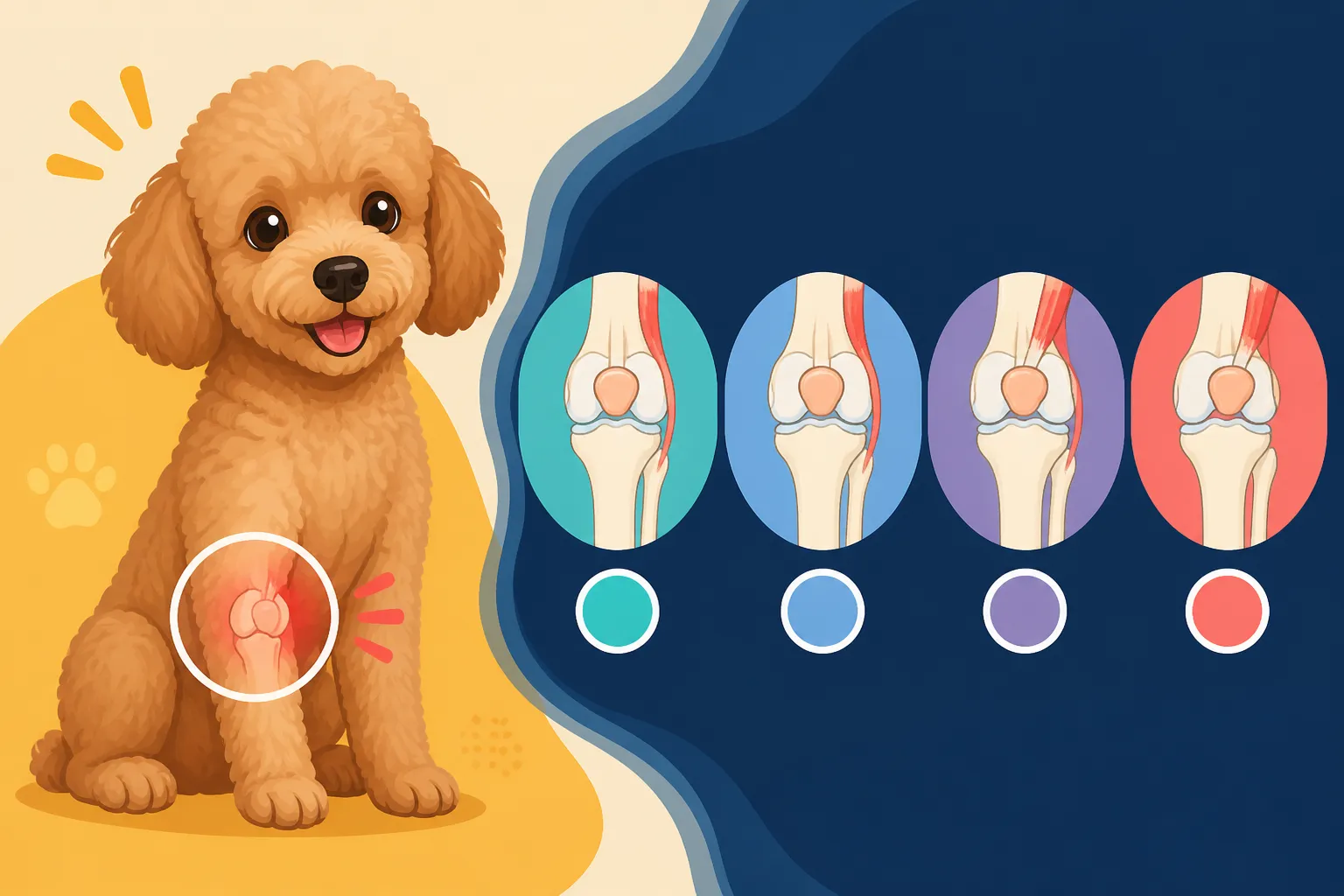
When a veterinarian diagnoses patellar luxation, they don't just say "it's luxating." They assign a grade from I to IV, which indicates the severity of the condition. This grading system is crucial because it informs the prognosis and the recommended course of treatment. Understanding these grades can help you communicate more effectively with your vet and know what to expect. It validates that not all slipped kneecaps are created equal, and your Poodle’s experience might be very different from another dog’s.
Here's a breakdown of the four grades:
| Grade | Description of Patella Movement | Owner Observation | Veterinary Findings | Typical Management |
|---|---|---|---|---|
| I | Luxates with manual pressure, but spontaneously reduces. | Occasional "skip" or momentary lameness, usually resolves quickly. Often asymptomatic. | Easily luxated by hand, immediately returns to normal position. | Conservative (monitoring, weight, supplements). |
| II | Luxates with manual pressure or natural movement, remains luxated intermittently. | More frequent "skips" or leg-holding. May limp for several steps. Occasional discomfort. | Luxates easily, may remain luxated until limb is extended or manipulated. | Conservative initially, surgery often considered if progressing or painful. |
| III | Luxated most of the time; can be manually reduced but re-luxates quickly. | Consistent lameness, limping, reluctance to bear weight, noticeable limb bowing. | Patella usually out of groove. Can be reduced but re-luxates immediately. | Surgery highly recommended to prevent further damage and pain. |
| IV | Permanently luxated and cannot be manually reduced. | Severe, chronic lameness, inability to bear weight, significant limb deformity, chronic pain. | Patella permanently out of groove, cannot be manually reduced. Severe skeletal changes. | Complex surgery to improve function and alleviate pain; prognosis varies. |
Grade I: The Mildest Slip
This is the mildest form of patellar luxation, and sometimes, owners might not even realize their Toy Poodle has it. In Grade I, the kneecap can be manually moved out of its groove by a veterinarian upon examination, but it pops right back into place on its own. It's like a slight hitch in the system that quickly corrects itself without conscious effort from the dog.
As an owner, you might observe a very occasional "skip" or "hop" from your Poodle when they’re running or playing, as if they briefly lift one leg for a step or two before putting it down and continuing as normal. These episodes are usually fleeting and painless. The dog shows no signs of discomfort or lameness afterward. It's so subtle that it can often be mistaken for a playful quirk. Because the patella spends most of its time correctly seated, there’s usually no damage to the cartilage or bone at this stage. Management for these cases is often conservative, focusing on strengthening the surrounding muscles and maintaining a healthy weight to minimize stress on the joint.
Grade II: Intermittent Hopping and Discomfort
Grade II patellar luxation is where things become a bit more noticeable and potentially problematic for your Toy Poodle. In this grade, the kneecap luxates more readily, either with manual manipulation or as your dog moves naturally. Crucially, it doesn't always pop back into place immediately on its own. Your Poodle might need to extend their leg straight out, or you might even be able to gently guide it back yourself.
You’ll likely observe more frequent and prolonged episodes of skipping, hopping, or holding the leg up. Perhaps your Poodle will run a few steps, then carry one hind leg for a moment, then seemingly "shake" it out and be fine. This is often followed by a noticeable period of lameness or stiffness, especially after vigorous activity. They might show signs of discomfort or reluctance to jump onto furniture. It’s during this stage that some owners might even hear a faint "pop" or "click" as the kneecap slips in and out. While conservative management, like diet control and Joint Supplements Worth Giving a Poodle, can certainly help, surgery becomes a more serious consideration if the episodes become more frequent, painful, or begin to affect their daily life. This is also where a good pet insurance plan, like those offered by Healthy Paws, can be incredibly beneficial, as surgical costs can quickly add up.
Grade III: Frequent Dislocation and Lameness
By the time patellar luxation reaches Grade III, the condition is significantly impacting your Toy Poodle's quality of life. At this stage, the kneecap is luxated (out of its groove) most of the time. While a veterinarian might be able to manually reduce it (push it back into place), it will quickly slip out again once released or as the dog moves. The underlying anatomical issues, such as a very shallow trochlear groove or significant misalignment of the bones, are much more pronounced.
For you, as the owner, this means observing consistent lameness. Your Toy Poodle might walk with a persistent limp, often carrying the affected leg or putting very little weight on it. You might notice a visible bowing or twisting of the limb as their body tries to compensate for the instability. Pain is usually more evident, and your dog might become reluctant to engage in activities they once loved, like playing fetch or going for walks. This is a point where discomfort has progressed to chronic pain for many dogs. At this stage, surgical intervention is almost always recommended to alleviate pain, prevent further joint damage, and improve mobility. The decision to proceed with surgery is a significant one, and understanding how a plan from Healthy Paws can help cover a substantial portion of the expenses can ease some of the financial burden during such a stressful time.
Grade IV: Permanent Dislocation and Severe Deformity
Grade IV patellar luxation represents the most severe form of the condition. In these extreme cases, the kneecap is permanently dislocated and cannot be manually reduced by a veterinarian. The anatomical changes are severe and often irreversible without complex surgical intervention. The trochlear groove may be completely flattened or even convex, and the supporting bone structures of the leg are significantly deformed, having adapted to the kneecap's constant malposition.
Witnessing a Toy Poodle with Grade IV luxation is heartbreaking. They will exhibit severe, chronic lameness and often cannot bear weight on the affected leg at all. Their gait might be significantly altered, often taking on a crouched stance or walking with a "pigeon-toed" appearance, as their body attempts to find some way to move. Chronic pain is a certainty, and their quality of life is severely compromised. Surgical correction for Grade IV luxation is challenging and often involves extensive bone reshaping and realignment. While surgery aims to improve function and reduce pain, achieving a fully normal gait might not be possible due to the long-standing, irreversible skeletal changes. It's a testament to the Poodle's resilience that they cope, but these cases demand dedicated, often intensive, care.
Diagnosis and Treatment Paths for Your Toy Poodle
Receiving a diagnosis of patellar luxation can feel overwhelming, but understanding the steps your veterinarian will take and the available treatment options can empower you. The journey typically begins with a thorough examination, followed by a discussion about whether conservative management or surgical intervention is the best path forward for your particular Toy Poodle.
The Veterinary Examination and Imaging
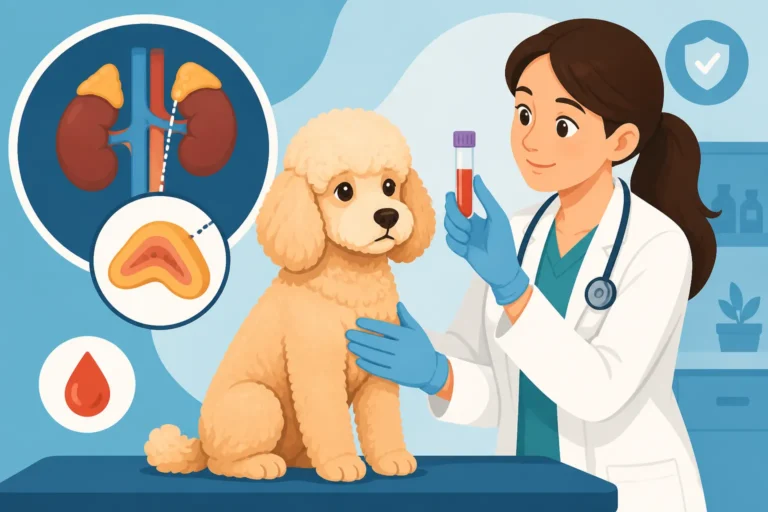
When you suspect your Toy Poodle has a kneecap issue, the first step is always a visit to your veterinarian. They will begin with a comprehensive orthopedic examination, paying close attention to your dog's gait and how they bear weight. During this hands-on assessment, the vet will gently manipulate your Poodle's knee joint, attempting to push the patella out of its groove. They'll assess how easily it luxates, which direction it moves, and whether it stays out or pops back in, which is crucial for determining the grade. They'll also check for any associated pain, swelling, or crepitus (a grinding sensation) in the joint.
Beyond physical manipulation, your vet will likely recommend radiographs (X-rays). While X-rays don't directly show the kneecap slipping, they are invaluable for assessing the overall alignment of the limb bones (femur and tibia), the depth of the trochlear groove, and any signs of arthritis or other skeletal abnormalities that might be contributing to the problem. They can also help rule out other conditions that might mimic patellar luxation, such as Legg-Calve-Perthes in Small Poodles or even a subtle form of Poodle Hip Dysplasia by Size, which, though less common in Toy Poodles, is still a possibility. This detailed imaging ensures a precise diagnosis and helps tailor the most effective treatment plan.
Conservative Management for Mild Cases
For Toy Poodles with Grade I or early Grade II patellar luxation, and sometimes even for those with mild Grade II cases where pain isn’t a primary concern, conservative management is often the first approach. This doesn't mean doing nothing; it means actively managing the condition through non-surgical methods aimed at minimizing discomfort, maintaining muscle tone, and preventing progression.
One of the most critical aspects of conservative management is weight control. Every extra pound puts undue stress on delicate joints, especially small ones. Keeping your Toy Poodle at their ideal weight is paramount. Your vet can help you determine the right portion sizes and a suitable diet. Another key component is controlled exercise. High-impact activities like jumping off furniture or vigorous fetch should be avoided. Instead, focus on regular, gentle walks on leash to build and maintain strong quadriceps muscles, which help support the kneecap. Joint supplements, such as glucosamine, chondroitin, and Omega-3 fatty acids, can also play a supportive role by promoting cartilage health and reducing inflammation. In some cases, a vet might recommend physical therapy exercises to strengthen specific muscles, or prescribe anti-inflammatory medications during flare-ups of pain or discomfort. It's about creating a supportive environment and a lifestyle that minimizes strain on their vulnerable knees.
Surgical Intervention and Recovery
When conservative management isn't enough – typically for Grade II luxation that is causing significant pain or progressing, and almost always for Grades III and IV – surgical intervention becomes the most effective, and often necessary, course of action. The goal of surgery is to permanently realign the patella within its groove, stabilizing the knee joint. There isn't just one type of surgery; rather, several techniques are often combined to address the specific anatomical issues.
Common surgical procedures include trochlear modification, where the surgeon deepens the trochlear groove (sulcoplasty) so the kneecap has a better track to run in. Another technique is tibial crest transposition, which involves carefully cutting and reattaching the bony prominence on the tibia where the patellar ligament attaches, thereby realigning the entire quadriceps mechanism. Lateral imbrication might also be performed, which tightens the joint capsule on the side opposite the luxation, further preventing it from slipping out.
The recovery period after patellar luxation surgery is crucial and demands dedication. It typically involves strict activity restriction for 6-8 weeks, followed by a gradual reintroduction to exercise. Pain management is paramount, often involving a combination of medications. Physical therapy, which can include gentle range-of-motion exercises, passive flexion, and extension, and eventually controlled walks, is vital for a successful outcome. This can be an expensive journey, and having pet insurance, such as a plan from Healthy Paws, can significantly ease the financial burden of both the surgery itself and the subsequent rehabilitation. You can also learn more about When a Toy Poodle's Kneecap Needs Surgery to help you prepare.
Living with and Preventing Patellar Luxation
Whether your Toy Poodle has a mild case managed conservatively or has undergone surgery, living with patellar luxation means making conscious choices to support their joint health. While preventing it entirely can be challenging due to its genetic nature, there are proactive steps you can take to minimize risk and ensure your Poodle remains as comfortable and active as possible throughout their life.
Environmental Adjustments and Lifestyle Considerations
Creating a safe and supportive home environment can make a world of difference for a Toy Poodle prone to patellar luxation. Their small size makes them particularly vulnerable to injuries from everyday activities. One of the most important adjustments is addressing slippery surfaces. Hardwood, tile, and laminate floors can be like ice rinks for a small dog with unstable knees. Lay down rugs, runners, or carpet mats in high-traffic areas to provide traction and prevent slips that could cause the kneecap to luxate.
Jumping should also be managed. While it's adorable to watch a Toy Poodle leap onto the sofa, repeated jumping off furniture or stairs can put immense strain on their knee joints. Consider investing in pet ramps or steps for access to beds and couches, especially as they get older. If your Poodle is a young puppy, teaching them gentle play and discouraging excessive jumping can also be beneficial in the long run. Learn more about When a Poodle Puppy May Start Jumping to understand developmental stages. Finally, maintaining a healthy weight through appropriate nutrition and consistent, but not excessive, exercise is perhaps the single most impactful lifestyle choice you can make. Even a little extra weight can significantly exacerbate the strain on vulnerable joints.
The Importance of Responsible Breeding
While environmental factors and lifestyle play a role in managing patellar luxation, the single most significant factor in its occurrence is genetics. This highlights why choosing a responsible breeder is absolutely paramount when bringing a Toy Poodle into your home. Reputable breeders understand the genetic predispositions of their lines and take proactive steps to minimize the risk of passing on undesirable traits like patellar luxation.
A responsible breeder will meticulously screen their breeding stock for orthopedic health. They should be able to provide clear documentation of health clearances, such as certifications from the Orthopedic Foundation for Animals (OFA). The OFA maintains a public database of health test results, including patella evaluations, allowing prospective buyers to verify the health history of a puppy's parents. They'll have their breeding dogs' knees examined by a qualified veterinarian to check for any signs of luxation before breeding. If a dog has even a Grade I luxation, a responsible breeder typically won't breed them, or will only breed to a dog with absolutely perfect knees and a long history of sound offspring. Asking detailed questions about the parents' health, requesting to see health certificates, and understanding the history of patellar luxation in their lines are all crucial steps. While good breeding doesn't offer a 100% guarantee against health issues (nature can always surprise us), it significantly stacks the odds in your favor, and can provide peace of mind knowing you’ve started with the healthiest possible foundation for your new family member.
Disclaimer
Please remember that the information provided in this article is for educational purposes only and should not be considered a substitute for professional veterinary advice. Always consult with a qualified veterinarian regarding any health concerns or before making any decisions about your Poodle's care or treatment.