Legg-Calve-Perthes in Small Poodles
It’s truly heartbreaking to watch your lively little Poodle puppy suddenly start limping, favoring a leg, or hesitating to jump and play. That sinking feeling in your stomach as you wonder what could be wrong is something no pet parent wants to experience. If you have a small Poodle, especially a Toy or Miniature, one potential, albeit rare, culprit behind these troubling signs could be Legg-Calve-Perthes disease, often shortened to LCP. This guide aims to thoroughly explain what LCP is, how to spot its symptoms, the diagnostic process, and the available treatment options so you can navigate this challenging diagnosis with confidence.
Understanding Legg-Calve-Perthes Disease LCP in Small Poodles
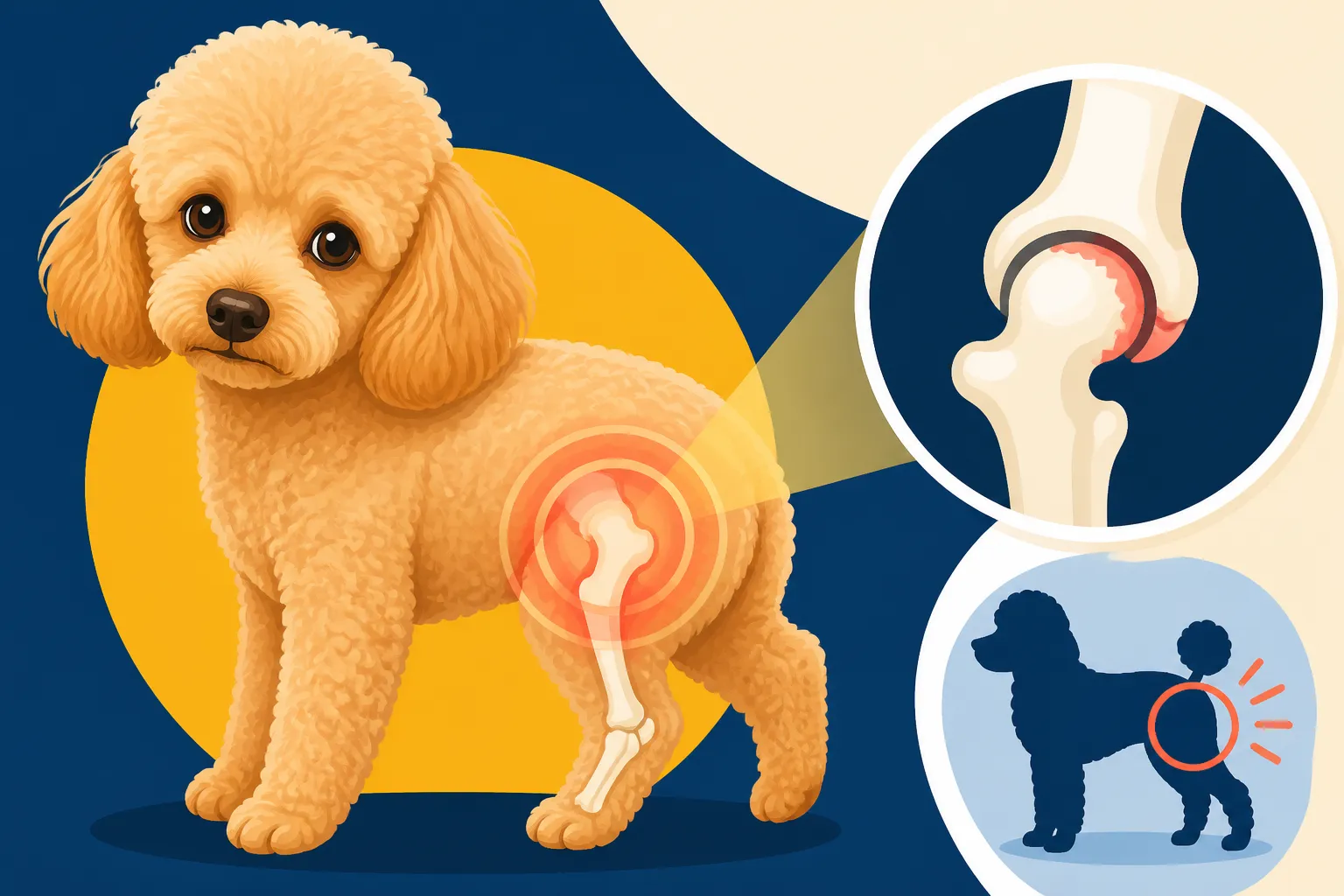
Legg-Calve-Perthes disease is one of those conditions that sounds incredibly complicated, but at its heart, it’s a problem with the blood supply to the top of your dog's thigh bone, specifically the head of the femur where it sits in the hip socket. When this blood supply is interrupted, the bone tissue starts to die, a process called avascular necrosis. Over time, this dead bone tissue weakens, fractures, and eventually collapses, leading to significant pain and joint degeneration. It’s not something you can see from the outside, which often makes the initial limping so perplexing and frustrating for owners trying to pinpoint the issue.
What Exactly is LCP?
Imagine the ball-and-socket joint of your Poodle’s hip. The "ball" is the head of the femur, and it’s normally smooth and perfectly rounded, fitting snugly into the hip socket. In a Poodle affected by LCP, for reasons we don't fully understand but suspect are genetic, the blood vessels supplying this femoral head temporarily or permanently shut down. Without oxygen and nutrients, the cells in the bone begin to perish. This dead bone becomes brittle and fragile, much like a dried-up sponge. As your puppy moves, the stress and weight-bearing on this weakened bone cause tiny fractures, leading to a gradual deformation and flattening of the femoral head.
This progressive breakdown of the bone results in painful inflammation within the hip joint. What starts as a minor stiffness or an occasional limp can quickly escalate into chronic pain and a severe refusal to use the affected leg. It’s particularly cruel because it strikes puppies during a crucial period of their development, usually when they’re full of boundless energy and ready to explore the world. Seeing your typically happy-go-lucky Poodle become withdrawn or yelp when touched is a distressing experience, and it’s important to remember that LCP is a disease that causes real, often intense, discomfort.
The Genetic Component and Breed Predisposition
LCP is widely recognized as a hereditary condition, meaning it’s passed down through a dog's genes. This is incredibly important for owners to understand because it means your Poodle’s condition isn't due to something you did or didn't do. It’s simply an unlucky genetic roll of the dice, though responsible breeding practices aim to minimize its occurrence. While it can theoretically affect any dog, LCP predominantly strikes smaller breeds. Toy Poodles and Miniature Poodles are, unfortunately, among those genetically predisposed, along with other small breeds like West Highland White Terriers, Cairn Terriers, Yorkshire Terriers, and Chihuahuas.
The exact mode of inheritance isn't fully clear, but it’s believed to be polygenic, involving multiple genes, or an autosomal recessive trait. This genetic link highlights the critical importance of choosing a reputable breeder who screens their breeding stock for genetic health issues. While a specific DNA test for LCP isn't routinely available in the same way some other genetic conditions are, good breeders will be transparent about the health history of their lines and take steps to avoid breeding dogs that have produced puppies with LCP. You might also find it helpful to look into topics like "What a Poodle Breeder Must Test For" to understand comprehensive health screening for your chosen Poodle variety. Knowing that you've done your due diligence in selecting a puppy can offer some comfort if LCP does sadly manifest.
Recognizing the Signs and Symptoms of LCP
Spotting LCP can be tricky in its early stages because puppies, especially energetic Poodles, can be a bit clumsy. They might take a tumble, bounce back up, and then develop a slight limp that seems to come and go. As a pet parent, it's easy to dismiss these initial signs as minor bumps or bruises, but with LCP, those subtle clues are often the first indications of a more serious underlying problem. The key is vigilance and knowing what to look for, even if it feels like you're constantly second-guessing every little thing your Poodle does.
Early Warning Signs and Onset Age
LCP typically manifests in puppies between 4 and 12 months of age, which is a critical growth period. The very first sign you might notice is a subtle, intermittent lameness in one of the hind legs. Your Poodle might occasionally hold the affected leg up for a few steps, then put it down and walk normally again. They might seem a little stiff after resting or have difficulty rising. Perhaps they're reluctant to engage in their usual playful activities, showing less enthusiasm for jumping onto the sofa or running around the yard.
It's truly tough because puppies are so full of gusto, and a momentary limp can feel normal. However, pay close attention if your Poodle starts to avoid putting weight on one particular hind leg more consistently, even for short periods. They might even sit or lie down in unusual positions to relieve pressure on the hip. As the disease progresses, this limping becomes more pronounced and constant, and you may notice muscle wasting in the affected thigh, making it appear thinner than the healthy leg. This early stage is crucial for intervention, and recognizing these changes, no matter how small, is vital. For more context on how different sizes of Poodles might exhibit various health issues, consider reading "Why Poodle Health Splits by Size."
Progressive Lameness and Pain Indicators
As LCP advances and the femoral head continues to degrade, the lameness will become much more obvious and persistent. Your Poodle might refuse to bear weight on the affected leg altogether, hopping on three legs or dragging the painful limb. This is where the intense pain really starts to take its toll. Beyond just physical lameness, you might observe significant behavioral changes in your otherwise sweet Poodle. They could become withdrawn, less interactive, or even show signs of aggression if you attempt to touch or manipulate their hip.
Pain indicators can include whimpering, yelping when moving or being picked up, restlessness, or difficulty finding a comfortable position to rest. The muscle atrophy we mentioned earlier will become more severe as the dog avoids using the limb, further weakening it. This stage is particularly challenging for both dog and owner, as the constant pain can severely impact your Poodle’s quality of life. Understanding "Reading Pain in a Sensitive Poodle" can help you interpret your dog's subtle cues. It’s at this point that most owners seek veterinary attention, often with a sense of urgency and deep concern.
Diagnosing Legg-Calve-Perthes in Your Poodle
When you bring your Poodle to the vet with symptoms suggestive of LCP, your veterinarian will begin a thorough physical examination. Diagnosing LCP involves a combination of careful observation, palpation, and crucial imaging techniques. It's a process of elimination and confirmation, designed to give you a clear answer and the best path forward. Getting an accurate diagnosis is the first step towards relief for your struggling Poodle.
Initial Veterinary Examination and Palpation
During the initial exam, your vet will observe your Poodle's gait, paying close attention to how they bear weight, walk, and stand. They'll then perform a hands-on examination, gently feeling your Poodle’s hips and legs. A key part of this is manipulating the hip joint through its range of motion. For a Poodle with LCP, this movement will often elicit pain, and your vet might feel a characteristic grinding or clicking sensation, known as crepitus, as the damaged femoral head moves within the socket. The range of motion in the affected hip will also likely be significantly reduced compared to a healthy joint.
The vet will also check for muscle atrophy in the hind limbs and assess for any tenderness or swelling around the hip. It’s important to remember that these clinical signs can sometimes overlap with other conditions affecting small breed dogs, such as "Luxating Patella in Toy and Miniature Poodles," where the kneecap slips out of place, or even some forms of "Poodle Hip Dysplasia by Size," though LCP is a distinct disease. Your vet will carefully differentiate between these possibilities, often by isolating the source of the pain to the hip joint itself.
The Role of X-Rays for Confirmation
While a physical exam provides strong clues, X-rays are absolutely essential to definitively diagnose Legg-Calve-Perthes disease. Radiographs allow the veterinarian to visualize the bones and joints, revealing the characteristic changes associated with LCP. On an X-ray, the femoral head of an affected Poodle will show signs of increased density initially, followed by a mottled appearance as bone necrosis progresses. You'll likely see flattening or irregular contours of the femoral head, widening of the joint space, and even fragmentation of the bone.
Due to the pain and the need for very specific positioning to get clear images of the hip joint, your Poodle will almost certainly require sedation for the X-ray procedure. This ensures that the images are diagnostic and minimizes stress and discomfort for your dog. Seeing the changes on the X-ray can be a moment of clarity for owners; while the news of a diagnosis is never easy, finally understanding the cause of your Poodle's pain can be a huge relief, allowing you to move forward with appropriate treatment.
Treatment Options for Legg-Calve-Perthes
Once LCP is confirmed, your veterinarian will discuss the available treatment options. Generally, there are two main approaches: conservative management or surgical intervention. The choice depends heavily on the severity of the disease, your Poodle's age, and your family's circumstances. No matter the path, the goal is always to alleviate pain and restore as much mobility as possible to your beloved companion.
Conservative Management: When and How It's Applied
Conservative management is typically reserved for very mild, early cases of LCP, often those caught before significant bone degeneration has occurred, or for owners who might face temporary financial constraints. It involves a strict regimen of rest, pain control, and sometimes physical therapy. Strict crate rest means limiting your Poodle's activity dramatically, preventing jumping, running, or excessive movement of the hip. This can be incredibly challenging with an active Poodle puppy, as their natural instincts are to play and explore. Imagine trying to explain to a bouncy Miniature Poodle that they can't chase a ball for weeks or months!
Pain and anti-inflammatory medications will be prescribed to manage discomfort and reduce inflammation in the joint. Non-steroidal anti-inflammatory drugs (NSAIDs) are commonly used. In some cases, joint supplements containing glucosamine and chondroitin might be recommended to support joint health. While conservative management aims to allow the femoral head to regenerate its blood supply and heal, it's often a long shot and rarely leads to a full recovery, especially in more advanced cases. The success rate is relatively low, and many dogs eventually require surgery if the condition worsens or pain becomes unmanageable. It’s a path that demands immense patience and discipline from the owner, and honestly, can be heartbreaking if it doesn't yield the desired outcome.
Femoral Head Ostectomy FHO Surgery: The Gold Standard
For the vast majority of Poodles diagnosed with Legg-Calve-Perthes, especially those with moderate to severe disease, Femoral Head Ostectomy (FHO) surgery is considered the most effective and often the "gold standard" treatment. This procedure involves surgically removing the entire head and neck of the femur, the "ball" portion of the hip joint. While it sounds drastic, the principle is quite clever. By removing the painful, damaged bone, the rubbing of bone-on-bone is eliminated.
After the surgery, scar tissue forms in the space where the femoral head once was. This fibrous tissue eventually creates a "false joint," allowing the leg to move without the excruciating pain associated with the degenerated bone. Because Poodles are lighter, smaller breeds, their bodies adapt remarkably well to this false joint, and they can regain excellent function and lead active, pain-free lives. The success of FHO in small dogs is much higher than in larger breeds, where the amount of muscle mass needed to support the hip without the bony connection is greater. This surgery is often a significant investment, but it offers a definitive solution to a painful, debilitating problem. If you're concerned about unexpected veterinary costs, pet insurance like Healthy Paws can provide crucial financial support for major surgeries like FHO. It's truly something that can take a huge weight off your shoulders during a stressful time.
Post-Surgical Care and Long-Term Prognosis
The surgery itself is only half the battle; the post-operative period is equally critical for a successful outcome following an FHO. This phase requires dedication, patience, and a commitment to rehabilitation to ensure your Poodle regains full function of their leg. It’s a journey, but with consistent effort, the results are overwhelmingly positive, allowing your Poodle to return to being the joyful, energetic companion they once were.
Rehabilitation and Physical Therapy
After FHO surgery, your Poodle will need a structured rehabilitation program. This usually begins shortly after surgery, sometimes even within 24-48 hours, with gentle passive range of motion exercises. This involves carefully moving your Poodle’s leg through its natural range of motion to prevent stiffness and scar tissue from becoming restrictive. As your Poodle heals, the exercises will gradually increase in intensity and complexity. Controlled leash walks, starting very short and slowly increasing in duration, are essential to rebuild muscle strength and encourage proper weight-bearing.
Many veterinarians will recommend a course of physical therapy with a certified canine rehabilitation therapist. These specialists can guide you through specific exercises, hydrotherapy (underwater treadmill or swimming) which is excellent for non-weight-bearing exercise, and therapeutic massage. The commitment to these therapies makes a profound difference in the speed and extent of recovery. It’s not uncommon for rehabilitation to last several weeks to a few months, and consistency is key. It can feel like a part-time job, but seeing your Poodle gain strength and confidence is incredibly rewarding.
Life After LCP: Expecting a Full Recovery
The good news is that the long-term prognosis for small Poodles after a successful FHO surgery and diligent rehabilitation is generally excellent. Most Poodles go on to live full, active, and pain-free lives, often without any noticeable limp or functional limitations. The "false joint" formed by scar tissue is robust enough to support their body weight and allow for normal movement. It’s truly remarkable how well these little dogs adapt!
While the immediate post-operative period involves strict care, within a few months, many Poodles are back to running, jumping, and playing with gusto. It’s important to maintain a healthy weight for your Poodle throughout their life to minimize stress on all their joints. Regular, moderate exercise will also help keep their muscles strong and supportive. While the chances are high for a complete return to normal activity, some Poodles might develop mild arthritis in the operated hip much later in life, similar to what might be seen when "Caring for an Aging Poodle." However, this is usually manageable with appropriate veterinary care and supplements. Ongoing support, especially for any potential future health concerns, can be financially eased by continued pet insurance coverage. Many pet insurance providers, such as Healthy Paws, offer plans that continue to cover chronic conditions or new illnesses throughout your pet's life, helping you manage unexpected costs down the road.
Here's a quick comparison of the two main treatment paths for LCP:
| Feature | Conservative Management | Femoral Head Ostectomy (FHO) Surgery |
|---|---|---|
| Severity | Very mild, early stages only | Moderate to severe cases, most common approach |
| Primary Goal | Allow blood supply to regenerate; pain relief | Eliminate bone-on-bone friction; create false joint |
| Method | Strict rest, pain meds, anti-inflammatories | Surgical removal of femoral head/neck |
| Success Rate | Low, often leads to eventual surgery | High, especially in small breeds |
| Recovery Time | Long, uncertain, potential for chronic pain | ~8-12 weeks intensive rehab, then ongoing maintenance |
| Cost | Lower initial drug/vet costs, but potentially ongoing | Higher upfront surgical cost, then rehab fees |
| Long-Term | Higher risk of chronic pain, arthritis, functional deficits | Excellent prognosis for active, pain-free life; possible later arthritis |
| Requires | Immense owner patience & discipline | Significant owner commitment to post-op rehab |
Disclaimer
This article is intended for informational purposes only and is not a substitute for professional veterinary advice. Always consult with a qualified veterinarian for any health concerns or before making any decisions about your Poodle's medical care.