Poodle Dental Disease by Size
It’s easy to overlook what’s happening inside your poodle’s mouth, especially when their beautiful coat and bright eyes grab all your attention. But dental disease is a silent, insidious problem that affects nearly all dogs, Poodles included, and it can significantly impact their overall health and comfort. This comprehensive guide will walk you through the unique dental challenges faced by Poodles of all sizes, from the tiny Toy to the majestic Standard, and arm you with the knowledge to protect their pearly whites for a lifetime.
The Unique Dental Landscape of Poodles
Poodles, regardless of their size, share certain characteristics that unfortunately make them particularly prone to dental issues. Their genetic makeup, coupled with the structure of their jaws and teeth, can create a perfect storm for plaque, tartar, and eventually, severe periodontal disease. Understanding these underlying factors is the first step in proactive care.
Why Poodles Are Prone to Dental Issues
One of the primary reasons Poodles are often at the top of the list for dental problems stems from their breeding. As a purebred dog, certain traits have been selectively amplified, and sometimes, this comes with unintended consequences for health. For Poodles, the shape of their muzzle and the size of their teeth relative to their jaw can create a crowded environment. Think about it: a small mouth trying to accommodate a full set of teeth designed for a larger animal, or even a normal set of canine teeth packed too tightly together. This crowding leads to an increased surface area for plaque to accumulate, and it makes it incredibly difficult for food particles and bacteria to be naturally dislodged. The teeth rub against each other, creating tiny crevices where debris loves to hide.
Moreover, Poodles, especially the smaller varieties, have delicate bone structures, and this can extend to their jawbones. Chronic inflammation from periodontal disease can weaken these bones, making them more susceptible to fractures in advanced stages. Their distinctive drop ears, while not directly related to dental health, do remind us of specific care needs for the breed that owners must be diligent about. Just as you pay attention to Ear Infections Under a Poodle's Drop Ears, you must also pay close attention to what’s happening inside their mouth. The breed's sensitive nature also means they might hide pain until it's quite advanced, making early detection a challenge for even the most observant owner.
The Silent Threat of Periodontal Disease
Periodontal disease isn't just about bad breath; it's a progressive and painful infection that can have far-reaching consequences for your poodle's entire body. It all begins with plaque, a sticky film of bacteria, food particles, and saliva that constantly forms on the teeth. If plaque isn't removed daily through brushing or chewing, it hardens into tartar (calculus), a rough, mineralized deposit that adheres firmly to the tooth surface. Tartar acts like a magnet for more plaque, creating a vicious cycle.
Once tartar forms, it provides a haven for bacteria to multiply beneath the gumline. This is where the real trouble starts. The bacteria irritate the gums, leading to gingivitis—inflammation, redness, and bleeding. This stage is reversible with professional cleaning. However, if left unchecked, the infection spreads deeper, destroying the supporting structures of the tooth: the periodontal ligament and the alveolar bone. This is true periodontal disease. Pockets form around the teeth, collecting more bacteria, pus, and debris. Eventually, teeth loosen, become painful, and can even fall out. The worst part is that many poodles, being stoic creatures, won't show obvious signs of this pain until the disease is incredibly advanced. The bacteria from these oral infections don't just stay in the mouth; they can enter the bloodstream and travel to vital organs, potentially causing serious damage to the heart, kidneys, and liver.
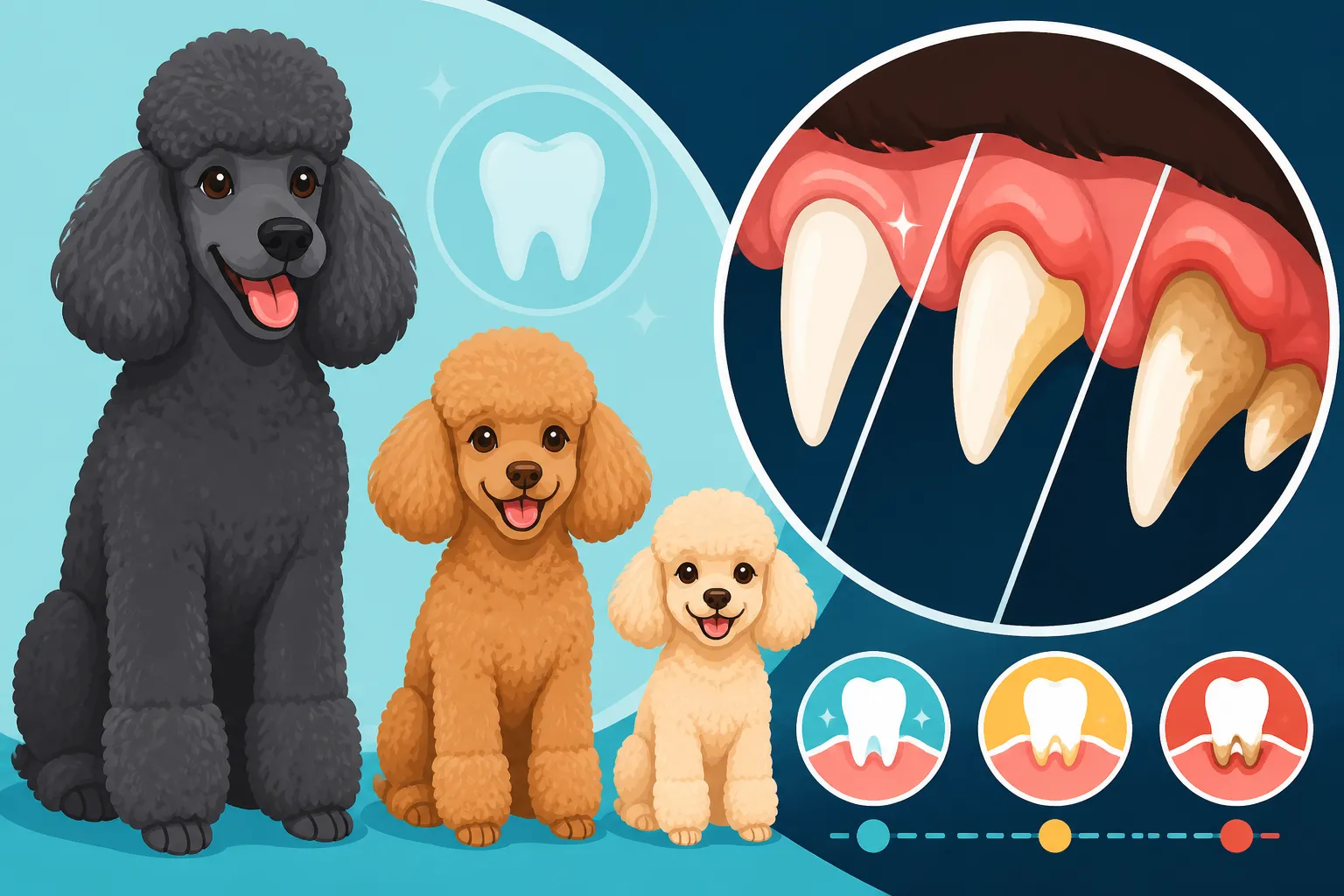
Toy and Miniature Poodles: A High-Risk Category
When it comes to dental health, our smallest Poodle varieties, the Toys and Miniatures, unfortunately face the steepest uphill battle. Their adorable, compact size comes with specific anatomical challenges that predispose them to more severe and rapidly progressing dental disease than their larger cousins.
Overcrowding and Retained Baby Teeth
Imagine trying to fit a standard-sized bookshelf into a tiny studio apartment; that's often what's happening inside a Toy Poodle's mouth. These little guys have very small jaws, but they are expected to accommodate the same number of teeth as a much larger dog – 42 permanent teeth, to be precise. This leads to severe dental crowding, where teeth are packed too closely together, sometimes even overlapping or rotating. This creates numerous nooks and crannies where plaque and tartar can accumulate undisturbed, becoming extremely difficult for even diligent brushing to reach.
Adding to this dilemma is the common issue of retained deciduous (baby) teeth. In many Toy and Miniature Poodles, the baby teeth simply don't fall out when the permanent teeth erupt. This often happens because the root of the baby tooth doesn't resorb properly, or the permanent tooth emerges at an odd angle. When a baby tooth remains alongside a permanent tooth, it creates a "double set" that traps food and bacteria, accelerating plaque and tartar buildup dramatically. If you notice your Toy Poodle puppy still has its baby canines when its adult canines are coming in, it's a red flag. This specific problem is why experts often talk about Why Small Poodles Lose Teeth Early and the need to address Retained Baby Teeth in a Toy Poodle promptly. These retained teeth require extraction by a veterinarian, usually when the dog is spayed or neutered, to prevent long-term dental problems.
Rapid Progression of Disease
Because of the crowding and smaller overall size, dental disease in Toy and Miniature Poodles tends to progress much faster than in larger breeds. What might be mild gingivitis in a Standard Poodle could be advanced periodontal disease in a Toy Poodle in the same timeframe. The delicate bone structure of their jaws also means that bone loss due to infection can become critical more quickly. A small amount of bone loss around a tooth in a large dog might not be immediately problematic, but in a tiny jaw, that same amount of loss can destabilize the tooth entirely, leading to painful mobility and eventual loss.
Owners of smaller poodles must be especially vigilant. Daily home care is not just recommended; it's absolutely essential. Even with the best home care, professional dental cleanings under anesthesia are usually needed more frequently for these sizes. Neglecting their dental health for even a year can lead to significant, irreversible damage and excruciating pain for your tiny companion.
Systemic Health Risks from Oral Infections
The implications of poor dental health in Toy and Miniature Poodles extend far beyond just the mouth. As mentioned, the bacteria thriving in an infected mouth don't stay put. They can easily enter the bloodstream, especially when the gums are inflamed and bleeding, and travel throughout the body. For smaller dogs with smaller organs, this bacterial shower can have a disproportionately severe impact.
The heart valves can become infected (endocarditis), leading to serious and often life-threatening cardiac conditions. The kidneys and liver, which are responsible for filtering waste and toxins from the blood, can also become overwhelmed and damaged by chronic bacterial exposure. In older or immunocompromised Poodles, these systemic infections can precipitate a crisis. It's a stark reminder that dental health isn't just about a pretty smile; it's a fundamental pillar of their overall well-being. Keeping up with routine veterinary care, which includes dental check-ups, is critical, and considering pet insurance like Healthy Paws can help manage the costs of both preventive care and potential treatments for these serious secondary conditions.
Standard Poodles: Different Challenges, Same Importance
While Toy and Miniature Poodles face unique challenges due to their diminutive size, Standard Poodles are by no means exempt from dental issues. Their larger mouths and more robust jaw structure might give the illusion of greater resilience, but they can still suffer from significant, painful dental disease, often with less obvious initial signs.
Deep-Rooted Problems and Less Obvious Signs
Standard Poodles generally have more space in their mouths, which can reduce the severity of overcrowding seen in their smaller relatives. However, they are still susceptible to plaque and tartar buildup, particularly on the molars and pre-molars at the back of the mouth, which are harder to reach with brushing. These teeth, with their complex surfaces, can quickly accumulate debris, leading to gingivitis and then to full-blown periodontal disease.
The sheer size of a Standard Poodle's teeth means that the roots are longer and deeper. When infection takes hold, it can track down these long roots, causing deep-seated pain and inflammation that might not be immediately visible on the gumline. A Standard Poodle might continue to eat and play normally for a long time, even with significant oral pain, because their larger body mass allows them to compensate or hide discomfort more effectively than a tiny dog. This stoicism can be a double-edged sword: it means they're tough, but it also means by the time you notice a problem, it’s often quite advanced. If you've ever wondered Reading Pain in a Sensitive Poodle, dental disease is one of those conditions where subtle changes in behavior might be the only clue. They might become slightly less enthusiastic about their favorite chewy toy, or perhaps shy away when you try to touch their muzzle.
Fractured Teeth and Root Abscesses
Standard Poodles love to chew. It's a fantastic outlet for their energy and intelligence, but it can also be a source of dental trouble if they're given inappropriate chew toys. Hard items like real bones, antlers, nylon bones, or even ice cubes can lead to slab fractures of the molars and pre-molars. These fractures, particularly the more common slab fracture where a piece of the tooth breaks off, expose the sensitive pulp chamber to bacteria, leading to excruciating pain and infection.
If a fractured tooth or severe periodontal disease is left untreated, bacteria can invade the tooth's root canal and surrounding tissues, resulting in a painful root abscess. These abscesses are pockets of pus that form at the tip of the tooth root. They can be incredibly painful and, if left untreated, can even erode through the jawbone, causing swelling and drainage under the eye or on the side of the face. This is a veterinary emergency and often requires extraction of the affected tooth or a root canal procedure by a veterinary dentist. Regular dental check-ups are vital for Standard Poodles to catch these issues before they become emergencies.
Recognizing the Signs and Taking Action
One of the biggest hurdles in addressing dental disease is recognizing the signs. Poodles, being incredibly intelligent and often stoic, are masters at masking discomfort. As loving owners, it’s up to us to become detectives, looking for subtle cues that something isn't quite right in their mouth.
Subtle Indicators of Pain and Infection
Many owners assume that if their dog is still eating, they can't be in dental pain. This is a dangerous misconception. Dogs are wired to survive, and eating is a fundamental instinct. They will often continue to eat, even with severe dental pain, perhaps chewing differently or favoring one side of their mouth. Instead of expecting obvious yelps or refusal to eat, look for these more subtle, insidious indicators:
- Bad Breath (Halitosis): This is the most common and often the first sign owners notice. While "doggy breath" is often normalized, truly foul, rotten-smelling breath is not normal and is a strong indicator of bacterial overgrowth and infection.
- Red, Swollen, or Bleeding Gums: Gently lift your poodle's lips. Healthy gums should be pink and firm, not angry red, puffy, or prone to bleeding when touched.
- Tartar Buildup: Yellowish-brown or brownish-green deposits on the tooth surface, especially near the gumline, are a clear sign that professional intervention is needed.
- Changes in Eating Habits: While they might still eat, notice how they eat. Are they chewing on one side? Dropping food from their mouth? Reluctant to chew on harder toys they once loved? Avoiding certain foods?
- Paw-at-Mouth or Facial Rubbing: Your poodle might discreetly paw at their mouth or rub their face against furniture or the carpet.
- Excessive Drooling: More drool than usual, sometimes tinged with blood, can signal pain or infection.
- Behavioral Changes: A poodle in chronic pain might become more irritable, withdrawn, less playful, or even exhibit changes in personality. They might shy away from head pats.
These signs, even if mild, warrant a visit to your veterinarian. Early detection makes treatment less invasive, less costly, and ultimately, saves your poodle from prolonged suffering.
The Importance of Regular Oral Exams
Your veterinarian is your best ally in the fight against dental disease. Regular oral examinations, ideally once a year as part of their routine wellness check, are paramount. During these exams, your vet will perform a conscious oral exam, which means they'll lift your poodle's lips and visually inspect their teeth and gums. They'll look for plaque and tartar buildup, gingivitis, fractured teeth, retained baby teeth, and any obvious signs of swelling or oral masses.
While a conscious oral exam is crucial, it's important to understand its limitations. A thorough assessment of dental health, especially below the gumline where 80% of dental disease hides, requires a procedure called a professional dental cleaning, which necessitates general anesthesia. This allows the vet to use specialized instruments to scale away tartar both above and below the gumline, polish the teeth, and most importantly, take full mouth dental radiographs (X-rays). These X-rays are non-negotiable for proper dental care, as they reveal bone loss, root abscesses, unerupted teeth, and other pathologies that are invisible to the naked eye. Your vet will discuss these findings with you and recommend a treatment plan, which might include extractions of severely diseased teeth. Never underestimate the value of these regular vet checks as part of your poodle’s Yearly Routine Vet Spend for a Poodle.
Proactive Dental Care: Home and Professional Solutions
Knowing that dental disease is a major threat is only half the battle; the other half is implementing effective strategies to prevent and manage it. A multi-pronged approach combining diligent home care with regular professional veterinary attention is the gold standard for maintaining your poodle's oral health throughout their life.
Daily Home Care Tailored to Size
Just like humans, daily dental hygiene is the most effective way to combat plaque buildup. While it might seem daunting, establishing a routine for your poodle can make a world of difference.
- Brushing: This is the undisputed champion of home dental care. Aim for daily brushing using a soft-bristled toothbrush designed for dogs and a pet-safe toothpaste (never human toothpaste, as it contains xylitol which is toxic to dogs). For Toy Poodles, a finger brush or a very small, soft pediatric toothbrush works well. For Miniatures and Standards, a standard dog toothbrush is usually appropriate. The key is to focus on the gumline, where plaque accumulates most rapidly. Start slowly, making it a positive experience with praise and treats. Resources like "Brushing a Toy Poodle's Teeth" can offer detailed, step-by-step guidance.
- Dental Wipes and Sprays: If brushing proves too difficult initially, dental wipes or oral rinses can be a good stepping stone. These contain enzymatic ingredients that help break down plaque. While not as effective as brushing, they are far better than doing nothing at all.
- Veterinary Dental Chews: Look for dental chews that have been scientifically proven to reduce plaque and tartar. These products usually carry a Veterinary Oral Health Council (VOHC) seal. Remember that chews are supplements to brushing, not replacements. Always supervise your poodle with chews to prevent choking, and choose appropriate sizes for their mouth. For smaller Poodles, specifically selecting Dental Chews Sized for a Toy Poodle is crucial to prevent choking or gastrointestinal upset. Avoid overly hard chews that could fracture teeth, which is a particular concern for Standard Poodles.
Consistency is key. Even a few minutes of daily attention can significantly slow the progression of dental disease and extend the intervals between professional cleanings.
The Critical Role of Professional Dental Cleanings
No amount of home care, no matter how diligent, can completely prevent the need for professional dental cleanings under anesthesia. This is because once plaque hardens into tartar, it cannot be removed by brushing or dental chews; it requires specialized ultrasonic scaling equipment, just like at your own dentist.
A professional dental cleaning (often referred to as a COHAT – Comprehensive Oral Health Assessment and Treatment) involves several critical steps:
- Pre-anesthetic Bloodwork: This is essential to ensure your poodle is a good candidate for anesthesia and to identify any underlying health issues. This is always factored into Bloodwork Prices Before Poodle Anesthesia.
- Anesthesia and Monitoring: Modern veterinary anesthesia is very safe, especially with careful monitoring by trained veterinary staff. Your poodle's vital signs will be continuously tracked.
- Oral Examination and Charting: Once anesthetized, the veterinarian can perform a thorough examination of every tooth surface, the gums, and surrounding oral structures, probing for pockets and charting any abnormalities.
- Dental Radiographs (X-rays): Full-mouth X-rays are taken to assess the health of the tooth roots and jawbone, revealing hidden disease.
- Ultrasonic Scaling: A scaler is used to remove plaque and tartar from above and below the gumline. This subgingival cleaning is crucial, as most periodontal disease occurs below the gumline.
- Polishing: After scaling, the teeth are polished to smooth out microscopic scratches created by the scaler, which helps to prevent new plaque from adhering.
- Fluoride Treatment/Sealants: Some clinics may apply fluoride or a dental sealant to further protect the teeth.
- Extractions or Other Treatments: If severe disease, fractures, or retained teeth are found, extractions or other procedures may be necessary. This is where costs can escalate, and understanding What a Toy Poodle Extraction Costs can help you prepare.
The frequency of these professional cleanings varies depending on your poodle's individual needs, but many poodles benefit from cleanings every 1-3 years. Your vet will advise you on the best schedule. It's truly a vital part of your poodle’s overall health plan, a testament to "How Often a Poodle Needs Dental Scaling".
Budgeting for Lifelong Dental Health
The reality is that veterinary dental care, especially professional cleanings under anesthesia, can be expensive. However, neglecting dental health can lead to far greater costs down the line, both in terms of financial burden and your poodle's quality of life. An emergency extraction for a painful, infected tooth will almost always cost more than a routine preventive cleaning. Furthermore, treating systemic illnesses that arise from dental infections, such as heart or kidney disease, can become chronic and incredibly costly.
It's crucial for any poodle owner to factor dental care into their budget. Considering pet insurance from providers like Healthy Paws can be a smart financial decision, especially for a breed prone to these issues. While some policies might have waiting periods or exclusions for pre-existing conditions, a comprehensive plan started early can cover a significant portion of dental cleaning costs, X-rays, and even extractions or other advanced procedures. This kind of forward planning is a significant part of "What New Poodle Owners Forget to Budget". Discussing potential costs and payment options with your veterinary team upfront can help alleviate financial stress.
Dietary Considerations and Preventive Strategies
Beyond brushing and professional cleanings, what you feed your poodle and how you approach their overall wellness can significantly influence their dental health. Diet plays a supporting role in managing plaque and tartar, while a holistic approach to preventive care reinforces their resilience against disease.
Choosing the Right Food and Treats
The impact of diet on dental health is a topic often debated among pet owners. While no kibble can replace the mechanical action of brushing, some foods are designed with dental health in mind.
- Dental-Specific Diets: Certain prescription dental diets, available through your veterinarian, feature a unique kibble design. These kibbles are often larger and have a fibrous, porous texture that essentially "scrubs" the tooth surface as your poodle chews. This mechanical action helps to reduce plaque and tartar buildup. They are typically VOHC-approved, meaning they have undergone rigorous testing to prove their efficacy.
- Kibble Texture and Size: For general kibble, larger pieces that encourage chewing rather than gulping can offer some minimal abrasive action. However, do not rely on standard kibble alone to clean teeth, especially for Toy Poodles whose tiny mouths might not be able to effectively chew larger kibble pieces. The appropriate kibble size is also a consideration for a Toy Poodle's jaw.
- Avoiding Sugary and Sticky Treats: Just like in humans, sugary, sticky treats can contribute to plaque formation. These treats adhere to the teeth and provide an excellent food source for bacteria. Opt for healthier, low-sugar, non-sticky alternatives. Many vegetables like carrot sticks or apple slices (without seeds) can make great healthy, crunchy treats.
- Water Additives: Some dental water additives contain ingredients that help reduce bacteria in the mouth or prevent plaque from adhering to the teeth. These can be a useful adjunct to a comprehensive dental plan but again, should not be a sole solution.
Always ensure that any dental chews or toys you offer are safe and appropriate for your poodle's size and chewing style to prevent fractured teeth, especially for strong chewers like many Standard Poodles.
Integrating Dental Health into Overall Wellness
Dental health isn't an isolated concern; it's intricately linked to your poodle's overall health and lifespan. A poodle with chronic dental pain or infection is not a truly healthy or happy poodle. Integrating diligent dental care into your poodle’s complete wellness routine means more than just addressing tooth problems; it means fostering a healthier, happier life.
Regular veterinary check-ups, as discussed, are not just for vaccinations; they are crucial opportunities for your vet to assess dental health, catch early signs of disease, and guide you on the best preventive strategies. These visits also allow your vet to identify any other underlying health conditions that might impact or be exacerbated by dental disease. For instance, a poodle struggling with conditions like diabetes may have more severe or rapidly progressing dental issues, as high blood sugar can impair the immune response and increase inflammation. As your poodle ages, the importance of dental care becomes even more pronounced. Caring for an Aging Poodle often involves managing chronic conditions, and good oral health can significantly improve their comfort and quality of life in their senior years. By taking a proactive, comprehensive approach to your poodle's dental health, you're not just preventing bad breath; you're safeguarding their systemic health, extending their active years, and ensuring they remain a comfortable and cherished member of your family.
Poodle Dental Health Comparison by Size
To summarize the distinct challenges and care needs, here's a quick overview of how dental disease can vary across the three Poodle sizes:
| Feature/Concern | Toy Poodle (Under 10 lbs) | Miniature Poodle (10-15 lbs) | Standard Poodle (40-70+ lbs) |
|---|---|---|---|
| Jaw Size & Crowding | Very small jaw, severe overcrowding common. | Small jaw, moderate to severe overcrowding. | Larger jaw, less severe crowding but still possible. |
| Retained Baby Teeth | Extremely common, often requiring extractions. | Common, often requiring extractions. | Less common, but still occurs occasionally. |
| Disease Progression | Very rapid, can go from mild to severe quickly. | Rapid, requires vigilant care. | Slower progression, but can be extensive before symptoms show. |
| Fractured Teeth | Less common (due to smaller teeth/chewing strength). | Possible with hard chews. | More common due to chewing power and inappropriate chew toys. |
| Systemic Risks | High risk due to small organ size, critical to prevent. | Moderate to high risk. | Moderate risk, but still significant if untreated. |
| Home Care Difficulty | Can be challenging due to small mouth and sensitivity. | Moderate, requires consistent effort. | Easiest to brush due to larger mouth. |
| Professional Cleanings Frequency | Often annually or bi-annually. | Annually or every 1-2 years. | Every 1-3 years, depending on individual. |
| Costs of Treatment | Extractions can be costly due to delicacy and multiple teeth. | Similar to Toy, possibly fewer extractions if caught early. | Can be costly for extractions, root canals, or jaw repair. |
Disclaimer
This article is intended for informational purposes only and does not constitute veterinary advice. Always consult with a qualified veterinarian for any health concerns or before making any decisions about your poodle's medical care.