Poodles in AKC Hunt Tests
Oh, the magnificent Poodle! So often, people see their elaborate show clips and think they're merely ornamental, a fluffy accessory content to lounge on a silk cushion. But anyone who truly knows a Poodle understands there's a keen mind and an athletic body beneath all that curl, often yearning for a real "job." If you've ever felt a tug at your Poodle's leash as a bird takes flight, or watched them intently follow a scent, you're tapping into their ancient heritage, and that's precisely what we'll explore today: how Poodles excel in the challenging and rewarding world of AKC Hunt Tests.
The Poodle's Undeniable Sporting Heritage
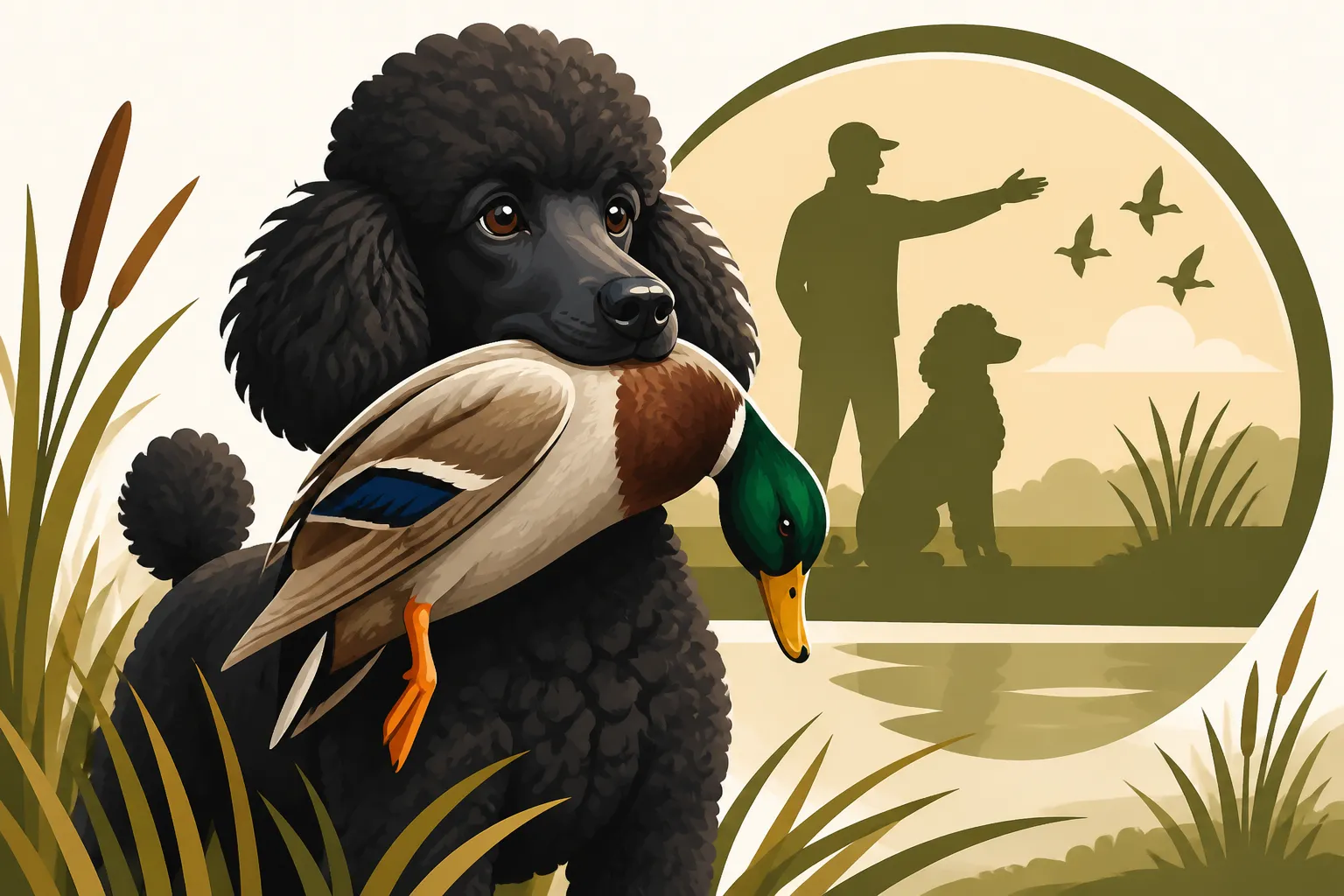
It's easy to forget, with all the glamour and elegance associated with Poodles today, that their roots are firmly planted in the mud and water of European duck hunts. The very name "Poodle" comes from the German word "Pudel," which means "to splash in the water," a clear nod to their original purpose. These weren't just pretty dogs; they were intelligent, resilient, and utterly dedicated retrieving specialists.
From Water Retriever to Show Dog
Imagine a time when hunters relied on their dogs to plunge into icy waters and dense reeds to bring back downed waterfowl. That's the Poodle's origin story. Their unique curly coat, which many today associate solely with fancy grooming, was originally a functional design. Those iconic "pompoms" weren't just for show; they protected vital joints and organs from the cold water and abrasive undergrowth, while the shaved areas reduced drag and allowed for easier movement. You can learn more about Why the Poodle Clip Was a Working Design.
Over centuries, as hunting practices changed and Poodles gained popularity as companions, their incredible intelligence and trainability led them into other roles, including circus performers and, eventually, the show ring. The focus shifted from their working abilities to their aesthetic appeal. Sadly, for a long time, their natural retrieving drives were largely overlooked or seen as a quirk rather than a foundational trait to be celebrated. This often leaves modern Poodle owners wondering if their dog's enthusiastic fetching is just play, or something more profound. It's definitely more.
Instinct That Endures
Despite generations of selective breeding for conformation, the retrieving instinct in Poodles, particularly Standard Poodles, remains remarkably strong. It's not just a casual desire to chase a ball; it's an innate drive to find, capture, and deliver. They possess excellent noses, sharp eyesight, and a remarkable ability to mark where a "bird" (or dummy) falls. This combination of traits makes them natural candidates for events that test these inherent abilities.
Many Poodle owners find themselves with a dog that is highly intelligent but also easily bored if not given an outlet for its mental and physical energy. This can lead to unwanted behaviors. Participating in something like hunt tests channels that intelligence and drive into productive and fun activities. It's a fantastic way to fulfill a Poodle's innate need to work and solve problems, reinforcing that Why a Poodle Needs a Job Rather Than a Walk is more than just a saying.
Diving into AKC Hunt Tests
If you've heard the term "hunt test" and pictured something akin to actual hunting, you're not wrong, but it's important to understand the distinctions. AKC Hunt Tests are designed to simulate hunting conditions without actually involving live game birds or firearms (though blank pistols are used for sound). They're about showcasing a dog's natural abilities and training in marking, retrieving, and honoring, all while demonstrating excellent canine manners and control.
What Are Hunt Tests All About?
At their core, hunt tests evaluate a dog's natural hunting aptitudes under controlled, simulated field conditions. Judges are looking for a dog that is eager, proficient, and under control. This isn't a competition against other dogs for speed or flash; it's a test against a standard. Each dog must pass specific requirements for their level to earn a title. This means your Poodle isn't trying to beat a Labrador; your Poodle is trying to be the best Poodle retriever it can be on that day.
The events typically involve a handler sending their dog to retrieve one or more "birds" (usually training dummies or dead-shot birds provided by the test organizers) that have been thrown from a distance, often accompanied by a shot sound. Dogs are judged on their ability to remember where the bird fell (marking), their willingness to enter and retrieve from various terrains (land and water), their steadiness (waiting patiently until sent), and their ability to "honor" (remain steady while another dog retrieves).
The Different Levels of Achievement
AKC Hunt Tests are structured in progressive levels, allowing dogs and handlers to build skills and confidence over time. Each level demands increasing proficiency and problem-solving.
| Level | Focus | Key Skills Tested | Poodle Fit |
|---|---|---|---|
| Junior Hunter (JH) | Introduces basic retrieving skills, marking, and steadiness. | Single marks on land and water, short distances, handler may give some guidance. | Excellent starting point for Poodles; builds confidence and reinforces natural drive. |
| Senior Hunter (SH) | More complex retrieves, multiple marks, and introduction of "honoring." | Double marks, longer distances, blind retrieves (dog doesn't see fall), honoring. | Requires more advanced training, control, and memory; Poodles excel with their intelligence. |
| Master Hunter (MH) | Advanced fieldwork, challenging scenarios, and handler control. | Triple marks, complex blinds, challenging terrain, difficult honoring scenarios. | The pinnacle of amateur hunt tests, demanding precision, advanced handling, and strong dog-handler teamwork. |
Poodles, particularly Standard Poodles, often shine in these tests. Their intelligence makes them quick learners for the complex marking and handling aspects, while their athleticism and water affinity make them strong contenders for land and water retrieves. For more about training specific skills, check out Teaching a Poodle to Retrieve and Water Work and the Poodle.
Rules, Regulations, and What to Expect
The rules for AKC Hunt Tests are quite specific, and it's essential to familiarize yourself with them before entering. For example, dogs must be at least six months old to compete, and handlers must demonstrate good sportsmanship. There's a strict "no force" policy, meaning handlers cannot physically coerce their dogs to retrieve or punish them in the field. This aligns perfectly with the sensitive nature of Poodles, who thrive on positive reinforcement and clear communication. Why Harsh Handling Breaks a Poodle is something every owner should understand, especially in a sport that values willingness and partnership.
You'll need certain gear: appropriate field clothing for yourself, a leash, and collar for your Poodle (no shock collars are permitted during the test), and typically some water. Test day involves walking through various "stations" or "series," where your dog will perform retrieves under the watchful eyes of judges. It's a full day, often outdoors in various weather conditions, so prepare for that! Many clubs hold training days or seminars, which are invaluable for understanding the flow and expectations of a hunt test weekend.
Training Your Poodle for Success in Hunt Tests
Embarking on the hunt test journey with your Poodle is incredibly rewarding, but it does require dedication and a structured approach. Poodles are exceptionally intelligent and eager to please, but they can also be sensitive and prone to getting bored if training isn't engaging.
Laying the Foundation: Obedience and Steadiness
Before you even think about throwing dummies in a field, your Poodle needs a rock-solid foundation in obedience. Recall is paramount – your dog must come when called, especially when distractions are high. A reliable "sit" or "stay" is crucial for steadiness. In hunt tests, dogs are expected to remain steady by the handler's side until sent to retrieve. Breaking early can result in disqualification. This requires immense impulse control, which can be challenging for an enthusiastic Poodle.
Start in low-distraction environments and gradually increase the difficulty. Practice holding your Poodle in a sit-stay while you toss a toy, then wait a few seconds before releasing them. Lengthen the duration and add more enticing distractions. Resources like BAXTER & Bella offer comprehensive online puppy and dog training programs that can help build these critical foundational skills, offering step-by-step guidance you can follow at your own pace. Many of the principles for general obedience, such as those discussed in Training the Second Smartest Dog Breed, apply directly to hunt test preparation.
Leash manners are also important. While your dog will be off-leash during retrieves, you'll need to walk them between stations, often through fields where other dogs are working. A Poodle that pulls on the leash or lunges at other dogs will create unnecessary stress for both of you. Consider investing in a good quality, comfortable lead and collar, or a well-fitting harness for control during these transitions.
Developing the Retrieve and Marking Skills
Once your Poodle has a good handle on basic obedience, you can start building their retrieving skills. Begin with simple, straight-line retrieves using a soft dummy. Praise and reward enthusiastically when they bring it back. The goal is to make retrieving a joyous game. Poodles often have a "soft mouth," meaning they naturally carry objects gently, which is a huge advantage.
- Marking: This is the dog's ability to remember where a bird or dummy falls. Start with single marks in an open field, increasing the distance gradually. As your dog progresses, introduce "multiple marks" where two or more dummies are thrown, and your dog must retrieve them in a specific order (often the furthest first, as dictated by the handler).
- Blind Retrieves: These are more advanced and involve sending your Poodle to a spot where they didn't see the dummy fall. You'll use hand signals and verbal commands to guide them to the hidden "bird." This requires a deep level of trust and communication, and it's where the Poodle's keen intelligence truly shines. Their ability to read handler cues is outstanding.
- Water Work: Many hunt tests include water retrieves. Introduce your Poodle to water gradually and positively. Many Standards absolutely adore swimming, but some need encouragement. Make it a fun experience. Once comfortable, practice retrieves in the water, starting close to shore and moving to deeper water and longer distances. Introducing a Poodle to Water can help you get started on the right paw. You'll want buoyant dummies that are easy for your dog to spot and retrieve from the water.
Essential Gear for Hunt Test Training
While you don't need a huge amount of specialized equipment, a few key items will make your training much more effective:
- Training Dummies: Invest in various types and sizes. Soft, weighted dummies for land, and buoyant ones for water. You can find excellent selections on Amazon. Some come with scent added, which can further engage your Poodle's nose.
- Whistle: A whistle is invaluable for long-distance communication, especially for recall and stop commands during blind retrieves. Teach your Poodle to associate different whistle blows with specific actions.
- Long Line: A long line (15-30 feet) is essential for proofing recall and teaching steadiness at a distance, allowing you to give your Poodle freedom while maintaining control.
- Blind and Stakes: As you advance, you might want simple blinds to set up for blind retrieves, simulating cover.
- Water Safety Gear: If training in open water, consider a dog-specific life vest, especially if your Poodle is new to swimming or you're working in unfamiliar waters.
Consistency is key. Short, frequent training sessions are often more effective than long, infrequent ones for Poodles. Keep it fun, positive, and always end on a good note. Remember, you're building a partnership, not just teaching commands.
The Rewards Beyond the Ribbon: Why Hunt Tests Matter
Participating in AKC Hunt Tests with your Poodle isn't just about earning titles, though those ribbons and bragging rights are certainly a nice bonus! It's about enriching your dog's life, strengthening your bond, and discovering the incredible capabilities lurking beneath that elegant coat.
Fulfilling a Poodle's Mind and Body
Poodles are not couch potatoes. They possess a high degree of intelligence and require significant mental stimulation to be happy and well-adjusted. An under-exercised or under-stimulated Poodle can easily become bored, leading to destructive behaviors, excessive barking, or even anxiety. Hunt tests provide an unparalleled outlet for both their physical energy and their brilliant minds.
The intricate challenges of marking falls, remembering multiple bird locations, navigating terrain, and responding to handler commands in the field are a mental workout. Your Poodle is constantly thinking, problem-solving, and utilizing their natural senses. This kind of focused activity is far more tiring and satisfying for a Poodle than a simple walk around the block, although daily walks are still important. It's a deep dive into what makes a Poodle, well, a Poodle! The satisfaction of seeing your dog work with such focus and joy is immense. This aligns perfectly with the need to give them Mental Work That Tires a Poodle.
Strengthening the Dog-Handler Bond
There's something incredibly special about working as a team with your dog towards a shared goal. Hunt test training fosters communication, trust, and mutual understanding between you and your Poodle. You learn to read your dog's subtle cues, and they learn to trust your guidance, even when their instincts might tell them something different.
Every successful retrieve, every perfectly executed blind, is a testament to the partnership you've built. This deeper connection extends beyond the training field, enhancing your relationship in daily life. Your Poodle becomes more confident, more responsive, and more attuned to you, because you've become their trusted partner in a challenging and exciting endeavor. It's an investment in a bond that few other activities can replicate.
Challenging Perceptions and Celebrating the Breed
Let's be honest, Poodles often face unfair stereotypes. They're seen as delicate, fussy, or purely ornamental. When a Poodle earns a Junior, Senior, or especially a Master Hunter title, it's not just a win for that individual dog; it's a win for the entire breed. It helps to educate the public about the Poodle's true nature as an intelligent, athletic, and capable working dog.
It's truly inspiring to watch a Poodle charge into icy water, retrieve a bird, and deliver it gently to hand, all with boundless enthusiasm. These moments remind everyone, judges and spectators alike, of the incredible versatility and heart of the Poodle. By participating, you become an ambassador for the breed, helping to re-establish the Poodle's rightful place as a superb sporting companion. As Poodle owners, we know they are so much more than their stereotypes, and hunt tests are a powerful way to demonstrate that.
Disclaimer
This article is for general informational purposes only and does not constitute professional advice. Laws, prices and regulations vary by location and change over time. Consult a qualified professional for guidance on your specific situation.