Why Harsh Handling Breaks a Poodle
It’s heartbreaking to see a Poodle, a breed known for its sharp mind and sensitive soul, shrink or become a shell of themselves because of harsh handling. Many well-meaning owners, often advised by outdated methods, find themselves frustrated when their clever Poodle seems to "shut down" or act out, not realizing the profound impact their training style is having. This guide will delve into why Poodles react so strongly to harshness, explore the damage it causes, and outline effective, positive approaches to build a strong, trusting bond with your companion.
The Poodle's Innate Sensitivity
Poodles aren't just pretty faces; they are incredibly intelligent, deeply feeling dogs. Their history and inherent nature make them particularly susceptible to the emotional and psychological fallout of harsh training methods. Understanding this sensitivity is the first step to truly connecting with your Poodle.
A History of Working Closely with Humans
Think about the Poodle's origins as a water retriever. These weren't dogs left to their own devices; they worked in tandem with hunters, requiring clear communication, focus, and a willingness to cooperate. This historical partnership forged a breed that thrives on connection and positive interaction. A working Poodle needed to trust its handler implicitly, often navigating challenging environments like cold water or dense reeds. That bond was built on mutual respect and understanding, not fear.
When a Poodle is subjected to harsh corrections, it fundamentally clashes with this deeply ingrained desire to work with you, not for fear of you. Instead of viewing you as a partner, they may start to see you as an unpredictable or even frightening entity. This can lead to a breakdown in communication and a reluctance to engage. The vibrant, intelligent dog you brought home can quickly become withdrawn or anxious, constantly trying to anticipate your mood or avoid potential punishment. This is why understanding Poodle Temperament and Sensitivity is so crucial. They are not merely performing tasks; they are interacting within a relationship.
Reading Their Subtle Cues
Poodles are masters of subtle communication. They don't always offer big, dramatic signs of distress like growling or snapping unless they've been pushed too far. Instead, they might offer a quick lip lick, a head turn, a slight lowering of the tail, or a softening of the eyes. These are all attempts to de-escalate a situation or signal their discomfort. A truly sensitive Poodle will often try to "appease" rather than confront.
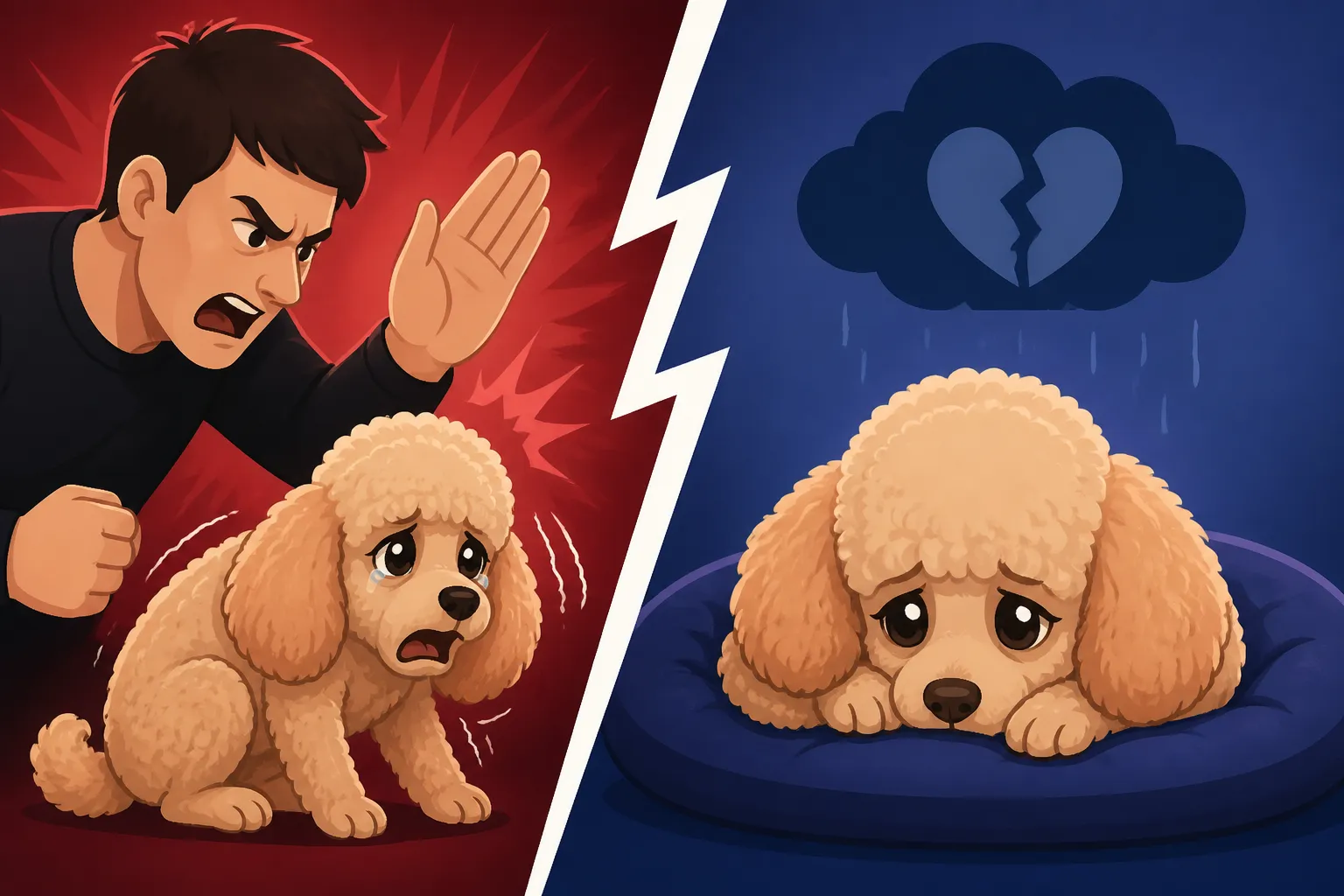
A person using harsh methods often misses these subtle cues, dismissing them as stubbornness or defiance. When these quiet requests for space or understanding are ignored, the Poodle learns that their subtle signals are ineffective. This forces them to either escalate their communication—which can be mislabeled as aggression—or to completely shut down. Imagine trying to explain yourself to someone who consistently ignores your polite requests and only responds when you raise your voice. Over time, you'd either stop trying or get louder. For a Poodle, shutting down is often a way to cope when their attempts at peaceful communication are repeatedly unheeded or punished. It’s a sad situation where the dog is trying to tell us something, and we’re simply not listening or, worse, punishing them for trying.
How Harshness Manifests and Harms
Harshness in dog training isn't always about outright physical abuse; it encompasses a range of actions that create fear, anxiety, and distrust. These methods chip away at a Poodle's confidence and willingness to engage, causing long-lasting damage to their psychological well-being.
Physical Punishments and Their Fallout
When we talk about physical punishments, many people immediately think of hitting a dog. While that is certainly included, it also extends to methods like alpha rolls, leash jerks, ear pinches, or using tools designed to inflict pain or severe discomfort, such as prong collars or electronic collars, without careful, ethical, and expert guidance. For a Poodle, whose fine bones and delicate nature already make them physically vulnerable, these can be profoundly damaging. A sharp tug on a leash, especially for a smaller Toy Poodle, can easily injure their neck or trachea.
Beyond the immediate physical discomfort, these methods teach a Poodle that their human is a source of pain and unpredictability. Instead of associating a command with a desired action, they associate it with the potential for pain if they don't comply fast enough, or correctly enough. This doesn't foster learning; it fosters fear. A Poodle might stop pulling on the leash, not because they’ve learned loose-leash walking, but because they fear the pain of the correction. This fear can then generalize, making them anxious about walks, other dogs, or even the sound of their collar jingling. Their response becomes about avoiding pain, not about understanding what you want them to do. This creates a deeply anxious dog that is always on edge, rather than a confident, joyful companion.
Verbal Reprimands and the Quiet Shutdown
It's easy to think that just shouting "No!" or giving a sharp, disapproving tone isn't "harsh." However, for a Poodle, especially one with a sensitive nature, consistent yelling, stern glares, or critical vocalizations can be just as damaging as physical corrections. Poodles are highly attuned to human emotion and tone. They understand subtle shifts in our voice and body language far more than we often give them credit for.
When a Poodle is constantly corrected verbally, they learn that attempting new things, or even making a mistake, leads to an unpleasant interaction. Instead of trying to figure out what you do want, they become hesitant, fearful of doing the wrong thing. This often results in what looks like "stubbornness" or a "shutdown" where the Poodle simply stops engaging, retreats, or even pretends not to hear you. They're not being stubborn; they're trying to avoid your disapproval. This phenomenon is often seen when a Poodle seems to lose interest in training sessions or becomes unresponsive, a clear sign that the communication has broken down due to fear. You might think they're being aloof, but in reality, they're often trying to make themselves invisible. This is closely related to Why a Poodle Shuts Down When Scolded.
The Invisible Damage to Trust
The most insidious harm inflicted by harsh handling is the erosion of trust. Trust is the foundation of any strong relationship, especially between a dog and their human. When a Poodle is consistently met with unpredictable corrections, fear, or discomfort, that trust is slowly chipped away. They might hesitate to approach you, flinch when you reach out, or show signs of anxiety when you raise your voice, even if it's not directed at them.
This damaged trust isn't always obvious. A Poodle might still follow you around or cuddle on the sofa, but there's an underlying tension, a constant vigilance in their eyes. They might be less playful, less spontaneous, or less willing to try new things. Rebuilding this trust is a long and patient process, requiring consistent positive interactions and a complete overhaul of training methods. It means showing your Poodle, through your actions, that you are a safe, reliable, and benevolent leader, not a threat. Without trust, a Poodle cannot truly relax and be their wonderful, quirky, intelligent self. This is why it’s so important to learn how to identify Reading a Poodle's Body Language to ensure you're not inadvertently damaging this vital bond.
The Consequences for Training and Behavior
The negative impacts of harsh handling extend far beyond a Poodle's immediate emotional state. They profoundly affect a Poodle's ability to learn, their general behavior, and even their joyful demeanor. It creates a cycle of misunderstanding and frustration for both dog and owner.
Learning Shutdown and Aversion
Poodles are incredibly smart. They are ranked among the most intelligent breeds, capable of learning cues and complex tasks with remarkable speed. Why Poodles Learn a Cue in Five Repetitions isn't just a fun fact; it's a testament to their cognitive abilities. However, this intelligence can be a double-edged sword when paired with harsh training. Instead of learning what to do, they often learn what to avoid.
If a Poodle is punished for making a mistake, or even for simply not understanding a new command, they don't learn the correct behavior. Instead, they learn that the situation itself is unpleasant. This can lead to a complete learning shutdown, where they refuse to engage in training or even become avoidant of the person doing the training. They might develop an aversion to certain objects (like a leash or crate) or even specific locations where training typically occurs. This isn't defiance; it's a very intelligent dog trying to protect itself from perceived threats. They become so focused on avoiding punishment that they cannot focus on the lesson at hand. It hinders their natural problem-solving abilities and can turn an eager learner into a reluctant participant.
Escalation of Fear and Reactivity
When a Poodle's subtle signals are ignored or punished, and they are consistently put in uncomfortable or frightening situations, their fear can escalate. A dog that initially showed quiet signs of anxiety might eventually resort to more overt displays, such as barking, growling, lunging, or even snapping. This is often mislabeled as aggression, when in reality, it's a desperate attempt to create distance and safety.
A Poodle who has been harshly handled may become reactive to certain triggers, like strangers, other dogs, or even specific sounds. They have learned that these situations are associated with unpleasantness and that their early, subtle warnings were ineffective. This reactivity isn't an inherent personality flaw; it's a learned response rooted in fear and a lack of trust. It's a sad state where the dog feels perpetually unsafe, always on high alert for the next perceived threat. Reversing this takes immense patience and a committed shift to positive reinforcement to Rebuilding Trust With a Frightened Poodle and teaching them that the world isn't such a scary place after all.
Loss of Enthusiasm and Spark
Perhaps one of the most heartbreaking consequences of harsh handling is the loss of a Poodle's natural enthusiasm and joyful spark. Poodles are generally exuberant, playful, and deeply connected to their families. They have a certain joie de vivre that makes them such wonderful companions. When living under a cloud of fear or constant disapproval, this spark can dim considerably.
A once-playful Poodle might stop initiating games, become withdrawn from family activities, or show a general lack of interest in things they once enjoyed. Their tail wags might be less frequent or less vigorous, and their eyes might lack that bright, intelligent sparkle. They may spend more time sleeping or trying to hide away. This isn't just about training; it's about their overall quality of life. A Poodle should be a happy, engaged member of the family, not a dog constantly trying to avoid making a mistake. The goal of any interaction with your Poodle should be to enhance their joy, not diminish it.
Building a Positive and Trusting Relationship
Thankfully, there's a better way to train and live with a Poodle. Focusing on positive reinforcement not only achieves superior results but also strengthens the bond between you and your dog, nurturing their bright minds and sensitive hearts.
The Power of Positive Reinforcement
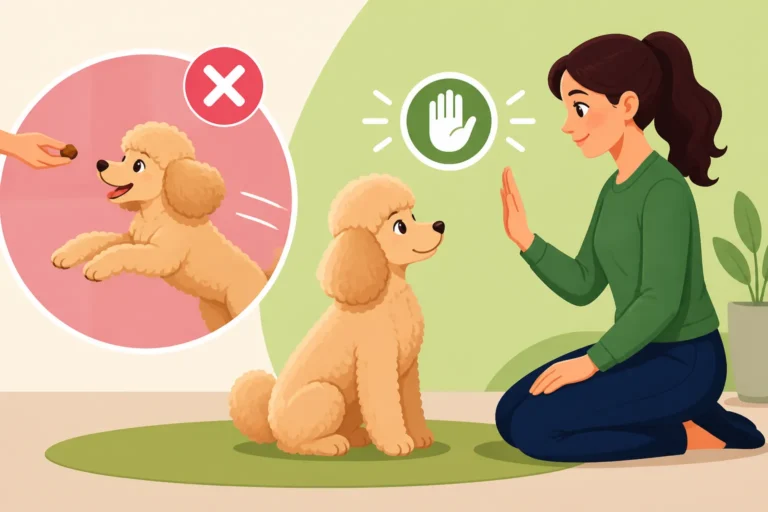
Positive reinforcement is all about rewarding the behaviors you want to see, rather than punishing the ones you don't. For a Poodle, this approach is like unlocking their full potential. When they perform a desired action—like sitting when asked, or coming when called—and are immediately rewarded with something they value (a tasty treat, enthusiastic praise, a favorite toy), they quickly learn to repeat that behavior. This creates a clear, positive association, making learning enjoyable and effective.
This method leverages their intelligence, allowing them to problem-solve and figure out what earns them rewards, rather than simply trying to avoid punishment. It builds confidence and encourages them to offer behaviors rather than just passively waiting for instruction. You'll find your Poodle more engaged, more eager to learn, and happier overall. Tools like clickers, readily available on platforms like Amazon, can be incredibly effective in marking the exact moment your Poodle performs the correct behavior, making the communication even clearer. The key is consistency and high-value rewards tailored to what your Poodle loves most.
Here's a quick comparison of the two approaches:
| Aspect | Harsh Handling | Positive Reinforcement |
|---|---|---|
| Foundation | Fear, intimidation, avoidance | Trust, cooperation, motivation |
| Learning Process | Avoidance of punishment, guesswork | Clear communication, reward-driven |
| Emotional State | Anxiety, fear, withdrawal, reactivity | Confidence, enthusiasm, joy, engagement |
| Relationship | Dominance/submission, distrust | Partnership, mutual respect, strong bond |
| Behavioral Outcome | Suppression of behavior, potential aggression | Desired behaviors, willingness to learn, resilience |
Understanding the Poodle's Motivation
Every Poodle has unique motivations. Some are incredibly food-motivated, others live for a game of fetch, and some just want your undivided attention and praise. The trick to successful positive reinforcement is figuring out what truly lights up your Poodle. Observing them in different situations will give you clues. Does their tail wag furiously for a small piece of cheese? Do they perk up at the sight of their favorite squeaky toy? Do they lean into you for scratches and soft words? Why Poodles Read People So Well means they're also reading your enthusiasm!
Once you understand their currency, you can use it strategically in training. For example, if your Poodle is highly toy-motivated, use a quick game of tug as a reward for a perfect recall. If they are social butterflies, a brief greeting with a friendly dog might be the ultimate reward for walking calmly past a distraction. The more personalized your rewards, the more effective your training will be. This approach helps you Reading a Poodle's Body Language to ensure you're using the most effective motivators and that your Poodle is enjoying the learning process.
Seeking Professional, Ethical Guidance
Sometimes, navigating a Poodle's behavior, especially if you're trying to undo previous negative experiences or address existing issues like reactivity, can feel overwhelming. This is where professional help comes in, but it's crucial to seek out trainers who adhere strictly to positive, force-free methods. Avoid any trainer who suggests using physical corrections, fear, or dominance-based techniques.
A good positive reinforcement trainer will help you understand why your Poodle is behaving a certain way and provide you with humane, effective strategies to shape desired behaviors. They can guide you through everything from basic obedience to more complex behavioral challenges. Many excellent online resources and programs are available, like BAXTER & Bella, which offers comprehensive positive reinforcement puppy and dog training from the comfort of your home. These resources can be invaluable in providing structured, ethical guidance that aligns with a Poodle's sensitive nature, ensuring you're building a relationship based on kindness and understanding. Finding a trainer a Poodle will not shut down for is paramount to their success and well-being.
Disclaimer
This article is for general informational purposes only and does not constitute professional advice. Laws, prices and regulations vary by location and change over time. Consult a qualified professional for guidance on your specific situation.