Replacing Clippers and Blades for a Poodle
If you've ever found yourself wrestling with your gorgeous Poodle, trying to achieve that perfectly polished look, only to end up with a patchy, uneven cut and a stressed-out pup, you know the frustration. It’s often not your technique that’s failing, but your tools. Dull clipper blades can turn a routine grooming session into a nightmare, causing discomfort for your Poodle and endless headaches for you. This guide will walk you through everything you need to know about replacing and maintaining your Poodle's clipper blades and equipment, ensuring smooth, efficient, and stress-free grooming every time.
The Unavoidable Reality of Worn-Out Grooming Tools
Let's be honest, grooming a Poodle is a commitment. Their continuously growing, dense, and often curly coat is a marvel, but it's also a serious workout for your clippers and blades. Over time, even the highest quality equipment will dull, snag, and lose its effectiveness. Trying to power through with subpar tools doesn't just make your job harder; it can genuinely hurt your Poodle.
The Frustration of a Bad Cut
There's nothing quite like the feeling of pride when you finish a beautiful groom on your Poodle, admiring their freshly clipped coat. But the flip side is the sheer annoyance when the clippers just aren't cutting it – literally. You push, they pull. You try to create a smooth line, and instead, you get track marks or uneven patches. This isn't just about aesthetics; it's about the time and effort you're investing, only to be let down by dull equipment. Many Poodle owners who decide to start Learning to Clip a Poodle at Home quickly realize that the quality of their tools makes all the difference in achieving a salon-worthy finish.
Beyond the visible results, a dull blade can lead to a truly miserable experience for your dog. The blade drags and tugs at their delicate skin and dense hair, causing pain and irritation. A Poodle, being the sensitive and intelligent creature they are, will quickly associate grooming with discomfort, making future sessions a battle. This is why maintaining sharp blades isn't just a nicety; it's a fundamental part of responsible Poodle care.
Why Poodle Coats Demand Sharp Tools
A Poodle's coat is unique; it's single-layered, grows continuously, and doesn't shed in the traditional sense. Instead, loose hairs get caught in the surrounding curls, leading to mats if not regularly brushed and trimmed. This density and unique texture mean that blades need to be exceptionally sharp to glide through efficiently without snagging. Imagine trying to cut a thick, tangled rope with a butter knife – that's what a dull blade feels like to a Poodle's coat.
The curly nature of their hair also means that dull blades can fold the hair rather than cut it cleanly, leading to an uneven appearance and increasing the likelihood of clipper burn. For breeds with a fine, straight coat, a slightly less-than-perfect blade might still get the job done. But for a Poodle, with its robust and often challenging coat, sharpness is paramount. It’s an investment in your Poodle's comfort and your own sanity during grooming time.
Understanding the Lifespan of Your Clipper Blades
Knowing when to replace or sharpen your clipper blades is crucial for consistent, comfortable grooming. It’s not always a hard and fast rule, as usage frequency and coat type play a big role, but there are definite signs your blades will give you that scream, "I need attention!"
Reading the Signs: When a Blade is Dull
Ignoring the signs of dull blades is a recipe for disaster. Not only will your grooming results suffer, but your Poodle will pay the price in discomfort. Learning to recognize these cues early can save you a lot of hassle and prevent potential skin irritation for your beloved companion.
Tugging and Pulling on the Coat
This is perhaps the most obvious and immediate sign that your blade is past its prime. Instead of smoothly gliding through the hair, you'll feel and hear the blade dragging and pulling. Your Poodle might flinch, pull away, or even whine, signaling their discomfort. This isn't just annoying; repeated tugging can cause microscopic tears in the hair shaft, leading to breakage and further matting down the line. It also creates a negative association with grooming, making the next session even more challenging.
When a sharp blade passes through hair, it makes a clean, swift cut. A dull blade, however, requires more force, effectively stretching and tearing the hair rather than slicing it. This pulling sensation is not only unpleasant for your dog but also inefficient for you, forcing you to go over the same spot multiple times, increasing the risk of irritation. If you notice your Poodle becoming unusually fidgety or resistant during clipping, a dull blade should be one of the first things you check.
Leaving Lines or Uneven Patches
A perfectly groomed Poodle coat should be smooth and even, without any visible "track marks" or stray hairs. If your clippers are leaving unsightly lines, ridges, or patchy areas, even when you're using proper technique, it's a strong indicator that your blades are no longer cutting uniformly. Dull spots on the blade can miss sections of hair or cut them unevenly, resulting in a less-than-professional finish.
These lines can be particularly noticeable on lighter-colored Poodles or when you're working on areas like the back or sides where an even length is desired. You might find yourself going over the same area repeatedly, trying to smooth it out, only to achieve minimal improvement. This wastes time and can overheat your blades, compounding the problem. Achieving that crisp, clean Poodle finish requires blades that cut every single hair at the same length, which only sharp blades can guarantee.
Excessive Heat Generation
All clipper blades generate some heat due to friction, especially during longer grooming sessions. However, if your blades are getting excessively hot very quickly, even after just a few minutes of use, it's a clear sign of dullness. A dull blade has to work harder to cut through the hair, increasing friction and thus heat. This heat not only makes the blade uncomfortable or even dangerous for your Poodle's skin but also dulls the blade even faster, creating a vicious cycle.
Hot blades can cause clipper burn, a painful skin irritation that can manifest as redness, bumps, or even skin lesions. This is particularly problematic on sensitive areas like the armpits, belly, and inner thighs. Always keep a can of blade coolant spray handy to manage heat, but if you're constantly relying on it, or if your blades heat up unusually fast after proper cooling, it's time to consider sharpening or replacement. Your Poodle's comfort is paramount, and burning their skin is a serious concern that can be entirely avoided with sharp, well-maintained blades.
Different Blade Materials and Their Durability
Not all clipper blades are created equal, and the material they're made from significantly impacts their sharpness, heat retention, and overall lifespan. Understanding these differences can help you make an informed choice when What Poodle Clippers and Blades Cost is a consideration.
Stainless Steel Blades: The Workhorse
Stainless steel blades are the most common and widely used type in the grooming world, and for good reason. They are durable, relatively inexpensive, and can be sharpened multiple times. Brands like Andis, Oster, and Wahl all offer a comprehensive range of stainless steel blades that are generally compatible with their A5-style clipper systems. These blades are robust enough to handle the tough, dense coat of a Poodle and are a reliable choice for everyday grooming.
While stainless steel blades are incredibly effective, they do tend to heat up faster than ceramic alternatives due to friction. This means you need to be diligent about cooling them with blade spray or by switching between multiple blades during longer sessions. Proper cleaning and oiling are also essential to prevent rust and maintain their edge. Despite the heat factor, their widespread availability, durability, and cost-effectiveness make them a staple for most Poodle owners.
Ceramic Blades: Cooler Running, Different Durability
Ceramic blades feature a ceramic cutting edge paired with a stainless steel base. The primary advantage of ceramic is its ability to stay cooler for longer periods. Ceramic doesn't conduct heat as readily as metal, which reduces friction and makes for a more comfortable experience for your Poodle, especially during lengthy grooms or on sensitive skin. This can be a huge benefit for Poodles prone to skin irritation or for owners who struggle with managing blade heat.
However, ceramic blades also have a downside: they are more brittle than steel. While the cutting edge is incredibly sharp and holds its edge well, it can chip or break if dropped or handled roughly. This makes them a bit less forgiving if you're prone to accidental drops or if your grooming environment is particularly busy. They are often a bit more expensive than their stainless steel counterparts upfront, and sharpening services for ceramic blades might be less common or specialized. Many groomers opt for ceramic blades for finishing work or on highly sensitive dogs due to their cooler operation.
Cryogenically Treated Blades: The Premium Option
For those seeking the pinnacle of blade performance and longevity, cryogenically treated blades are an excellent, albeit more expensive, option. These blades, typically made from high-carbon steel, undergo a specialized freezing process that alters their molecular structure. This treatment makes the metal significantly harder, more durable, and better able to resist wear and tear. The result is a blade that stays sharper for much longer and is exceptionally resilient.
Cryogenically treated blades offer superior cutting performance, gliding through even the densest Poodle coat with ease. They tend to maintain their edge through more grooms than standard stainless steel blades, potentially reducing the frequency of sharpening or replacement. While the initial investment is higher, the extended lifespan and superior cutting quality can justify the cost for dedicated Poodle owners or professional groomers. These blades still require proper cleaning and oiling, but their enhanced durability offers a noticeable improvement in overall grooming efficiency and blade life.
The Great Debate: Sharpening Versus Replacing Poodle Blades
Once your blades start showing signs of dullness, you're faced with a choice: do you send them off to be sharpened, or do you simply buy new ones? Both options have their merits and drawbacks, and the best decision often depends on your budget, convenience, and the type of blades you own.
The Economics of Sharpening Services
Professional blade sharpening is a fantastic way to extend the life of your expensive grooming tools. A skilled sharpener can restore a dull blade to near-new condition, making your initial investment go further. However, it's not without its considerations.
Finding a Reputable Sharpener
The quality of your blade sharpening service can make or break the experience. A bad sharpener can ruin a blade, making it impossible to use or significantly shortening its lifespan. Look for sharpeners who specialize in pet grooming blades and have a strong reputation. Ask for recommendations from other Poodle owners, local groomers, or even your vet. Many reputable sharpeners operate by mail, so you don't necessarily need one in your immediate vicinity. Websites like the National Association of Professional Sharpeners (NAPS) or similar local directories can be a good starting point.
When contacting a sharpener, ask about their process, their experience with specific blade brands (like Andis or Wahl), and their turnaround time. A good sharpener will understand the nuances of various blade types and ensure they are returned to you in optimal working condition, cutting cleanly and running cool. Avoid services that offer extremely low prices or quick fixes, as these often compromise quality.
Cost Per Sharpening and Turnaround Time
The cost to sharpen a single clipper blade typically ranges from $7 to $15, depending on the type of blade and the sharpener's rates. While this is significantly less than buying a brand new blade, it adds up if you have many blades or need frequent sharpening. You also need to factor in shipping costs if you're mailing them out. Beyond the monetary cost, there's the inconvenience of turnaround time. You might be without your essential blades for several days to a week or even longer, depending on the service.
For this reason, many experienced Poodle owners and professional groomers maintain a rotation of blades. They'll have at least two of each essential size (e.g., two #10 blades, two #7F blades) so that while one set is being sharpened, they can continue grooming with the other. This ensures uninterrupted grooming schedules and minimizes stress for both you and your Poodle. Remember that some ceramic blades might require specialized sharpening techniques, which could affect cost and availability of services.
The Case for New Replacement Blades
Sometimes, despite your best efforts, a blade reaches the end of its serviceable life, or the convenience of a new blade simply outweighs the sharpening process. Knowing when to simply replace can save time and ensure consistent quality.
Guaranteed Edge Quality and Hygiene
One of the biggest advantages of buying a new replacement blade is the guarantee of a factory-sharp edge. You know you're getting a blade that's never been dropped, dulled, or improperly sharpened. This ensures optimal cutting performance right out of the box. For Poodle owners who are still Desensitizing a Poodle to Clippers, a perfectly sharp blade can make the experience much smoother and less stressful for the dog, helping to build positive associations with grooming.
New blades also offer a fresh start in terms of hygiene. While proper cleaning and disinfection are always crucial, a brand-new blade eliminates any lingering concerns about microscopic debris or potential contamination that might build up over time, even with diligent care. This can be particularly important for Poodles with sensitive skin or those prone to infections. It's like replacing an old, worn-out kitchen knife with a brand-new, gleaming one – the difference in performance and satisfaction is immediate.
Availability and Convenience (e.g., from Chewy)
In today's market, buying new blades is incredibly convenient. Online retailers like Chewy offer a vast selection of clipper blades from all the major brands, often at competitive prices. You can order exactly what you need from the comfort of your home and have it delivered directly to your door, sometimes within a day or two. This eliminates the need to package blades, find a sharpener, wait for turnaround, and pay for return shipping.
For many Poodle owners, the time saved and the immediate availability of a perfectly sharp blade make replacement an attractive option, especially for frequently used sizes like the #10 or #7F. When you're in the middle of grooming and realize your blade is completely dull, having a fresh replacement on hand can be a lifesaver. This ease of access ensures that you're never stuck with inadequate tools, which is crucial when you're adhering to a regular grooming schedule for your Poodle's demanding coat.
Navigating the World of Clipper Types and Their Blade Systems
Before you can even think about replacing blades, it's essential to understand the type of clippers you're working with. Clippers come in various configurations, and their design dictates which blades are compatible.
Corded vs. Cordless Clippers: What Affects Blade Compatibility?
The choice between corded and cordless clippers isn't just about convenience; it can sometimes influence blade compatibility and overall grooming experience. Both have their place in a Poodle owner's toolkit.
Power and Consistent Performance
Corded clippers, like the classic Oster A5 or Andis AGC2, are workhorses known for their consistent power output. Because they're plugged directly into an electrical outlet, they deliver a continuous, unwavering stream of power, which means they maintain their speed and cutting efficiency throughout the entire grooming session. This steady power is incredibly beneficial when you're tackling a thick or matted Poodle coat, as it reduces the likelihood of the motor bogging down or the blades slowing, which can cause snagging.
Generally, corded clippers tend to be more robust and are often favored by professional groomers for their reliability in high-volume settings. They are less prone to overheating motors (though blades still get hot!) and often have a longer overall lifespan because there are no batteries to degrade. If you're looking for a dependable, powerful machine for regular, heavy-duty Poodle grooming, a corded clipper is often the go-to choice.
Freedom of Movement and Battery Life
Cordless clippers, on the other hand, offer unparalleled freedom of movement. Brands like Wahl's Bravura or Andis' Pulse ZR II provide the flexibility to groom your Poodle anywhere without being tethered to an outlet. This is particularly advantageous if you groom in various locations, perhaps moving around your Poodle for different angles, or if you prefer to groom outdoors on a nice day. They are often lighter and more ergonomically designed, reducing hand fatigue during long sessions.
The main consideration with cordless clippers is battery life and power fade. While modern lithium-ion batteries offer impressive run times, they do eventually need recharging, and some models might experience a slight decrease in power as the battery drains. If you have a large Standard Poodle or multiple Poodles to groom, you might need to recharge mid-session or invest in a clipper with multiple battery packs. Always check the expected battery life and charging time when considering a cordless model. Both types of clippers, however, primarily use the industry-standard A5 detachable blade system, so blade compatibility isn't usually an issue between corded and cordless within the same brand.
Understanding Detachable Blade Systems
The vast majority of clippers suitable for Poodle grooming utilize a detachable blade system. This is a critical feature that simplifies blade replacement and offers immense versatility.
A5-Style Blades: The Industry Standard
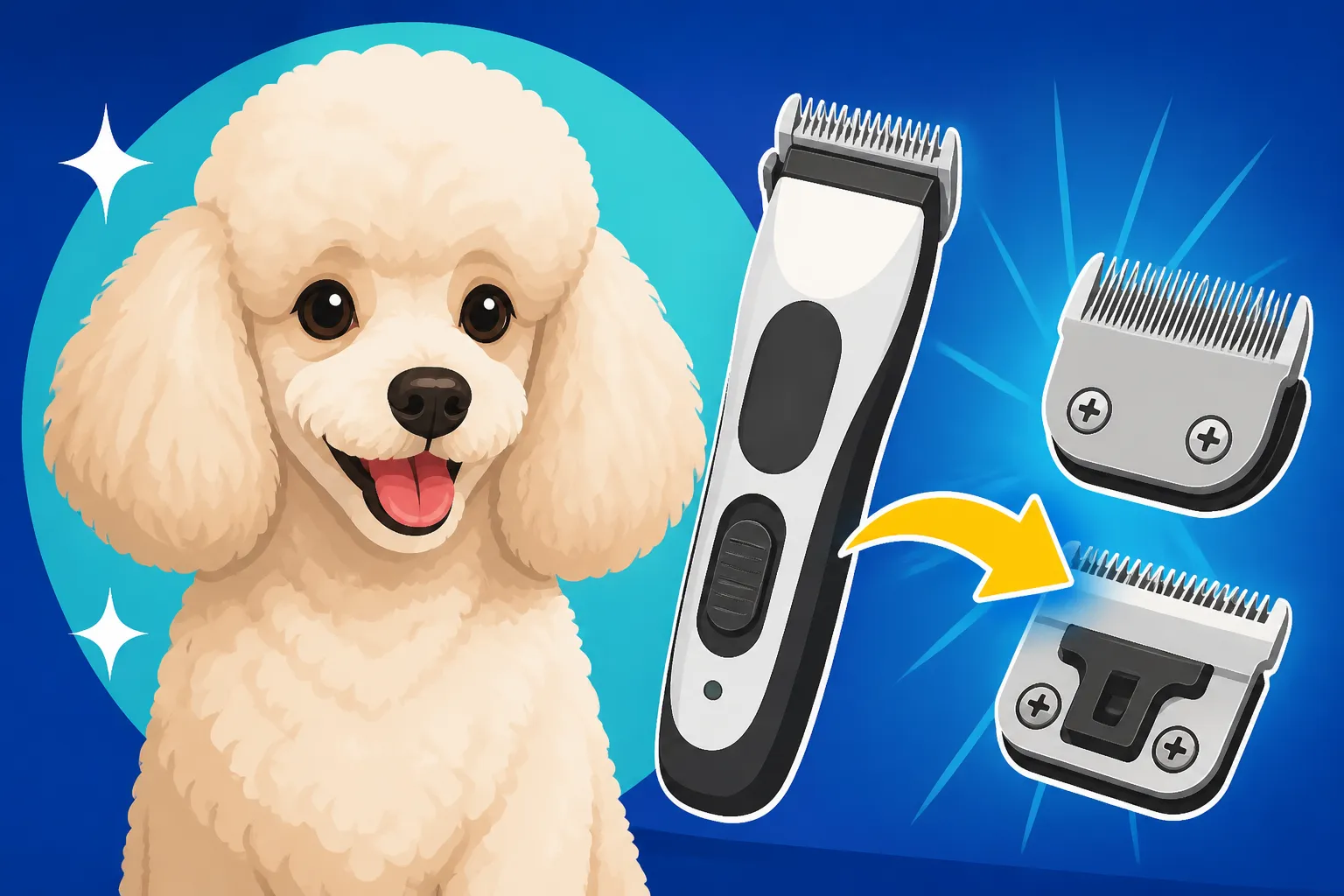
The "A5-style" detachable blade system is the gold standard in professional pet grooming. What this means is that most major clipper brands – Andis, Oster, Wahl, Laube, etc. – produce blades that are interchangeable with each other's A5-compatible clippers. So, an Andis CeramicEdge #10 blade will fit on an Oster A5 clipper, and a Wahl Competition Series #7F blade will fit on an Andis UltraEdge clipper. This cross-compatibility is a huge advantage for Poodle owners, as it allows for a wide selection of blade types, sizes, and materials without being locked into a single brand.
This universal system makes it incredibly easy to replace blades. You simply push a small lever on the clipper head, and the blade detaches. To reattach, you align the blade with the drive lever and snap it into place. This design allows you to quickly switch between different blade lengths during a single grooming session, or swap out a hot blade for a cool one. It also simplifies cleaning and maintenance, as you can easily remove the blade for thorough washing and oiling.
Proprietary Blade Systems: Brand-Specific Needs
While the A5-style is dominant, a few clipper models, particularly some of the smaller, lighter-duty trimmers or professional cordless units, might use a proprietary blade system. These blades are specifically designed for that particular clipper model and are not interchangeable with A5-style blades or other brands. For example, some specialized finishing trimmers or clippers designed for very fine detail work might have their own unique blade cartridge system.
If you own a clipper with a proprietary system, you must purchase replacement blades specifically made for that model and brand. This means your choices might be more limited, and you'll need to source them from that specific manufacturer or their authorized retailers. While these systems can offer unique advantages in terms of design or performance for their intended purpose, they do tie you into a single brand's accessories. Always check your clipper's manual or product specifications to confirm its blade system before purchasing replacements. Most standard Clippers Worth Buying for a Poodle will likely use the A5 system, however.
Selecting the Right Replacement Blades for Your Poodle's Coat
Choosing the right blade isn't just about getting a sharp one; it's about selecting the correct length, type, and material for the specific task at hand and for your Poodle's unique coat. Having a small arsenal of blades is often necessary for a complete groom.
Essential Blade Sizes for Poodle Grooming
Poodle grooming requires a variety of blade lengths to achieve different clips and to manage various coat conditions. Knowing which blade does what is fundamental.
The Versatile #10 Blade
If there's one blade every Poodle owner should own, it's the #10. This blade cuts hair to about 1/16th of an inch (1.5mm) and is incredibly versatile. It's the standard for sanitary clips (around the private areas), shaving the face and feet (the "Poodle clip" look), and often used for the base of the tail. It’s also a good starting point for a very short body clip, especially if the coat is matted and needs to be taken down short to reset. The #10 blade is a safe choice for most short areas, providing a clean, neat finish without being excessively short.
However, while versatile, the #10 blade can run quite warm, and because it leaves the hair so short, it's essential to exercise caution to prevent Clipper Burn on a Closely Trimmed Poodle, particularly on sensitive skin. Always use it on clean, dry, and thoroughly brushed-out hair. For beginners, it's an excellent blade to practice precise lines on the face and feet, which are hallmark features of a well-groomed Poodle.
Finish Blades: #7F, #5F, #4F for Smooth Clips
"F" blades, or "finish blades," are designed to leave a smooth, consistent finish without any lines or tracks. The "F" stands for "finish," meaning the teeth are set closer together, allowing for a smooth cut. These are fantastic for body clips where you want a uniform, polished look.
- #7F (approx. 1/8 inch or 3.2mm): A popular choice for a neat, shorter body clip. It provides a clean, close cut that's longer than a #10 but still manageable. It’s great for summer clips or for Poodles with active lifestyles where a shorter, easy-care coat is desired.
- #5F (approx. 1/4 inch or 6.3mm): This blade leaves the coat a bit longer, offering a plush, velvety finish. It's excellent for Poodles who need protection from the elements but still desire a relatively short, uniform body. It's a fantastic blend between short and plush.
- #4F (approx. 3/8 inch or 9.5mm): The longest of the common finish blades, the #4F leaves a good amount of coat, providing a soft, full look. This is often used for a "lamb clip" or a slightly longer sporting clip, giving the Poodle a cuddly, yet still tidy, appearance. These blades require the coat to be relatively free of mats to glide through smoothly.
Skip-Tooth Blades: #7, #5, #4 for Blending and Bulk Removal
Skip-tooth blades (without the "F") have alternating long and short teeth, designed to feed more hair into the cutting surface. These blades are excellent for removing bulk quickly or for blending different lengths. However, because their teeth are spaced further apart, they are inherently less safe and should never be used on dirty, matted, or heavily tangled coats, as they can easily catch and cut the skin. They are also not recommended for beginners.
- #7 (approx. 1/8 inch or 3.2mm): Useful for quickly taking down a very thick coat to a shorter length before going over it with an F-blade or for blending.
- #5 (approx. 1/4 inch or 6.3mm): Similar to the #7, but leaves more length. Best for initial passes on a clean, fluffed coat.
- #4 (approx. 3/8 inch or 9.5mm): For maximum bulk removal while leaving a good amount of length. Again, always on a clean, pre-brushed coat.
Most pet owners will find more use for the "F" blades, as they provide a safer, smoother finish. If you're a beginner, stick to the F-blades or use metal comb attachments over a #10 or #30 blade for longer lengths.
Surgical Blades: #30 and #40 for Specialty Areas
Surgical blades cut hair extremely short. The #30 blade (1/50th inch or 0.5mm) and #40 blade (1/100th inch or 0.25mm) are typically used for very specific purposes:
- Pre-surgical preparation: Vets use these blades to shave an area completely bare for surgical procedures or wound care.
- Pads of the feet: Some groomers use a #30 blade for a very clean shave between the Poodle's paw pads, which helps with traction and hygiene.
- Under the ears: Occasionally, a #30 blade might be used very carefully to shave the hair under a Poodle's ears to prevent matting and improve airflow, crucial for preventing Ear Infections Under a Poodle's Drop Ears.
These blades are extremely sharp and leave the skin highly exposed, making them prone to causing irritation or clipper burn if not used with extreme caution and a light touch. They should only be used by experienced individuals on clean, taut skin. For most home groomers, a #10 blade is sufficient for all short-shaved areas.
Matching Blade to Coat Condition and Desired Clip
The Poodle coat is incredibly versatile, allowing for a vast array of clips, from the elaborate Continental to the simple kennel clip. Your blade selection will depend heavily on the coat's current condition and the style you're aiming for.
Dealing with Mats: Lower Blades and Patience
Matted Poodle coats are every groomer's nemesis. When a Poodle's hair gets severely matted, it forms a dense, impenetrable fabric close to the skin. Attempting to brush out severe mats is painful and often impossible without causing severe skin irritation. In these cases, the kindest and safest approach is often a complete shave-down. For this, you'll need a very short blade, typically a #10 or even a #15, used carefully. The shorter the blade, the easier it can get under the mat and close to the skin without pulling.
It’s crucial to use these short blades slowly, keeping the skin taut, and making short strokes. Never force a blade through a mat; if it's tugging, the mat is too dense for that blade or you need to adjust your angle. Sometimes, you might need to use a skip-tooth blade very, very carefully to break up light matting, but this carries a significant risk of cutting the skin. Often, a professional groomer is best equipped to handle severely matted Poodles due to their experience and specialized tools. For general tips on how to prevent mats, understanding How Often a Poodle Must Be Brushed is key.
Achieving a Smooth, Professional Finish
Once the bulk of the coat is removed and any mats are dealt with, the goal is to achieve a smooth, even finish. This is where your F-blades (e.g., #7F, #5F, #4F) really shine. These blades are designed to leave a uniform length with no unsightly lines, giving your Poodle that polished, salon-quality look. When using these blades, ensure the coat is clean, completely dry, and thoroughly brushed out and fluffed. Any tangles or dirt will impede the smooth passage of the blade and ruin your finish.
For an ultra-smooth finish, especially on lighter coats, some groomers will go over the coat a second time with an F-blade, using a slightly different angle, after the initial pass. This helps catch any stray hairs and further evens out the length. Always ensure your blades are sharp and cool for this step, as a hot or dull blade will quickly compromise the desired finish. Regular Bathing and Drying a Poodle before grooming is crucial for an even cut.
Using Clipper Combs for Longer Styles
While blades offer specific lengths, sometimes you want a much longer, fluffier cut than what even a #4F blade can provide. This is where clipper comb attachments come in. These plastic or metal combs snap onto a short blade (usually a #10 or #30) and act as a guard, allowing the blade to cut hair to a much longer, predetermined length.
Clipper combs come in a variety of lengths, from half an inch up to a full inch or more. They are perfect for achieving a plush, natural-looking coat that's still tidy. They are fantastic for body work, creating a "teddy bear" or longer sporting clip. Metal comb attachments are generally preferred over plastic ones as they glide through the coat more smoothly and are more durable.
When using clipper combs, it's absolutely paramount that the Poodle's coat is impeccably clean, completely dry, and meticulously brushed out and free of any tangles. Clipper combs cannot cut through mats; they will simply skip over them or get stuck, leaving an uneven mess and potentially frustrating your Poodle. They also work best on a coat that is fluffed straight, not curly. If you're aiming for a longer, flowing look for your Poodle, investing in a good set of metal clipper combs is a smart move.
| Blade Size | Cut Length (approx.) | Common Uses for Poodles | Notes |
|---|---|---|---|
| #10 | 1/16 inch (1.5mm) | Face, feet, tail base, sanitary trim, very short body clip (matted coats) | Very versatile, can run warm, use with caution on sensitive skin. |
| #7F | 1/8 inch (3.2mm) | Shorter body clip, smooth finish | Good for active Poodles, provides a neat, uniform look. |
| #5F | 1/4 inch (6.3mm) | Medium body clip, plush finish | Popular for a "velvety" feel, offers more protection. |
| #4F | 3/8 inch (9.5mm) | Longer body clip, soft/full finish | Ideal for lamb clips or longer sporting cuts, leaves significant coat. |
| #30 | 1/50 inch (0.5mm) | Under comb attachments, surgical prep, paw pads (advanced users) | Extremely short, use with extreme care to avoid clipper burn. |
| #40 | 1/100 inch (0.25mm) | Under comb attachments, surgical prep (advanced users) | Even shorter than #30, highest risk of clipper burn. |
| Clipper Combs | Various (1/2" to 1" +) | Longer body styles, teddy bear clips, blending | Must be used on clean, dry, brushed-out, tangle-free coat. Attached to #10 or #30 blade. |
Maximizing the Longevity of Your Poodle Clippers and Blades
Your grooming equipment is an investment. By taking a few simple steps, you can significantly extend the life of your clippers and blades, ensuring they remain in peak condition for many grooms to come. This not only saves you money but also ensures a better experience for your Poodle.
The Ritual of Cleaning and Oiling Blades
This is perhaps the single most important step in blade maintenance, yet it's often overlooked or done improperly by home groomers. Consistent cleaning and oiling are essential for preventing rust, maintaining sharpness, and ensuring smooth operation.
Before, During, and After Each Groom
The ideal routine involves cleaning and oiling your blades at three key stages:
- Before grooming: A quick brush-off and a drop of oil ensure the blade starts fresh and lubricated. This prevents initial friction and heat buildup.
- During grooming: If you notice the blade starting to slow down, pull hair, or get excessively hot, stop immediately. Use a blade brush to clear any trapped hair, spray with blade coolant/lubricant, and then apply a drop or two of clipper oil. This is crucial for managing heat and maintaining cutting efficiency, especially during longer sessions with a dense Poodle coat. Having a second, cool blade on standby for quick swaps is even better.
- After grooming: This is the most critical cleaning. Detach the blade from the clipper. Use a stiff blade brush to meticulously remove all hair, dirt, and debris from between the teeth and under the cutting plate. Then, spray with a blade cleaner or wash (some groomers use rubbing alcohol, but be sure to re-oil thoroughly afterwards as alcohol dries out metal). Once clean, apply 2-3 drops of high-quality clipper oil across the teeth and on the friction points of the blade. Run the clipper for a few seconds to distribute the oil, then wipe off any excess. This routine prevents rust, minimizes wear, and keeps the blade sharp.
Choosing the Right Blade Wash and Oil
Not just any oil will do. Always use specialized clipper oil designed for pet grooming equipment. These oils are typically non-toxic and formulated to lubricate high-speed cutting surfaces without gumming up or attracting excessive hair. They also often contain anti-corrosion agents. Household oils (like WD-40, vegetable oil, or motor oil) are completely unsuitable; they can damage your blades, attract dirt, and be harmful to your pet.
For blade washes or cleaners, look for products specifically labeled for clipper blades. Many brands, like Andis, Oster, and Wahl, offer their own blade care products. These liquids effectively flush out hair and debris while simultaneously lubricating and disinfecting the blade. Some even act as coolants. Using these products correctly, along with regular oiling, will make a significant difference in how long your blades stay sharp and functional.
Safe Storage and Handling Practices
How you store and handle your blades when not in use is just as important as how you clean them. Improper storage can lead to damage, rust, and premature dulling.
Protecting Blades from Damage
Clipper blades are precision instruments. Dropping them, especially on a hard surface, can easily chip the teeth, bend the cutting plate, or knock them out of alignment. Even a small chip can render a blade unusable, causing it to snag hair or even cut your Poodle's skin. Always handle blades with care. When not on the clipper, store them in a protective case, a blade box, or a dedicated drawer where they won't jostle around or come into contact with other hard objects.
Many groomers use magnetic blade holders or specialized blade organizers. Even a simple plastic storage box with individual compartments can do the trick. The goal is to keep each blade separate and protected. Never just toss them into a drawer with other grooming tools, as they are likely to get damaged.
Preventing Rust and Contamination
Rust is the enemy of any metal blade. Even stainless steel can rust if exposed to moisture for prolonged periods. This is why thorough cleaning, drying, and oiling after every groom are so crucial. Storing blades in a humid environment or putting them away when still damp will inevitably lead to corrosion, which pits the metal and ruins the cutting edge.
Ensure your blades are completely dry before oiling and storing. Consider adding a desiccant pack (like silica gel packets) to your blade storage box to absorb any ambient moisture. Additionally, always store blades in a clean environment to prevent dust, pet hair, or other contaminants from accumulating on their surfaces, which can interfere with their performance the next time you use them.
Troubleshooting Common Clipper Issues (beyond dull blades)
Sometimes, the problem isn't just a dull blade; it's the clipper itself. Recognizing and addressing these issues can save you from unnecessary blade purchases or costly repairs.
One common issue is the clipper not cutting even with a sharp blade. First, check the drive lever or blade drive. This small plastic or metal piece, located where the blade attaches, wears down over time. If it's worn, it won't properly move the top blade against the bottom blade, resulting in poor cutting. These are usually inexpensive parts and easy to replace. Another culprit could be a loose or broken spring mechanism within the clipper that holds the blade securely.
Another issue is excessive vibration or noise. This can indicate that the internal motor components are loose, the drive lever is worn, or the tension screw (if your clipper has one) needs adjustment. Overheating of the clipper body (not just the blade) could signal a motor issue, possibly due to a lack of internal lubrication or simply an old, overworked motor. In these cases, it's best to consult the clipper's manual, a reputable repair shop, or consider purchasing a new clipper if yours is very old. Regular maintenance and proper use, as detailed in our guide Grooming Tools a Poodle Owner Must Buy, can prevent many of these common problems.
Budgeting for Continuous Poodle Grooming Equipment Needs
Owning a Poodle is a joy, but their magnificent coats require consistent care, which, naturally, comes with ongoing costs. Budgeting for your grooming equipment, from initial purchases to regular replacements, is a savvy financial move that ensures your Poodle always looks their best without breaking the bank.
Estimating Annual Costs for Blades and Maintenance
The cost of keeping your Poodle's grooming tools in top shape can vary widely depending on how frequently you groom, the number of blades you own, and whether you sharpen or replace. For the average home groomer with one Poodle, you might budget for one or two professional sharpening services per year for your most-used blades (e.g., #10, #7F), costing roughly $20-$40 in sharpening fees, plus shipping. If you prefer to replace blades, a new #10 blade might cost $30-$40, and a #7F might be $35-$50. So, replacing two blades annually could set you back $60-$100.
Beyond blades, don't forget the consumables:
- Clipper oil and blade wash: A few bottles might last you a year or more, costing $10-$20.
- Blade coolant spray: Depending on use, $10-$30 annually.
- Blade storage: A one-time purchase of a blade box for $15-$30.
- Replacement drive levers: $5-$10 every year or two.
A realistic annual budget for blade maintenance, assuming you do most grooming at home, could easily be in the $50-$150 range. This pales in comparison to the Professional Grooming Costs by Poodle Size, which can easily run $80-$150 per visit for a Standard Poodle, highlighting the long-term savings of home grooming.
The Investment in Quality: Paying More to Save Later
It’s tempting to opt for the cheapest clippers and blades you can find, especially when you're just starting out. However, with Poodle grooming, quality genuinely pays off. Cheap blades dull faster, cut poorly, and are more prone to breaking. Cheap clippers often have weak motors that struggle with a Poodle’s dense coat, leading to frustration, incomplete grooms, and a shorter lifespan for the clipper itself.
Investing in high-quality clippers and reputable brand-name blades (like Andis, Oster, or Wahl) means you're buying tools that are built to last, perform consistently, and can be sharpened multiple times. While the initial outlay might be higher – a good set of clippers can range from $150-$300, and individual blades from $30-$50 – these tools will typically outperform and outlast their cheaper counterparts by a significant margin. This means fewer replacements, better results, and a more positive grooming experience for you and your Poodle in the long run. Thinking about the Budgeting for a Poodle Coat That Never Stops often highlights that higher upfront costs can lead to lower lifetime costs.
Where to Find Reliable Grooming Supplies
Finding a trusted source for your Poodle's grooming supplies is essential. You want to ensure you're getting genuine, high-quality products, not counterfeits that will quickly fail.
Large online retailers are an excellent resource. Chewy, for example, stocks a wide array of professional-grade clippers, blades, blade care products, and grooming accessories from all the major brands. Their competitive pricing, frequent sales, and convenient delivery make them a go-to for many Poodle owners. Pet supply stores, both local and national chains, also carry a selection of grooming equipment, although their specialized blade inventory might be more limited.
For highly specialized blades or clippers, you might need to look at dedicated grooming supply websites or even directly from the manufacturer's site. When purchasing, always check reviews, product specifications, and return policies. If a deal seems too good to be true, it probably is. Stick to reputable sellers to ensure you're getting authentic products that will stand up to the demands of Poodle grooming.
Considering a Backup Set of Clippers or Blades for Emergencies
Imagine this: it's Sunday afternoon, you're halfway through grooming your Poodle, and suddenly your primary clipper dies, or your only #7F blade falls and chips. Panic sets in, because you have an unfinished Poodle and no way to complete the job until stores open or new equipment arrives. This scenario is a strong argument for having a backup.
For critical blades, such as your go-to #10 and your main body blade (e.g., #7F or #5F), having a spare of each can be a lifesaver. This allows you to swap out a dull or hot blade instantly, keeping your grooming session on track. If your budget allows, a secondary, perhaps less expensive, clipper can also be a wise investment. It doesn't have to be top-of-the-line, but a reliable backup can ensure you're never completely without grooming capabilities, providing peace of mind and preventing those dreaded "Poodle grooming emergencies."
Disclaimer
This guide is intended for informational purposes only and should not replace professional veterinary advice. Always consult with a qualified veterinarian or professional groomer for specific concerns regarding your Poodle's health or grooming needs.