Learning to Clip a Poodle at Home
The idea of taking clippers to your beloved Poodle's beautiful, curly coat can feel utterly daunting. Many Poodle parents feel trapped by the endless cycle of expensive professional grooming appointments, the stress of scheduling, and the worry about how their sensitive Poodle handles the salon. This guide is here to empower you, showing you how to learn the ropes of home grooming, save money, and build an even stronger bond with your Poodle through a hands-on, positive clipping experience.
Getting Started: The Essential Tools for Home Grooming
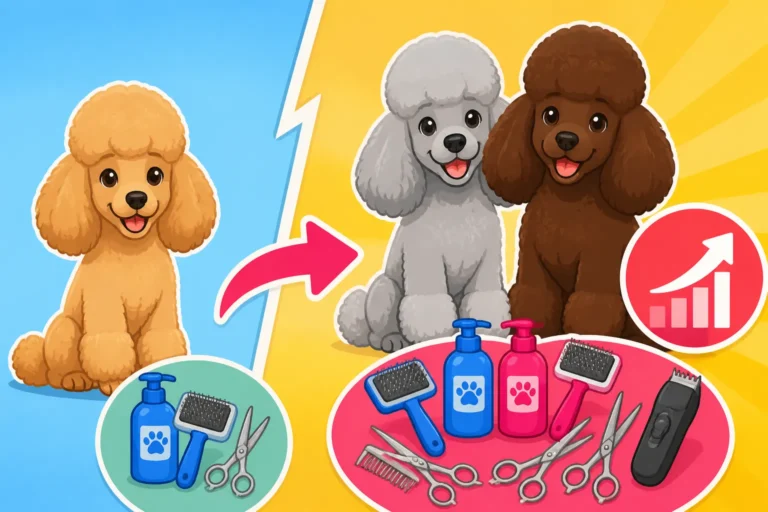
Embarking on the journey of grooming your Poodle at home isn't just about saving money, it's about control, convenience, and a deeper connection with your furry family member. But before you dive in, having the right tools is paramount. Skimping on quality here can lead to frustration for both you and your Poodle, and even potential injury or a terrible-looking clip. Think of it as investing in a new hobby – good equipment makes all the difference.
Investing in Quality Clippers and Blades
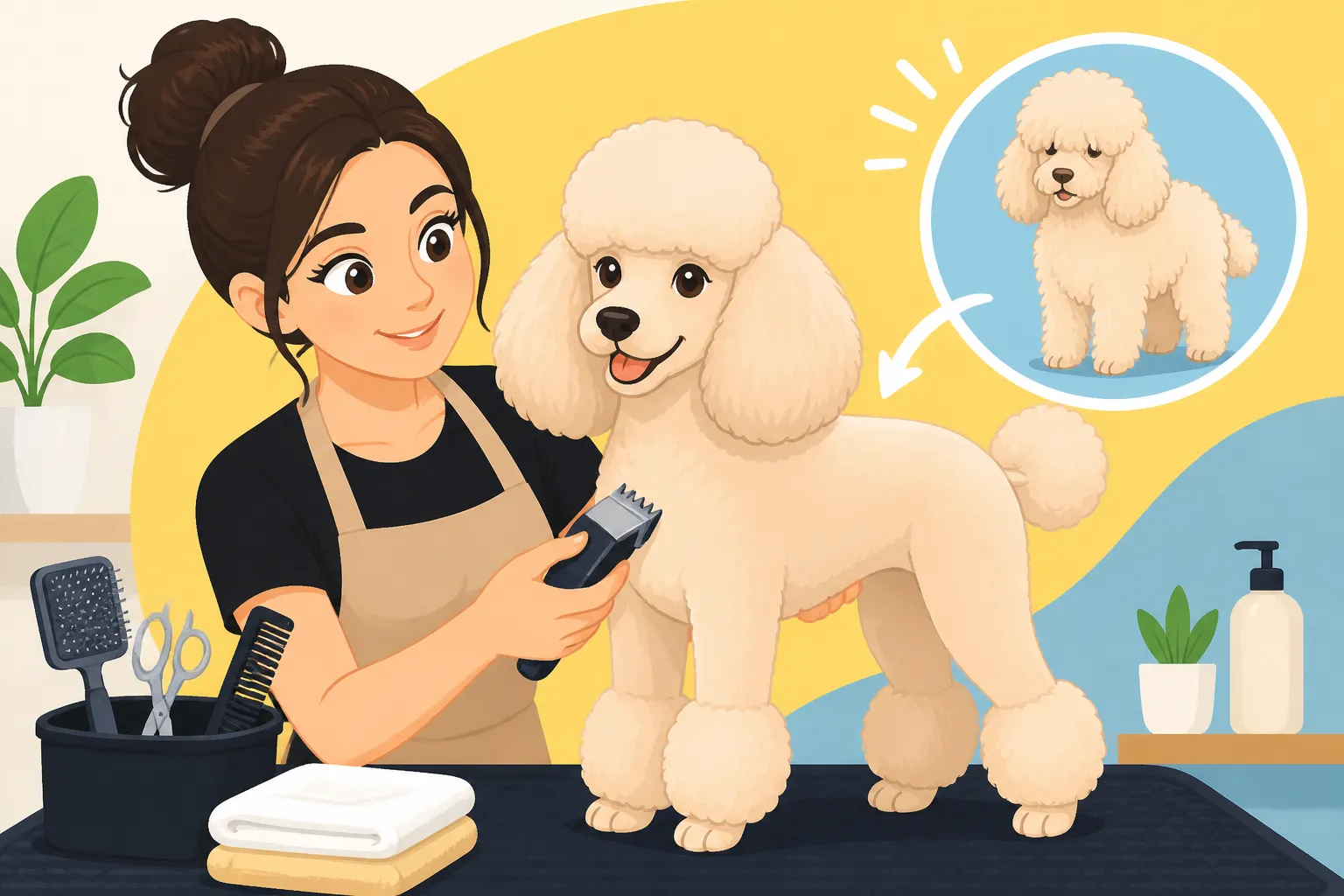
This is probably the most crucial piece of equipment you'll buy. Poodle hair is dense and curly, and it never stops growing. Regular human clippers simply won't cut it (pun intended!). You need a heavy-duty, professional-grade pet clipper. Brands like Andis, Wahl Professional Animal, and Oster are widely respected in the grooming world for their durability and power. You'll want a two-speed or variable-speed clipper, as the lower speed can be less intimidating for sensitive areas and a higher speed is great for dense body work.
Beyond the clipper itself, the blades are key. Most professional clippers use detachable A5-style blades. For a beginner, a good starting point is a #10 blade for sanitary areas (paws, belly, under the tail) and often for the face. For the body, many home groomers prefer a #7F (F for "finish," meaning it leaves a smooth cut) or a #5F for a slightly longer, plushier look. A #4F will leave an even longer, cuddlier coat. Always choose "F" blades for a smooth finish unless you are planning to go over the coat with a comb attachment afterward. Remember, blades dull over time and with use, and dull blades can pull hair, cause irritation, and even lead to Clipper Burn on a Closely Trimmed Poodle. It’s wise to have a backup set or two, and learn how to clean and oil them after every use to extend their life. You can often find a good selection of blades and clipper oil on sites like Chewy, making it easy to stock up.
Essential Brushes, Combs, and Scissors
Clippers are just one part of the equation. A comprehensive set of brushes and combs is non-negotiable for a Poodle owner, even if you never pick up a clipper. For a thorough understanding of what you need, check out our guide on Grooming Tools a Poodle Owner Must Buy.
- Slicker Brush: A good quality slicker brush is essential for "line brushing" your Poodle, especially when the coat is longer. This technique involves brushing in small sections, from the skin out, to ensure no tangles or mats are left behind.
- Metal Greyhound Comb: This is your mat detector! After slicker brushing, always go through the coat with a metal comb. If the comb snags, you've found a tangle that needs more attention before bathing or clipping.
- Straight Shears: For trimming around the paws, ear fringes, or tidying up edges that clippers might miss. Look for blunt-nosed shears if you're nervous about accidental pokes.
- Thinning Shears: These are fantastic for blending uneven lines, softening harsh clipper marks, or reducing bulk in areas like the topknot or ear feathering, giving a more natural, finished look.
- Nail Clippers or Grinder: Don't forget nail care! Regular trimming or grinding prevents painful overgrowth and keeps your Poodle comfortable.
- Ear Cleaning Solution & Cotton Balls: Poodles are prone to ear infections due to their drop ears. Regular cleaning is a must.
Setting Up Your Grooming Space
Creating a designated grooming area makes the process smoother for both you and your Poodle. Consistency helps your dog understand what's expected.
- Grooming Table: While not strictly mandatory, a grooming table with a non-slip surface and a grooming arm (to which you attach a noose to keep your Poodle safely in place) is a game-changer. It raises your Poodle to a comfortable working height, saving your back, and prevents them from wiggling off the floor. If a dedicated table isn't feasible initially, a sturdy, non-slip elevated surface like a workbench or a covered laundry table can work in a pinch.
- Good Lighting: You need to see what you're doing! Bright, even lighting helps you spot mats, identify skin issues, and ensure a smooth, even cut.
- Non-Slip Mats: Even on a grooming table, ensure the surface is non-slip. If grooming on the floor, a rubber mat can give your Poodle better traction and make them feel more secure.
- Tidy and Quiet Environment: Minimize distractions. Turn off the TV, ask family members to give you space. A calm atmosphere helps keep your Poodle relaxed. Have all your tools laid out within reach, so you're not fumbling around mid-clip.
Here's a quick look at essential home grooming tools:
| Tool Type | Purpose | Key Considerations |
|---|---|---|
| Professional Clippers | Trimming body and sanitary areas | Two-speed, A5-style blade compatible. Brands: Andis, Wahl, Oster. |
| Blades (#10, #7F, #5F) | Specific coat lengths & sanitary work | #10 for sanitary, #7F for short body, #5F for medium body. Always use "F" blades. |
| Slicker Brush | Removing tangles and undercoat | Firm pins, comfortable grip. Essential for line brushing. |
| Metal Greyhound Comb | Mat detection & finishing | Coarse and fine teeth, stainless steel. |
| Straight Shears | Trimming paws, ears, tidying lines | Blunt-nosed for safety, sharp blades. |
| Thinning Shears | Blending lines, reducing bulk | Single or double-sided. Creates a softer, more natural look. |
| Nail Clippers/Grinder | Paw health | Guillotine or scissor-style clippers; Dremel-style grinder for smooth nails. |
| High-Velocity Dryer | Efficient drying, dematting | Essential for drying a Poodle completely straight. |
| Grooming Table | Elevates dog for comfort & control | Non-slip surface, grooming arm and noose. |
Preparing Your Poodle for a Home Clip
The actual clipping is just one part of the grooming process. Proper preparation is absolutely crucial for a successful and stress-free home groom. Rushing this stage often leads to matted coats, uneven clips, and a Poodle who learns to dread grooming time.
The Importance of a Thorough Bath and Dry
You absolutely cannot clip a dirty or matted Poodle. Period. Clippers will snag, pull, and potentially injure your dog if there's any debris, tangles, or oils in the coat. This is where many beginners go wrong. A truly clean and perfectly dry coat is non-negotiable. Our guide on Bathing and Drying a Poodle offers a deep dive into the process.
First, before the bath, brush your Poodle thoroughly. Any mats that get wet will tighten and become impossible to brush out, meaning you'll have to shave them out much shorter than intended, or even risk severe skin irritation. Use your slicker brush and metal comb, line-brushing all the way to the skin. If you encounter any stubborn mats, try to work them out gently with a detangling spray and comb. If they're too tight, it might be safer to carefully shave under the mat with a #10 blade before bathing.
Next, the bath. Use a good quality dog shampoo and conditioner. Poodles have sensitive skin, so choose products designed to be gentle and moisturizing. Lather thoroughly, ensuring the shampoo penetrates all the way to the skin, and rinse completely. Any residue can cause skin irritation. The conditioning step is important too, as it helps soften the coat, making it easier to brush and clip.
Finally, drying. This is perhaps the most critical step. Your Poodle must be bone dry before you attempt to clip. A high-velocity dryer is a game-changer here. It blows water out of the coat, significantly speeds up drying time, and helps straighten the curly hair, which makes clipping much easier and results in a smoother finish. As you dry, continuously brush the coat to ensure it's fluff-dried straight. If you let it air dry or use a standard human hairdryer, the curls will return, and you'll end up with an uneven, choppy clip. Air drying also significantly increases the risk of matting.
Desensitizing Your Poodle to the Process
Poodles are intelligent and sensitive dogs, and they pick up on your emotions. If you're stressed, they'll be stressed. Building a positive association with grooming is vital. Start early with puppies, handling their paws, ears, and mouth regularly, even if it's just for a few seconds. For adult Poodles, introduce new tools gradually. Let them sniff the clippers while they're off, then turn them on briefly in another room. Slowly bring them closer, always pairing the sound and vibration with high-value treats (like those from Ollie) and praise.
Desensitizing your Poodle to clippers and other grooming tools is a long-term project. It’s not something you can rush. Focus on short, positive sessions. Just holding the clippers, touching them to your Poodle’s side (while off), and giving a treat is a win. Then move to turning them on for a second, then touching them to the body briefly. If your Poodle shows signs of stress (tail tucked, yawning, lip-licking, trying to escape), stop and try again later, or go back a step. Patience is your best friend. For more in-depth tips, consider our article on Desensitizing a Poodle to Clippers.
Creating a Positive Grooming Experience
Make grooming time a routine, not a battle. Choose a time when you're relaxed and your Poodle isn't overly energetic or sleepy.
- Start Small: Don't try to do a full clip the very first time. Focus on just one area, like the paws or face.
- High-Value Rewards: Have irresistible treats ready. Every time your Poodle tolerates a step, reward them. Verbal praise and gentle strokes also go a long way.
- Comfort Breaks: Don't expect your Poodle to stand still for hours. Offer short breaks, a chance to stretch, get a drink, or even a quick potty break.
- Gentle Handling: Always be gentle. Support your Poodle's weight if they're standing for a long time. Speak in a calm, soothing voice.
- Practice "Stand": Teaching your Poodle to stand still on command is incredibly helpful. This foundational behavior will make all aspects of grooming easier. Our article on Teaching a Poodle to Stand for the Groomer has useful tips that apply to home grooming too.
- Be Mindful of Pain: Poodles can be very stoic. If your Poodle suddenly reacts negatively, check for clipper burn, snagged hair, or a dull blade. Stop immediately if you suspect discomfort.
Step-by-Step: The Actual Clipping Process
Once your Poodle is clean, dry, brushed, and desensitized, you're ready for the main event. Remember, practice makes perfect. Your first few clips might not be showroom quality, and that's perfectly okay!
Choosing Your Poodle's Clip Style and Blade Length
The beauty of home grooming is that you can choose any style you like. For a pet Poodle, most owners opt for a practical, easy-to-maintain clip rather than a fancy show cut. Popular choices include:
- The Puppy Clip/Teddy Bear Clip: This leaves the hair longer and fluffier all over, often using a longer blade (like a #4F or #5F) or comb attachments over a #30 blade. It's adorable but requires more frequent brushing to prevent mats.
- The Sporting Clip/Kennel Clip: A shorter, uniform length over the body, often with a slightly longer topknot and tail pom. This is highly practical, low-maintenance, and easy to keep clean. Blade lengths typically range from #7F to #5F on the body, with a #10 or #15 on the face, feet, and sanitary areas.
- The Lamb Clip: Similar to a sporting clip but leaving the legs slightly longer than the body, blending smoothly. This can be achieved with a #5F or #7F on the body and a slightly longer blade or scissor work on the legs.
For beginners, starting with a shorter, more uniform clip (like a #7F or #5F all over) is often the easiest way to learn. It hides imperfections better and reduces the risk of missing spots. If you're unsure, our guide on Choosing a Clip for a Pet Poodle might give you some ideas.
Clipping the Body, Legs, and Tail
Before you start, make sure your blades are clean, oiled, and cool. Clippers can get hot, so take breaks and check the blade temperature frequently. You can use a blade coolant spray if needed.
- Start with the Body: Work in the direction of hair growth for a smoother finish. Hold the clippers flat against the skin and move them slowly and steadily, overlapping each stroke slightly. Imagine you're mowing a lawn. Start with less visible areas, like the back or sides, to get a feel for the clippers.
- Move to the Legs: The legs are often clipped to the same length as the body or left slightly longer for a Lamb Clip. Pay attention to the joints and bony areas, being extra careful not to press too hard.
- The Tail: For a classic Poodle look, you'll shave the base of the tail with a #10 blade, leaving a pompom at the end. Determine how much hair you want for the pompom, then clip from the base of the tail towards that point. Use your shears to shape the pompom into a neat sphere. If your Poodle has a natural tail, you might just trim it to match the body or leave it a bit longer.
Throughout the process, periodically brush your Poodle to remove loose hair and check for missed spots. Step back often to assess your progress and ensure symmetry. Don't be afraid to take breaks if either of you gets tired or stressed.
Mastering the Face and Feet
These are perhaps the most challenging and sensitive areas, requiring precision and a steady hand. Many Poodle owners struggle with the face and feet, and it’s okay to seek professional help for just these areas if you’re not confident. For detailed guidance, read our article on Face, Feet and Tail Trimming on a Poodle.
- The Face: Use a #10 or #15 blade. Start under the chin and work upwards towards the ears. Be incredibly careful around the eyes and whiskers. Gently hold your Poodle's muzzle to keep it still, and stretch the skin taut to prevent nicks. Many Poodles dislike their face being clipped, so consistency in desensitization is key. Go slow, offer treats, and praise profusely.
- The Feet: This involves shaving the hair on the top of the foot and between the pads. Use a #10 blade. Lift each paw, carefully clip the hair from the pads, being mindful of the paw pads themselves and the nails. Then, hold the foot and gently clip the hair from the top of the foot, between the toes, to create that characteristic clean Poodle foot. Again, stretch the skin to prevent nicks. This is an area where a wriggly Poodle can easily get hurt, so patience is paramount.
After clipping, use a clean cloth to wipe away any loose hair and check your Poodle's skin for any irritation or nicks. Apply a soothing balm if needed.
Maintaining Your Poodle's Coat Between Full Clips
Home grooming isn't just about the full shave-down every few weeks; it’s also about consistent upkeep to keep your Poodle comfortable and prevent problems.
Regular Brushing and Spot Trims
Even if you're clipping your Poodle every 4-6 weeks, regular brushing in between is critical. Poodle hair mats easily, especially in friction areas like armpits, behind the ears, and where harnesses rub. A quick daily or every-other-day brush-through with a slicker brush and comb can prevent serious matting, which is painful for your dog and much harder for you to deal with. Remember our guide on How Often a Pet Poodle Needs Brushing. This is also the time for "spot trims."
- Sanitary Trim: The hair around your Poodle's rear can grow long and collect debris. A quick trim with a #10 blade or small shears will keep this area clean and hygienic.
- Paw Pad Trim: Hair between the paw pads can make your Poodle slip on smooth floors and can harbor dirt and debris. Trim this area every 1-2 weeks.
- Face Tidy-Up: The hair around the eyes and muzzle can grow quickly, obscuring vision and collecting food. A quick trim with your #10 blade or blunt-nosed shears can keep their face tidy between full clips. This helps prevent Why a Poodle's Tear Stains Turn Red by keeping the hair away from their eyes.
- Ear Fringe: If your Poodle has longer hair on their ears, it can tangle easily. Keep this brushed and trim the very ends to prevent mats.
Regular brushing also gives you a chance to check your Poodle's skin for any lumps, bumps, or irritations, and to look for fleas or ticks. This proactive approach can catch problems early.
Keeping an Eye Out for Mats and Skin Issues
Mats are not just unsightly; they are painful and can lead to serious skin problems. Tight mats pull on the skin, causing discomfort, bruising, and even tearing. They can also trap moisture, leading to skin infections. This is why thorough brushing before bathing and clipping is non-negotiable. If you find a mat:
- Try to work it out gently: Use a detangling spray, carefully separate the hairs with your fingers, and then use the coarse end of your metal comb.
- Cut it out carefully: If it's small and not too close to the skin, you can sometimes cut a mat out with the tip of straight shears, cutting away from the skin. Be extremely cautious.
- Shave it out: For larger, tighter mats, the safest option is often to carefully shave underneath the mat with a #10 blade, holding the skin taut. Our article on Why Groomers Shave a Matted Poodle explains why this is often necessary.
Beyond mats, pay attention to your Poodle's skin. Poodles can be prone to various skin conditions and allergies. If you notice redness, scaling, sores, or excessive itching, consult your vet. Pet insurance like Healthy Paws can be a real lifesaver if persistent skin issues or other health problems arise, as vet visits and treatments can add up quickly. Early detection and treatment are key for your Poodle's comfort.
When to Seek Professional Help
While home grooming is incredibly rewarding, there are times when professional help is the best course of action.
- Severe Matting: If your Poodle becomes severely matted, it's often safer to take them to a professional groomer. They have the experience and tools to safely shave down a matted coat, minimizing the risk of clipper burn or injury.
- Aggression or Fear: If your Poodle becomes overly aggressive, fearful, or difficult to handle during grooming, a professional groomer or a certified positive reinforcement trainer might be needed. They can help desensitize your Poodle or safely handle them while working.
- Specialty Clips: If you want a specific, intricate show clip or simply can't achieve the look you desire, a professional can deliver.
- Tool Sharpening and Maintenance: Professional groomers can sharpen your blades and shears, ensuring they stay in top condition. You can also send your clippers in for servicing. Replacing Clippers and Blades for a Poodle discusses this further.
- Health Concerns: If you notice unusual skin conditions, persistent ear problems, or anything else that worries you during grooming, a vet visit is always appropriate.
Learning to clip your Poodle at home is a journey, not a destination. Embrace the learning curve, celebrate your small victories, and enjoy the unique bond it helps create with your Poodle.
Disclaimer
This article is for general informational purposes only and does not constitute professional advice. Laws, prices and regulations vary by location and change over time. Consult a qualified professional for guidance on your specific situation.