Ear Infections Under a Poodle’s Drop Ears
Oh, the joys of Poodle ownership! But let's be real, a constant source of worry for many of us, especially with those adorable floppy ears, is the dreaded ear infection. It feels like you just got rid of one, and another one pops up, leaving your sweet Poodle shaking their head, scratching relentlessly, and giving you that sad, uncomfortable look. It's incredibly frustrating, and you're not alone in feeling like you're constantly battling something that should be simple. This guide is here to walk you through why Poodle ears are so prone to these issues, how to spot the early warning signs, what causes them, and most importantly, how to prevent and manage them effectively.
Why Poodle Ears Are Prone to Trouble
Poodles, with their elegant drop ears and beautiful, continuous hair growth, are unfortunately predisposed to ear infections. It’s not just bad luck; it’s a combination of genetics and anatomy that creates a perfect storm for bacteria and yeast to thrive. Understanding this inherent vulnerability is the first step toward better prevention.
The Anatomy of a Drop Ear
Unlike breeds with upright, airy ears, a Poodle’s ear flaps hang down, effectively sealing off the ear canal from fresh air. Think of it like a cozy, little cave. This lack of ventilation means that any moisture that gets in—from baths, swimming, or even just humidity—doesn't evaporate easily. Instead, it gets trapped, turning the ear canal into a warm, damp environment. And what loves warm, damp environments? You guessed it: bacteria and yeast. This anatomical feature is a primary reason why Poodle ears, regardless of size, are more susceptible than those of, say, a German Shepherd.
Hair in the Ear Canal
Adding another layer of complexity to the Poodle's ear woes is their unique coat. Poodles have a single, non-shedding coat that grows continuously, not just on their bodies, but also deep inside their ear canals. This might seem like a minor detail, but it's actually a huge contributing factor to ear infections. This hair acts like a tiny net, trapping everything: dirt, wax, dead skin cells, and yes, that stubborn moisture we just talked about. The accumulated debris then becomes a feast for microorganisms, leading to irritation and infection. It's a double whammy: poor airflow and a literal hairball acting as a perfect incubator for trouble.
Moisture and Warmth: A Bacterial Paradise
When you combine those gorgeous, floppy ears that trap heat and humidity with the hair growing inside the canal that holds onto moisture and debris, you've got a perfect breeding ground. Imagine a steamy jungle, but inside your Poodle's ear. Bacteria and yeast, which are normally present in small, harmless amounts, quickly multiply out of control in these conditions. This is why a damp ear after a swim or a bath can rapidly escalate into a full-blown infection within a day or two if not properly dried and managed. It’s an ongoing battle against nature, and it’s why understanding these factors is so crucial for every Poodle parent.
Recognizing the Early Signs of an Ear Infection
As Poodle parents, we get pretty attuned to our pups' subtle signals. Spotting an ear infection early can make a huge difference in how quickly and easily it's resolved. Don't wait until things are really bad; your Poodle will thank you.
Behavioral Clues
Poodles are sensitive souls, and when their ears bother them, they'll let you know, often subtly at first. One of the most common signs is an increase in head shaking. It might start as just a little shake here and there, almost imperceptible, but it will become more frequent. You might also notice your Poodle scratching at their ears or rubbing them against furniture, the carpet, or even your leg. Sometimes, they'll tilt their head to one side more than usual, favoring the unaffected ear or trying to alleviate pressure. My Standard Poodle, Winston, used to get this very specific "I'm not quite right" look in his eyes, combined with a slight wince if I even gently touched near his ear. These are all subtle ways your Poodle is trying to tell you, "Hey, something's bothering me here." Keep an eye out for these changes; they're your early warning system. You can learn more about this by reading our guide on Reading Pain in a Sensitive Poodle.
Visual and Olfactory Indicators
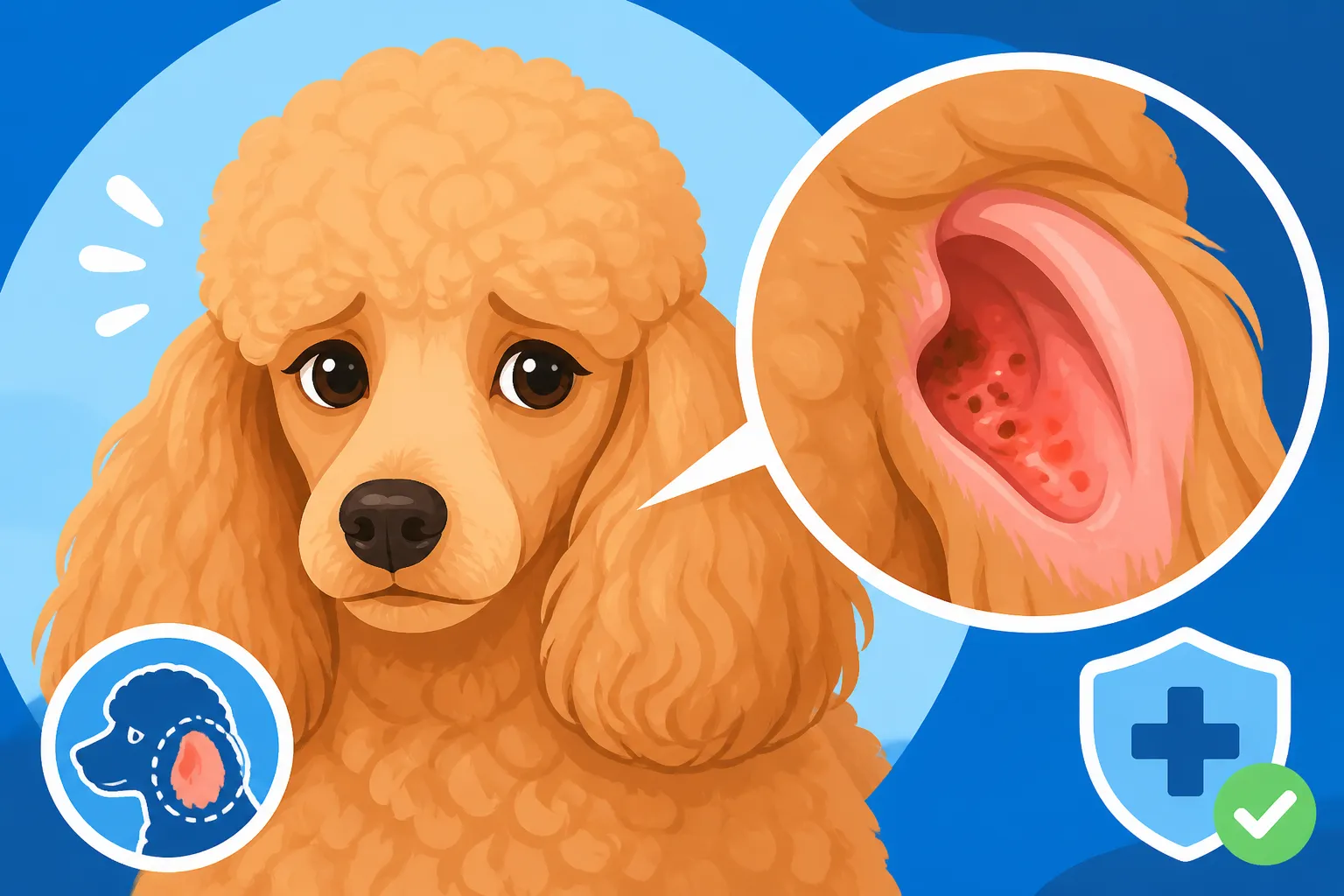
Beyond behavior, your Poodle's ears will often give you visual and olfactory (smell) cues that something is amiss. Gently lift their ear flap and take a peek. Is the skin inside the ear canal red or swollen? Does it look irritated? You might also see discharge. This discharge can vary in color and consistency – it could be brownish-black and waxy, yellowish and pus-like, or even crusty. The smell is another dead giveaway. Healthy Poodle ears should have a very faint, neutral smell. An infected ear, however, can emit a strong, unpleasant odor, often described as yeasty, sweet, or putrid. This odor is usually a sign of bacterial or yeast overgrowth. Don't be afraid to take a sniff; it's one of the most reliable indicators!
When to Call the Vet Immediately
While many ear infections start subtly, some signs warrant immediate veterinary attention. If your Poodle suddenly develops severe pain, cries out when their ear is touched, or refuses to let you near their head, it's time to call the vet. Other urgent signs include a noticeable head tilt that persists, loss of balance, walking in circles, or rapid, involuntary eye movements (nystagmus). These could indicate a more serious inner ear infection or an infection that has spread, potentially affecting their neurological system. While it's tempting to try at-home remedies, an untreated or improperly treated ear infection can lead to chronic issues, hearing loss, or even more severe health problems. Getting a proper diagnosis and the right medication from your vet is always the safest and most effective course of action. You may want to consider pet insurance from a company like Healthy Paws to help cover unexpected vet bills for these kinds of urgent issues.
Common Culprits Behind Poodle Ear Infections
It’s easy to just say “ear infection,” but there are actually different types of infections and underlying causes. Knowing the most common culprits can help you and your vet narrow down the treatment plan and, crucially, implement effective preventative measures.
Yeast and Bacteria Overgrowth
These are the most frequent offenders in Poodle ear infections. Yeast, particularly Malassezia pachydermatis, is a common resident in a dog's ear, but when the environment becomes warm, moist, and lacking airflow, it can multiply rapidly, leading to a yeast infection. These often present with a distinct yeasty odor and a brownish-black, waxy discharge. Bacterial infections, on the other hand, can be caused by various types of bacteria (e.g., Staphylococcus, Pseudomonas) and often result in a more foul-smelling, yellowish or greenish pus-like discharge, and significant redness and swelling. Sometimes, a Poodle's ear can have a mixed infection, with both yeast and bacteria thriving together, making treatment a bit more complex. Your vet will usually take a swab to look at under a microscope (cytology) to determine which type of infection is present, as the treatments for each can differ significantly.
Allergies as a Root Cause
What many Poodle owners don't realize is that chronic, recurring ear infections are often a symptom of an underlying allergy. Just like people, Poodles can suffer from environmental allergies (atopy) to things like pollen, dust mites, or mold, or food allergies to certain proteins in their diet. When a Poodle has an allergic reaction, it often manifests as inflammation and itching, not just on their skin, but also deep within their ear canals. This inflammation changes the ear's environment, making it even more susceptible to secondary yeast and bacterial infections. If your Poodle seems to get ear infections repeatedly, even with good cleaning habits, your vet might suggest investigating allergies. This could involve trying an Elimination Diets for an Itchy Poodle or discussing allergy testing and management options. Addressing the allergy is key to breaking the cycle of recurring ear infections.
Ear Mites and Foreign Bodies
While less common in adult Poodles, especially those with good hygiene, ear mites can certainly cause infections, particularly in puppies or Poodles who have been in contact with other infected animals. Ear mites (most commonly Otodectes cynotis) are tiny parasites that live in the ear canal, causing intense itching and producing a characteristic dark, crusty discharge that looks a bit like coffee grounds. If you've adopted a young Poodle or your Poodle frequently interacts with other dogs, ear mites could be a possibility.
Another less common but severe cause of ear infection is a foreign body lodged in the ear canal. This could be anything from a grass seed (especially those pesky foxtails common in some areas) to a small piece of plant material or debris. These foreign bodies cause irritation, trauma, and block the ear canal, quickly leading to inflammation and infection. If you suspect a foreign body, it's crucial to see your vet, as they have specialized tools to safely remove it without pushing it further in or damaging the delicate ear structures.
The Vet Visit: Diagnosis and Treatment
When your Poodle is showing signs of an ear infection, a trip to the vet is in order. It’s not just about getting medication; it’s about a proper diagnosis to ensure the right treatment and prevent future issues. Don't dread it, see it as a crucial step in giving your Poodle relief.
What to Expect at the Clinic
When you bring your Poodle in for an ear concern, your vet will start with a thorough physical examination, including a good look at both ears. They’ll likely use an otoscope, which is a lighted instrument, to visualize the ear canal and eardrum. This helps them assess the severity of inflammation, check for foreign bodies, and ensure the eardrum is intact. The next crucial step is often cytology. Your vet will gently collect a sample of the discharge from the ear with a cotton swab and examine it under a microscope. This simple test is incredibly important because it allows them to identify whether yeast, bacteria, or mites are present, and sometimes even the specific type of bacteria. This guides the choice of medication, as different organisms respond to different drugs. In some persistent or severe cases, your vet might recommend a culture and sensitivity test, where the discharge is sent to a lab to grow the bacteria and determine exactly which antibiotics will be most effective.
Treatment Options for Different Infections
Once the specific cause of the infection is identified, your vet will prescribe the appropriate treatment. For yeast infections, anti-fungal ear drops or ointments are typically used. Bacterial infections often require antibiotic ear drops, and sometimes oral antibiotics for more severe or deep-seated infections. If ear mites are the culprit, your vet will prescribe specific ear drops or systemic medications to kill the mites. The treatment often involves a multi-pronged approach:
- Ear Cleaners: Your vet will likely recommend a medicated ear cleaner to use before applying any drops. This helps remove debris, excess wax, and discharge, allowing the medication to penetrate more effectively. They'll show you exactly how to do it.
- Topical Medications: These are the drops or ointments applied directly into the ear. Consistency is key here. You must follow the dosage and duration exactly as prescribed, even if your Poodle's ear looks better quickly. Stopping too soon can lead to a relapse.
- Oral Medications: For severe infections, particularly those with a lot of swelling or pain, oral anti-inflammatories or antibiotics might be prescribed to tackle the infection systemically and reduce discomfort.
It’s absolutely vital to finish the entire course of medication your vet prescribes. Stopping early because the ear looks better can lead to resistant infections that are much harder to clear up later.
Addressing Underlying Issues
Treating the immediate infection is only half the battle, especially for Poodles prone to recurrence. If allergies are suspected to be the root cause, your vet will work with you to develop a long-term management plan. This could involve:
- Dietary Changes: If a food allergy is suspected, an elimination diet, switching to a novel protein or hydrolyzed protein diet, might be recommended. This process takes time, but can be incredibly effective.
- Allergy Medications: For environmental allergies, medications like Apoquel or Cytopoint injections can help control the itching and inflammation, thereby reducing the predisposition to ear infections. Antihistamines are sometimes used, though often less effective for severe cases.
- Environmental Management: Reducing exposure to known allergens (e.g., frequent vacuuming, air purifiers) can also play a role.
- Regular Preventative Care: This includes consistent ear cleaning with a vet-approved solution and regular grooming to manage ear hair.
By addressing these underlying issues, you can significantly reduce the frequency and severity of your Poodle’s ear infections, giving them much-needed relief and you peace of mind. Keeping up with your Poodle's overall health, including their Poodle Vaccination and Preventive Schedule, can also contribute to their resilience against infections.
Proactive Prevention Strategies for Poodle Ears
Knowing that Poodles are predisposed to ear infections means we, as their devoted owners, need to be proactive. Prevention is always better (and often less expensive) than treatment! Establishing a consistent routine can save your Poodle a lot of discomfort and you a lot of vet visits.
Regular Cleaning and Drying
This is perhaps the most critical step in preventing ear infections in Poodles. Given their drop ears and hairy canals, routine cleaning and thorough drying are non-negotiable.
- Choosing the Right Cleaner: Don't just grab any ear cleaner off the shelf. Ask your vet for a recommendation. They can suggest an appropriate ear cleaning solution, often one with drying agents or mild antiseptics, suitable for your Poodle's specific needs. Avoid products with alcohol, as these can be irritating.
- The Cleaning Process: Aim to clean your Poodle's ears weekly, or more often if they swim or get bathed frequently.
- Warm the Solution: Gently warm the ear cleaning solution by placing the bottle in a bowl of warm water for a few minutes. A cold solution can be startling for your Poodle.
- Fill the Canal: Gently pull the ear flap up and back. Hold the tip of the cleaner bottle just inside the opening of the ear canal and generously squeeze in the solution until the canal is full. You'll hear a squishy sound.
- Massage the Base: Gently massage the base of the ear for 30 seconds. This helps break up wax and debris. You'll likely hear more squishy sounds.
- Let Them Shake: Stand back and let your Poodle shake their head. This is their natural way of expelling the loosened gunk. Be prepared for a spray!
- Wipe Clean: Use a soft cotton ball or gauze (never a Q-tip, which can push debris further in or damage the eardrum) to gently wipe out the visible part of the ear and the underside of the ear flap. Wipe away any remaining solution or debris. Don't dig deep into the canal.
- Thorough Drying: After cleaning, swimming, or bathing, it is absolutely paramount to dry your Poodle's ears completely. Use soft cotton balls or a small piece of towel to gently blot and wipe inside the ear flap and as far into the canal as you can reach without forcing anything. You can also use a low-setting hairdryer (held at a safe distance) to gently air-dry the area, ensuring it's not too hot. The goal is to remove all moisture.
Managing Ear Hair
The hair growing inside a Poodle's ear canal is a major contributor to trapped moisture and debris. There are two primary approaches to managing it, and what works best can depend on your individual Poodle.
- Plucking: This is the traditional method where excess hair is removed from the ear canal. It can be done by a professional groomer or your vet, or you can learn to do it yourself with ear powder and specialized hemostats. The idea is to create better airflow and reduce the amount of material available for trapping moisture and debris. However, plucking can sometimes cause micro-traumas to the delicate skin of the ear canal, potentially leading to inflammation, which ironically can also predispose to infection. Some Poodles find it very uncomfortable. The debate around Plucking Hair From a Poodle's Ear Canal continues among experts.
- Trimming: An alternative, particularly for Poodles with sensitive ears or those who react poorly to plucking, is to carefully trim the hair short at the entrance of the ear canal and around the ear flap using small, blunt-tipped scissors or clippers. This opens up the canal for airflow without causing the potential irritation of plucking. This should ideally be done by a professional groomer or vet to avoid accidental injury.
- Which to Choose? Discuss with your vet or groomer which method is best for your Poodle. Some Poodles benefit from plucking, while for others, it's more detrimental than helpful. It's often a matter of trial and error and careful observation. Keep in mind that even with regular plucking, some Poodles still experience infections, as discussed in How Often a Plucked Poodle Ear Still Infects.
Dietary and Environmental Considerations
As mentioned earlier, allergies are a huge factor in recurring ear infections. Beyond direct ear care, managing allergies can be a game-changer.
- Addressing Allergies: If your vet suspects allergies, a comprehensive approach is needed. This might include:
- Dietary Trials: If food allergies are suspected, your vet might recommend a prescription hypoallergenic diet or a carefully managed novel protein diet for several weeks to see if symptoms improve. This is not just about changing kibble; it's a strict elimination of all other protein sources.
- Environmental Allergy Management: For Environmental Allergies in a Poodle, reducing exposure to common allergens like dust mites (frequent washing of bedding, vacuuming), pollen (wiping paws and coat after outdoor activity, air purifiers), or molds can help. Medications like Apoquel or Cytopoint can also be invaluable in controlling allergic itch and inflammation.
- Overall Health: A strong immune system and a healthy body weight contribute to your Poodle's overall resilience against infections. Ensure your Poodle is on a high-quality, balanced diet suitable for their size and age, and gets adequate exercise. Our guide on Poodle Allergies and Skin Reactions delves deeper into how allergies manifest.
Long-Term Management of Chronic Ear Issues
For some Poodles, ear infections become a persistent, frustrating problem, cycling through treatment after treatment. If your Poodle falls into this category, it’s time to think about long-term strategies and potentially specialized care.
Understanding Chronic Cases
A "chronic" ear infection isn't just one that keeps coming back; it often means there's an underlying issue that hasn't been fully addressed, or the repeated infections have caused permanent changes within the ear canal. Over time, chronic inflammation can lead to irreversible thickening of the ear canal tissues (stenosis), calcification, and even polyp formation, making it even harder for medications to penetrate and for the ear to air out. This creates a vicious cycle where the ear becomes increasingly difficult to treat with standard methods. It's a truly heartbreaking situation for both the Poodle and their dedicated owner, who feels like they're constantly fighting a losing battle.
Advanced Diagnostics and Treatments
When ear infections become chronic, it often warrants a deeper investigation and more aggressive treatment approaches.
- Veterinary Dermatology Specialist: Your general veterinarian might recommend a referral to a board-certified veterinary dermatologist. These specialists have advanced training and equipment to tackle complex skin and ear conditions. They can perform more detailed diagnostics, such as biopsies of the ear canal tissue, or advanced allergy testing.
- Video Otoscopy: This procedure involves inserting a tiny camera into the ear canal, allowing the specialist to get a magnified, real-time view on a monitor. It helps them identify subtle abnormalities, deep-seated foreign bodies, polyps, or severe stenosis that might be missed with a standard otoscope. They can also use specialized instruments to clean the ear thoroughly or remove growths while viewing.
- Imaging: In some cases, X-rays, CT scans, or MRIs might be recommended to assess the middle or inner ear structures, especially if there's concern about the infection spreading beyond the external ear canal.
- Surgical Interventions: For severe, intractable chronic cases where the ear canal has become permanently damaged and medical management is no longer effective, surgery might be the only option to provide relief and improve quality of life. The most common procedure is a Total Ear Canal Ablation (TECA), often combined with a Bulla Osteotomy (TBC). This involves surgically removing the entire ear canal, leaving only the ear flap. While it sounds drastic and results in hearing loss in the affected ear, for a Poodle suffering from constant pain and infection, it can offer immense relief and a dramatically improved quality of life. This is a last resort, but one that can bring an end to years of suffering.
The Importance of Consistent Care
Even if your Poodle has chronic ear issues, consistent daily or weekly care remains crucial. This means:
- Adherence to Medication: Strictly following your vet's instructions for all prescribed medications, even if they're long-term maintenance drugs.
- Regular Cleaning: Maintaining the cleaning schedule recommended by your vet or dermatologist, using the specific cleaning solution they endorse.
- Routine Checks: Regularly checking your Poodle's ears for any early signs of irritation or discharge, so you can intervene quickly.
- Open Communication with Your Vet: Keeping your veterinary team informed about any changes in your Poodle's ear health, even subtle ones. They are your partners in managing this challenging condition.
Dealing with chronic ear infections can be exhausting, but with dedication and the right veterinary support, you can significantly improve your Poodle's comfort and well-being. It's an investment in their health, and a good pet insurance plan like Healthy Paws can often alleviate some of the financial burden of managing long-term conditions or unexpected advanced procedures.
Summary of Ear Infection Types and Symptoms
To help you quickly identify what might be bothering your Poodle, here’s a quick overview of common ear infection types, their symptoms, and typical treatments. Remember, this table is for informational purposes only; always consult your vet for a definitive diagnosis and treatment plan.
| Feature | Yeast Infection (Malassezia) | Bacterial Infection | Ear Mites (Otodectes) | Foreign Body |
|---|---|---|---|---|
| Common Scent | Sweet, "yeasty," or pungent | Foul, putrid, sometimes cheesy | No strong odor, but can have secondary odor | Often foul if infection present |
| Discharge Color | Dark brown, blackish, waxy | Yellow, green, pus-like, sometimes bloody | Dark brown, crumbly, "coffee ground" like | Varies, often bloody or pus-like if infected |
| Consistency | Waxy, greasy, sometimes thick | Liquid, purulent, sticky | Dry, granular, crusty | Varies, dependent on object & infection |
| Appearance | Redness, thickening, sometimes scales | Redness, swelling, severe inflammation | Intense itching, scabs, redness | Acute pain, sudden onset, focal inflammation |
| Itchiness | Moderate to severe | Moderate to severe | Extreme, relentless scratching | Often severe, especially with head shaking |
| Common Treatment | Topical antifungals, oral antifungals | Topical antibiotics, oral antibiotics | Topical miticides, systemic antiparasitics | Surgical removal, antibiotics |
| Underlying Cause | Often secondary to allergies, moisture | Often secondary to allergies, trauma, moisture | Contagion from other animals | Exposure to grass, debris |
Disclaimer
The information provided in this article is for general informational purposes only and is not intended as a substitute for professional veterinary advice, diagnosis, or treatment. Always seek the advice of your veterinarian or other qualified health provider with any questions you may have regarding a medical condition for your Poodle. Never disregard professional veterinary advice or delay in seeking it because of something you have read in this article.