Separation Anxiety in a Velcro Poodle
It’s a heartbreaking sight: you pull away from the driveway, glancing back only to see your beloved Poodle standing at the window, eyes wide with distress, or perhaps you hear the plaintive cries echoing down the street as you leave for work. Many Poodle owners experience the gnawing guilt of leaving their deeply attached canine companions, only to return to destruction, incessant barking, or even accidents on the floor. This guide is here to walk you through understanding, preventing, and compassionately managing separation anxiety in your Poodle, helping both of you navigate this challenging emotional landscape.
Understanding the Poodle's Attachment: Why Separation Anxiety Hits Hard
Poodles, regardless of their size – Standard, Miniature, or Toy – are renowned for their intelligence, sensitivity, and profound bond with their human families. This isn't just a charming personality quirk; it's deeply ingrained in their history and genetics as dogs bred to work closely with people. However, this wonderful trait can, unfortunately, make them particularly susceptible to separation anxiety. Their intense devotion, while lovely to experience, means that being separated from their primary caregiver can trigger genuine panic and distress.
The "Velcro Dog" Phenomenon in Poodles
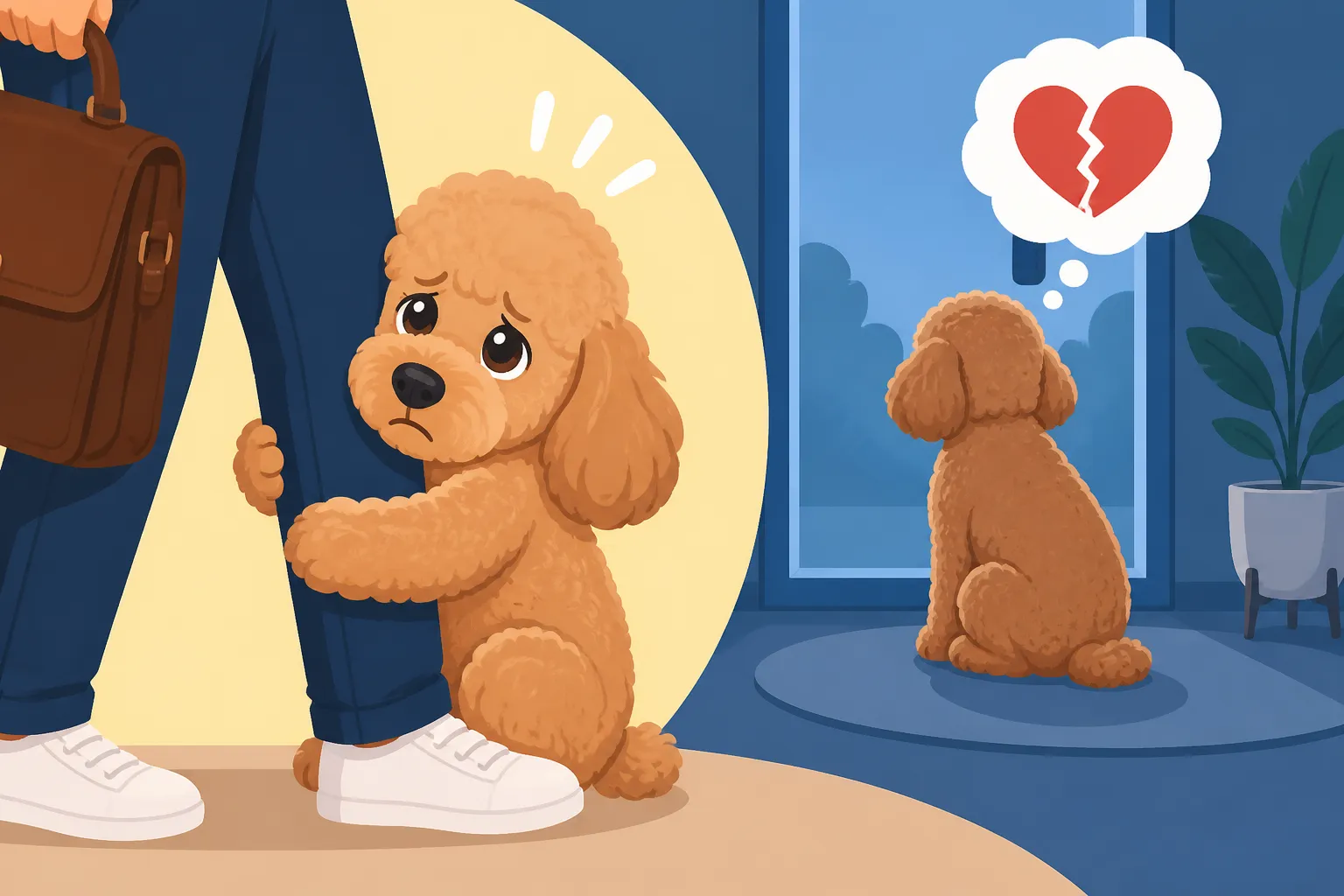
Many Poodle owners affectionately refer to their dogs as "Velcro Poodles" because they tend to stick by their side, following them from room to room, even sitting patiently (or not so patiently) outside the bathroom door. This constant companionship is a hallmark of the breed. They thrive on interaction, mental stimulation, and being an integral part of their human pack. When you consider their historical role as retrieving dogs, working alongside hunters, it makes perfect sense. They were bred to be attentive and responsive partners.
This strong bond, however, can be a double-edged sword. While it's comforting to have such a devoted companion, it also means that the concept of "alone time" can be incredibly frightening for them. Their high intelligence allows them to anticipate routines and cues, and their inherent sensitivity means they feel emotions deeply. If they've never learned to cope with solitude, or if a traumatic event triggers a fear of abandonment, this deep attachment can spiral into intense anxiety. A Poodle's sensitivity means that any perceived rejection or isolation can be amplified, leading to profound emotional responses that manifest in various concerning behaviors. Just as a Poodle might shut down if scolded harshly, they can experience similar emotional distress when they feel abandoned. Why a Poodle Shuts Down When Scolded
Imagine a Poodle, let's call him Pierre, who follows you from the kitchen to the living room, then to the bedroom, and then to the bathroom. If you accidentally close a door between you, even for a moment, you might hear a soft whine or a paw scratching at the door. For Pierre, your presence is his world, his comfort, and his security. When that presence is removed entirely, his world can feel like it's crumbling. This isn't naughtiness; it's a deep-seated fear.
Identifying True Separation Anxiety vs. Boredom or Lack of Training
It's absolutely critical to distinguish between true separation anxiety and other issues like boredom, destructive chewing habits, or a lack of house-training. Misdiagnosing the problem means you'll be applying the wrong solution, which won't help your Poodle and will only increase your frustration.
True separation anxiety is characterized by a specific set of behaviors that occur only when the dog is left alone or believes they are about to be left alone. These behaviors are often an attempt to escape or a manifestation of extreme panic. Key indicators include destructive behaviors focused on exit points (doorframes, windows), persistent and intense vocalization (howling, barking, whining), house soiling despite being recently let out, and sometimes even self-harm (chewing paws, licking excessively) that ceases the moment you return. The distress is primarily about the absence of the owner, not just a general need for entertainment.
On the other hand, a Poodle that is simply bored might engage in destructive chewing on any accessible item, regardless of its proximity to an exit. They might bark at external stimuli like squirrels or mail carriers, but their vocalizations tend to stop once the stimulus is gone, or they might engage in these behaviors even when you're home but ignoring them. A Poodle with a lack of house-training might have accidents randomly, not just when left alone. Understanding this distinction is the first step toward effective intervention. You can really dive into Telling Poodle Boredom From Real Panic to better understand these subtle differences in your Poodle's behavior.
Consider two scenarios: first, a Miniature Poodle named Gigi who shreds the blinds and chews the windowsill every time her owner leaves, creating a frantic mess around the window. This focused destruction near an exit point, coupled with frantic pacing noted by a pet camera, points strongly to separation anxiety. Second, a Standard Poodle named Beau, who, when left alone, methodically disembowels every soft toy in his toy basket and then perhaps barks at a passing delivery truck. Beau’s destruction is not aimed at escape, and his barking is responsive to external factors. While still problematic, Beau's behavior suggests boredom and a need for more engaging activities or training, rather than deep anxiety about being alone.
Recognizing the Red Flags: Symptoms of Separation Anxiety
Observing your Poodle's behavior when you're gone is key to confirming separation anxiety. Since you can't be there, this often involves some detective work, perhaps with the help of a pet camera or by consulting neighbors. These symptoms are not just nuisances; they are genuine expressions of profound distress.
Vocalization Beyond Normal Barking
One of the most common and distressing symptoms of separation anxiety is excessive vocalization. This isn't the occasional alert bark at the mail carrier or a playful yap. This is incessant, high-pitched whining, mournful howling, or persistent, frantic barking that can last for the entire duration of your absence. Neighbors often become unwilling witnesses to this canine symphony of despair, which can lead to complaints and increase your own stress and guilt.
This vocalization is a distress call, a desperate attempt to reconnect with the missing guardian. It typically doesn't stop, even if there are no external triggers, and it doesn't respond to anything outside the home. It’s driven by an internal panic, not an external event. If your Poodle barks endlessly the moment you leave, and a neighbor confirms it continues for hours, you're likely dealing with anxiety. This is different from the type of barking you might encounter with Poodle Alarm Barking, which is usually triggered by specific events and often subsides once the perceived threat is gone.
For example, imagine a neighbor calling you, concerned because your Toy Poodle, Fifi, has been howling continuously for the past hour since you left for errands. They describe it as a mournful, almost sorrowful sound, unlike her usual happy barks. This persistent, unprovoked vocalization when alone is a strong indicator of separation distress.
Destructive Behavior Focused on Escape
Anxious Poodles often resort to destructive behaviors, but these acts are usually not random. They are typically focused on points of egress—doors, windows, or crates—as the dog frantically tries to escape and reunite with their owner. You might come home to chewed doorframes, scratched window sills, ripped curtains, or mangled blinds. For a Poodle crated during your absence, this might manifest as bent bars, broken teeth from attempting to chew through the crate, or even injuries to paws and nose from frantically trying to dig their way out.
This destruction is driven by panic, not malice. Your Poodle isn't "punishing" you; they are experiencing an intense fear of abandonment and are desperately trying to relieve that fear by escaping. The danger here isn't just property damage; it's the potential for serious self-injury, such as broken nails, lacerations, or even chipped teeth. Observing where the destruction is concentrated can tell you a lot about the root cause. If your Poodle is consistently damaging areas around windows and doors, it's a clear sign they are attempting to get to you. This kind of destructive behavior is a strong indicator of the panic described in What a Panicking Poodle Does to the Door.
Consider a Standard Poodle, Winston, left alone in the kitchen. His owner returns to find the bottom panel of the back door heavily clawed and chewed, with splintered wood and Winston's nails worn down to the quick. This is not casual chewing; it’s a desperate attempt to get through the door, illustrating the intense anxiety he experiences when separated.
House Soiling and Pacing
Even the most impeccably house-trained Poodle might have accidents indoors when experiencing separation anxiety. This isn't a deliberate act of defiance or a sign they've forgotten their training. Instead, it's a physiological response to extreme stress and panic. An anxious Poodle might urinate or defecate shortly after you leave, even if they were just outside and fully relieved themselves. This kind of house soiling is usually accompanied by other anxiety symptoms and is a clear indicator of distress rather than a training lapse.
In addition to soiling, you might observe other physical manifestations of anxiety. Pacing is common, where the dog walks back and forth in a repetitive pattern, unable to settle. They might shake, tremble, or drool excessively. Some Poodles will even engage in compulsive behaviors like repetitive licking or grooming, sometimes to the point of creating hot spots or skin irritation. These behaviors are all physical outlets for overwhelming emotional stress.
Here’s an example: A Miniature Poodle, Chloe, who has never had an accident inside in her adult life, is consistently found to have urinated on the living room rug when her owner returns from short trips. A pet camera reveals Chloe frantically pacing the house, panting, and then squatting to urinate, immediately after her owner’s departure. This isn't a sign of forgetting her potty training, but rather a direct symptom of her acute anxiety about being left alone.
Proactive Prevention: Setting Your Poodle Up for Success
The best way to deal with separation anxiety is to prevent it from developing in the first place. For new puppy owners, or even those bringing home an adult Poodle, establishing a foundation of independence and positive associations with alone time can make a world of difference. Even if your Poodle already shows mild signs of anxiety, these preventative steps can form the bedrock of a management plan.
Early Socialization and Independence Training for Puppies
If you're bringing home a Poodle puppy, you have a golden opportunity to shape their emotional resilience. Early socialization is paramount, but it's not just about meeting other dogs and people. It's also about gently introducing the concept of being comfortable on their own. From day one, start teaching your puppy that short periods of solitude are normal and safe. This means providing a comfortable, safe space (like a crate or a puppy-proofed room) where they can be alone for a few minutes at a time, gradually increasing the duration.
Expose your puppy to a variety of environments, sights, sounds, and people, always ensuring positive experiences. This builds confidence and helps them feel secure in new situations, which can translate to feeling more secure when you're not around. Don't make every moment about you; encourage independent play with toys and teach them to settle quietly on their own. For Poodle puppies, these early weeks are crucial for shaping their temperament and resilience. You can find excellent guidance on this in What a Poodle Puppy Should Meet by Sixteen Weeks.
For instance, when your Poodle puppy, Alfie, first comes home, don't let him be on your lap or at your feet 24/7. Designate a comfy spot for him in another room where he can chew a special toy or nap. Start by leaving the room for 30 seconds, then a minute, slowly building up. Don't make a big deal of coming or going. This teaches him that you leave, but you always come back, and nothing bad happens while you're gone.
Crate Training: A Den, Not a Dungeon
Crate training, when done correctly, can be an invaluable tool in preventing and managing separation anxiety for a Poodle. The key phrase here is "done correctly." A crate should never be used as a punishment. Instead, it should be introduced as a safe, comfortable, and positive den—a private sanctuary where your Poodle feels secure. Many Poodles inherently appreciate a den-like space, as it taps into their natural instinct for enclosed, safe areas.
Introduce the crate gradually, making it a positive place through treats, toys, and comfortable bedding. Feed meals in the crate, and occasionally throw high-value treats inside for them to discover. Leave the door open initially, allowing them to go in and out freely. Once they are comfortable, begin closing the door for very short periods, always staying nearby. Gradually increase the time the door is closed, and then the time you are out of sight. A properly introduced crate can help a Poodle feel secure and contained, rather than exposed and vulnerable, during alone time. This process is crucial, especially for sensitive Poodles who might otherwise struggle with confinement. The insights in Crate Training a Poodle That Wants Company can be incredibly helpful here.
For example, Penelope, a Standard Poodle puppy, was introduced to her crate with soft blankets, a puzzle toy filled with peanut butter, and gentle praise. Her owner would toss treats into the crate and close the door for just a few seconds, then open it again. Over days and weeks, Penelope learned to associate her crate with safety and delicious rewards, making it her preferred spot for naps and quiet time, rather than a place of forced isolation. You might even find calming beds or durable chew toys on Amazon that can make the crate extra inviting.
Desensitizing Departure Cues
Poodles are incredibly observant and intelligent, quickly learning to associate certain actions with your imminent departure. The jingle of keys, the rustle of your jacket, the sound of you picking up your bag, or putting on your shoes—these can all become "departure cues" that trigger anxiety before you even walk out the door. Your Poodle starts panicking the moment they see you putting on your coat, not when you actually leave.
To combat this, you need to desensitize these cues. This involves performing your departure rituals randomly throughout the day, without actually leaving. Pick up your keys, jingle them, then put them back down and sit on the couch. Put on your shoes, walk to the door, then turn around and go read a book. Grab your bag, walk to the door, then open the fridge. Repeat these actions many times a day, making them meaningless signals. Over time, your Poodle will learn that these actions don't always precede your departure, reducing their anticipatory anxiety. The goal is to make your leaving as unremarkable as possible.
Imagine your Miniature Poodle, Sparky, who starts whining the second you pick up your car keys. To desensitize him, you might pick up the keys, walk to the door, then sit down and watch TV. Five minutes later, pick them up again, walk to the kitchen, and get a drink. You repeat this several times a day. Eventually, Sparky learns that "keys in hand" doesn't necessarily mean "owner leaving," and his anxiety response begins to diminish.
Implementing a Management Plan for Existing Anxiety
If your Poodle already struggles with separation anxiety, it's time to put a dedicated management plan into action. This isn't about quick fixes; it's about patient, consistent work to slowly change your Poodle's emotional response to being alone. The goal is to build their confidence and teach them that your departures are temporary and safe.
Graduated Departures: Slowly Building Tolerance
This is the cornerstone of treating separation anxiety. The principle is to gradually increase your Poodle's tolerance for being alone, starting with periods so short they don't trigger anxiety. It requires immense patience and a commitment to not pushing your Poodle beyond their comfort zone.
Start with "fake" departures. Perform your departure cues, walk out the door, and immediately come back in. Repeat this several times. Then, step out for 5 seconds, then 10, then 30, then a minute. Only increase the duration when your Poodle remains calm for the previous duration. If they show any signs of anxiety (whining, pacing), you've gone too far, and you need to dial back the time. The idea is to teach them that you always come back, even if it's just a few seconds later.
Crucially, make your departures and arrivals as low-key as possible. No big goodbyes or excited hellos. A calm "see you later" or no verbal cue at all is best. When you return, ignore your Poodle for the first few minutes until they are calm, then offer a quiet greeting. This teaches them that your leaving is not a dramatic event and your return is not a cause for over-excitement, normalizing the entire process. This consistent approach is what makes Teaching a Poodle That Leaving Is Ordinary so effective.
For instance, your Standard Poodle, Remy, can tolerate you being out of sight for 30 seconds. You practice this several times, ensuring he stays calm. The next step is 45 seconds. If he whines at 40 seconds, you immediately return, then go back to practicing 30 seconds until he's solid again. This slow, steady progress, without ever letting him hit full panic, is essential for him to learn new coping mechanisms.
Mental and Physical Exercise Before Alone Time
A tired Poodle is a calmer Poodle. Before you plan to leave your Poodle alone, ensure they have had ample physical and mental exercise. Poodles, with their intelligent and athletic heritage, need more than just a quick trot around the block. A good, long walk or an energetic play session in the yard can help burn off excess physical energy and leave them more inclined to rest while you're gone.
Beyond physical exertion, Poodles thrive on mental stimulation. Engaging their brilliant minds with puzzle toys, a brief training session, or a scent work game before you leave can be incredibly effective. Mental work is often more tiring for a dog than physical exercise, leaving them pleasantly fatigued and less likely to engage in anxious behaviors. A stuffed Kong toy (available on Amazon), a snuffle mat, or a puzzle feeder that dispenses kibble can keep them occupied and focused during the initial period of your absence. This kind of mental engagement is explored further in Mental Work That Tires a Poodle.
Consider a Toy Poodle, Pip, who gets a brisk 20-minute walk followed by a 10-minute session practicing new tricks, ending with a Kong stuffed with frozen peanut butter. His owner then leaves for a short period. Pip is physically tired and mentally satisfied, making him more likely to settle down with his Kong than to pace anxiously.
Creating a Safe and Engaging Environment
Making your Poodle's alone-time environment feel safe, comfortable, and stimulating is crucial. Think about what can help them feel secure and what can distract them positively.
Provide comfort items that smell like you, such as an old t-shirt or a used blanket. Your scent can be incredibly reassuring. Ensure their designated safe space (crate or room) is cozy and quiet. Introduce calming sounds: classical music, dog-specific relaxation tracks, or even a white noise machine can help mask external noises that might trigger alarm barking and provide a soothing backdrop.
Crucially, provide engaging, long-lasting enrichment toys. Stuffed Kongs, lick mats with frozen wet food, or other food-dispensing puzzle toys can keep your Poodle busy and happy for a significant portion of your absence. These items redirect their energy from anxiety into a positive, rewarding activity. Furthermore, consider a pet camera. Devices like a Furbo or Wyze camera allow you to monitor your Poodle's behavior remotely, which is invaluable for understanding their anxiety triggers, tracking progress, and even interacting with them (some cameras allow you to speak or dispense treats).
For example, your Standard Poodle, Luna, has a dedicated "den" area with her comfy bed, a blanket that smells like you, and a classical music playlist quietly playing. Before you leave, you give her a West Paw puzzle toy (an excellent brand of durable, engaging toys) filled with kibble. When you check your pet camera later, you see her calmly working on the puzzle, occasionally looking up, but not pacing or vocalizing. This prepared environment significantly reduces her stress.
Tools and Resources to Aid Your Anxious Poodle
Managing separation anxiety isn't always something you can tackle alone. There's a whole world of tools, products, and professional help available to support you and your Poodle. Don't hesitate to reach out for assistance; it's a sign of a responsible and loving owner.
Pheromones and Calming Aids
For some Poodles, supplemental calming aids can provide an extra layer of support. Dog Appeasing Pheromone (DAP) products, like Adaptil collars or diffusers, release synthetic pheromones that mimic those secreted by a mother dog to comfort her puppies. While not a cure, these can help create a more serene environment and reduce overall anxiety levels in some dogs. You can find these easily on Amazon and in most pet stores.
Similarly, various natural calming supplements are available. Ingredients like L-theanine, tryptophan, or various herbal blends are marketed to help reduce anxiety. It is always essential to consult your veterinarian before giving your Poodle any supplement to ensure it's safe, appropriate, and won't interact negatively with any other medications or underlying health conditions. These aids work best when used in conjunction with a comprehensive behavioral modification plan, not as standalone solutions.
Take Max, a Miniature Poodle, who seemed to benefit from an Adaptil diffuser plugged in near his crate. His owner noticed a subtle but definite reduction in his initial frantic pacing after she started using it. While it didn't magically cure his anxiety, it seemed to take the edge off, making him more receptive to the gradual departure training.
Professional Guidance: When to Call for Help
Separation anxiety can be complex, and sometimes it's simply too much to handle on your own. Knowing when to seek professional help is crucial for your Poodle's well-being and your peace of mind.
- Veterinary Consultation: Your first stop should always be your veterinarian. They can rule out any underlying medical conditions (such as pain, thyroid issues, or cognitive dysfunction in older Poodles) that might be contributing to or exacerbating the anxiety. In severe cases, your vet may discuss anti-anxiety medications. These medications aren't a "magic pill" but can help lower your Poodle's anxiety levels enough for the behavioral modification techniques to be effective. Think of them as helping your Poodle get out of the red zone so they can actually learn.
- Certified Professional Dog Trainers (CPDT-KA) or Veterinary Behaviorists (DACVB): For significant or persistent separation anxiety, a qualified professional is invaluable. A Certified Professional Dog Trainer specializing in fear or anxiety can provide hands-on guidance for your behavioral modification plan. For the most severe cases, a Veterinary Behaviorist (a vet with specialized training in animal behavior) is often the best choice. They can diagnose, create a tailored treatment plan (often including medication), and guide you through the process. Programs like those offered by BAXTER & Bella can also provide excellent foundational training and support, teaching you effective strategies to build your Poodle's confidence and independence under expert guidance, which can be particularly useful for tackling separation-related issues.
- Online Training Programs and Support Groups: There are many online resources, from detailed articles to entire courses dedicated to separation anxiety. These can provide structured programs and a community of support. Just be sure to choose reputable sources and remember that every Poodle is an individual.
Consider a situation where your Standard Poodle, Coco, is so distressed that she has injured herself trying to escape her crate, and her barking is causing severe neighbor complaints. This is a clear indicator that professional intervention is needed. Your vet might prescribe a short course of anxiety medication to help Coco calm down enough to even begin working on desensitization. Simultaneously, working with a veterinary behaviorist would provide a comprehensive plan, ensuring both medical and behavioral aspects are addressed.
Technology and Enrichment for Alone Time
Leveraging technology can be a game-changer when dealing with separation anxiety. These tools offer insights and engagement that were once impossible.
- Remote Cameras: As mentioned, pet cameras (like those from Wyze or Furbo on Amazon) are incredibly useful. They allow you to observe your Poodle's actual behavior when you're gone, rather than just guessing. This helps you identify triggers, gauge the severity of the anxiety, and track the effectiveness of your training. Some cameras offer two-way audio, letting you speak to your Poodle, or even dispense treats remotely.
- Interactive Treat Dispensers: Beyond stuffed Kongs, there are advanced treat dispensers that can be programmed or remotely activated. These provide intermittent rewards and mental engagement, keeping your Poodle's mind busy and associating alone time with positive experiences.
- Automatic Feeders: While not directly for anxiety, automatic feeders can help establish a routine and ensure your Poodle has regular meals, which can contribute to overall security and predictability, especially during longer absences.
- Enrichment Toys: Continue to invest in a variety of durable, engaging enrichment toys. Brands like Kong, West Paw, and Nina Ottosson create puzzle toys that challenge your Poodle's intelligence and keep them occupied. Rotate these toys to maintain novelty and interest.
For example, your Toy Poodle, Daisy, whines for precisely 7 minutes after you leave, then settles. You learn this from your Furbo camera. Knowing this allows you to time your gradual departures more accurately, ensuring you return before she starts whining, thus reinforcing calm behavior. The ability to toss a treat remotely via the camera can also provide a small, positive interruption if you see her starting to get restless.
Living with and Loving Your Velcro Poodle
Navigating separation anxiety with a Poodle is a marathon, not a sprint. It requires immense patience, consistency, and a deep well of love and understanding. It's about adjusting your expectations and celebrating every tiny step forward.
Realistic Expectations and Patience
One of the hardest parts of dealing with separation anxiety is the emotional toll it takes on owners. The guilt, frustration, and worry can be overwhelming. It's crucial to have realistic expectations. This isn't a problem that gets "fixed" overnight, or even in a few weeks. It's a journey of gradual progress, and there will be setbacks.
Celebrate the small victories: your Poodle settled for an extra minute today, they didn't chew the door frame quite as much, or they only whined for five minutes instead of ten. These are huge steps! Understand that setbacks are normal. A particularly stressful day, a change in routine, or a loud noise outside can temporarily derail progress. When this happens, don't get discouraged; simply go back a step in your training and continue with patience and consistency. Your Poodle isn't doing this to spite you; they are genuinely distressed, and your calm, consistent approach is their anchor.
Imagine your Poodle, Louis, a Standard, has been doing wonderfully with his alone time, managing up to an hour without distress. Then, one day, you come home to find he's had an accident and chewed a shoe. Instead of becoming angry or defeated, you calmly clean up the mess, review your notes, and decide to go back to 45-minute departures for a few days to rebuild his confidence. This realistic approach prevents burnout and maintains trust.
The Role of Routine and Predictability
Poodles thrive on routine. A predictable schedule provides a sense of security and reduces overall anxiety. When your Poodle knows what to expect throughout the day – when they'll eat, when they'll go for walks, when they'll play, and even when you'll leave – it helps them feel more in control and less anxious.
Establish a consistent daily schedule for meals, potty breaks, exercise, and training sessions. Even your departure and return times, as much as possible, can become part of this routine. While the gradual departures teach them to cope, a consistent schedule around those departures can reinforce the normalcy of alone time. This predictability helps reduce the element of surprise and uncertainty, which are major triggers for anxious dogs.
For example, if your Poodle, Daisy, knows she gets her long morning walk, then her breakfast, then a puzzle toy, and then you leave for a short period, this sequence becomes comforting and predictable. The predictability helps her anticipate what’s coming next, allowing her to relax into the routine rather than constantly anticipating your departure.
Building Confidence Beyond the Owner
While working on separation anxiety, it's also important to foster your Poodle's overall confidence and independence, even when you are home.
- Encourage Independent Play: Provide toys that your Poodle can enjoy on their own, even when you're in the room. This teaches them to entertain themselves and not rely solely on your interaction for enjoyment.
- "Place" or "Go to Bed" Command: Teach your Poodle a "place" command, where they learn to go to a specific mat or bed and stay there calmly while you move around the house. Reward them heavily for calm duration on their place. This builds self-control and confidence in being settled away from you.
- Explore Other Outlets: Depending on your Poodle's personality and the severity of their anxiety, consider controlled social interaction with other dogs. Dog daycare might be an option for some, but it's not a universal solution for separation anxiety and could even be overwhelming for a very anxious Poodle. If your Poodle gets lonely and genuinely enjoys canine company, Daycare Costs for a Standard Poodle could be a consideration, but careful evaluation of suitability is essential. A trusted pet sitter who understands their anxiety could also be a good option for longer absences, ensuring they aren't truly alone.
Imagine your Toy Poodle, Leo, who used to always be underfoot. You start training him a "go to mat" command, rewarding him with treats for staying on his mat while you do chores. Slowly, he learns that he can be calm and happy in his own space, even if you're not directly interacting with him. This builds a foundation of independence that translates to more confidence when you're truly absent.
Common Misconceptions and What Not to Do
When dealing with separation anxiety, there are several common pitfalls that owners, with the best of intentions, sometimes fall into. Understanding why these approaches are counterproductive is as important as knowing what to do.
Punishing Anxious Behavior
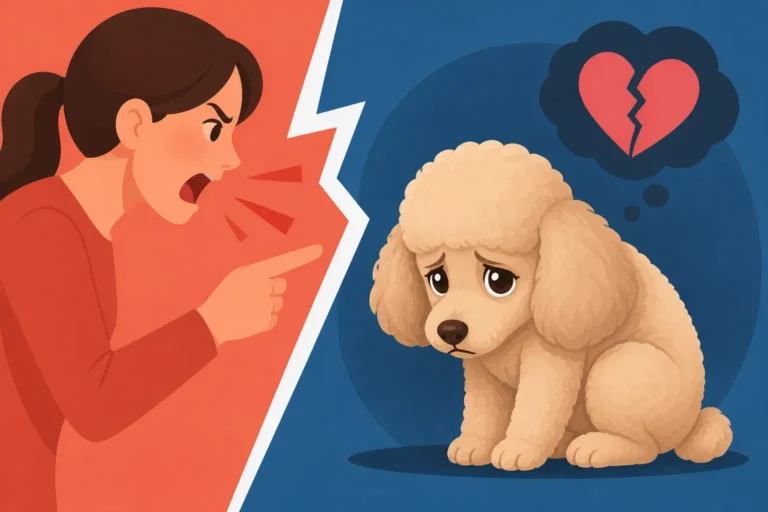
This is perhaps the biggest and most damaging mistake an owner can make. Punishing your Poodle for behaviors related to separation anxiety—like scolding them for barking, rubbing their nose in an accident, or harshly crating them after destruction—will never solve the problem. In fact, it will almost certainly make it worse.
Your Poodle is not "getting back at you" or being disobedient out of spite. They are experiencing genuine panic and distress. Punishing them for these behaviors only increases their fear and anxiety. They will associate your return with punishment, making them even more anxious about being left alone. It breaks down trust and can create new behavioral problems. Imagine being terrified and then being punished for showing that fear. It's simply inhumane and ineffective. Your Poodle needs empathy, not reprimand, in these moments of vulnerability.
For example, if you come home to find your Miniature Poodle, Chloe, has had an accident, and you yell at her, she doesn't connect the punishment to the act of peeing hours ago. She connects it to your arrival. This will only make her more fearful of your return, increasing her anxiety about being left alone. Instead, calmly clean the mess and focus on the training plan.
Getting Another Dog to "Fix" the Problem
Many owners, heartbroken by their Poodle's distress, think that getting a second dog will cure the first one's loneliness. While a companion animal can certainly enrich a dog's life, it very rarely solves true separation anxiety.
Separation anxiety is usually about the absence of the primary human caregiver, not just loneliness for any companion. Your Poodle is likely bonded specifically to you. Bringing in another dog might mean you now have two dogs with separation anxiety, or the new dog might pick up on the anxious behaviors of the first. In some cases, the new dog might even exacerbate the problem by competing for your attention or adding another layer of stress. Before considering another dog, thoroughly address the existing separation anxiety in your Poodle. The idea that a second dog is a quick fix is a common trap, and it's well discussed in Whether a Second Poodle Fixes Loneliness.
For instance, your Standard Poodle, Enzo, is deeply anxious when you leave. You bring home a new puppy, hoping Enzo will be distracted. Instead, Enzo remains anxious, and the puppy, seeing Enzo's distress every time you leave, also starts to develop anxious tendencies. Now you have a bigger, more complex problem.
Leaving a Standard Poodle Uncrated or for Too Long
While Poodles are intelligent, and many owners feel bad about crating them, leaving an anxious Standard Poodle (or any Poodle) loose in the house when they struggle with separation anxiety can lead to widespread destruction and potential injury. An uncrated Poodle in a panic has free access to furniture, electrical cords, household cleaners, and other dangerous items, increasing the risk of both property damage and serious medical emergencies.
Furthermore, no matter the size, an anxious Poodle should not be left alone for excessively long periods, especially not while actively training them out of anxiety. During the re-training phase, alone time should be kept very short, only gradually increasing. If you have to be away for long hours, enlist the help of a trusted pet sitter, friend, or dog walker to break up the time, or consider a quality doggy daycare if your Poodle is comfortable in that environment. Ignoring the problem or hoping they'll "grow out of it" will only prolong their suffering and increase the likelihood of deeply ingrained anxious behaviors.
Imagine leaving your Standard Poodle, Bella, loose for an entire workday (8-9 hours) because you felt guilty crating her. You come home to find your sofa cushions shredded, electrical cords chewed through (a dangerous fire hazard), and severe damage to your wooden coffee table. This level of destruction, and the inherent danger, could have been mitigated by proper crate training and a management plan that prevents her from reaching peak panic.
Summary of Anxiety vs. Boredom Symptoms
To help distinguish between true separation anxiety and simple boredom or lack of training, refer to this table. This can be a useful tool as you observe your Poodle's behavior.
| Symptom / Behavior | Indicates Separation Anxiety (Primary Concern) | Indicates Boredom / Lack of Training (Other Concerns) |
|---|---|---|
| Vocalization | Incessant howling, frantic barking, high-pitched whining; continuous. | Responsive barking at external stimuli; barks may stop once stimulus is gone; less intense. |
| Destruction | Focused on exit points (doors, windows, crates); attempt to escape. | Generalized chewing on household items, toys, furniture (not exit-related). |
| House Soiling | Accidents occur only when owner is absent; even if recently potty-trained. | Accidents may occur randomly, regardless of presence; can be due to poor training. |
| Pacing / Restlessness | Constant, repetitive pacing, trembling, drooling only when alone. | May pace briefly, but generally settles or finds other entertainment. |
| Timing | Occurs shortly after owner leaves or during perceived alone time. | Can occur at any time, even if owner is present but inattattentive. |
| Self-Harm | Excessive licking, chewing paws, body, potentially causing injury. | Rarely seen; if present, usually not directly related to owner's absence. |
| Owner Greeting | Over-the-top, frantic greetings upon return; often takes time to settle. | Enthusiastic but usually calm and happy greeting. |
Disclaimer
This article is for general informational purposes only and does not constitute professional advice. Laws, prices and regulations vary by location and change over time. Consult a qualified professional for guidance on your specific situation.