Telling Poodle Boredom From Real Panic
One of the most heart-wrenching things as a poodle owner is coming home to a distressed dog, and it's even worse when you can't quite figure out if they're simply bored and acting out, or genuinely suffering from profound anxiety. The signs can sometimes look similar, but the underlying emotions and the solutions are vastly different. This guide will walk you through how to distinguish between a poodle who's just looking for some excitement and one experiencing real panic when you're not around, so you can provide the right kind of support.
The Subtle Language of Poodle Emotions
Poodles are incredibly intelligent and emotionally complex creatures. They don't just 'act up' for no reason; there's always a motivation behind their behavior. Learning to read their subtle cues is key to understanding whether you're dealing with a case of the zoomies from under-stimulation or a genuine cry for help.
Reading a Poodle's Body Language
Our poodles communicate so much with their bodies, even before a sound leaves their lips. When you arrive home, or even observe them while you're still there, pay close attention to their posture, eyes, and mouth.
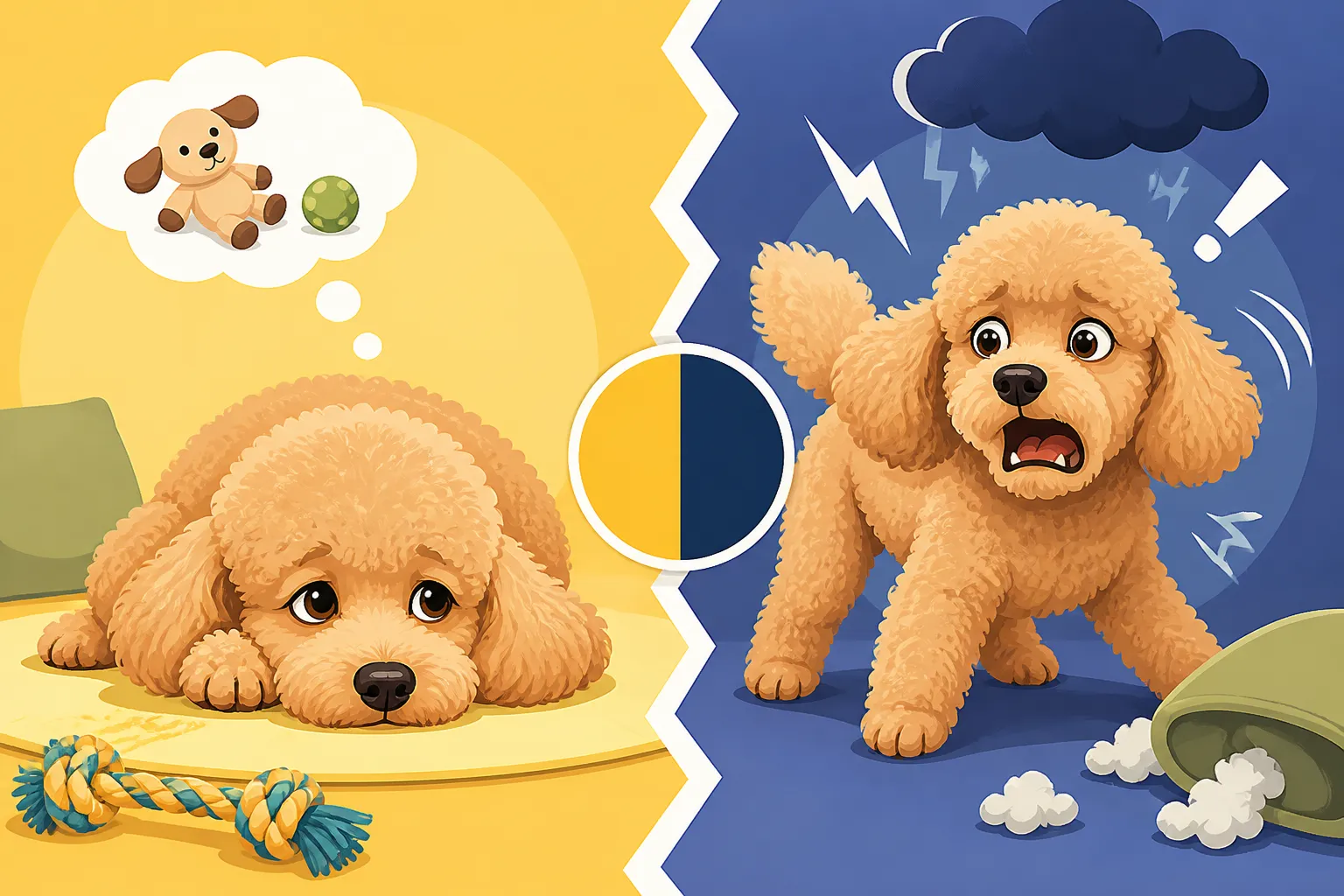
A bored poodle might greet you with a casual stretch, a soft sigh, or a nudge with their nose, almost like they're saying, "Oh, you're back. What's next?" Their eyes might look a little dull or glazed over, not fully engaged, or perhaps they'll watch you with an expectant, slightly lazy expression. You might notice them chewing on something inappropriate, like a cushion or a remote, but without frantic energy or a desperate attempt to destroy it. They might pace slowly around the house, checking various spots, as if looking for something to do, but not with a sense of urgency or distress. Their overall demeanor tends to be one of low-key dissatisfaction, a quiet yearning for engagement rather than acute fear. For more on this, consider Reading a Poodle's Body Language.
Conversely, a poodle experiencing real panic often presents a far more intense picture. Their eyes might be wide, showing a lot of the whites, giving them an almost startled or haunted look. You might see trembling, even if the house isn't cold. Excessive drooling, a wet chin, or even a puddle of drool on the floor are common signs. Their pacing will be frantic, often in tight circles or back and forth along exit points, and they might scratch, chew, or even dig relentlessly at doors, windows, or their crate, attempting to escape. They're not just looking for something to do; they're trying to reunite with you, and their movements are charged with desperation and fear.
Vocalizations as Clues
A poodle's barks, whines, and growls are not all created equal. The type and intensity of their vocalizations can tell you a lot about their emotional state.
When a poodle is simply bored, their vocalizations might be less urgent and more sustained. You might hear a low, drawn-out whine, almost like a sigh with sound, as if they're complaining about the lack of excitement. Some poodles will make those adorable "woo-woo" sounds, a kind of mournful singing that’s usually a bid for attention rather than an expression of fear. They might let out an occasional bark at nothing specific, just to hear themselves or to see if you respond. It's often a request for interaction, a polite (or not-so-polite) suggestion that you might want to entertain them.
However, a poodle in the throes of panic will often produce vocalizations that are insistent, high-pitched, and continuous. This isn't just a bark; it's a frantic series of yelps, howls, or barks that seem to have no end. They might whine desperately, sometimes for minutes on end, building in intensity the longer they are alone. This isn't just about getting your attention; it's an outpouring of profound distress and fear. If you've ever heard a genuinely terrified dog, you'll recognize the difference – the sound is piercing and filled with a raw, primal urgency that simply isn't present in a bored attention-seeking bark.
When Boredom Masquerades as Distress
It's easy to confuse a bored poodle for one in genuine distress, especially given their intelligence and sometimes dramatic flair. But understanding the root cause is critical for effective intervention.
The Clever Poodle's Need for a Job
Poodles are celebrated for their sharp minds, often ranking as one of the most intelligent dog breeds. But this incredible intelligence comes with a caveat: a clever mind without a job to do is a recipe for trouble. If a poodle isn't given enough mental stimulation, they can quickly become bored, and that boredom can manifest in ways that might initially look like anxiety. They're not necessarily panicking about your absence, but they are panicking about the lack of anything to do while you're absent. As I've often seen, a smart poodle can become a destructive poodle if their brain isn't engaged. This is why it's crucial to understand Why a Bright Poodle Gets Bored. They need purpose, even if that purpose is just figuring out how to get a treat out of a puzzle toy.
When you're away, a bored poodle isn't thinking, "Oh no, my human is gone forever!" Instead, they're probably thinking, "Well, this is dull. What can I get into now?" Their destructive behaviors aren't usually aimed at escaping to find you, but rather at relieving the unbearable monotony.
Common Boredom Behaviors
Boredom-driven behaviors often have a specific flavor that sets them apart from true panic. They might be destructive, but the destruction isn't typically focused on points of egress.
For instance, a bored poodle might chew on your favorite pair of slippers, a chair leg, or even carefully remove stuffing from a pillow. The damage is irritating, of course, but it often lacks the desperation of an escape attempt. They're exploring textures, seeking sensory input, or simply finding a way to occupy their jaws and minds. You might find several items chewed, scattered around the house, indicating a general exploration rather than a single-minded focus. If you visit Amazon, you'll find a wide array of durable chew toys and puzzle feeders specifically designed to redirect these behaviors.
Other boredom behaviors include excessive attention-seeking, like nudging your hand off the keyboard, persistent pawing, or even a gentle "mouthiness" where they try to hold your hand or arm in their mouth (without pressure). Digging at carpets or scratching at doors might occur, but it's usually less intense and sustained than a panicked attempt to break out. They're often trying to get your attention or simply satisfy a natural instinct, rather than trying to escape. Some poodles might also engage in excessive grooming or licking of themselves, almost as a displacement activity to self-soothe when under-stimulated.
Unmasking Genuine Separation Panic
When a poodle is truly panicked by your absence, it's a very different emotional state from boredom. This isn't about needing a job; it's about a deep-seated fear of being alone.
The Realities of Separation Anxiety
Separation anxiety in poodles isn't just a bad habit; it's a legitimate phobia of being left alone. For these sensitive souls, your departure isn't just inconvenient; it's terrifying. They don't understand that you'll be back, and their world descends into fear the moment you're out of sight. This profound emotional distress sets it apart from simple boredom. While a bored poodle seeks engagement, a panicked poodle seeks you. This is why conditions like Separation Anxiety in a Velcro Poodle can be so debilitating for both dog and owner. It's a deep-seated emotional response, not a misbehavior.
The key difference lies in the poodle's motivation. A bored poodle might break rules because they have nothing better to do. A panicked poodle breaks rules (or breaks out) because they are desperate to alleviate their intense fear and reunite with their primary attachment figure. It’s important not to punish these behaviors, as it only intensifies their anxiety. They aren't being "naughty"; they are genuinely suffering.
Destructive and Self-Harmful Panic Behaviors
The destructive behaviors of a panicked poodle are typically much more severe and focused than those of a bored one. They are usually centered around escape attempts or self-soothing in extreme ways.
You might come home to discover frantic escape attempts, such as broken nails from scratching at doors, bloody paws from digging, bent or broken crate bars, or even damage to windowsills where they tried to chew their way out. The sheer force and persistence behind these actions speak volumes about their terror. It's not just a casual chew; it's a desperate struggle. If you find your poodle's living area looking like a war zone every time you leave, you are likely dealing with true panic. This level of destruction often indicates a desperate attempt to find you, rather than just pass the time. What a Panicking Poodle Does to the Door is a common and heartbreaking symptom.
Another tell-tale sign of separation anxiety is urination or defecation inside the house, even when your poodle is otherwise perfectly housetrained and held their bladder for appropriate lengths of time when you are home. This isn't a "protest pee"; it's an involuntary physical response to extreme stress and fear. You might also notice persistent, non-stop vocalization – howling, barking, or crying that doesn't cease until you return. Excessive drooling, to the point where their chin and neck are soaked, or puddles form on the floor, can also be a significant indicator, even if you were only gone for a short period. In severe cases, poodles might engage in self-mutilation, licking or chewing their paws raw, or causing other injuries to themselves as an extreme coping mechanism for their terror. For serious help with separation anxiety, structured online programs like those offered by BAXTER & Bella can provide guidance and resources.
Strategies for Addressing Each Scenario
Once you've discerned whether your poodle is grappling with boredom or genuine panic, you can tailor your approach to help them. The solutions are distinct, and applying the wrong one can be ineffective or even counterproductive.
Enriching a Bored Poodle's Life
For a poodle suffering from boredom, the goal is to provide ample mental and physical stimulation, essentially giving their clever brain a "job."
Start by increasing their daily mental exercise. This can be as simple as incorporating short, fun training sessions throughout the day, teaching them new tricks, or practicing obedience cues. Puzzle feeders are absolute game-changers for bored poodles. Instead of simply putting their meal in a bowl, make them work for it. There are countless options available on Amazon, from slow-feeder bowls that make kibble last longer to complex toys that require rolling, nudging, and problem-solving to release treats. For more ideas on how to tire out that clever brain, read Mental Work That Tires a Poodle. Scent games, where you hide treats around the house for them to find, are also fantastic ways to engage their natural instincts and tire them out mentally.
Alongside mental work, ensure they're getting enough physical exercise. A standard poodle, for example, needs a good amount of vigorous activity daily, not just a casual stroll. Regular walks, trips to a secure dog park (if appropriate for your poodle's temperament), or active games of fetch can make a huge difference. Provide a variety of appropriate chew toys, rotating them to keep things interesting. A consistent routine helps, but also introduce novelty to keep them engaged. Remember, a tired poodle, both mentally and physically, is a happy poodle.
Gently Guiding a Panicked Poodle
Addressing true separation panic requires a much more delicate and structured approach. This isn't about giving them a toy; it's about fundamentally changing their emotional response to being alone.
The cornerstone of treating separation anxiety is desensitization and counter-conditioning. This means gradually exposing your poodle to your absence in tiny, manageable increments, pairing it with something positive. You might start with simply stepping out of sight for a few seconds, then returning and rewarding calm behavior. Slowly, over days or weeks, you build up the duration. The key is to never push them into a full-blown panic. If they show signs of stress, you've gone too far, too fast. This process takes immense patience and consistency. To help your poodle understand that your departure isn't a forever thing, explore strategies like those in Teaching a Poodle That Leaving Is Ordinary.
Creating a safe, comfortable space for them when you leave is also important. This might be a cozy crate (if they are already crate-trained and don't associate it with punishment), a specific room, or even just their bed. Some poodles benefit from calming pheromone diffusers or calming music played quietly. For many severe cases of separation anxiety, professional help is invaluable. A certified dog behaviorist or a veterinary behaviorist can design a tailored plan and guide you through the process, which often involves medication in conjunction with behavior modification. Websites like BAXTER & Bella often have resources or training programs that can help guide you through the initial steps and provide structured support. For a better understanding of what an average poodle can handle, consider Hours a Poodle Copes With an Empty House.
Here’s a quick overview to help you spot the difference:
| Symptom / Behavior | Boredom | Separation Panic |
|---|---|---|
| Vocalizations | Low whining, "woo-woo" sounds, occasional barks, attention-seeking | High-pitched, incessant barking/howling/yelping, desperate cries |
| Destructive Chewing | On household items (shoes, furniture, pillows), generalized, less frantic | Targeted at exit points (doors, windows, crates), intense, desperate |
| Pacing | Slow, aimless wandering, looking for activity | Frantic, anxious circles, hyper-vigilant scanning for you |
| Elimination | Typically holds bladder/bowels, occasional 'protest' pee/poop (rare) | Involuntary urination/defecation, even if housetrained and held |
| Physical Signs | Sighing, relaxed body, seeking interaction | Trembling, excessive drooling, wide eyes, panting (without exertion) |
| Motivation | Lack of mental/physical stimulation, desire for engagement | Intense fear of being alone, desperation to reunite |
| Response to Your Return | Casual greeting, ready for next activity | Over-the-top, frantic greeting, intense relief, takes time to settle |
Ultimately, understanding your poodle's unique personality and needs is paramount. Whether it's more puzzle toys from Amazon or a dedicated training plan with resources from a platform like BAXTER & Bella, equipping yourself with knowledge is the first step to a happier, healthier poodle.
Disclaimer
This article is for general informational purposes only and does not constitute professional advice. Laws, prices and regulations vary by location and change over time. Consult a qualified professional for guidance on your specific situation.